
Torrential Rain, Pumpkins Galore for Goats, Chickens & Pigs + Pig Moves & Pig Breeding
Rainy season begin with a bang with nearly 8 inches of rain over three days, the pumpkin drive is in full swing and that means there’s tons of treats for the goats, chickens and pigs and we’ve been moving around pigs around into new breeding groups and to new sections of woods to rotate through.
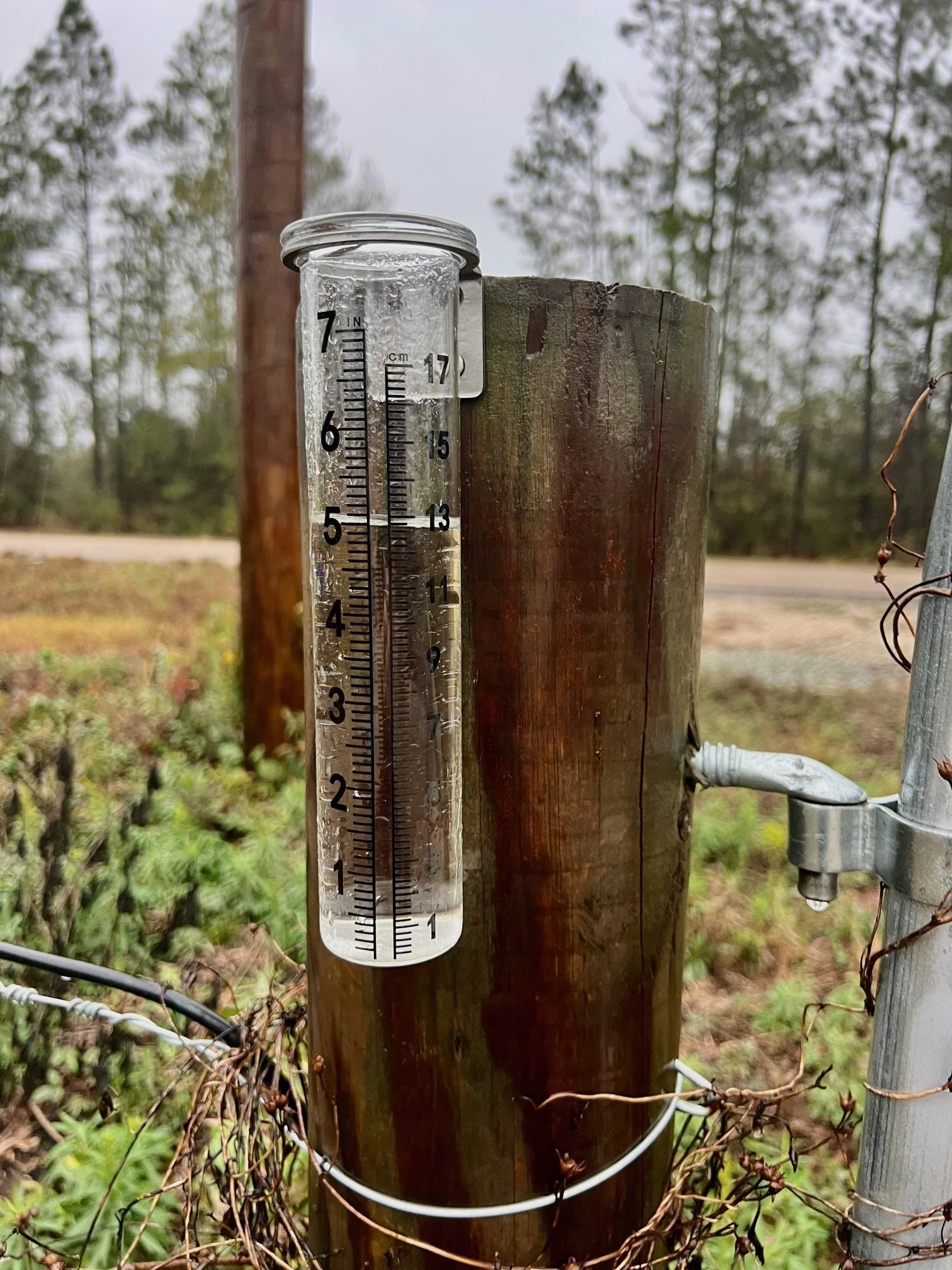
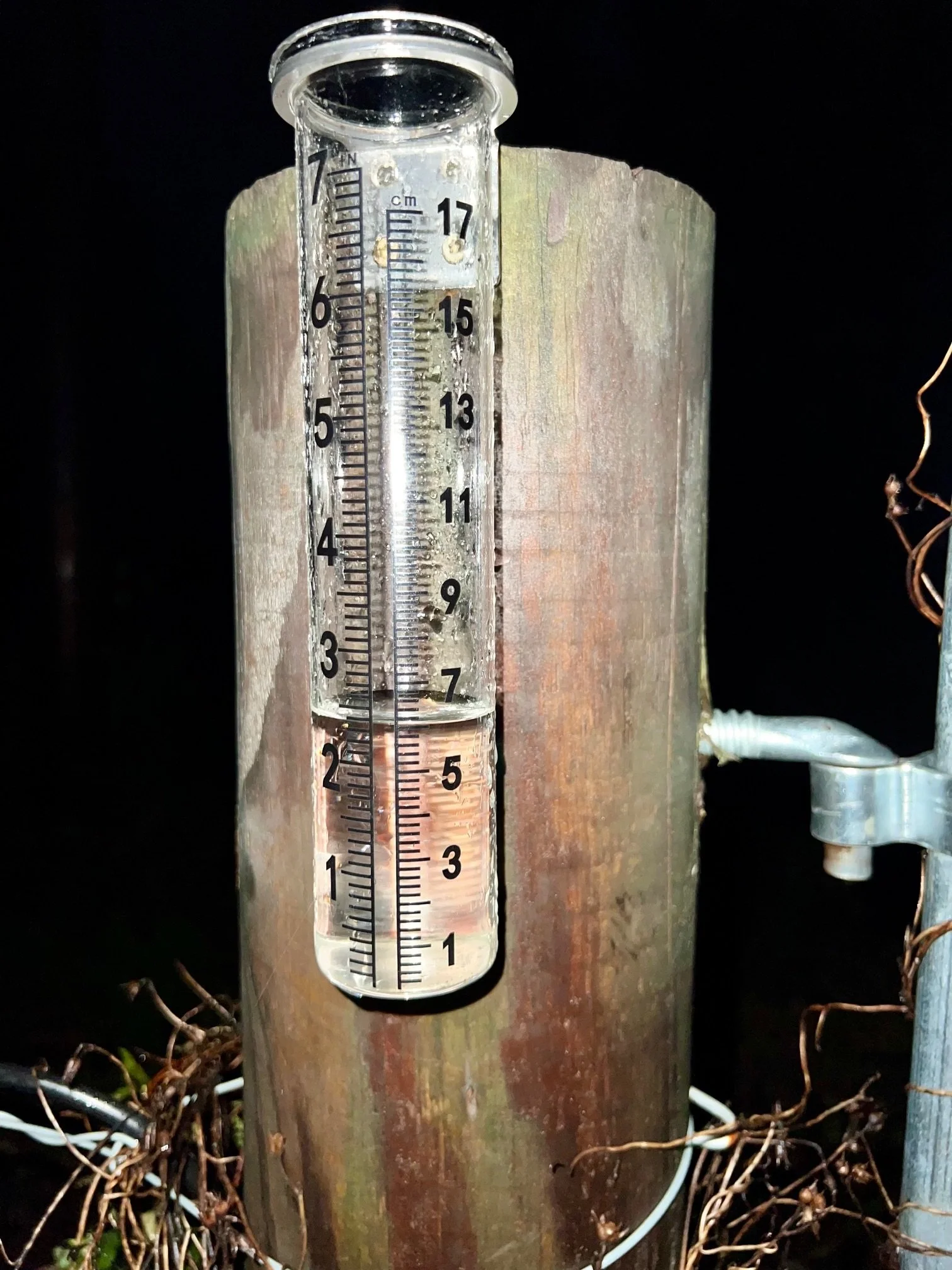
Just like that, we went from being in a bonafide drought, to having above average rainfall for the year!
In years past, when obsessively looking at forecasts for upcoming storms and rain events, I always assume we’ll get the higher end of the rainfall estimates. But this year, the rain always seemed to miss us and last Monday, the clouds formed a big V and we got .10 inches when areas around us got several inches.
So even though Grant did a fair amount of preparations early last week for Thursday’s rain, I still was very surprised when I woke up to the sound of an absolute deluge of rain and then looked at the radar to confirm we were right in one of the bands training over us from East to West and it wouldn’t be tapering off any time soon.
By the time I got up at 6 am, the gauge already had 2.25 inches in it and then by 9 am it was at 5 inches!
It did slow down, but kept raining and misting all day and we got another 2.45 that day, for nearly 7.5 inches total. Woof.
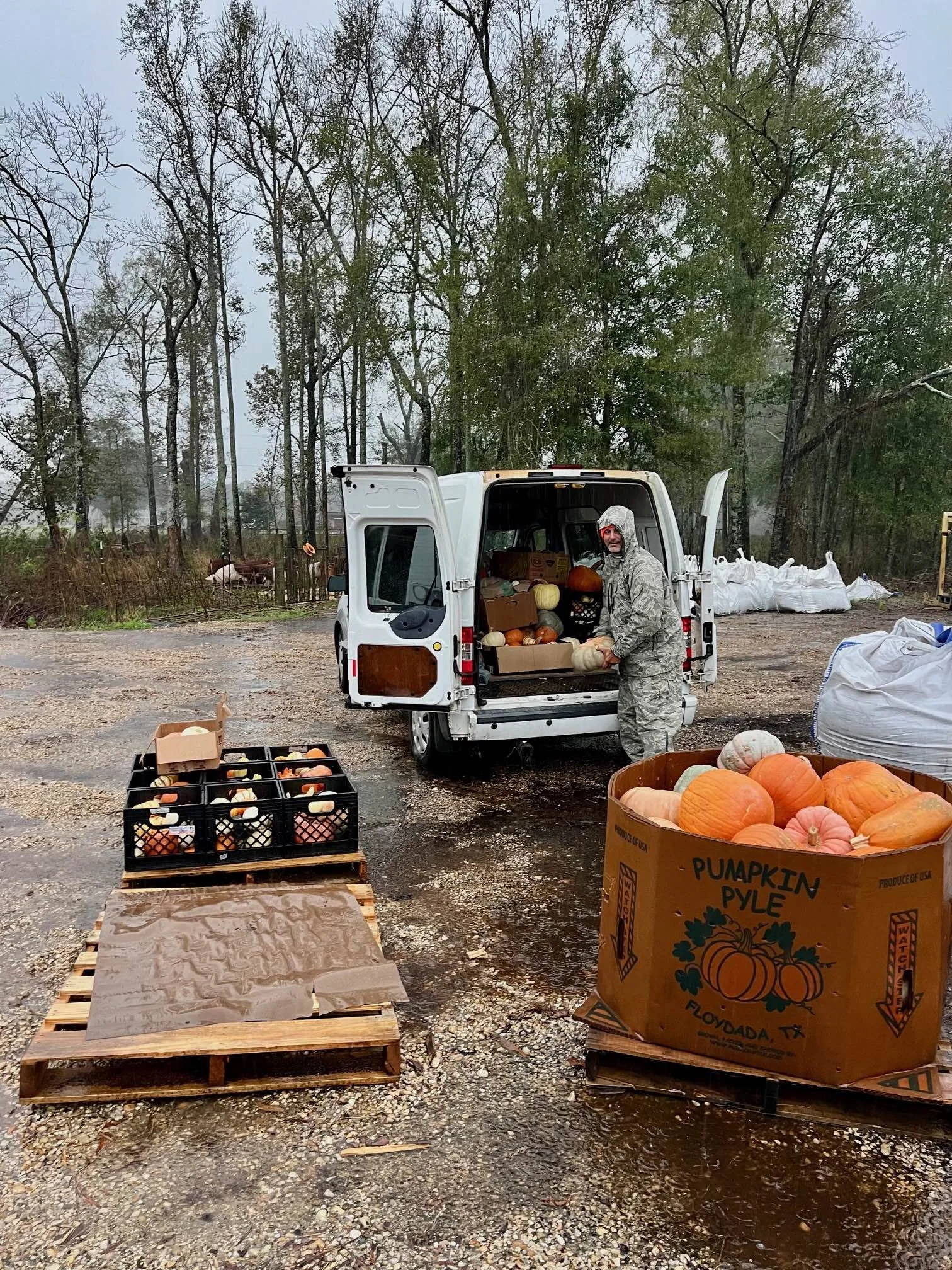
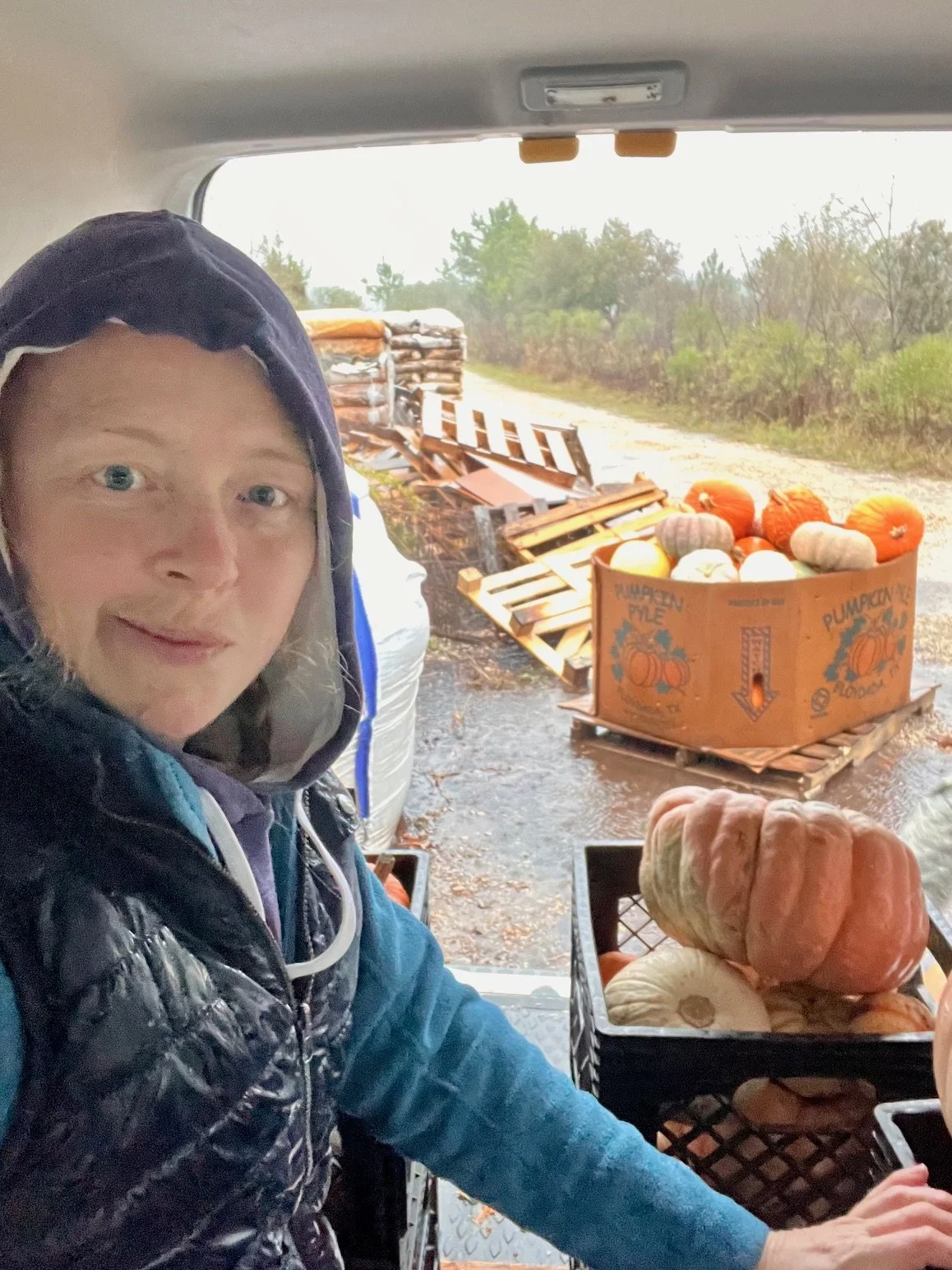
Of course, since I had loaded the van with pumpkins from our Pumpkin Drive at the shop on Wednesday night, Grant and I had to offload them (and load up eggs for delivery) in the rain. Grant has new rain gear he was very excited to try out and I just planned time to change before heading in to the Southshore!
We certainly needed the moisture, but you always wish it wasn’t all at once!

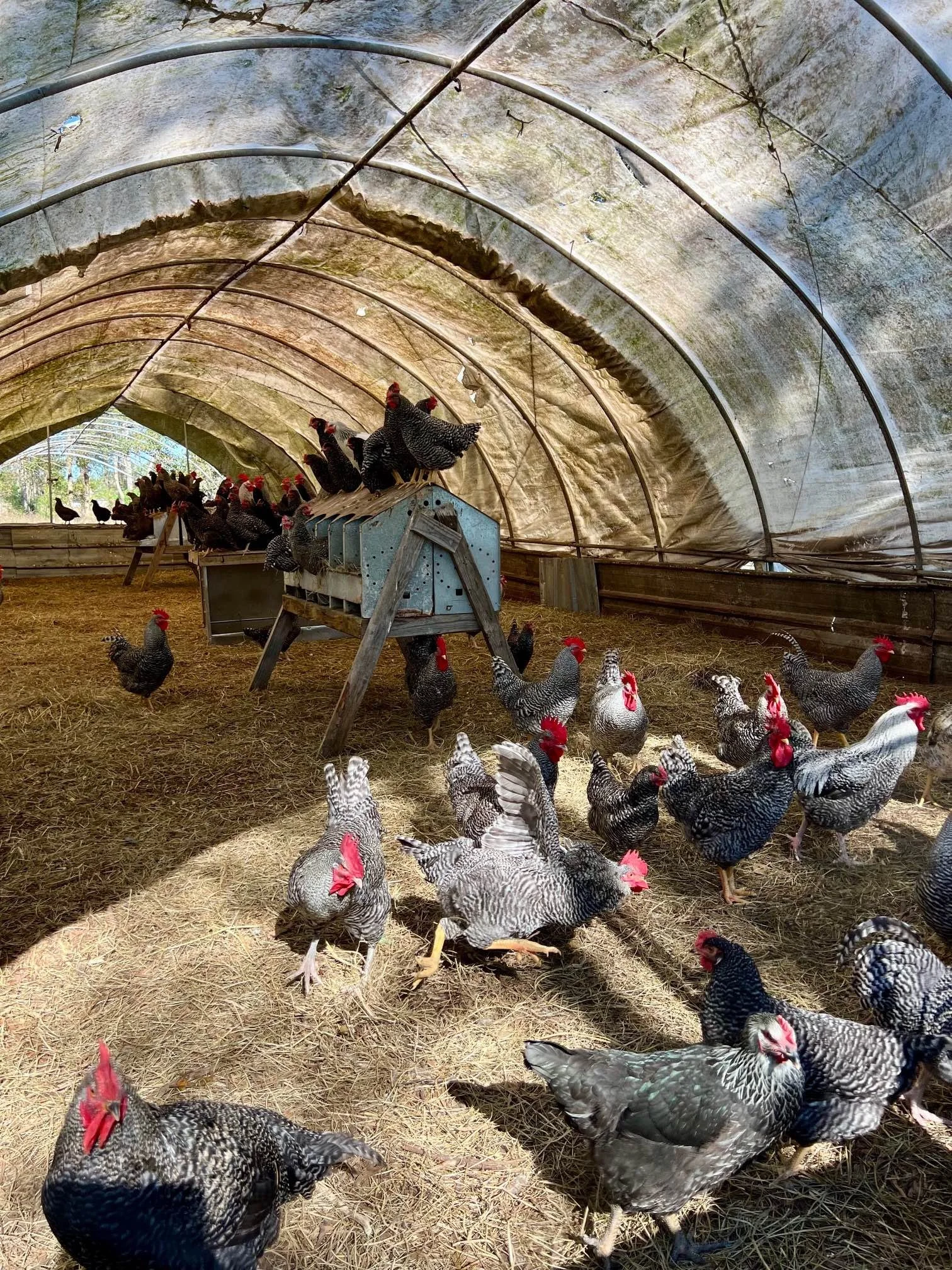
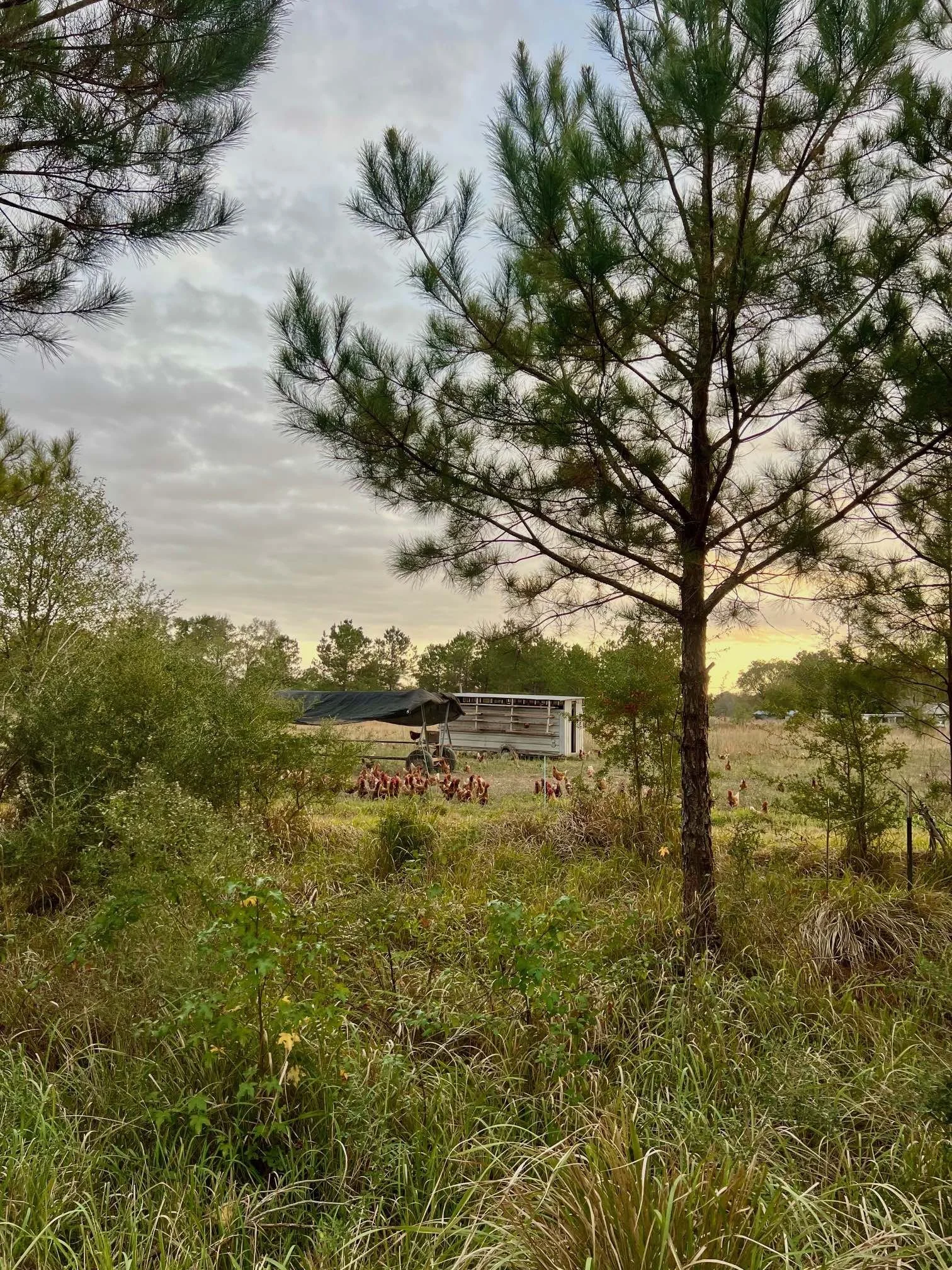
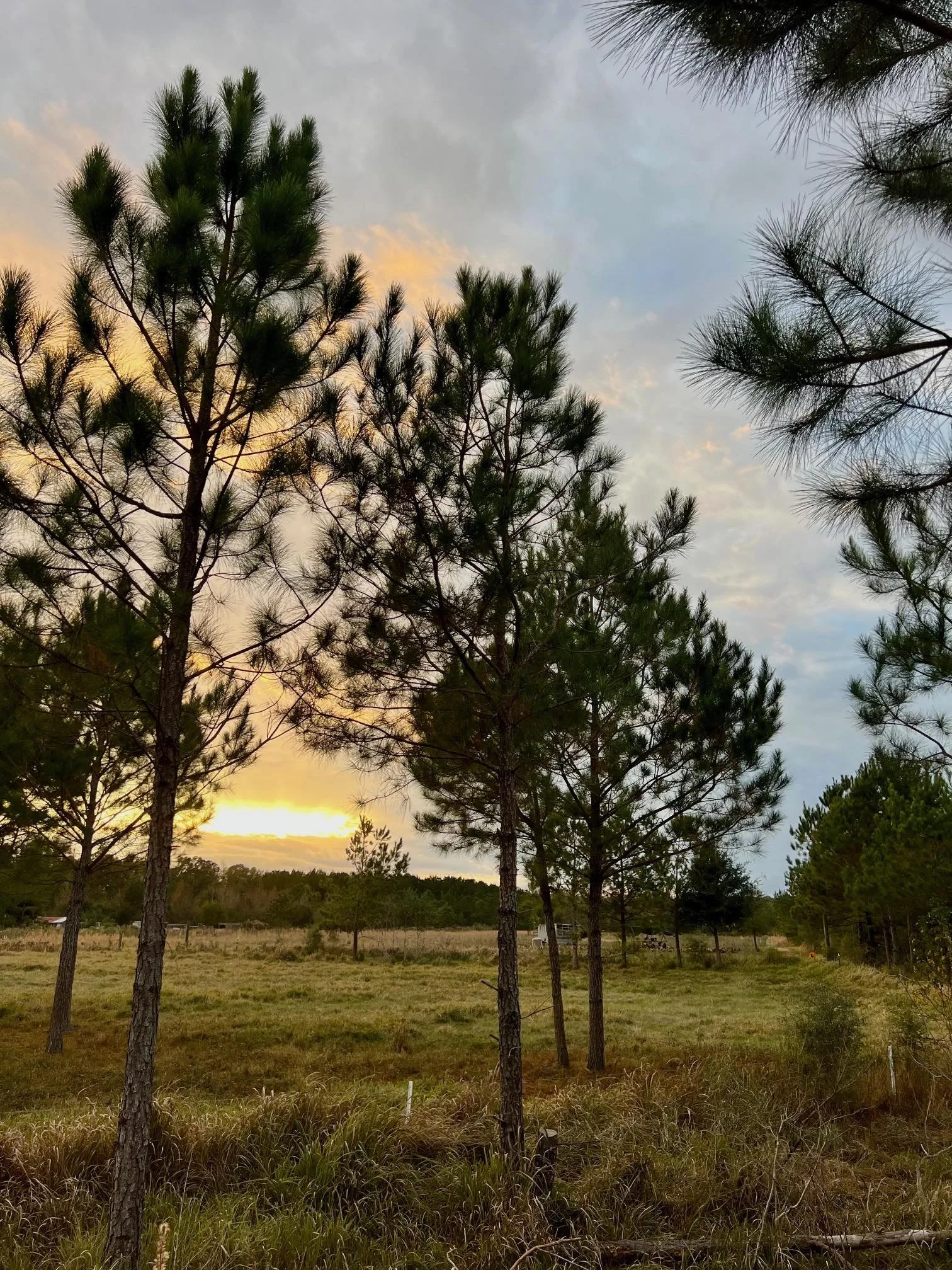
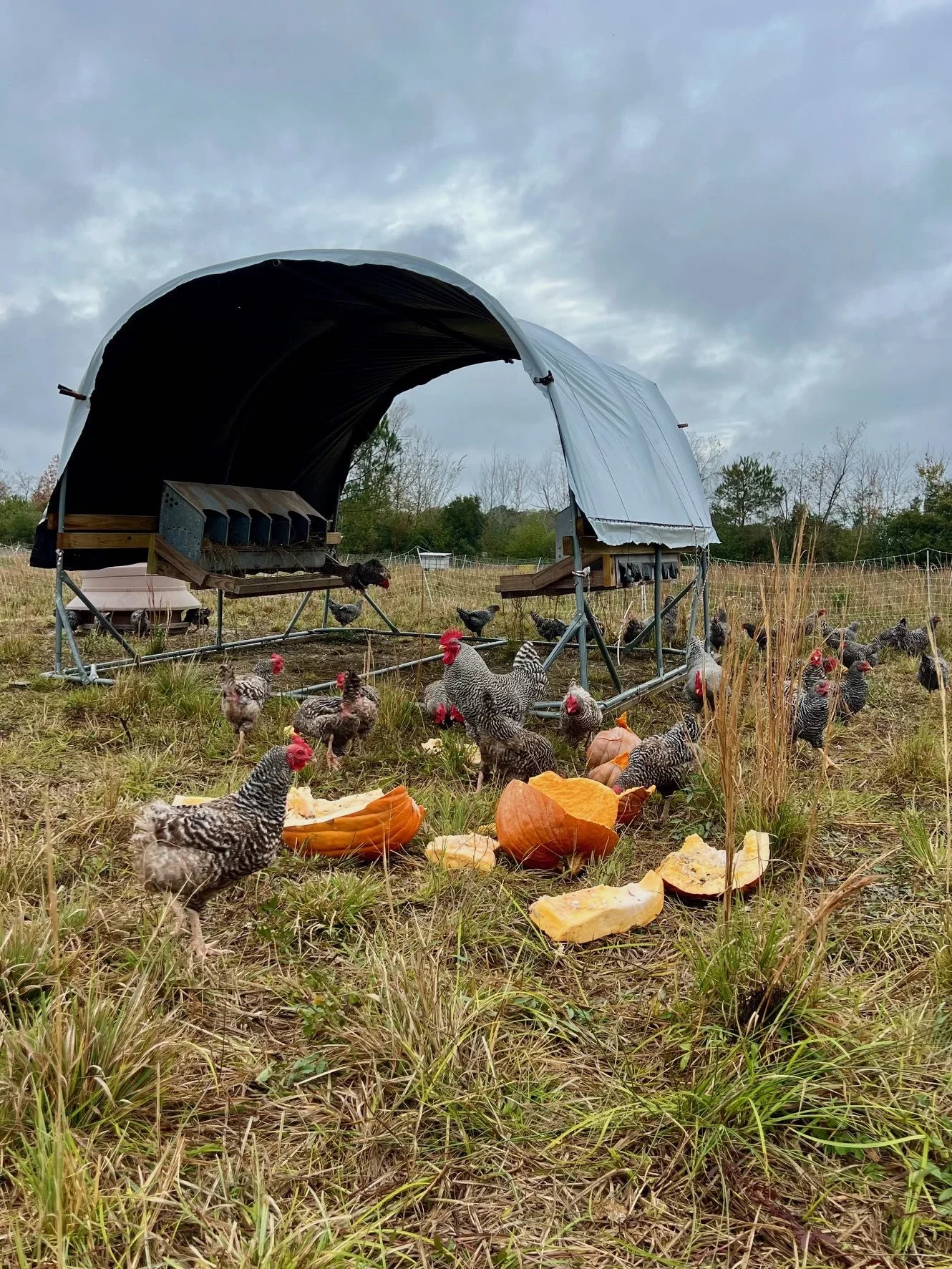

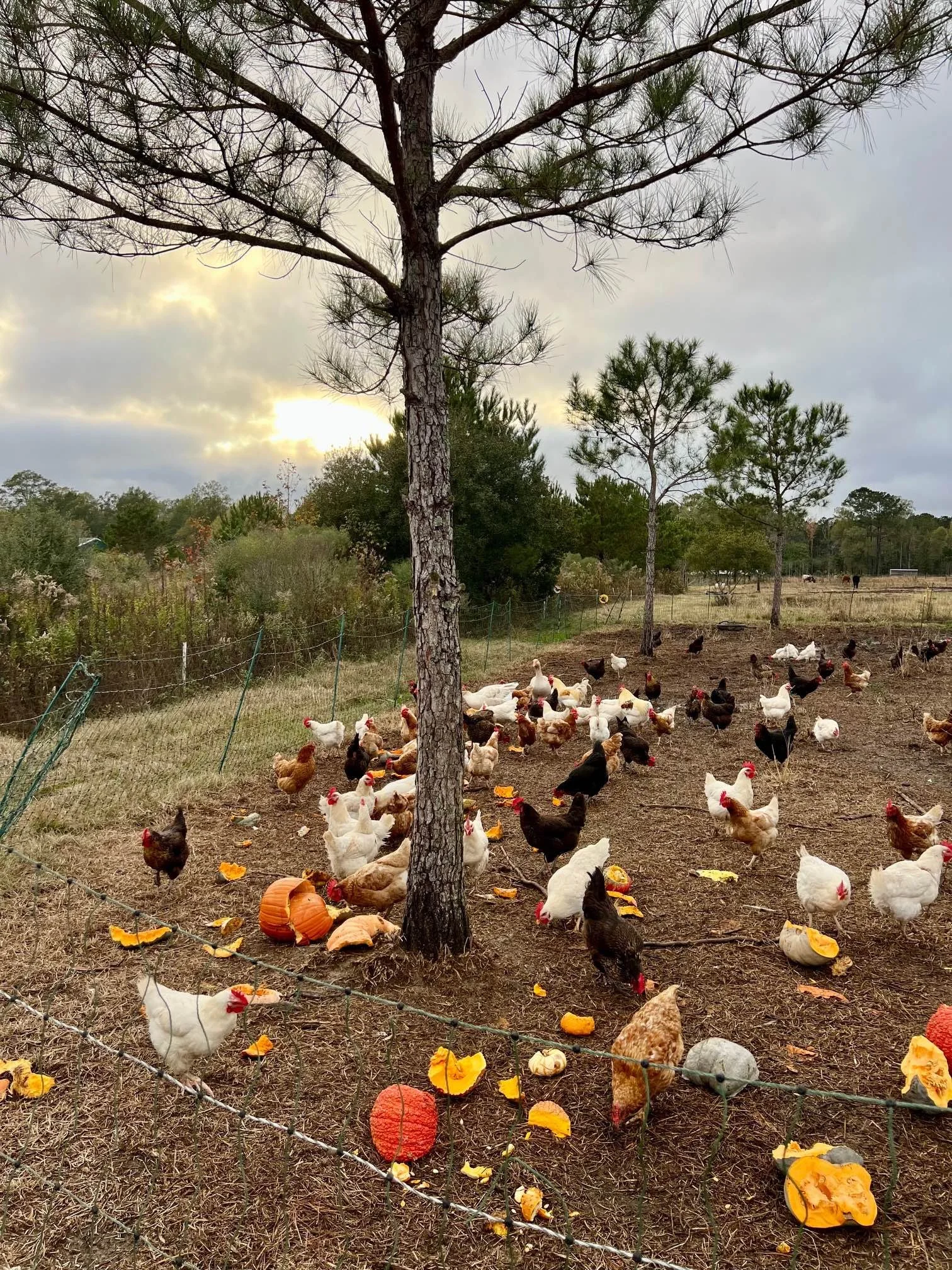
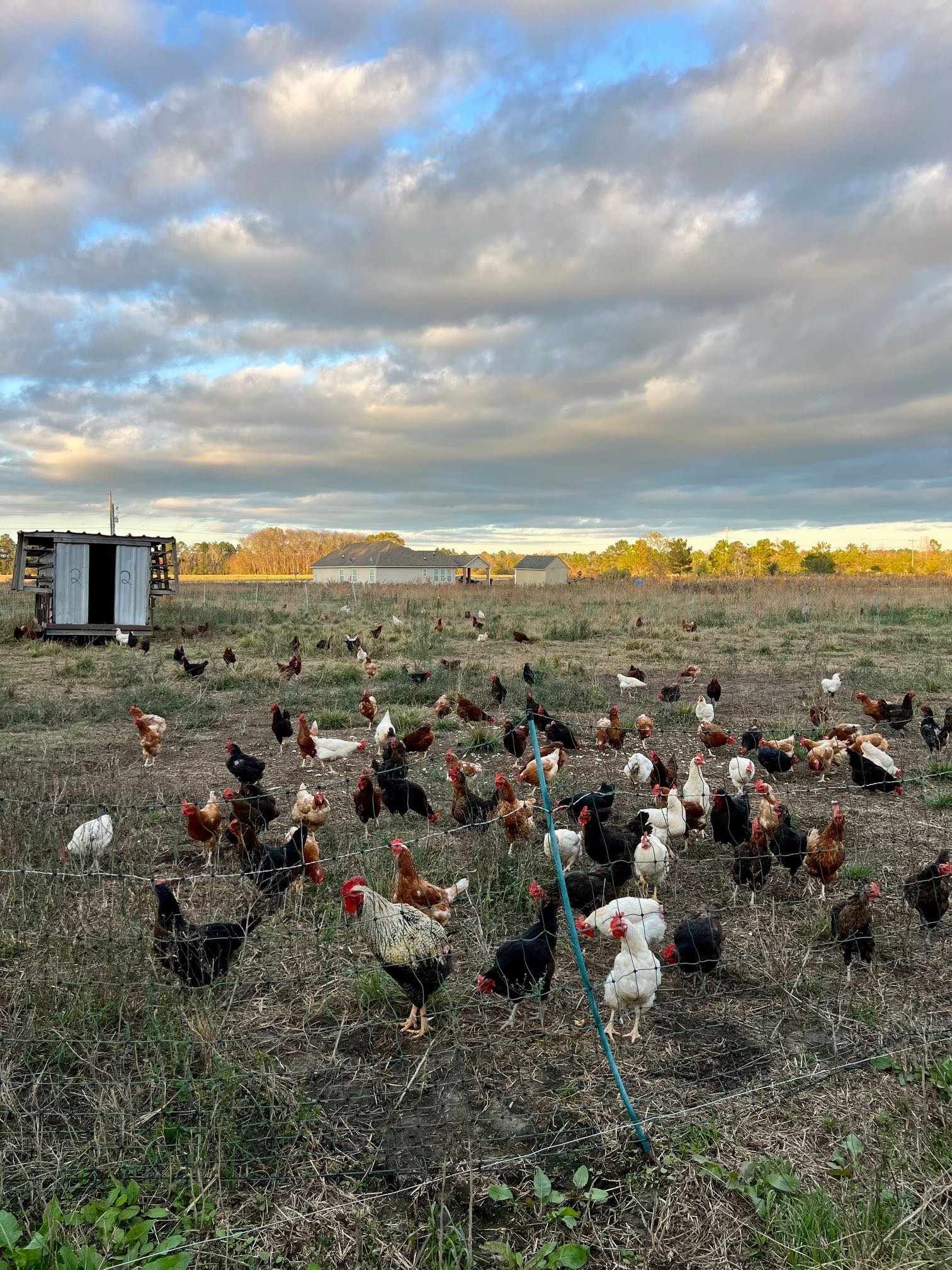
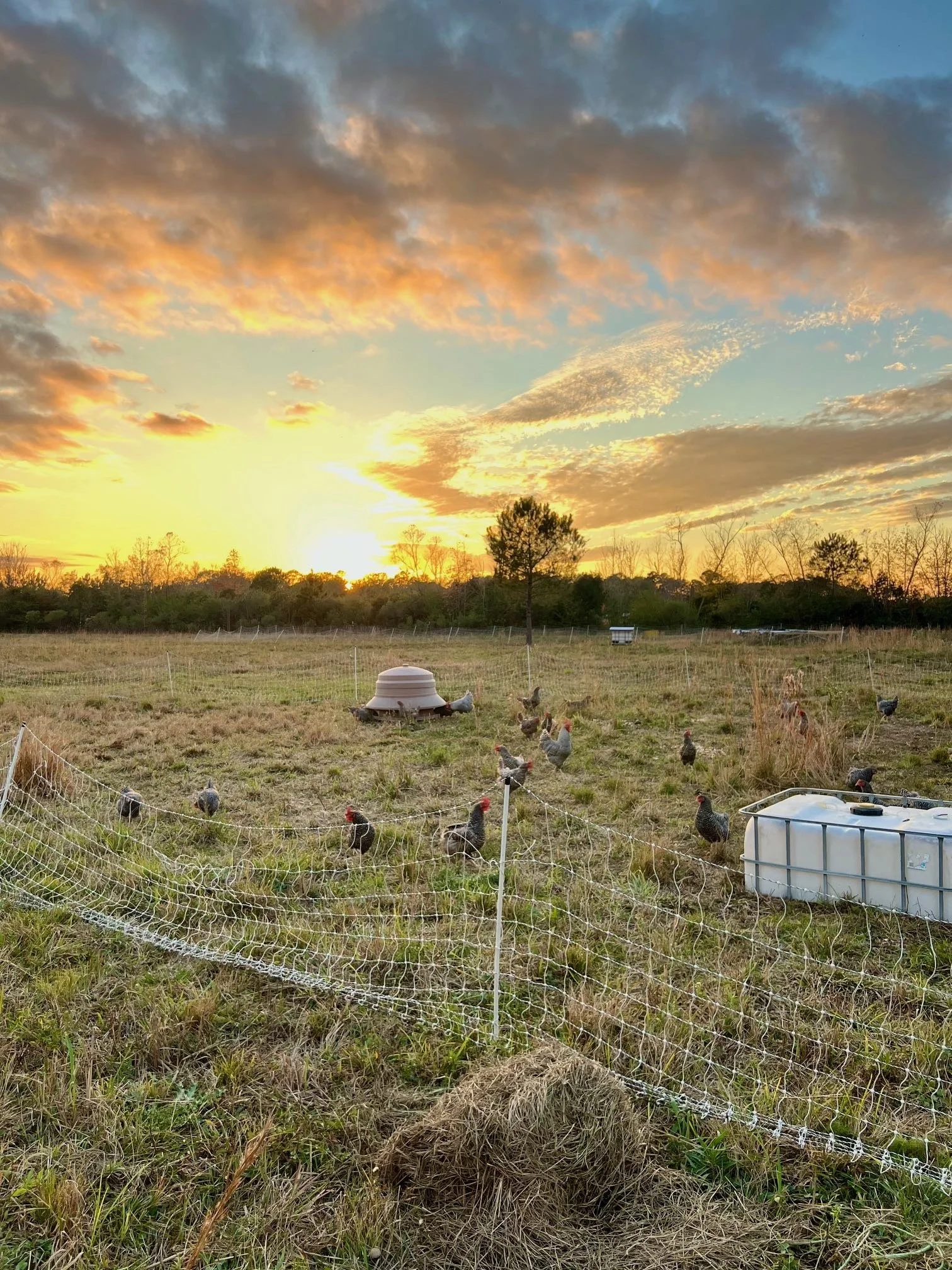
It’s getting to that ugly time of the year for the pastures. And although we don’t get the extreme cold and snow that many of our farmer friends in other states do, we are starting to scheme if we can house each chicken flock in a hoophouse for six weeks or so each winter.
We renovated a hoophouse we used to use for farrowing pigs for a new flock or chickens we hatched in June and between all the mulch from the parish trimming trees and limbs along the power lines this summer, wood shavings and hay, it is absolutely cozy in there!
As mentioned previously, we are keeping these hens in the hoophouse until their eggs size up to larges and we can incubate two full incubators full of eggs from them before moving them out to pasture. We want to protect our investment in buying these hatching eggs before risking losses to predators on pasture.
But what’s been a little surprising is that there is FAR more beetle and worm activity in the bedding of the hoophouse than there is on pasture right now, meaning these chickens are getting some great insect foraging in right inside the hoophouse.
We’ve also been feeding them pumpkins regularly and we’re looking to get a fodder program (where you grow wheat and oat sprouts in trays) going for all the flocks this winter since we bed the other flocks down on lots of mulch, as well, and not much other forage is growing at a pace that can keep up in the winter.
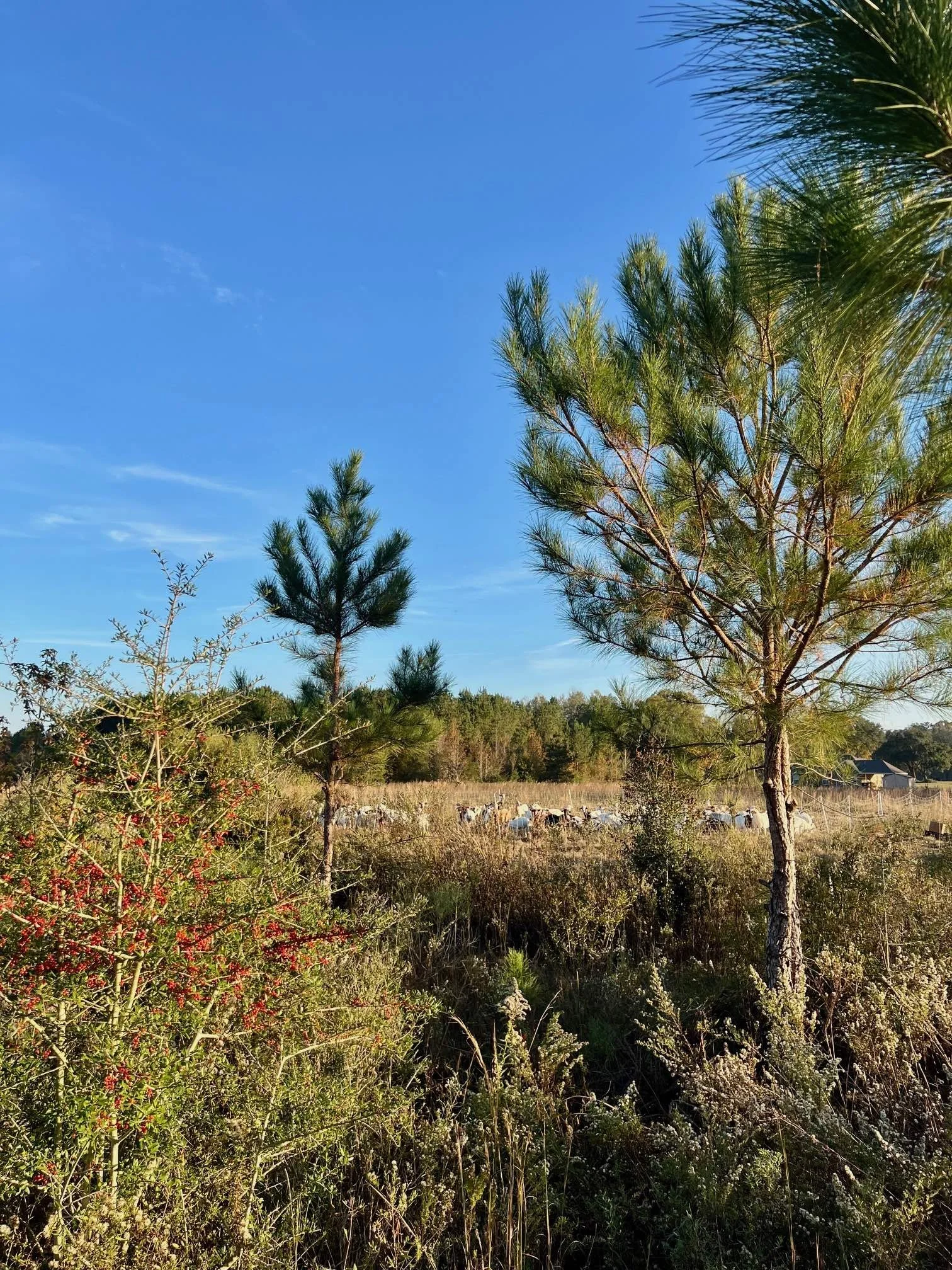
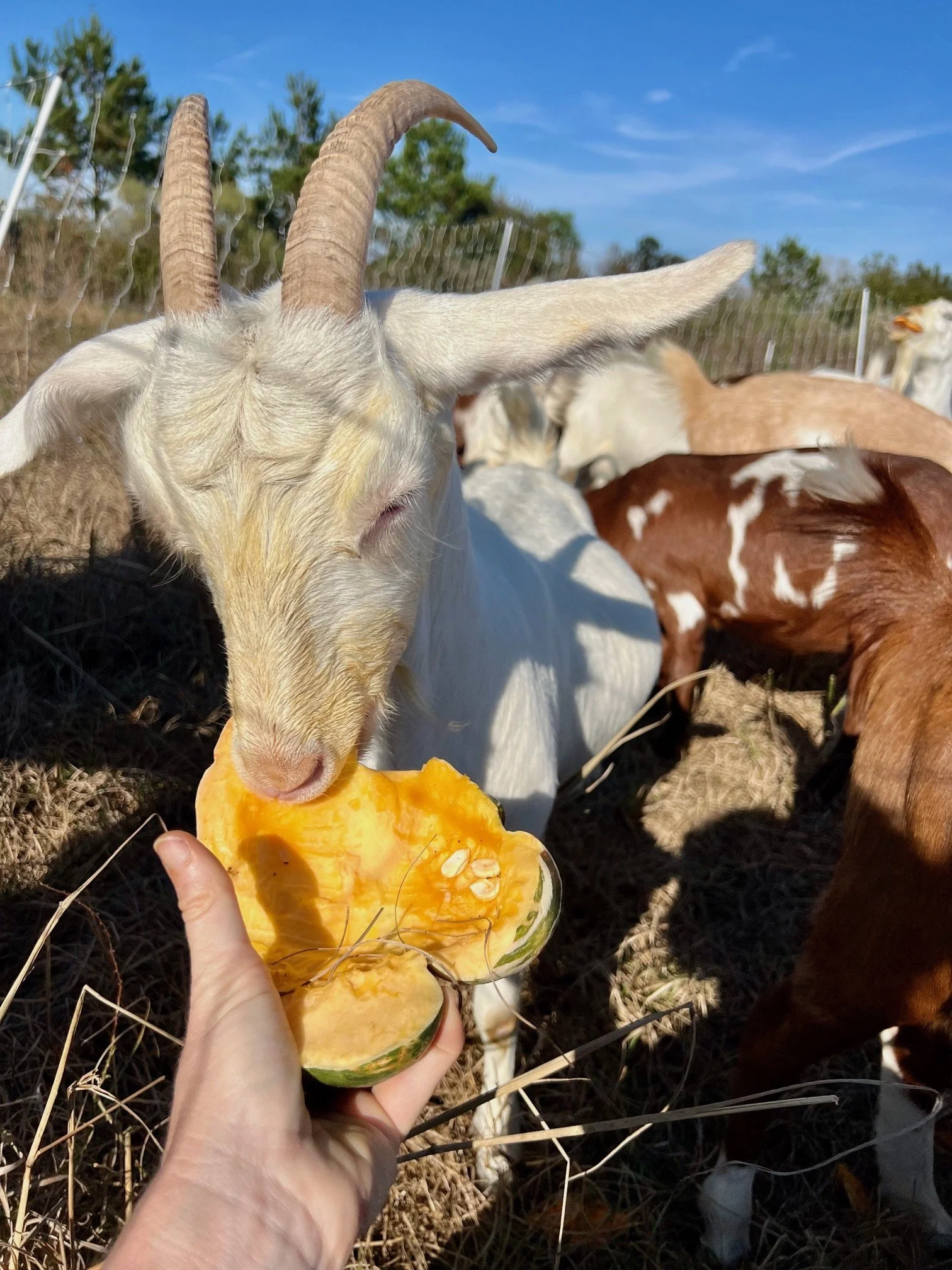
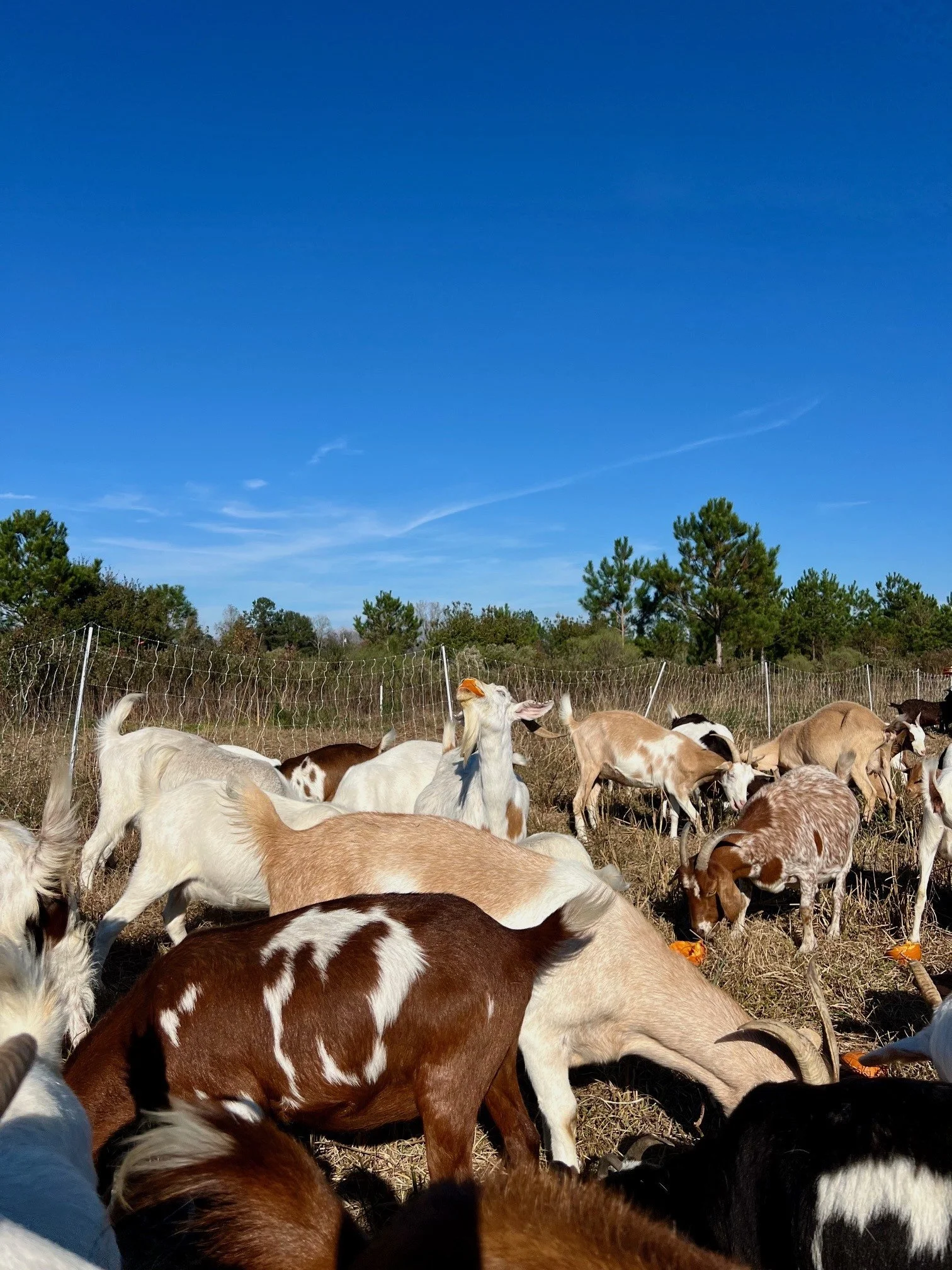
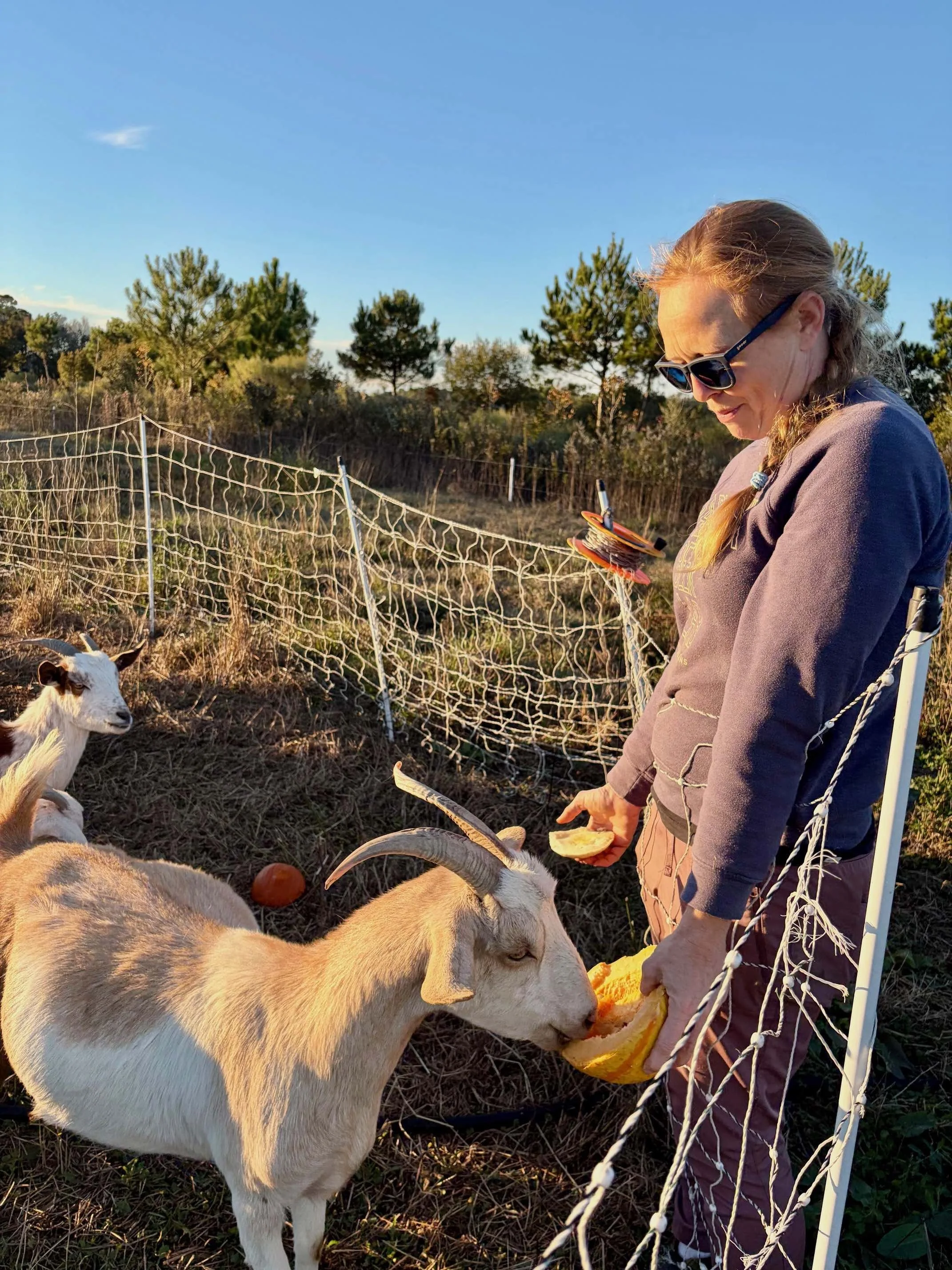
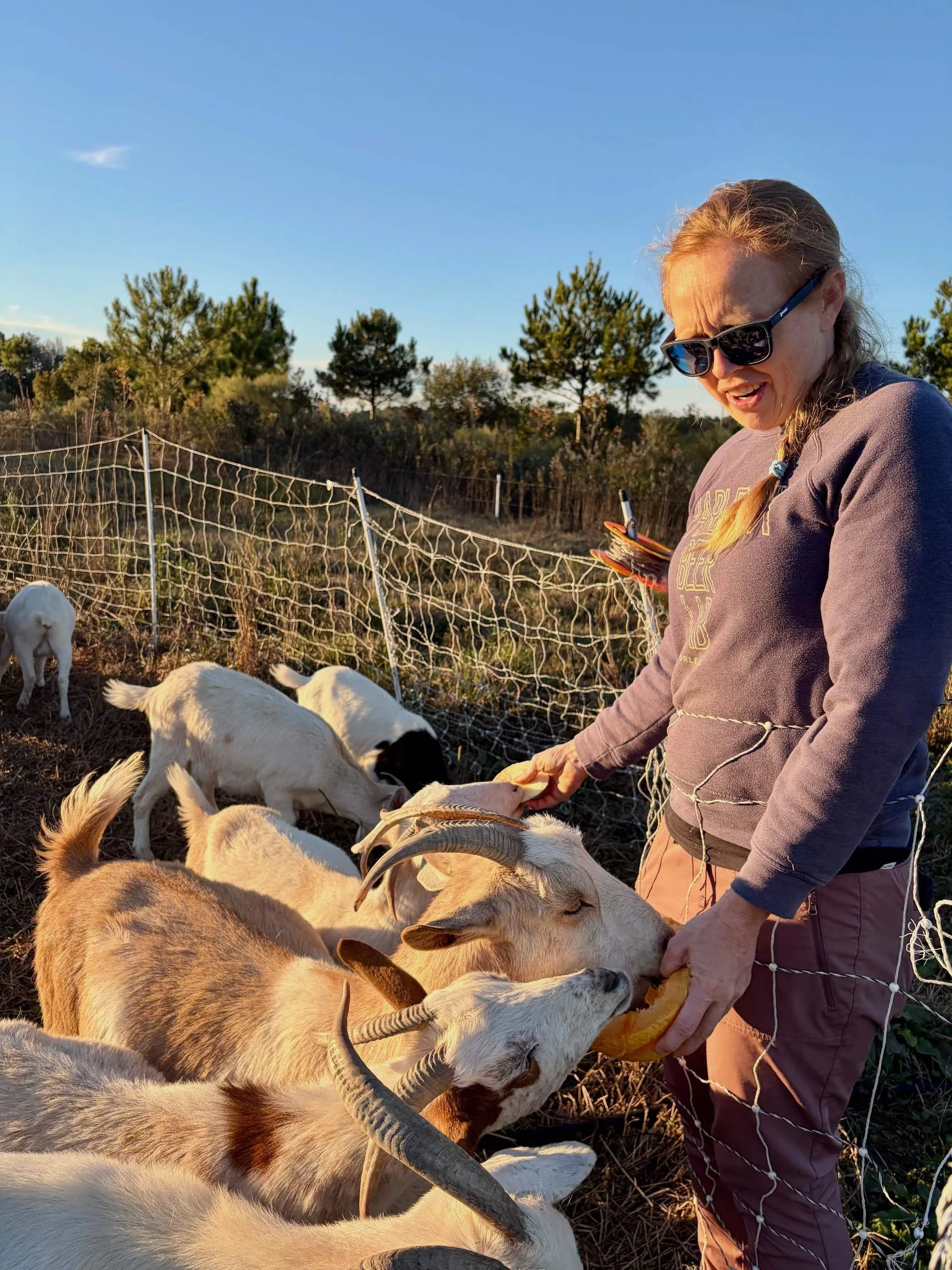
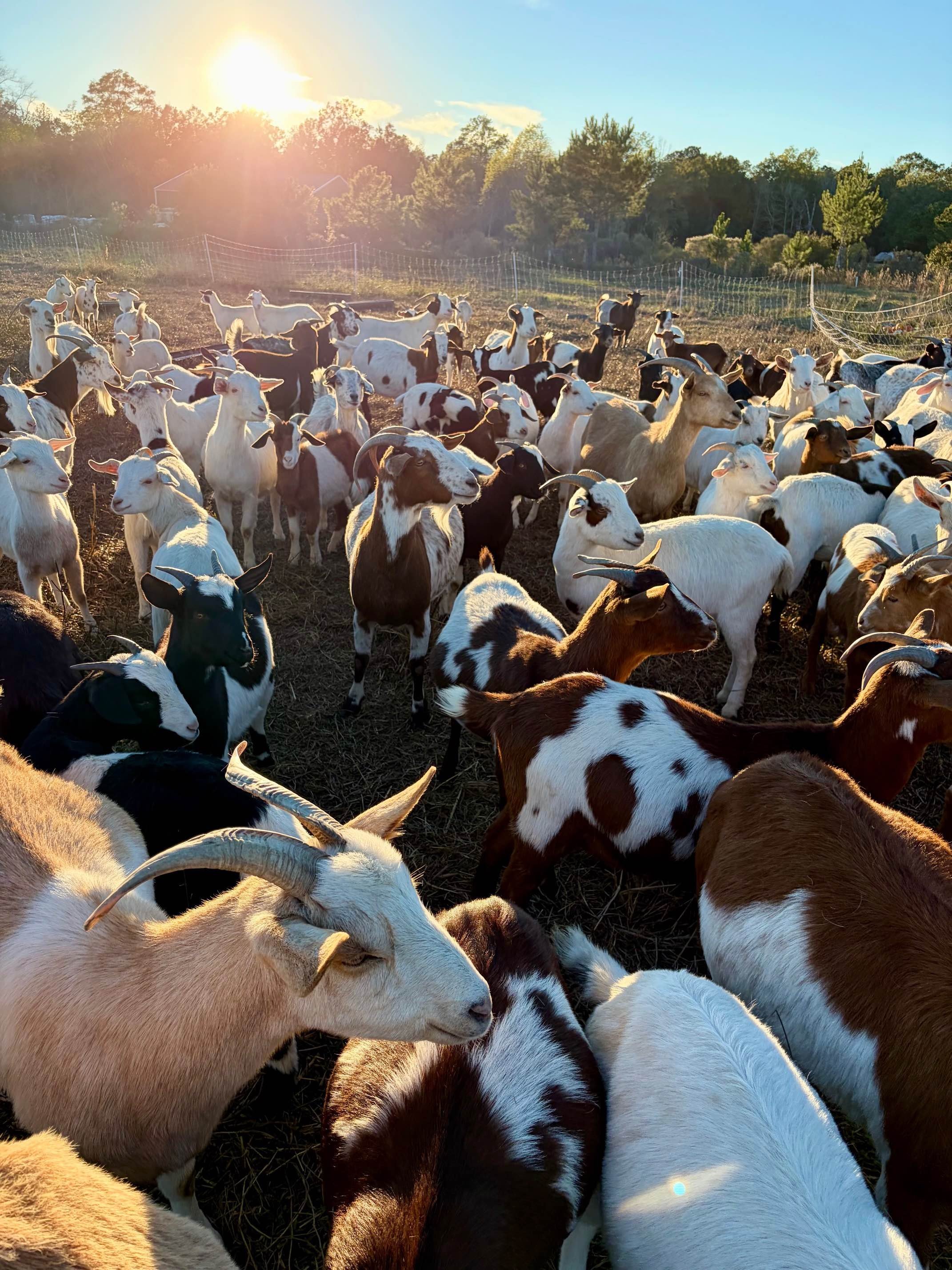
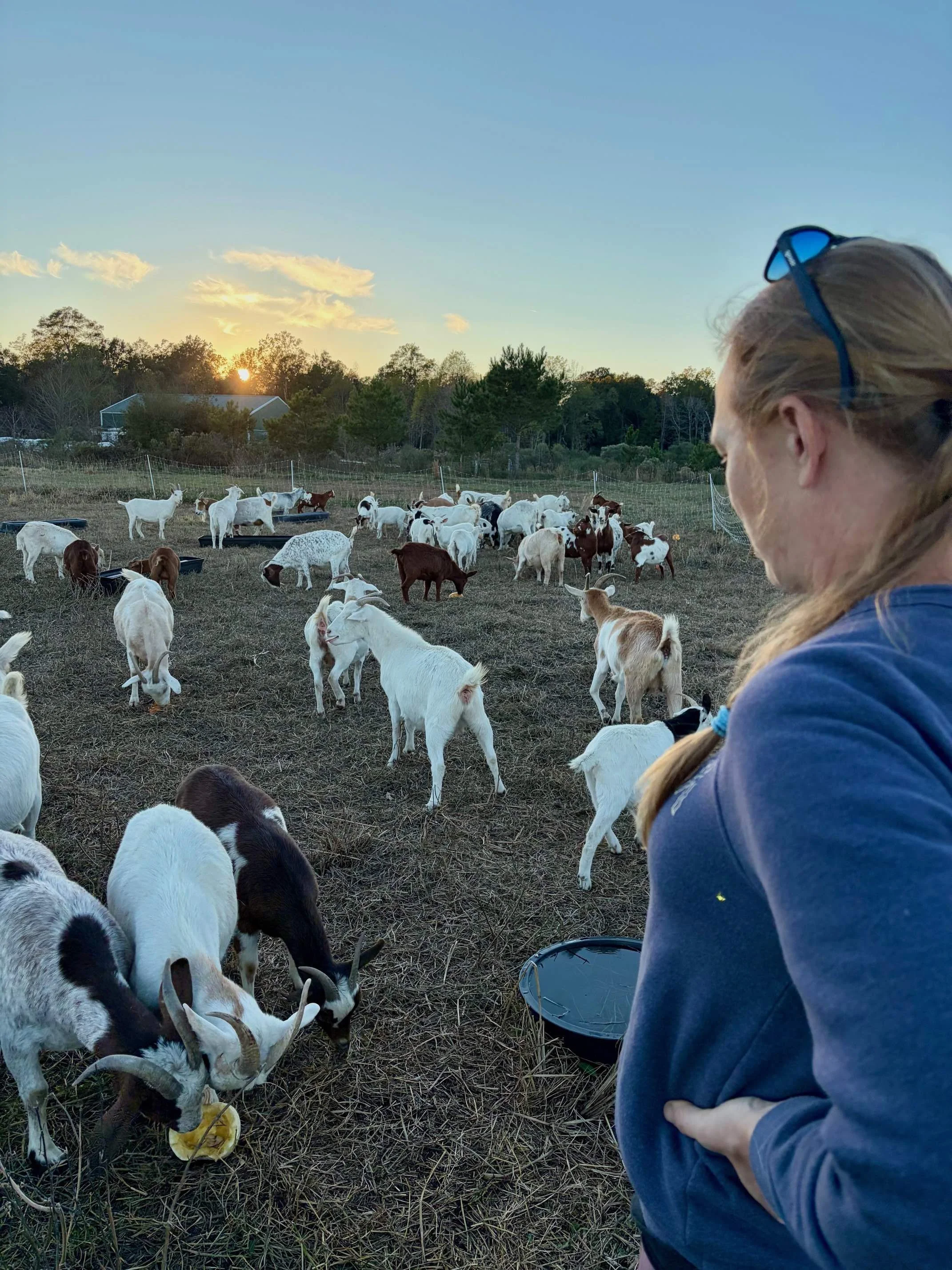
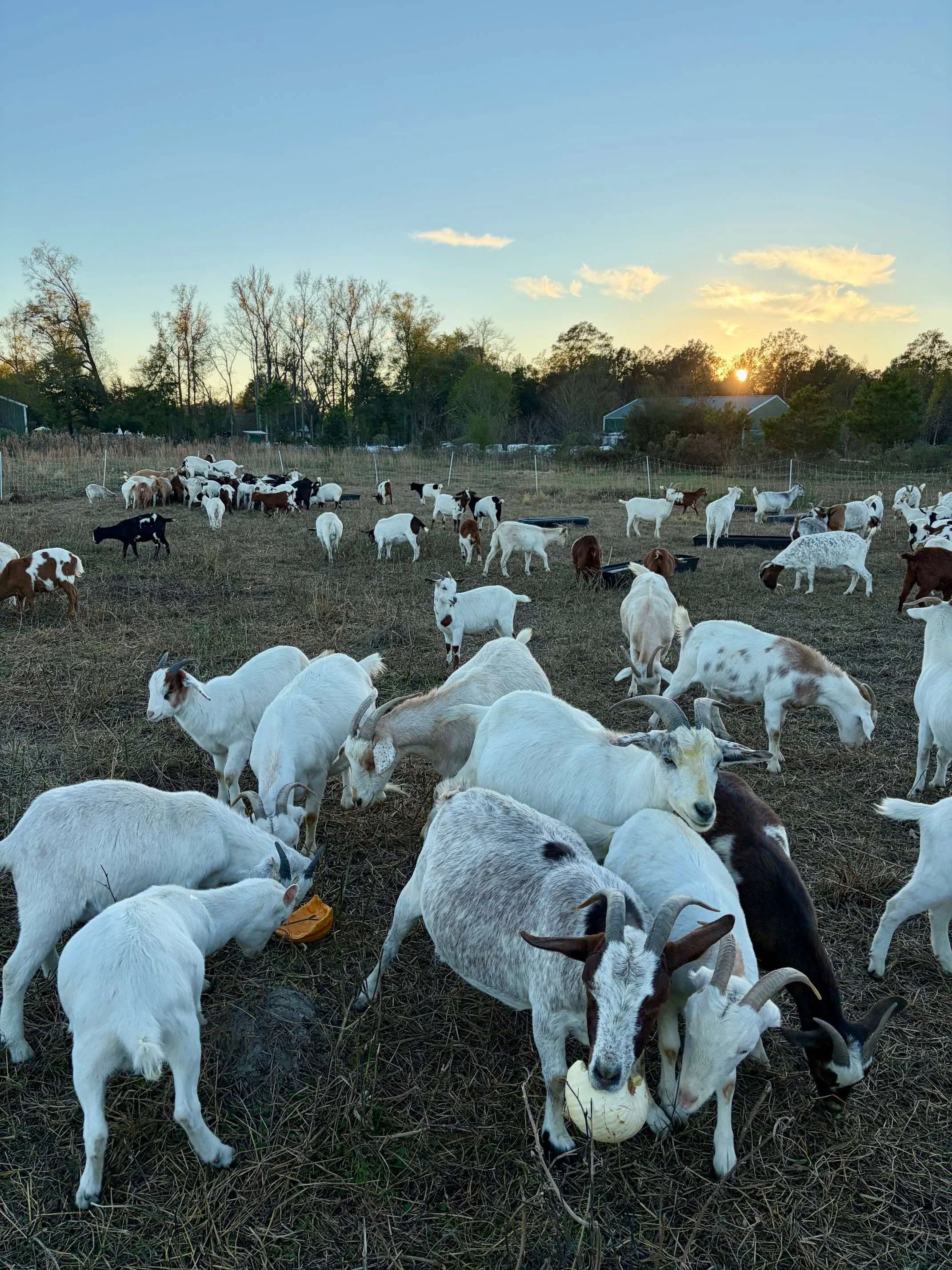
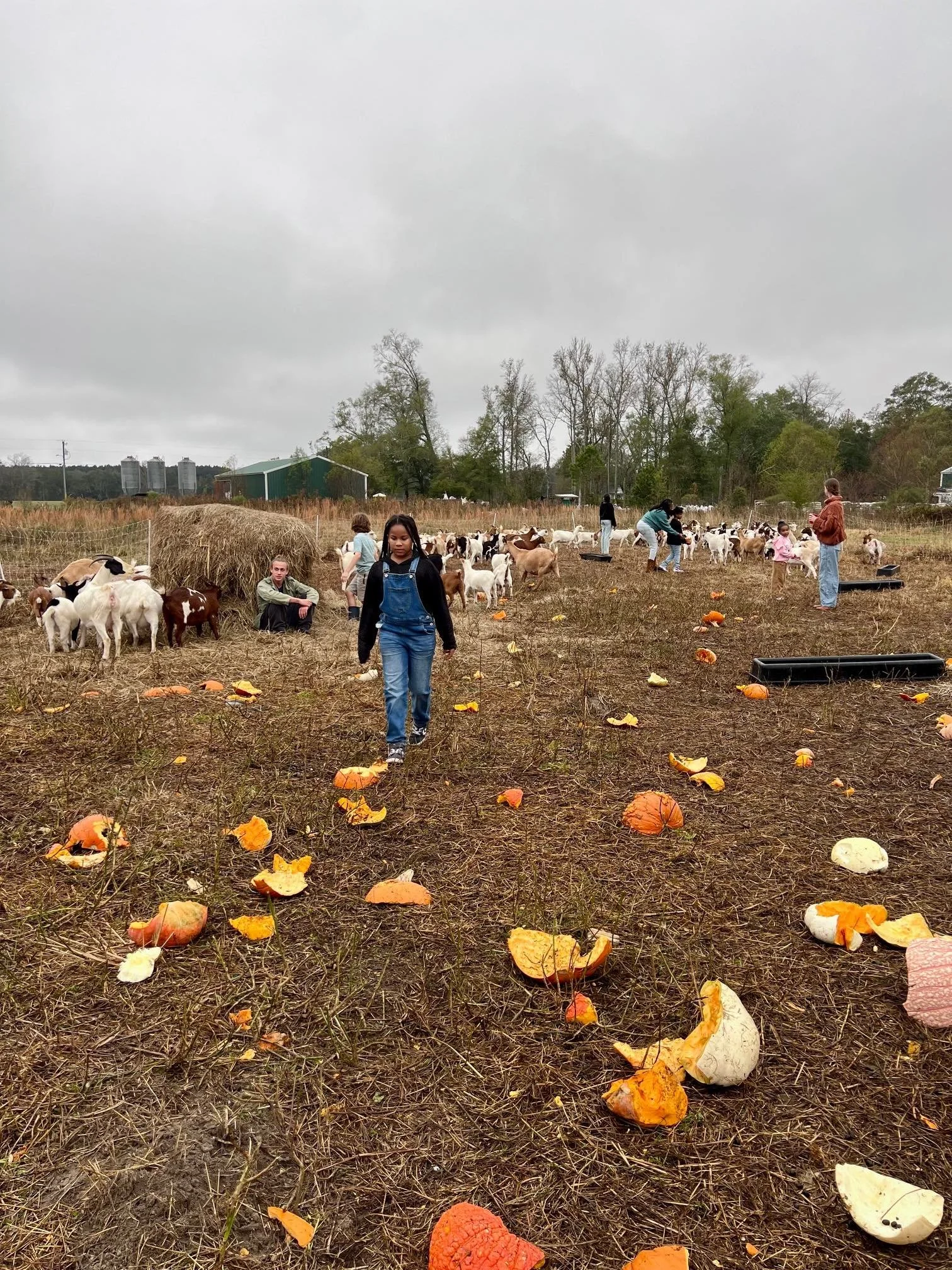

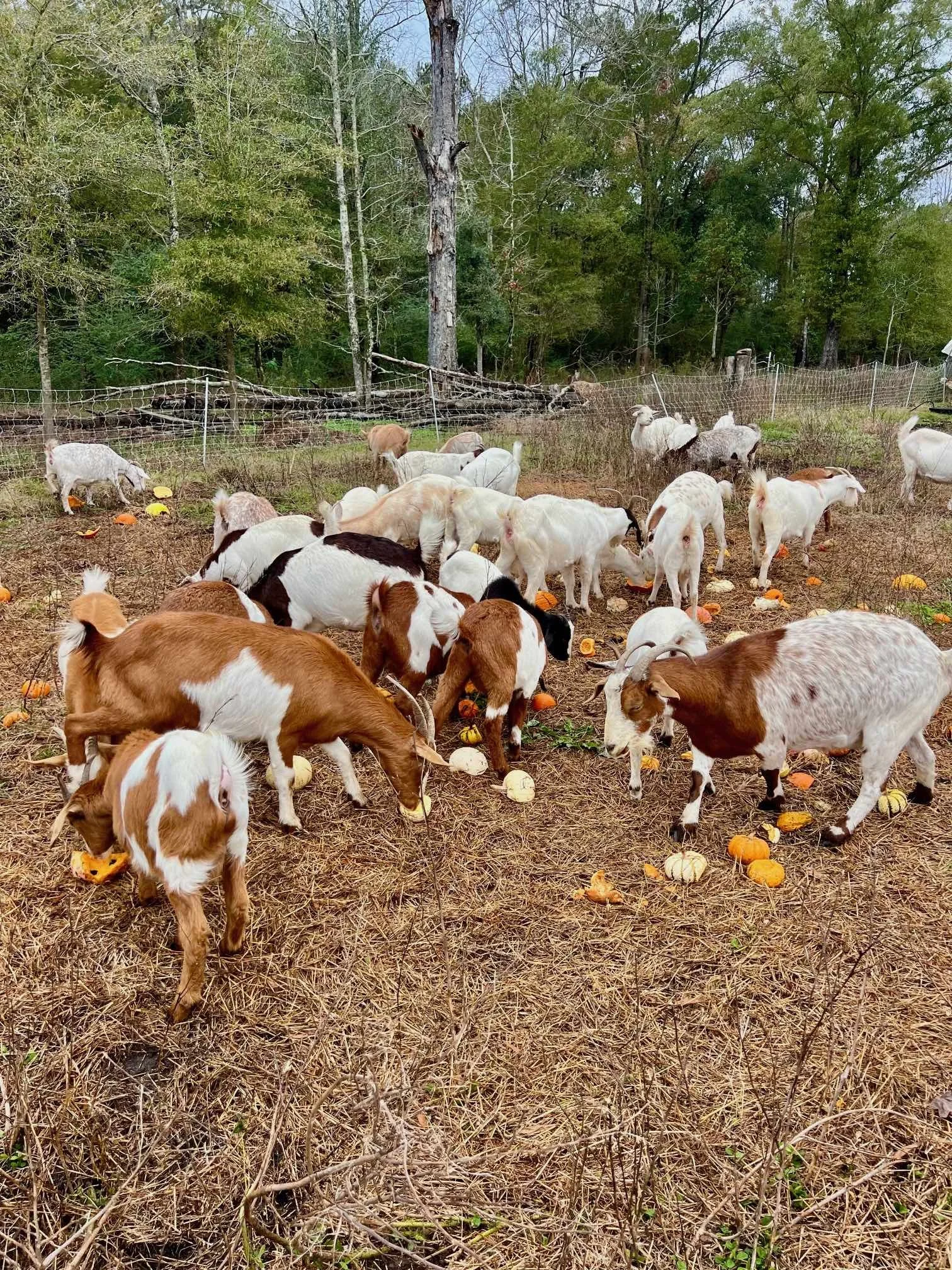
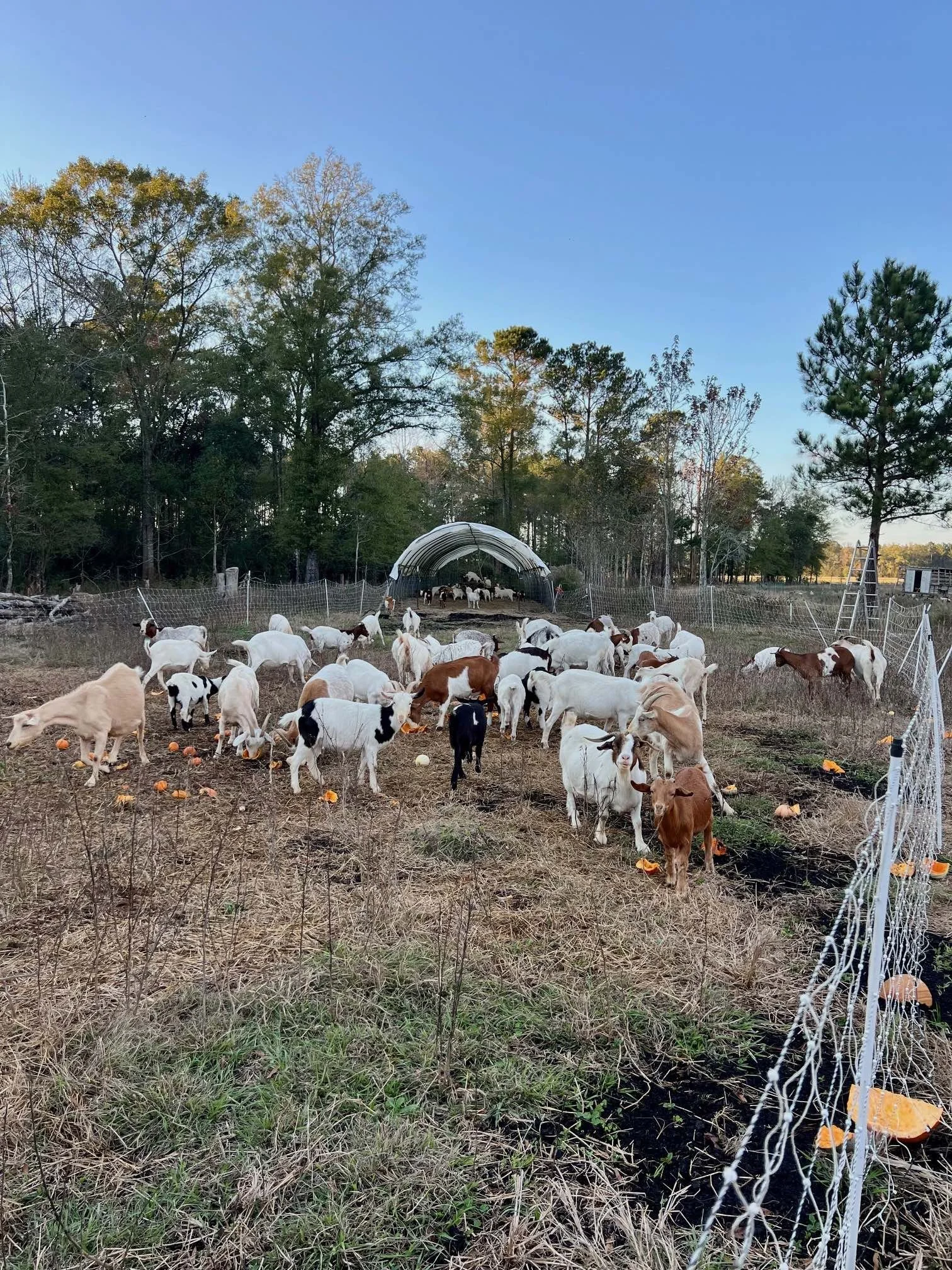
We had friends from Vermont visit briefly after Thanksgiving, so some of these photos of me with the goat herd are thanks to Beth!
The goats are loving pumpkin season, as usual, but hated the rain last week.
We had some other irons in the fire, so we figured if it was just going to be 2.5 inches, they’d be fine in the field they’d been rotating through rather than prioritizing moving them to the hoophouse paddock.
Needless to say they all got quite a shower. The white ones in particular have cleaner coats than they have in a while from getting deluged on!
And now they are back in the hoophouse field, with a few round bales in the hoophouse to start a cozy layer of bedding for the winter.
They aren’t scheduled to start kidding until February, so depending on the weather and the growth of the surrounding fields, we will still likely rotate them to graze nearby before locking them down for kidding in February.
The nice thing is that because we pulled the bucks and limited the kidding window, they will be ready to start rotating as a herd again once the spring forage takes off. The last couple years we had late spring kids and we had to hold back part of the herd at the hoophouse paddock to make sure newborn and young kids didn’t get lost in tall forage in the bigger fields.
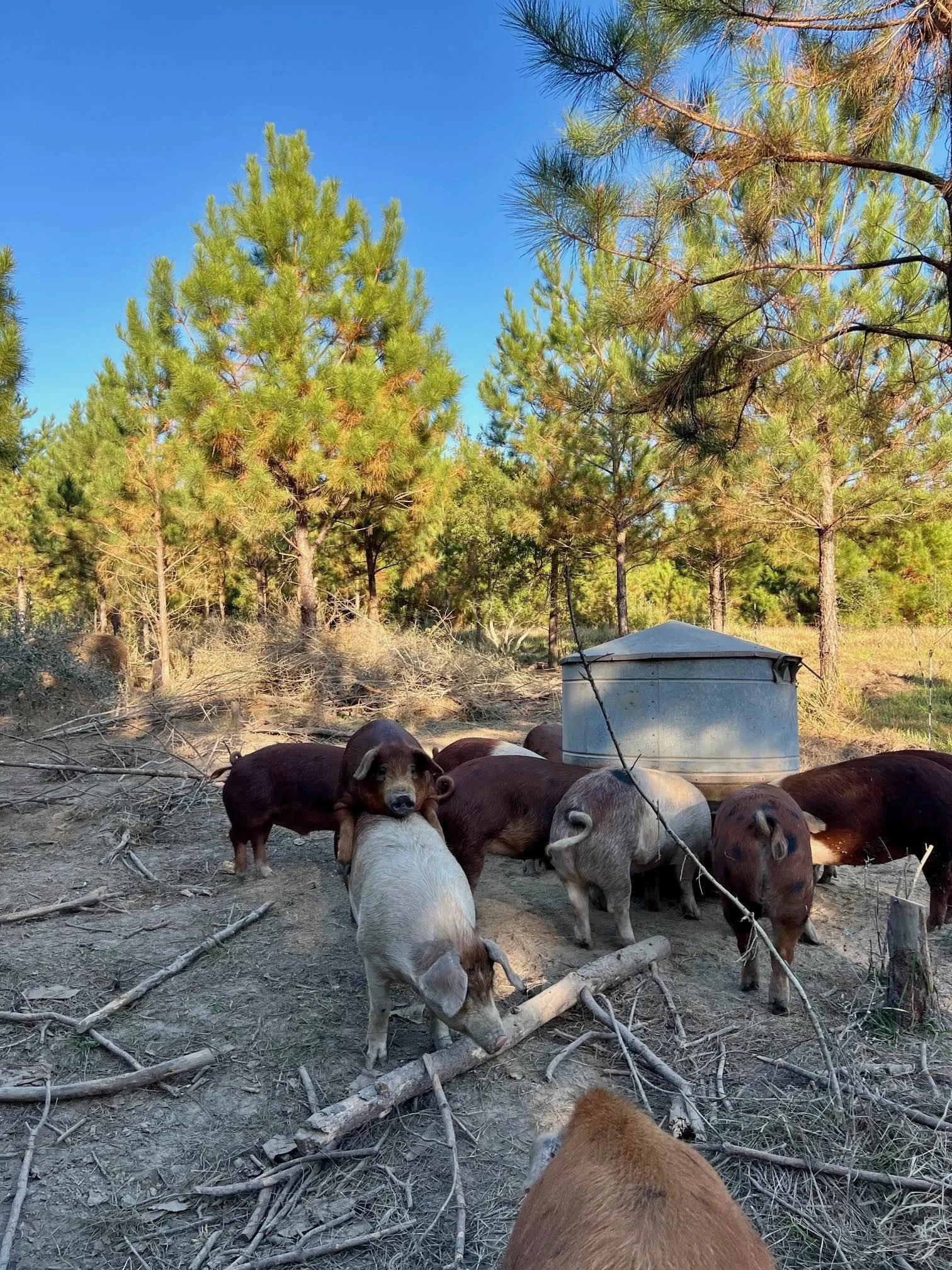

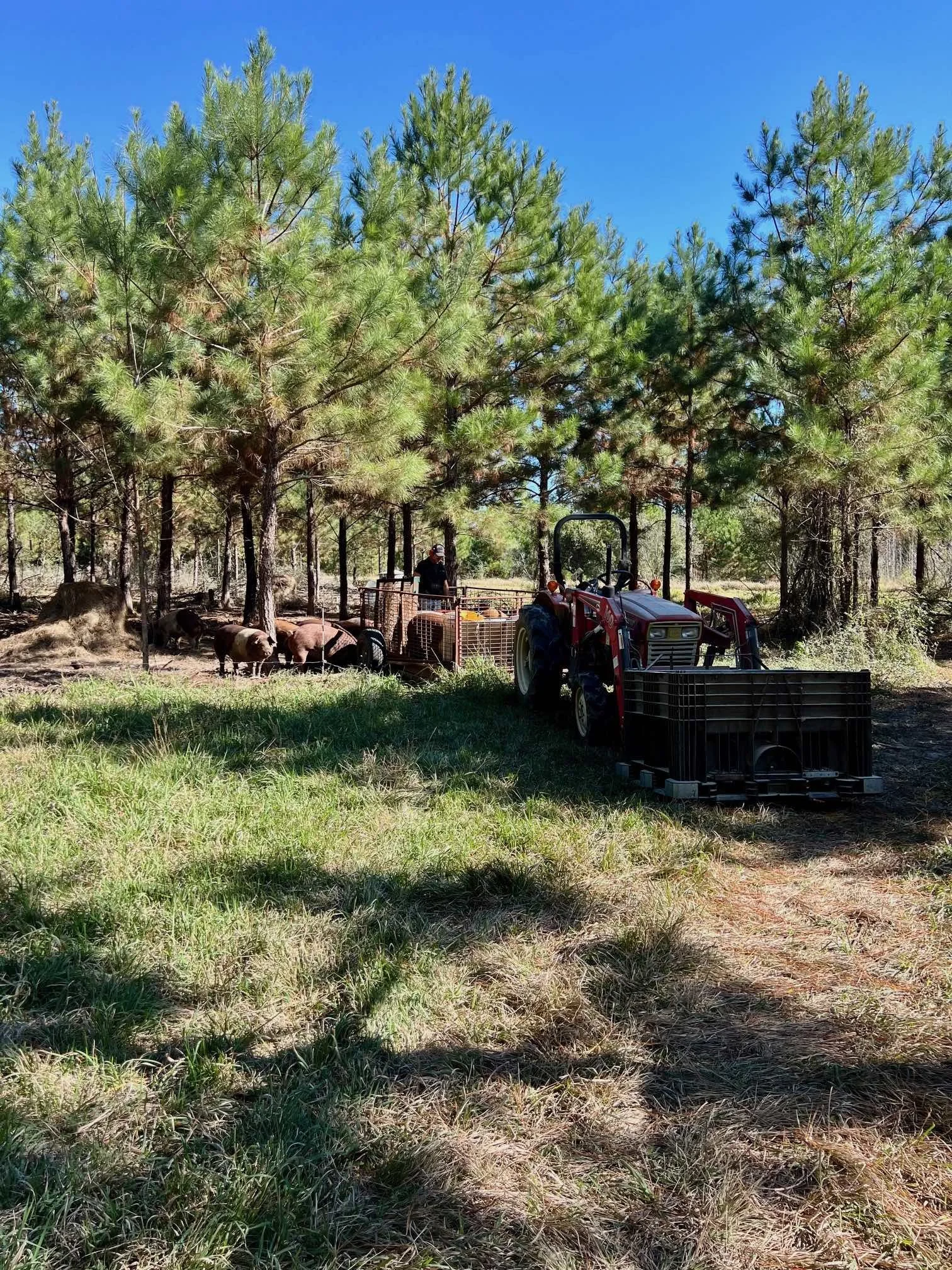
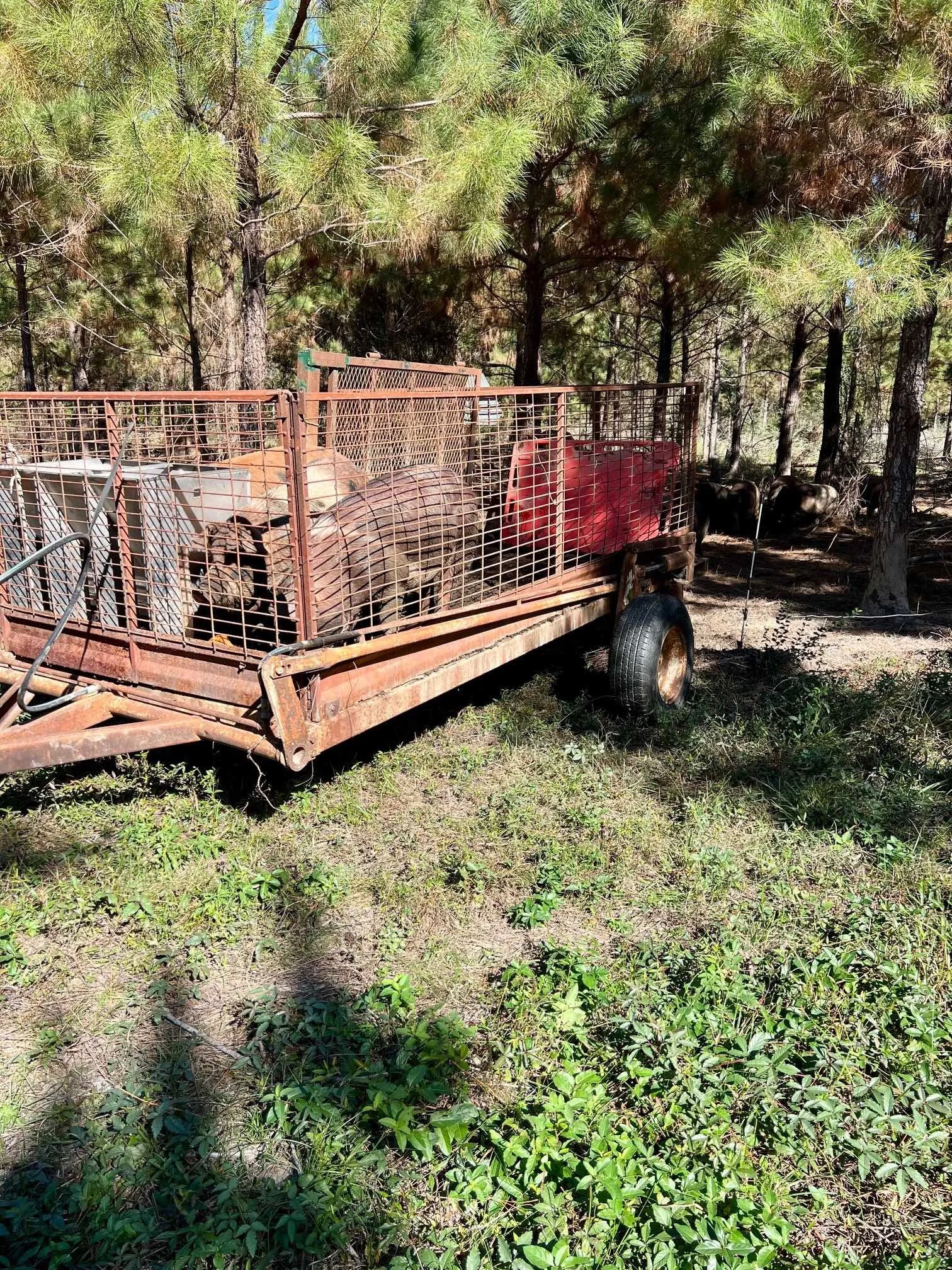
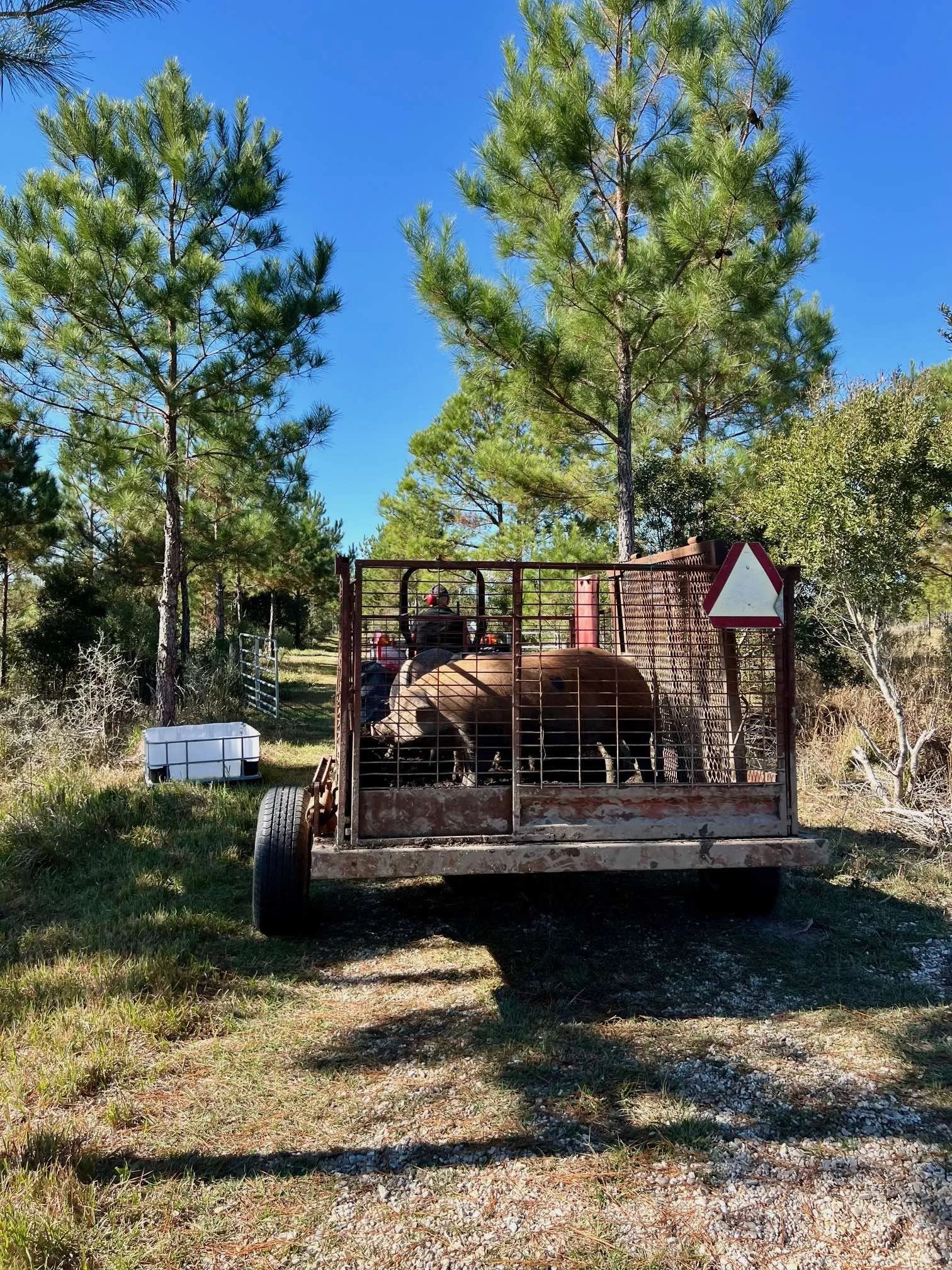
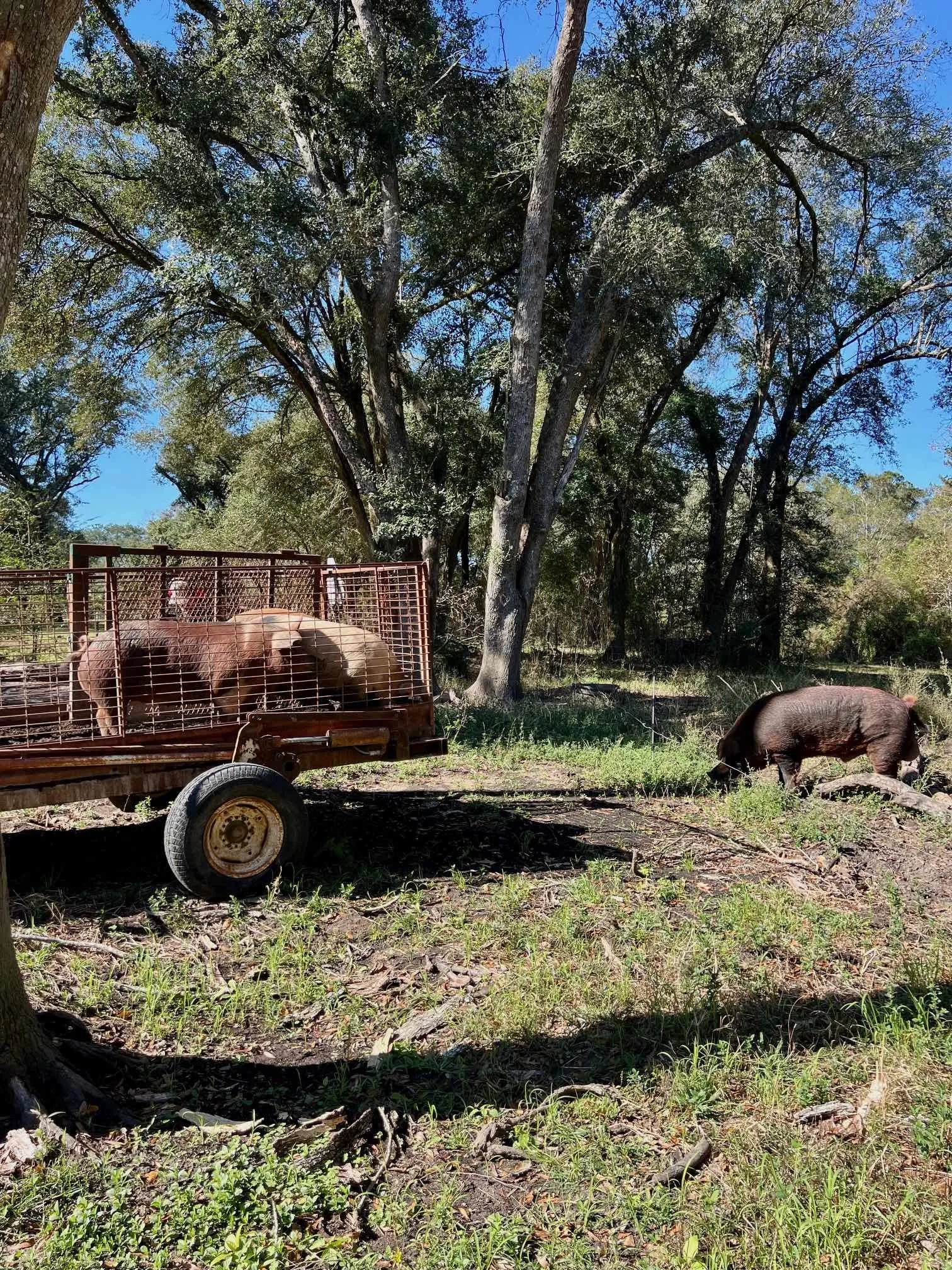
We put good use to our hog trailer recently with some pig moves. Pigs really don’t like to step up, so having a trailer with hydraulics that allow you to lower it flush to the ground makes loading pigs so much easier! Grant took a trip to Illinois a few years ago to buy this used trailer and it has been absolutely worth it.
On Thanksgiving Day, we went and separated three gilts (the term for a female pig before she has her first litter) to bring over to our boar. He met them at the fence literally frothing at the mouth with excitement.
None of the three were in heat when we brought them over, so they were confused and annoyed by him and kept running away!
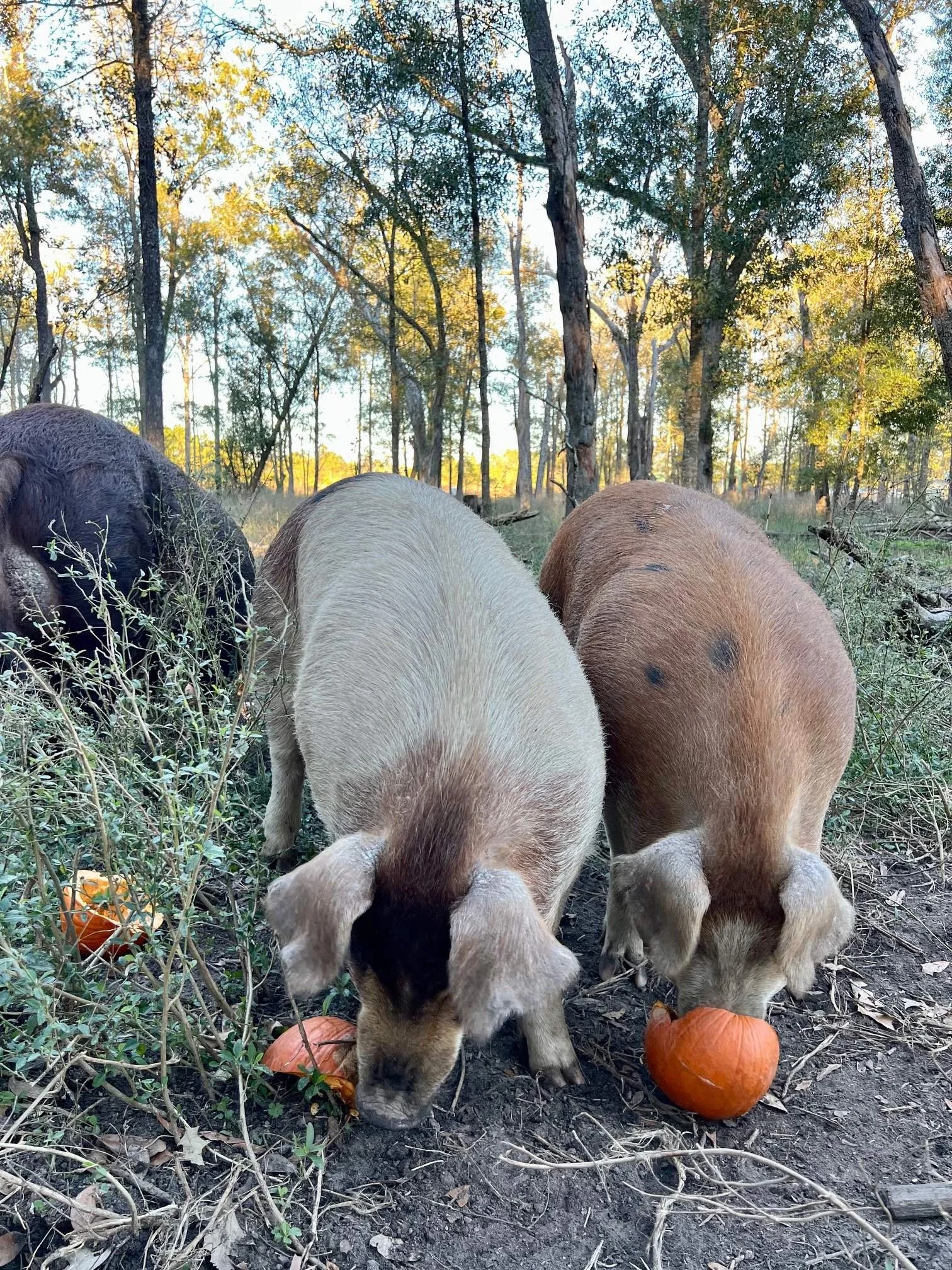
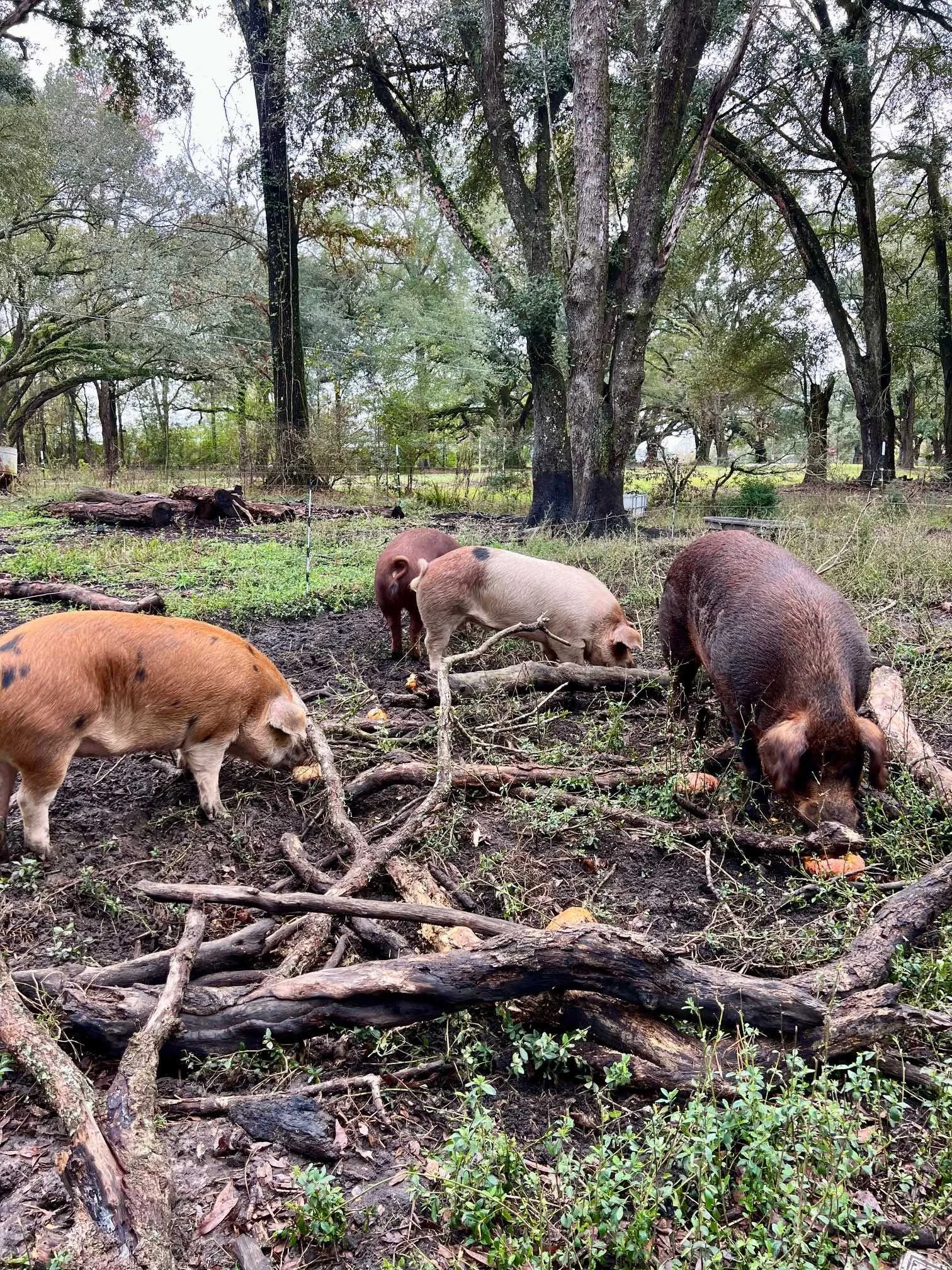
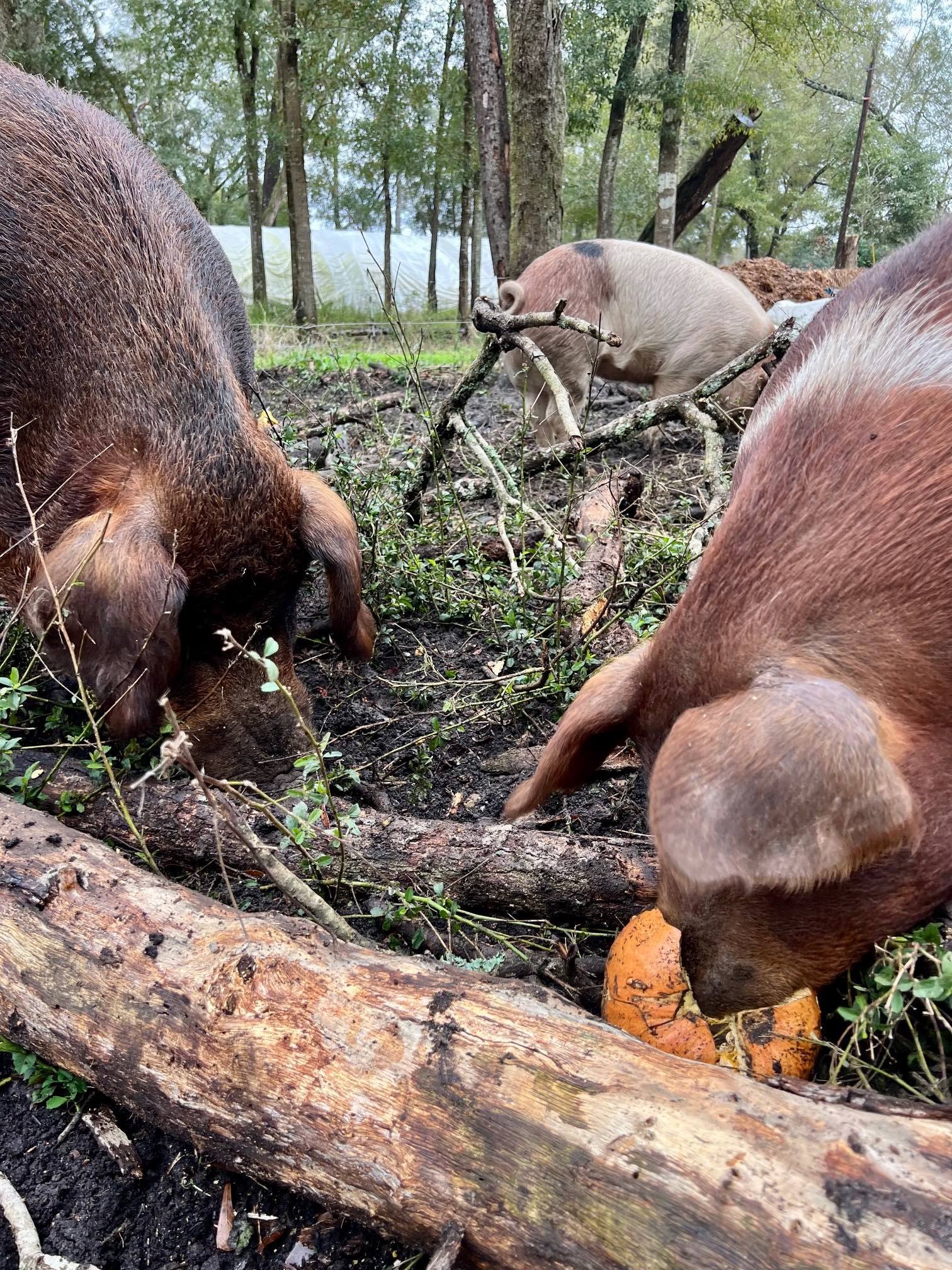
But in the two weeks since, they’ve all calmed down and gelled into a nice little breeding group.
I’ve almost never been able to catch mounting behavior with this boar with previous groups of sows, so we’ll plan to have piglets as early as the March 20th, but likely it will be after that! Pig gestation is about 115 days, but first time moms are also more likely to go past that to day 118 or 119 even.
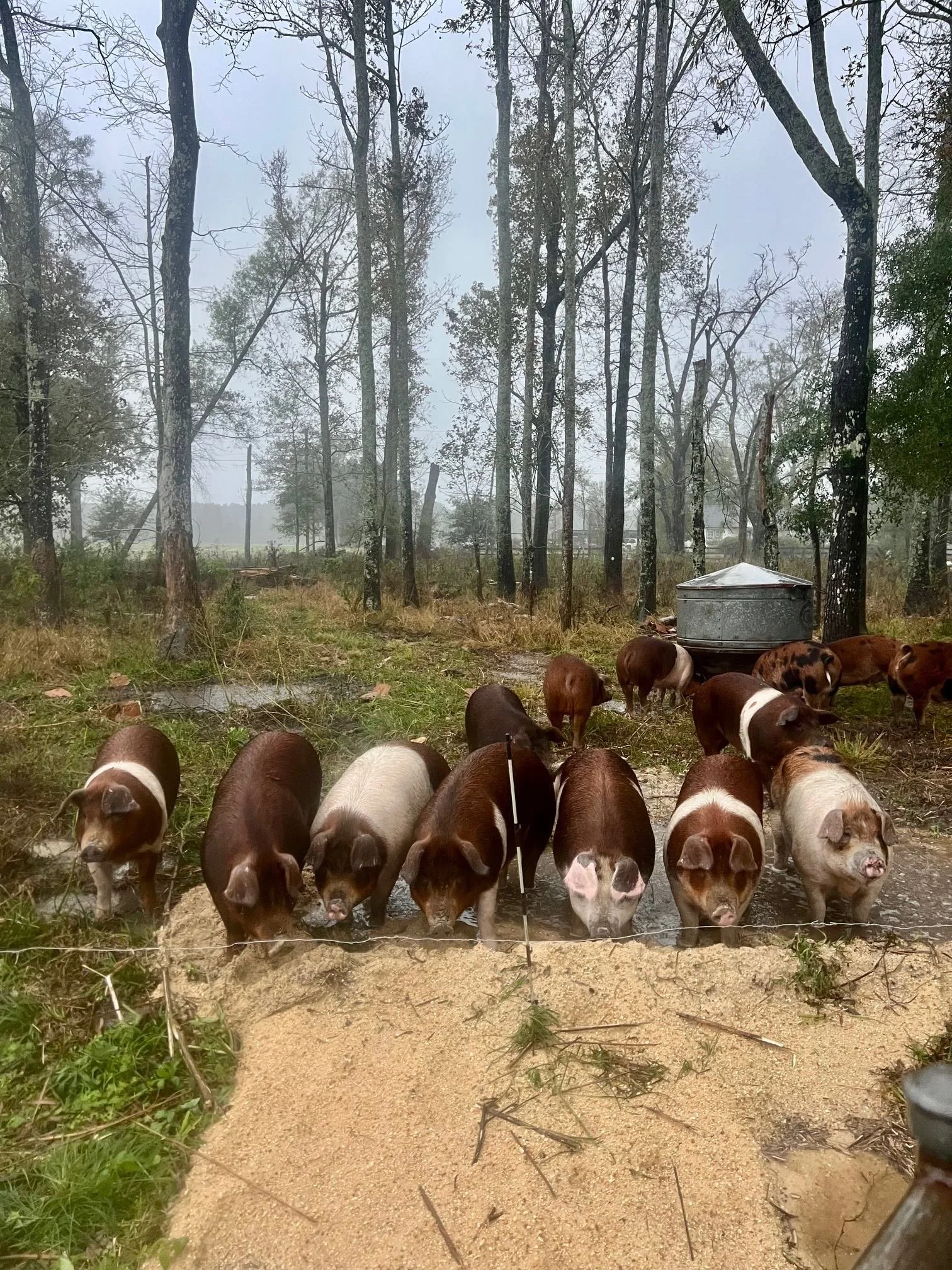
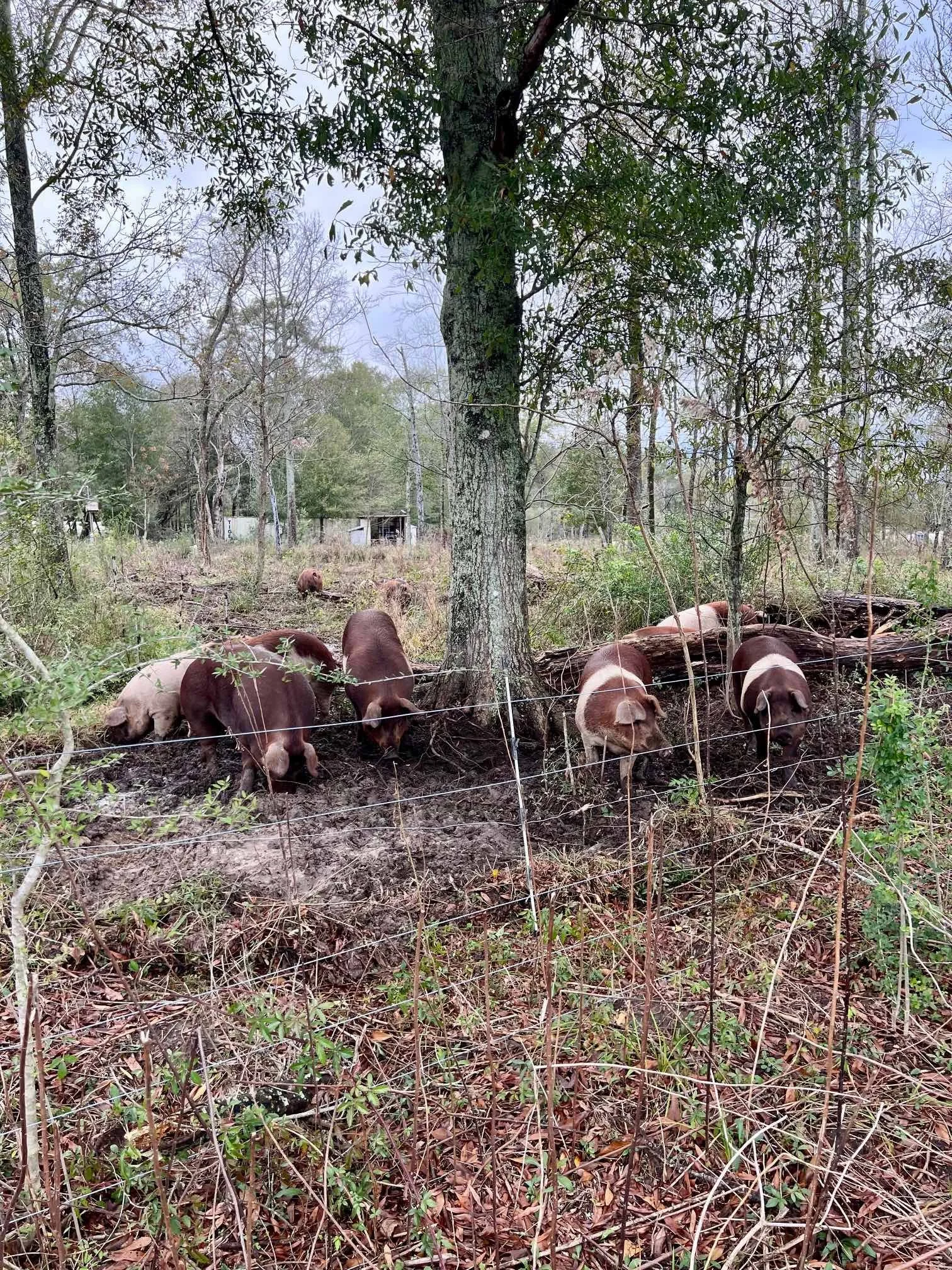
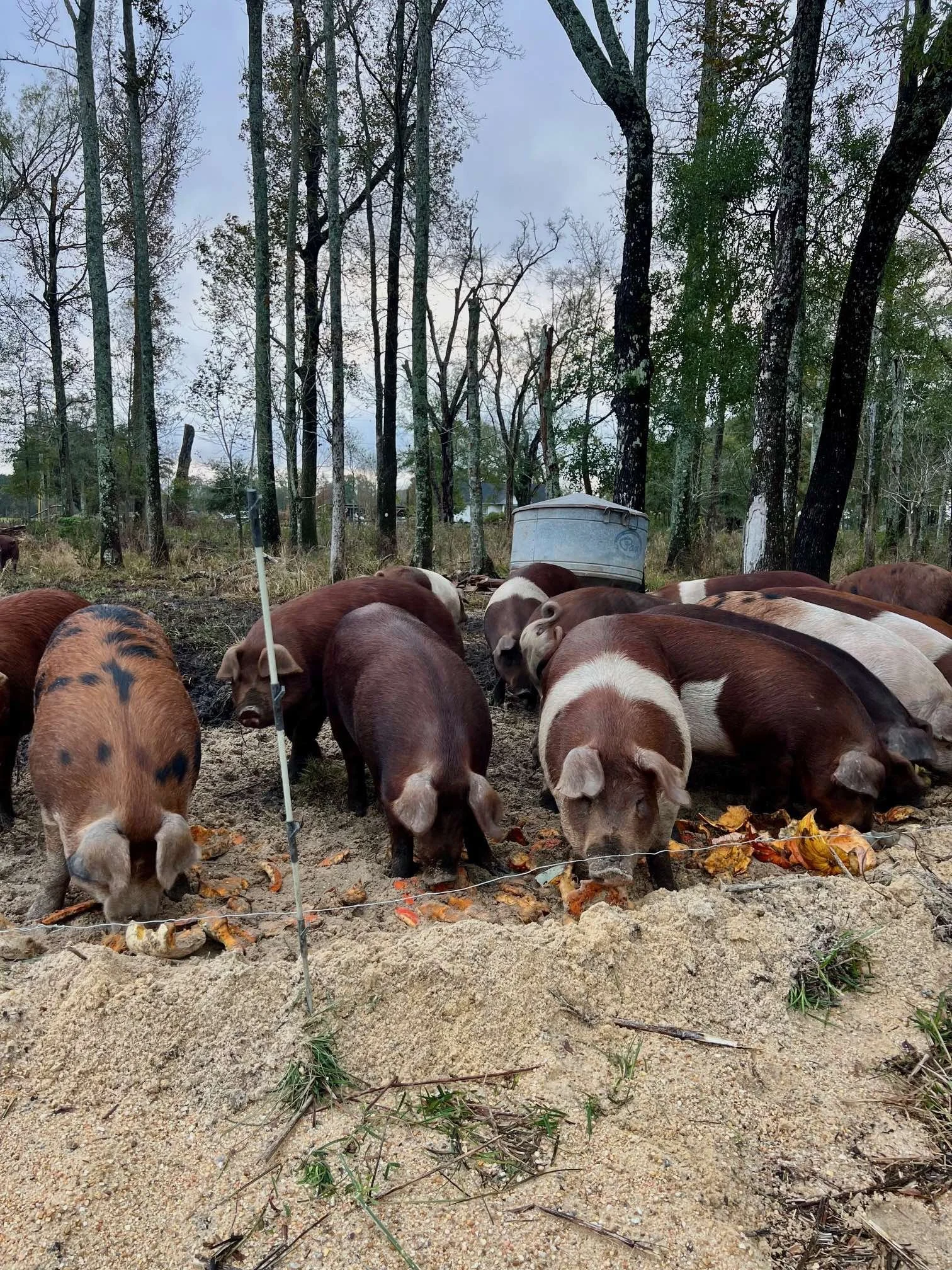
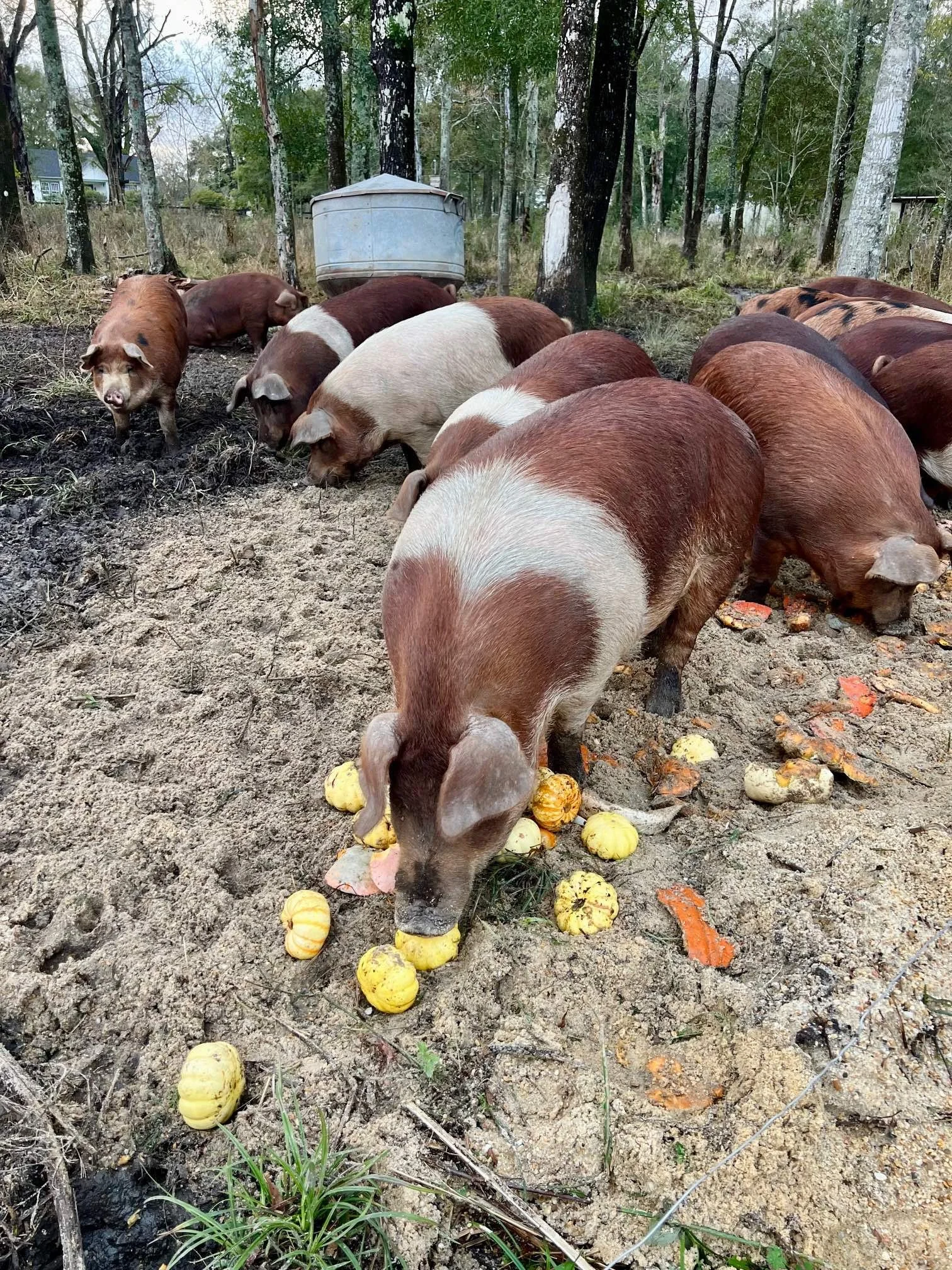
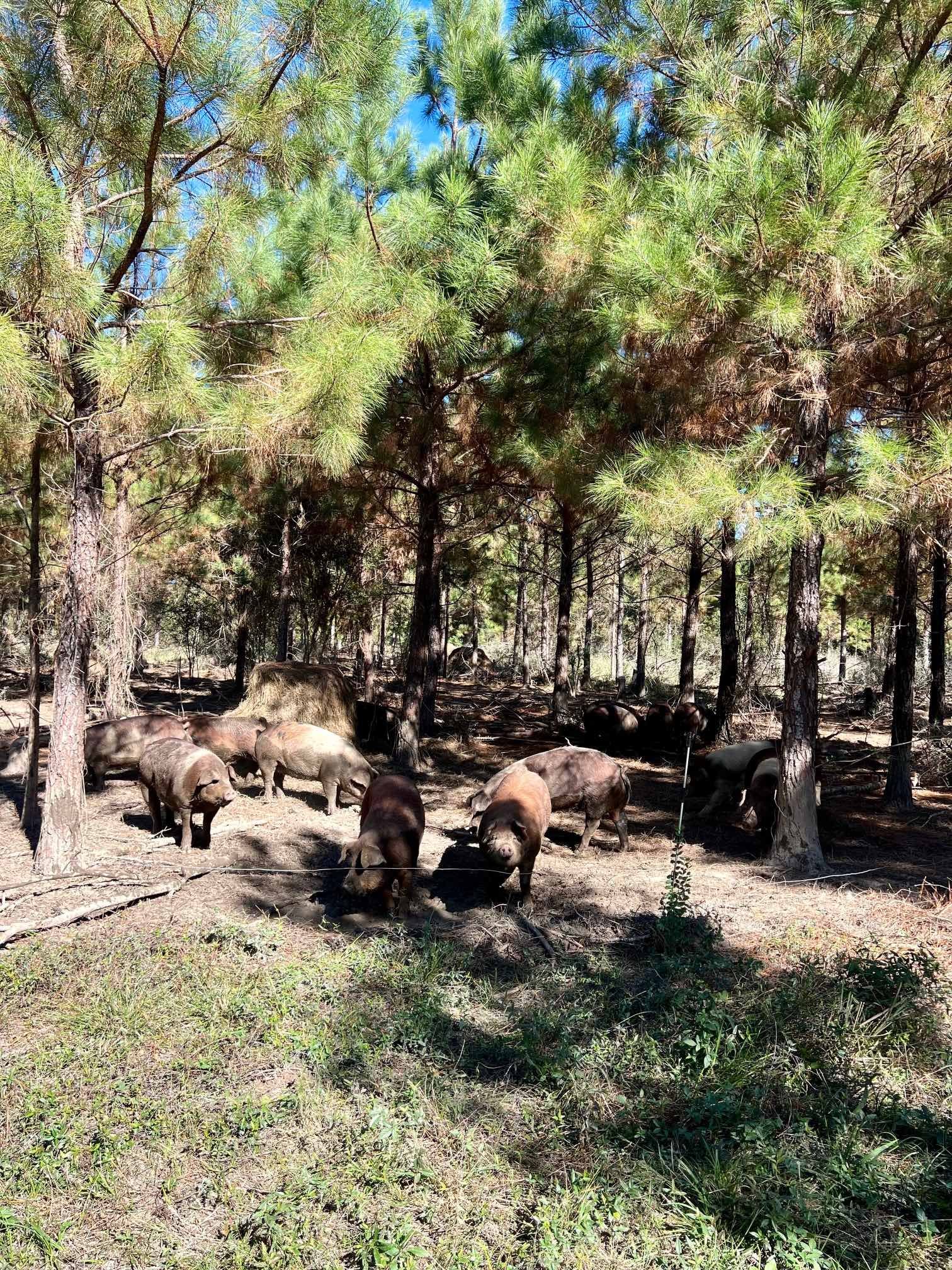
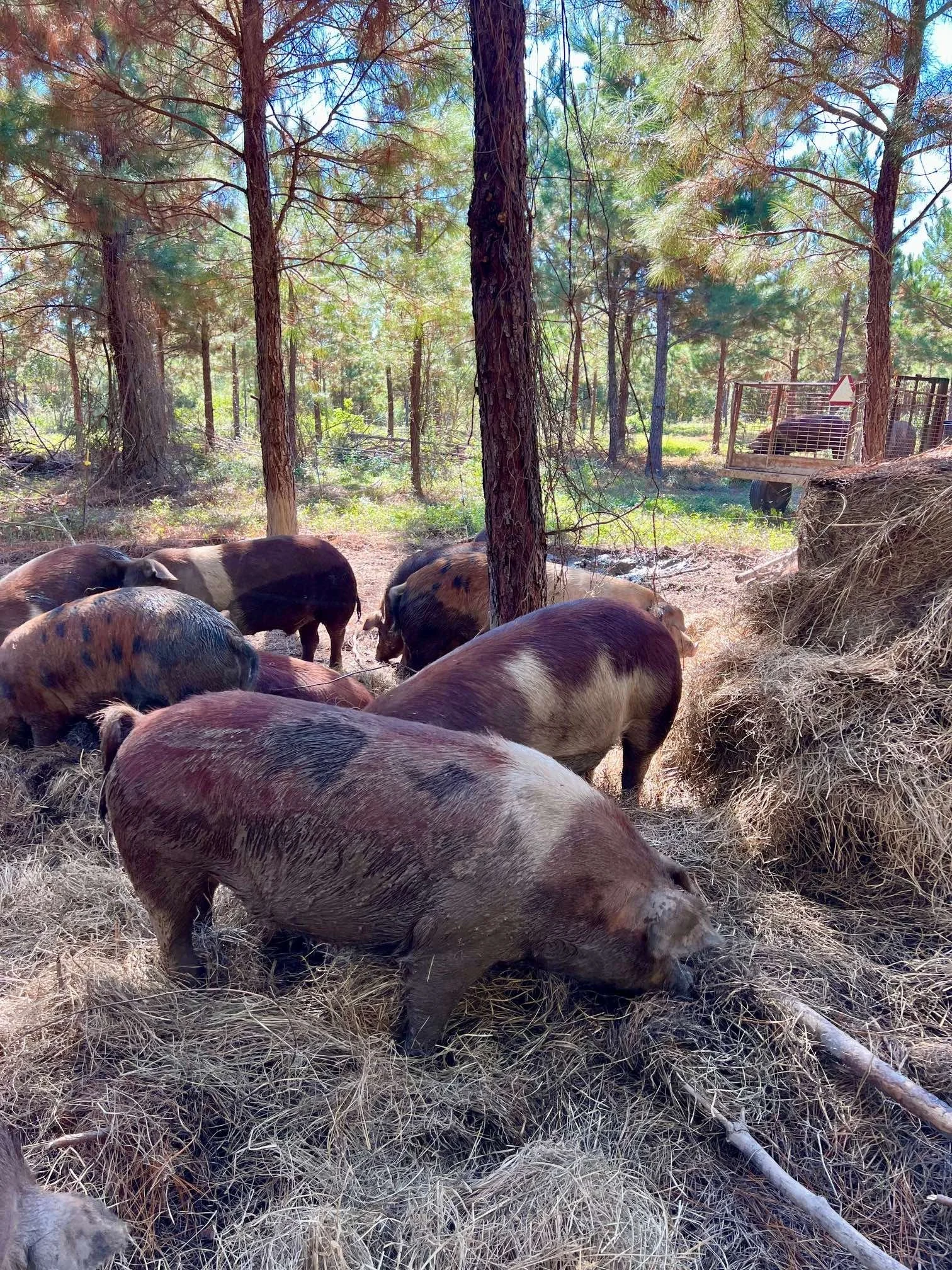
Then the next week, we moved the remaining feeder pig group out of the section they’ve been rotating through for the past several weeks up to the front of the farm by the barns and the soil mixing area.
It makes for easy access to fill their feeder and toss them lots of pumpkins and it’s nice for me personally to see them every day versus on dedicated walks deeper into the property!
After the first three gilts have been with the boar for five weeks or so, we will add three more gilts (in order to stagger when the litters are born for use of the three farrowing stalls).
And the rest of the pigs in this group are destined for harvest in January and February. We initially had a butcher date this week, but with our additional freezer space closing for holiday break for a week and a half and also bringing in beef and goats to harvest, it was going to be too much transport and freezer logistics to manage and we punted.
We have plenty of pork in stock in the meantime, just may run out of certain sausages until we get those back in early February.
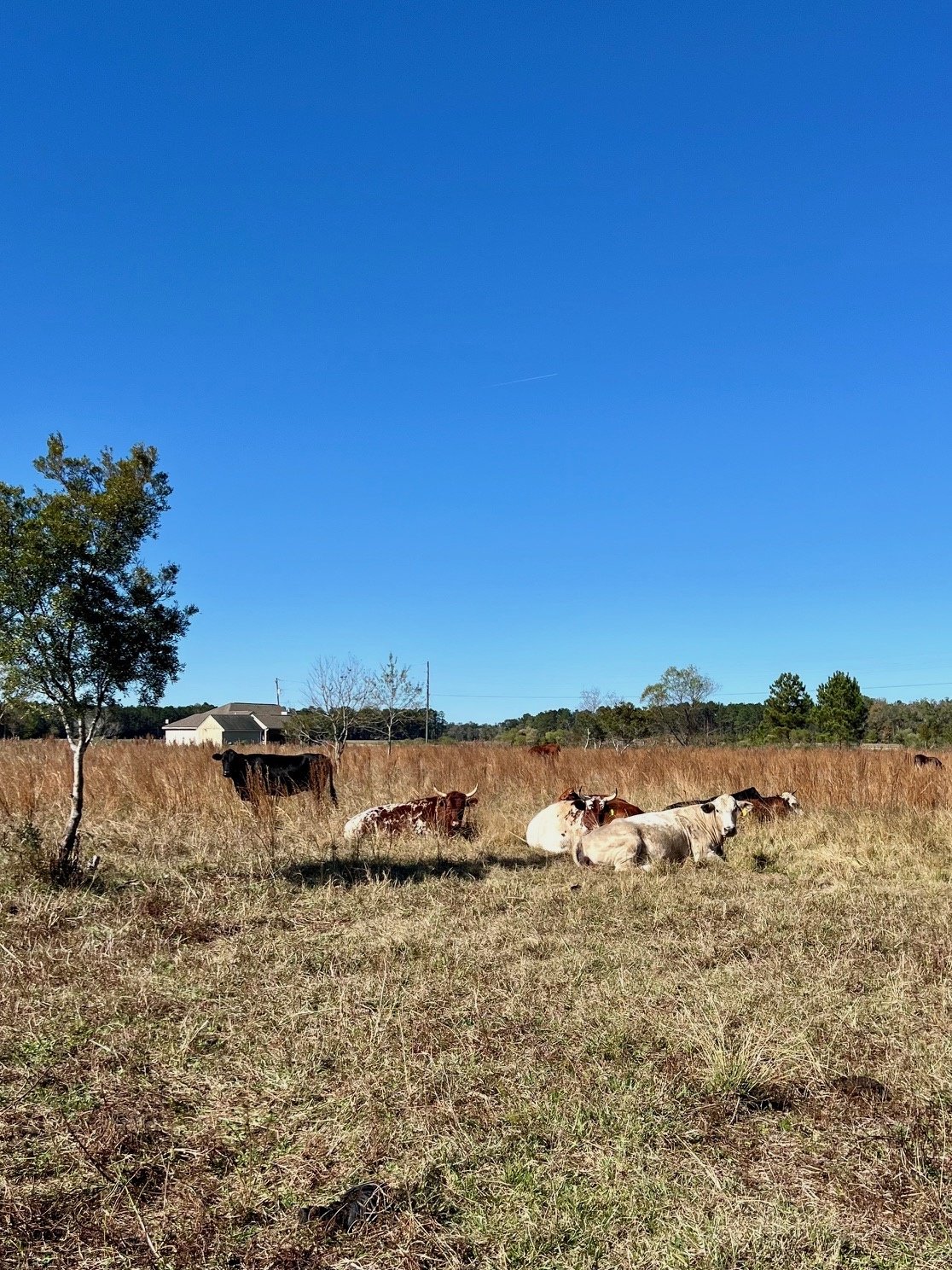
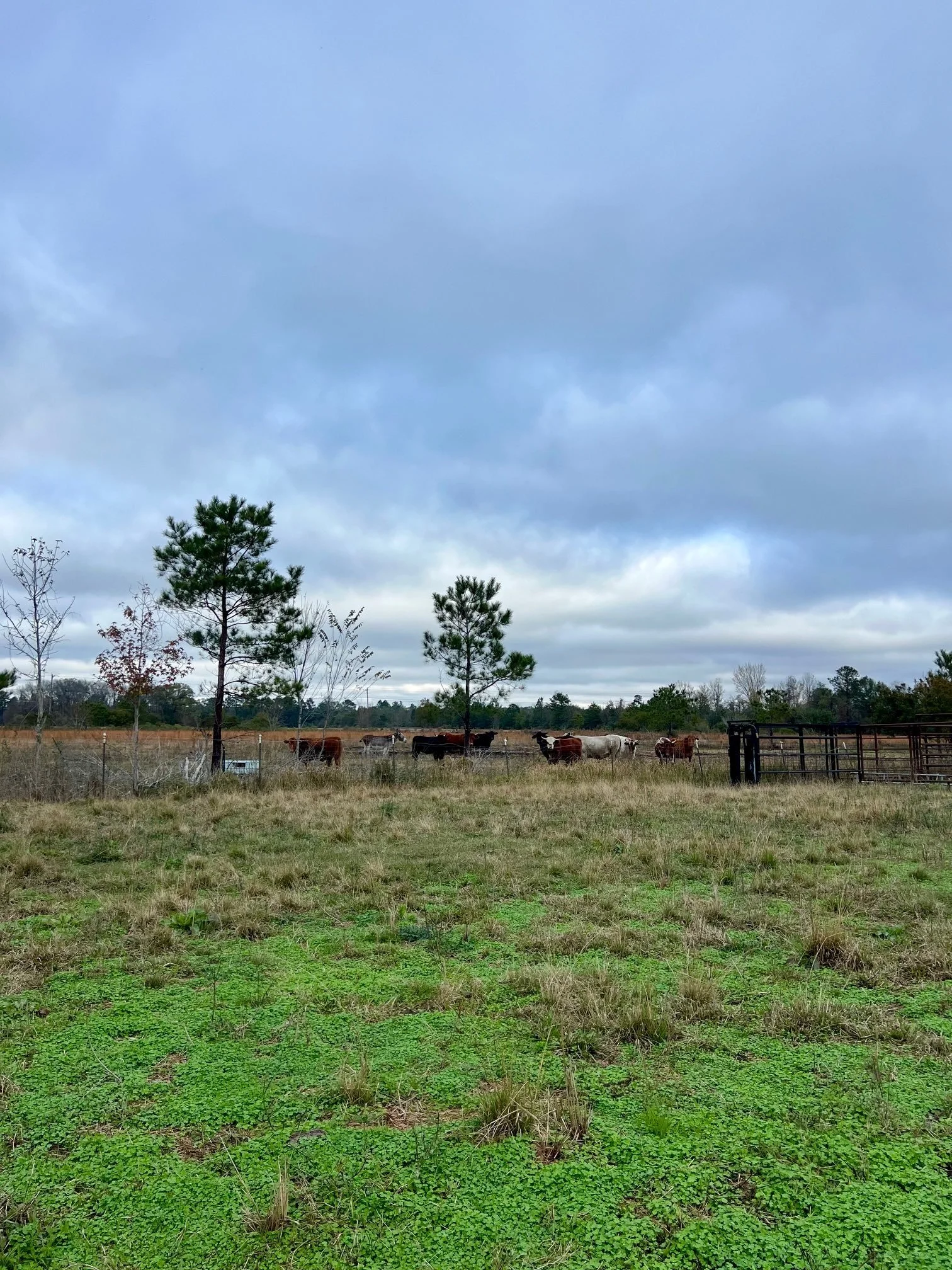
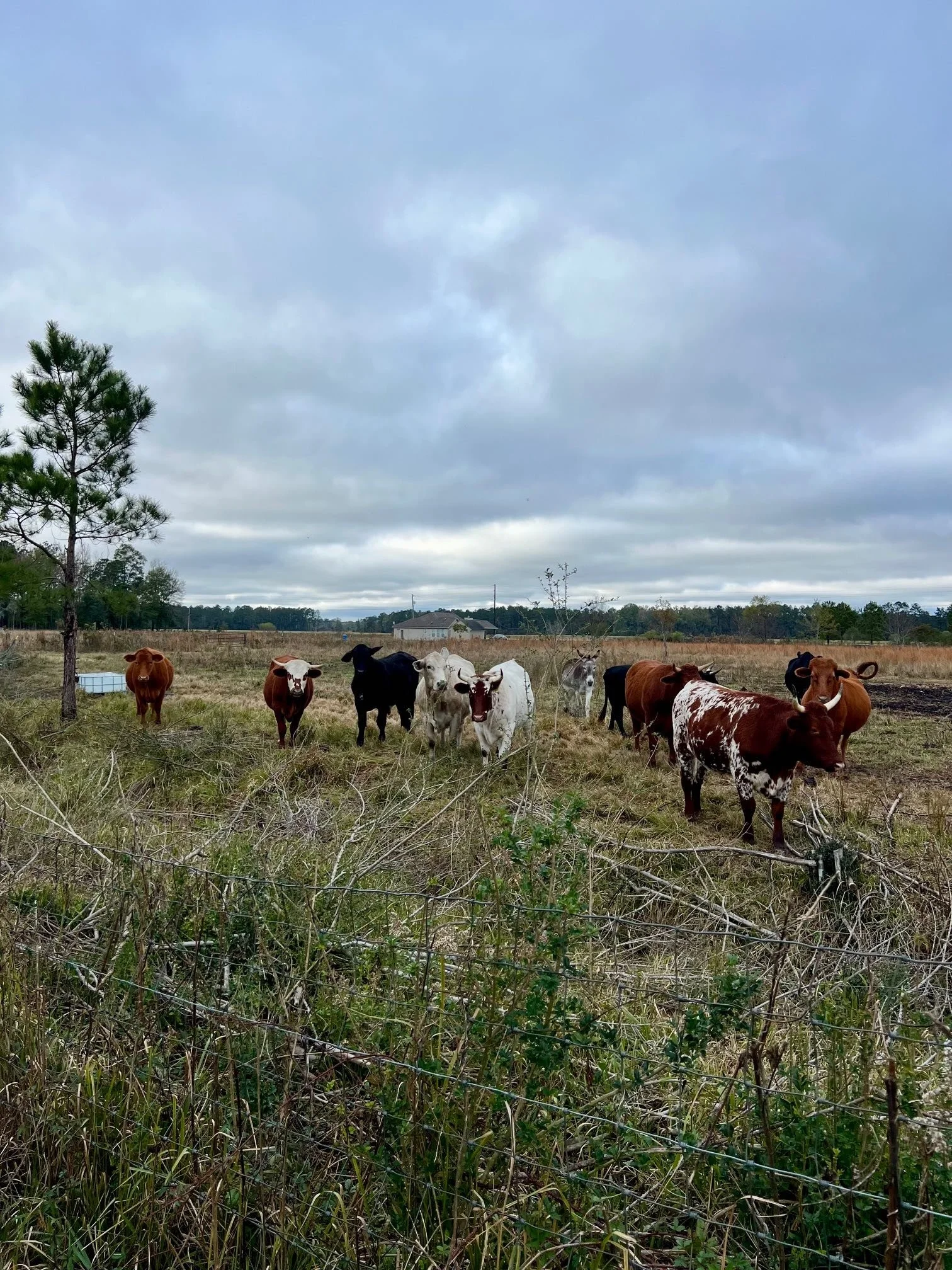
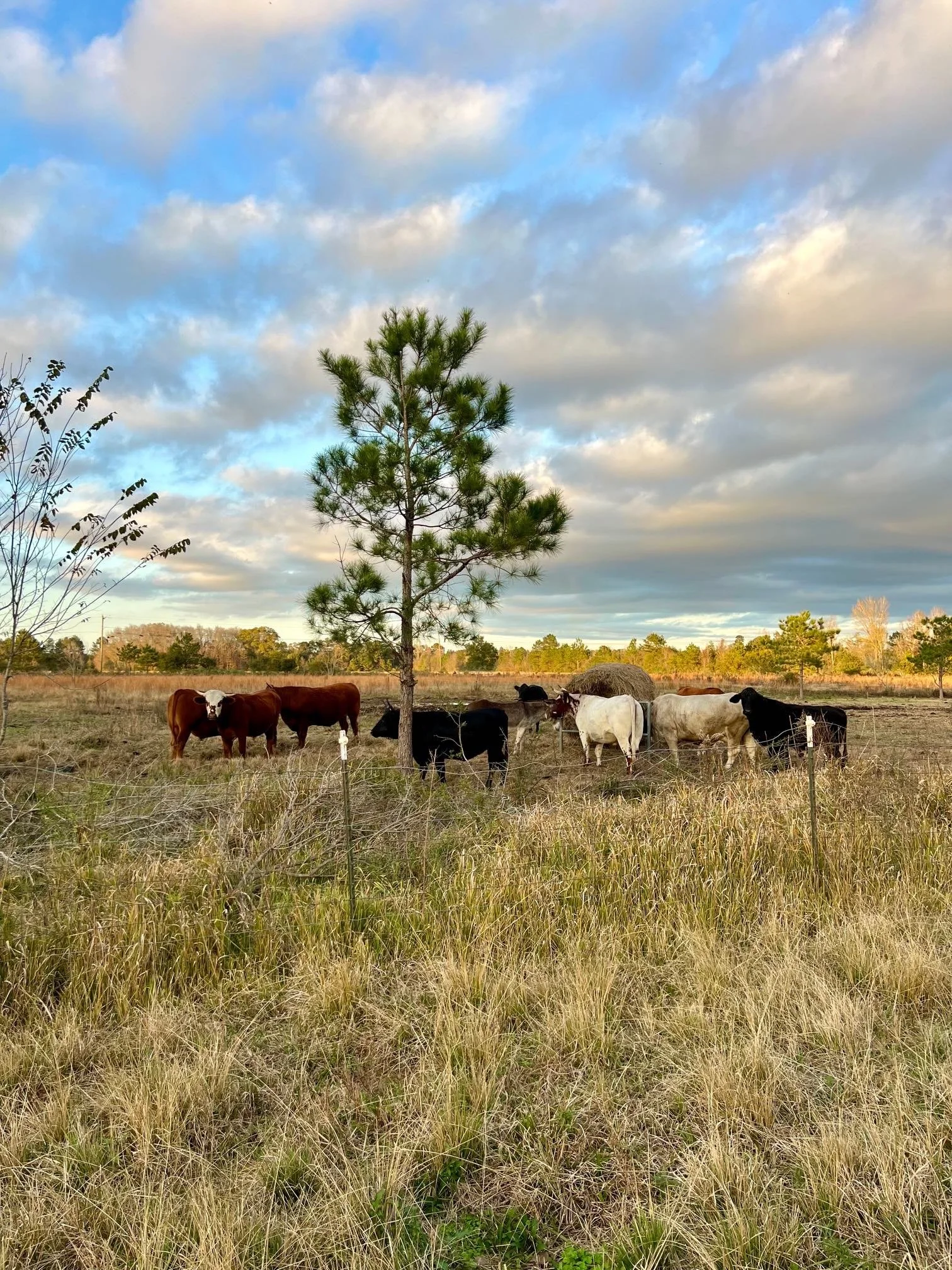
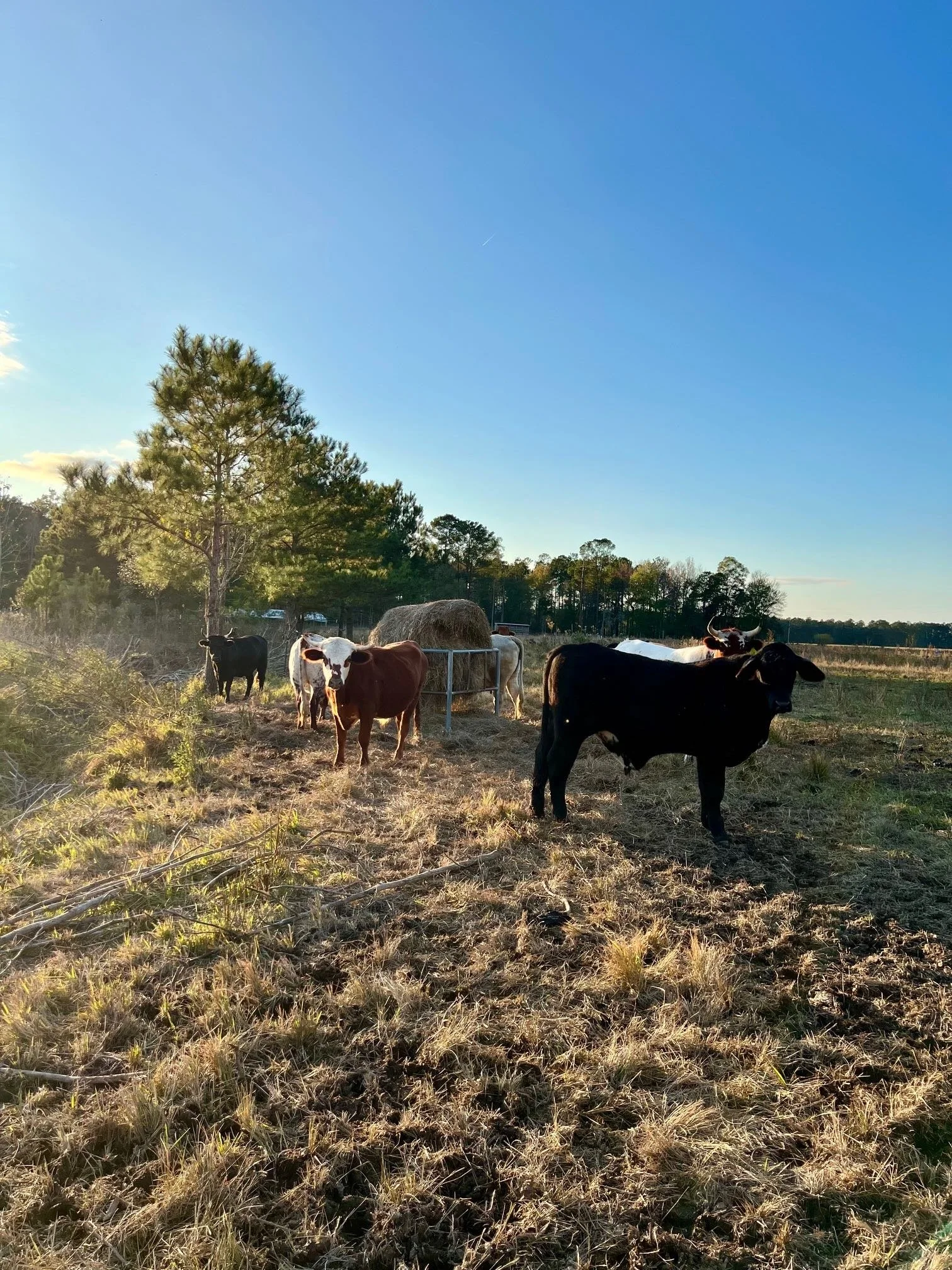
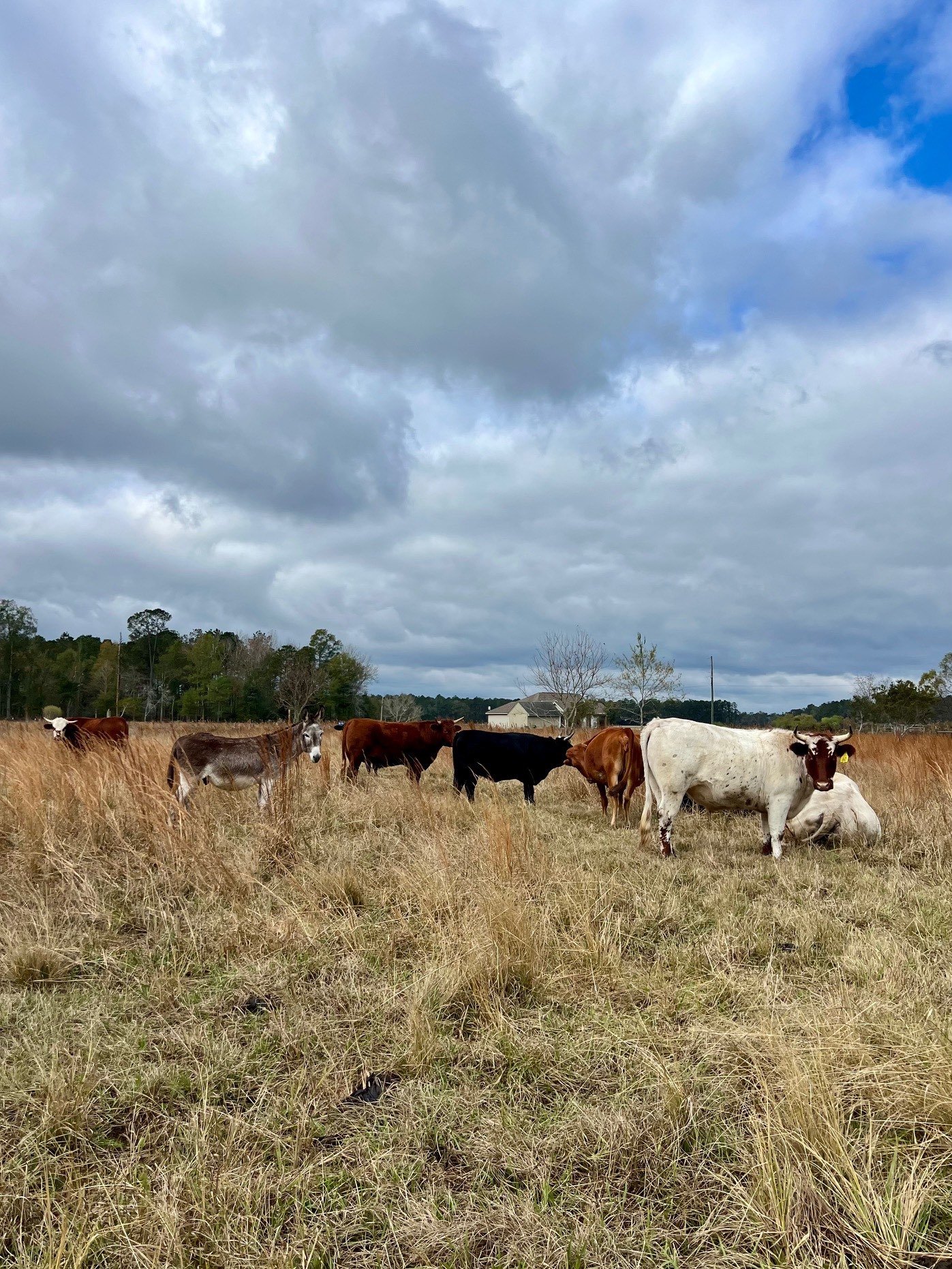
The majority of the cattle are on their final rotation before harvest now. We finally booked the beef harvest for Monday. They’ll dry age for two weeks and we’ll pick up the beef at the beginning of January. We are using our pork butcher this time, so the label will be different and we may not be able to do primal or patties, but we’ll have lots of ground beef, steaks, roasts, organs, bones and more at long last!
We’ll be keeping our big white cow who should be bred for a March calf, plus two steers born in 2024 that will take until 2026 to finish growing.
And hopefully we’ll be able to buy more steers and cows in the spring for spring and summer grazing, but the beef market is still unpredictable and prices are high, so we will see. We certainly have plenty of lawn mowers in the goat herd in the meantime!
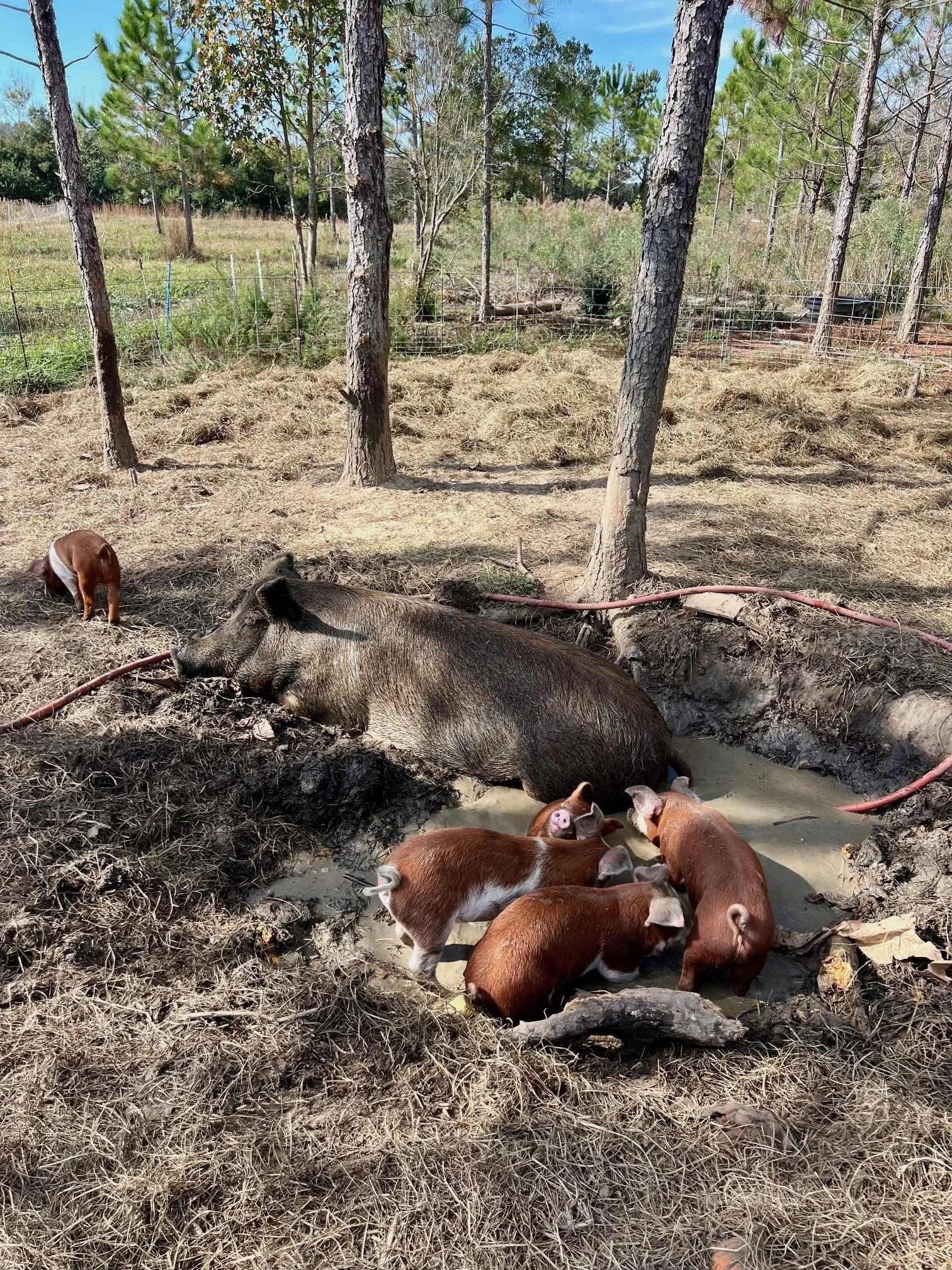
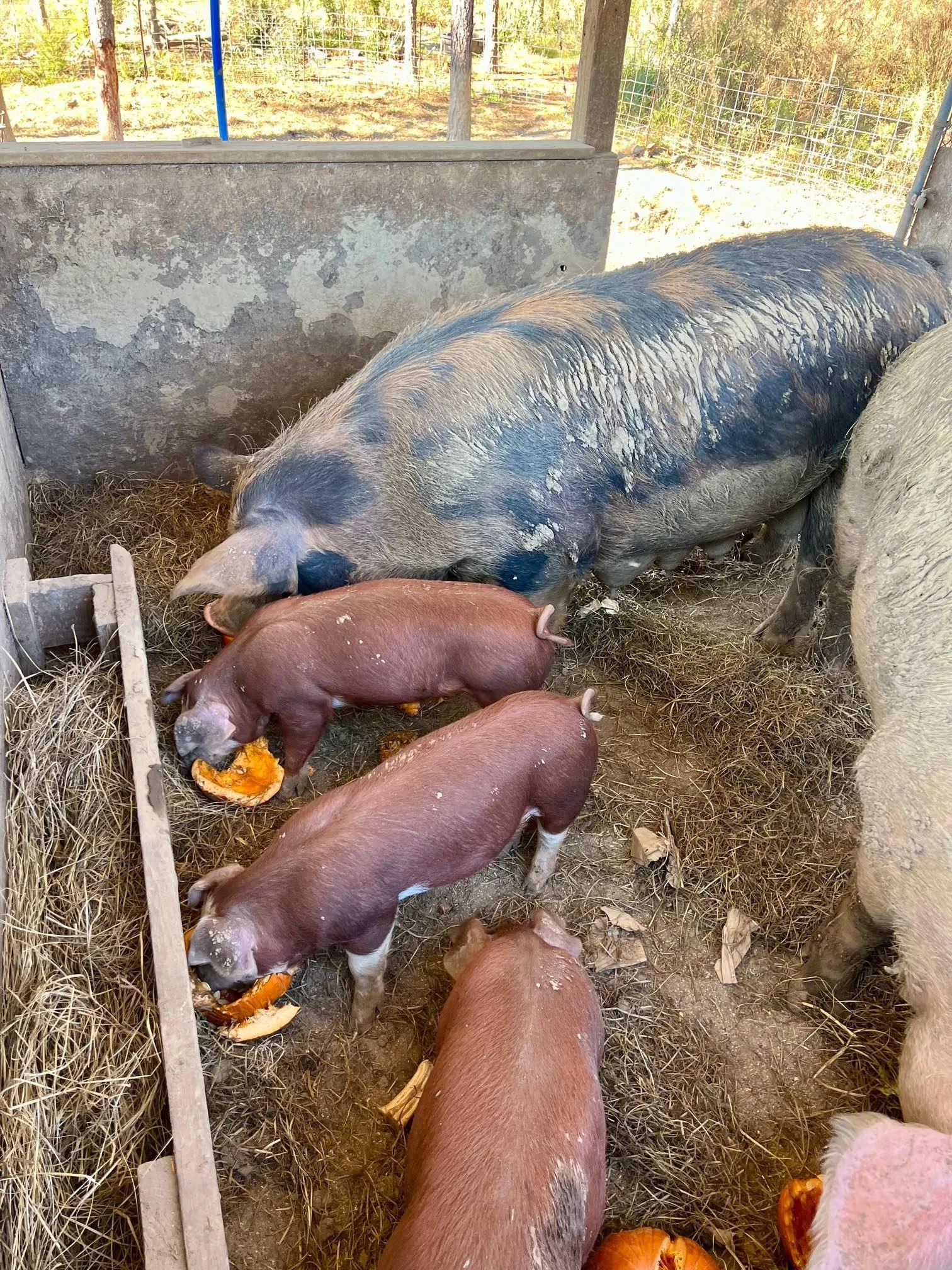
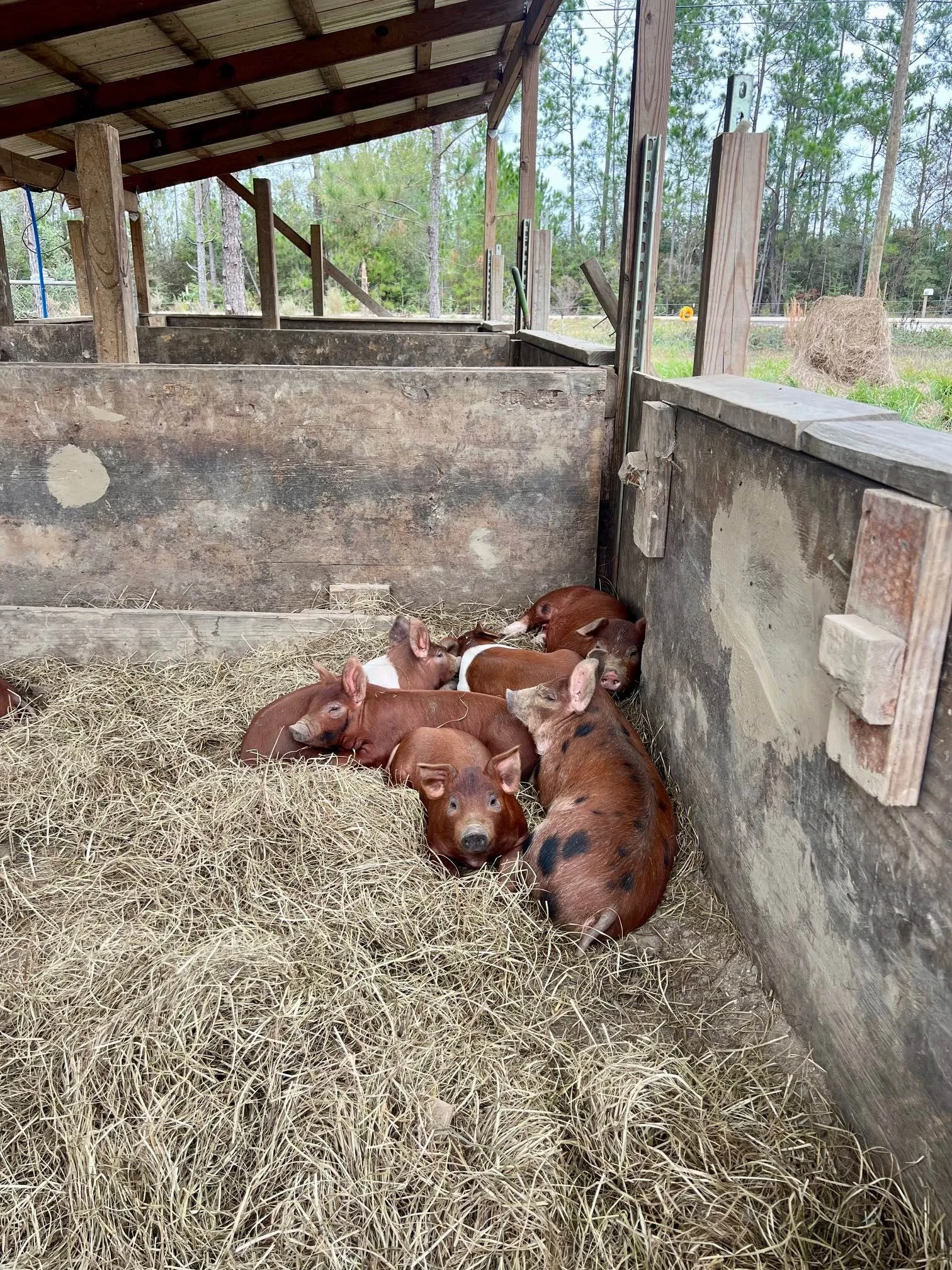
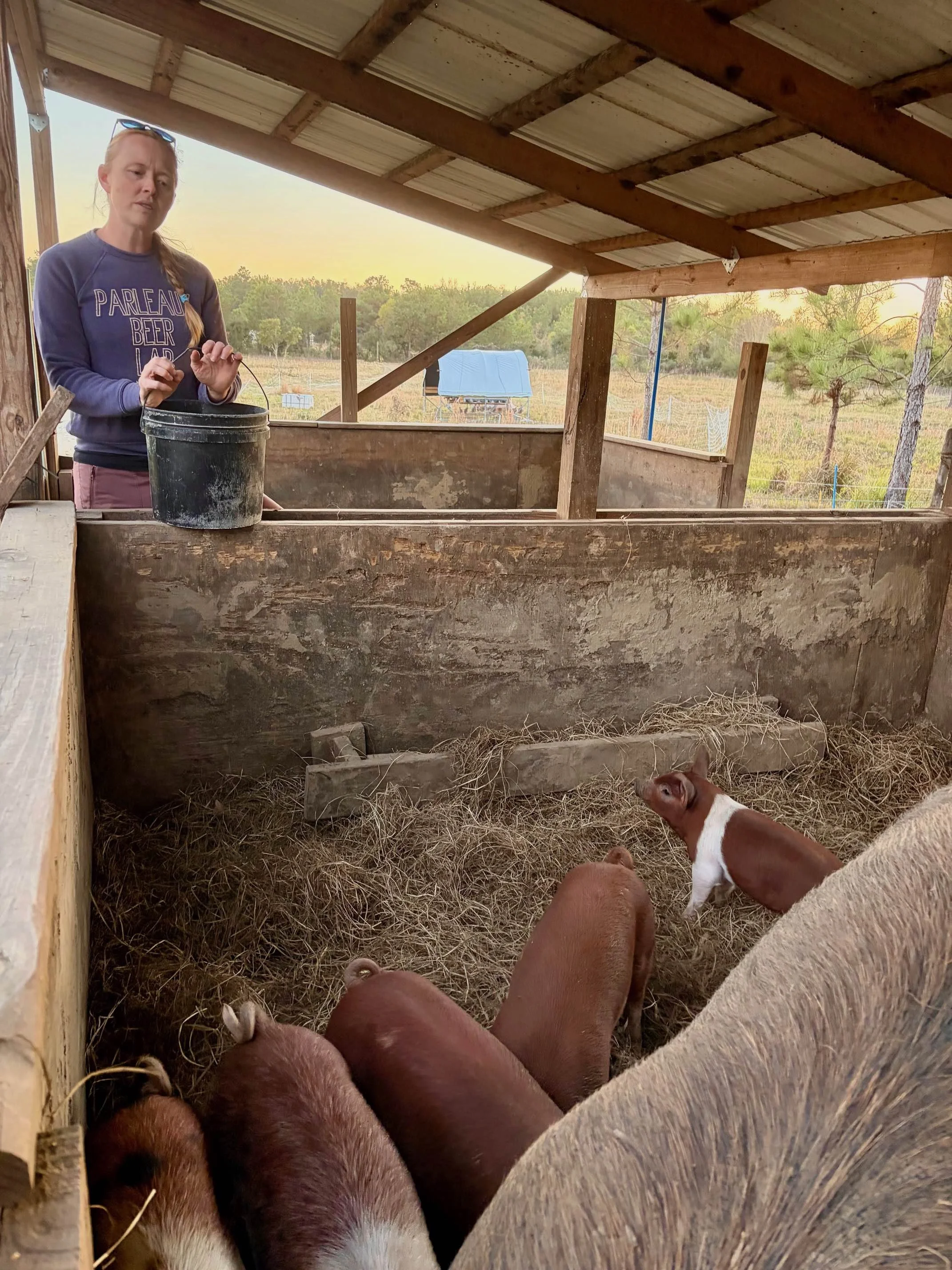
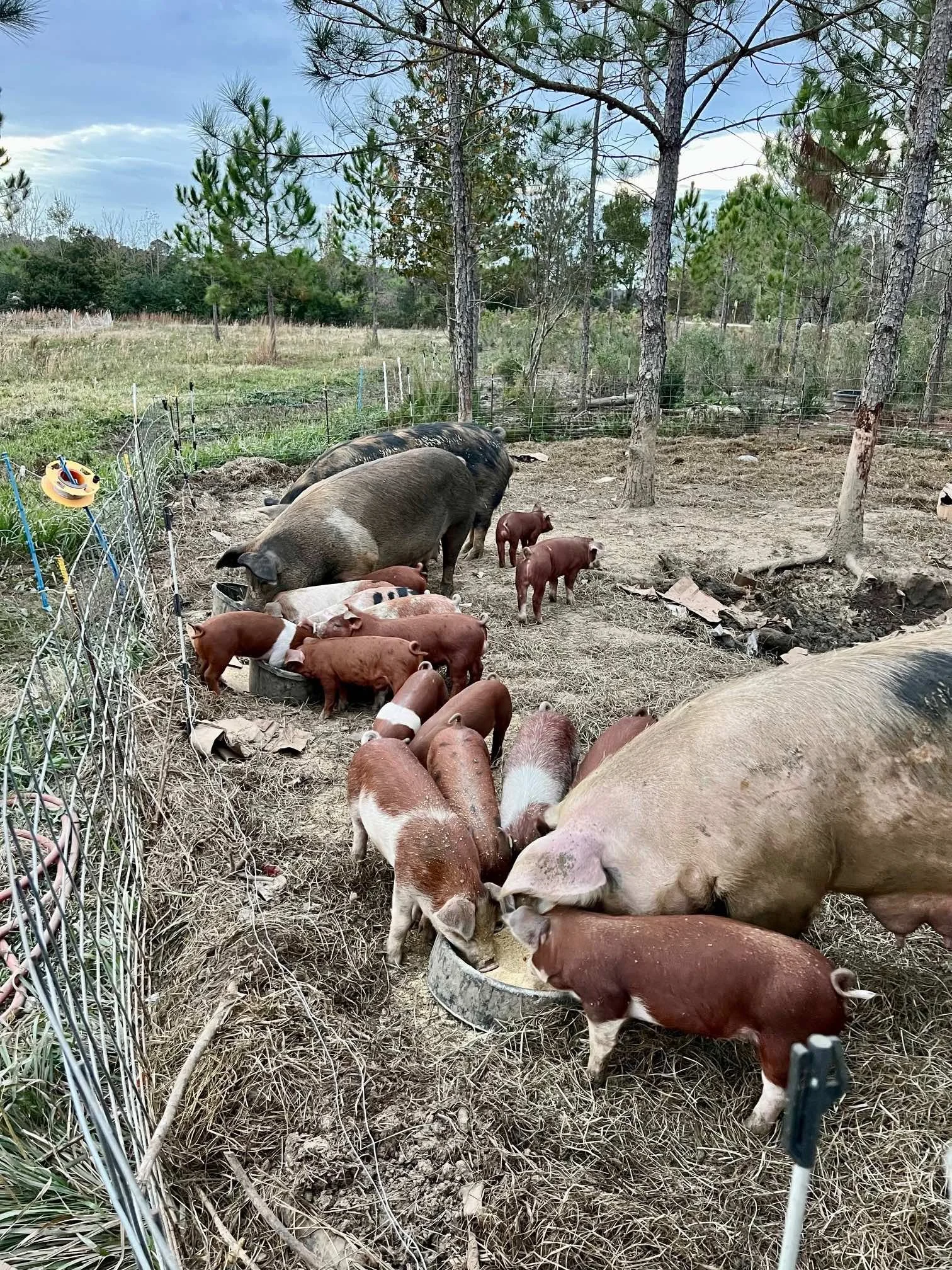
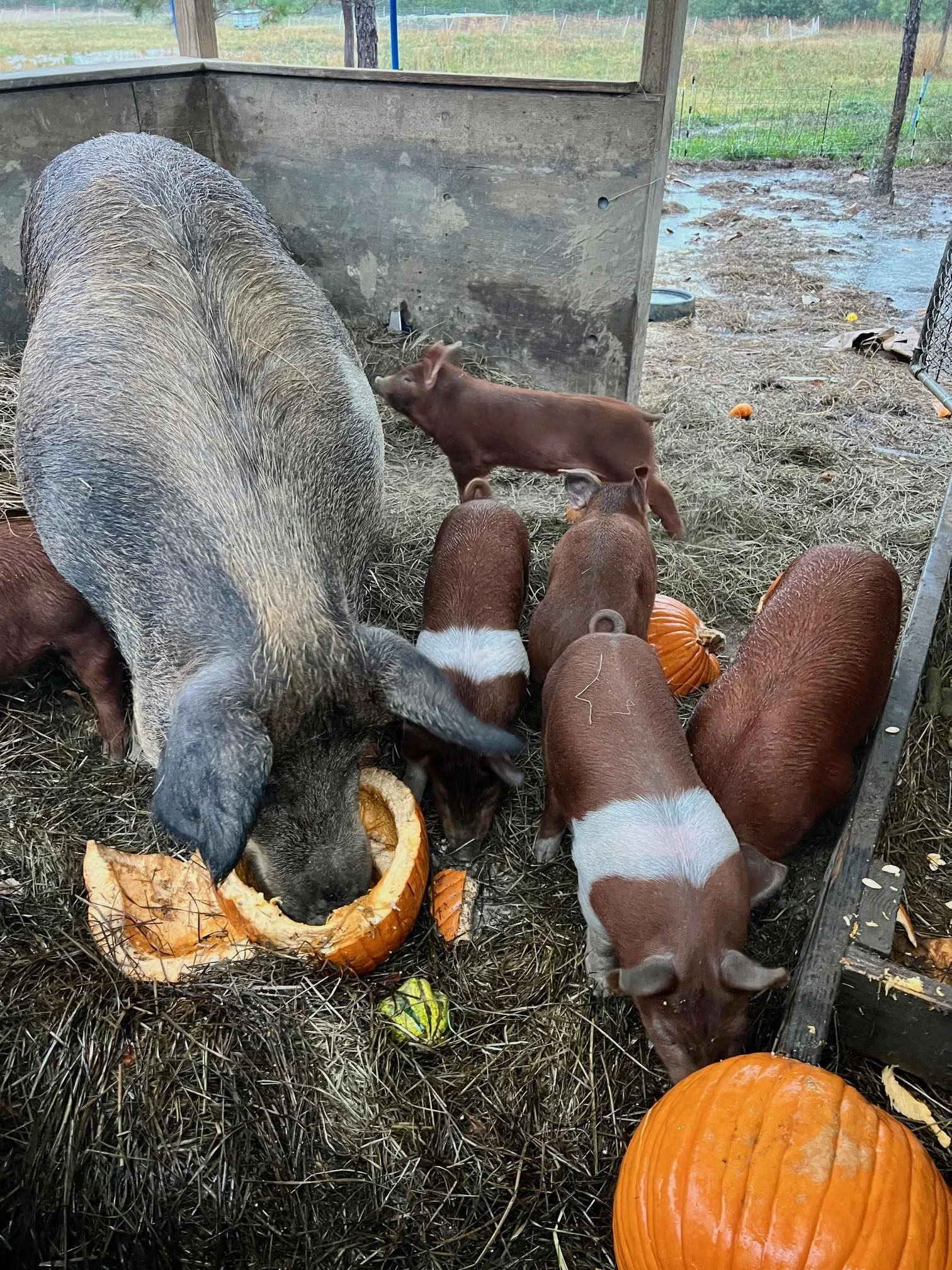
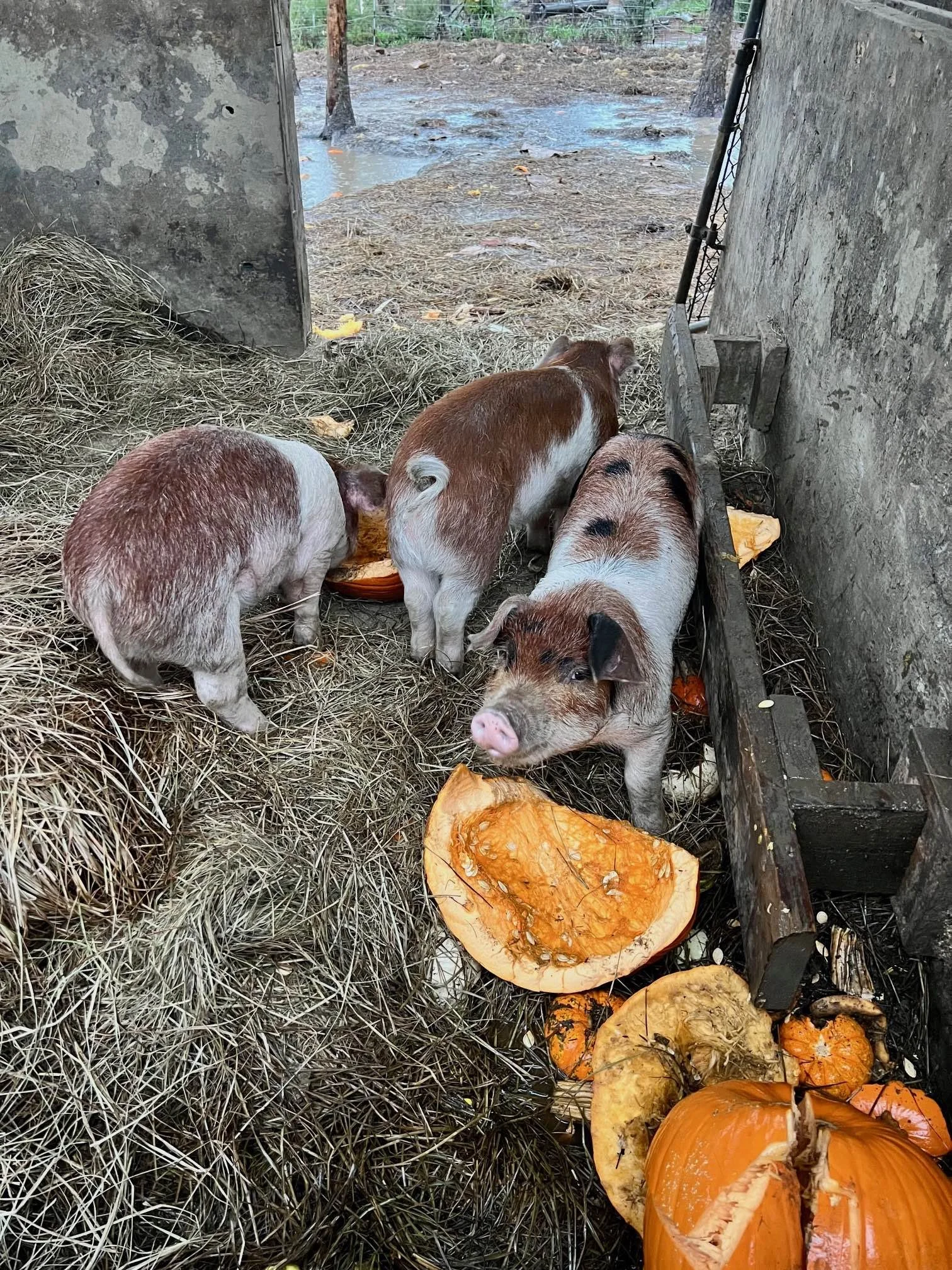
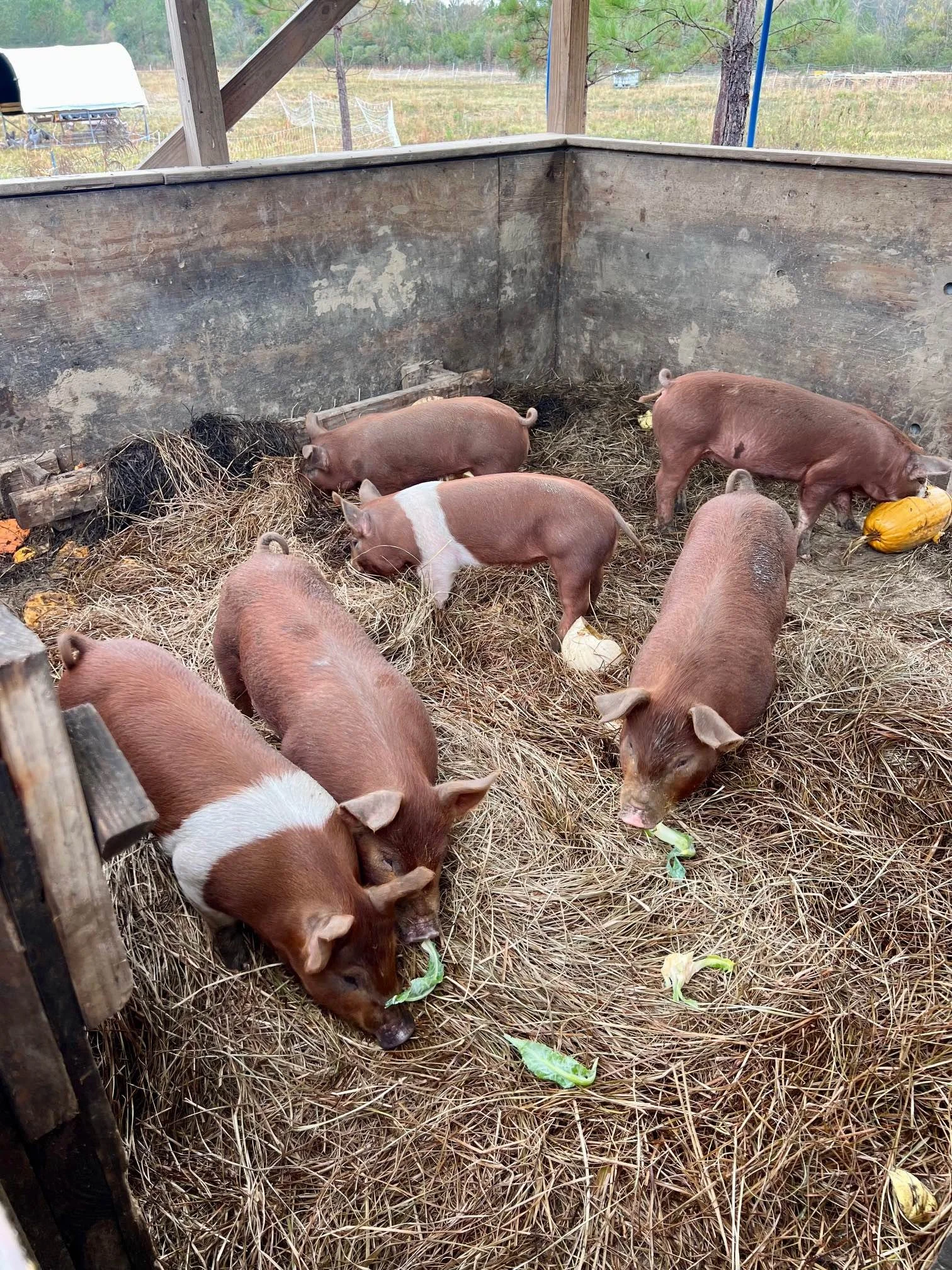
The hog farrowing barn came in very clutch in the rainstorm! The pigs still had access to their yard, but the wallows totally filled up, the yard got muddy and they slept every night cozy in the stalls with with plenty of fresh hay.
The piglets are absolute monsters and we’ll be weaning very soon. The older two litters are nine weeks old, well past when they can be weaned. But the younger litter just passed six weeks old, so we wanted to wait until at least then.
The sows definitely seem ready for a break and ready to eat and sleep in peace!
The way we built the farrowing barn with slide doors on one side and dates at the back makes separating and loading the sows very easy. We just back the hog trailer up to one of the doors, sort them into the trailer and off they go, leaving the piglets in the farrowing barn until we’re ready to move them to a new paddock on the opposite side of the farm from their moms.
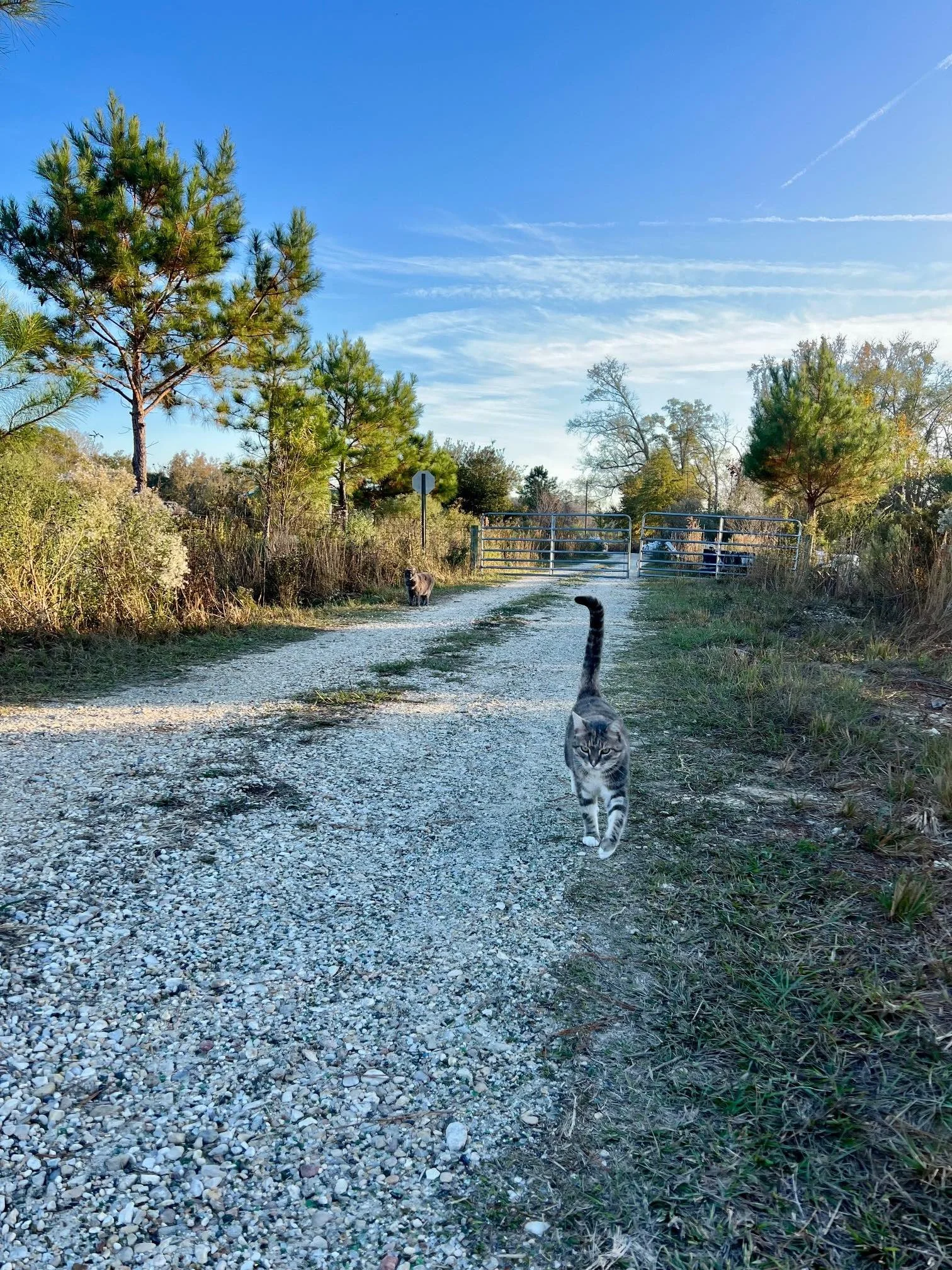
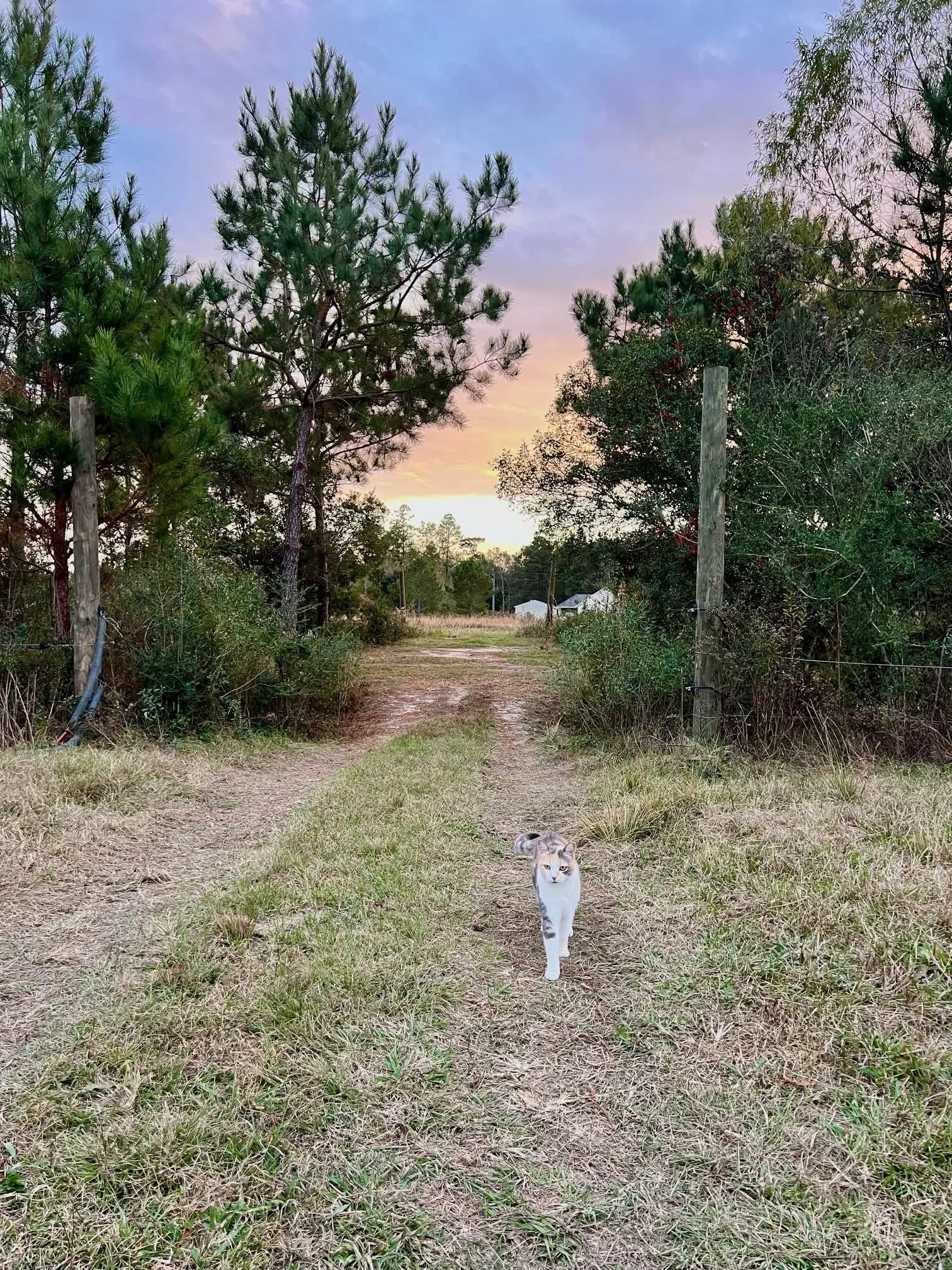

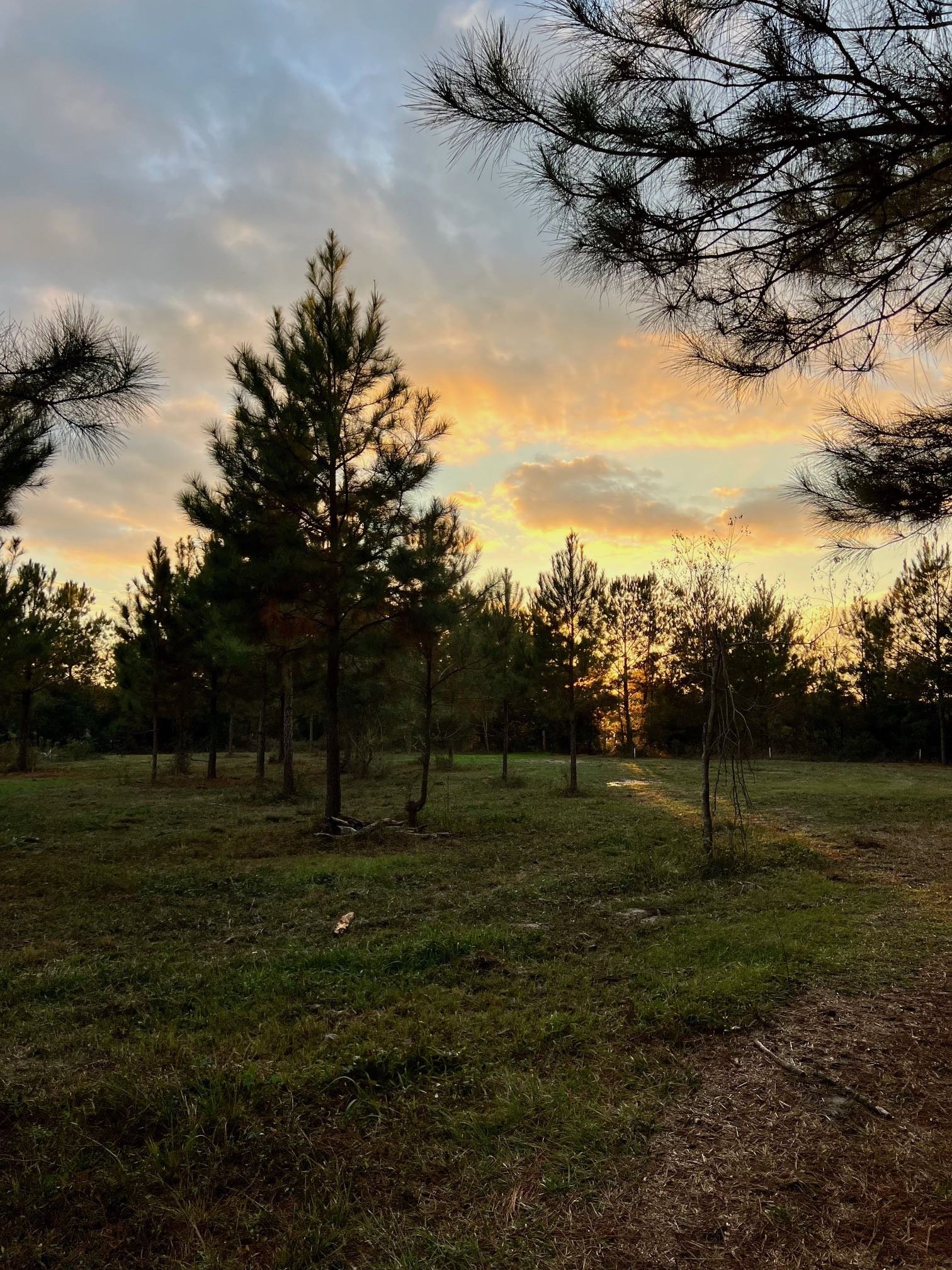
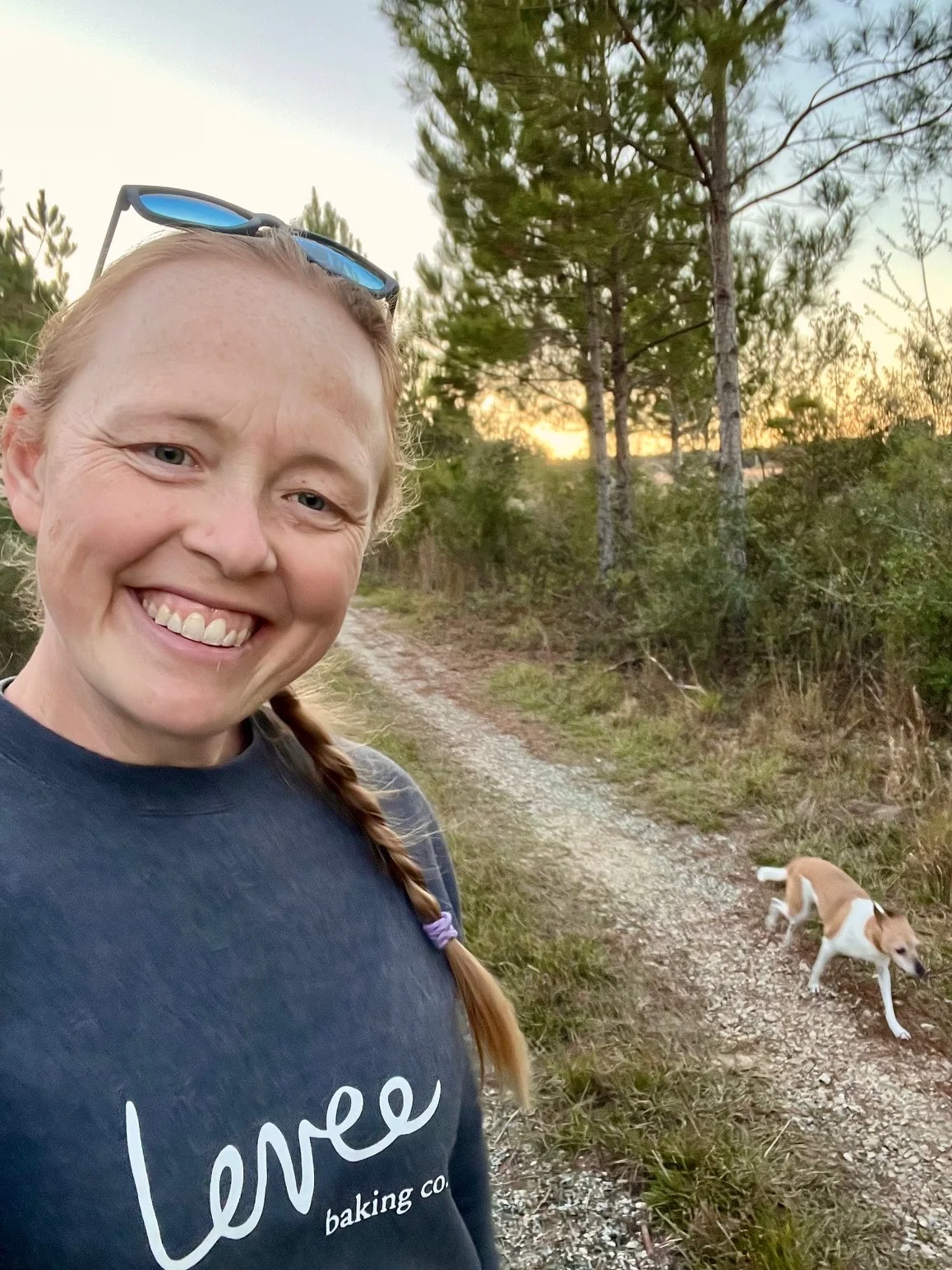
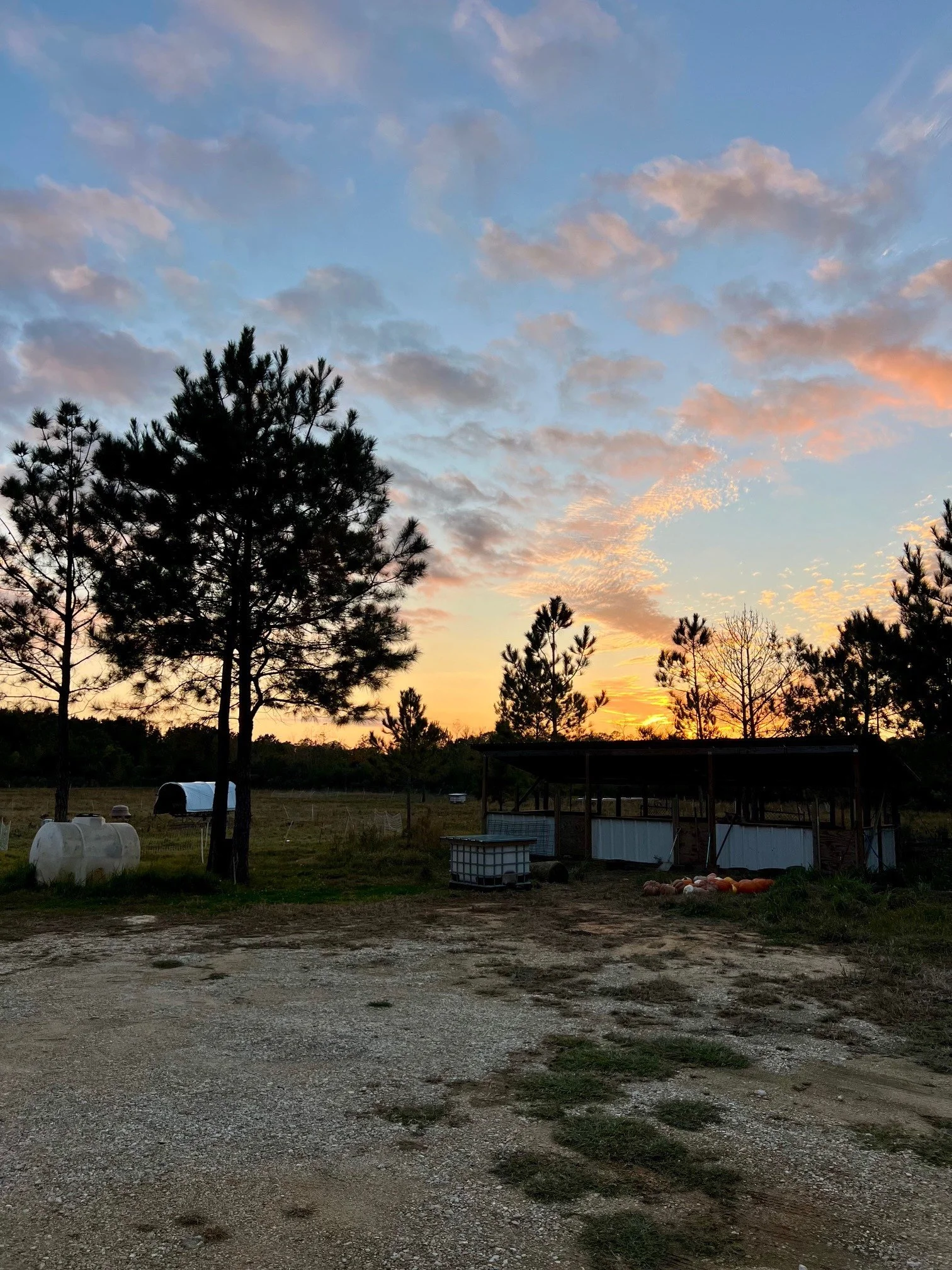
Each of our barn cats met me on the road on several walks recently! Their home base has always been our original barn, where I brought their mother (a stray pregnant cat from Metairie!) to have her kittens.
So when we lived in the tiny house just 100 yards or so from the barn, they would hang out on our porch all the time and Lavender especially would stare at us through the glass door every night until I occasionally started letting her in.
I haven’t wanted to disrupt the balance (and rodent patrol IN the barn) by bringing them over to the new house, which is about a quarter mile away from the barn. But Pearl followed me almost all the way back to the house last week!
She was slowly inching her way up the road that goes from the internal road through the field to the house when Grant drove through to collect eggs and scared her off. I was so curious if she discovered where we actually live now if she would set up shop on this porch instead! They all seem to love nothing more than staring in our windows and begging for food!