
Storm Damage, A Heifer Calf, Growing Goat Kids, Gestating Pigs, New Chicks & More!
Overall, February and March have been full of new life and excitement on the farm. Soil and compost season has been really busy, too, so it’s made us realize that as much as we want to share the goat kids and baby chicks (and soon piglets) with everyone, it’s tough to fit in farm tours in the spring with so much focus on soil mixing, bagging and loading and then all the demands of the livestock, too.
So, we’re aiming to try some early evening tours this summer, even though it’ll be hot by then. Stay tuned for more on that.
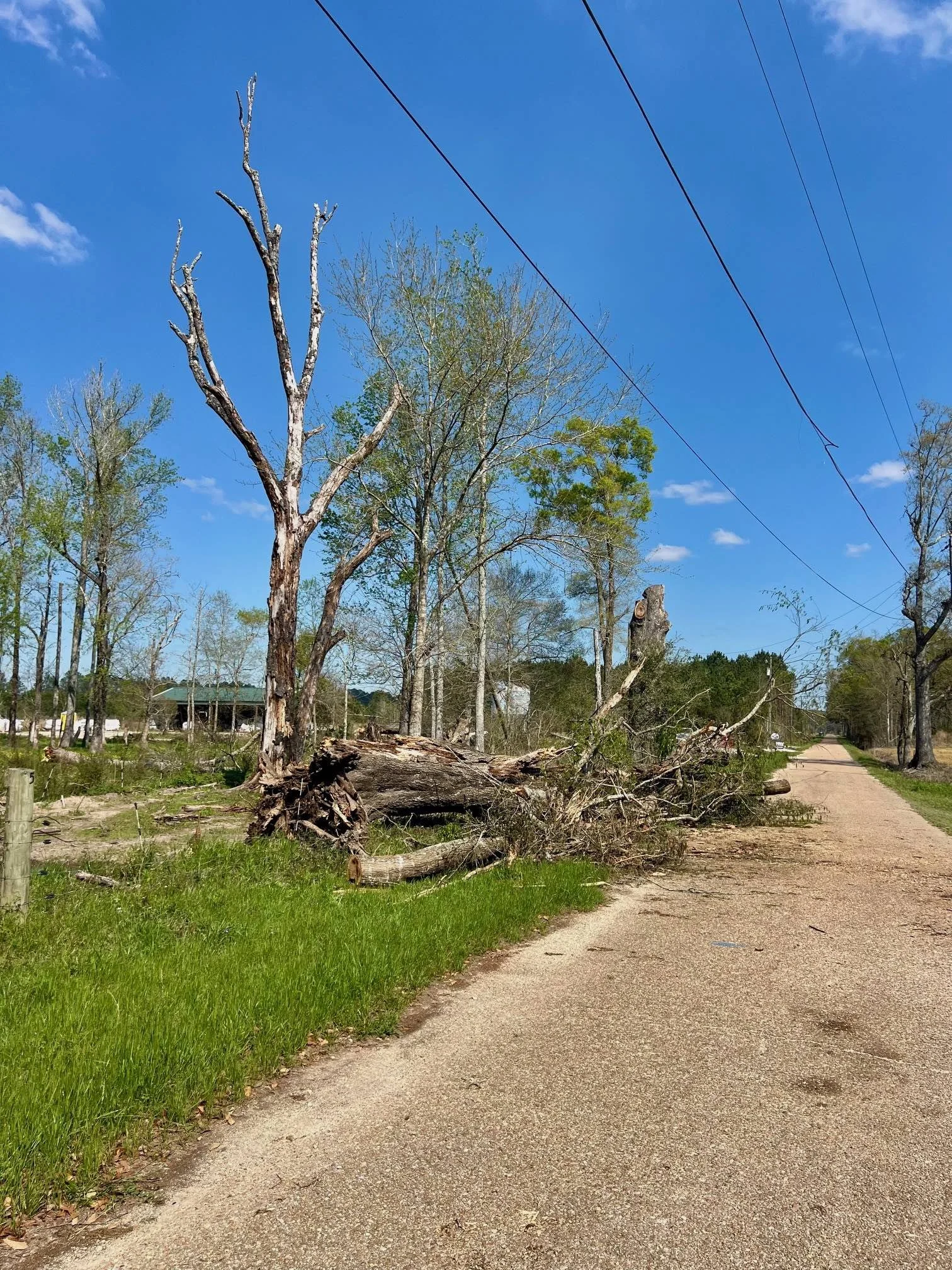
Amidst all the positives, the severe weather on March 11 gave us a run for our money.
We knew the weather was coming, but thought it was going to be overnight/early morning.
So that evening, I went to swim laps at my gym as usual, thinking I had plenty of time to get home and check on the goat herd before the weather hit. Grant had fed and tended to the goats that evening, of course, but they had just started grazing nearby fields that week and the kids were not even a month old yet, so I just wanted to put eyes on them myself and make sure no one was standing at the fence looking for lost kids or anything!
When I got home at 9:30, the main line of the storm was just about to hit us. But looking at the radar, I thought I had 10 minutes or so to dash out there and check them and make it back to my house before it really started storming.
I did NOT though!
I got poured on, but the scarier thing was this was just as the winds picked up immensely, so I was running back from the goats as branches were coming down, either small hail or debris from the wind was hitting me in the face and the sound of the wind was incredible.
I made it to my car to drive around the "block" back to the house. A branch was blocking the road by my neighbor's house, so I turned around to go the other way around the "block" and in that short time (1 minute or 90 seconds?) a HUGE tree came down from our property, covering the entire road. I had passed under it just moments before.
I was able to go back the other way and just pull the branch out of the road and made it back to the house as Grant was literally holding the heavy wooden door closed because the wind was rattling it so much it seemed like it might fly open. We had all kinds of pine needles and other tree debris splattered all over that side of the house.
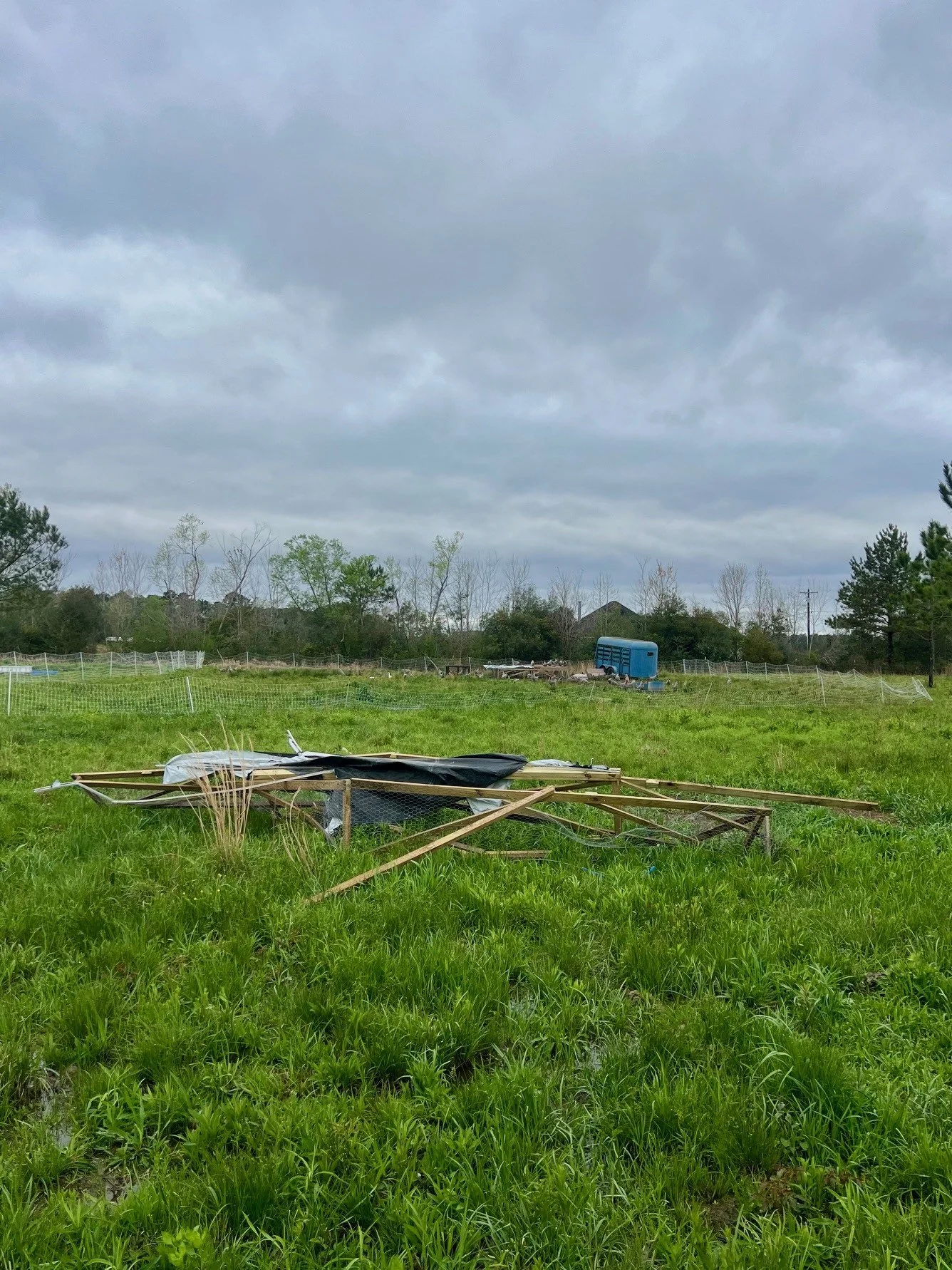
An electric pole snapped on the highway near our house, so we lost power at both the farm and the house side (it comes from two different stations) and possibly the same insane gust that snapped the power line picked up the duck's pasture pen and tossed it more than 100 feet. The ducks were all fine and none of the other pasture pens got picked up. It's pretty wild given how low to the ground the pasture pens are.
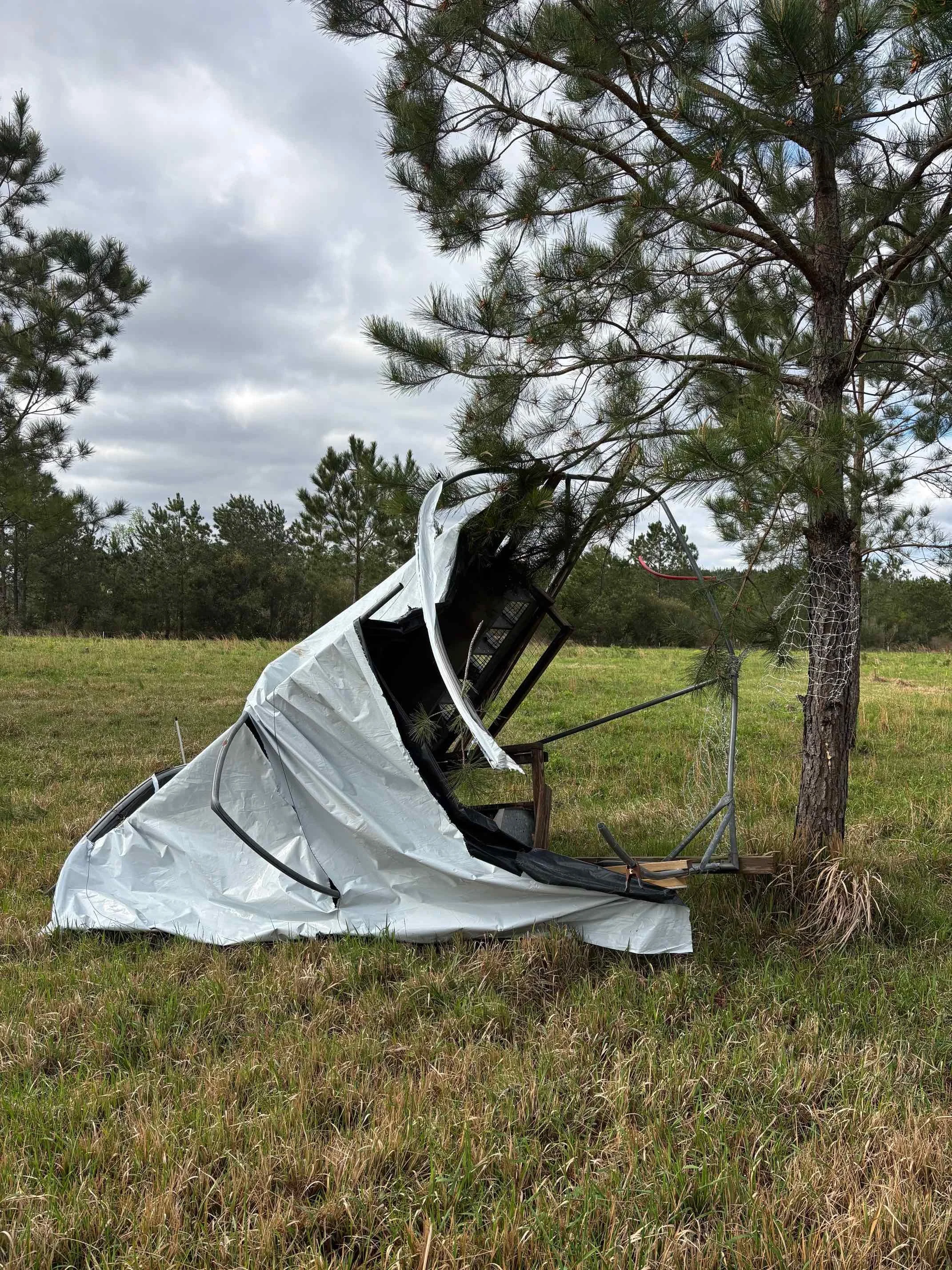
And then the little hoop coop also got tossed about 100 feet, too, snagging the net fence with it. Unfortunately, two hens had bad injuries from that and needed to be put down.
The loss of power was pretty unfortunate because we had 400+ chicks in the brooder that had just hatched that day! Fortunately, it had been so warm that day and the cold front lagged several hours behind the line of storms passing through, so the temperature didn’t drop very fast.
The bedding in the brooder was very warm from the lamps before the power went out and the chicks’ body heat and the chicks were all in a nice circle under neath each lamp in each stall. So ultimately, we didn’t lose very many. Grant helped about 3% hatch and those often don’t make it. And that ended up being the percentage we lost, which we might have lost anyway as they’re the weakest ones.
But, it definitely was a pretty sleepless night for me not knowing yet how well they would make out. And it made us make plans to get some propane brooder heaters to rely on if we lose power in the future.
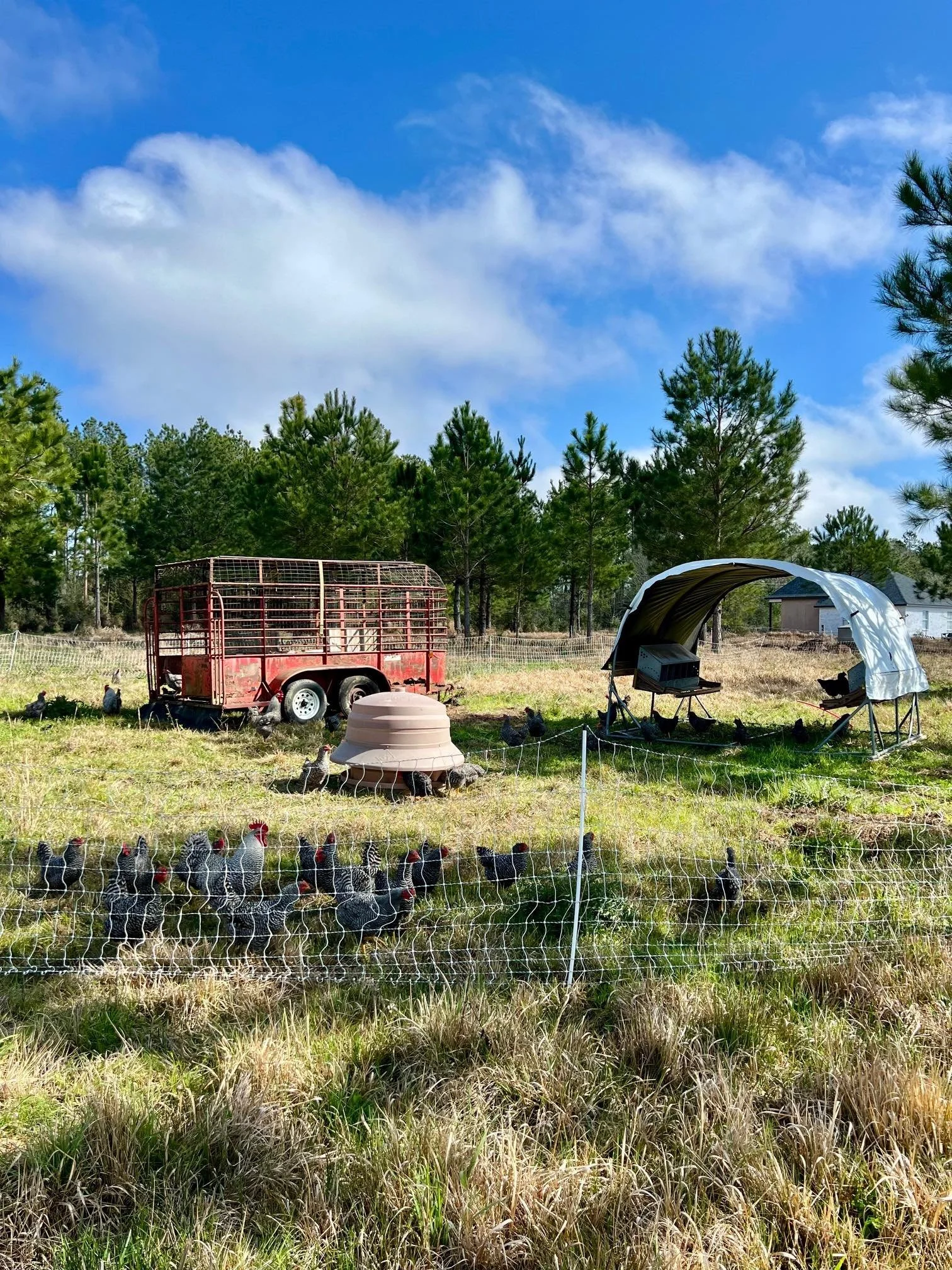
Fortunately, our larger heavy egg mobile coops were fine. We've regularly had a problem with the design of those that some birds lay under the coop versus in the nest boxes. But this was a good reminder that losing some eggs is cheaper than losing an entire coop in storms like these. We were planning to strap the little hoop coop down for hurricanes, but it's these less predictable bouts of severe weather than can be harder to prepare for.
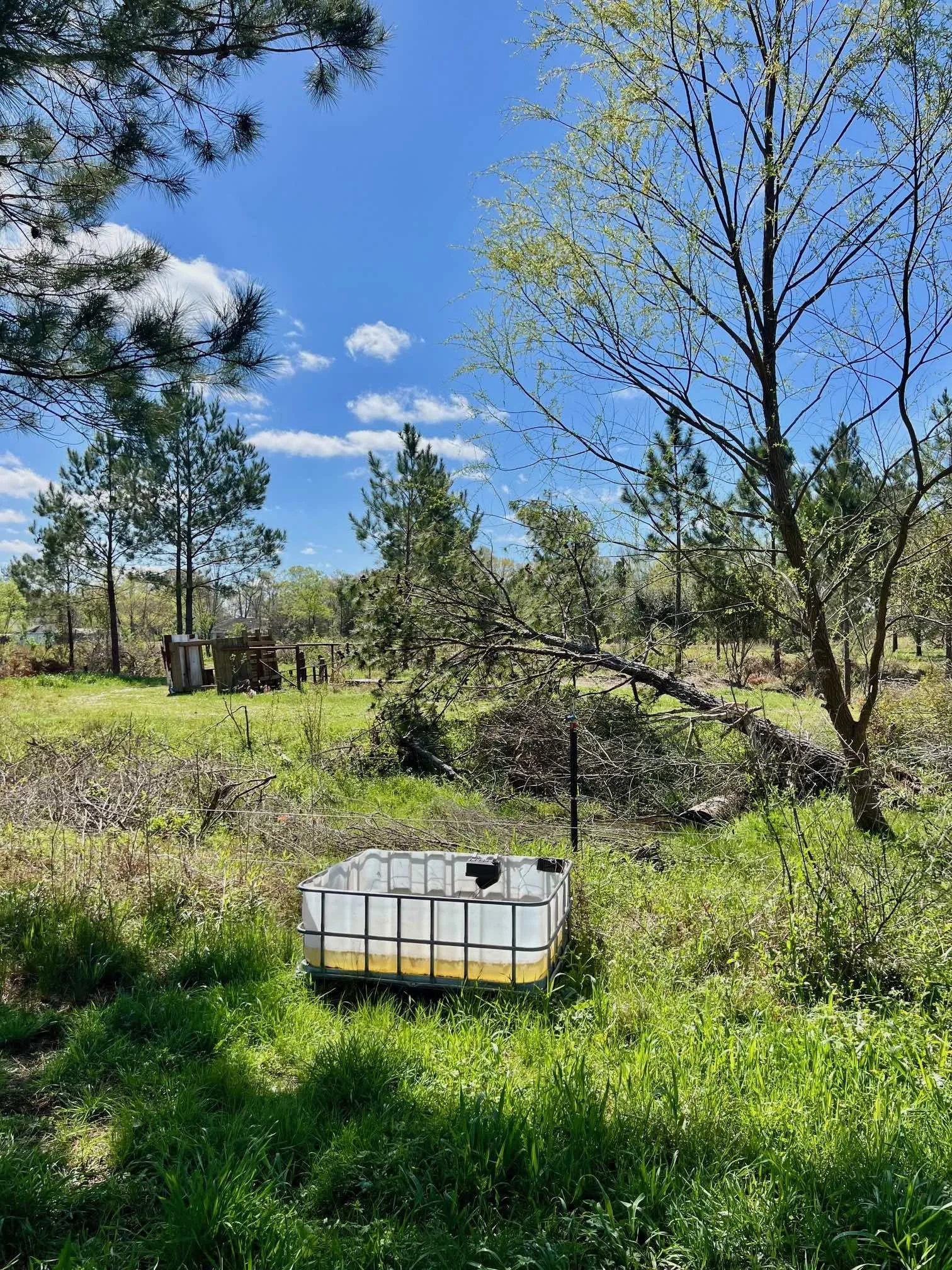
We also had tons of pine trees snapped at various low angles and a few larger trees in the woods tipped over at the root ball. A neighbor had some vinyl siding ripped off their house, another had a shed tossed into the tree line and another had a large healthy tree taken down at the root ball, as well. So it does make us wonder if it was some kind of micro burst or EF0 tornado that went through.
All in all, it could have been much worse, but it’s still a bummer to have to troubleshoot and clean up from a storm in a very busy season as it is! So it goes though, all you can do with severe weather is try to learn from it to be better prepared the next time.
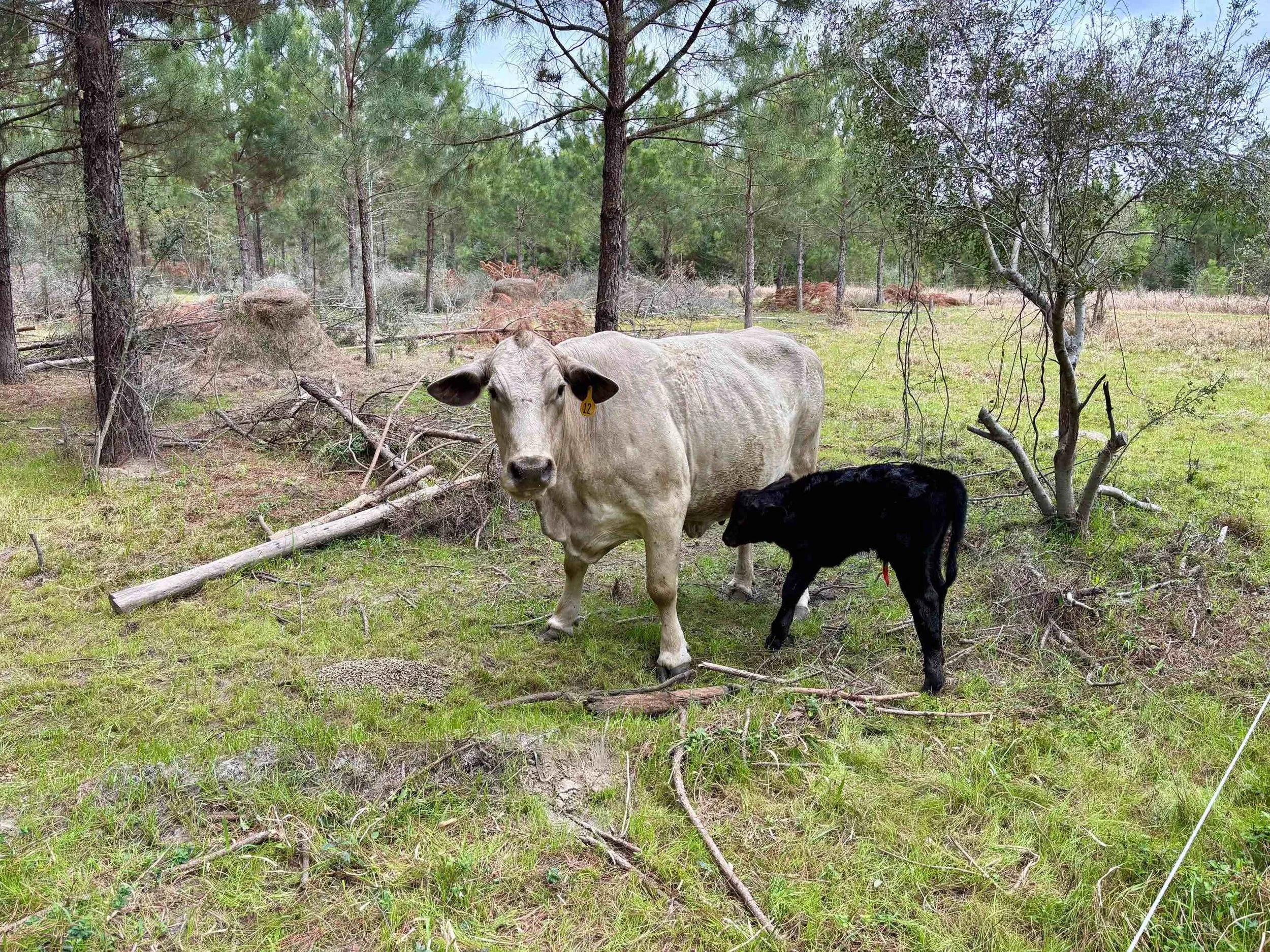
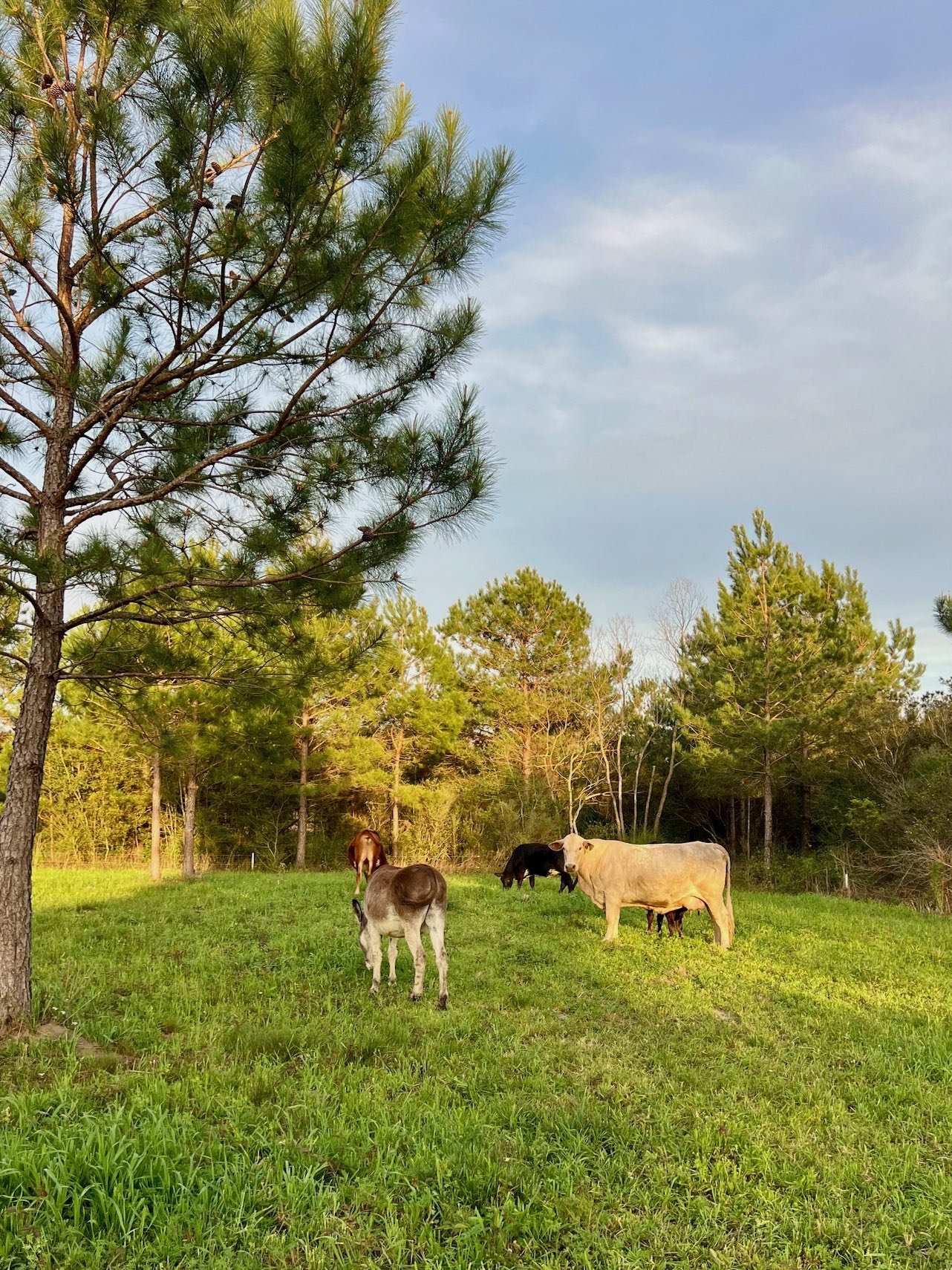
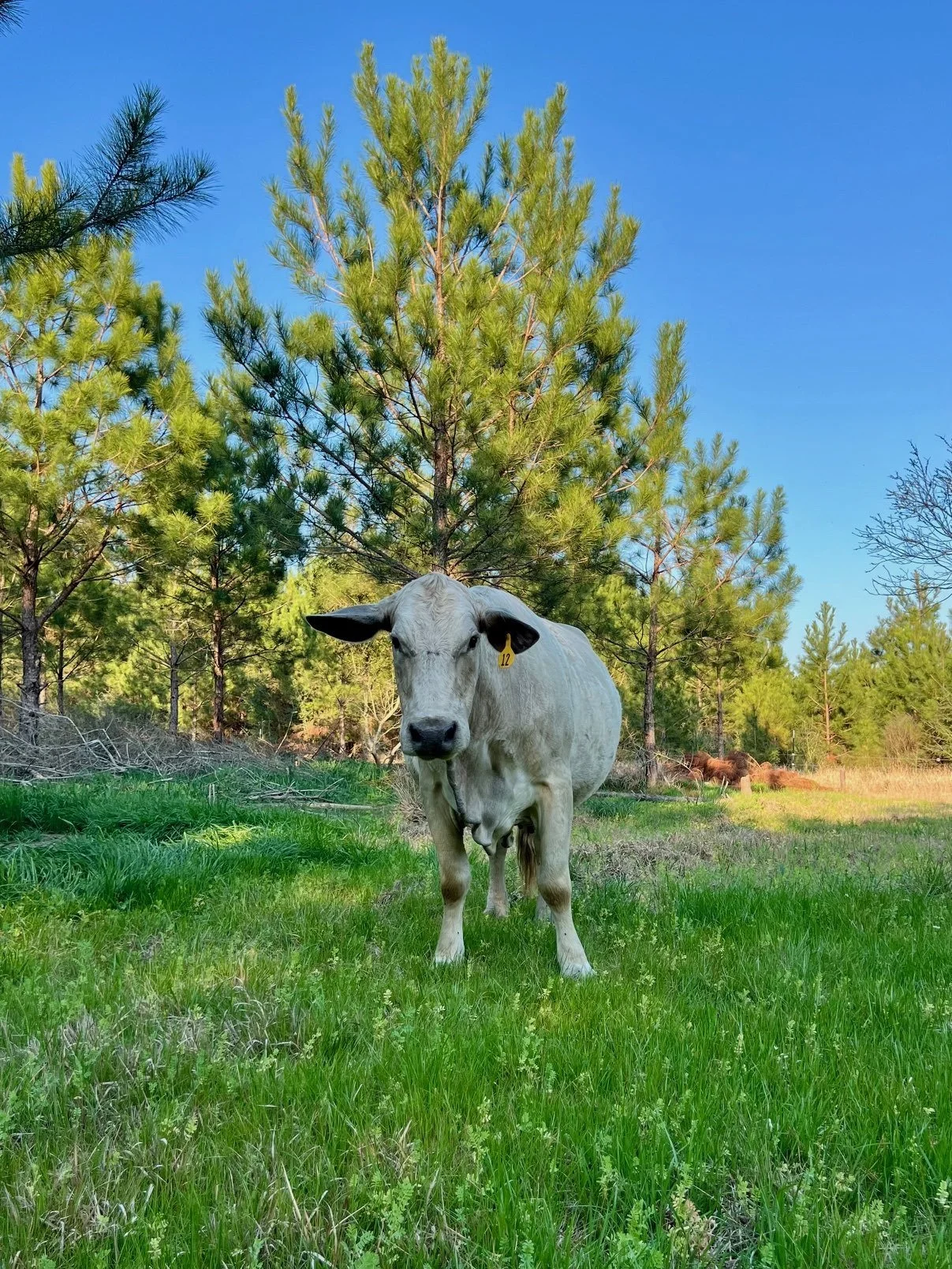
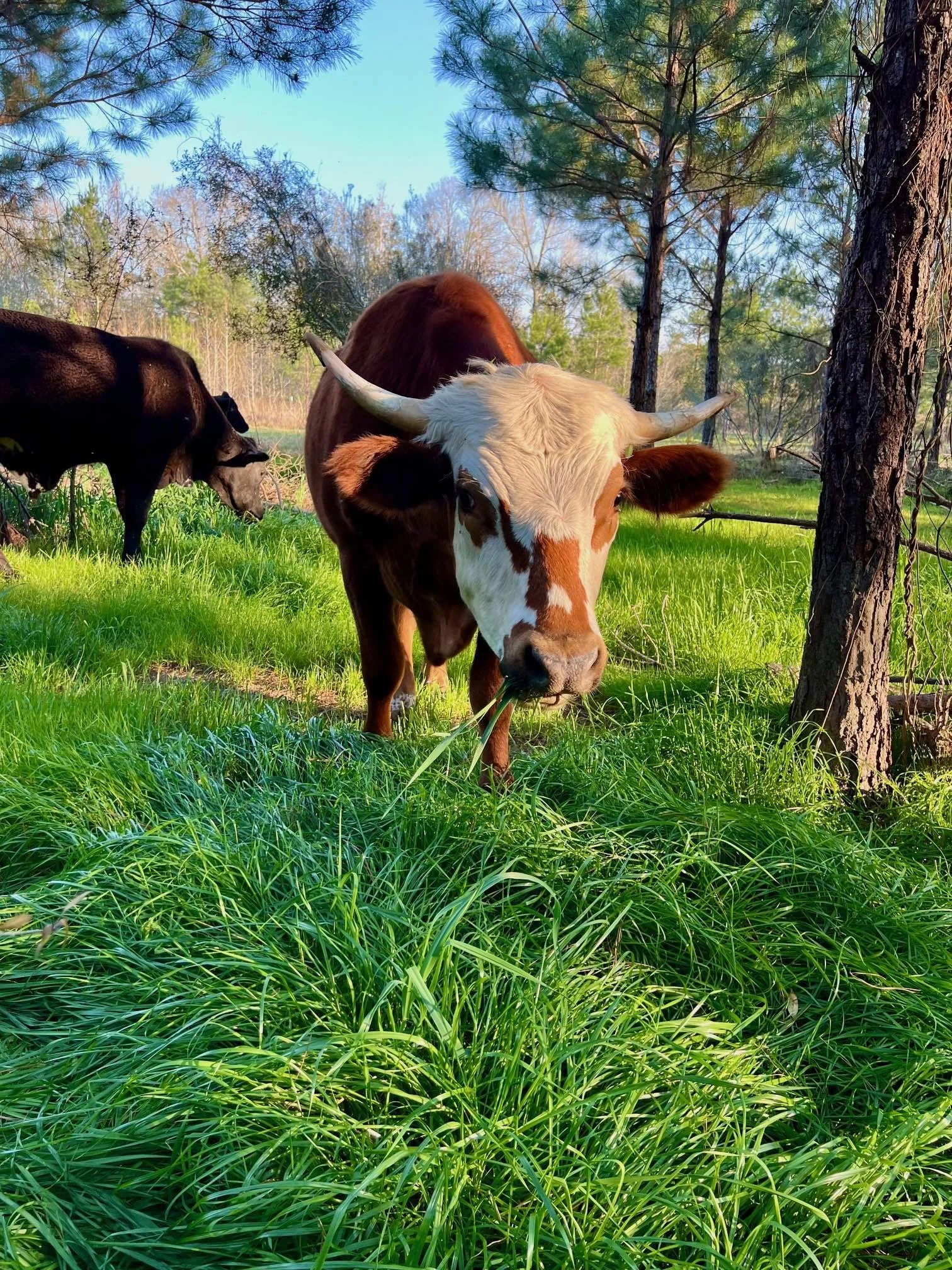
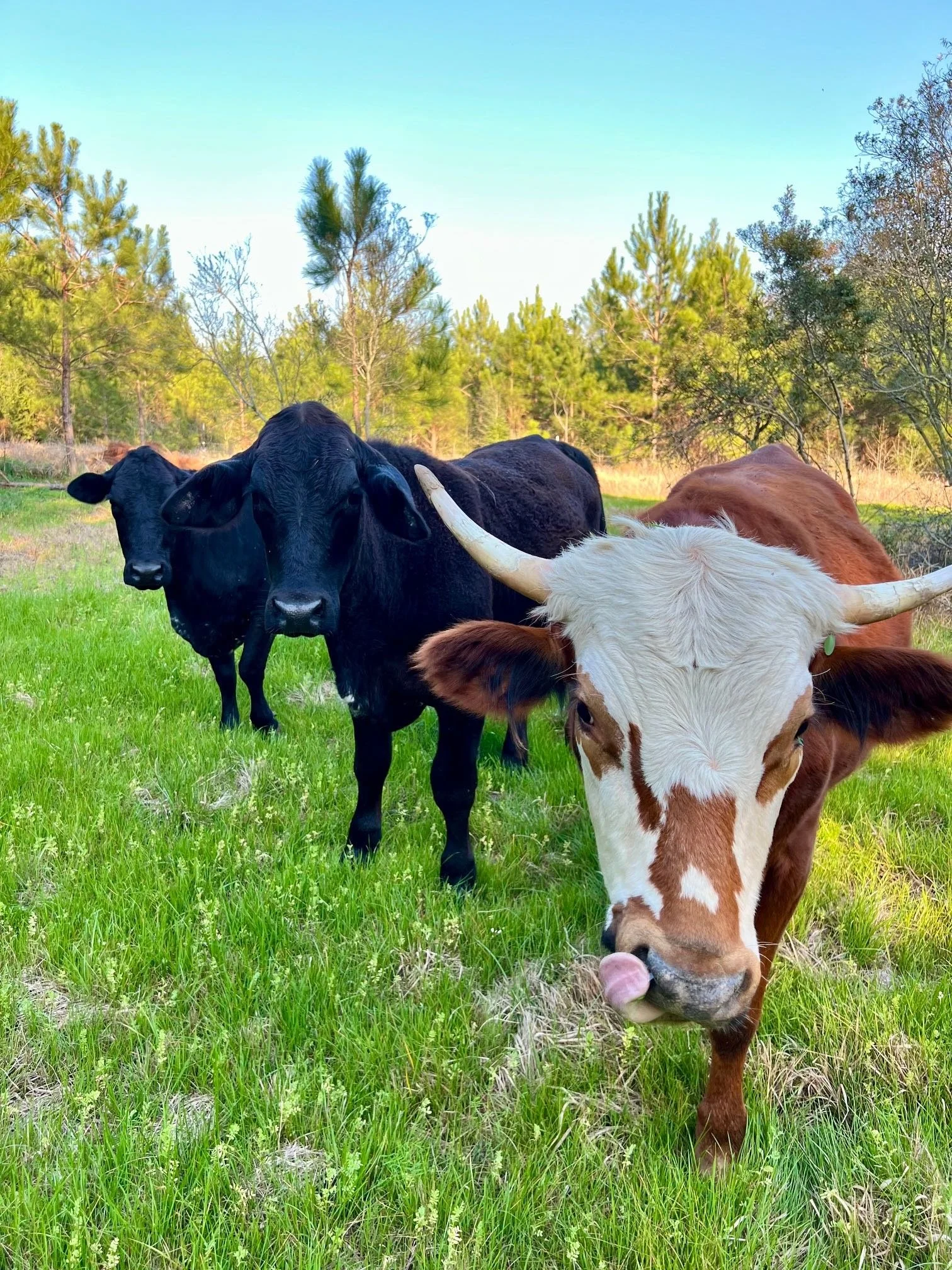
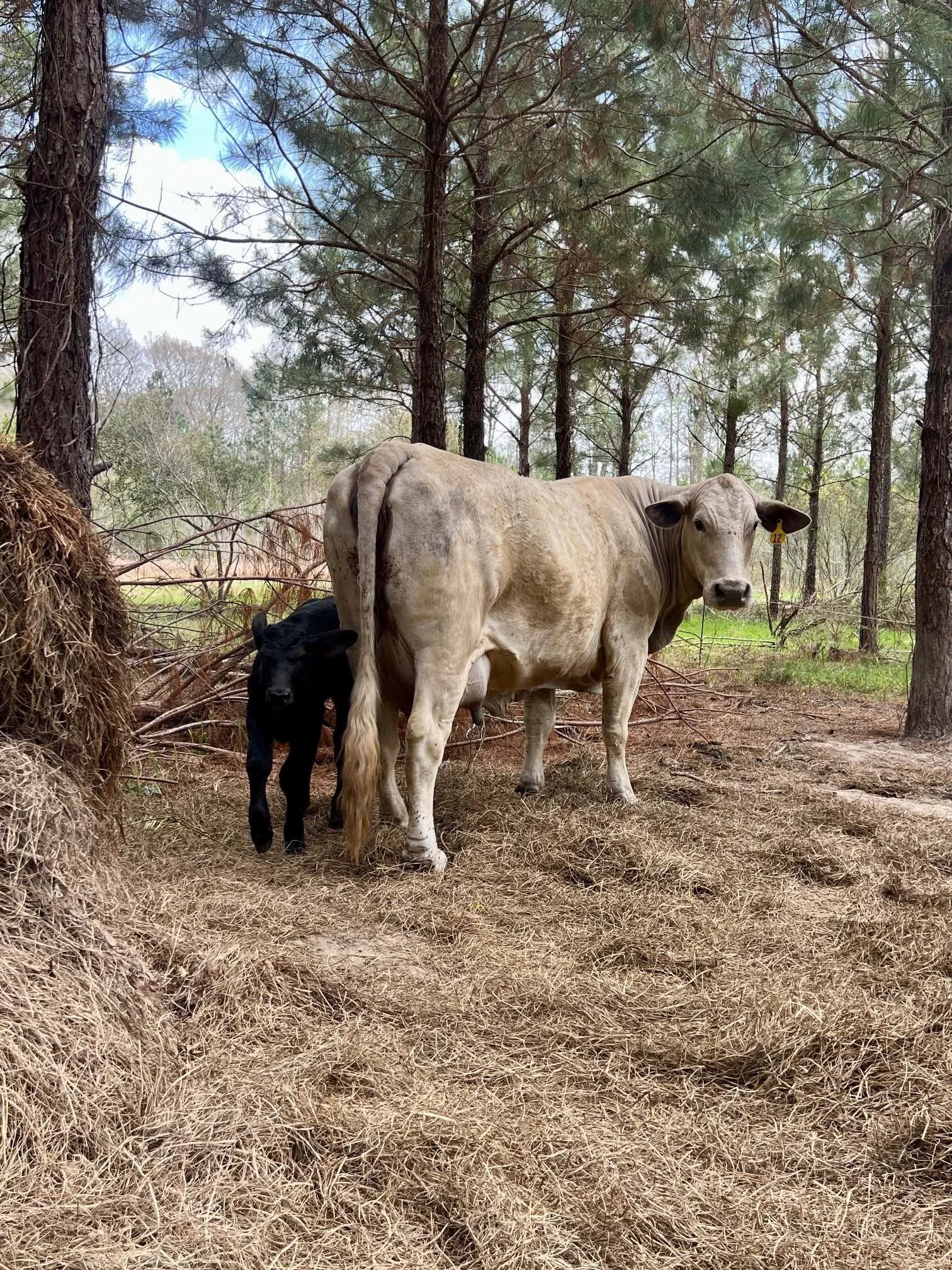
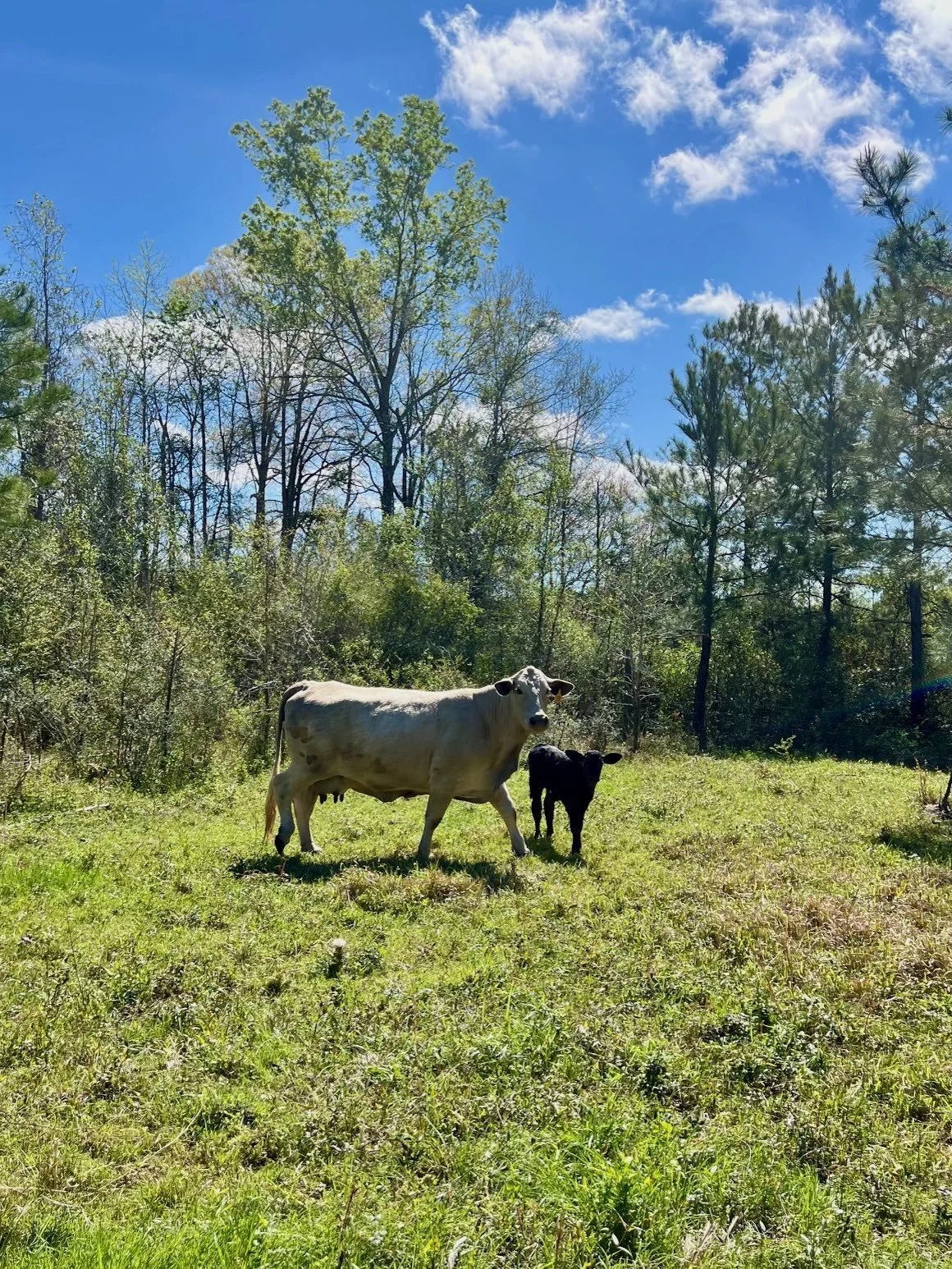
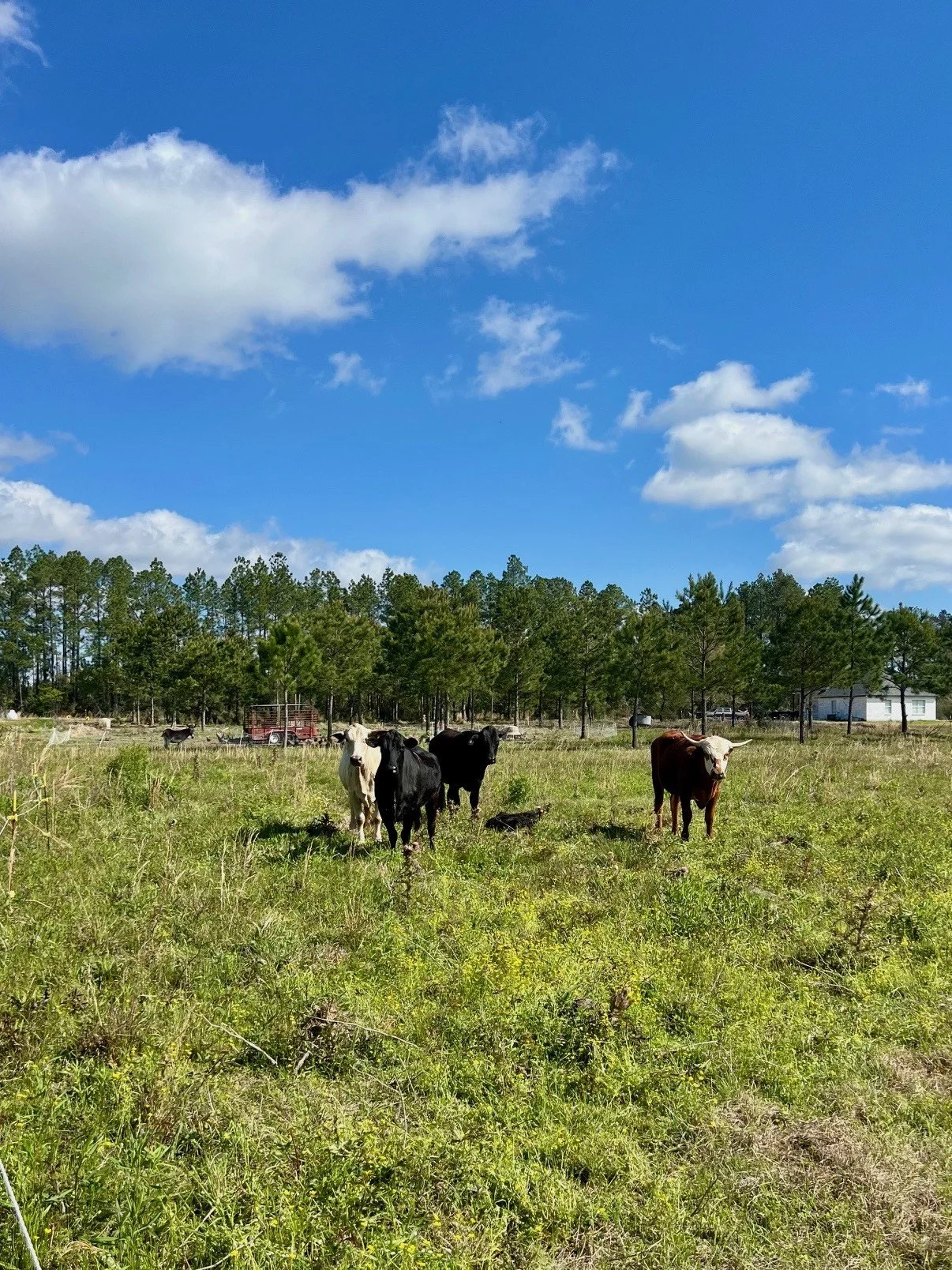
In happier news, our one big momma cow had a heifer calf on March 5th, a day after her “due date.” Cow gestation is around 9 months and folks usually count day 283 as the “due date,” but calving on day 279 to 292 is all considered normal.
Generally bull calves are often carried slightly longer than heifer calves, so I was anxiously checking on her starting on that Saturday, February 28th, hoping she’d go early and have a heifer.
We didn’t think we'd ever really get into breeding cattle, because it’s an expensive proposition to buy heifers or momma cows, have enough grass to feed the mommas, future mommas and their calves for 3+ years before the calves are born and then grow big enough to process for beef.
As I’ve written about before, for many first generation farmers, with the burden of buying land, an investment in a breeding herd of cattle just isn’t feasible. And typically with the cattle market the way it historically is, there are plenty of weaned calves to buy to raise on grass for beef for prices that are reasonable enough to make retail beef prices work out okay.
But now that we’re seeing such historically high prices in cattle and beef (because of a host of factors like significant multi-year droughts that have led to herd sell offs and overall the lowest U.S. cattle herd numbers since the 1950’s), we decided to keep a cow we would normally have processed for ground beef and keep any heifers she has and gradually build a tiny, but mighty herd that way! The (really) long way!
We do have another wily, flighty cow that isn’t breeding material but has jumped the fence every time we’ve tried to herd her into the corral to load to bring to the processor, as well as two steers born in 2024 that we’ll finish towards the end of this year.
The heifer is doing amazingly well and it really feels like she belongs to all four of them — her older brother and the other steer curl up to take naps with her just as much as her mother and the other cow do. It’s very sweet to see.
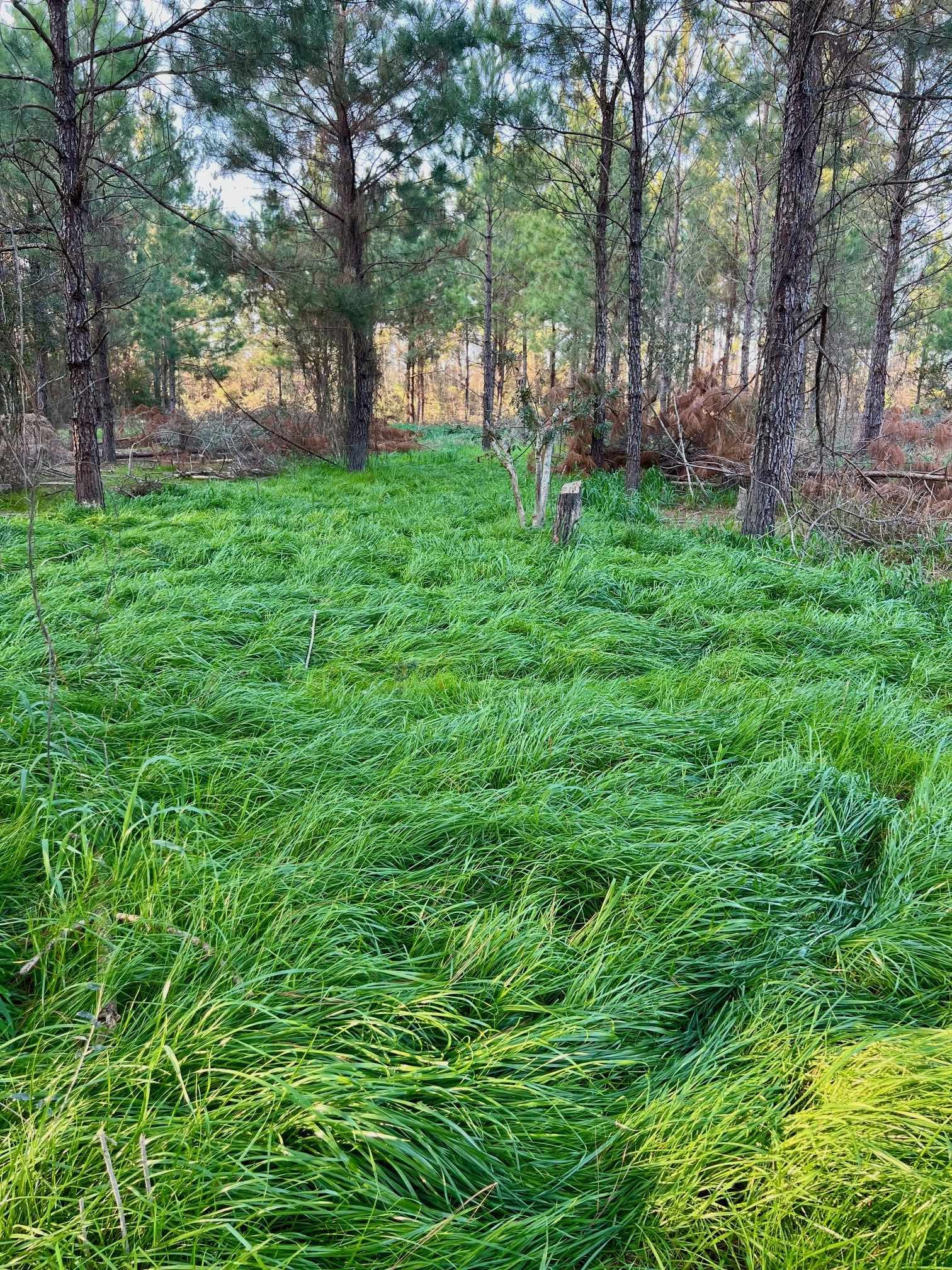
And we’ve had some really nice spring grass for them to eat, some rye and wheat grass we seeded behind the pigs towards the end of the year and some rye grass that we let go to seed in previous years that came back on its own.
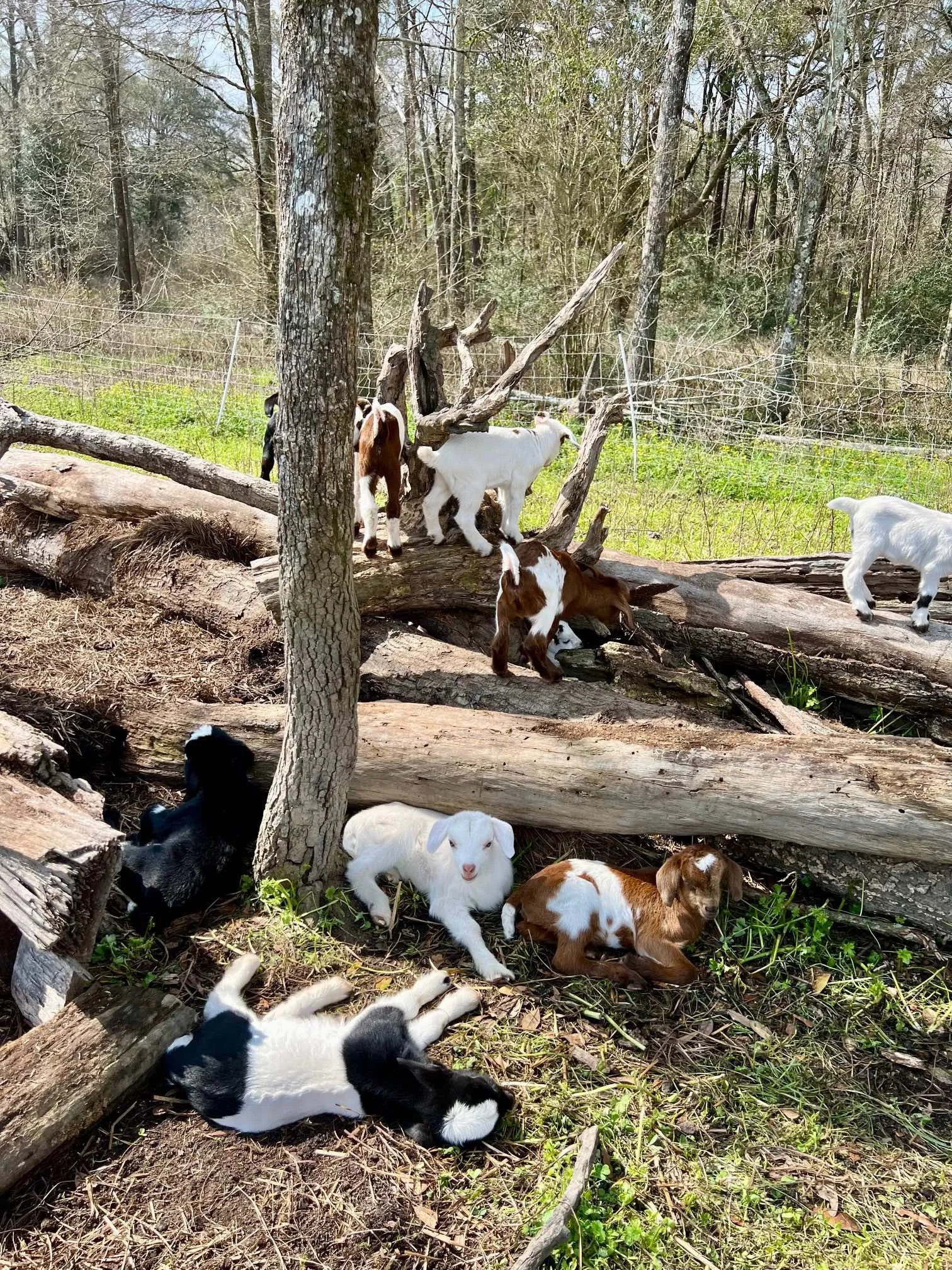
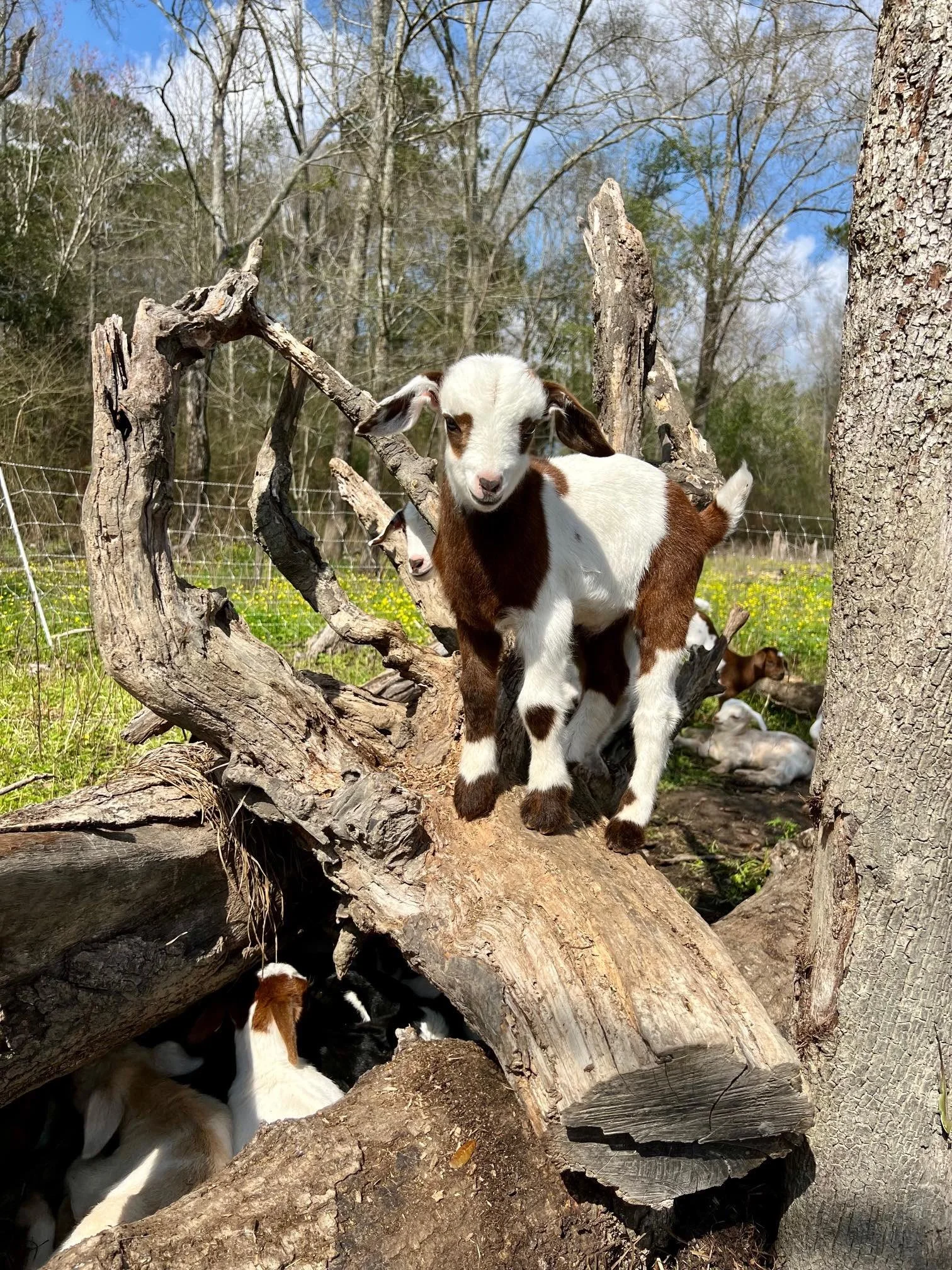
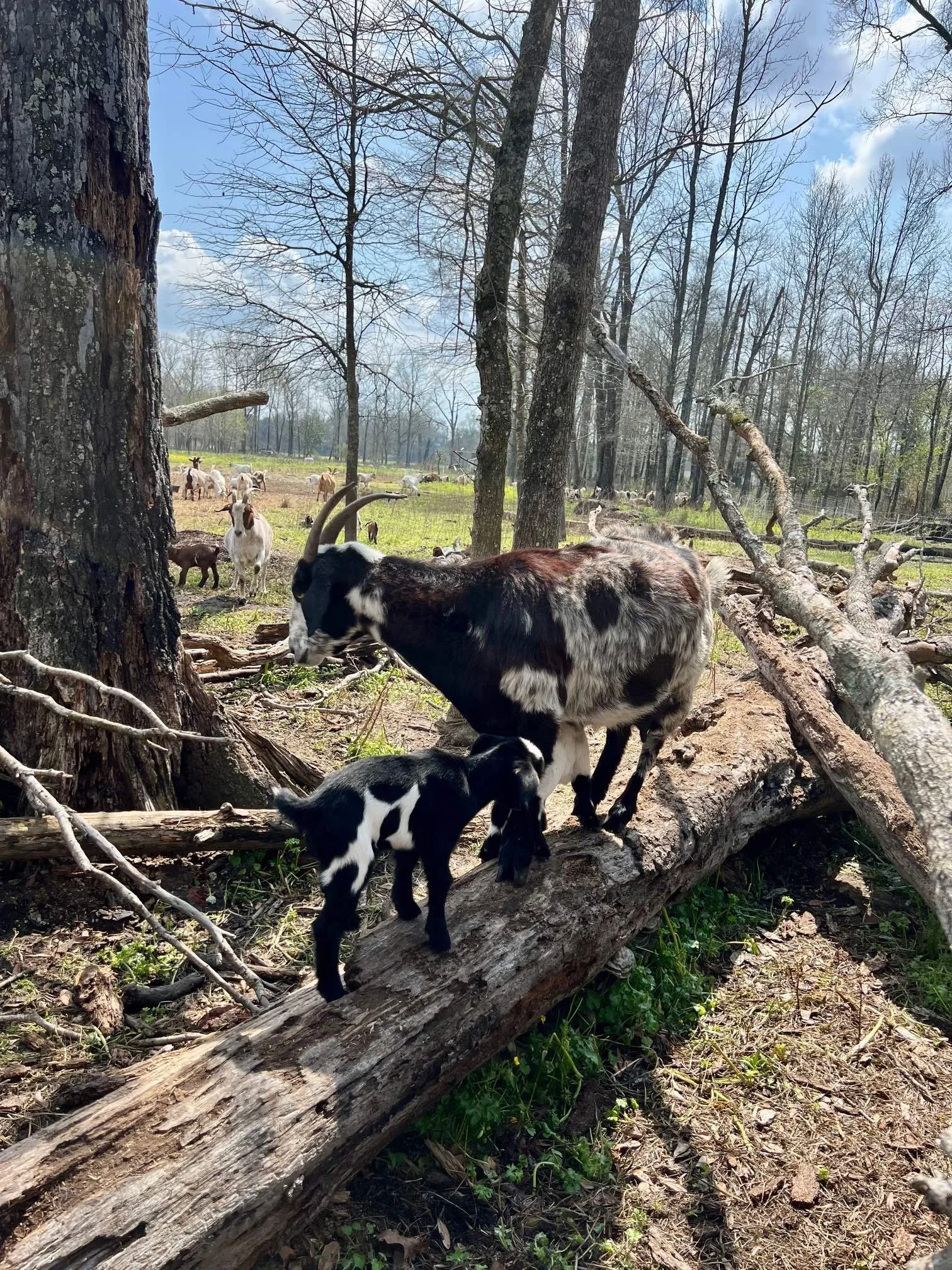
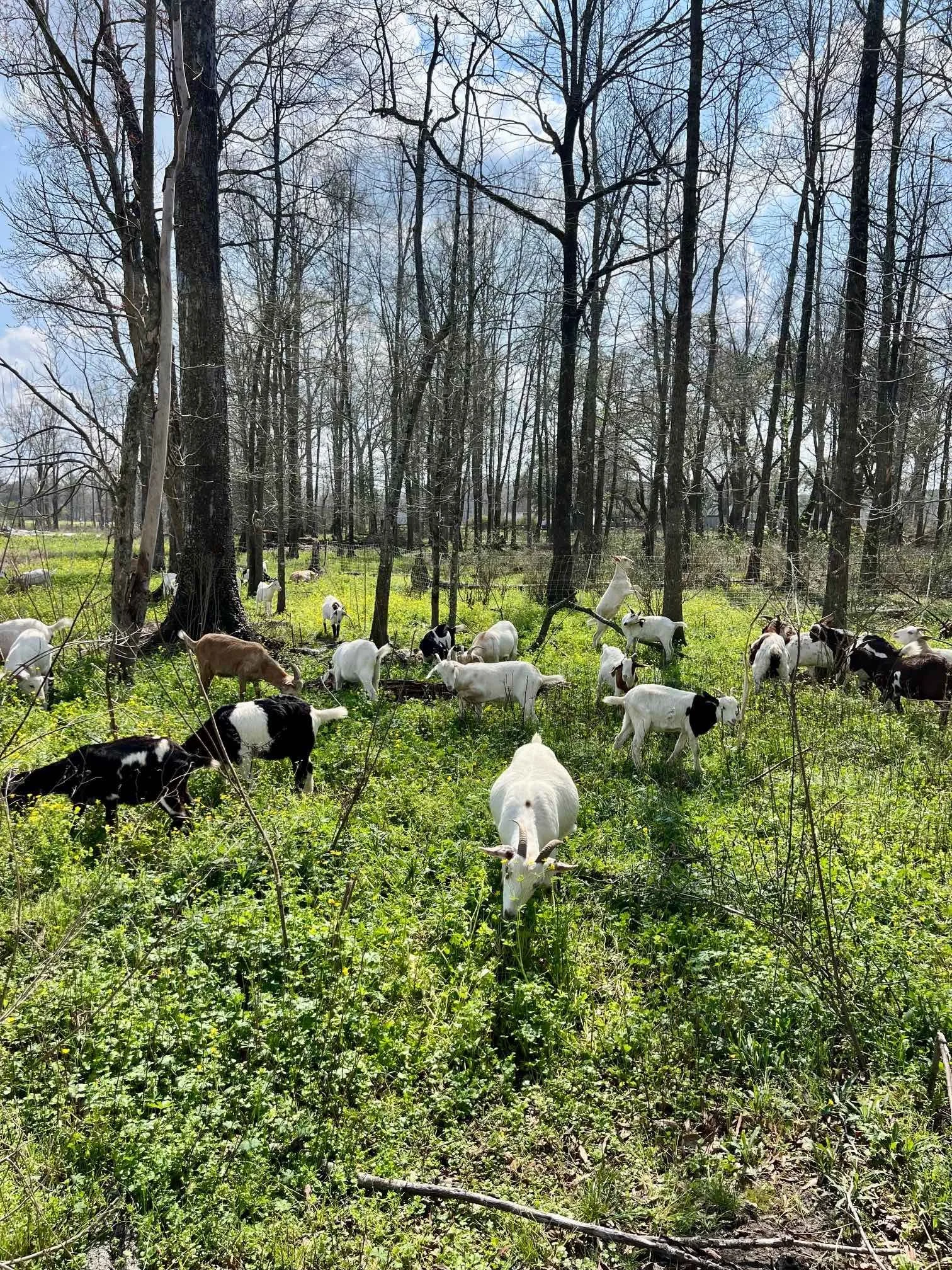
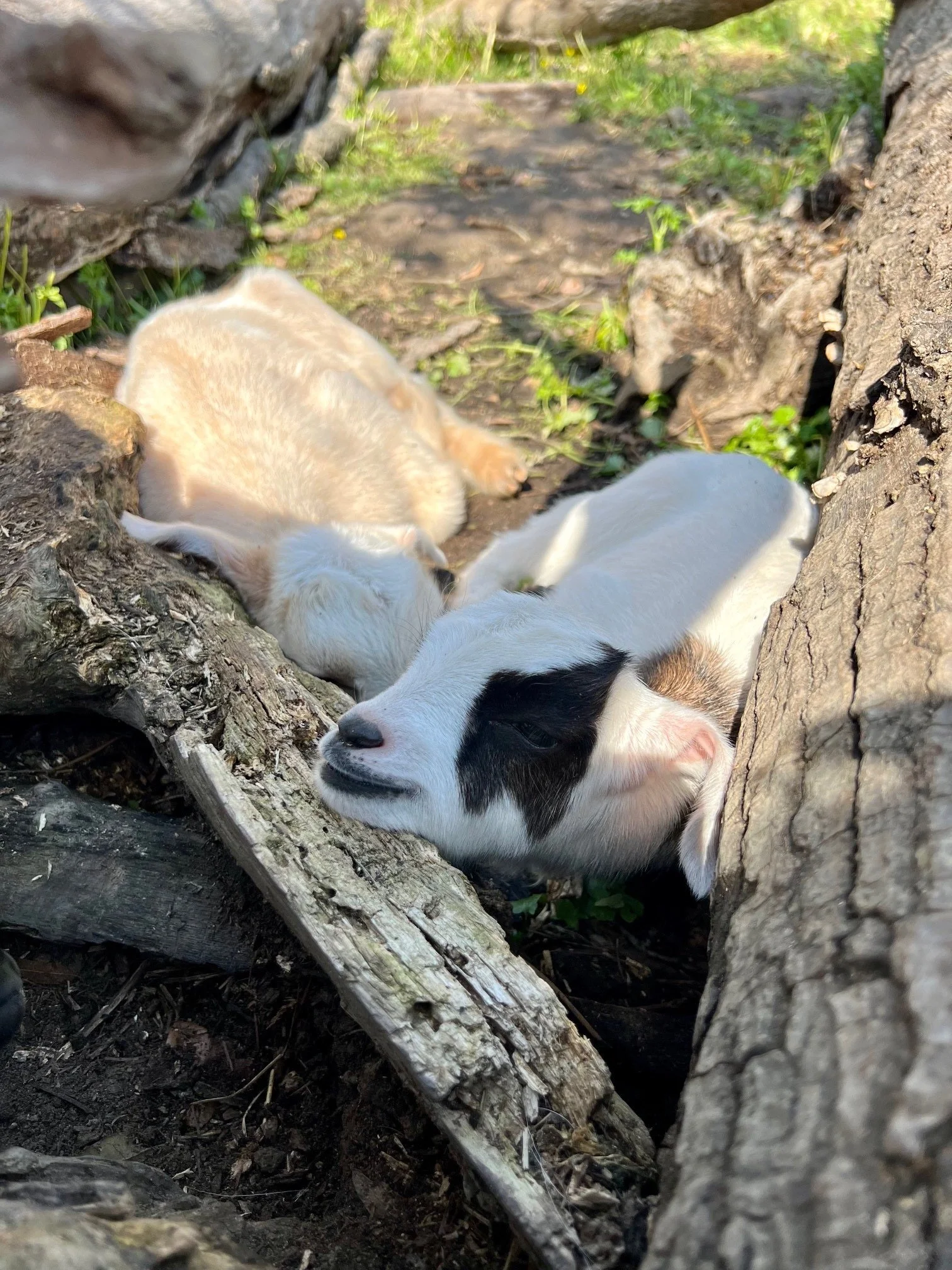
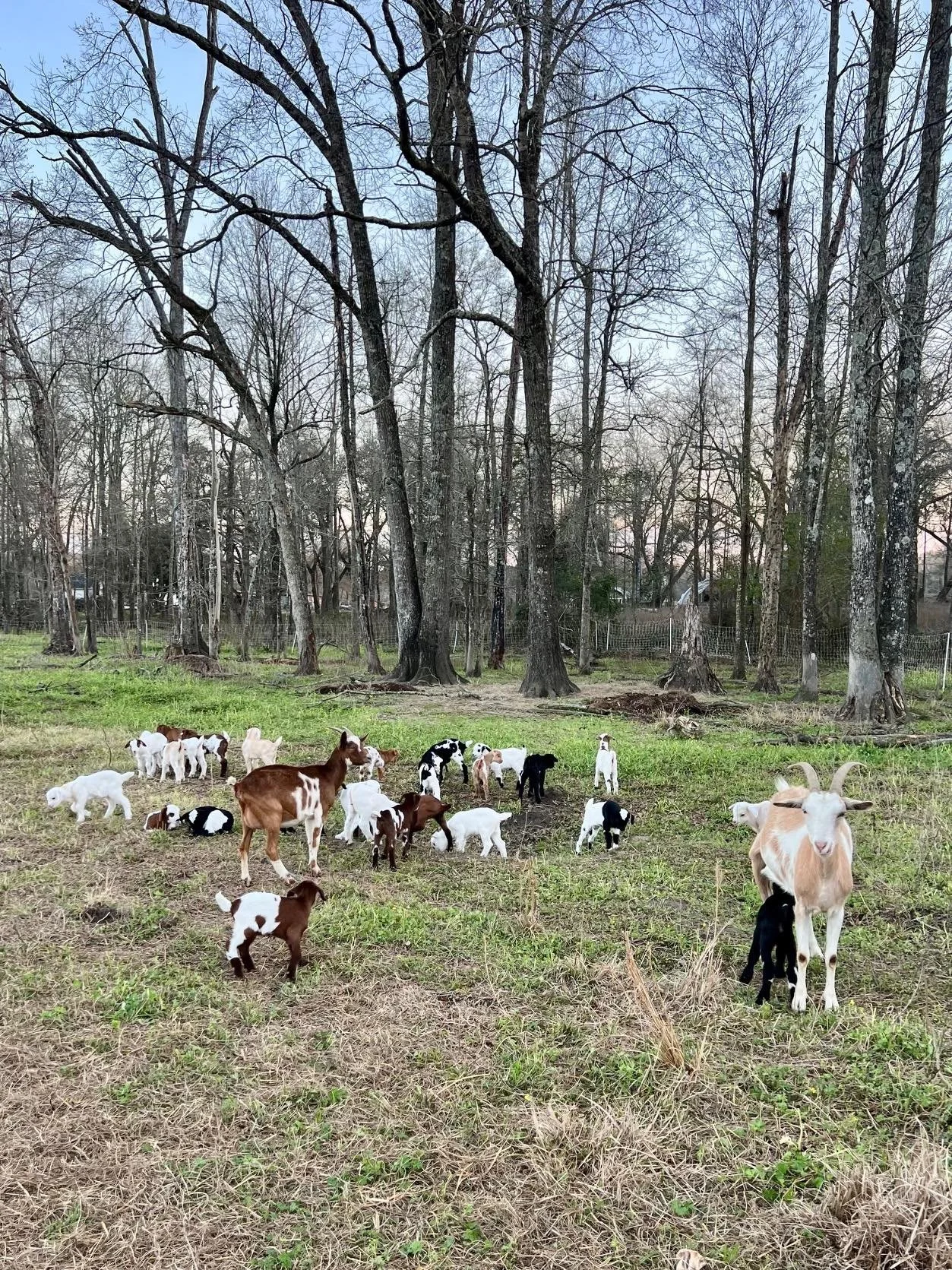
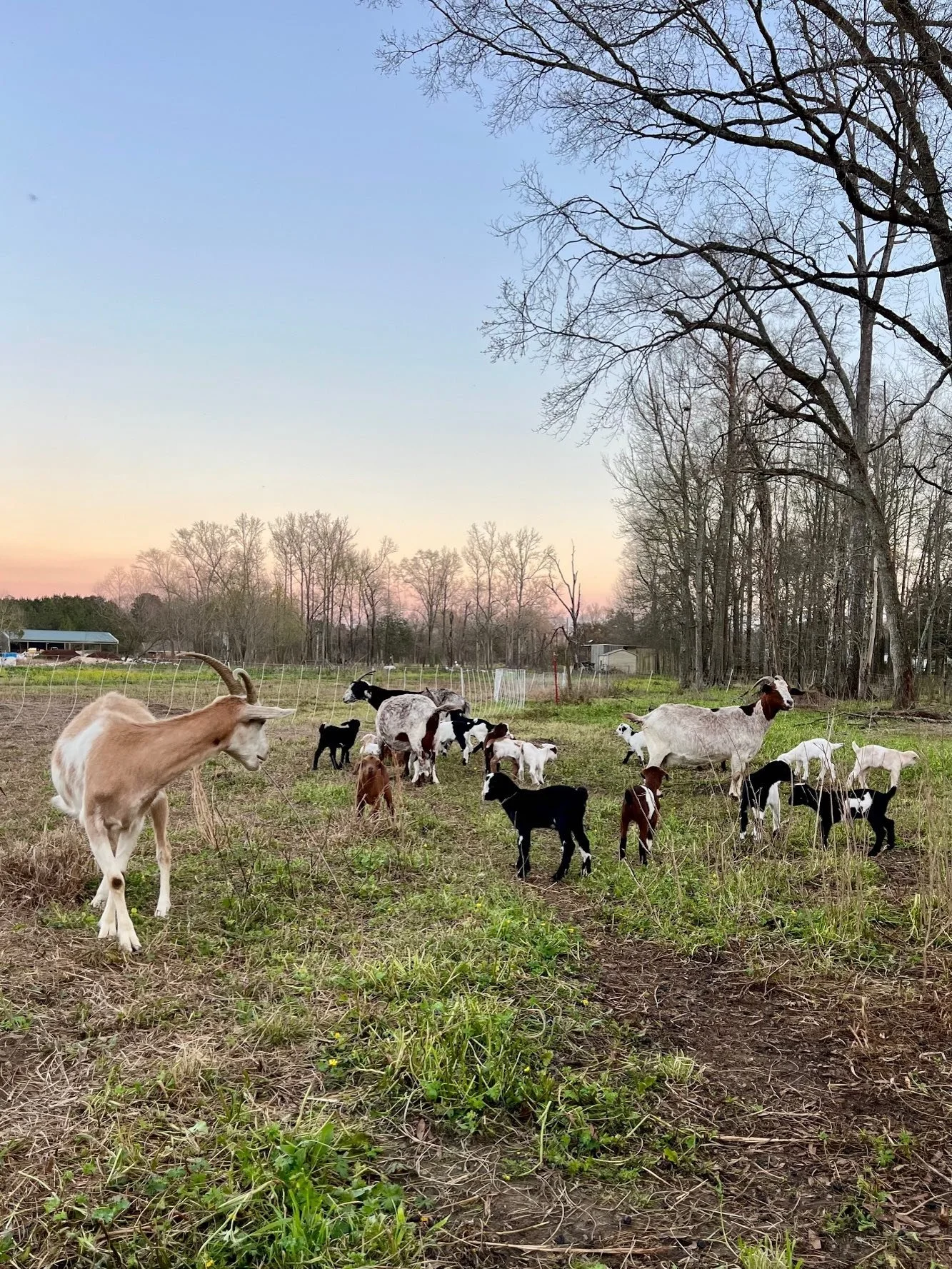
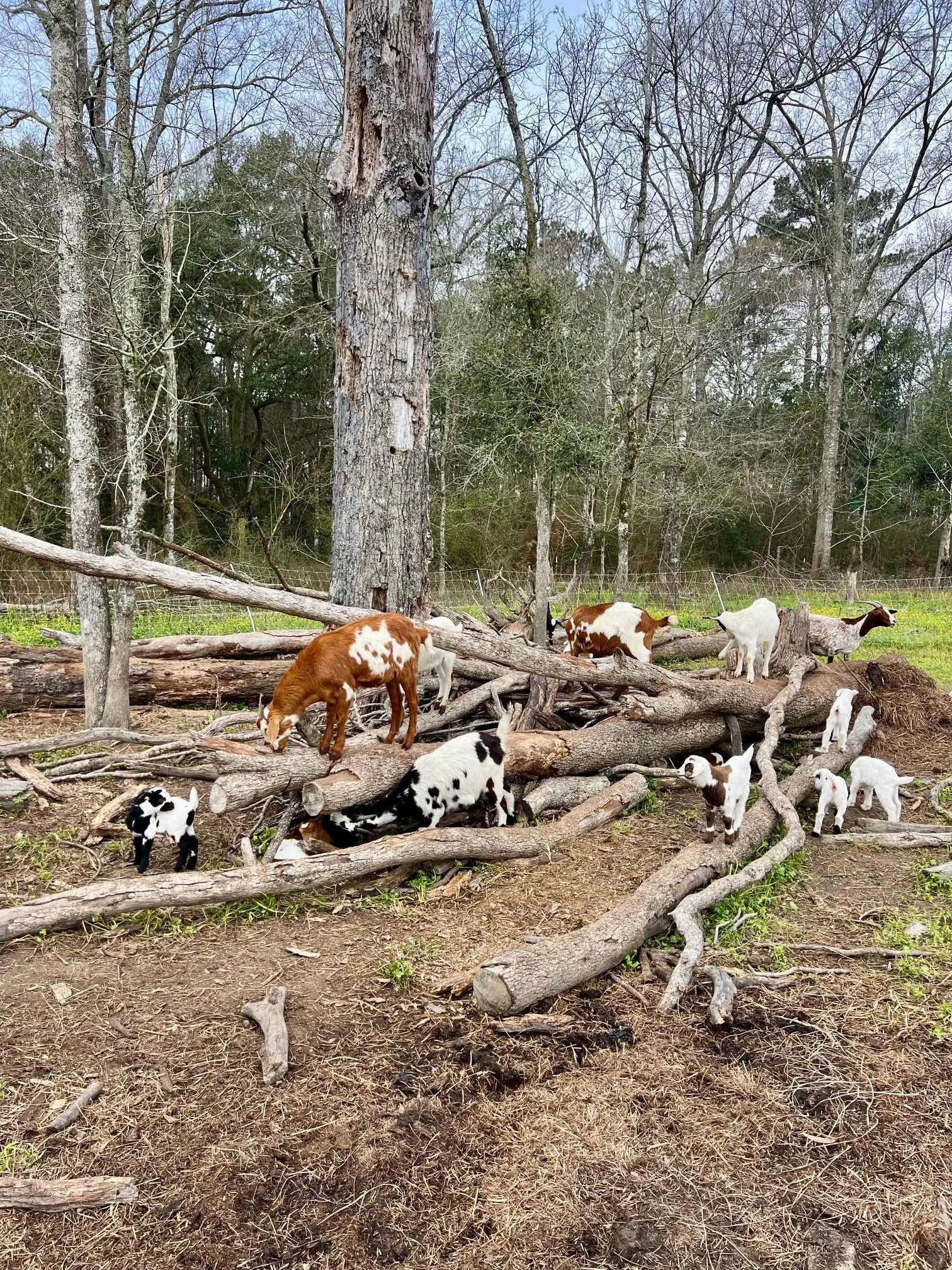
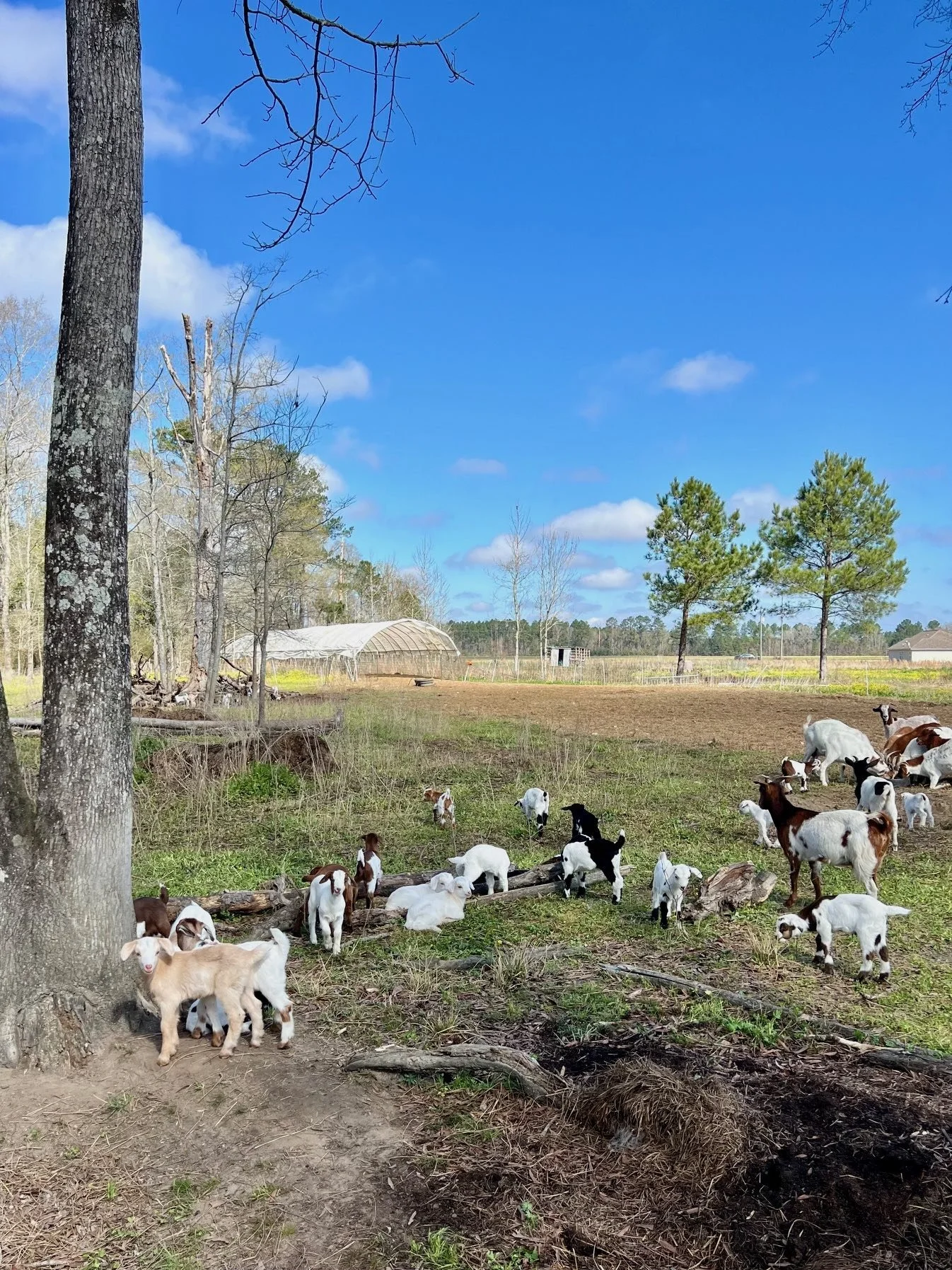
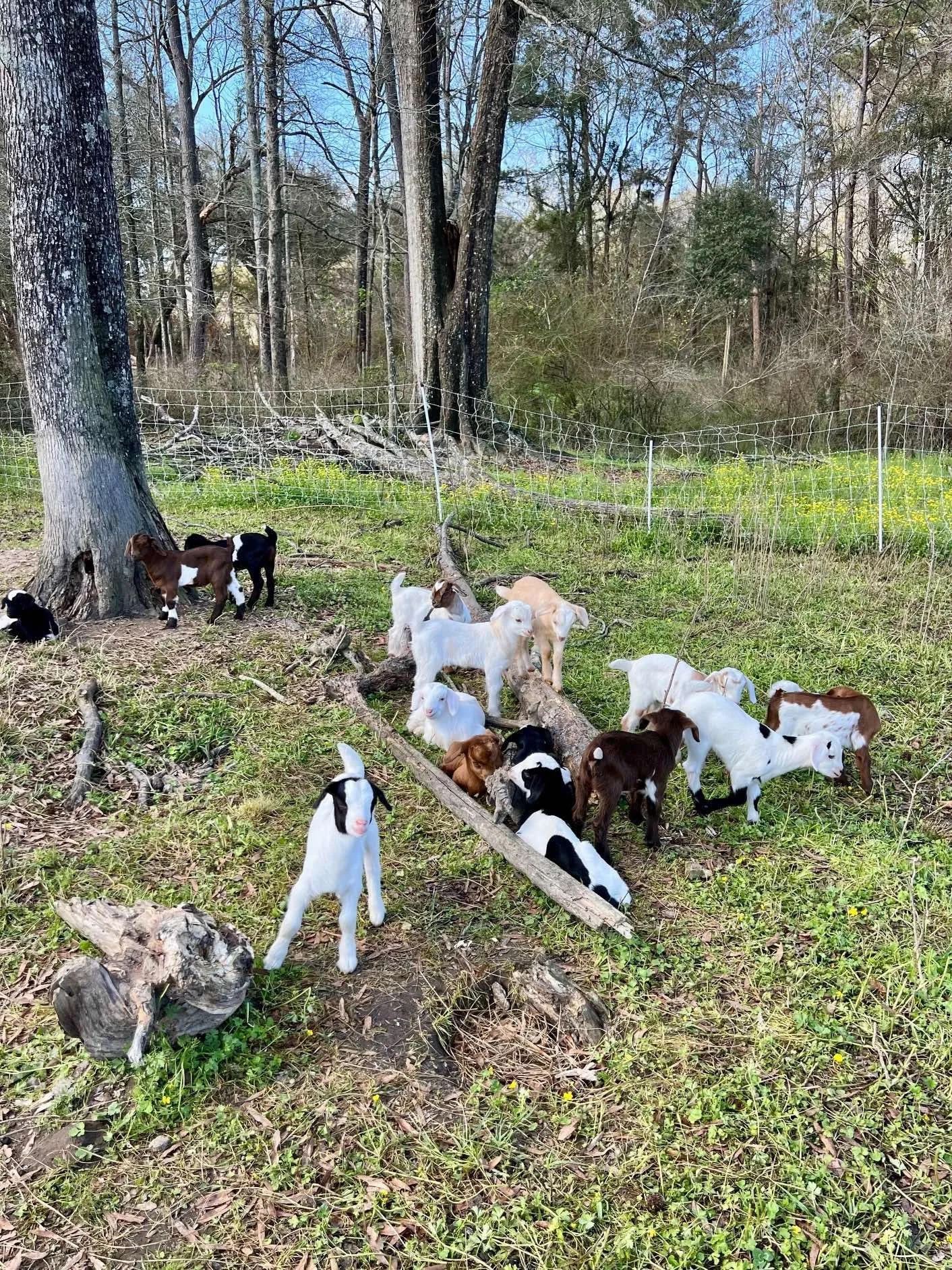
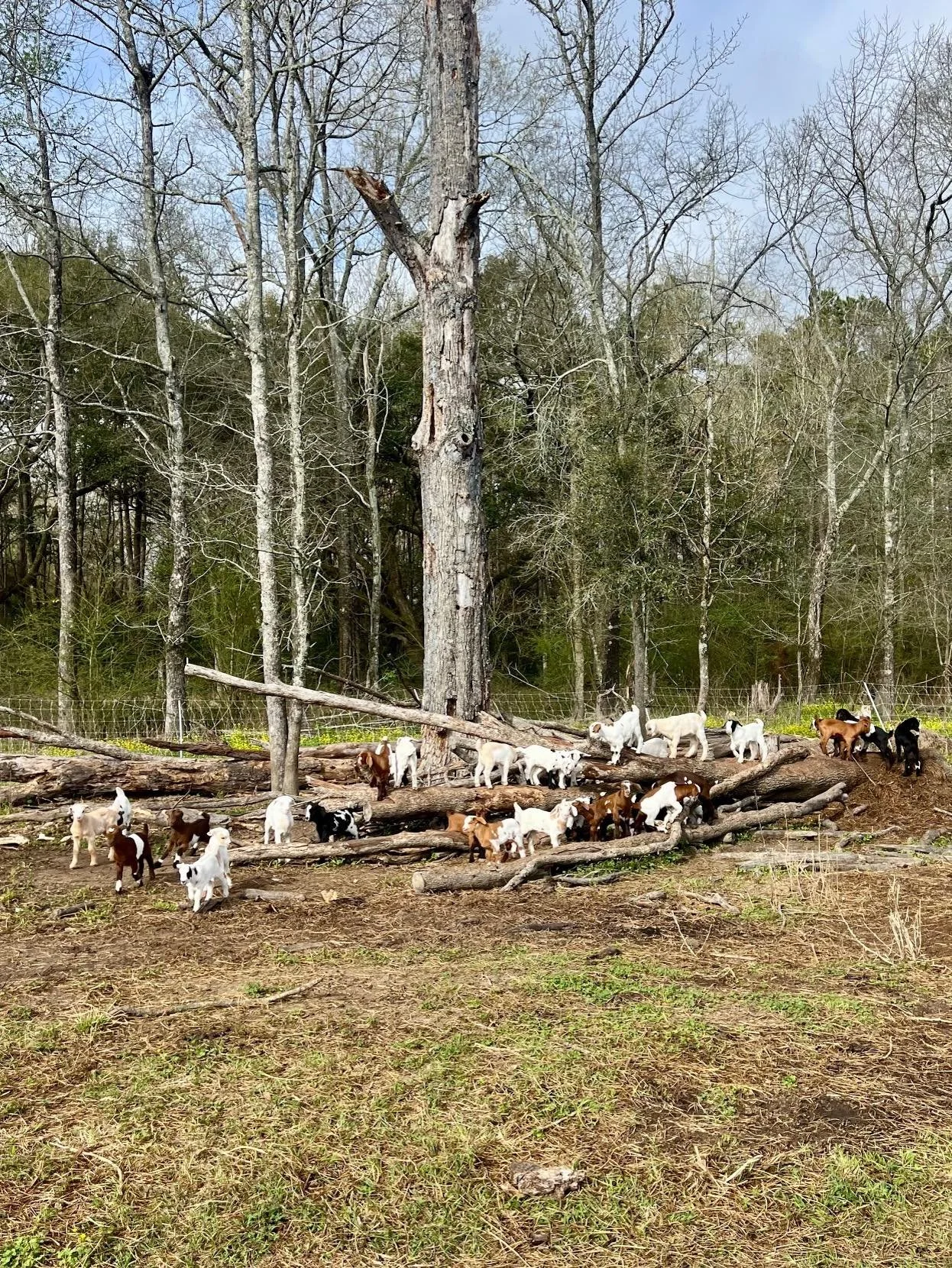
And with such a small cattle herd grazing this year, part of how I convinced Grant to keep back this many goats is because we need SOME ruminants to maintain the pastures in lieu of more bovines!
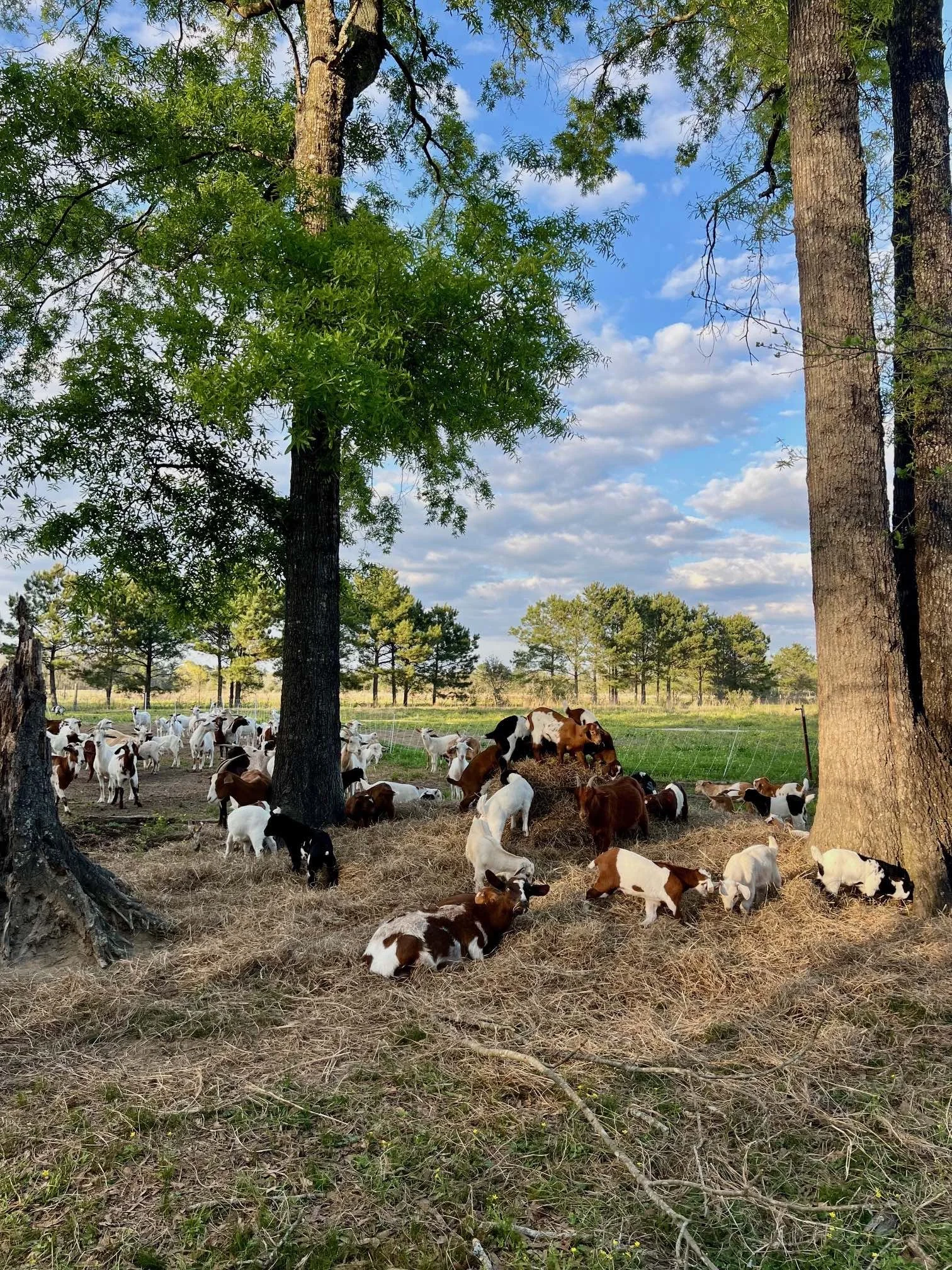
And the goats and their 50+ kids have been starting to do just that for the season, grazing all the nearby fields during the day and coming back to the hoophouse paddock at night, totally tuckered out.
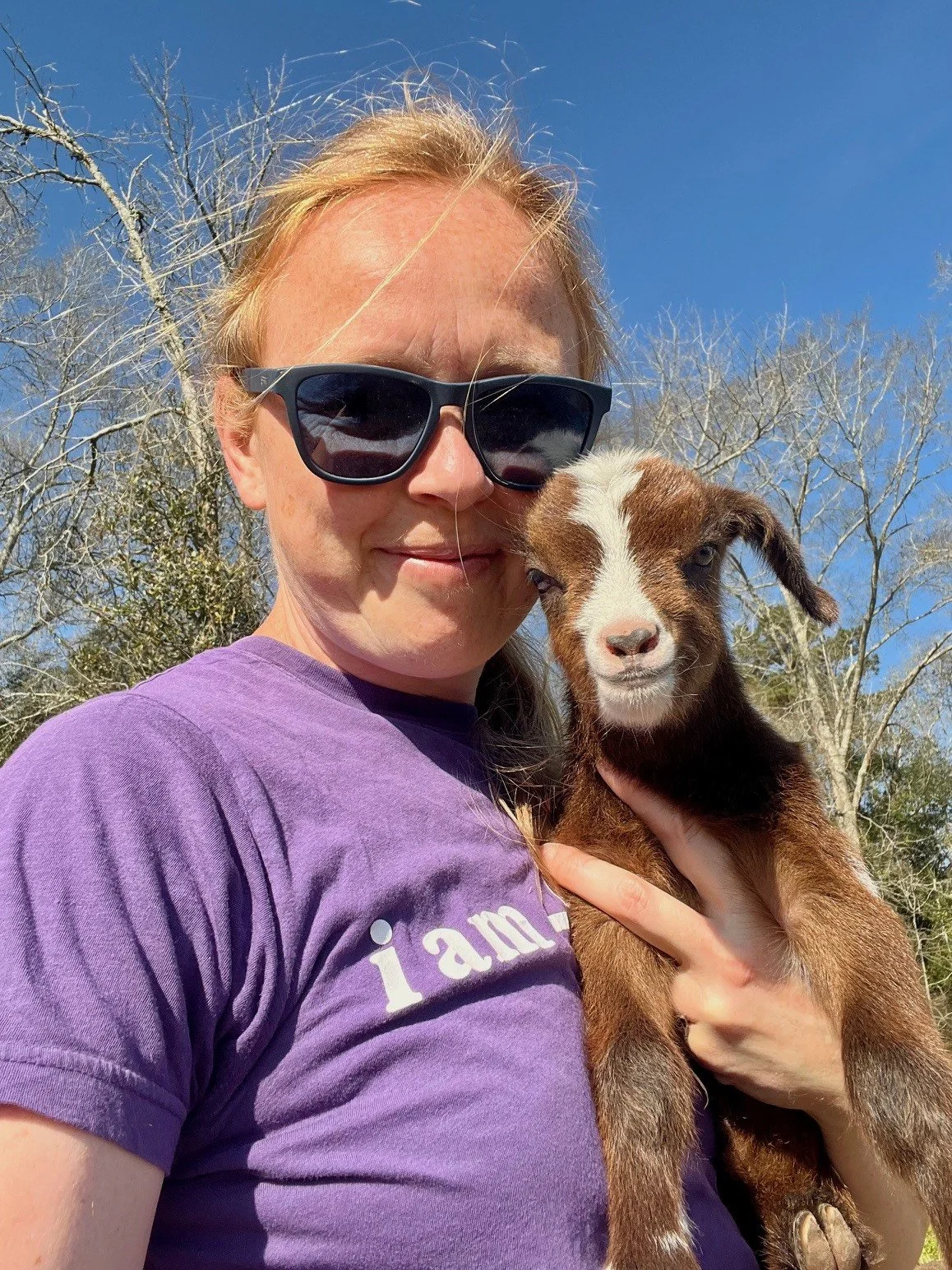
I take so many pictures of the goats, especially during kidding season, so most of these are actually from late February and the beginning of March before we started grazing them again every day.
The kids have such a fun dynamic at this age, transitioning from their really sleepy newborn phase to doing group wind sprints and jumping and climbing on everything they can find.
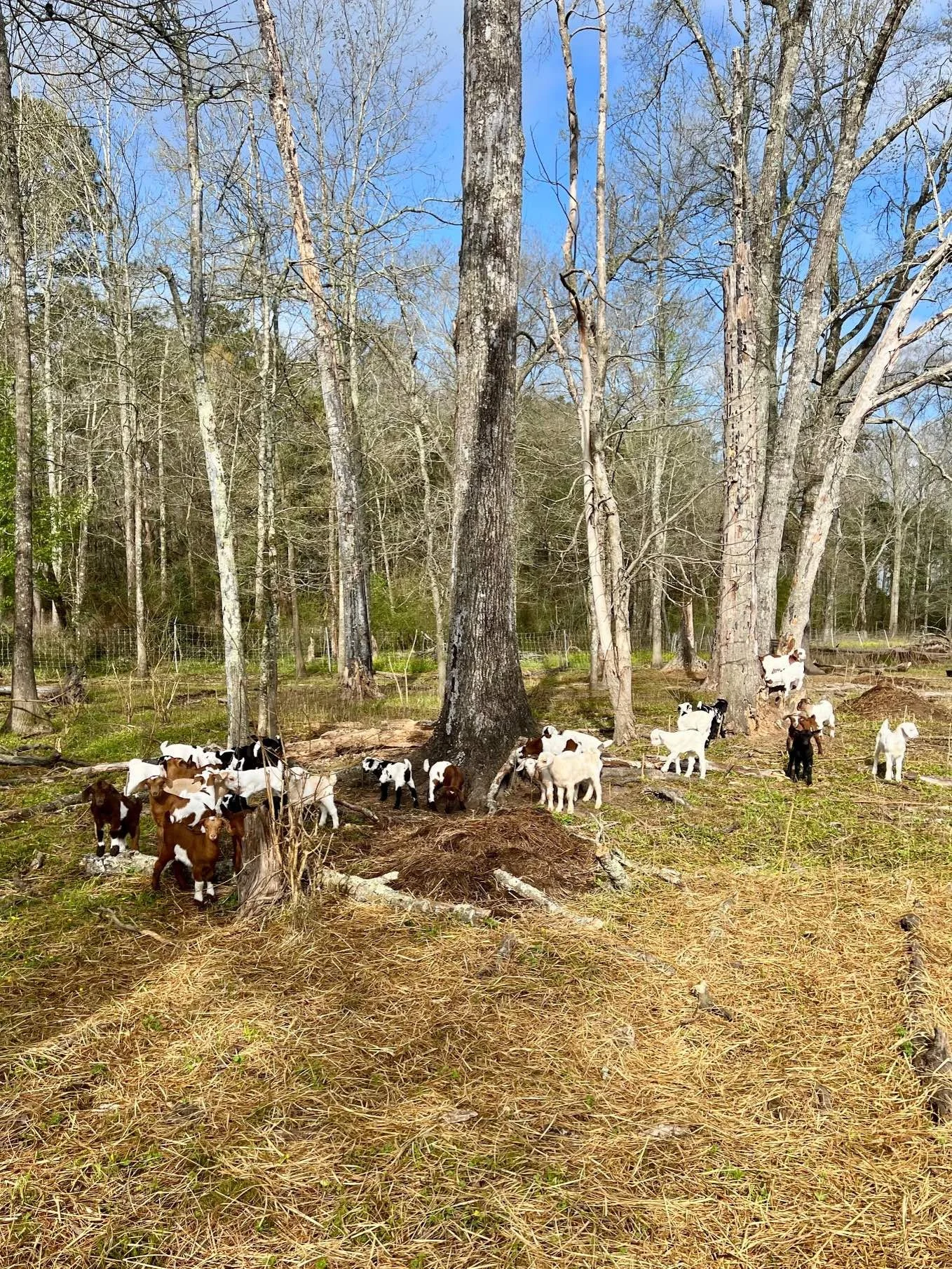
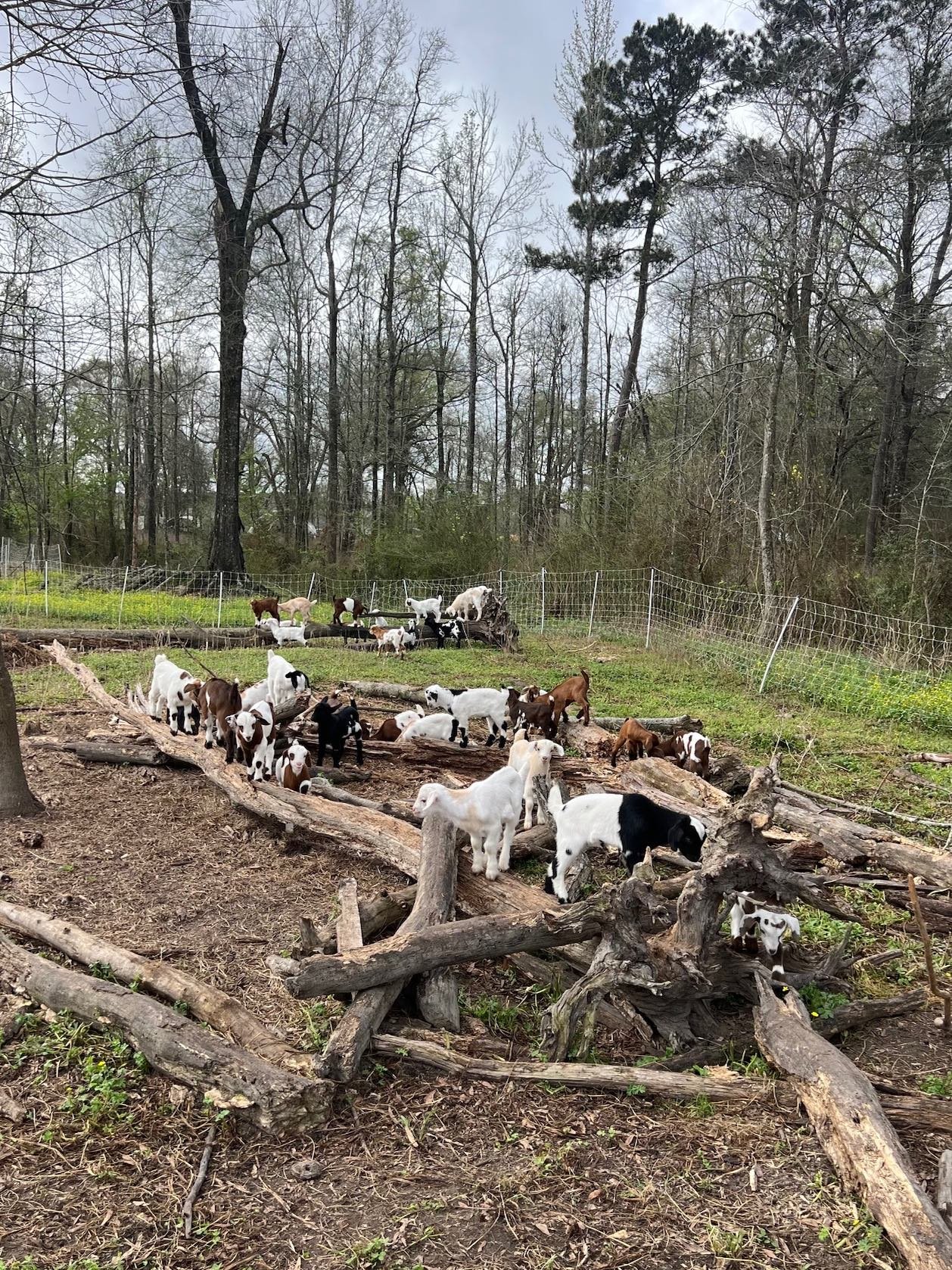
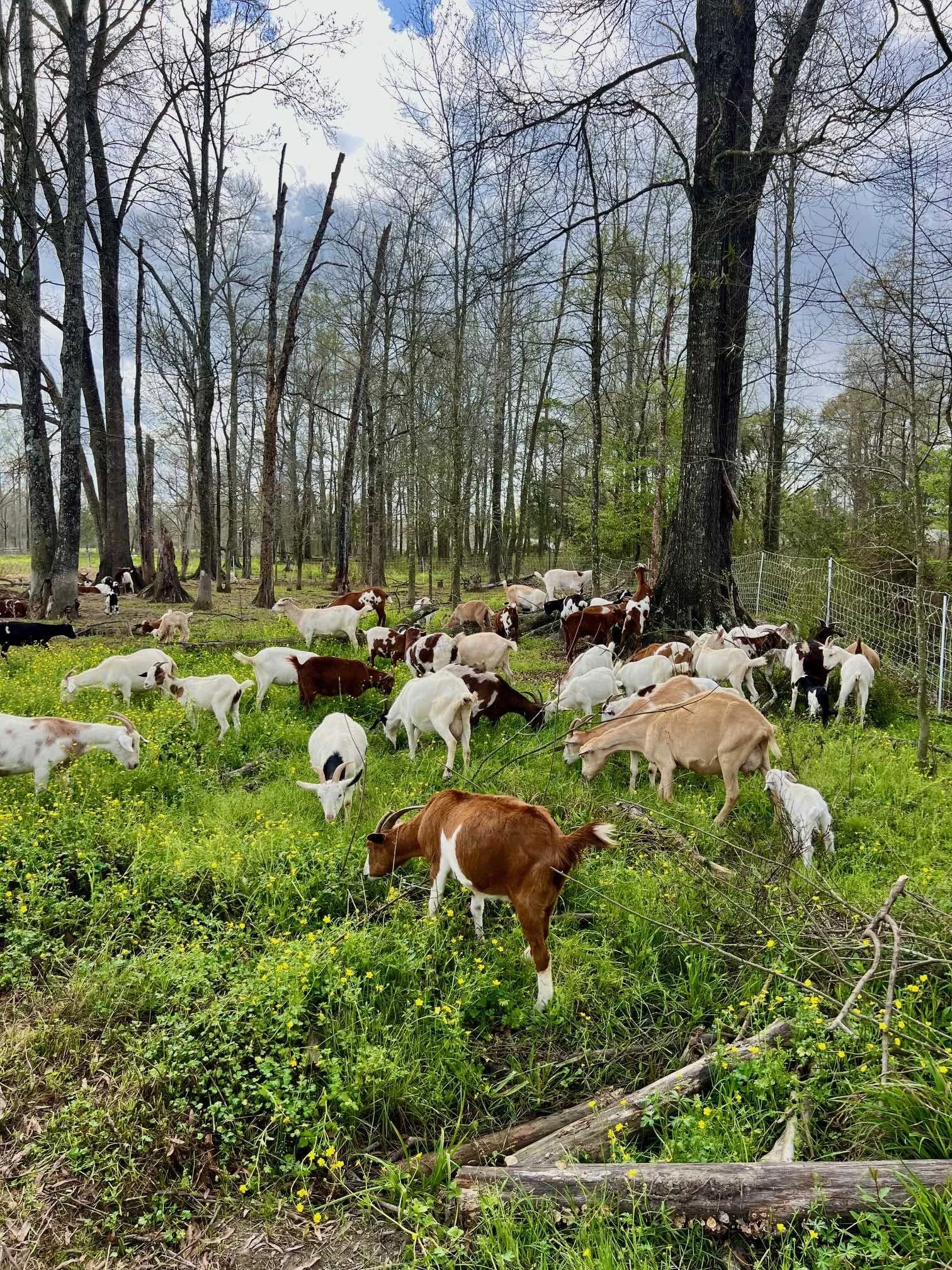
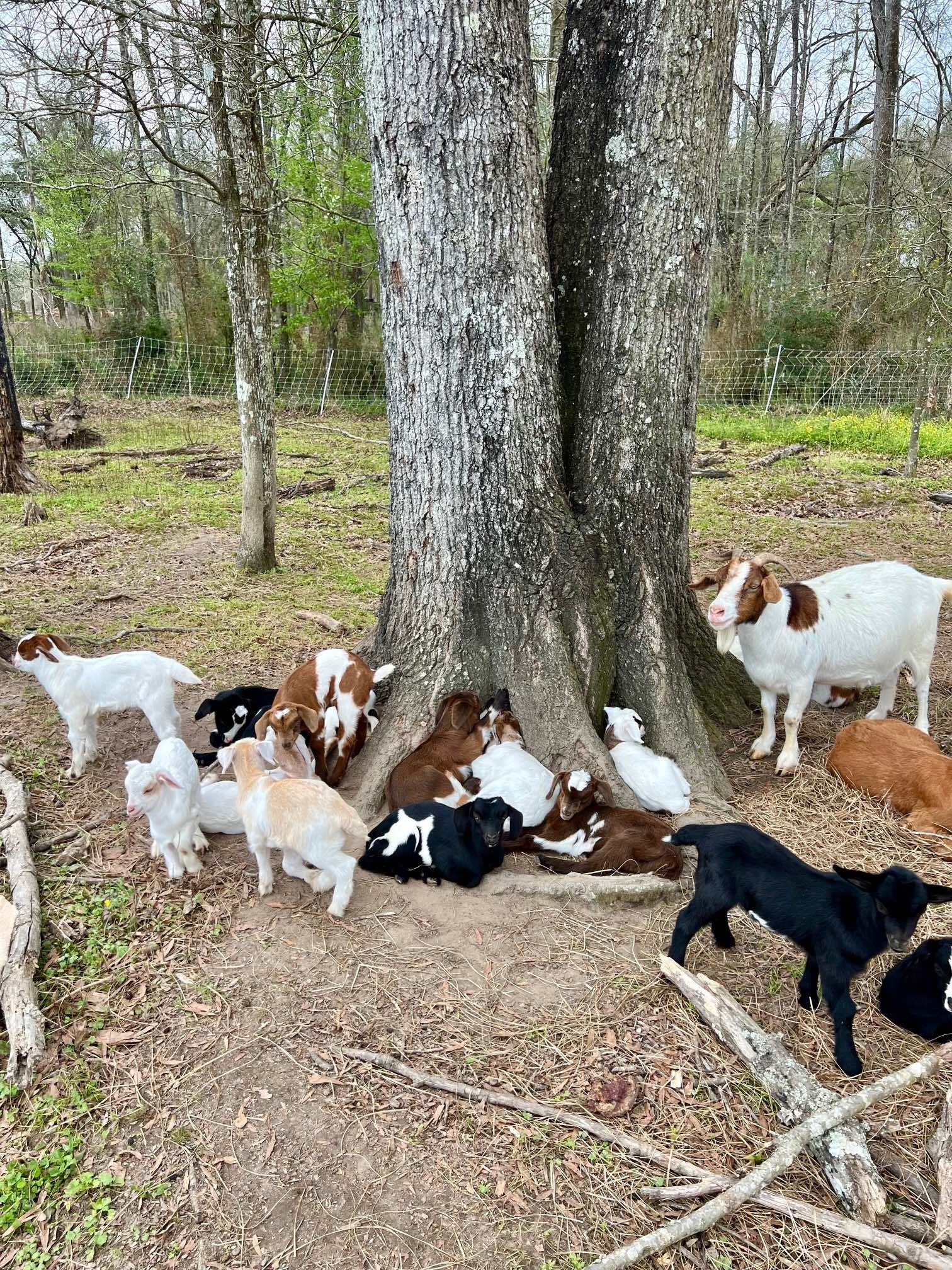
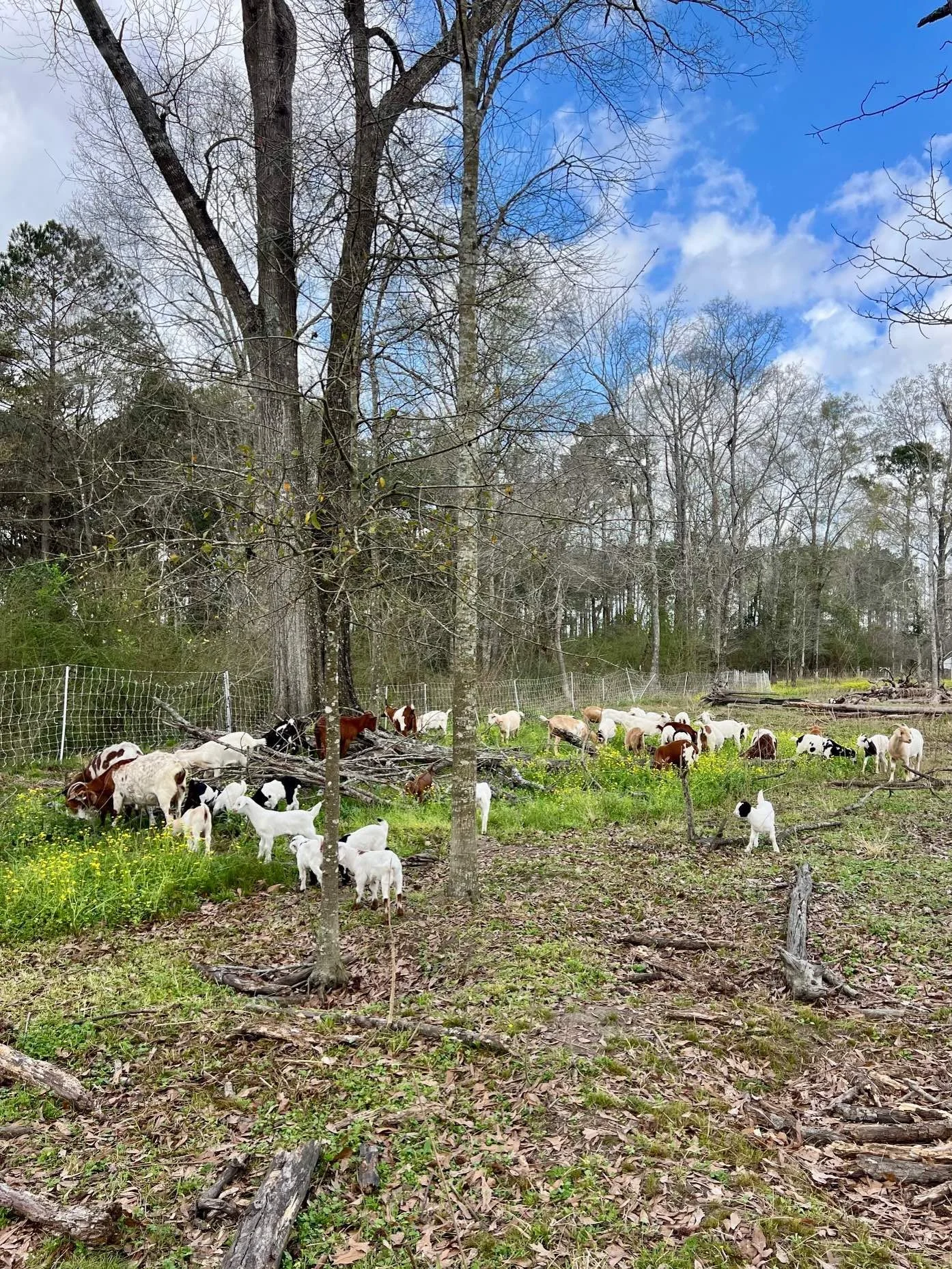
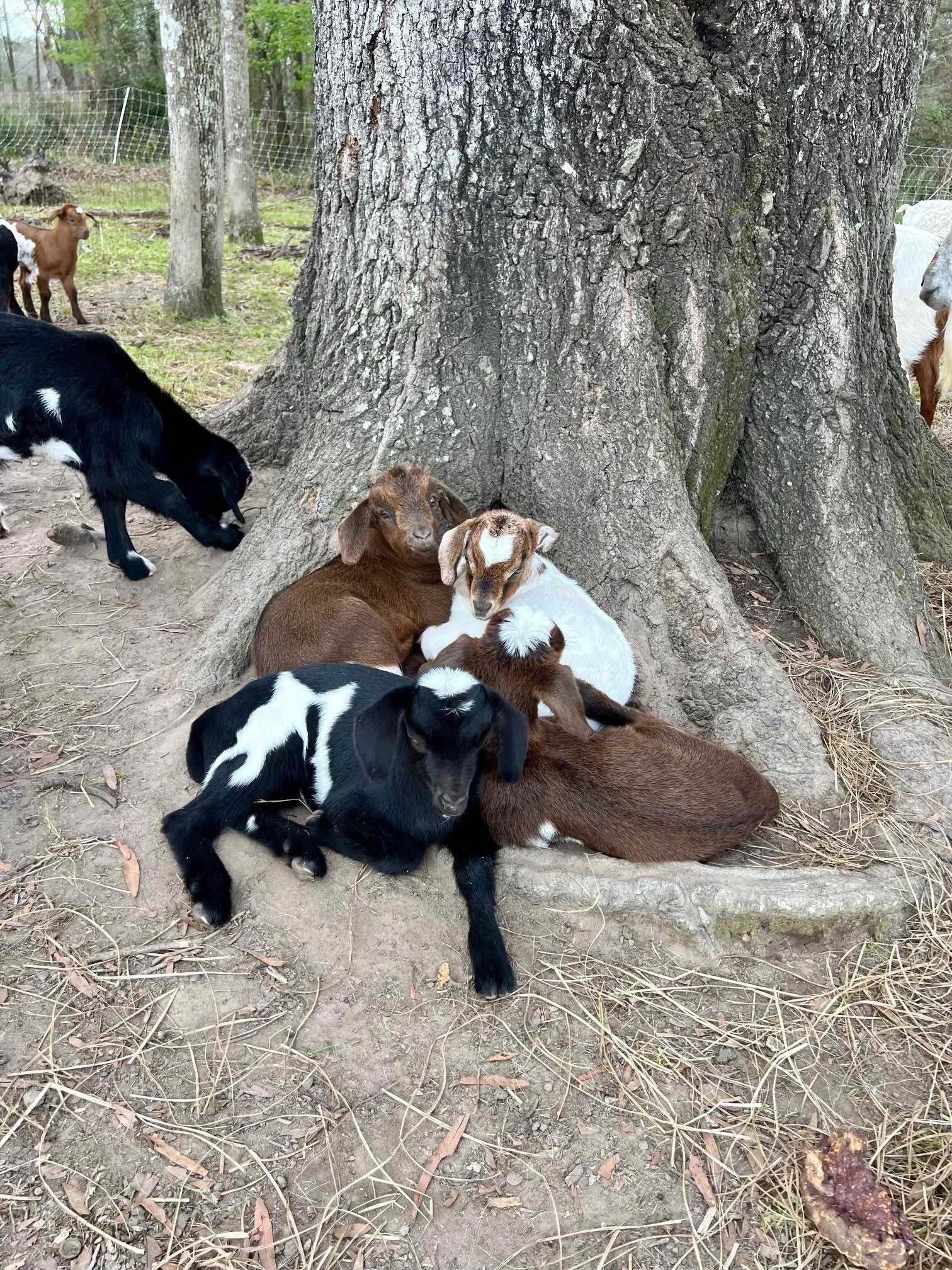
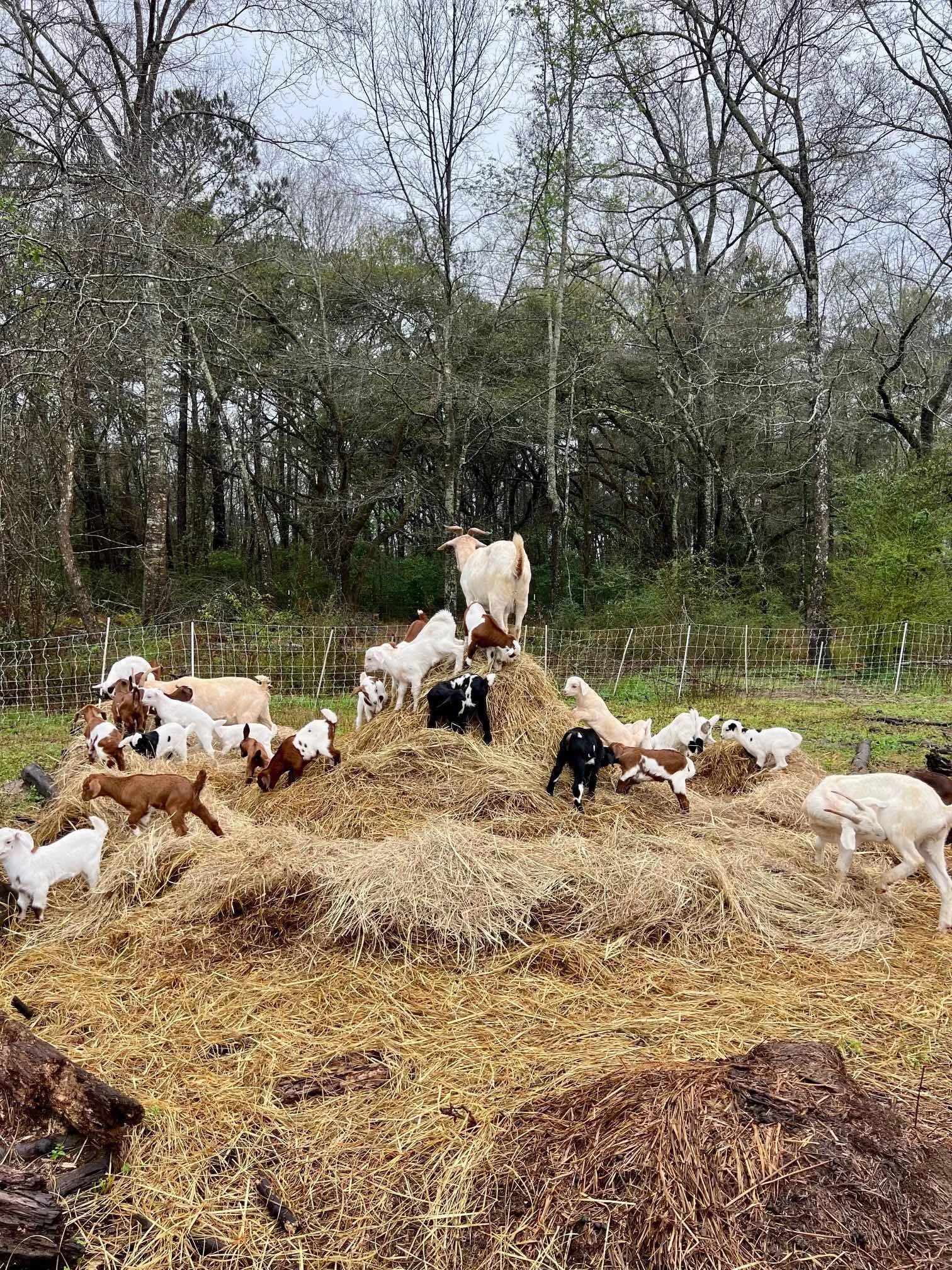
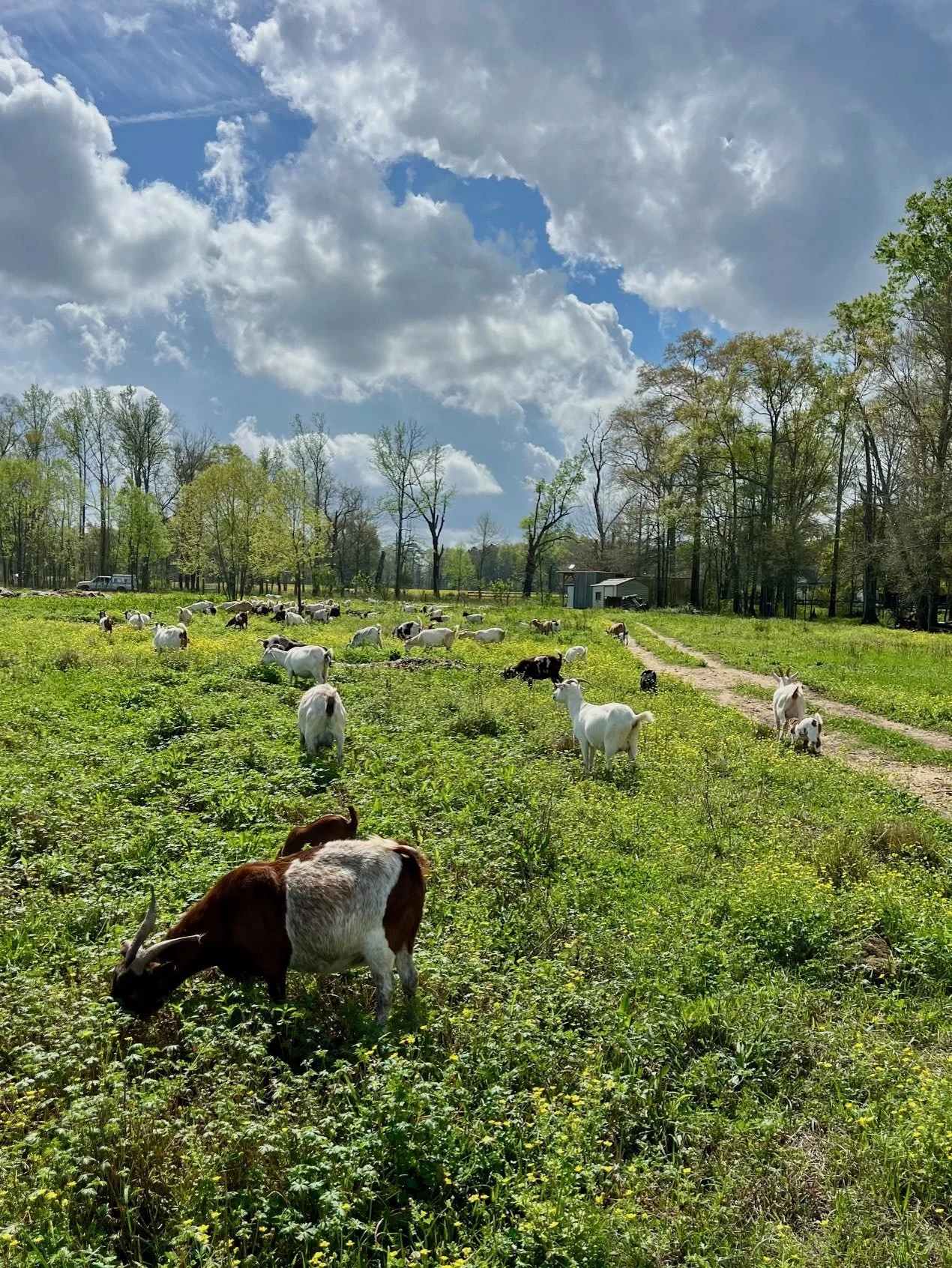
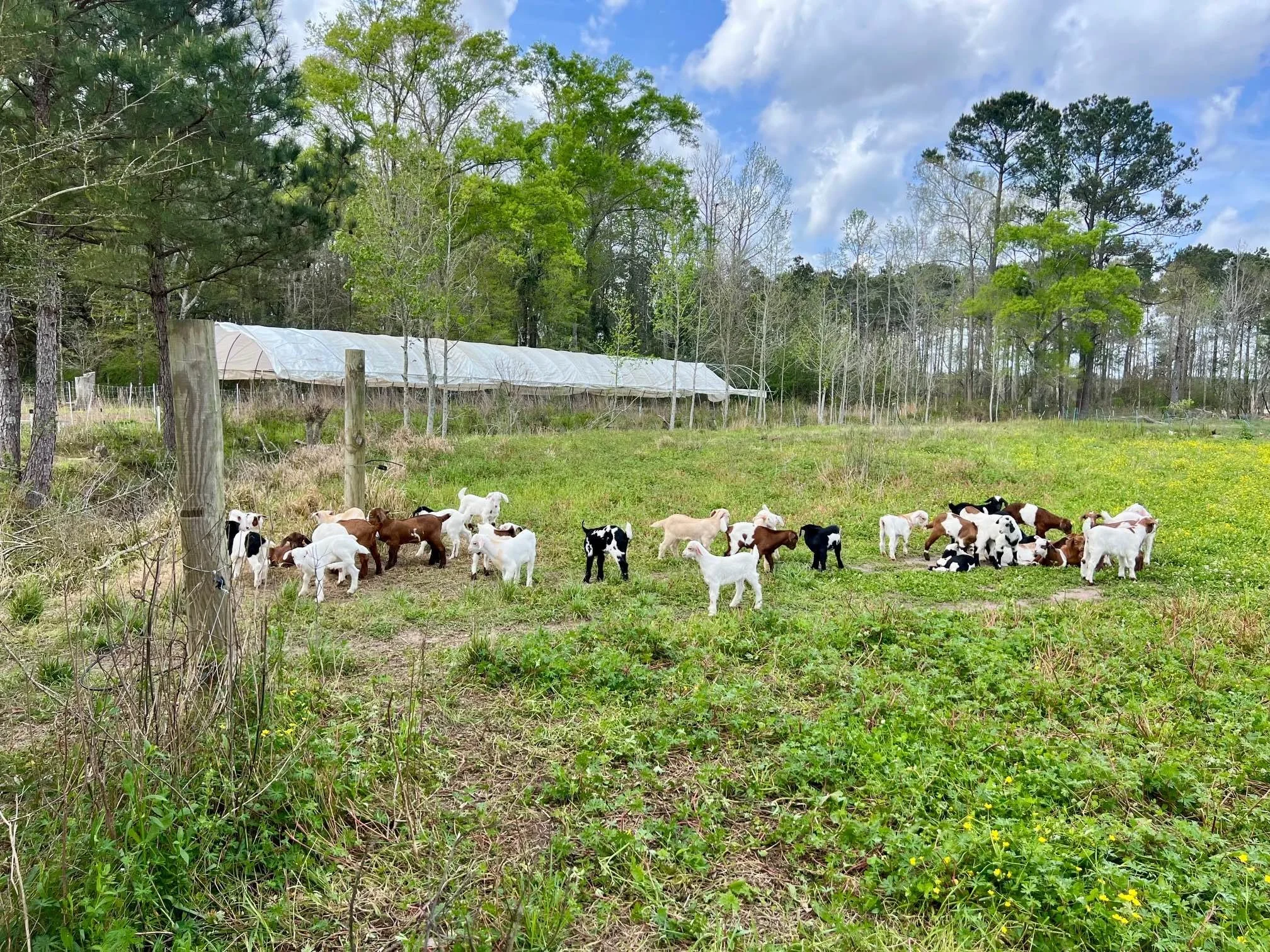
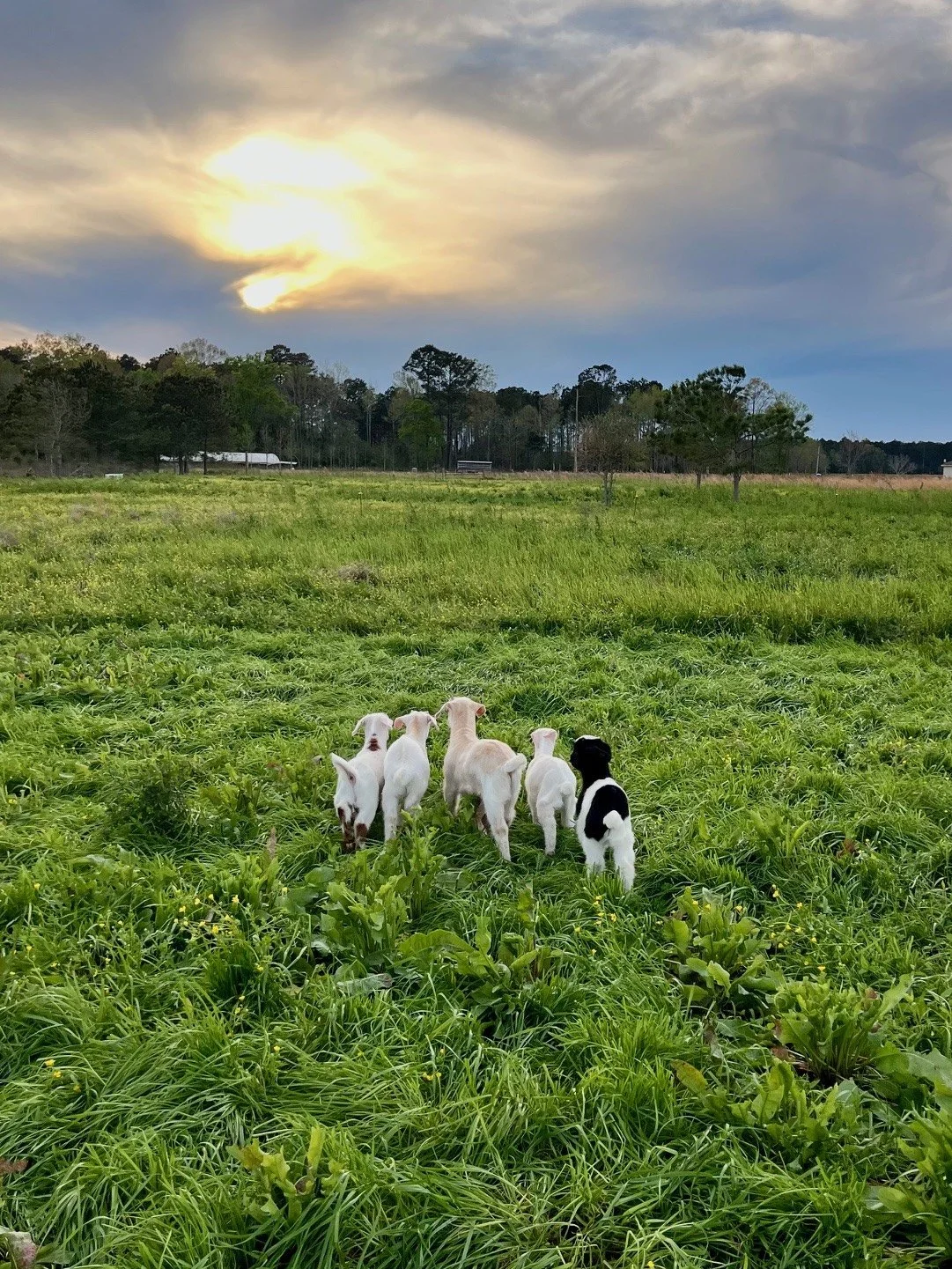
One evening I was walking out to check on a newborn kid and his momma (we had a few outlier kids born in mid March) and noticed a group of five kids had gotten left behind when Grant put the herd up an hour earlier or so.
I wasn't sure how easy it was going to be to herd the kids back to the hoophouse, but they figured it out pretty easily and eventually ran ahead of me back to their moms! It was like the five musketeers!
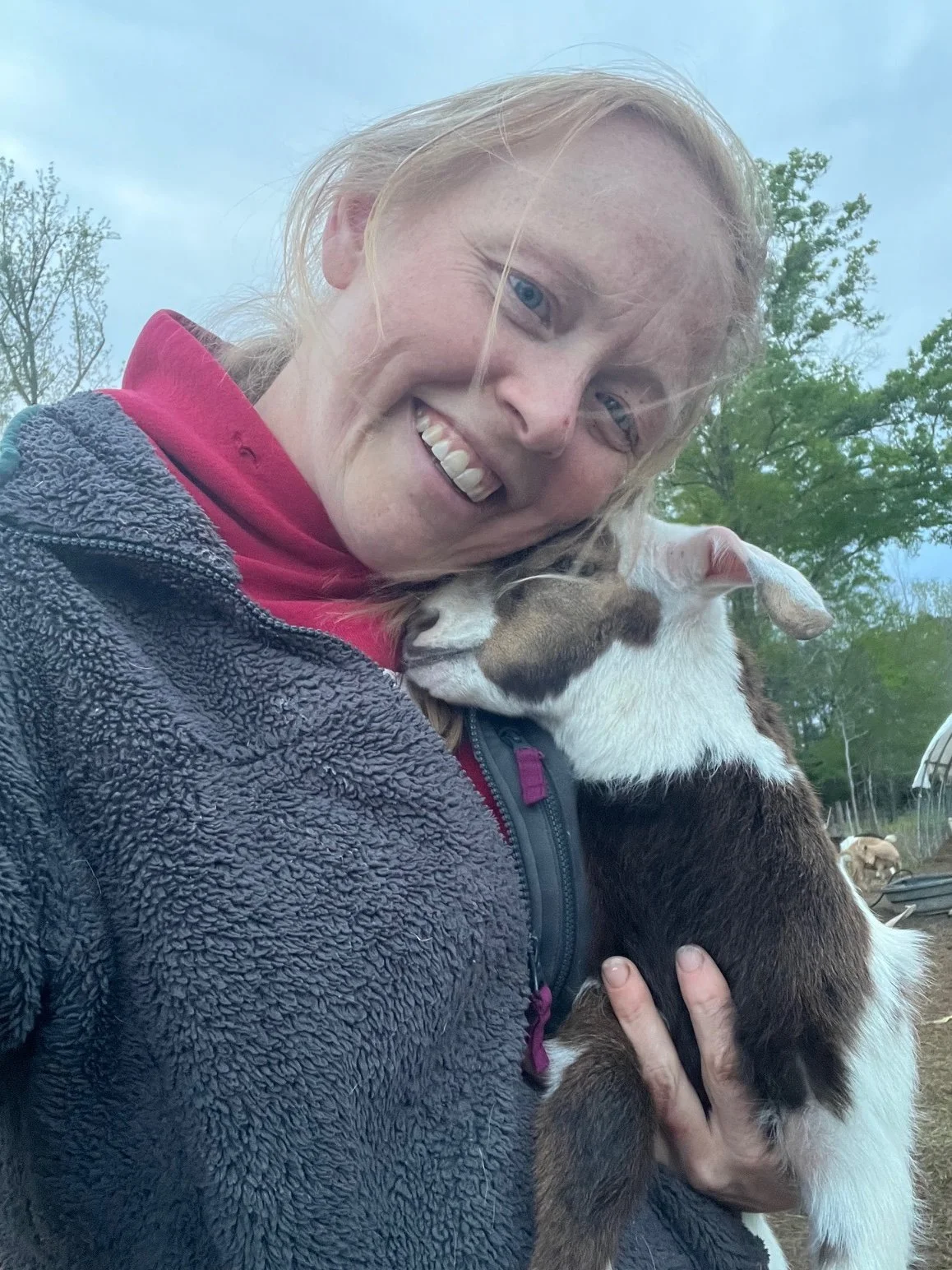
Their little individual personalities are starting to come out, too, and one of my friendliest does once again has a buckling that is the bravest and the most curious to come up to me for pets, even though I’ve never given him a bottle or anything like that. The way genetics do and don’t influence temperament is endlessly interesting to me.
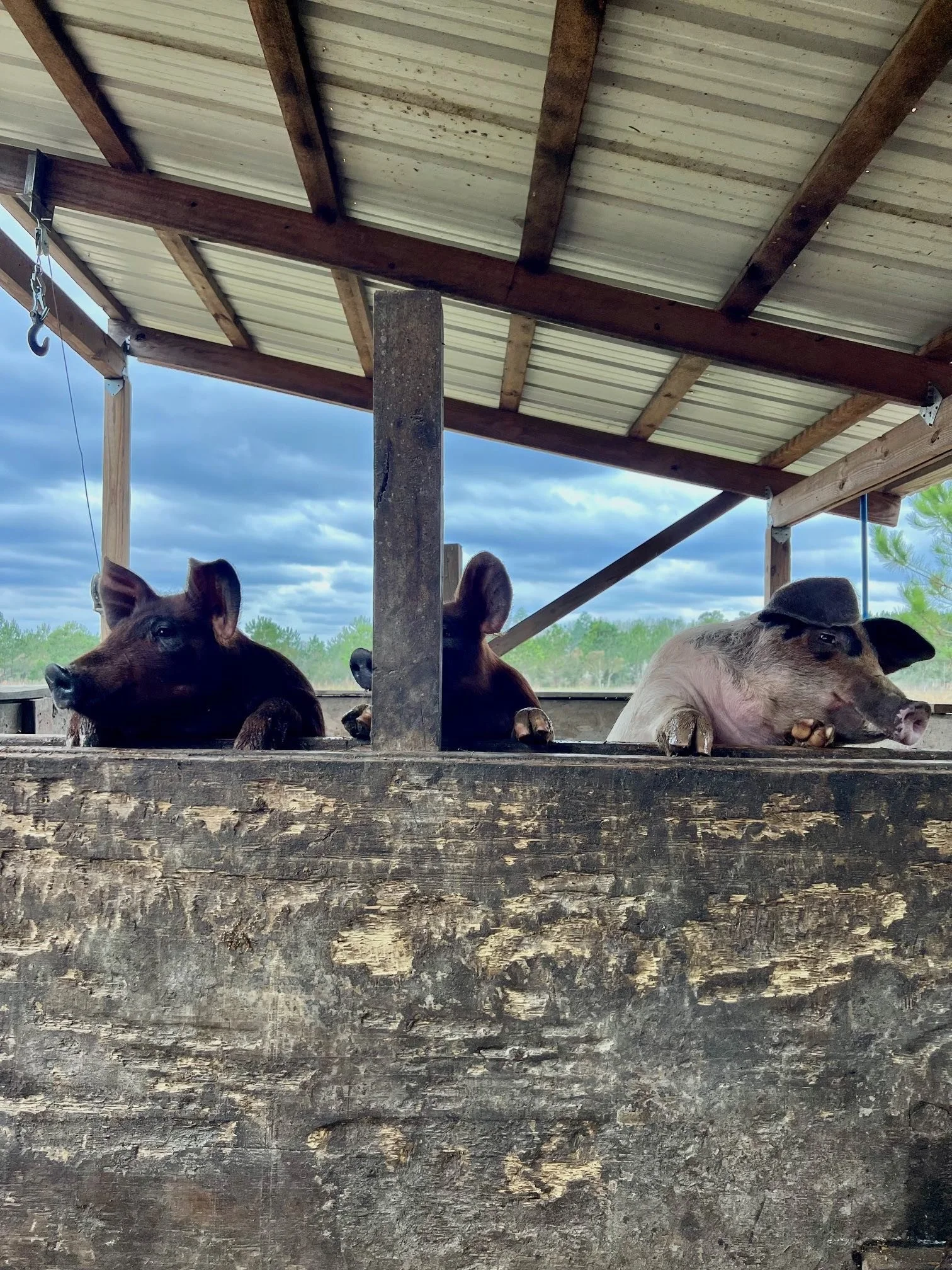
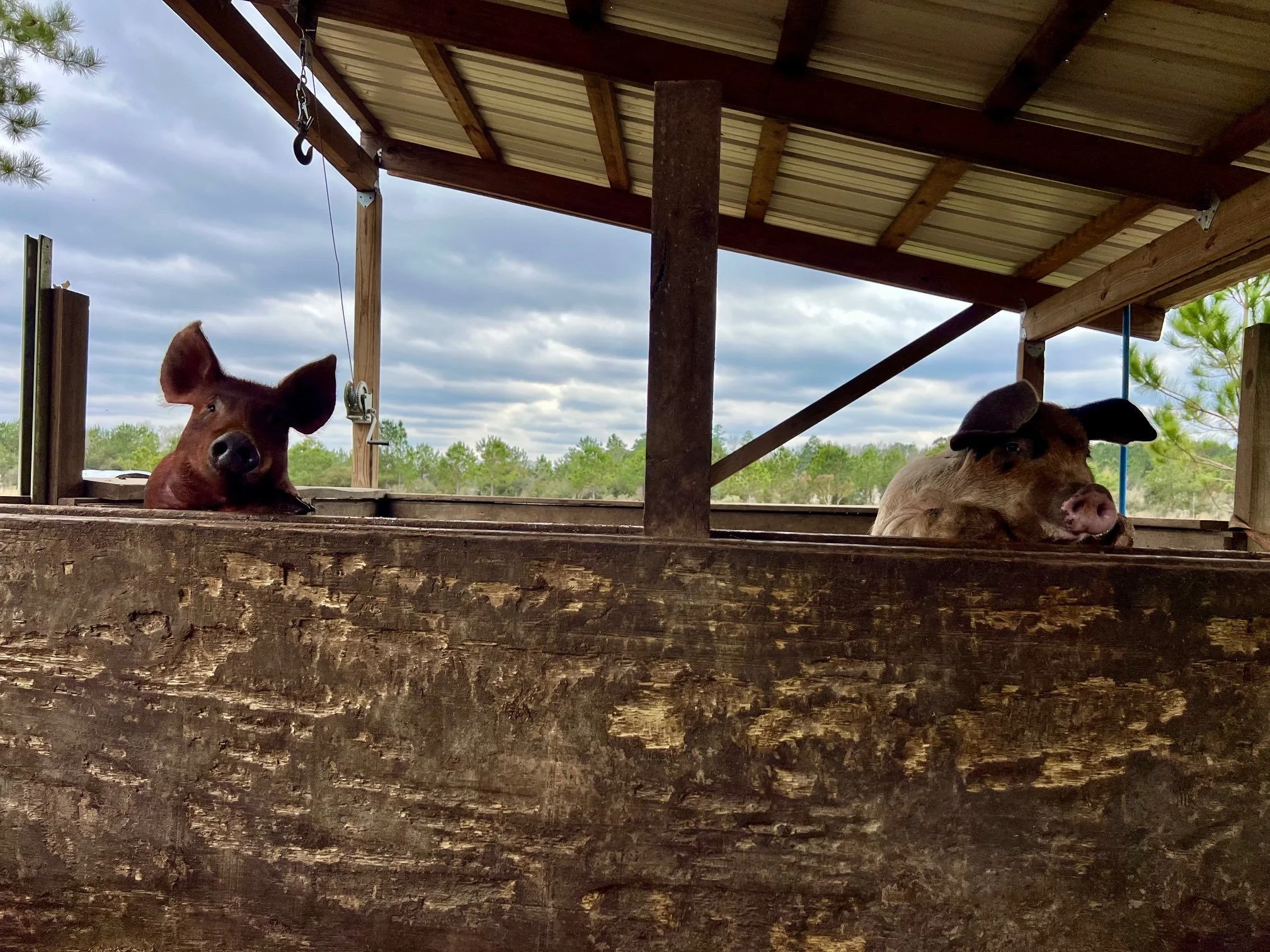
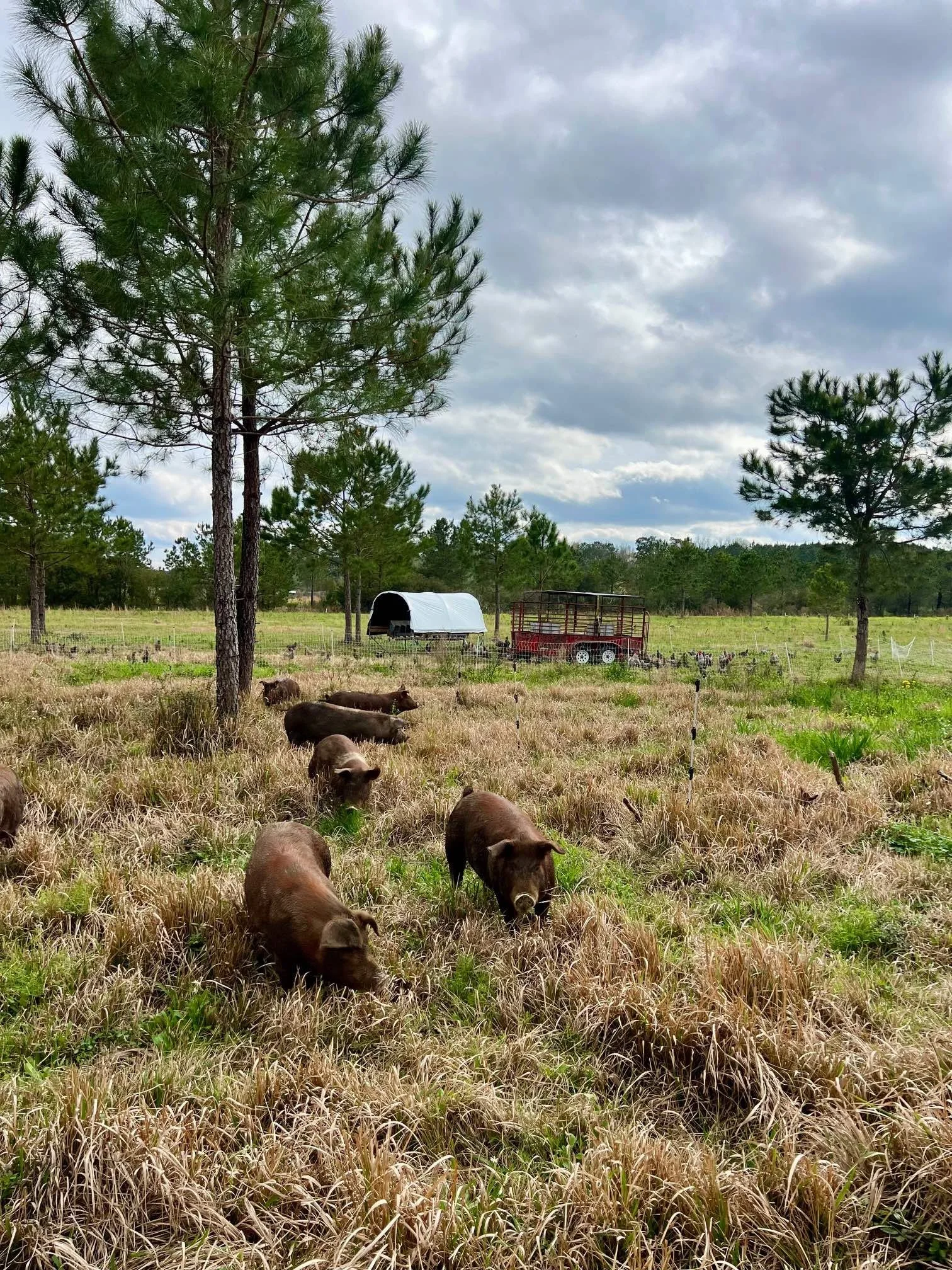
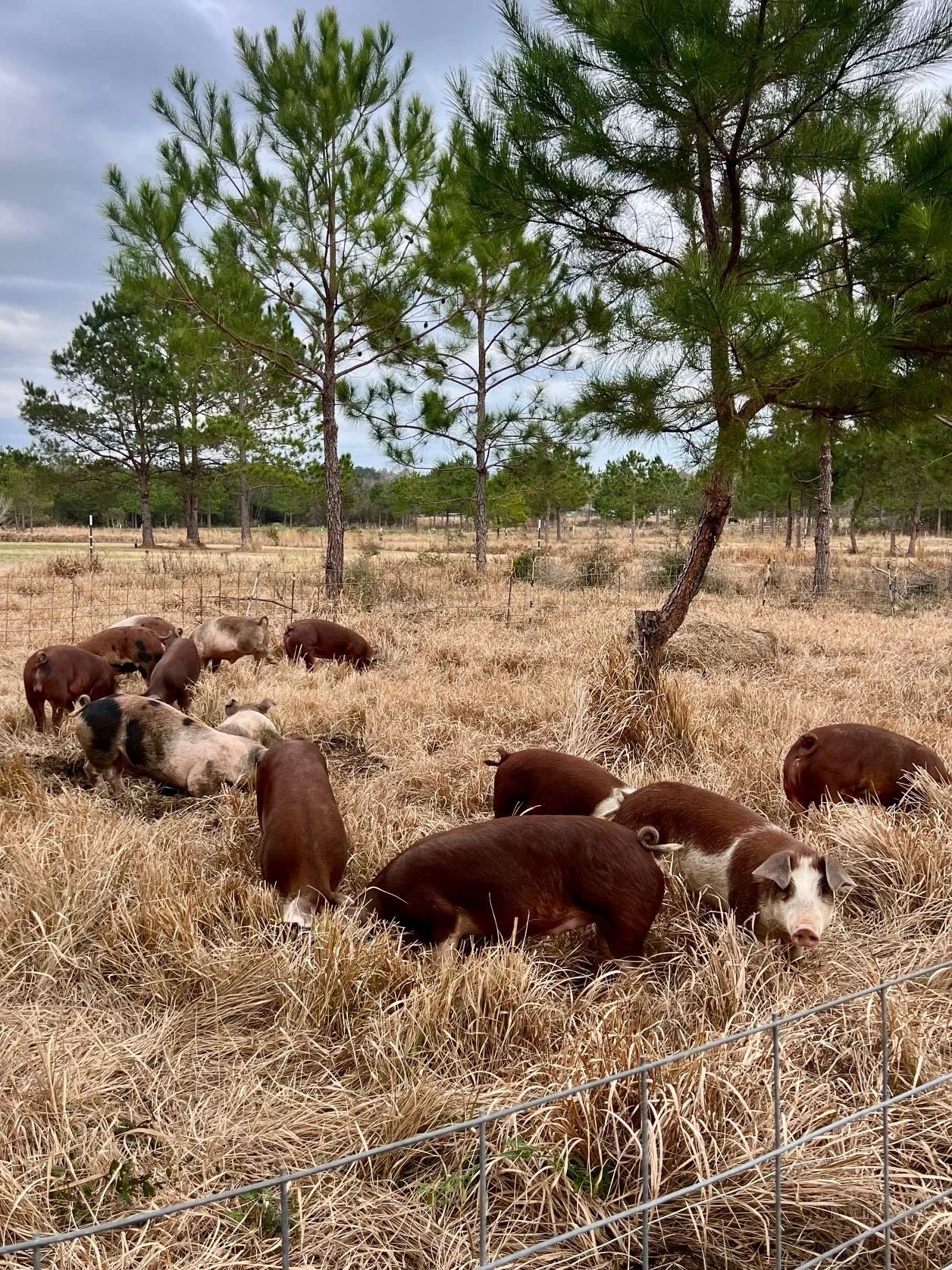
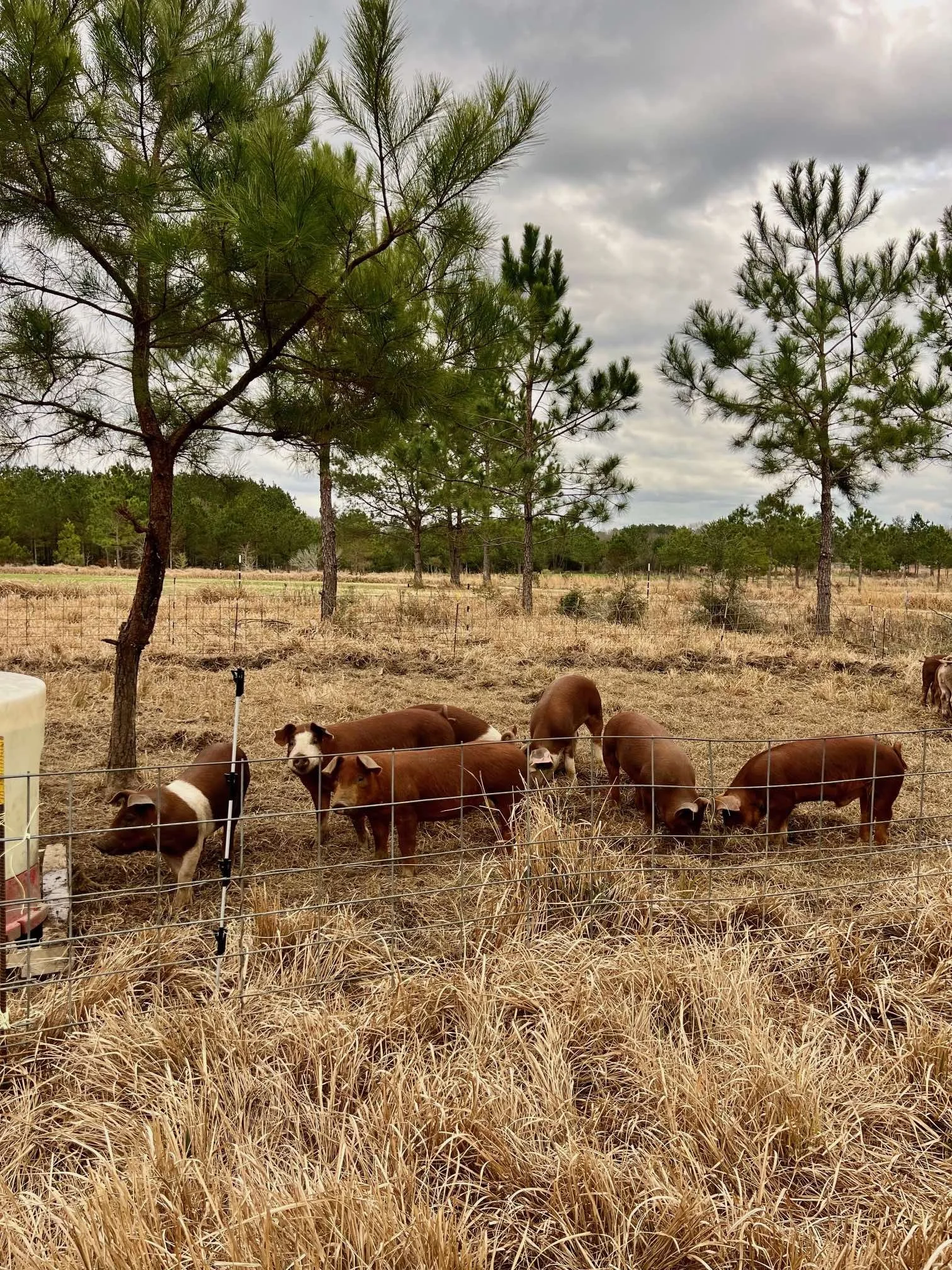
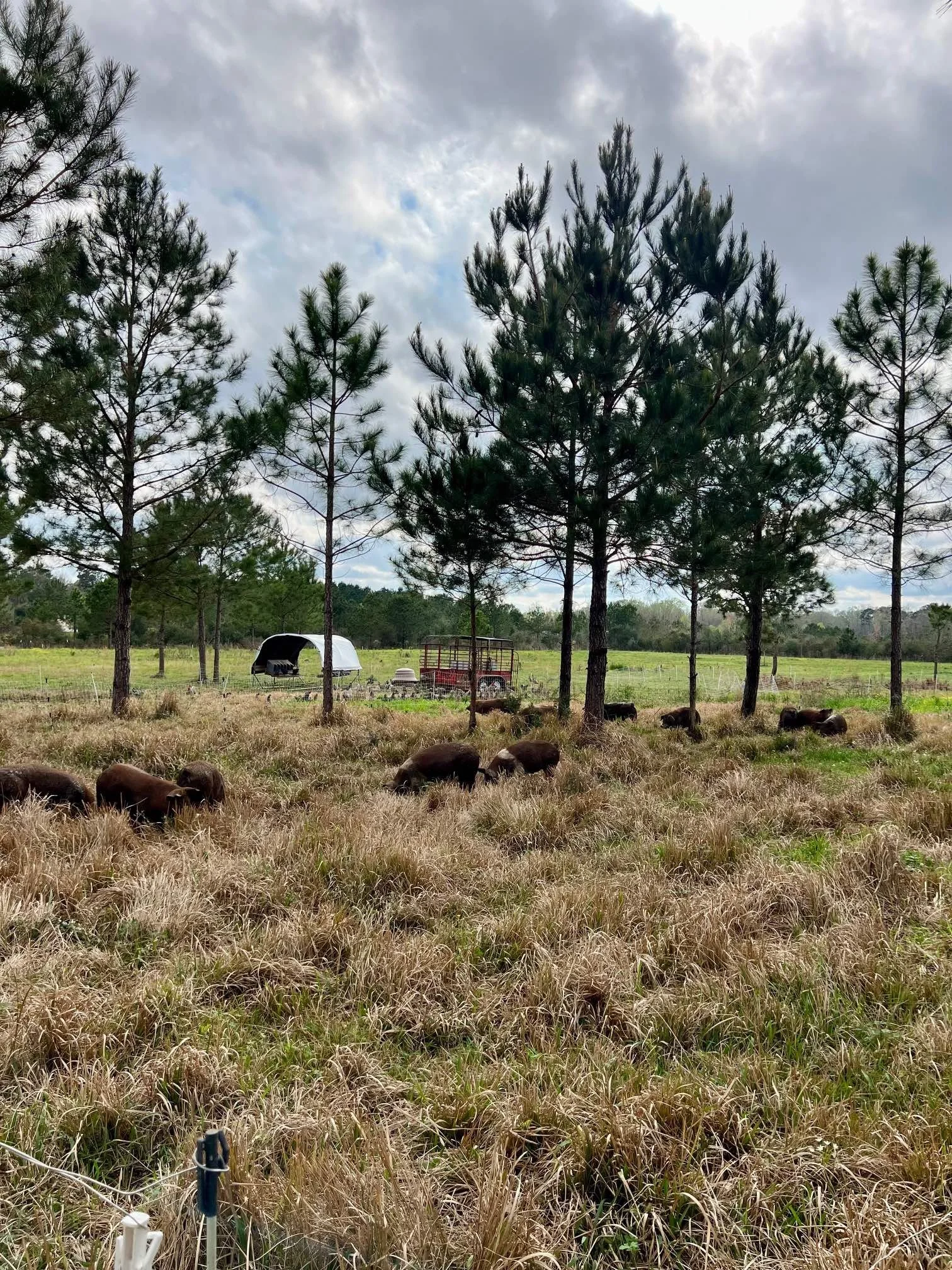
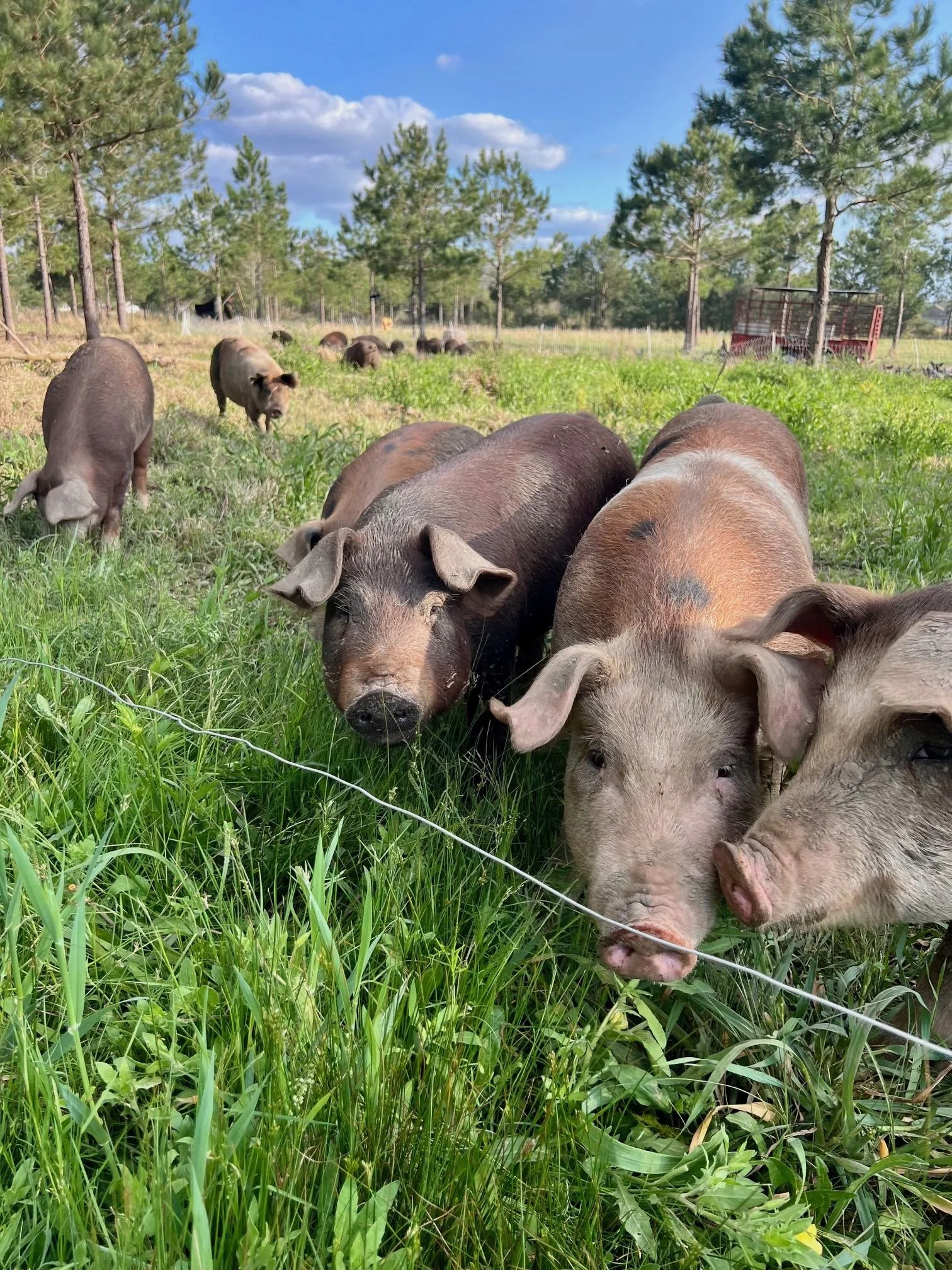
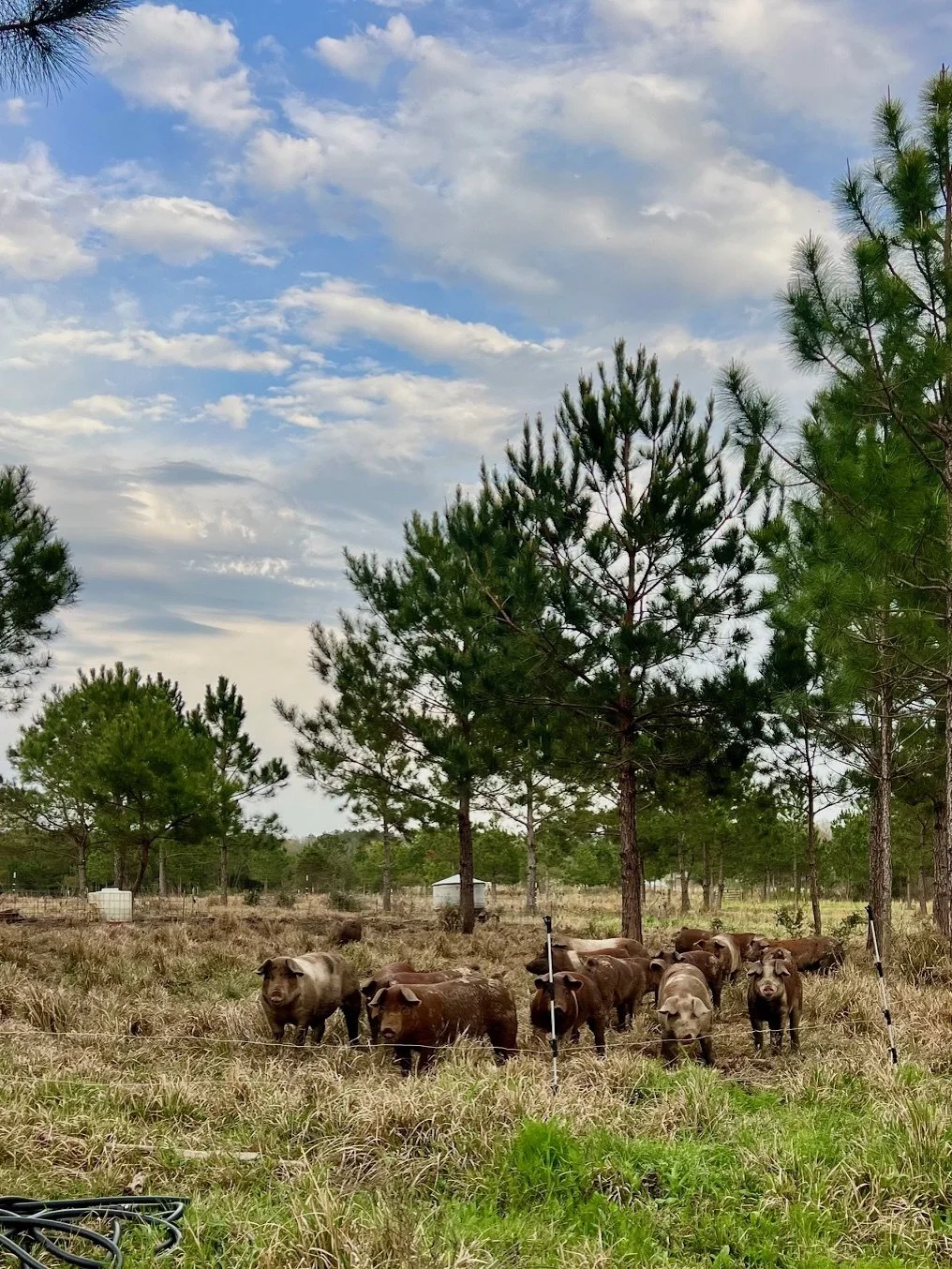
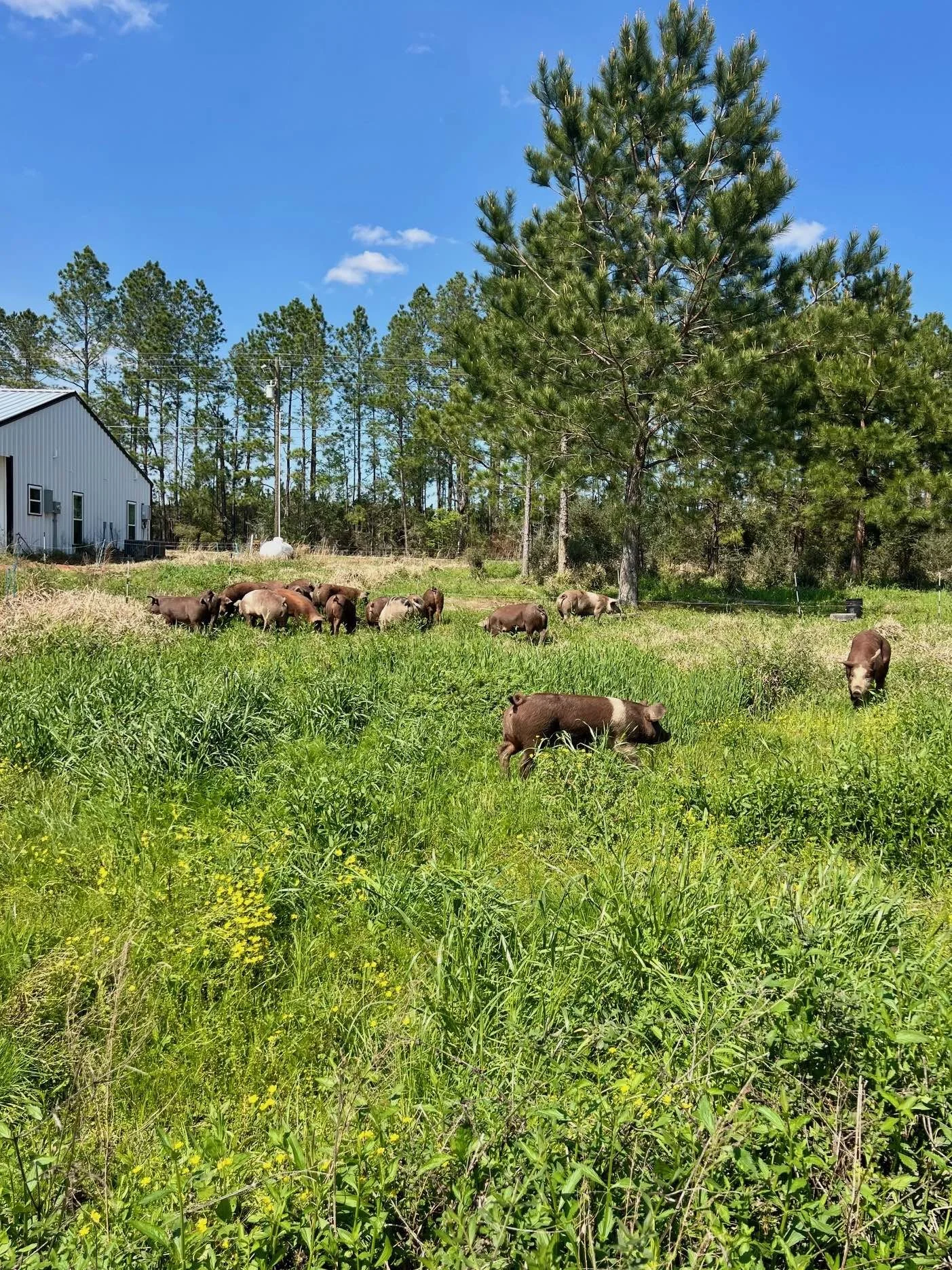
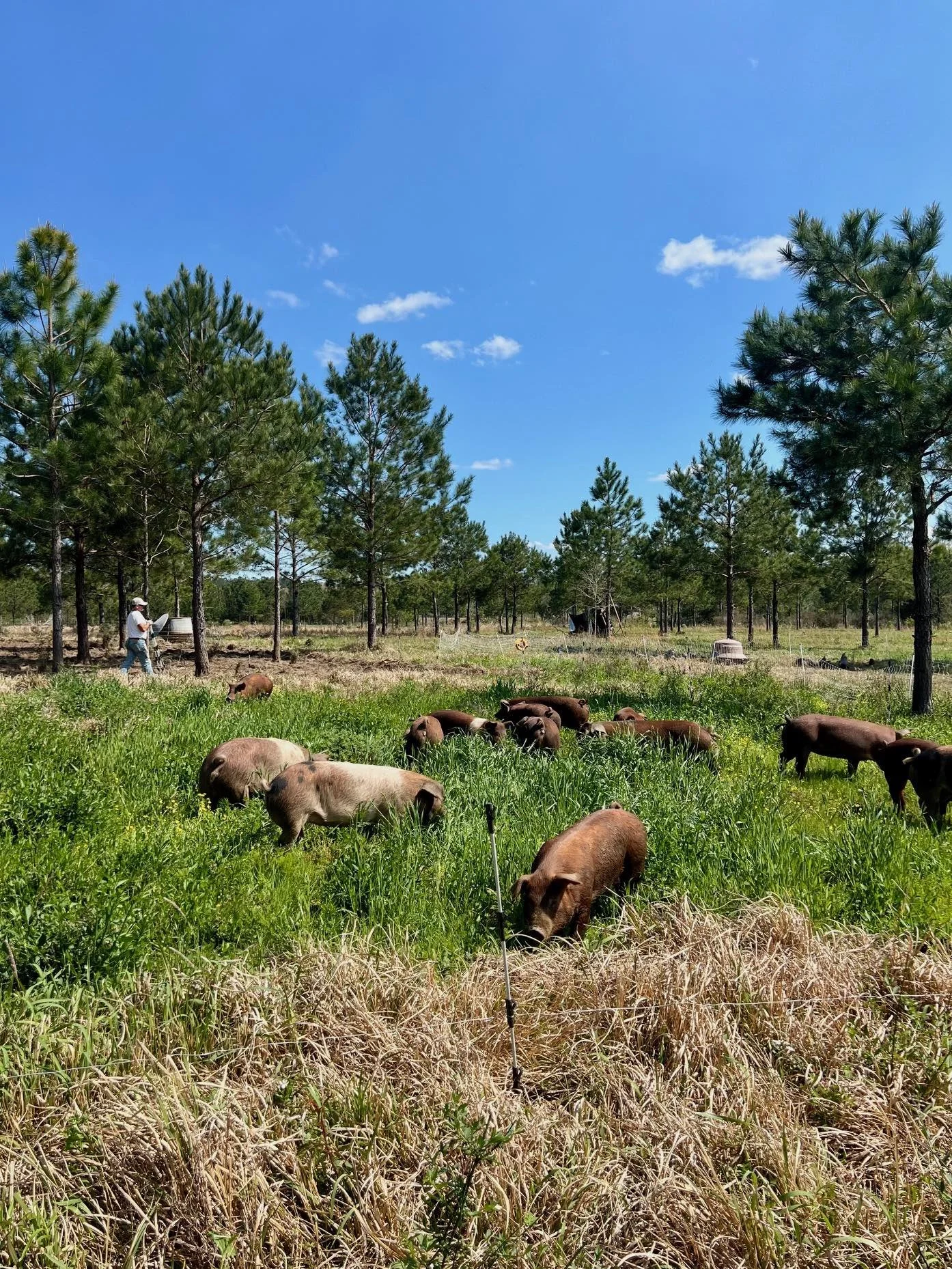
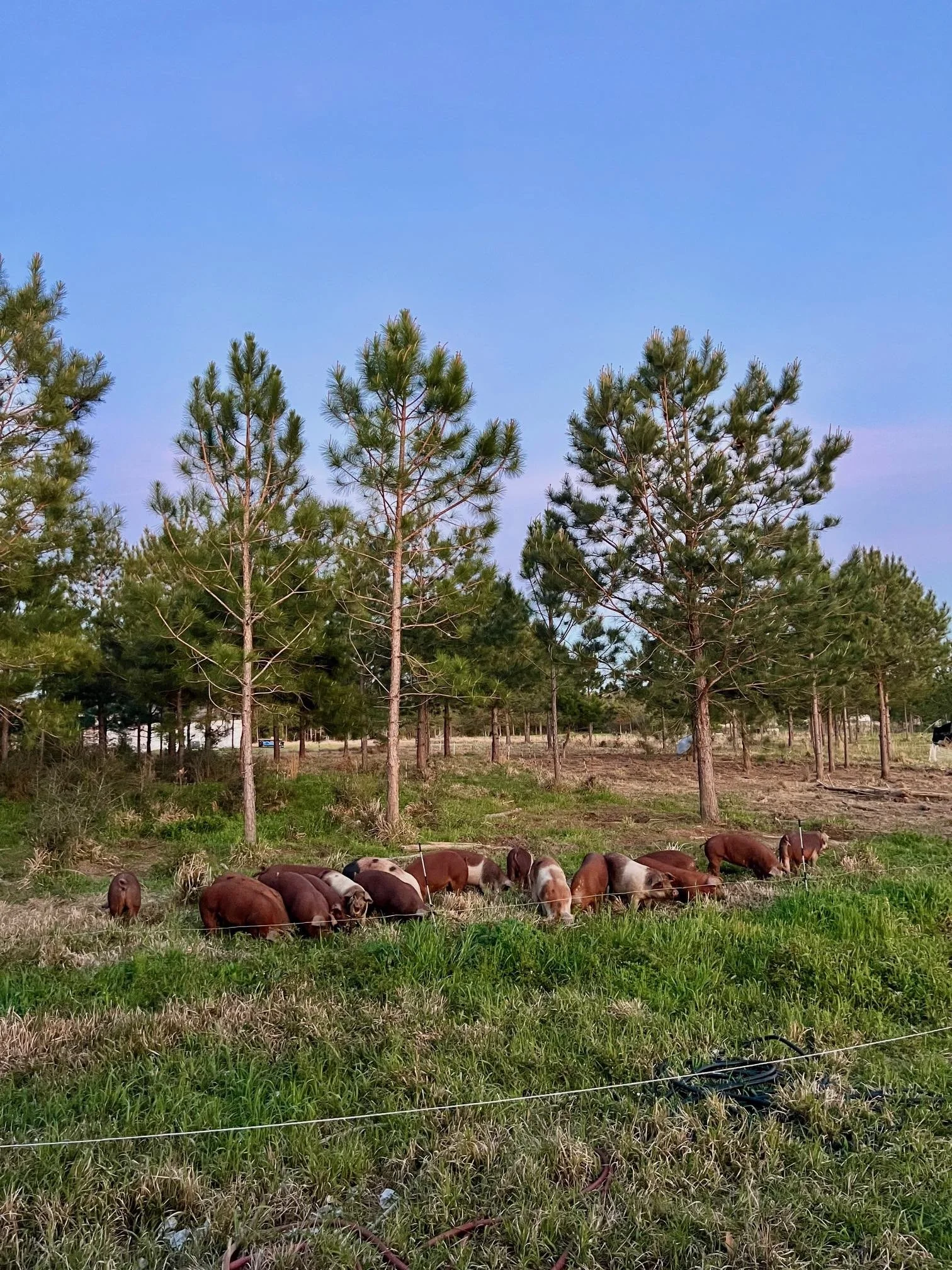
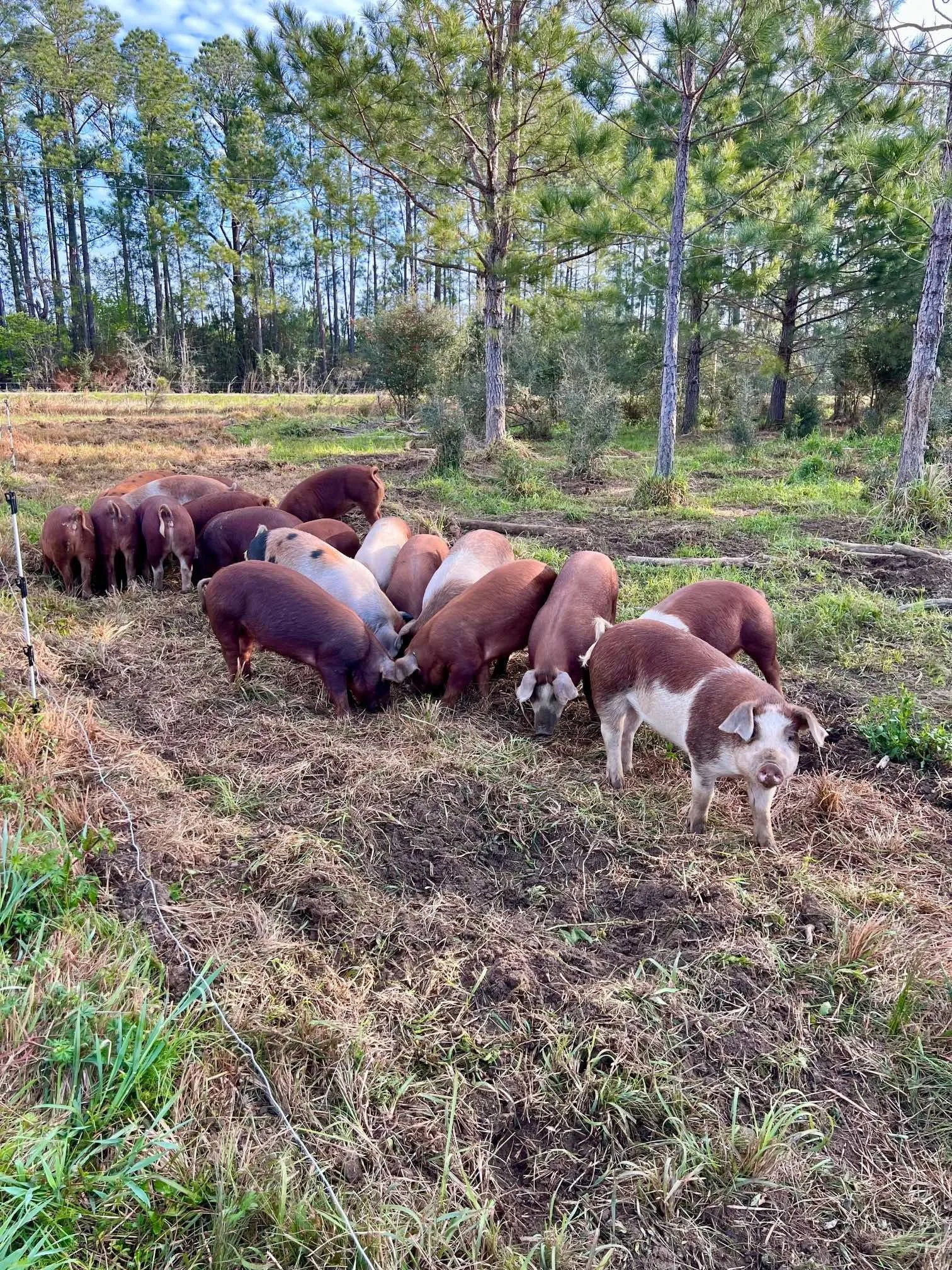
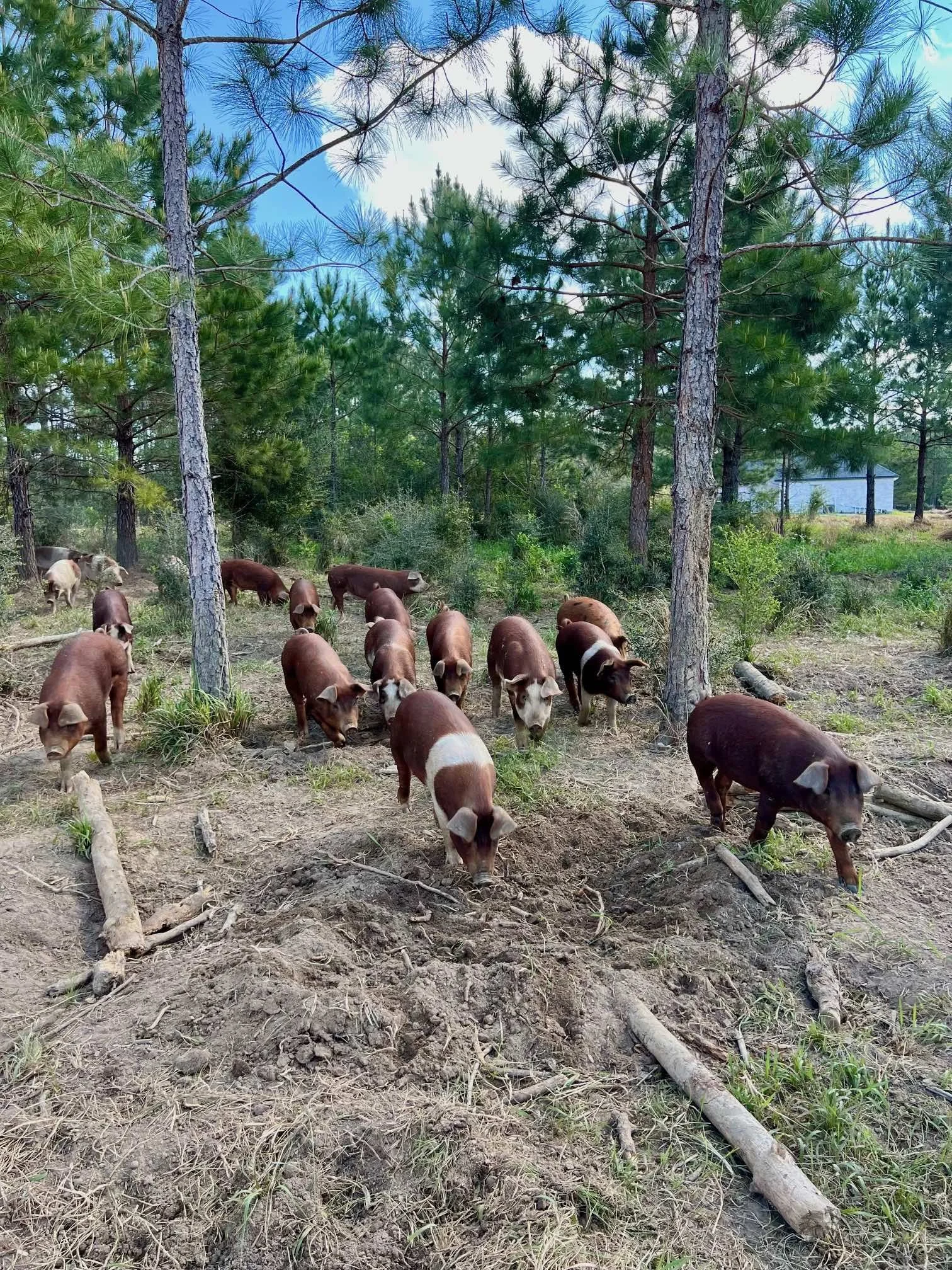
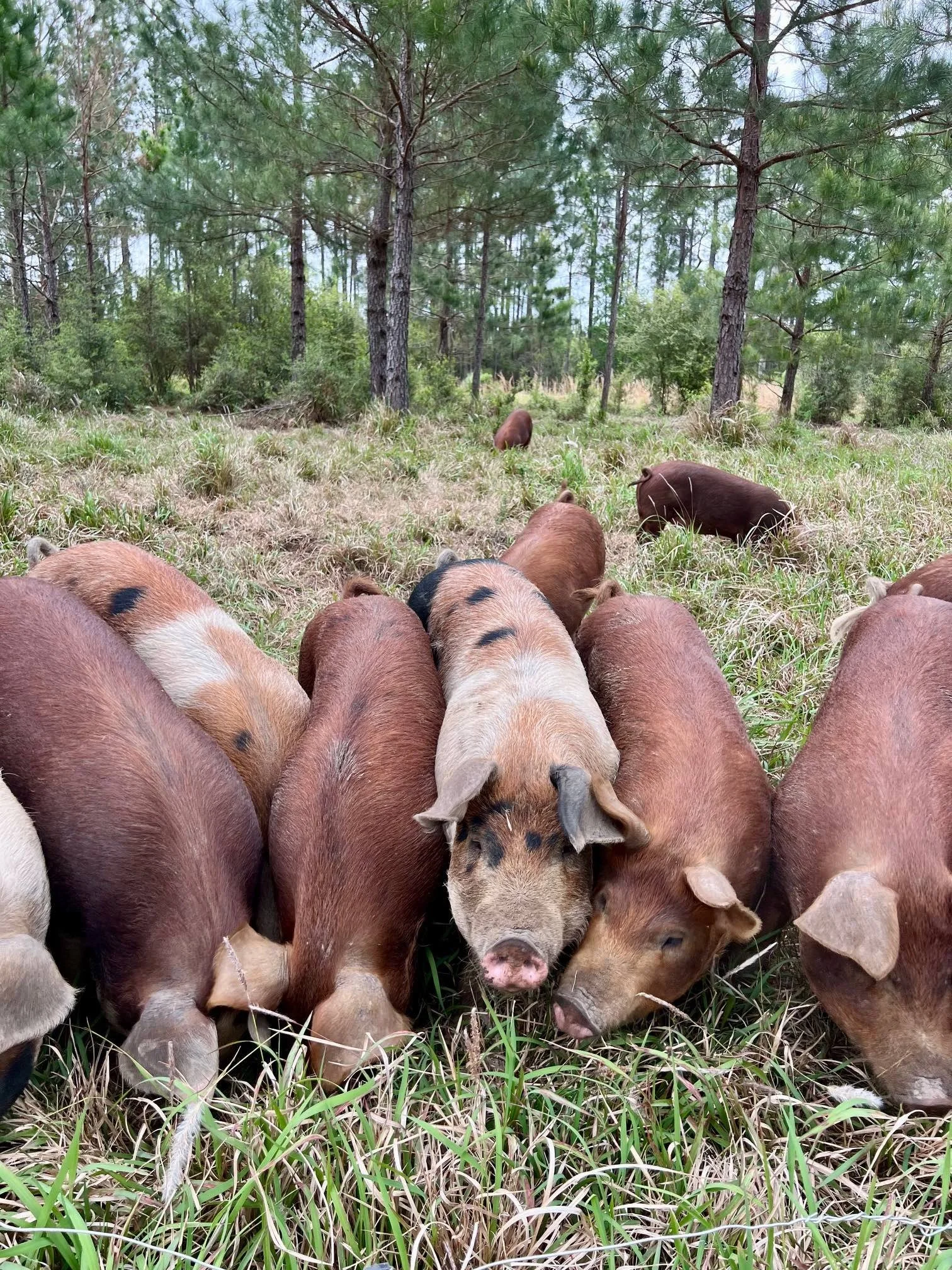
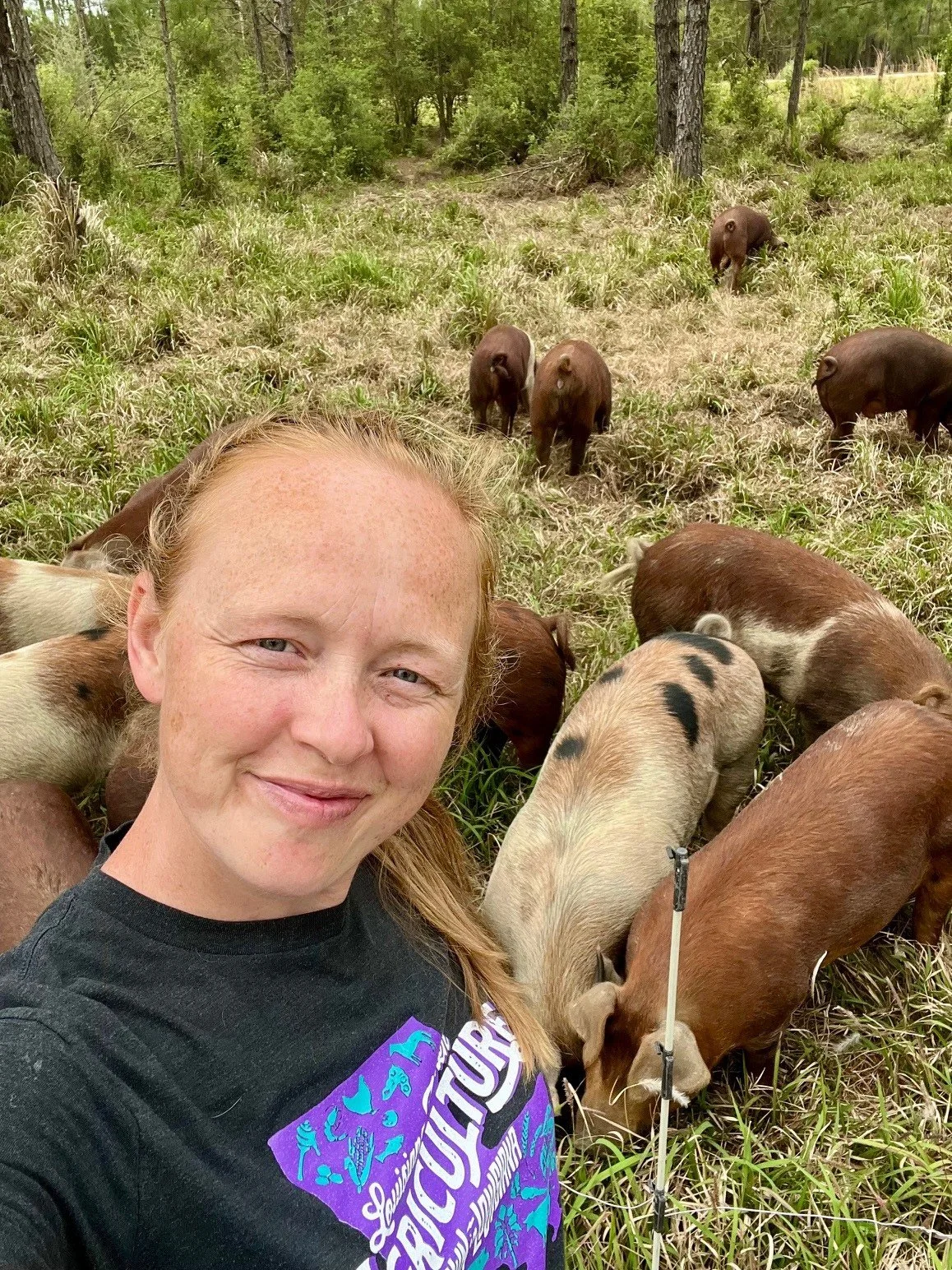
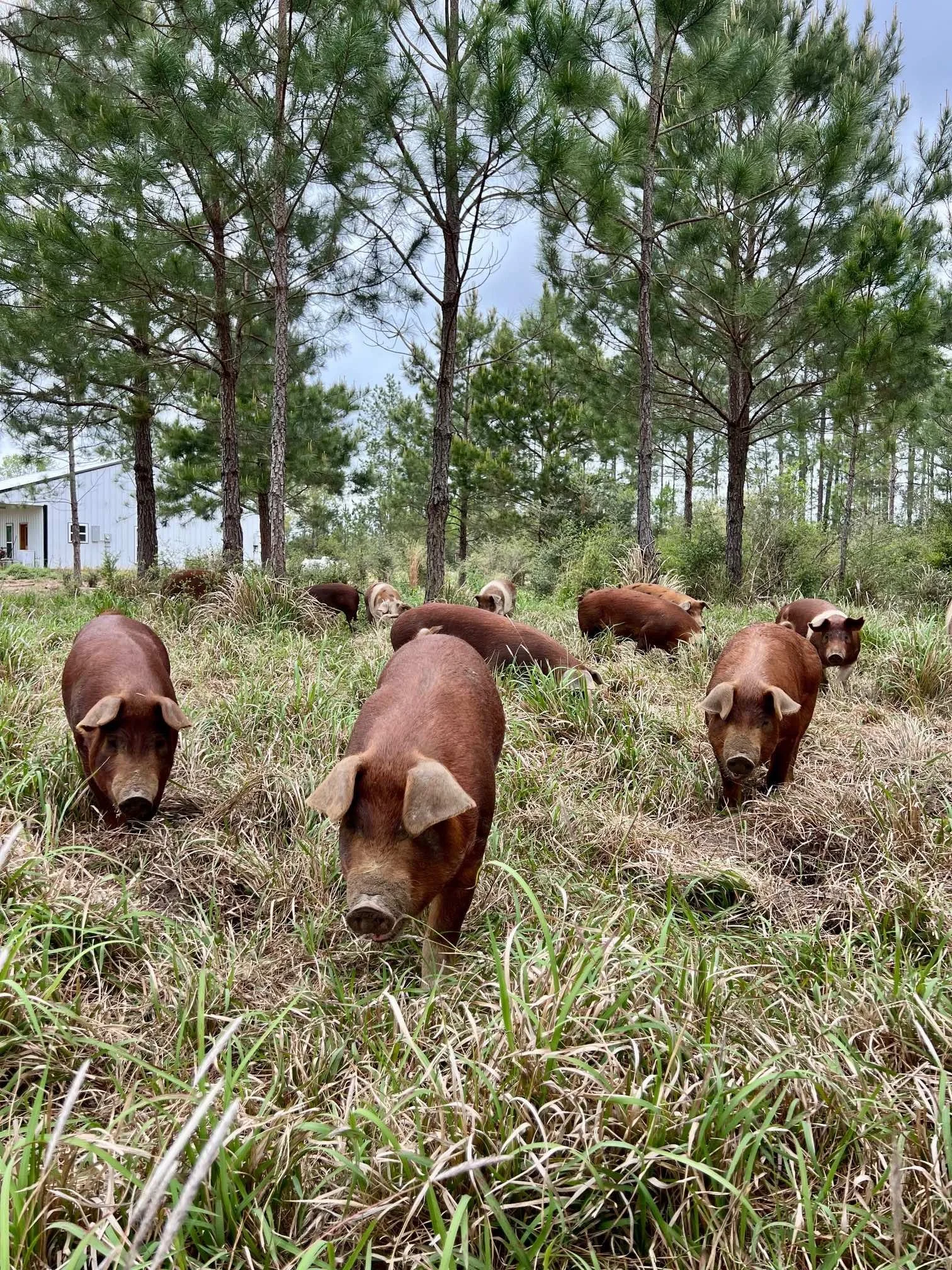
The pigs born in October have been rotating through one corner of our house field in February and March, rooting up invasive cogon grass.
The first pictures are when they still had access to the farrowing barn stalls and then you can see how brown it still was in February when they made their first moves on the cogon grass section and then things transition to a lot more green in March!
We’ve been letting the pigs root the area up pretty hard because cogon grass has a rhizome root structure that’s hard to get rid of. So some real disturbance by strong pig snouts really helps. Once they’ve moved on to a different farm, we’ll hand seed some cover crop and let it rest before grazing the ruminants.
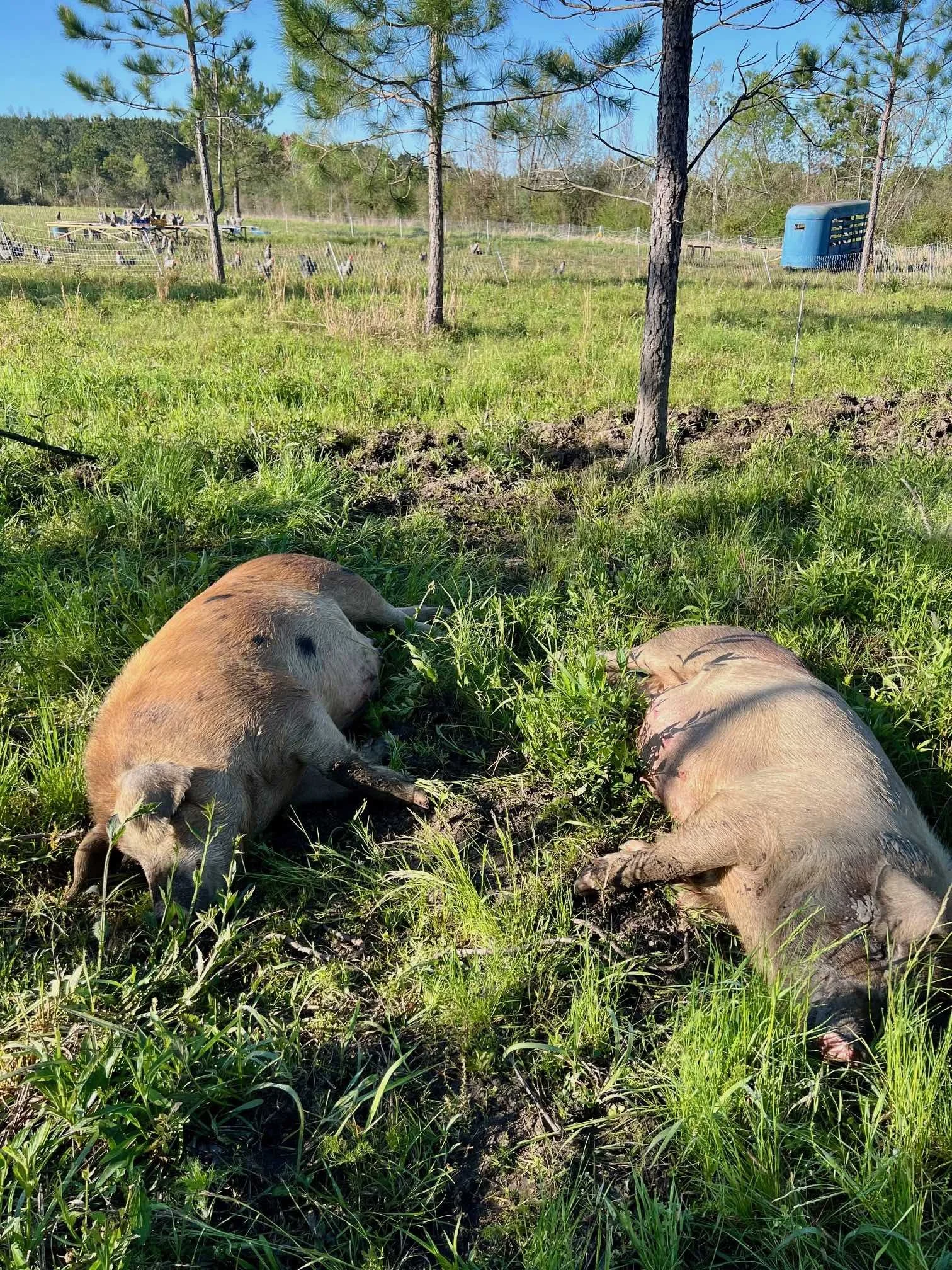
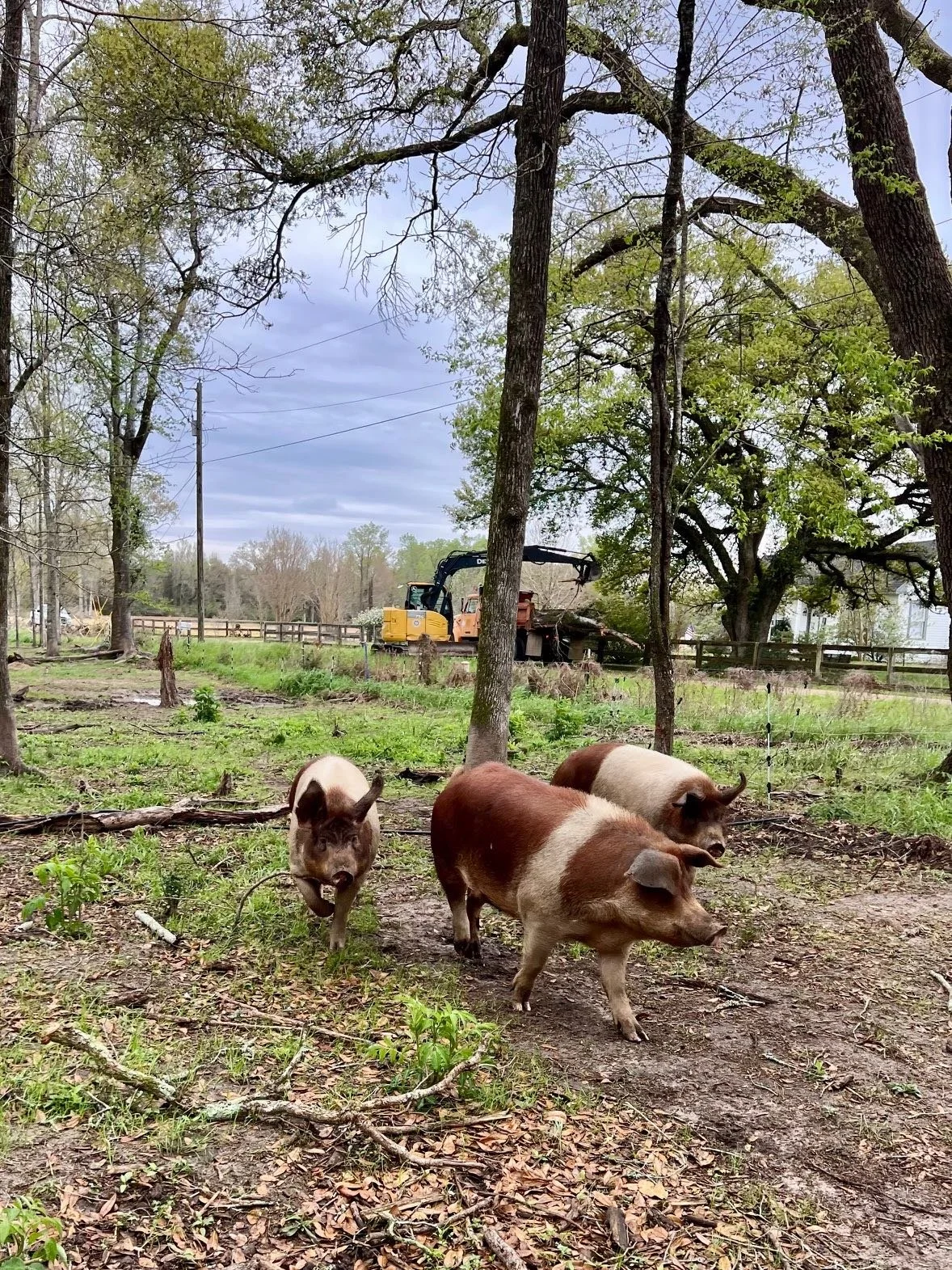
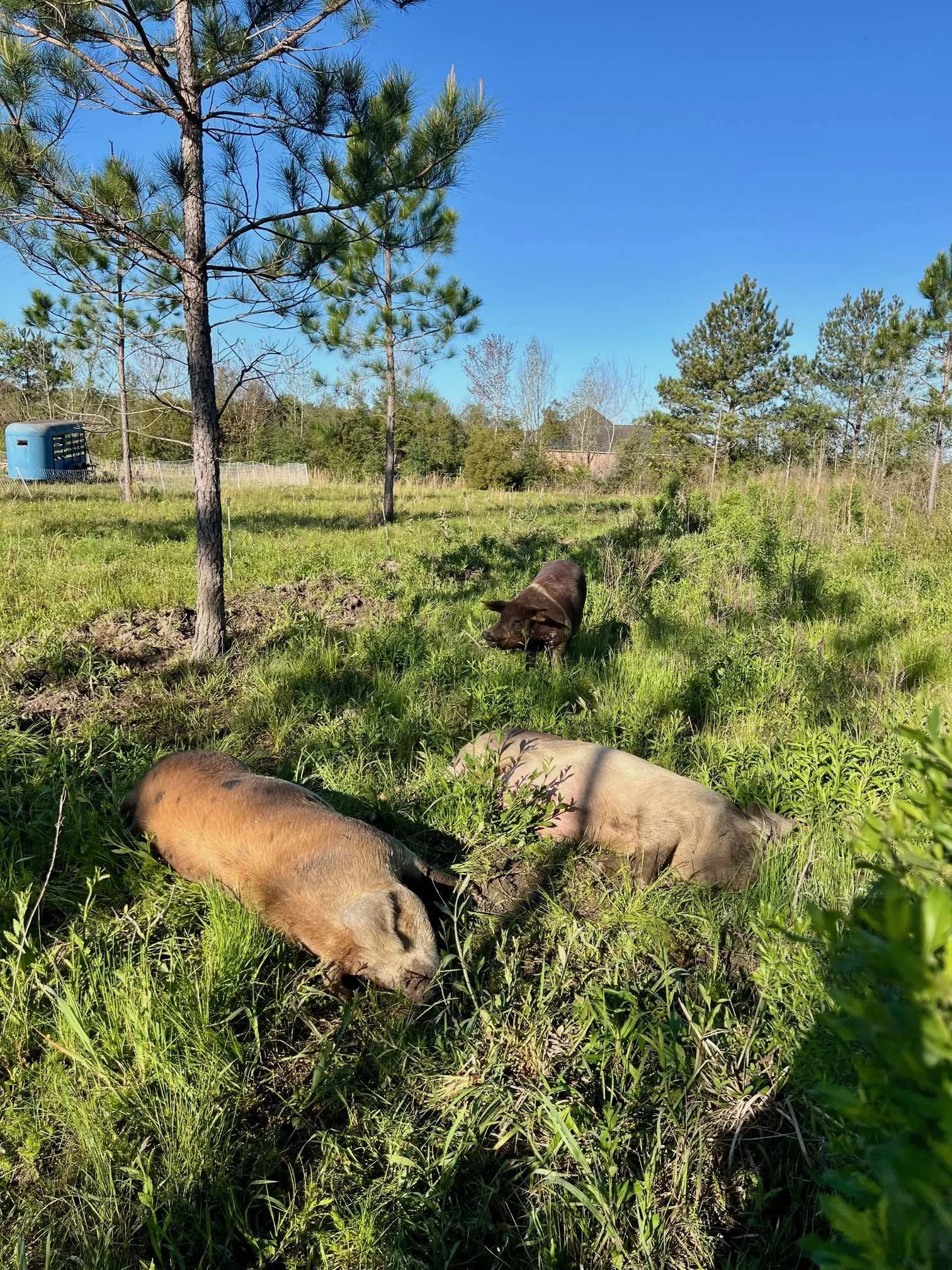
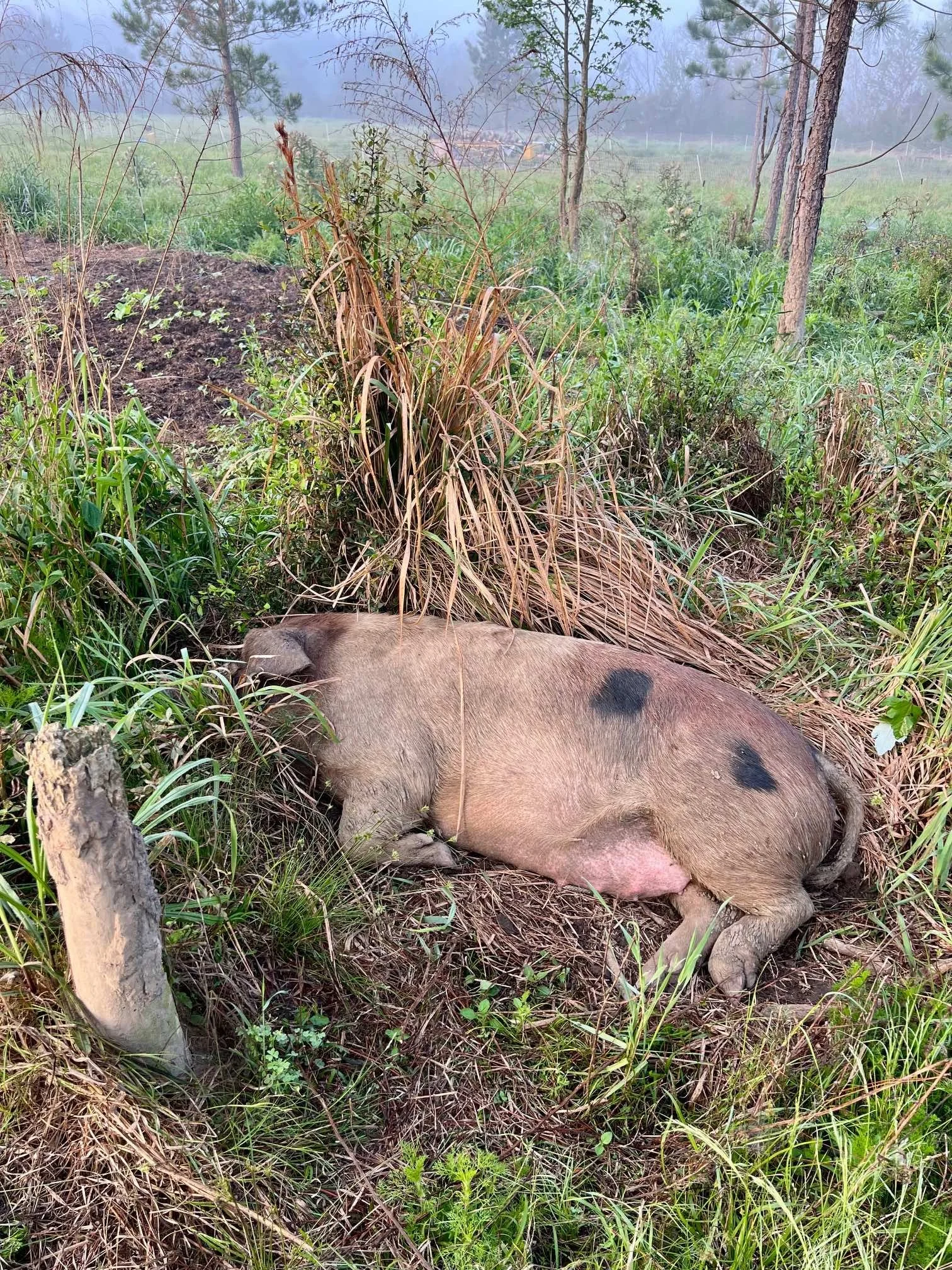
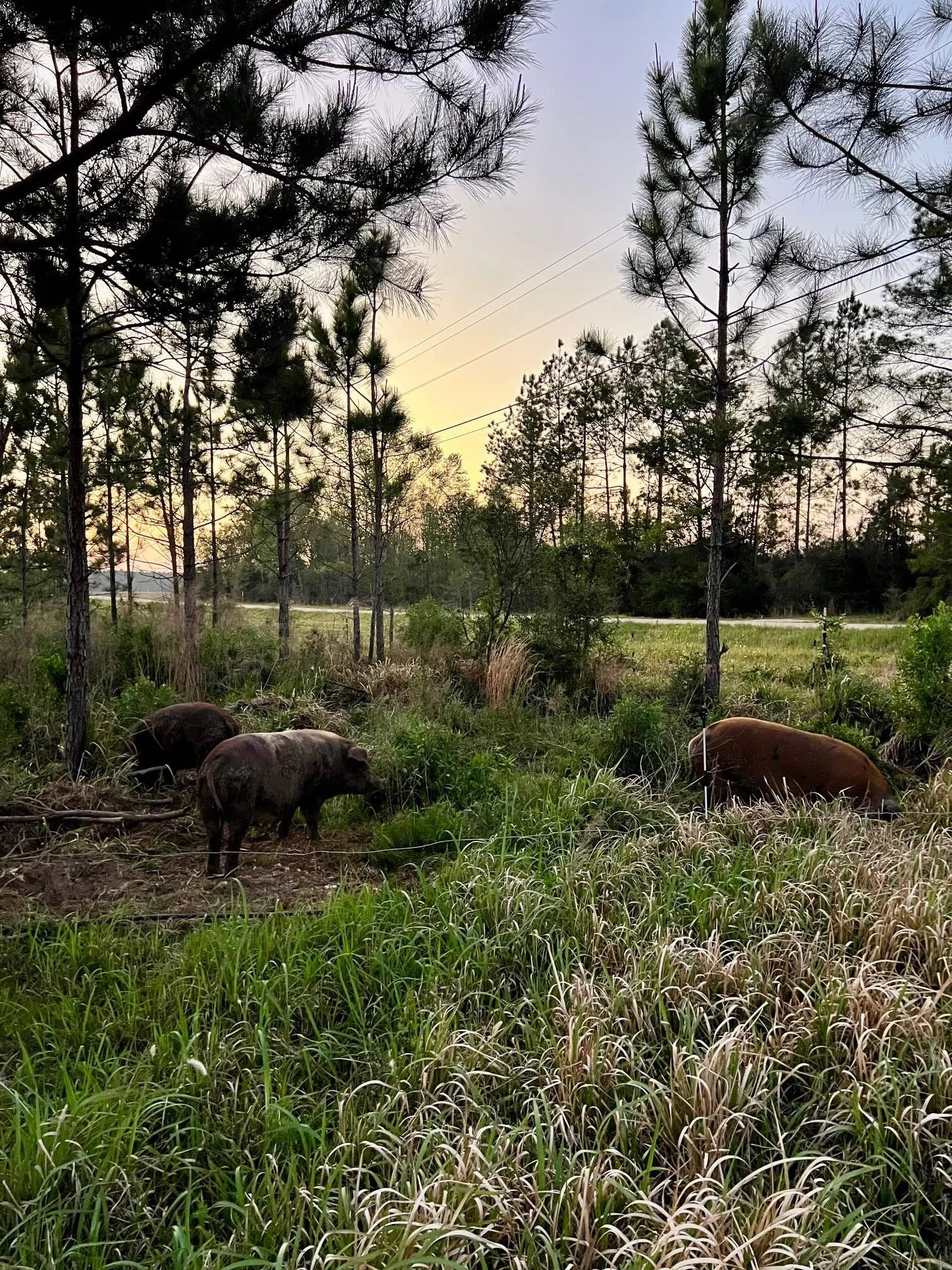
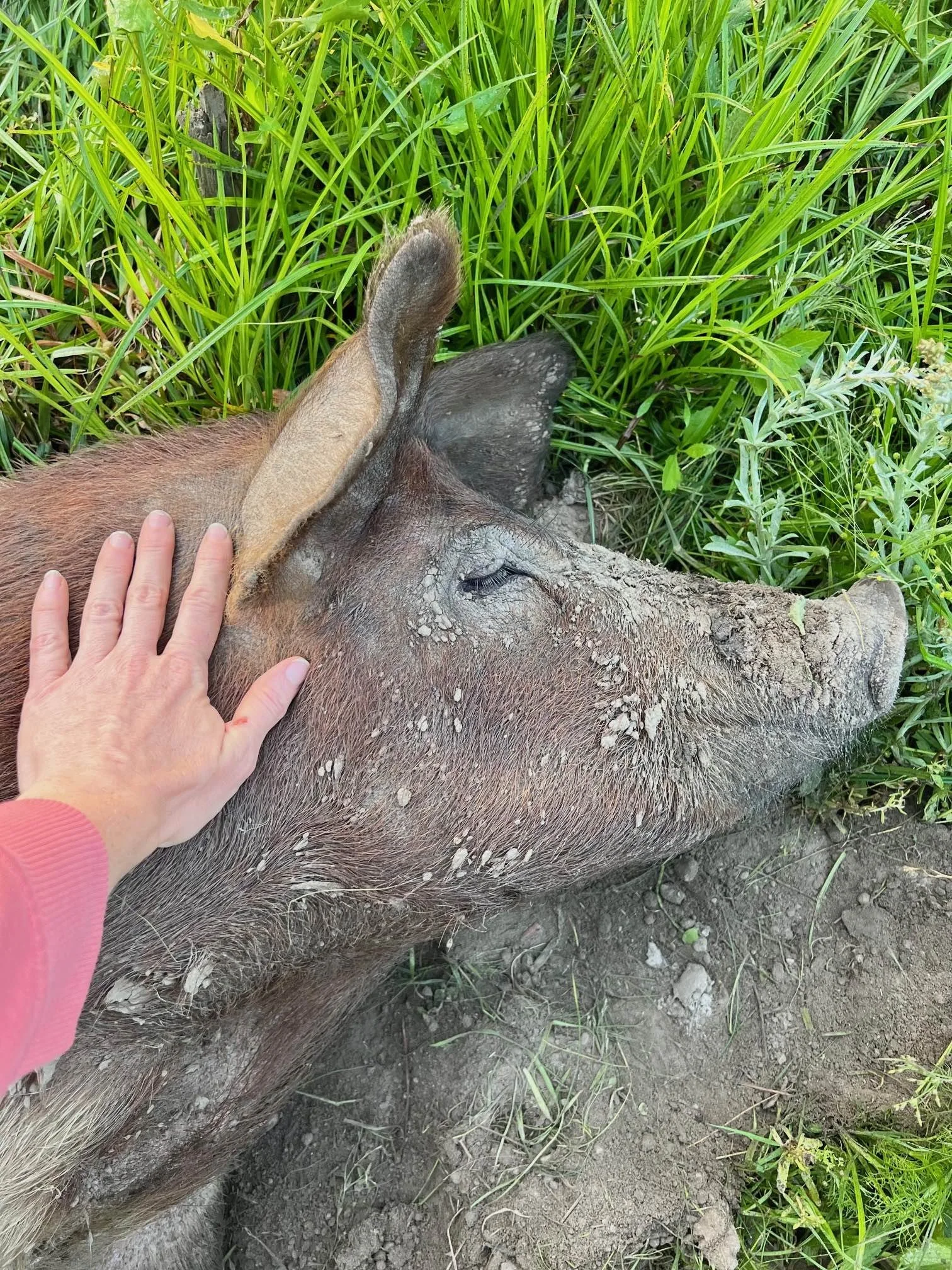
Meanwhile the three gilts that we selected as breeders from the April 2025 piglet group are very close to having their piglets and we moved back them back to the paddock next to the farrowing barn. We haven’t bred new gilts in a few years and I’m excited (and nervous) to see how they do.
They all have chill and sweet temperaments, so that’s a great sign! And I've been spending a lot of time petting them and rubbing their bellies and they plop right down and expose both rows of teats, as if their instincts are telling them to practice for when the piglets come!
Meanwhile we moved the boar in with another set of young gilts to breed them for summer litters. Here’s hoping they all do well when the time comes, too.
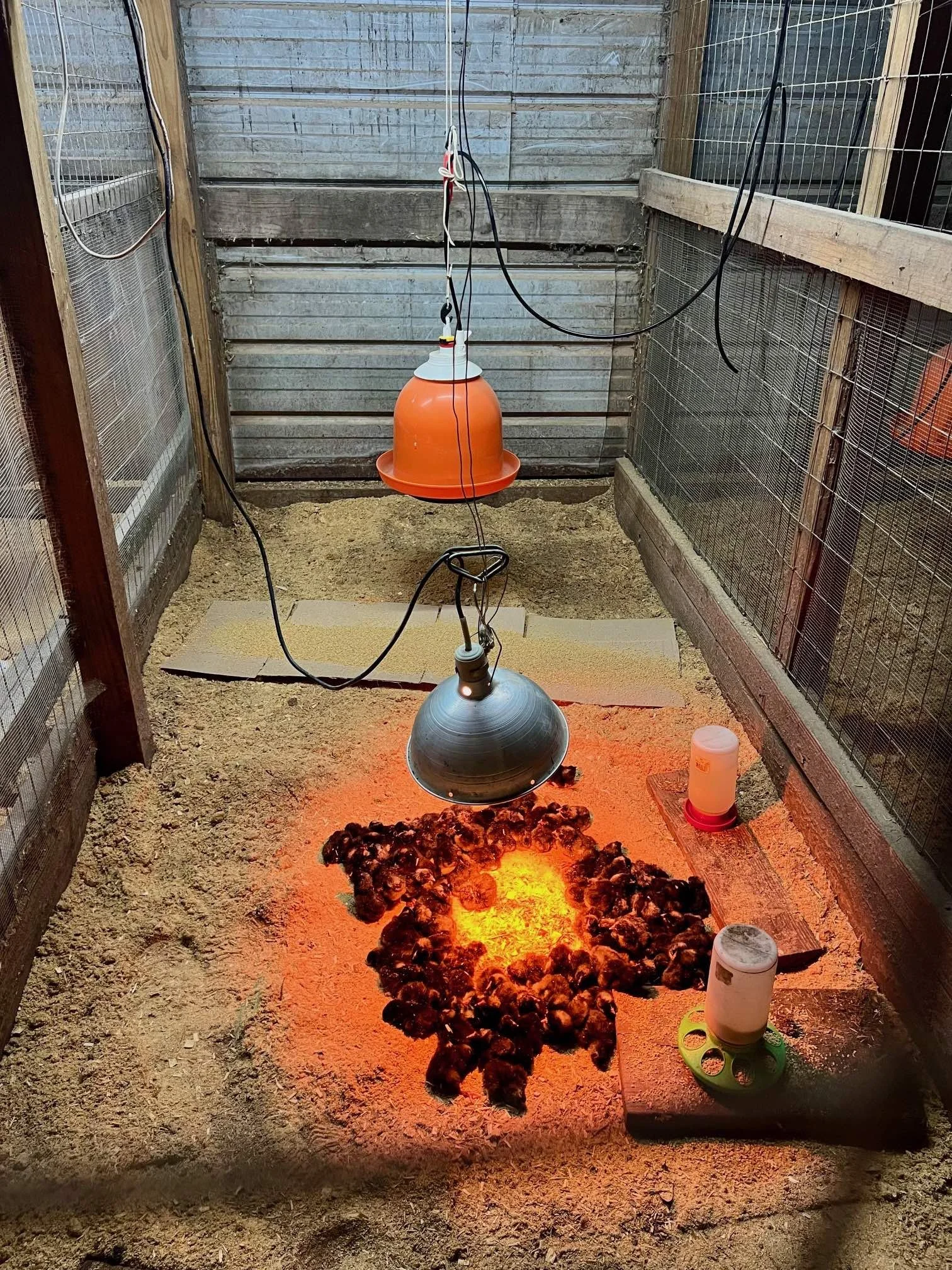
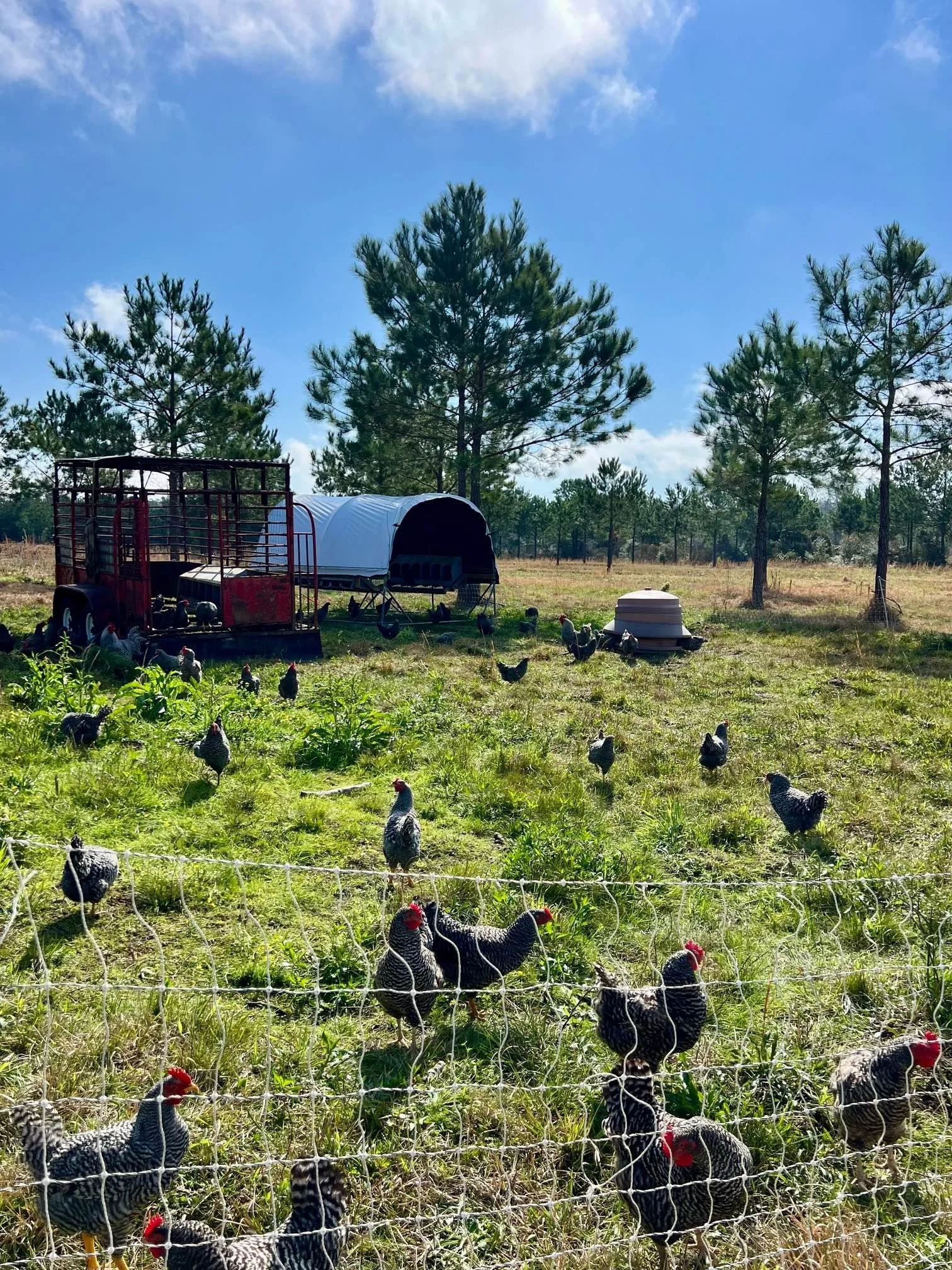
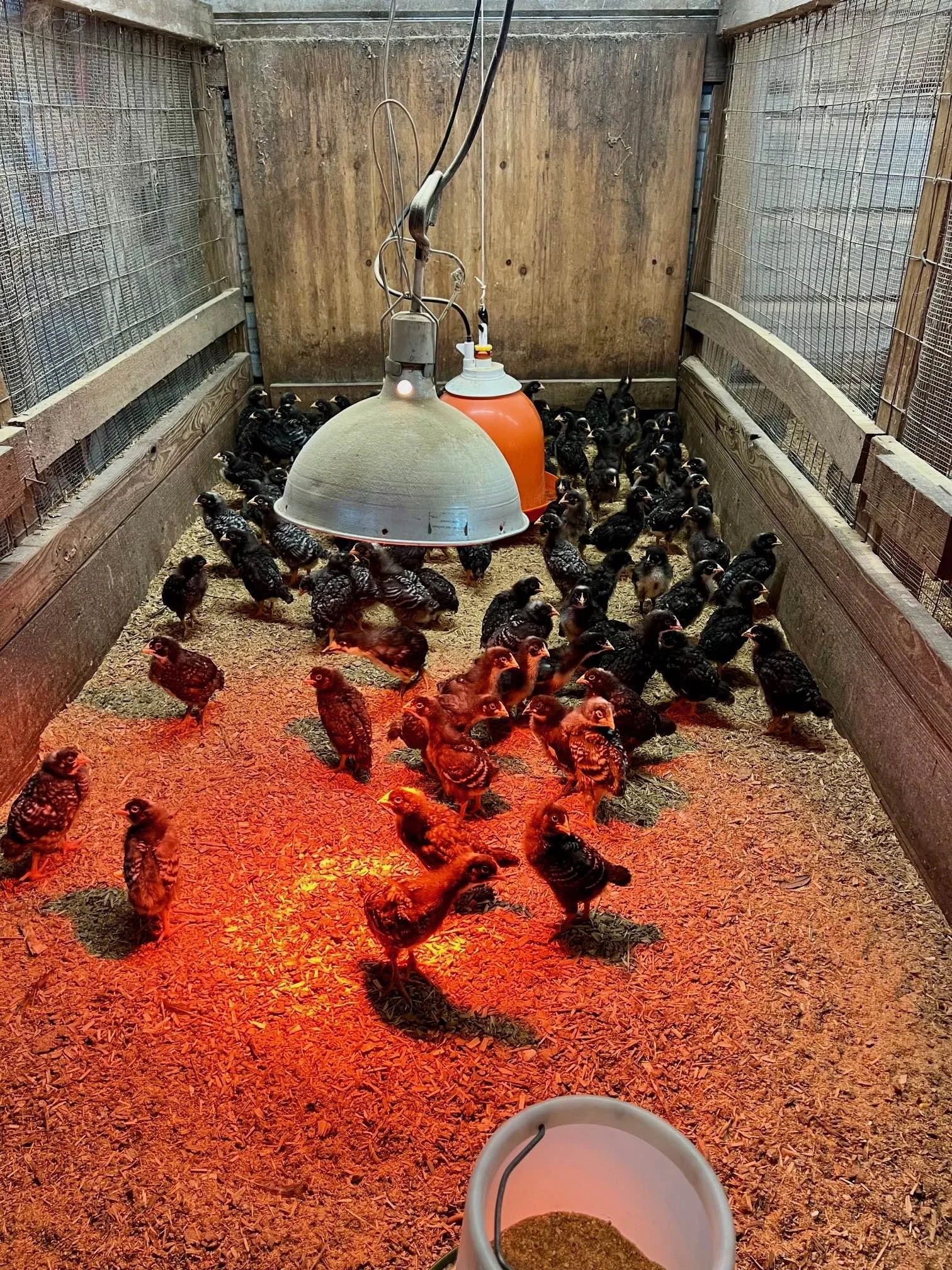
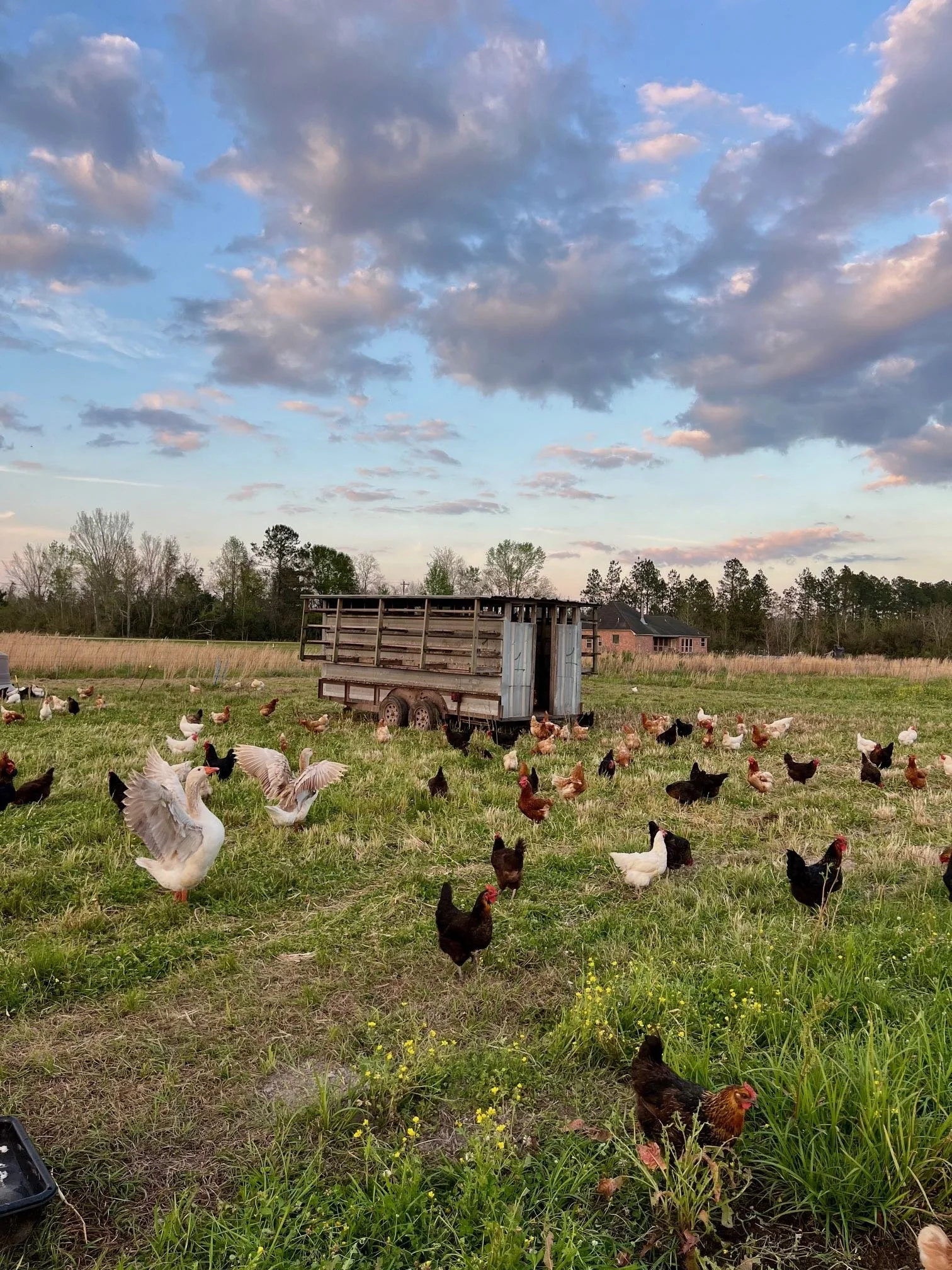
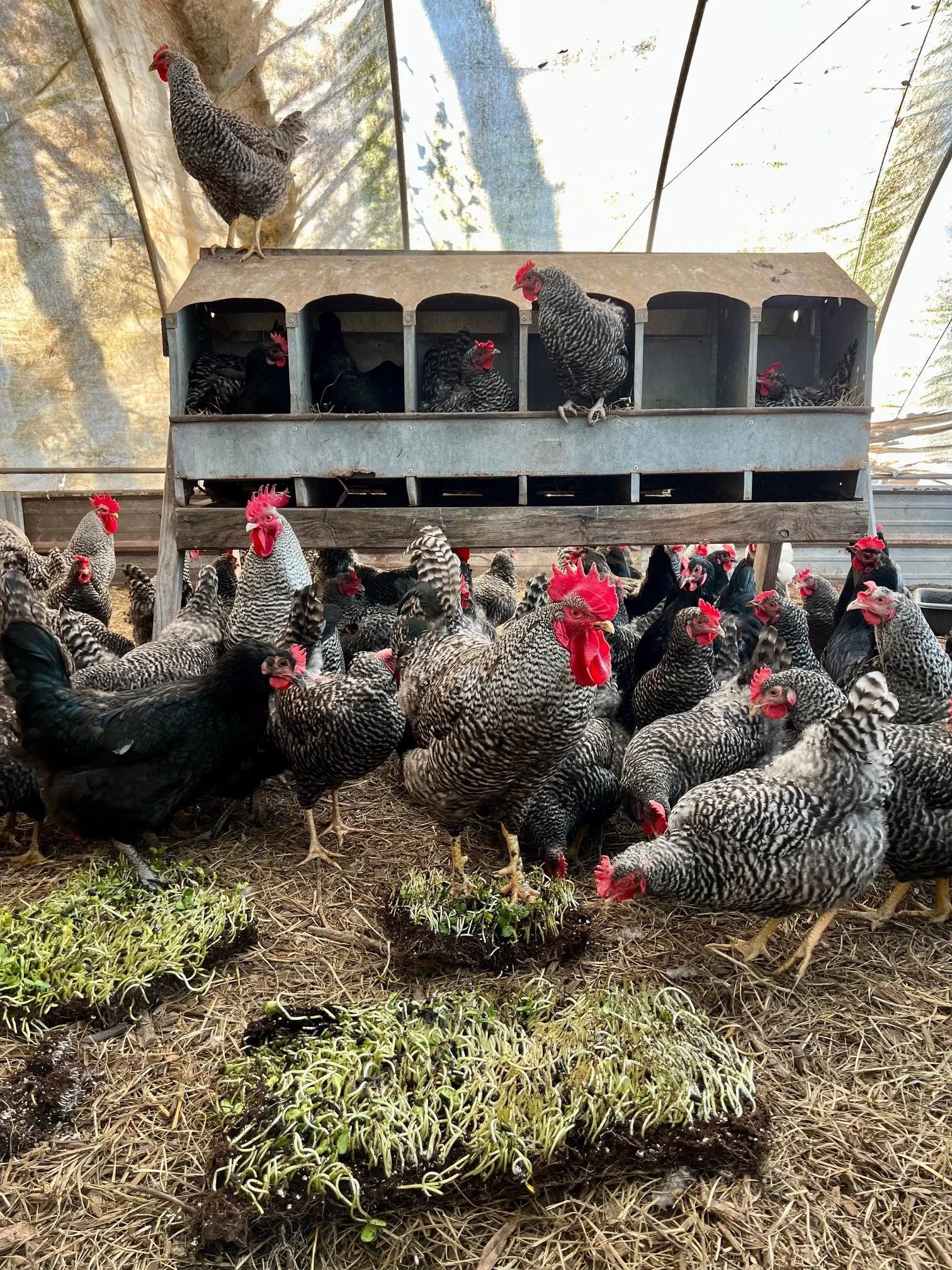
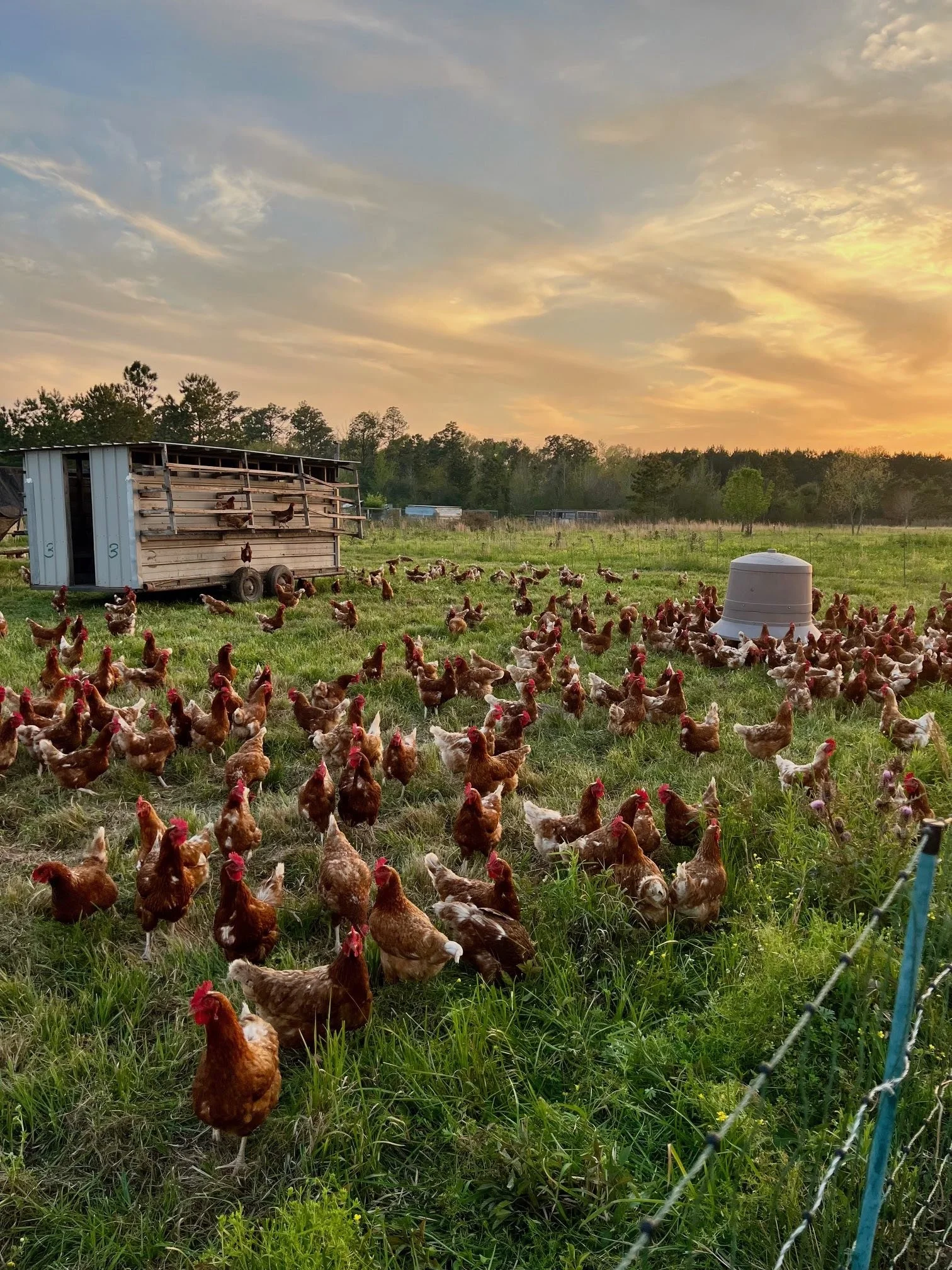
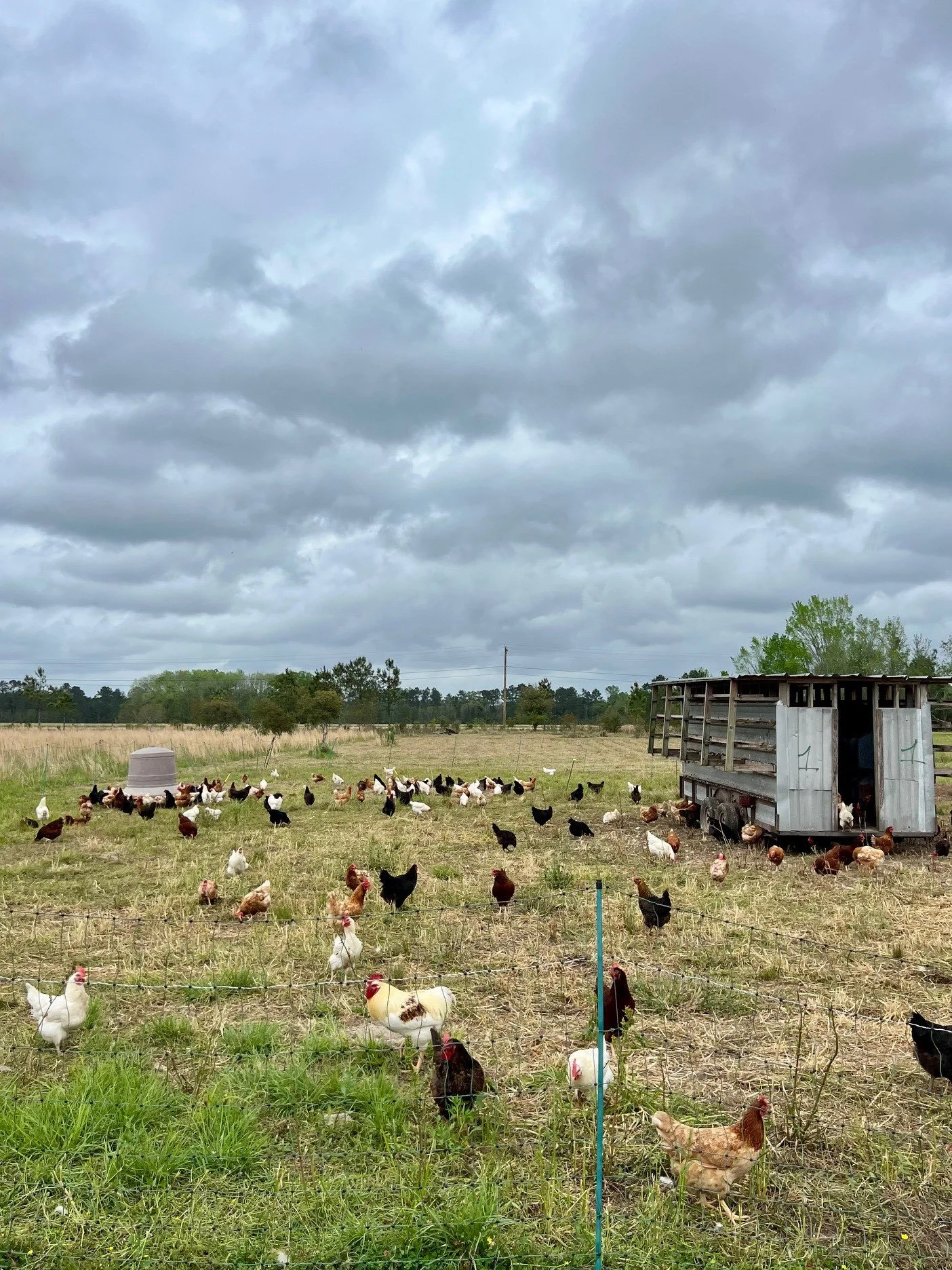
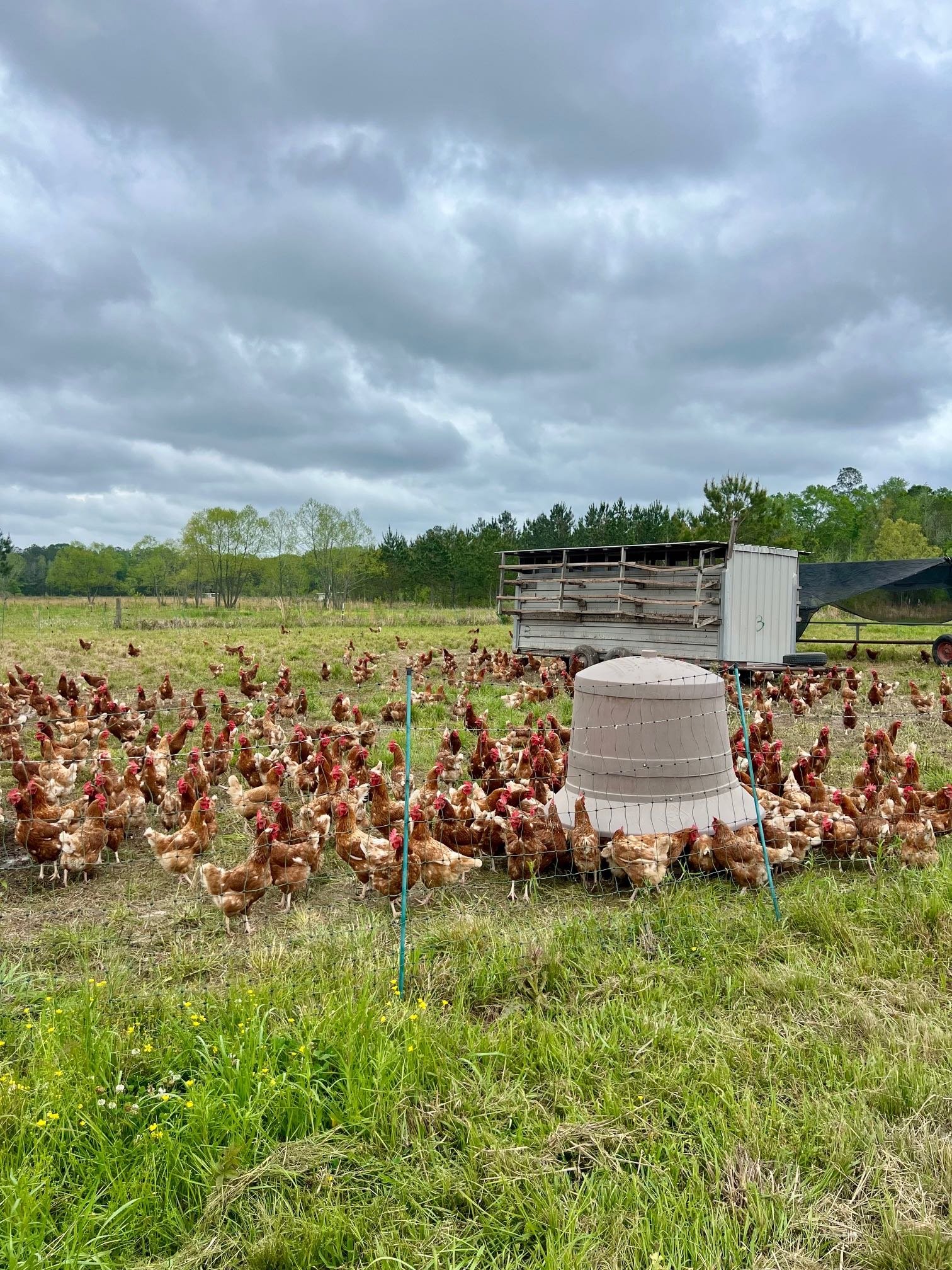
And finally, there’s lots going on with all of our chickens, too!
As mentioned in relation to the storm, we did a big hatch from one of our breeding flocks last month and we filled up the incubator with another round of 500+ eggs as soon as the last batch hatched and the incubator was cleaned out and reset.
Our main flocks in the egg mobiles have been 500 or so birds, so we need two hatches to get close to that number, since half or more will be roosters. And we’re working on being able to offer ground chicken from the roosters we raise from these hatches, so we’re looking forward to sharing more details and rolling that out soon.
Since we’ve gotten two hatches out of the breeding flock, we’re ready to move them into one of the mobile coops and switch up the roosters.
There’s always attrition in the oldest flocks over time, so we were able to combine the two oldest flocks (as Grant likes to call the Geris, aka the Geriatrics) one night, freeing up one of their coops and sets of net fencing for the breeding flock.
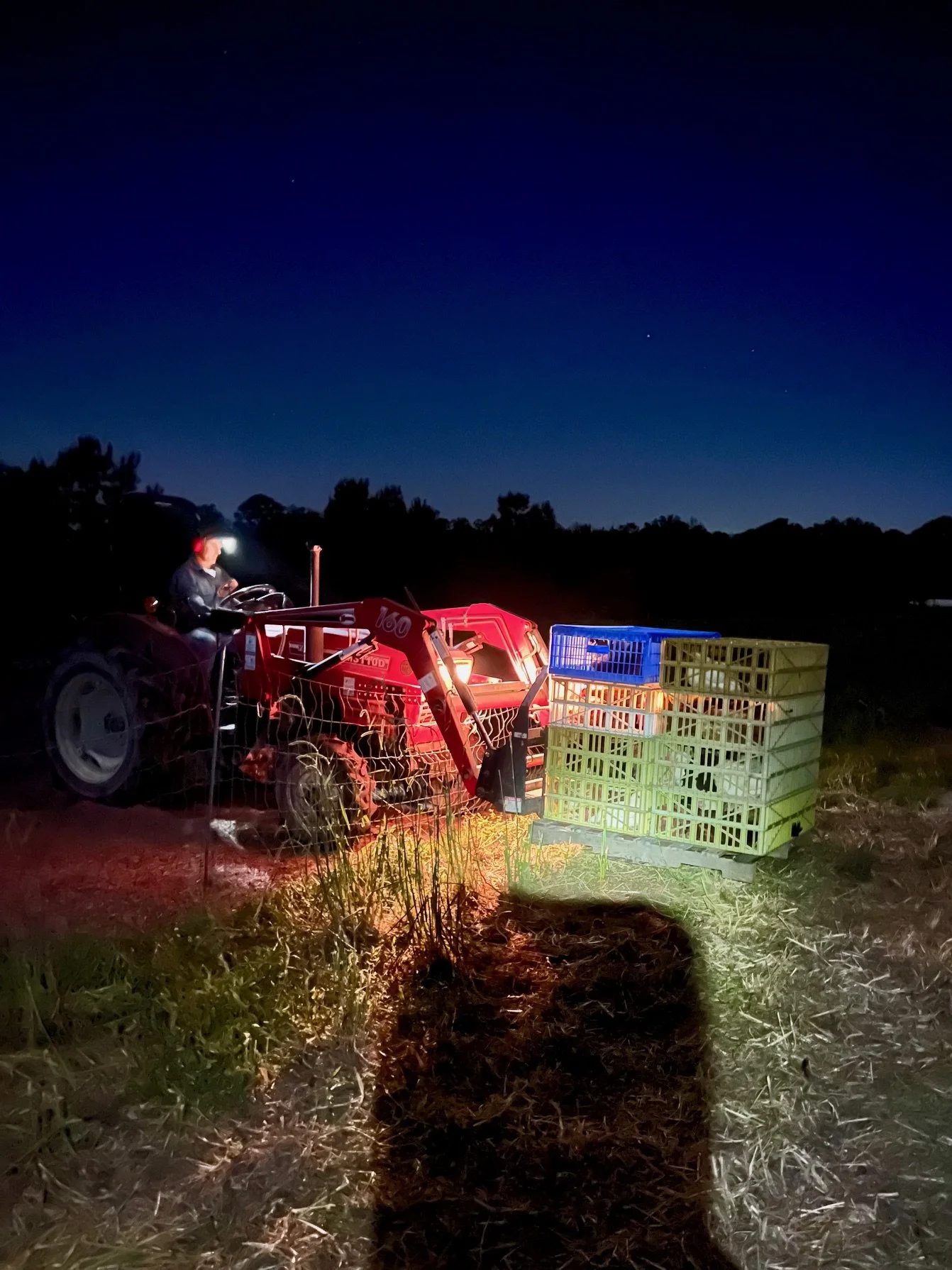
We move chickens at night because they’re night blind and easier to catch and generally calmer then. We have standard stackable poultry crates that we load them in and then drove from one field to the other field.
The other goal about moving them at night is that they hens we moved wake up and think “we’ve been here all along, right?” And the resident flock thinks, “these other hens have been here all along, right?” And everyone gets along swimmingly!
In actuality there have been some hen tussles as they figure out the new pecking order, but hopefully we won’t see a significant drop in egg production or anything as they sort things out and adjust.