
Local Cooling Farms is Now a Louisiana Certified Natural Habitat!
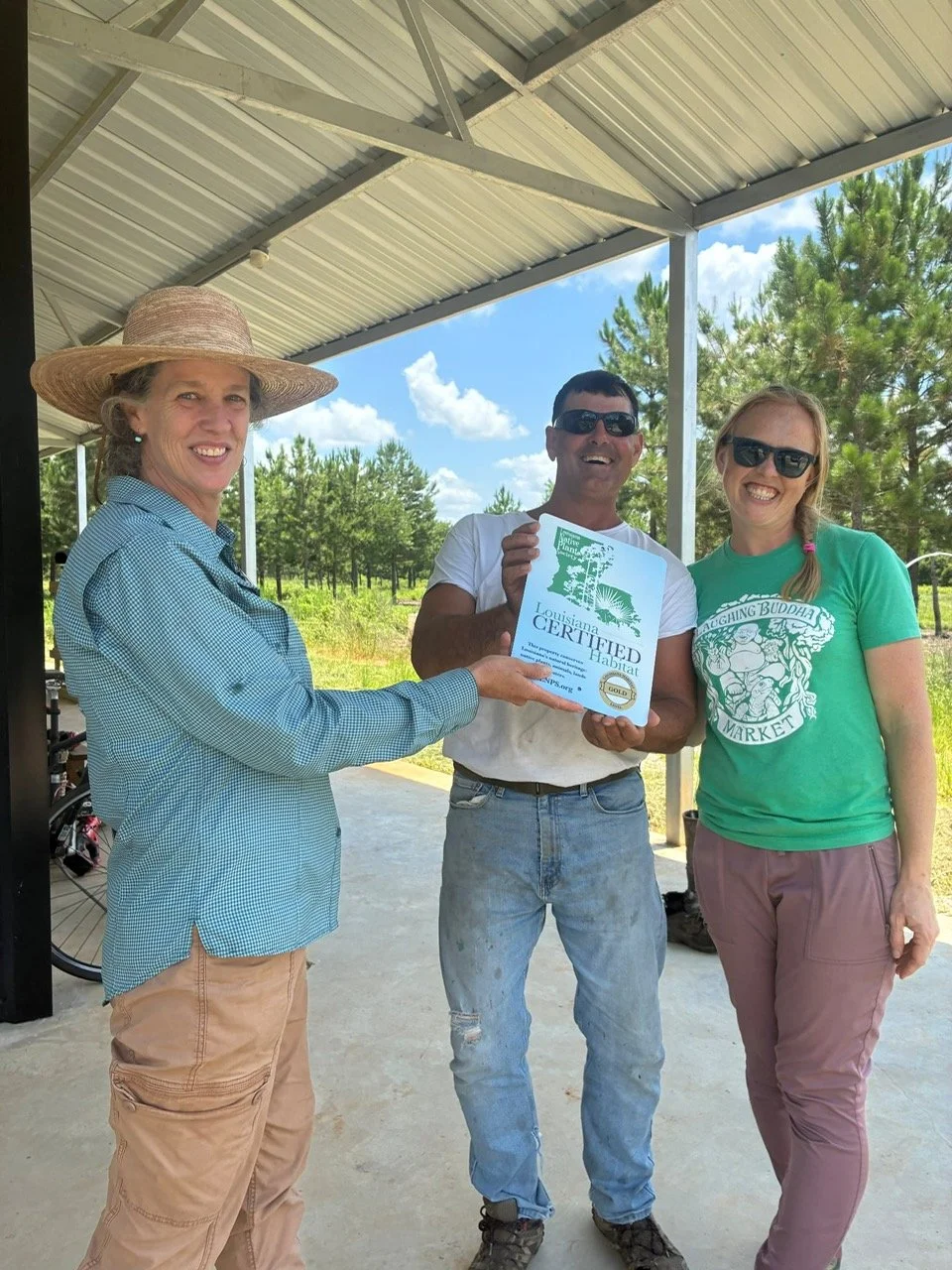
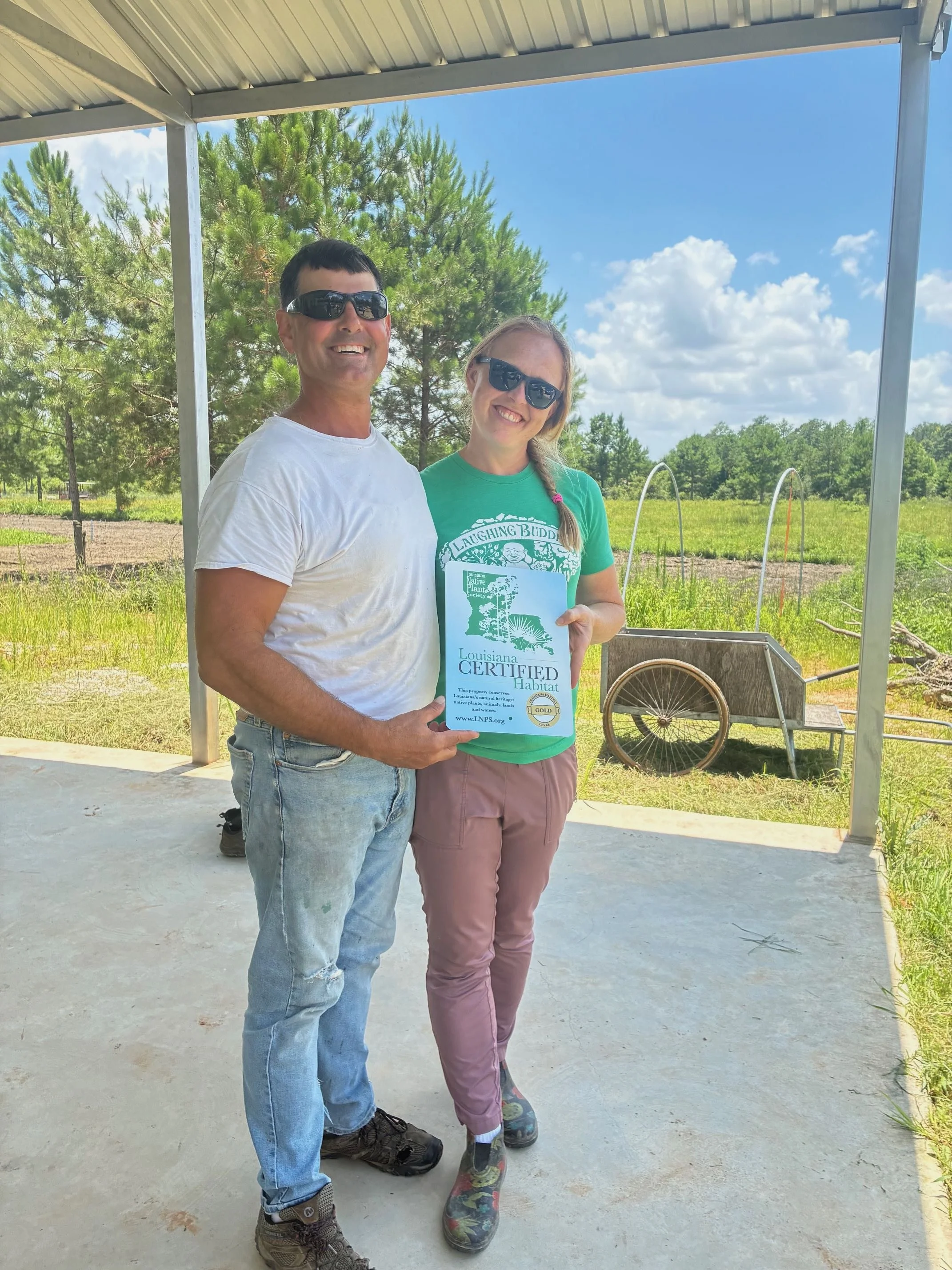
In late June, we were thrilled to host Tammany Baumgarten and friends from the Louisiana Native Plant Society for a tour about our regenerative farming practices and our wildlife and plant conservation efforts.
Tammany is a horticulturist and owner of BaumGardens Landscape and Design in New Orleans. (We used to live on the same street as her in Old Jefferson!). As the founding president of the Native Plant Initiative of Greater New Orleans and the past president of the Louisiana Native Plant Society, Tammany is real force in the world of native plants, habitat restoration and healthy ecosystems in Louisiana.
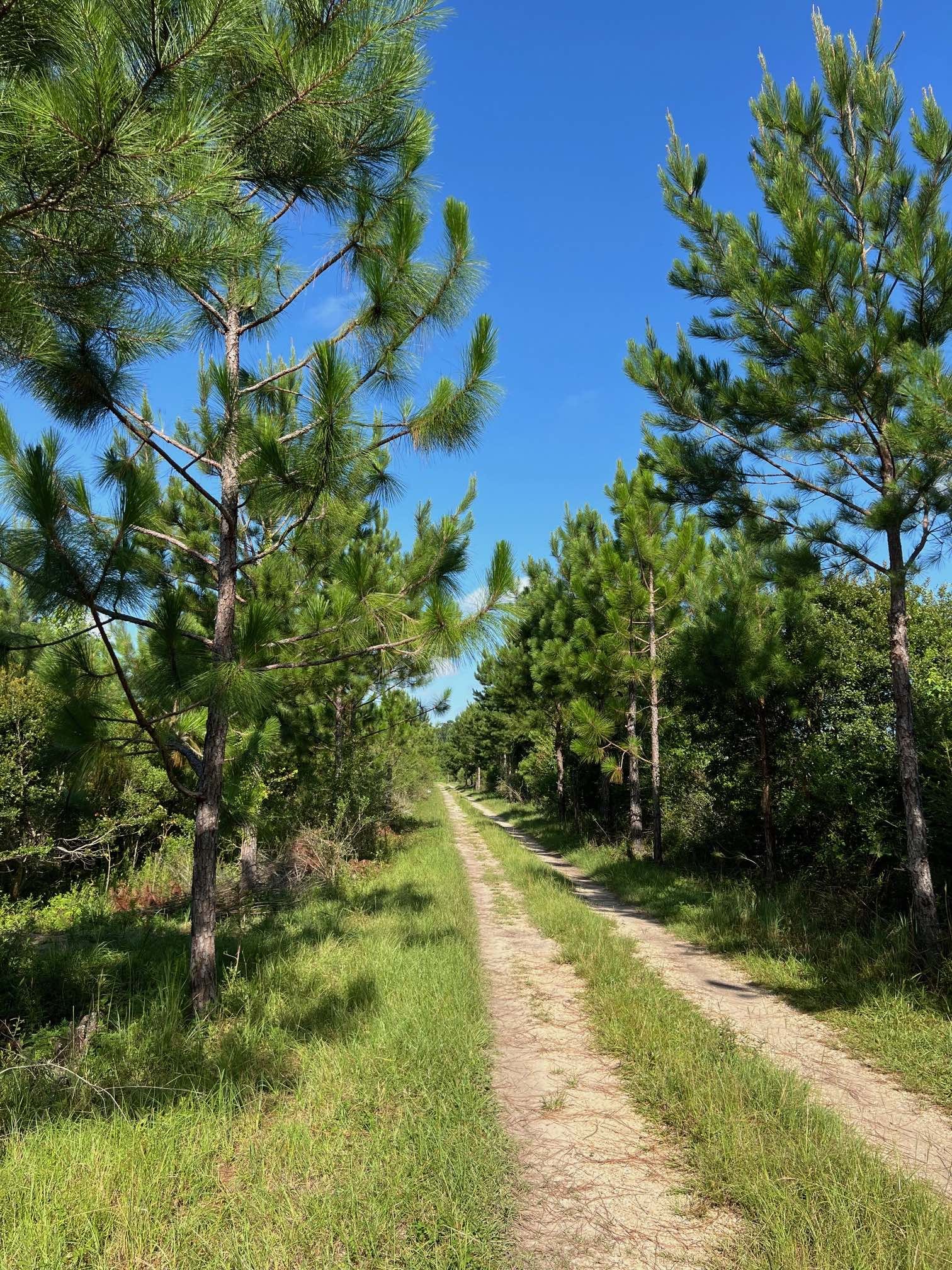
We had a great walk, showing them the long leaf pine and oak trees we select and baby and together identifying tons of other native plants, along with explaining our farming practices and efforts around habitat creation, water retention, soil building and more.
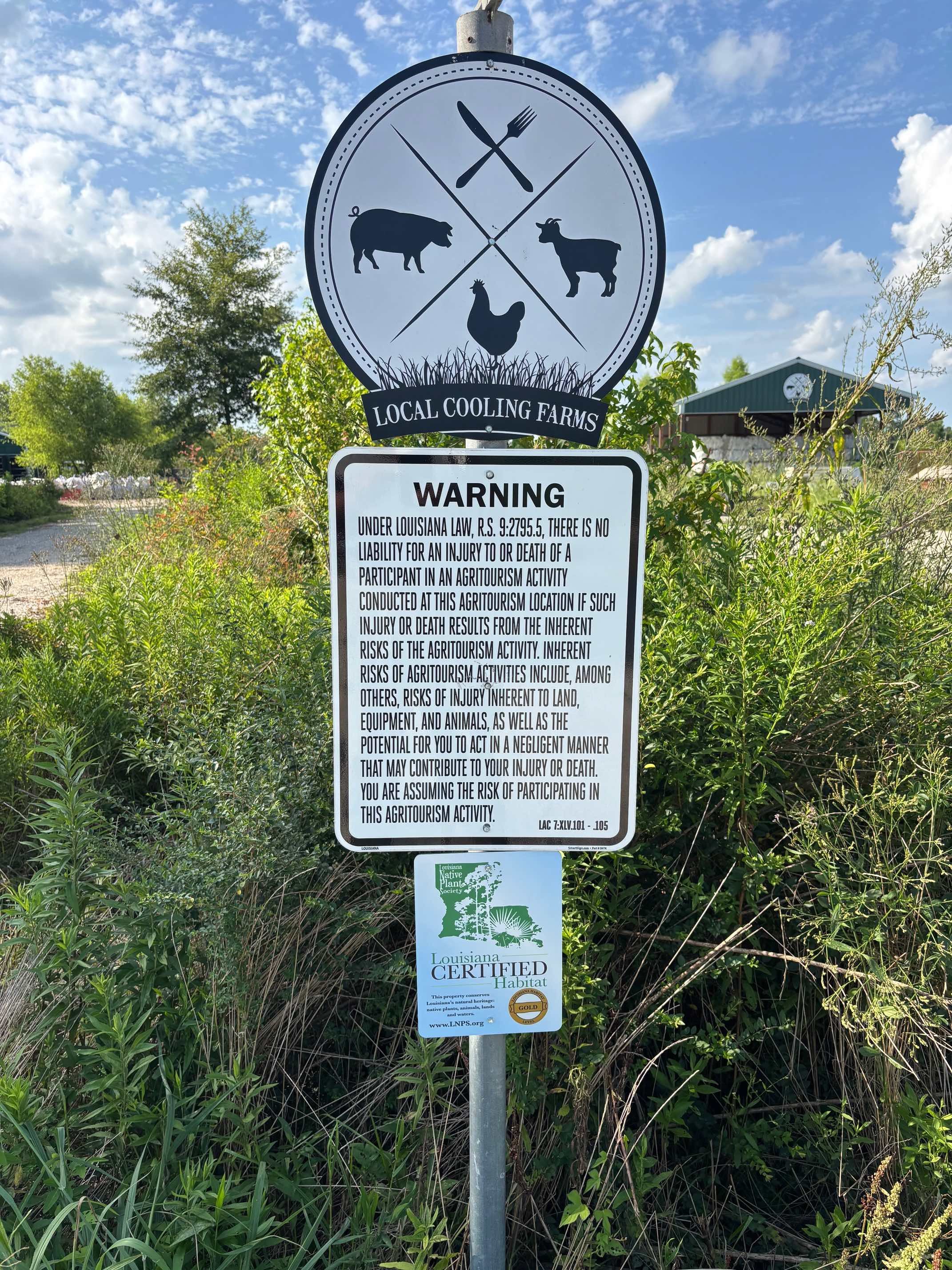
To cap off the visit, Tammany surprised us by awarding our farm with the Gold Level of the Louisiana Natural Habitat Certification. This program aims to encourage property owners and managers to increase and protect the ecological value of their land to benefit wildlife and natural systems.
Habitat certification levels are determined by the number of native plant species or percentage of native plant species on a property: bronze level is 25 native species or 25% native plants, silver is 50 native species or 50% native plants, and gold is 75 native species or 75% native plants.
The certification was such a cool surprise. There’s so many things we do on the farm that are their own reward — seeing pollinators doing their thing on native flower blossoms, birds feeding off of wild berries, an explosion in the rabbit and quail population, healthier soil that absorbs more water after heavy rains and the list goes on.
But it’s also really nice to receive the recognition because farming this way certainly isn’t easy or without costs and blood, sweat and tears. And sometimes it seems like people expect it to be a manicured golf course, when for a whole variety of reasons, we want it a little wilder!
We also discussed ways that regenerative farmers and ranchers can get involved with groups like the Louisiana Native Plant Society, the Louisiana Master Naturalists and The Nature Conservancy in Louisiana and we’re looking forward to working with those groups on tours and educational programs in the future.
I have been wanting to start a blog series about Why We Farm the Way We Farm (and How, too!), so I figured this surprise certification would be a good first blog in the series.
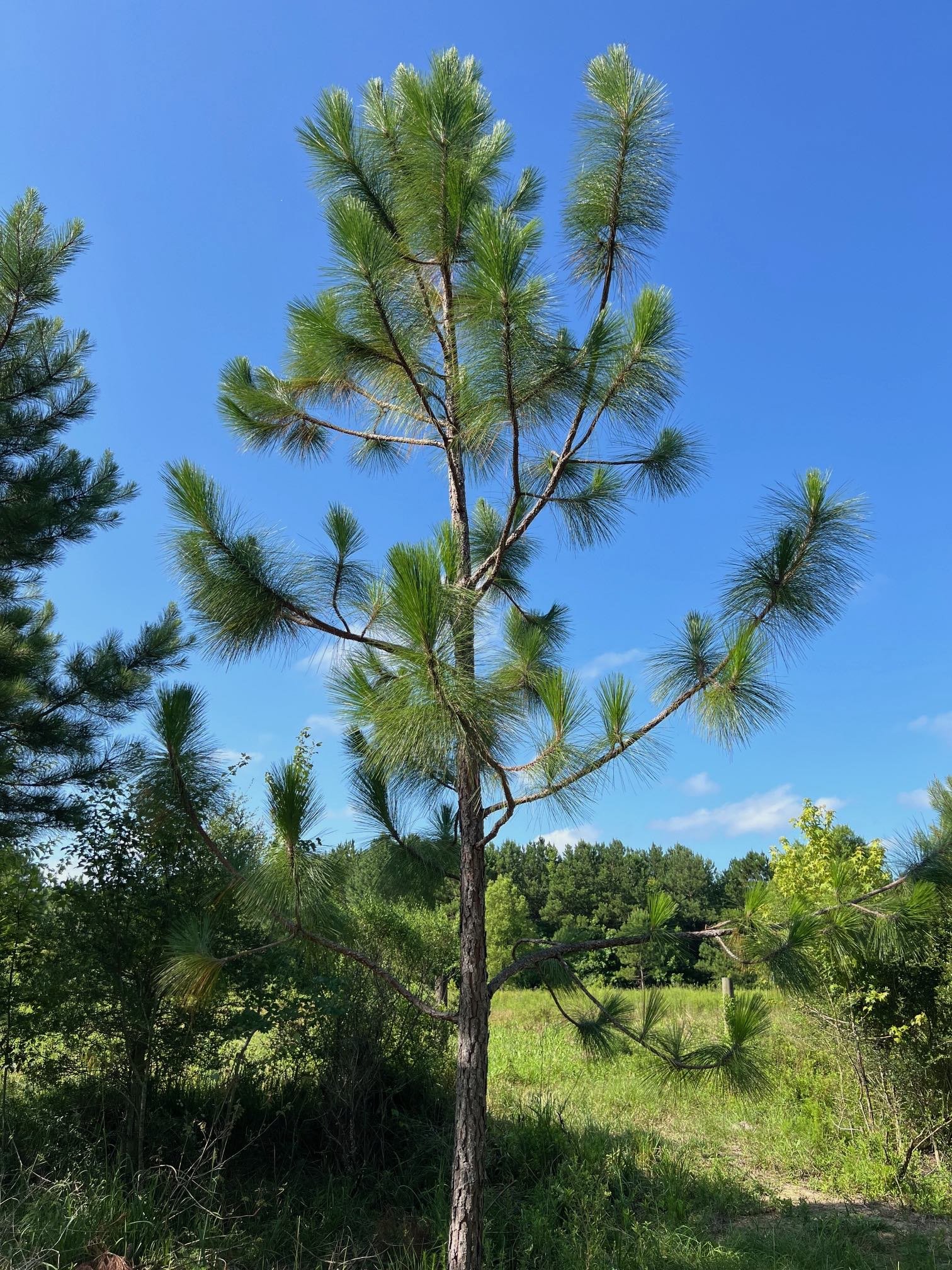
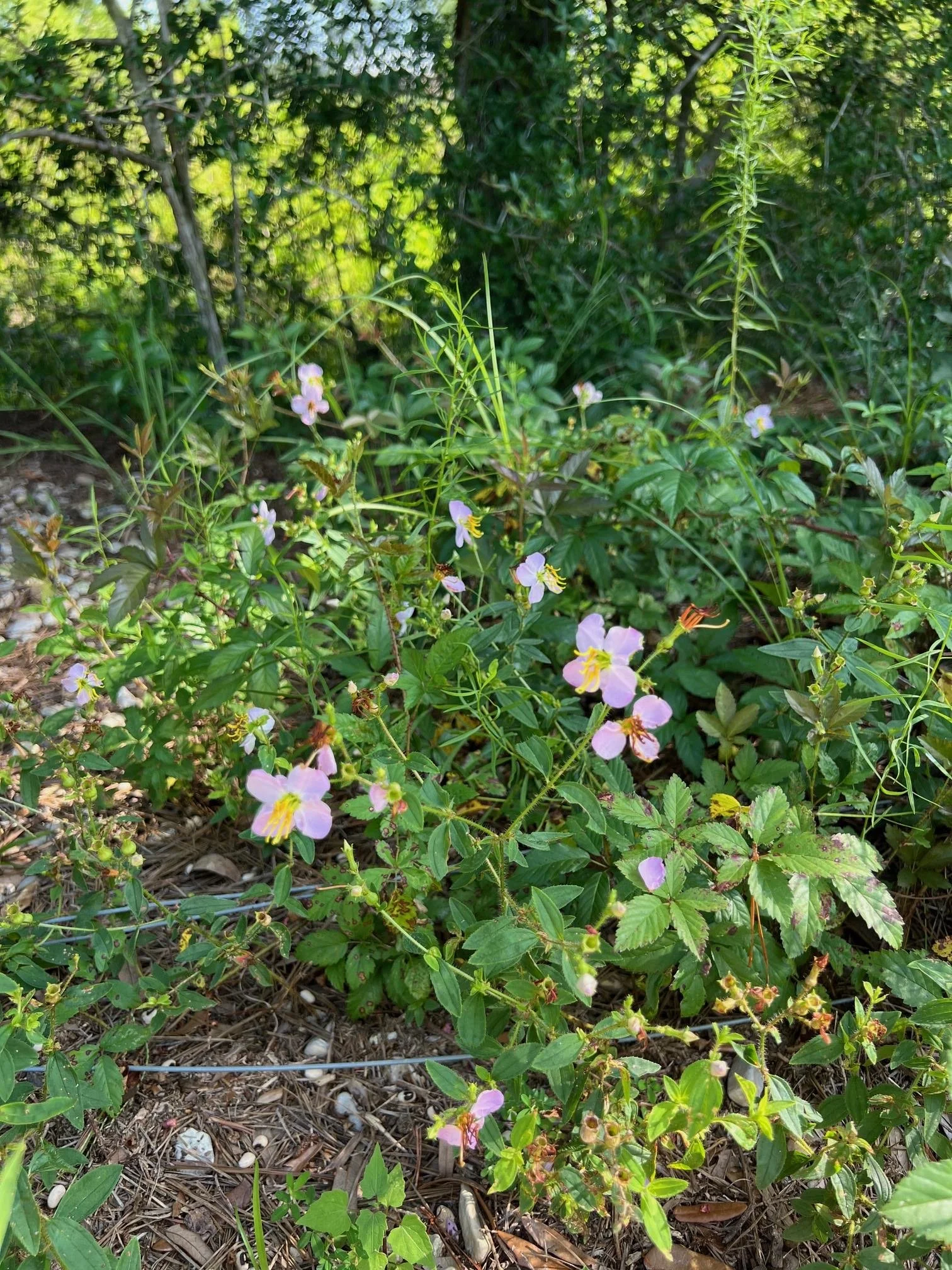
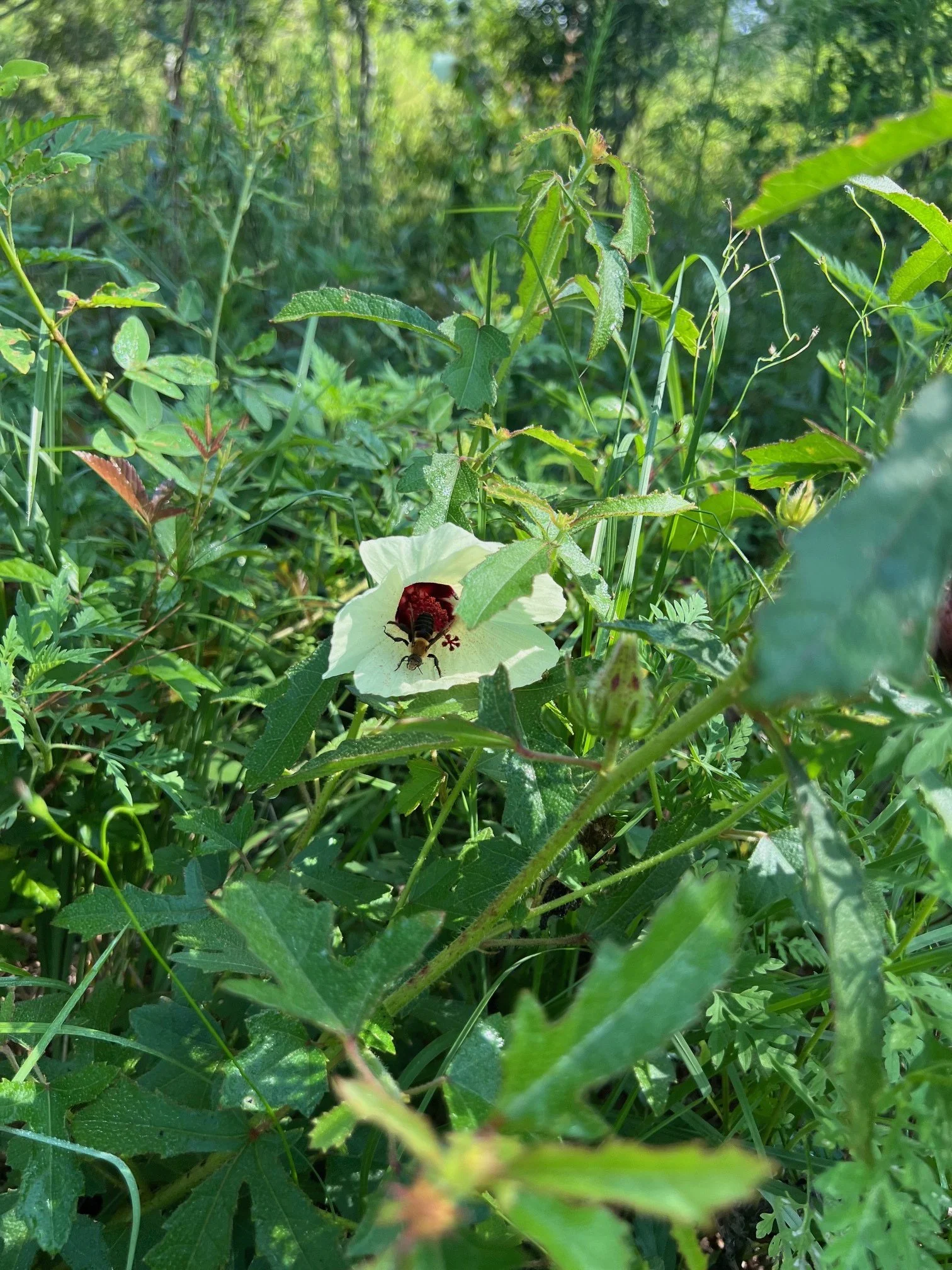
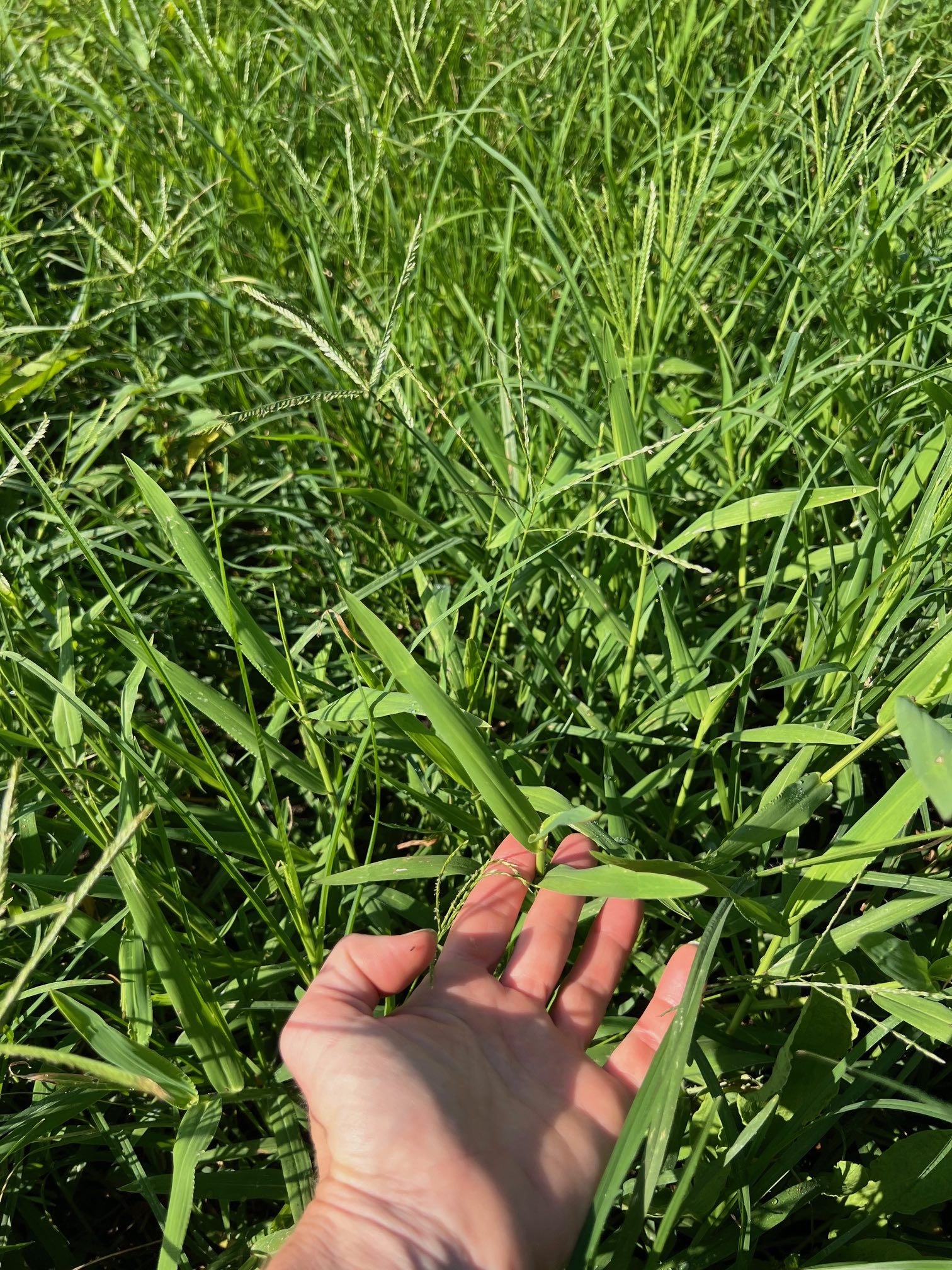
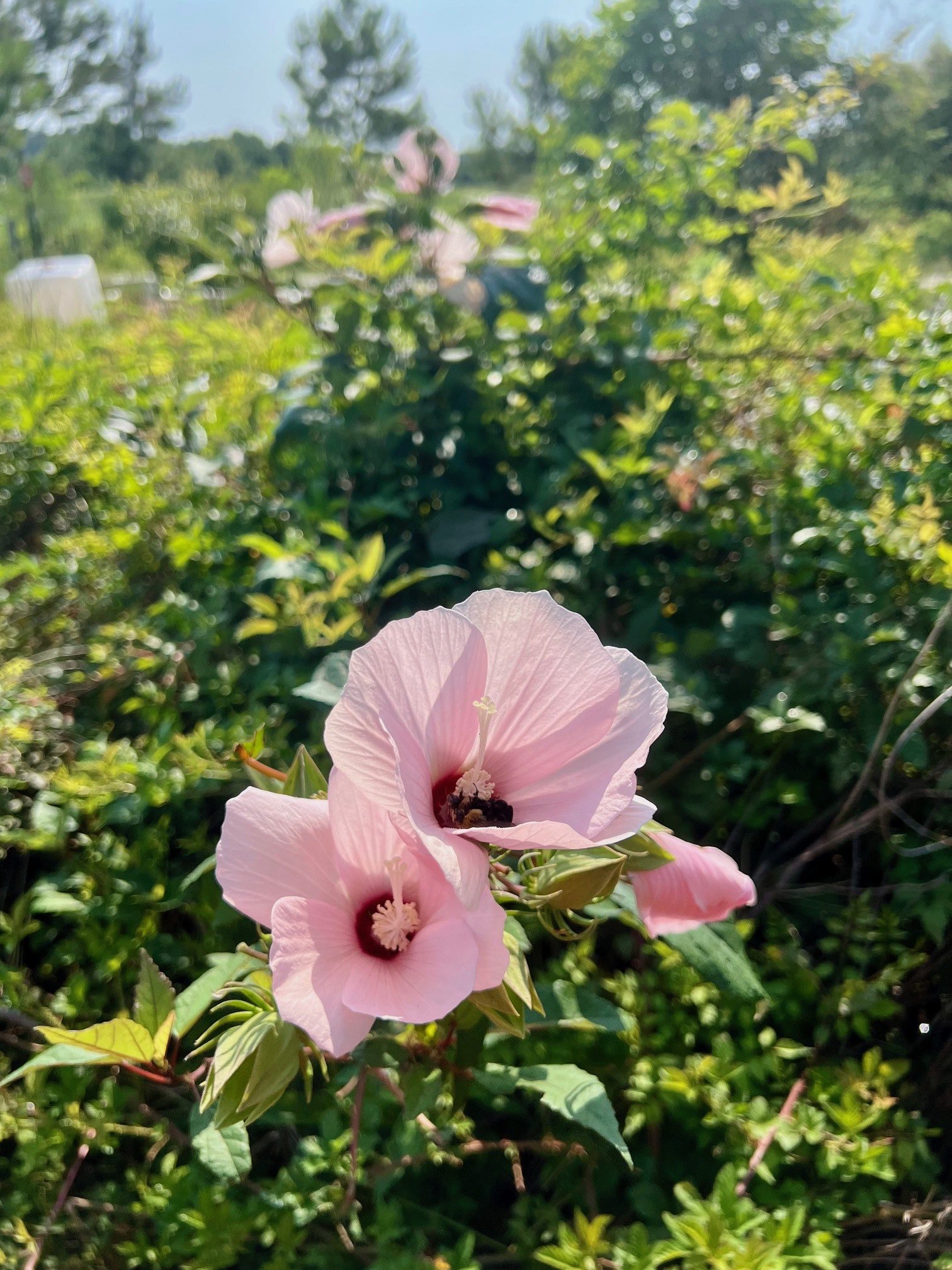
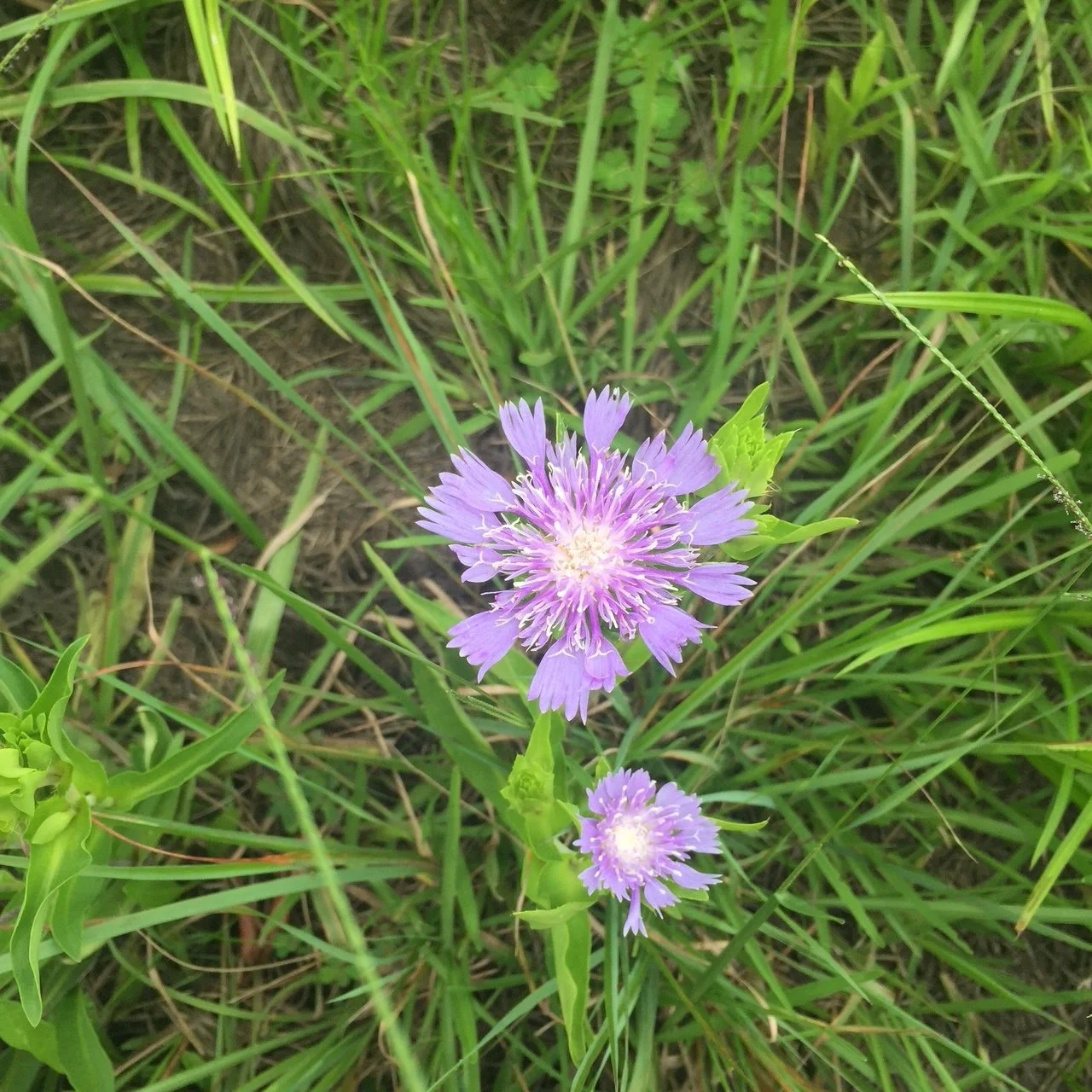
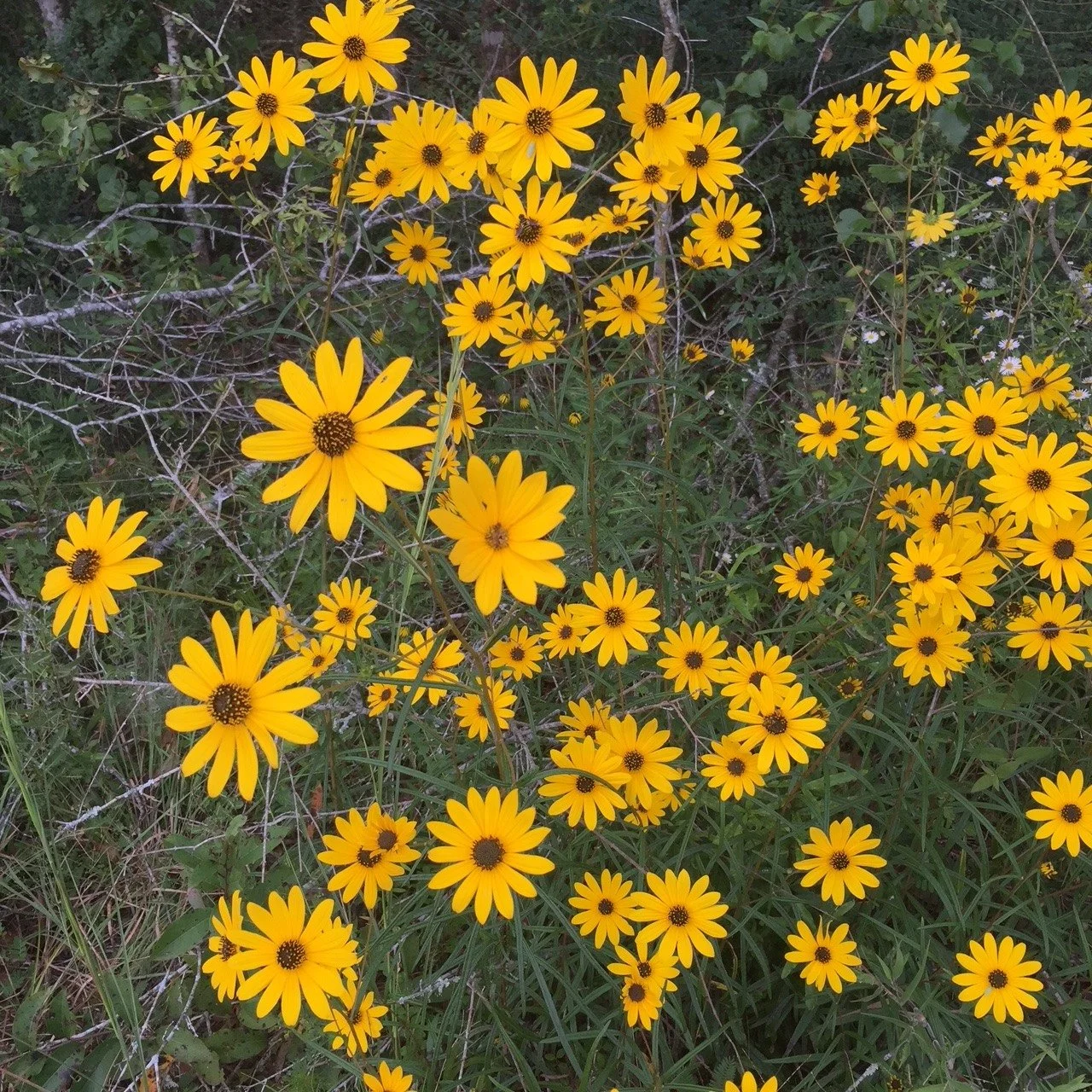
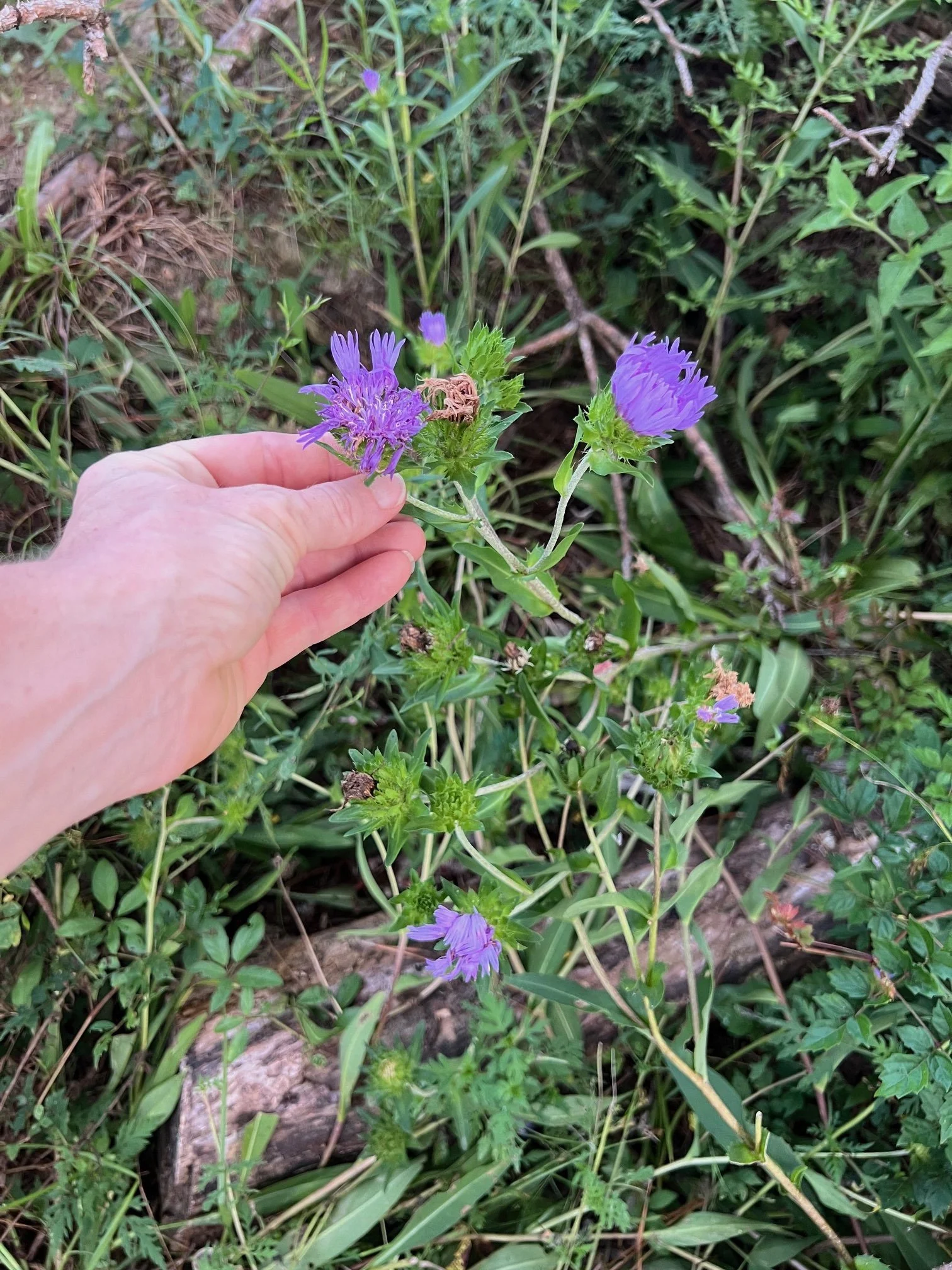
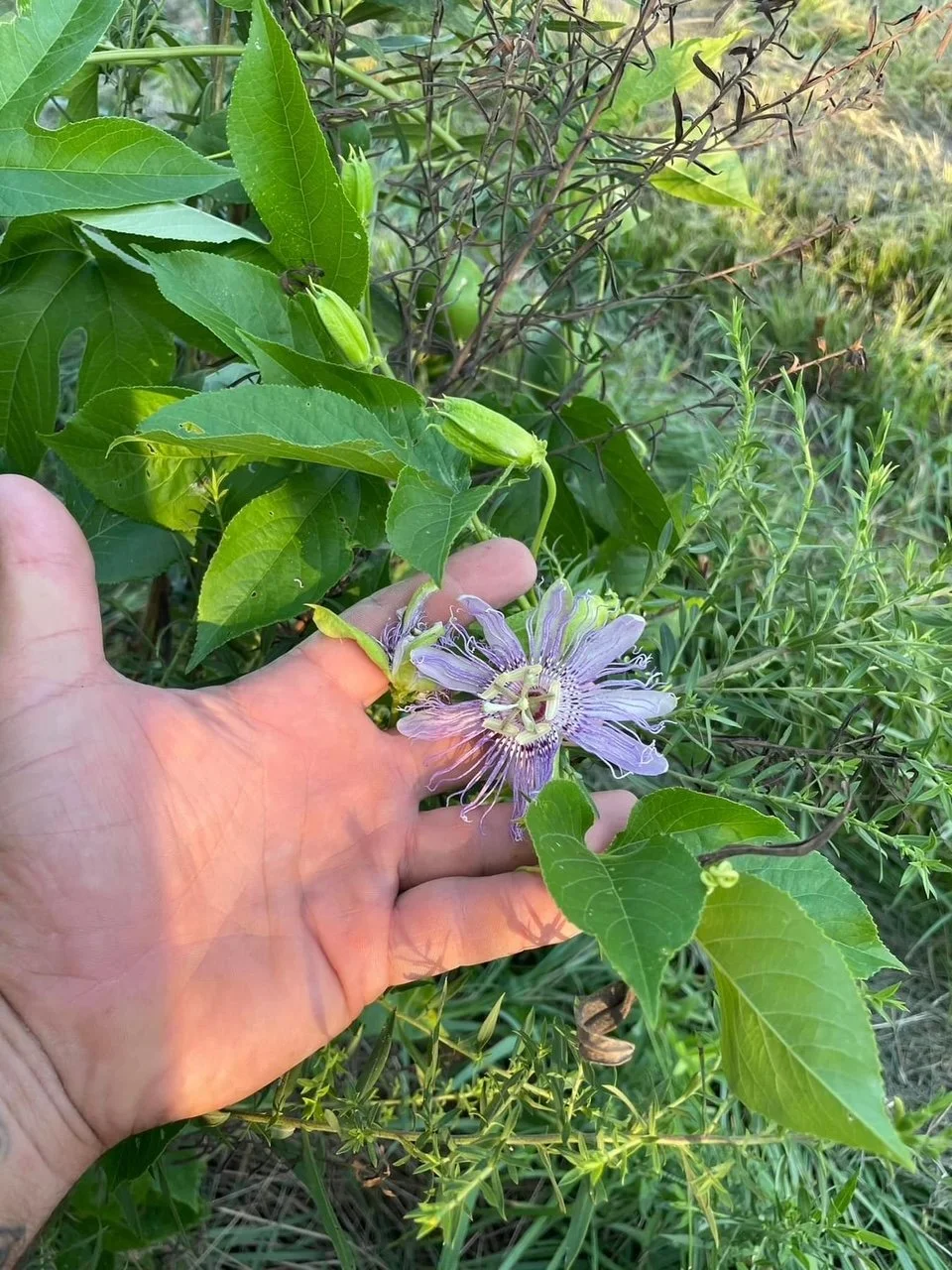
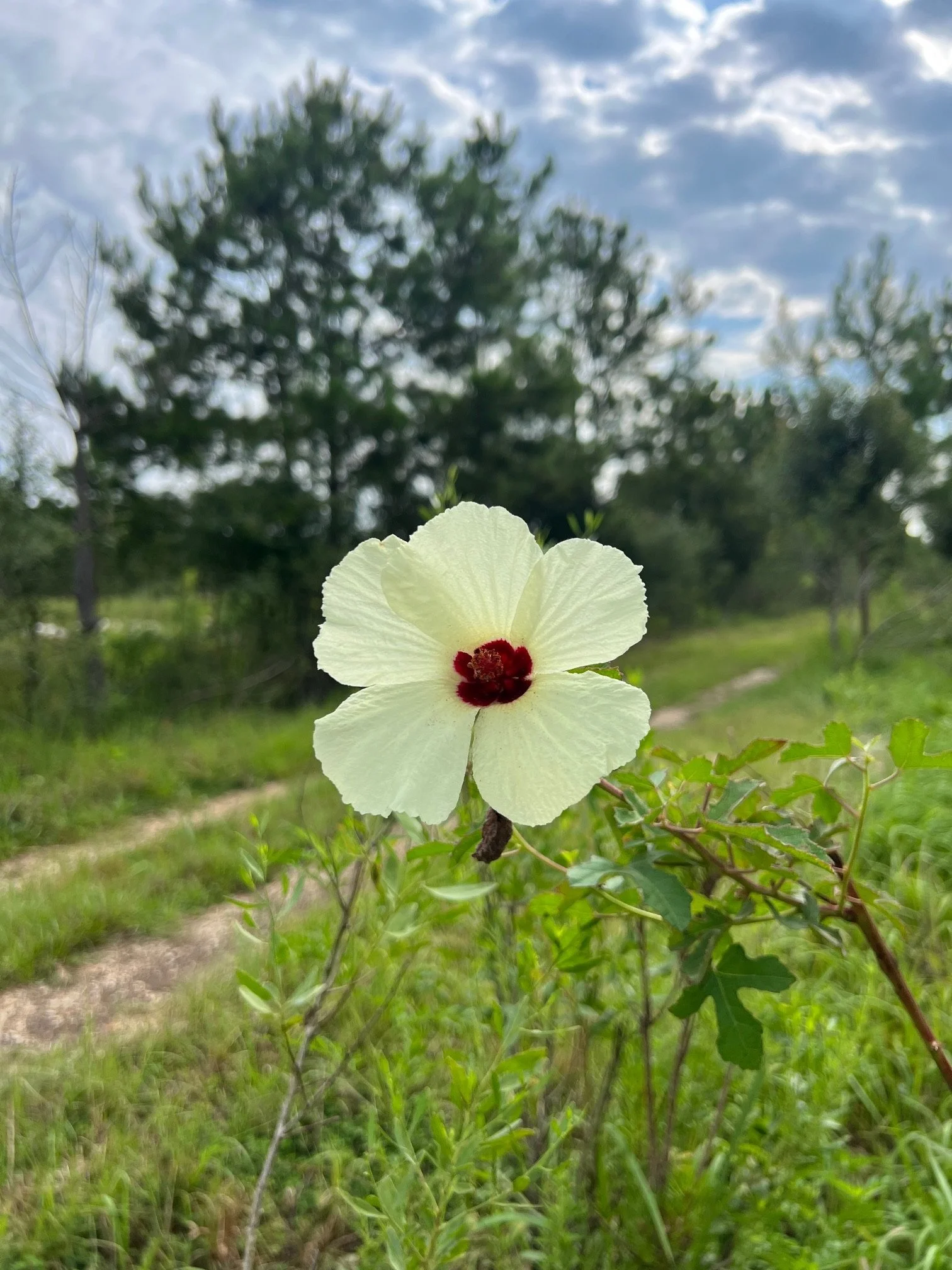
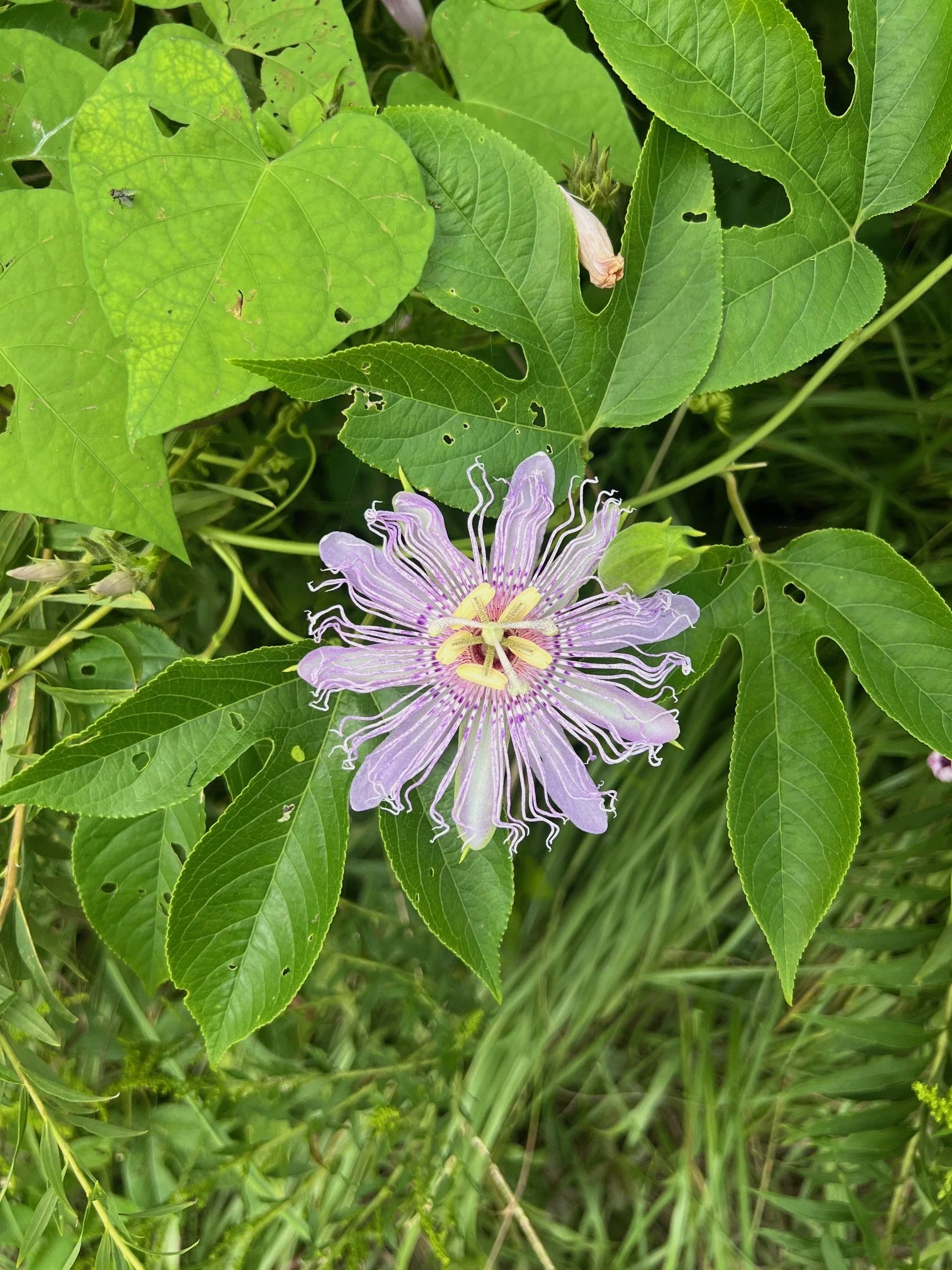
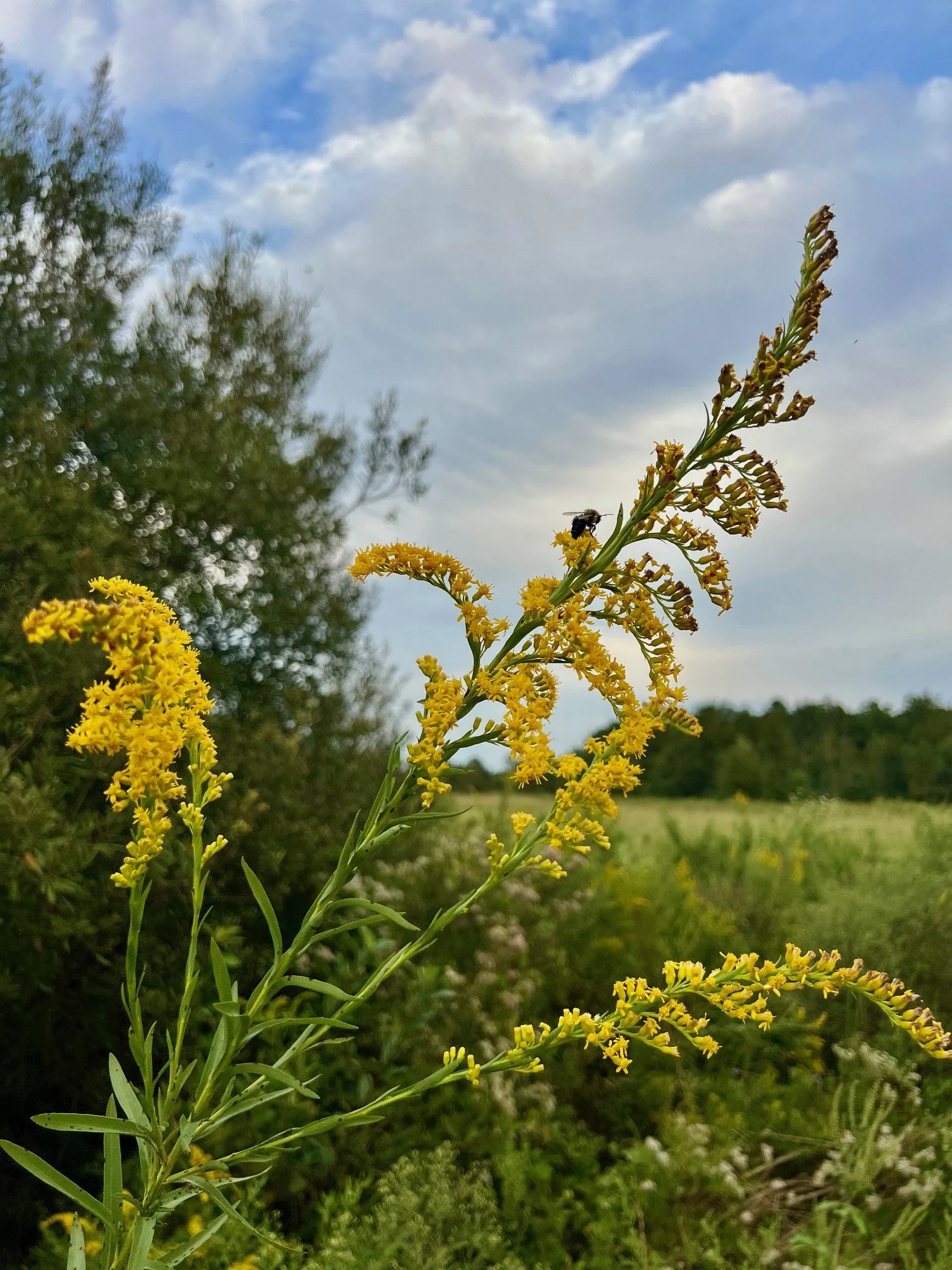
The pictures in the two galleries on this page are a collection of some of the most photogenic native plants on our land recently (long leaf pine trees, meadow beauty or rhexia, a bumble bee in a white swamp mallow flower, paspalum grass, pink swamp mallow, stokes asters, swamp sunflowers, maypop or native passionfruit and of course, goldenrod!).
The main Local Cooling Farms page of our website goes over our story and our motivations and goals, but there’s topics like human rights in slaughterhouses that I plan to cover in this series, along more detail about the obvious themes of human health and nutrient density, carbon sequestration and building topsoil, animal welfare and more.
The native plant and wildlife ecosystem building aspect is an easy place to start this series because it is topic especially close to our hearts.
The land that makes up our farm was failed subdivision that was row cropped for decades before Hurricane Katrina. Needless to say, the soil was stripped of nutrients with each harvest and these nutrients were replaced only with synthetic, petroleum-based fertilizers to support the growth of monocultures of corn and soybeans. They were certainly sprayed with pesticides and herbicides, too. All of these common conventional agricultural practices degraded the soil and destroyed wildlife.
I’ll never forget how quiet the land was in our early days — there was so little life that we didn’t hear birds, crickets or katydids, frogs and toads or much of anything in the fall of 2014 and into 2015. On many nights, our yard in the suburbs of New Orleans was louder with wildlife than our farm land!
Today, it’s a total cacophony of life and sound and the bird activity has especially taken off. It’s really cool to think about how the ecosystem is really built from the literal ground up. Without healthy soil, you don’t have insects that can feed the louder and more visually obvious species like amphibians, reptiles and birds.
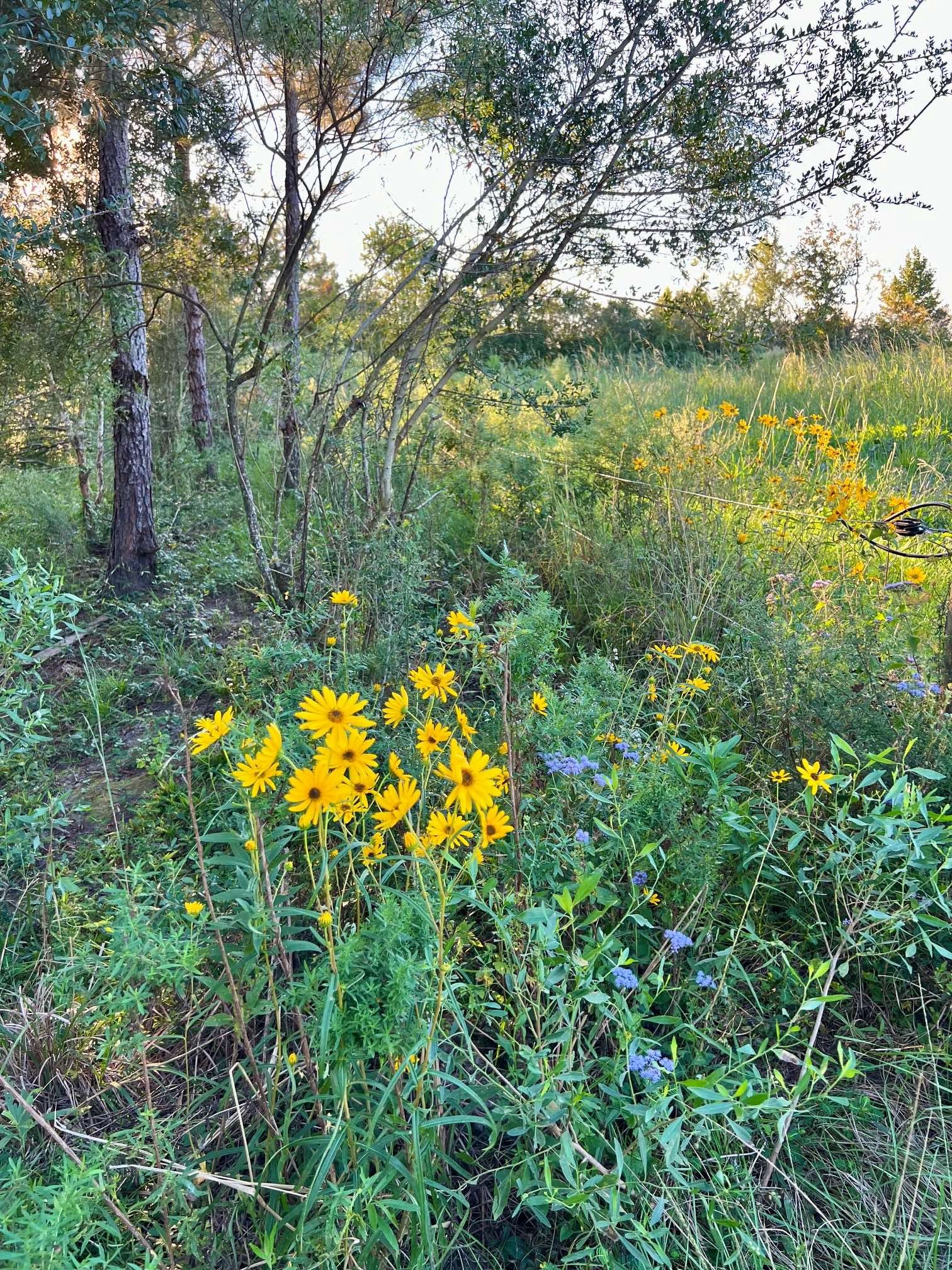
Perhaps the majority of consumers and even some farmers themselves think of farming and native plant and wildlife habitat restoration as at odds, but there are many ways to interweave regenerative farming with rebuilding healthy ecosystems and fostering biodiversity.
One simple way that I like to put it in perspective is that human beings have already touched and impacted the vast majority of once wild spaces, certainly here in the United States. If we let areas that have been farmed or timbered just lay fallow and “go back to nature,” that doesn’t guarantee a functioning ecosystem will return on its own. Nature is amazing, but it often needs help from humans who messed it up in the first place.
Regenerative farming is way to proactively manage land (and yes, produce food at the same time), while fostering biodiversity and soil health.
Some of the practices that support native plants and animals and protect soil and waterways on our farm include:
Rotational grazing cattle and goats. Moving ruminants regularly to fresh pastures and silvopastures mimics the patterns of wild herbivores. By continuing to move animals in peak grazing season, we encourage healthy cycles of disturbance and rest. When animals graze densely but briefly, more plants — not just the most palatable ones — are impacted, allowing diverse grasses, forbs, browse and flowers to flourish. Further, ruminant hooves are much gentler on the land and don’t disturb ground nesting birds, small mammals and insects the way mechanical equipment and tilling does!
We also rotate our hogs and chickens on our pastures and in the woods. Although they are not true grazers (they are omnivorous and can’t survive on plant matter alone), spreading out their manure and their impact (chickens scratching and pecking and pigs rooting) distributes natural fertilizer and organic matter more evenly. We sometimes “park” the hogs in a spot a little longer to root up invasive species like cogon grass that are persistent and difficult to eradicate and often out complete native plants.
We do not use herbicides to control “weeds.” What is a weed, anyway? If soil quality is low, it’s better to have something that is naturally thriving and acting as ground cover as we improve the soil and naturally transition to other plants (versus spending untold sums of money on seeding desirable plants before the soil is able to support their growth).
We’ve even had some advice from more conventional-minded ag agents that we use herbicides to get rid of plants like morning glory or to cut down trees in our pastures because the trees are “stealing nutrients from the grasses.” Aside from it being a little bizarre to recommend chemicals or cutting down trees versus patience and time, the cattle eat the morning glory and they appreciate natural shade! We believe diversity is important in all aspects of our farm and ruminants especially know their own bodies best. Research has shown that they eat for their own nutrient deficiencies and even microdose on plants that can be on the spectrum of toxic to treat themselves for intestinal parasites or other maladies.
We do selectively cut certain weaker and less desirable types of trees in thick and overgrown parts of the property to foster better growth of desirable trees and to rebuild a more functioning silvopasture where dappled sunlight can actually reach the ground and support grasses and ground covers in addition to trees and shrubs. Instead of removing cut trees and branches or burning, we typically pile the branches for wildlife habitat. Rabbits especially use the piles for nests, but so do ground-nesting birds and of course all the decomposers and microbes so critical soil health have a field day with naturally rotting wood. The larval stage of lightning bugs love wet wood, for instance. And songbirds fly in and out to feed on insects within these piles, too!
Assessing where water naturally flows and pools and digging small frog ponds and swales. Our ponds and swales and even the ditches dug for the internal road of the failed subdivision have all become vibrant riparian areas, hosting perhaps the highest percentages of wildlife on the entire farm land.
Proper pest and nuisance wildlife management. This is something not everyone likes to hear or think about, but an ecosystem gets out of whack not just when certain types of wildlife aren’t abundant, but also when pest species populations grow unchecked. Raccoons and possums are nest raiders of ground-nesting birds especially and regularly can wipe out entire clutches. They are also carries of certain dangerous zoonotic diseases like rabies, raccoon roundworm, leptospirosis and tuberculosis. Being responsible stewards of land does sometimes mean trapping and euthanizing these species. We definitely aren’t out here feeding them marshmallows like some swamp tour hosts!
As I mentioned earlier, so many of these practices act as their own reward because in just the 12 years we’ve been managing this land, it’s already transitioned from a fallow failed subdivision to what often feels like a park or preserve. We look forward to getting more tours scheduled in the fall to share it with you!