
From Drought to Ditch-Filling Deluges, Cozy Piglets & Sows, Rooting Pigs, Grazing Goats & Cattle, Growing Chicks & More!
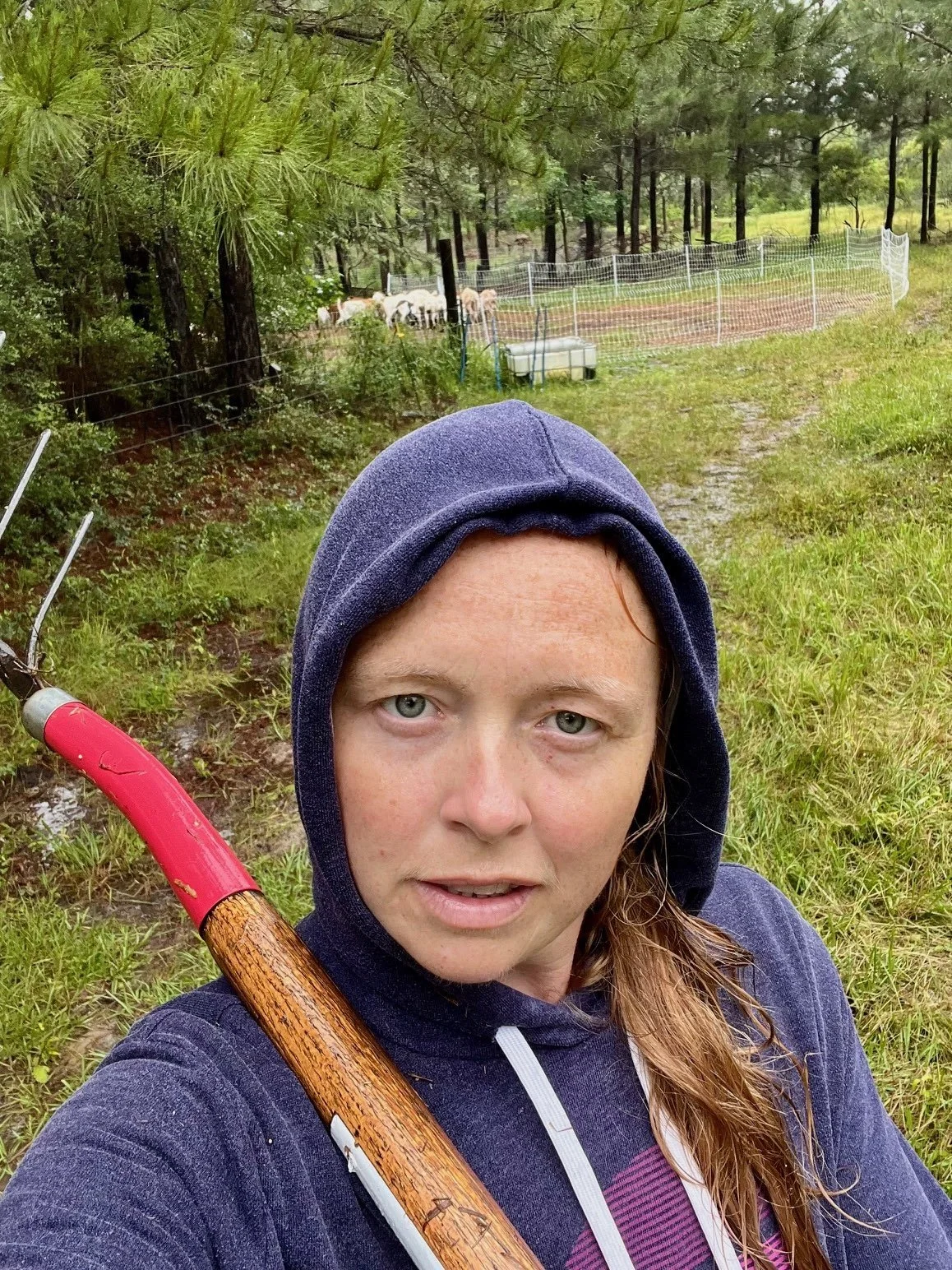
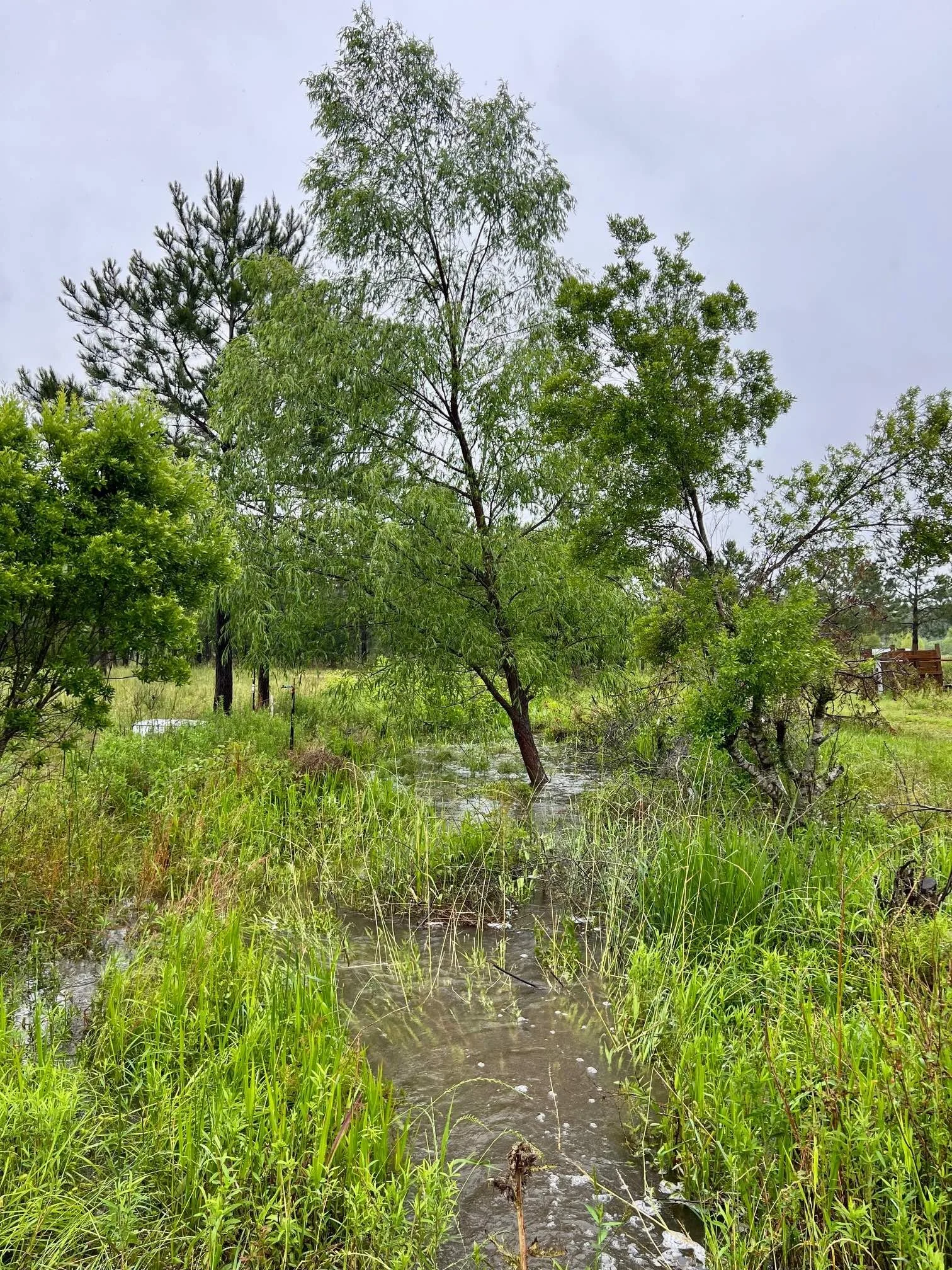
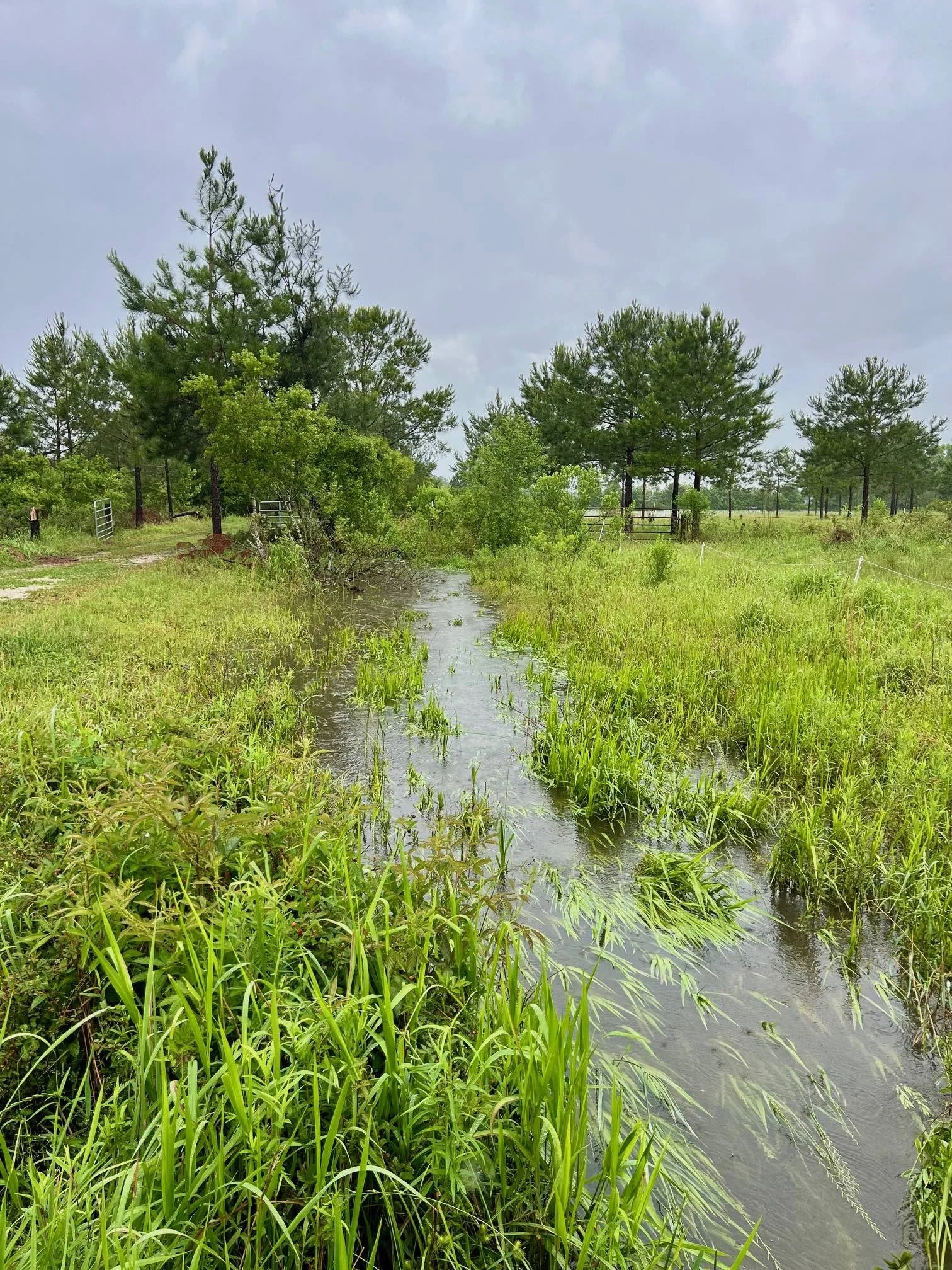
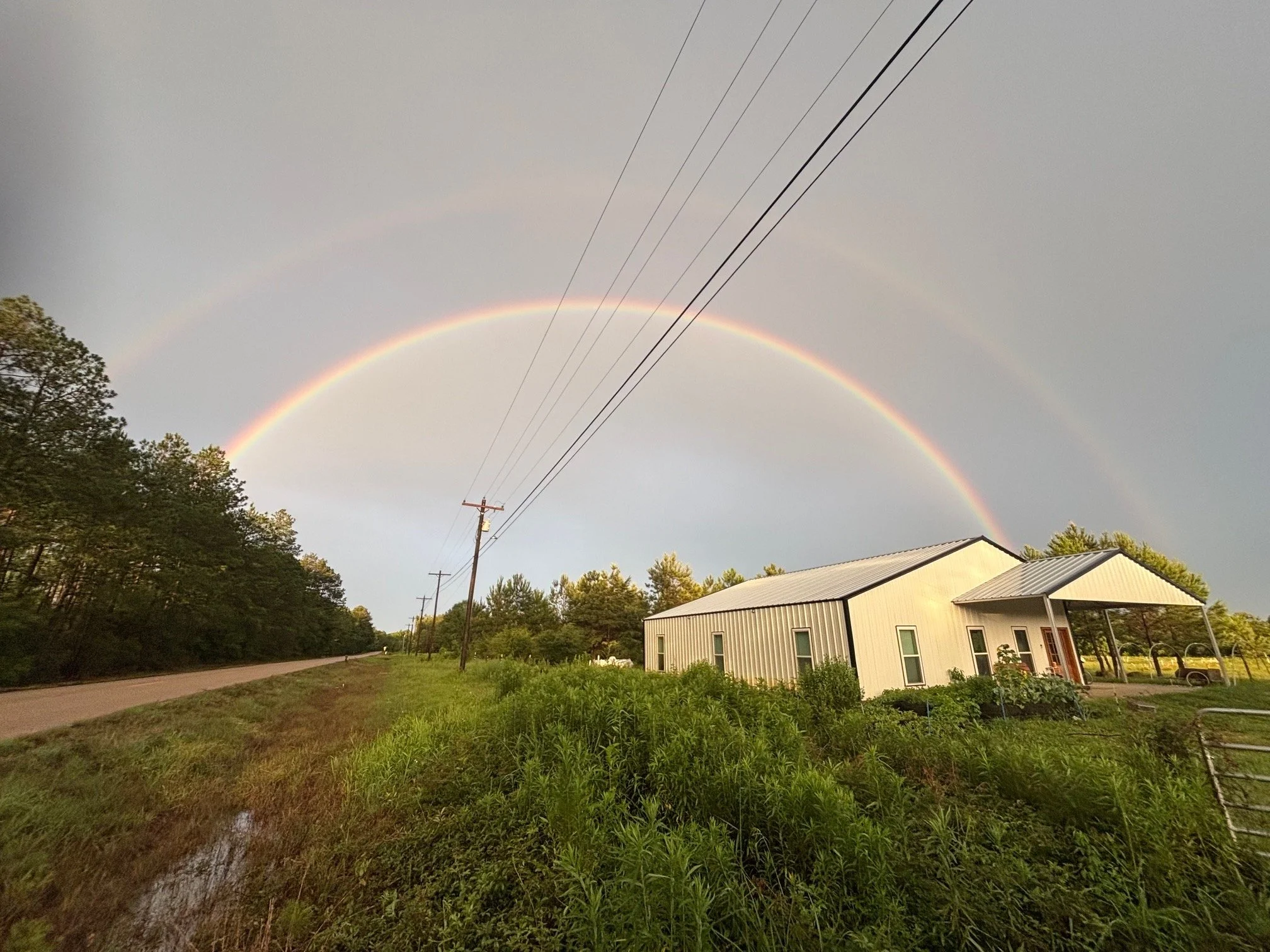
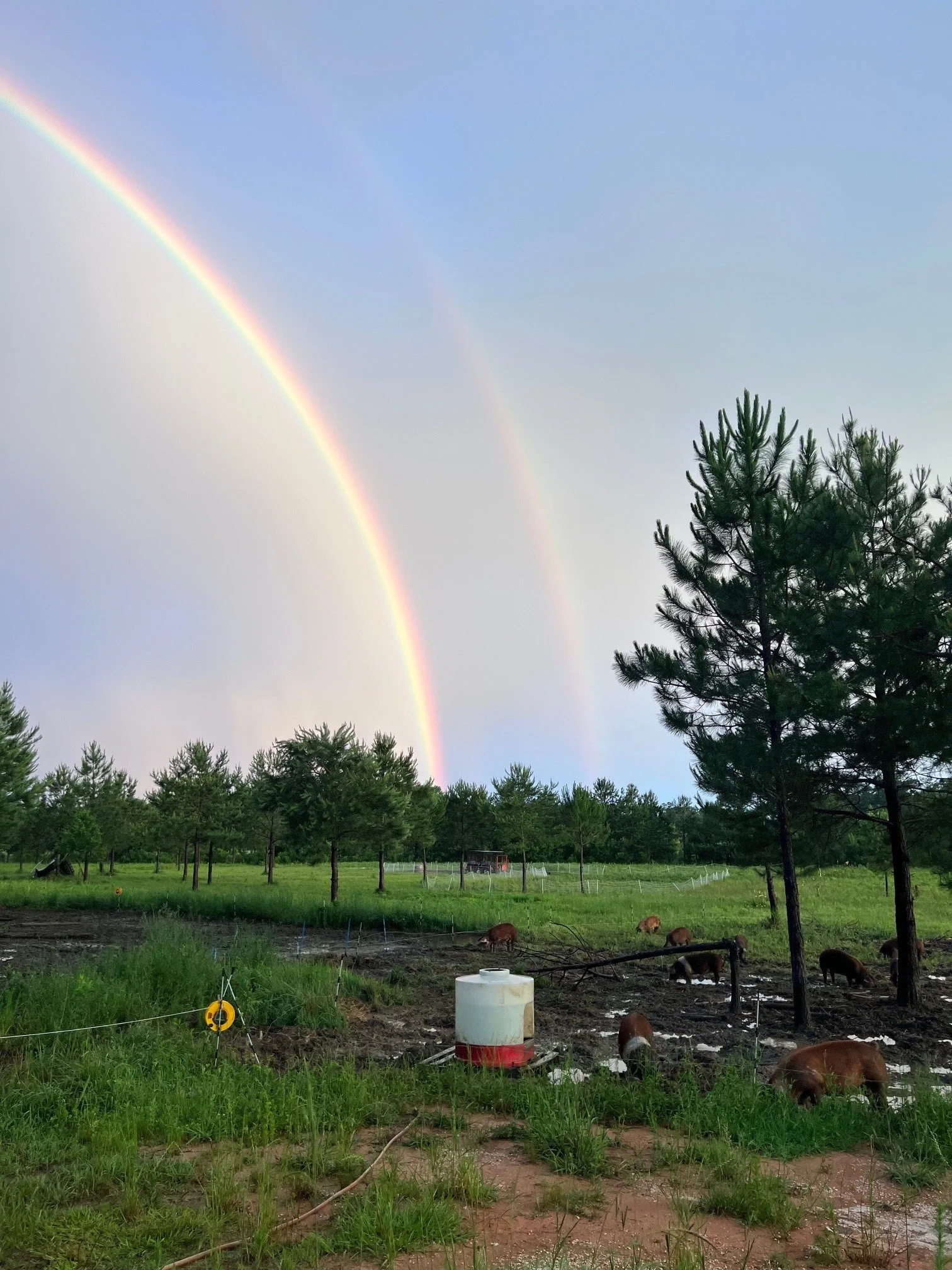
Lots has happened at the farm in the last month, including lots of progress and good things! But right now it feels like the only thing to talk about is rain, rain and more rain!
Since April 19th, we’ve had more than 27 inches of rain at the farm. They’re have been times when we dodged a few cells that pummeled Baton Rouge and the Hammond area, but other times when we got absolutely hammered.
As you probably know from the forecasts, this rainy pattern is supposed to continue for another week at least!
It’s amazing how much the weather can change. We were in a bonafide drought with fire risk to start the year, but now we’re at more than 47 inches of rain for the year, and our average annual rainfall is 65 inches.
Building soil through rotational grazing and applying compost has definitely increased the absorption of our soil and decreased run off. We’ve also dug ponds and connected them with swales in low spots over the years. So we’ve definitely seen a ton of improvement since we started farming and stewarding this land. But 27 inches of rain in less than a month is still a lot!
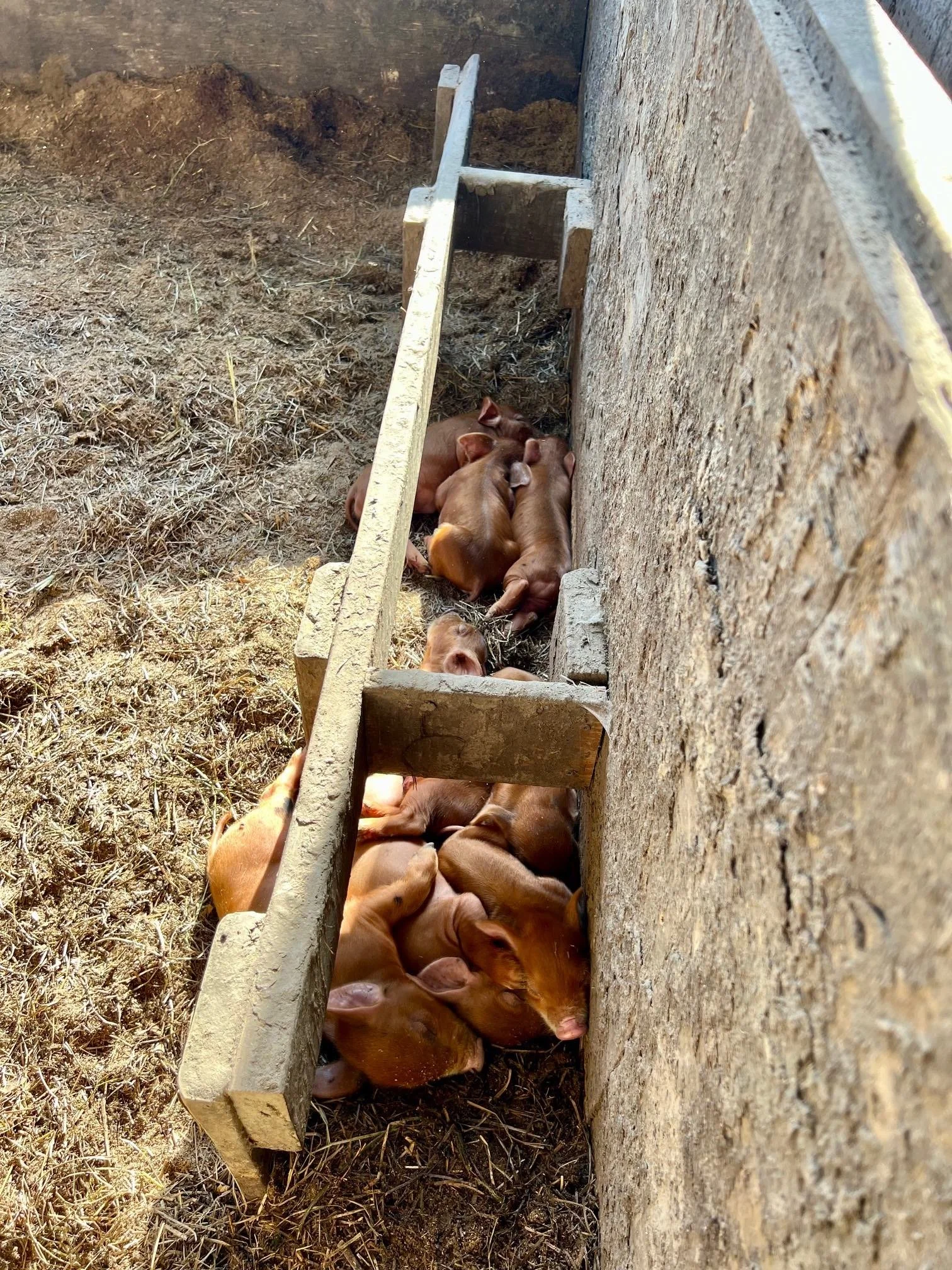
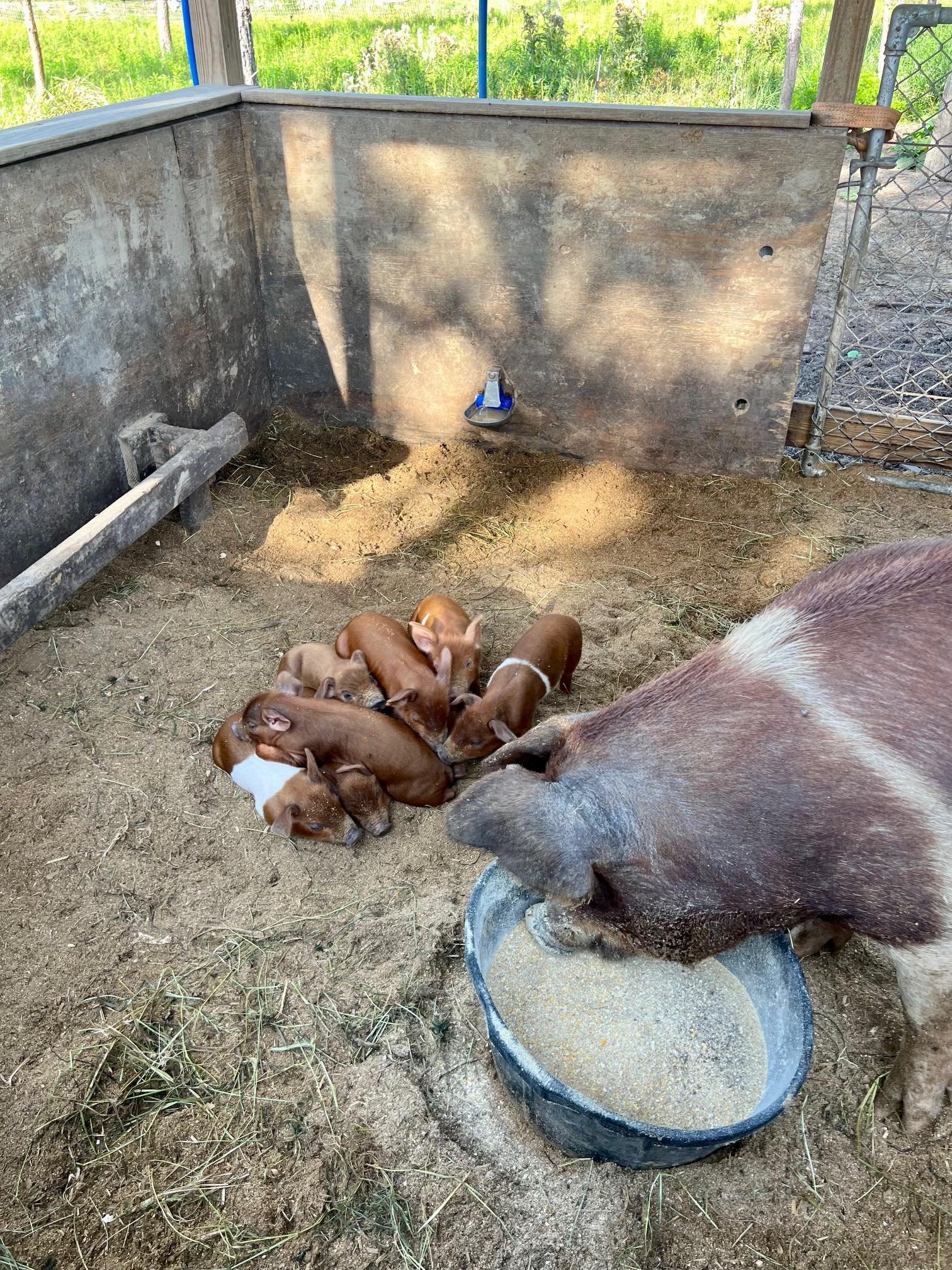
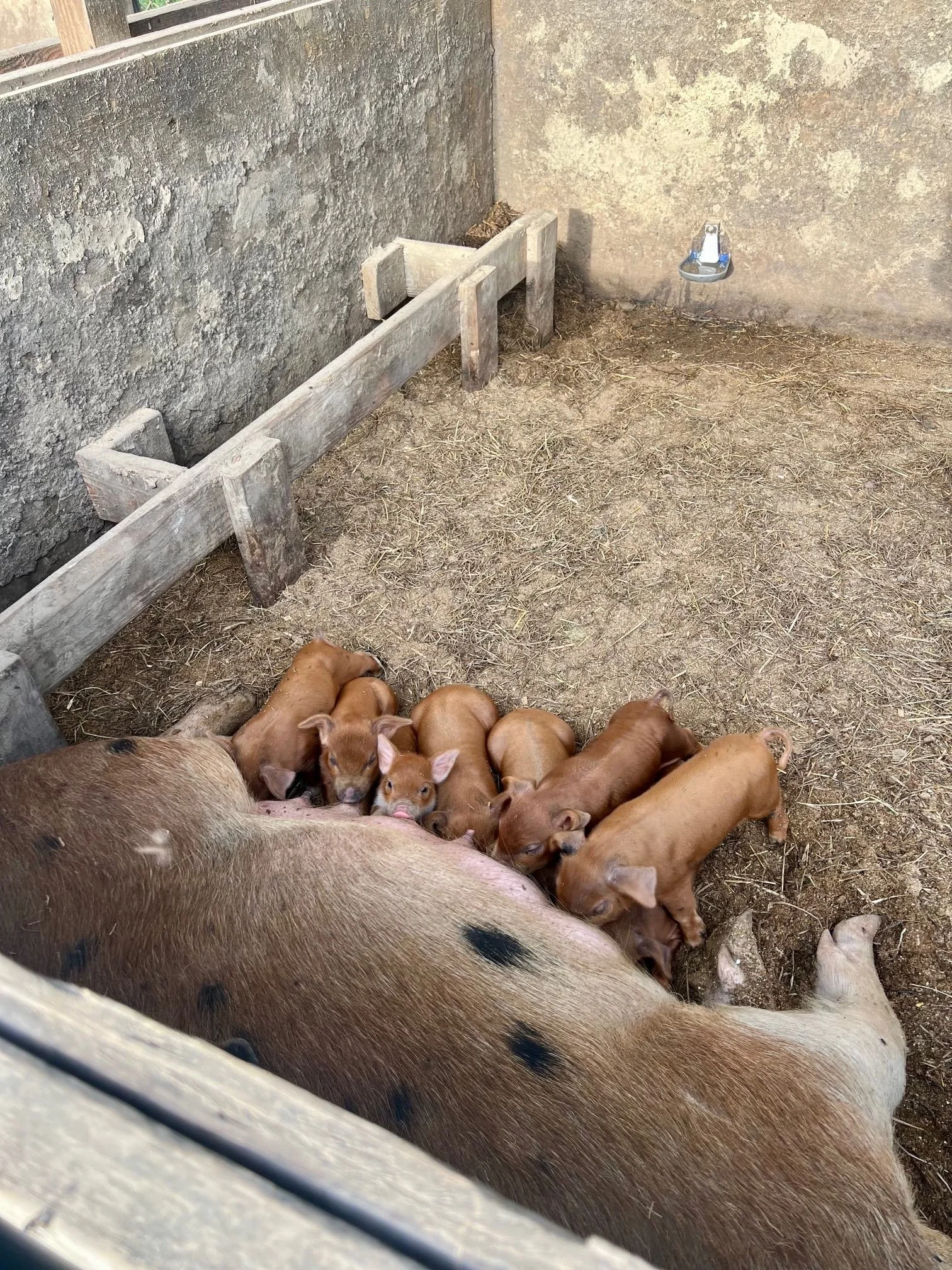
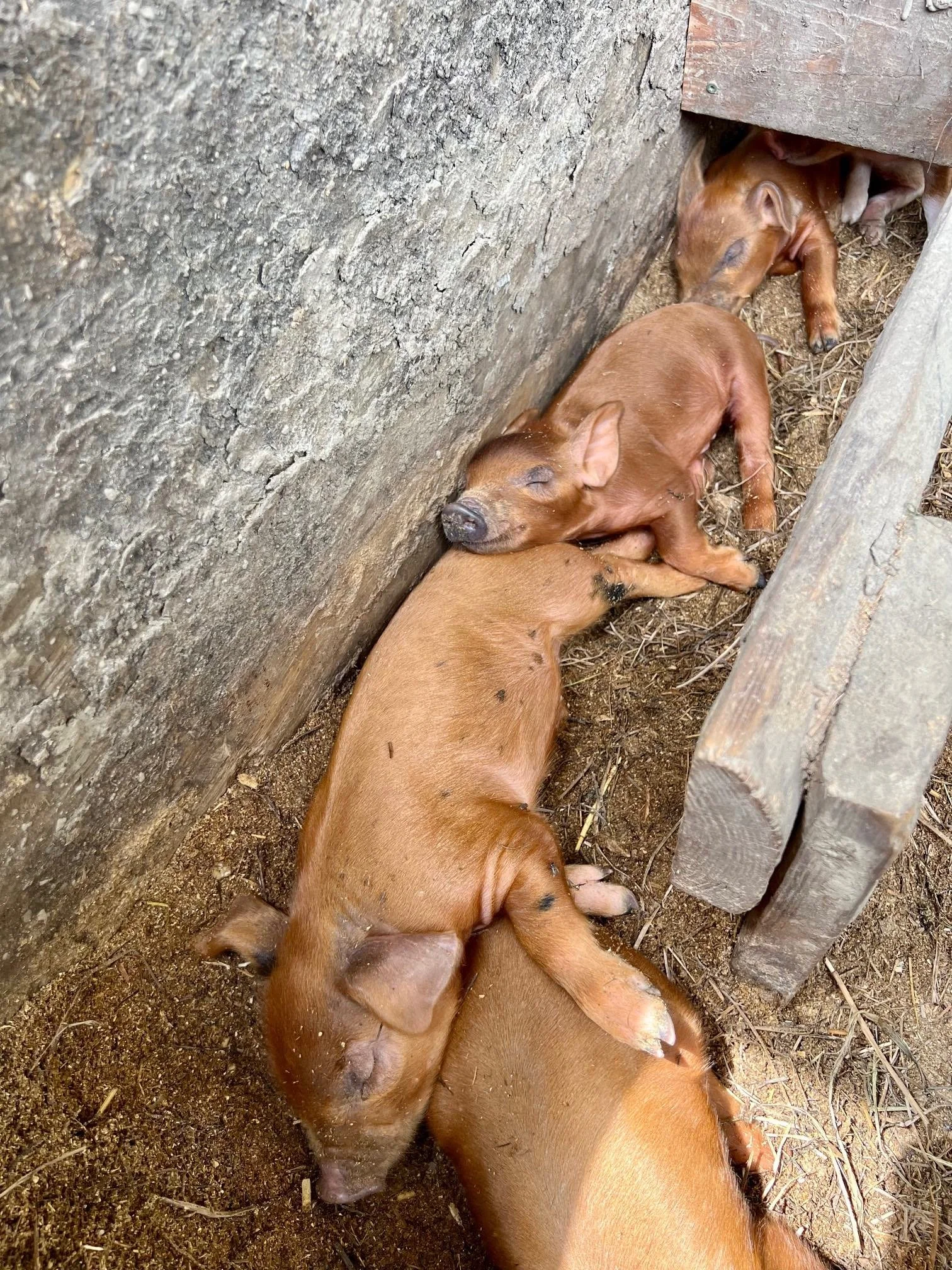
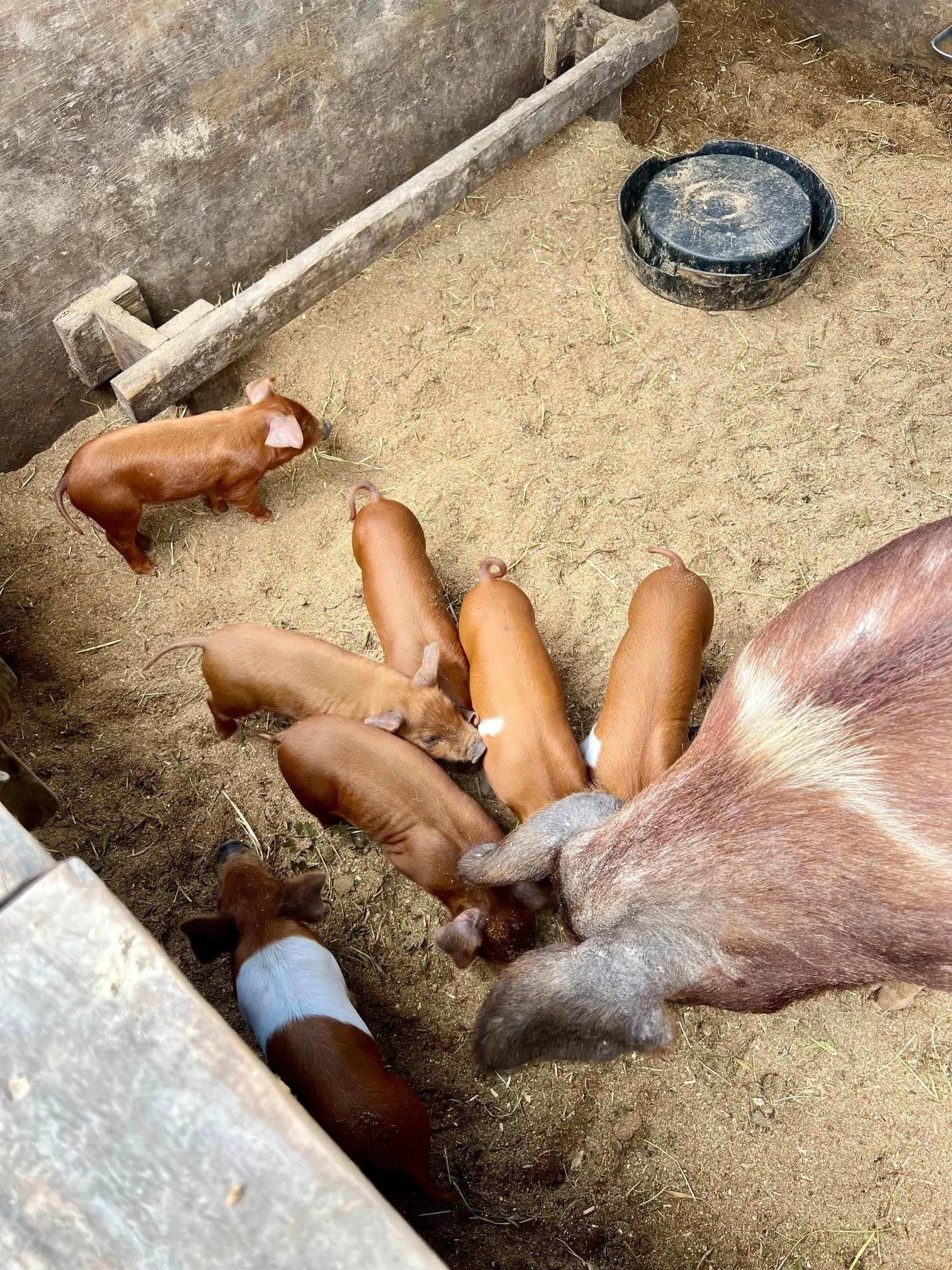
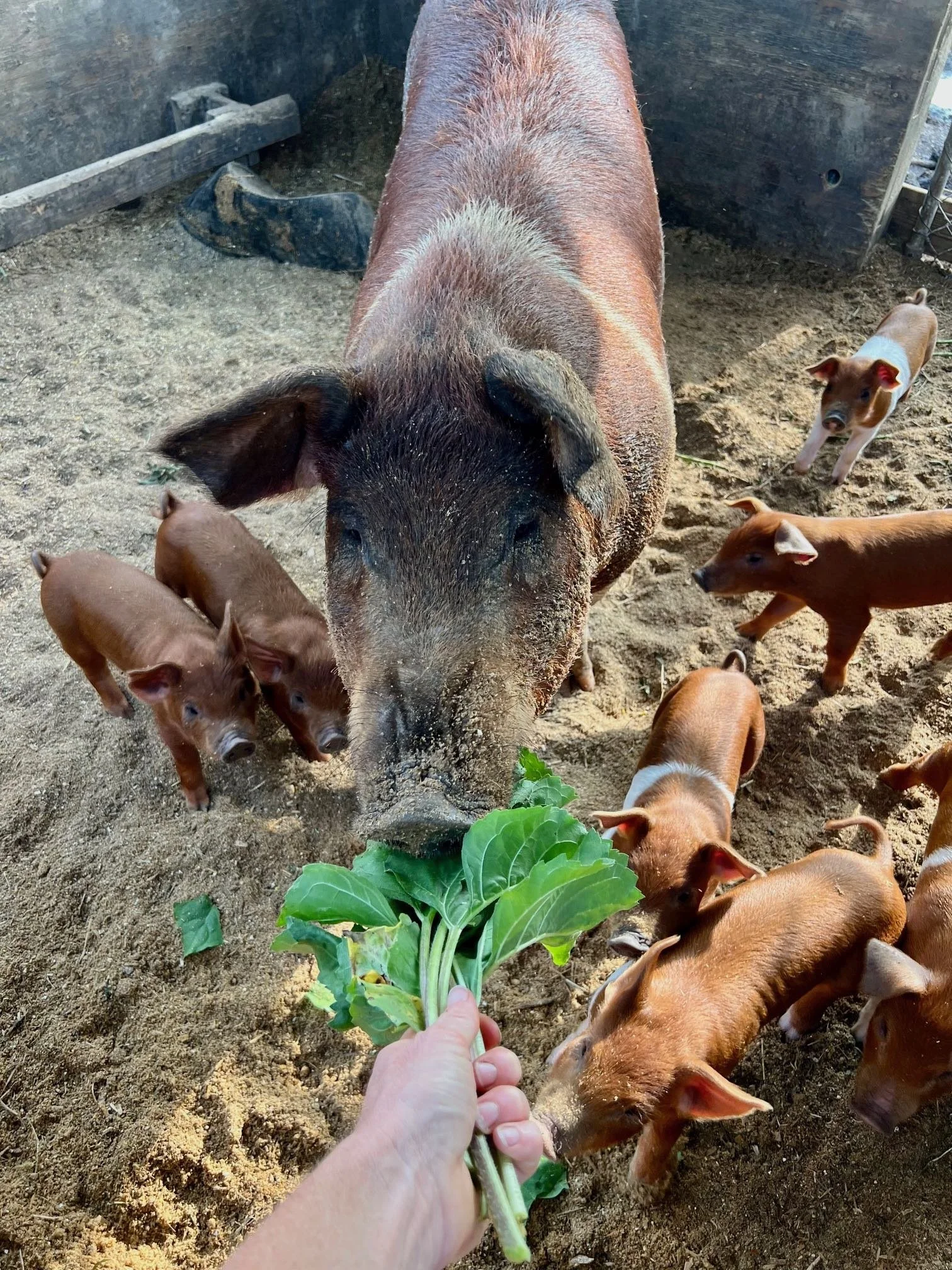
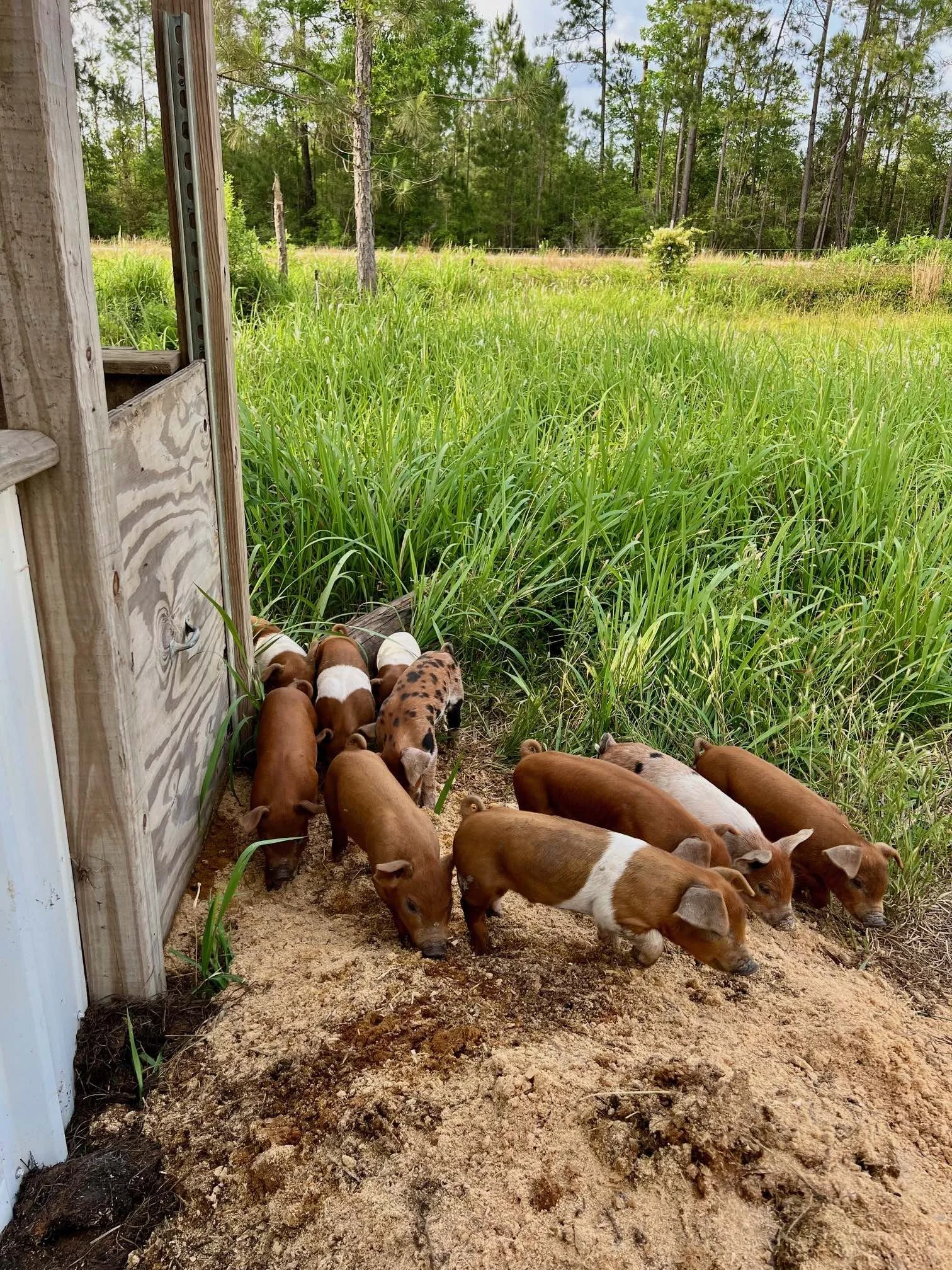
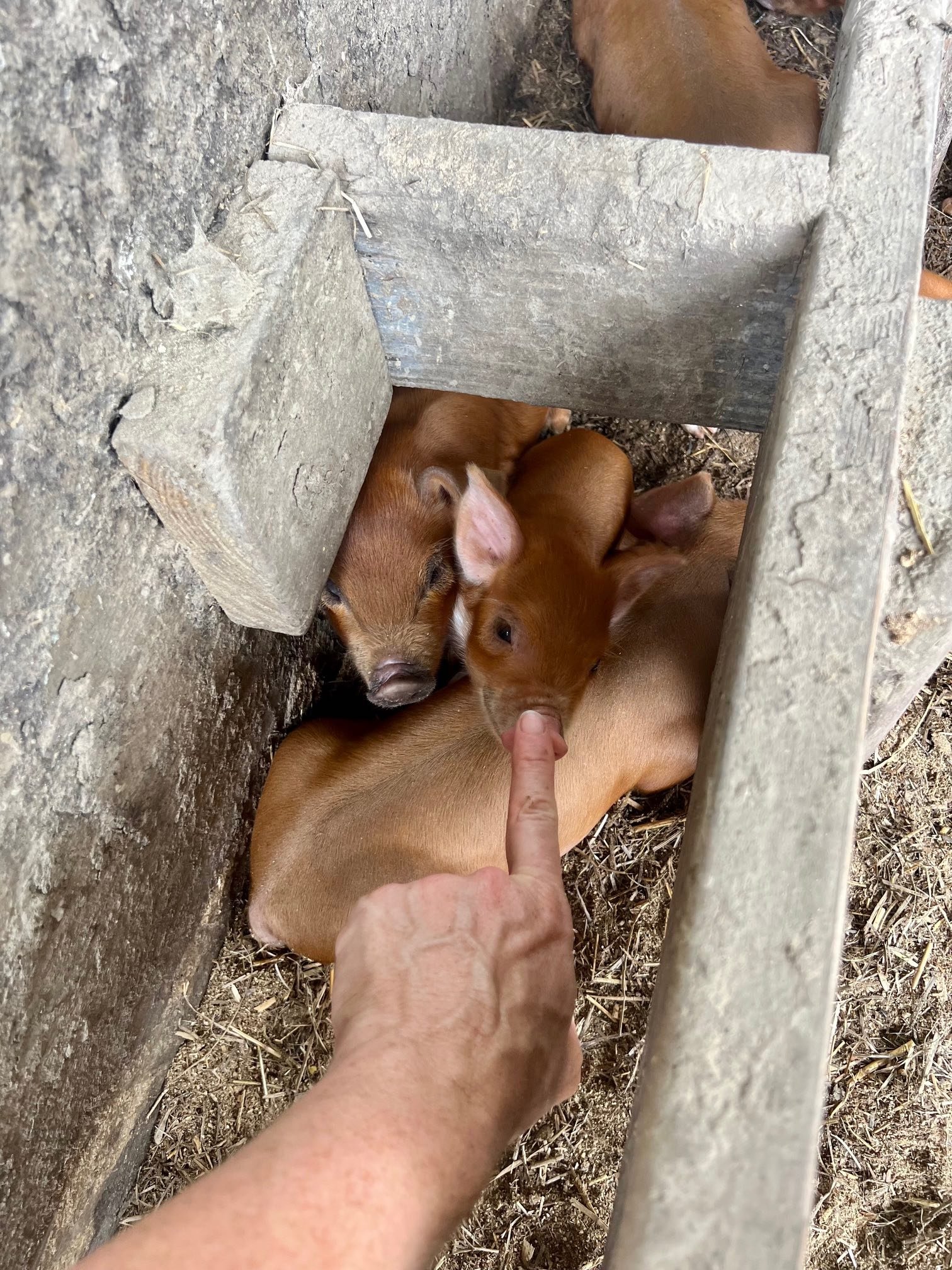

The three stall farrowing barn on a high part of the property definitely felt extremely worth it this piglet cycle!
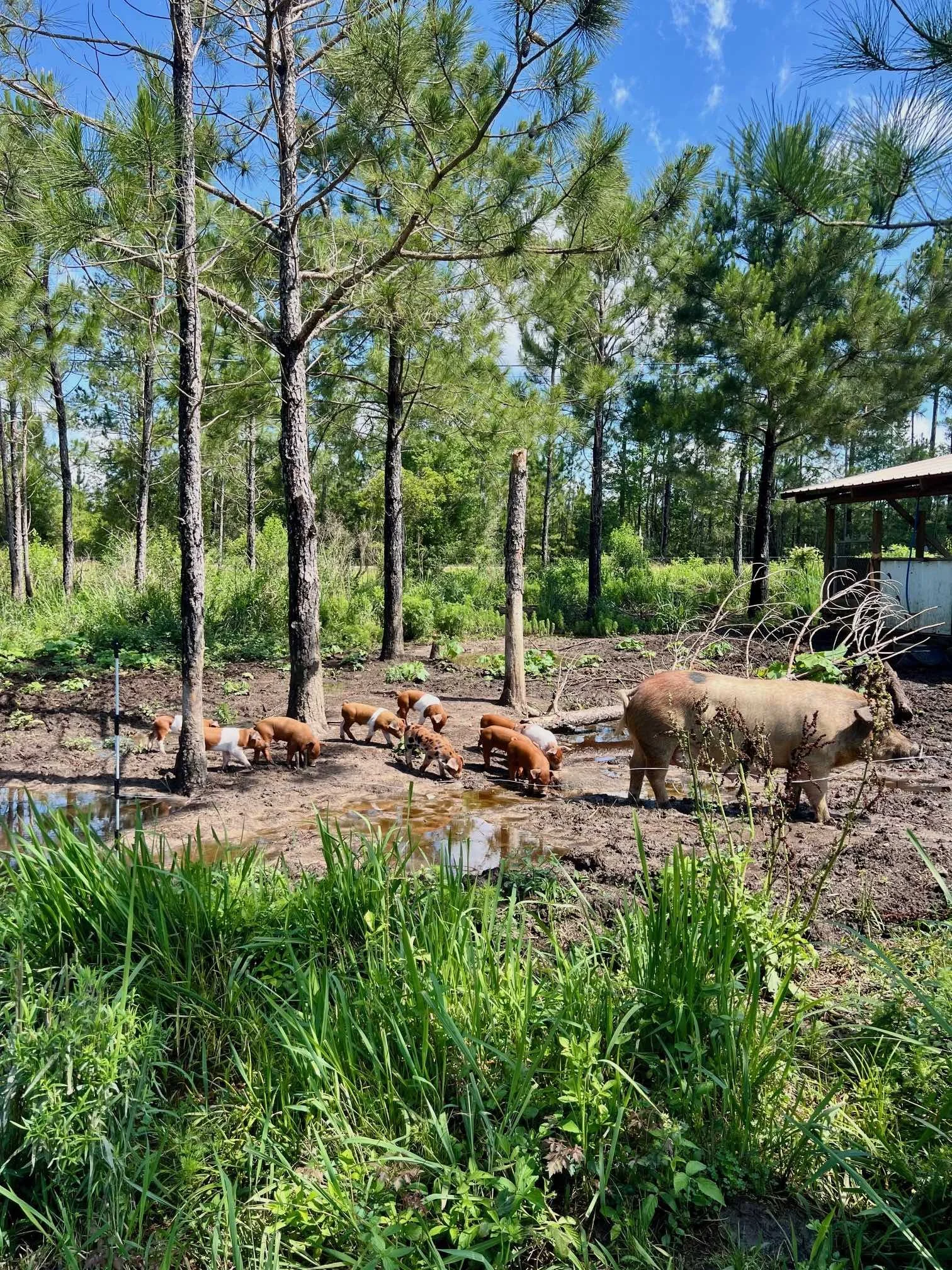
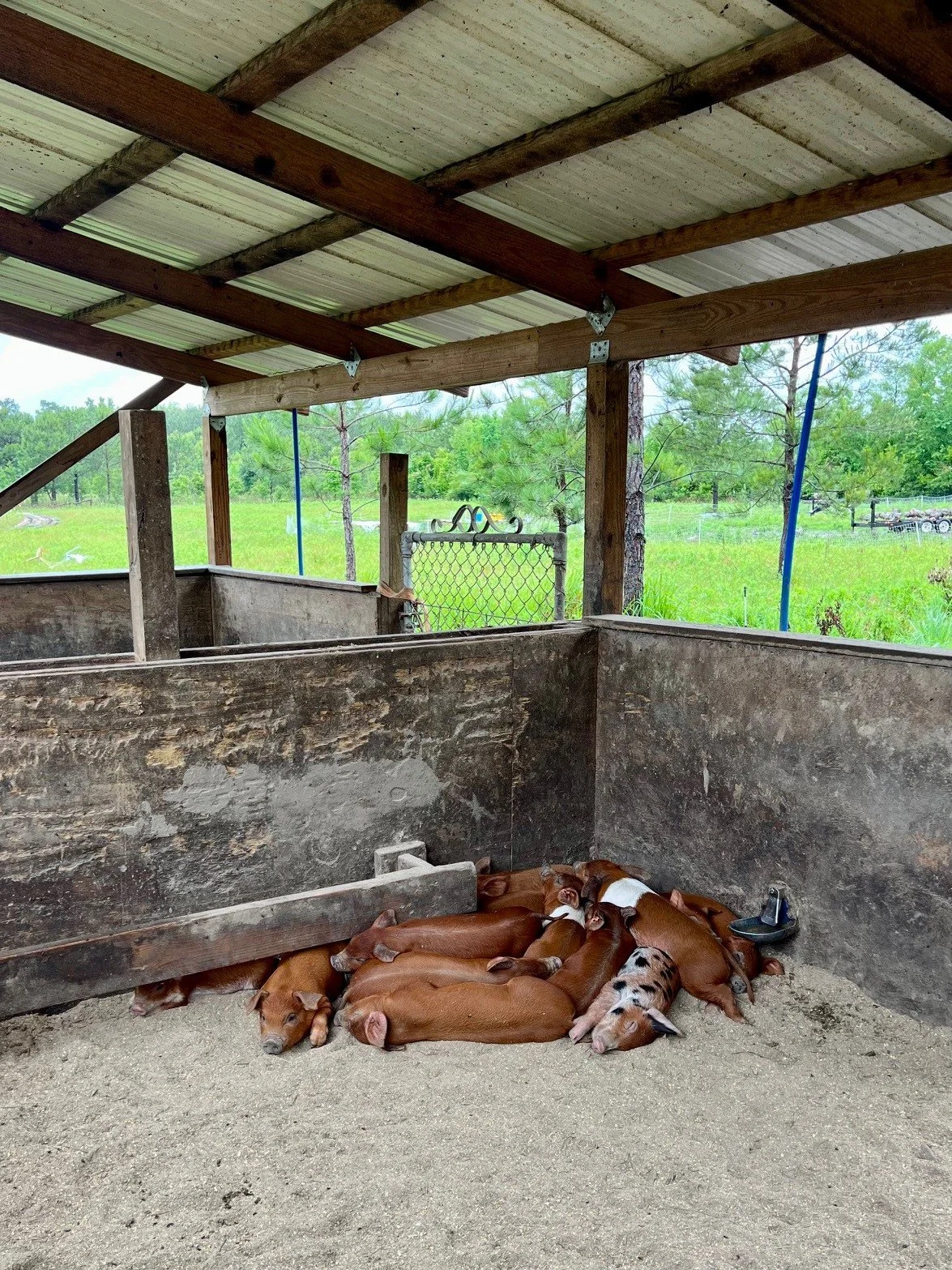
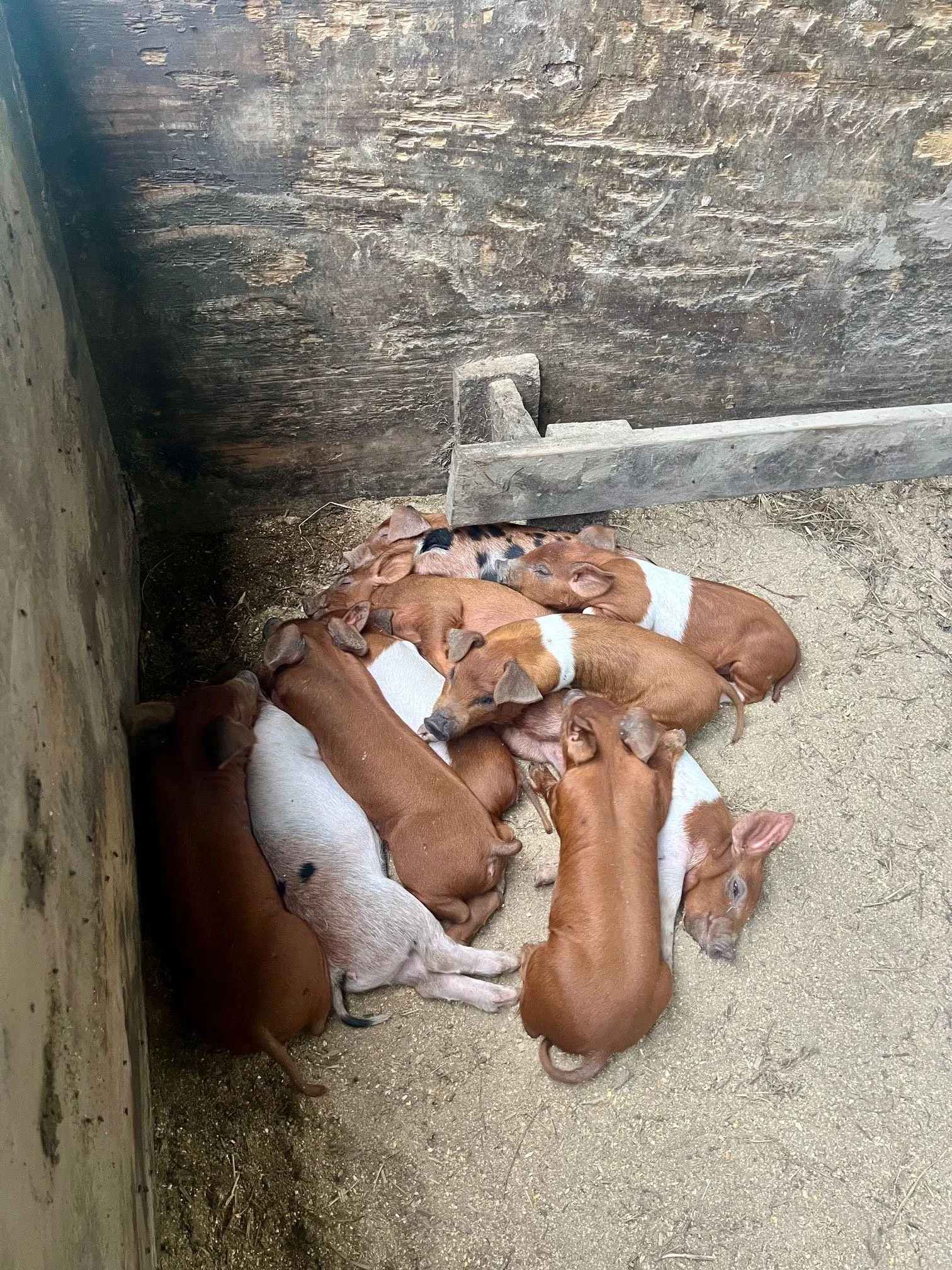
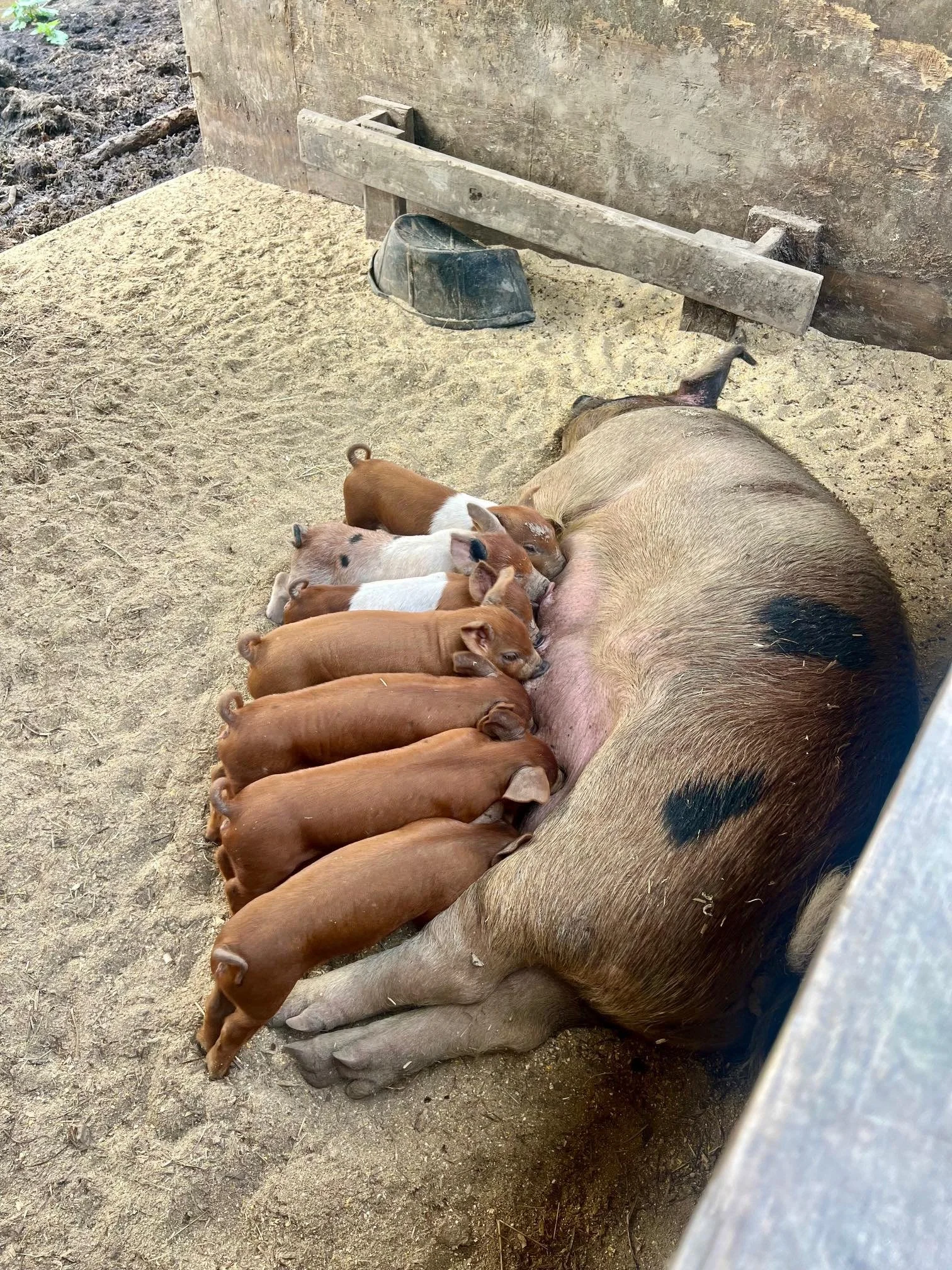
The piglets were born at the beginning of April, two of the litters on a very rainy night. And while the pigs wouldn’t want to be confined to a 10 by 10 stall on concrete without other land to forage and root through, they definitely love their cozy stalls in the rain!
Even the sow who broke out and built a nest away from the barn promptly brought her piglets back once it started raining again and they sleep in the stall every night! (And take naps in there, too, especially when it’s raining).
I switched to only wood shavings as bedding this cycle and that has been wonderful for managing their manure. Often I would throw them hay for nests and playing with, but it doesn’t break down and absorb their manure and urine as fast and mucking it out if more difficult. You need a hay fork for the long pieces, whereas with shavings you can just shovel.
Pigs typically pick a bathroom spot outside and stick to that spot, but when they are in the stall for a few weeks with their litters before we let them back into the yard, they pick a corner of the stall as their bathroom spot. Both of them picked right by the slide door this time and even the piglets know to go there, too!
So it made it easy to feed them on the opposite side, slide the door open and shovel out the manure and shavings and then add fresh shavings.

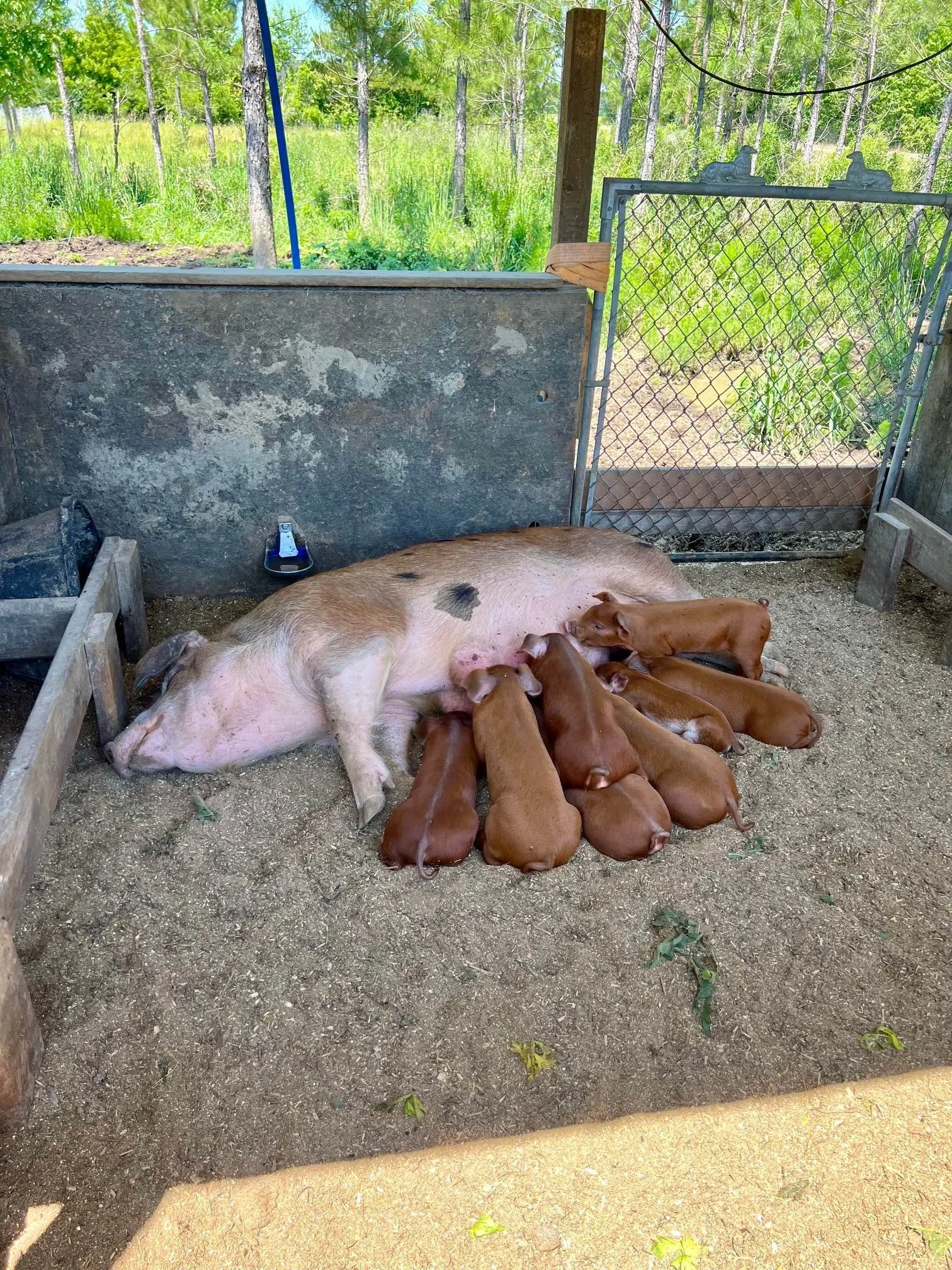
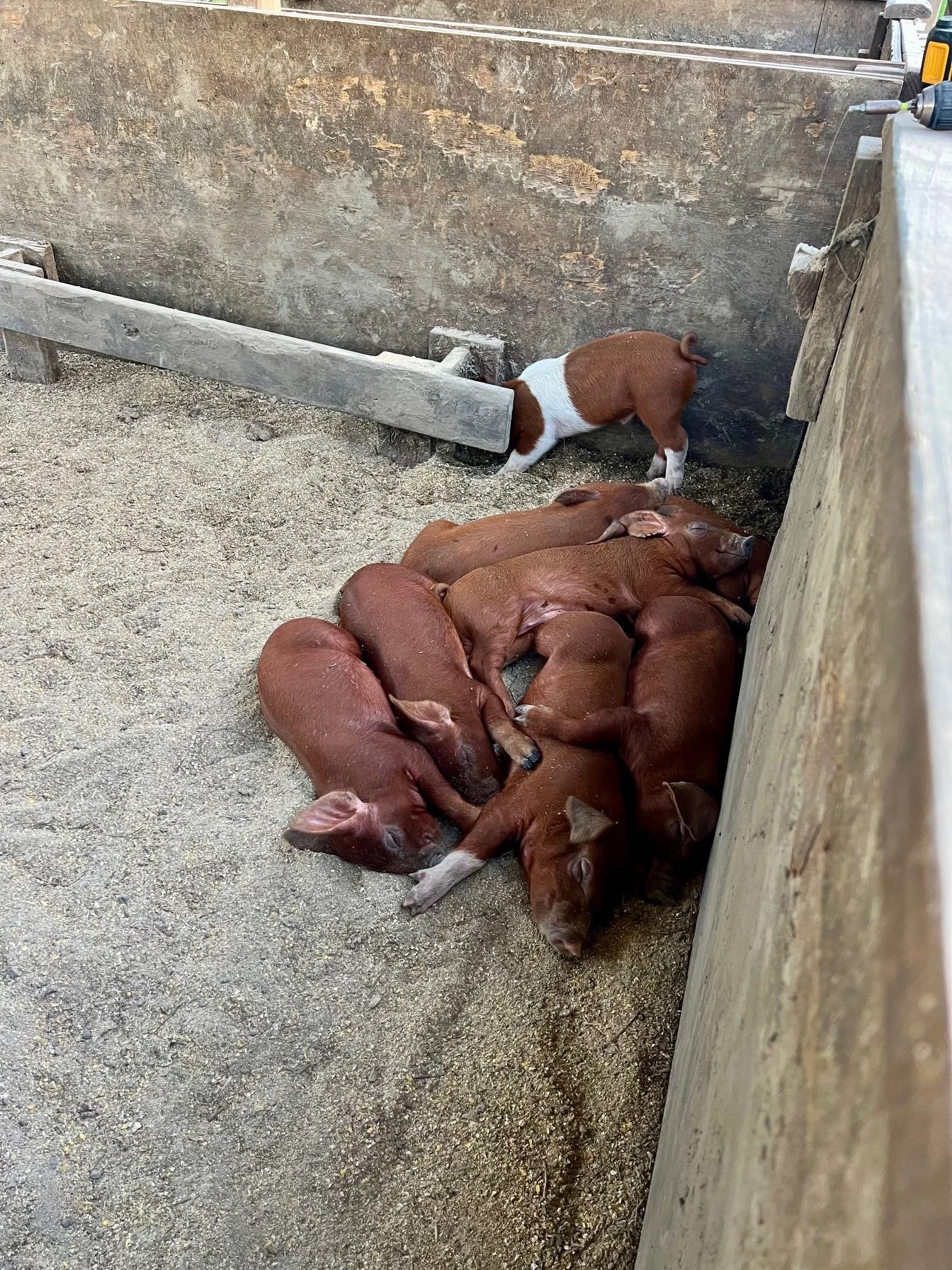
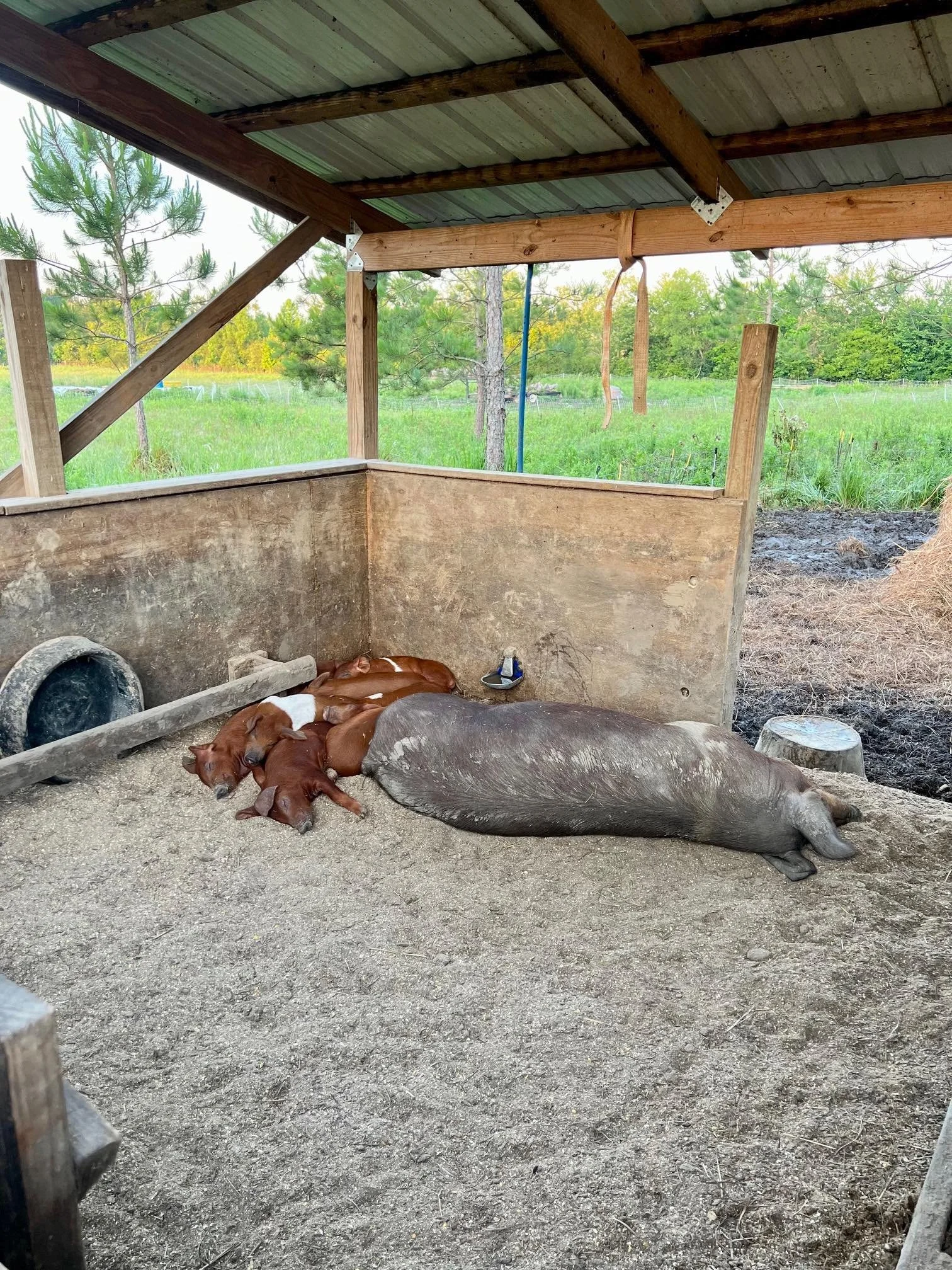
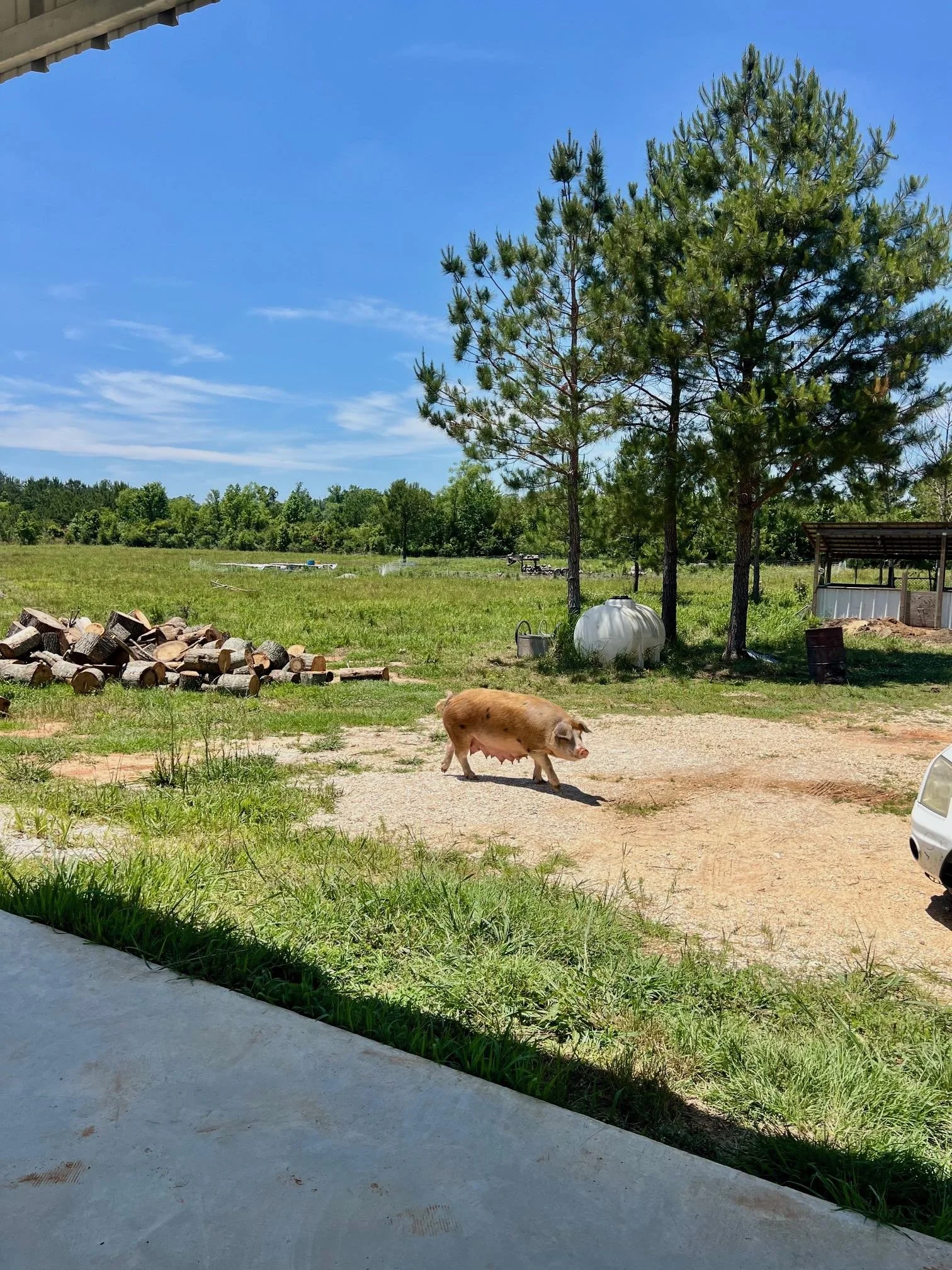
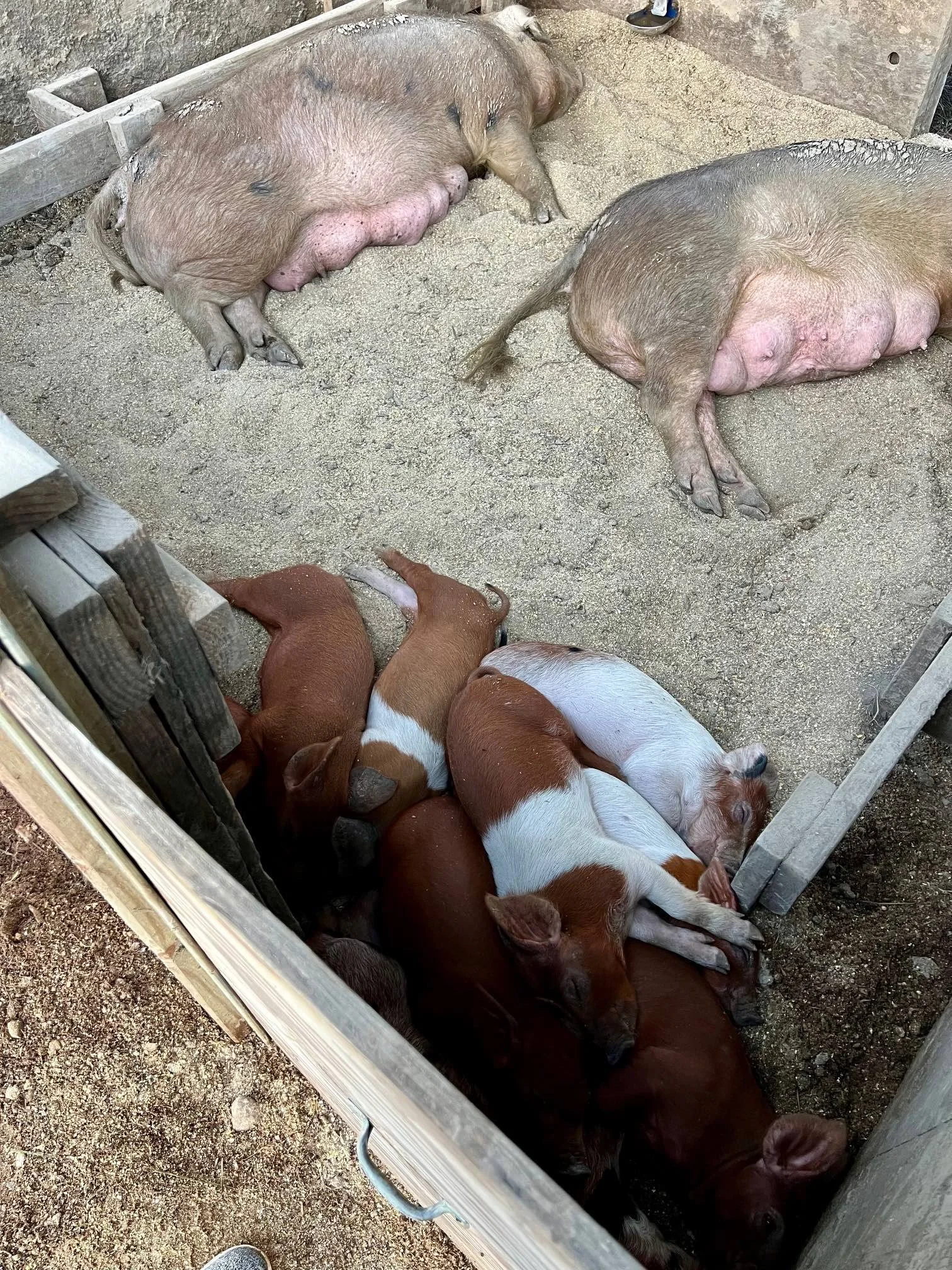
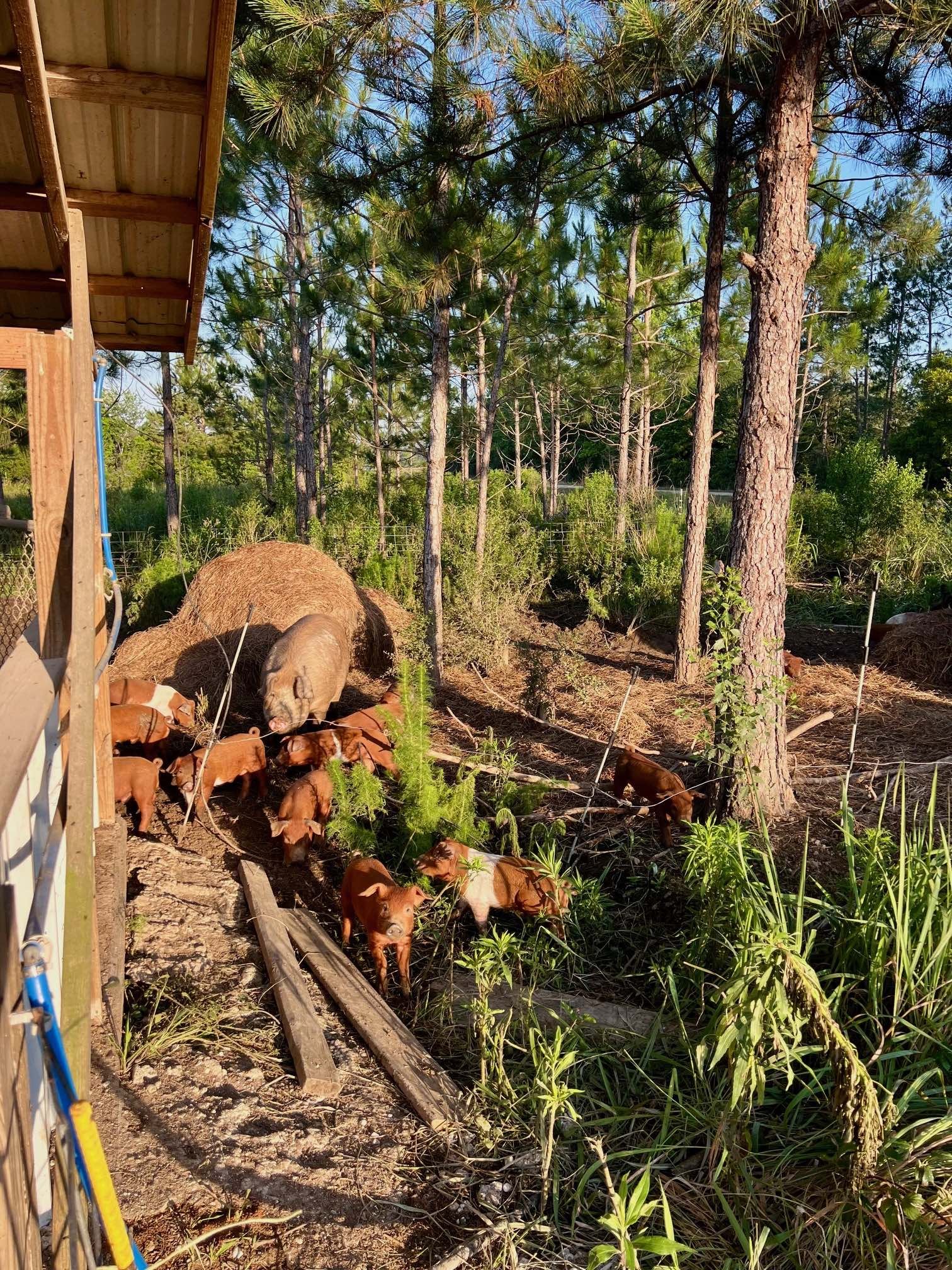
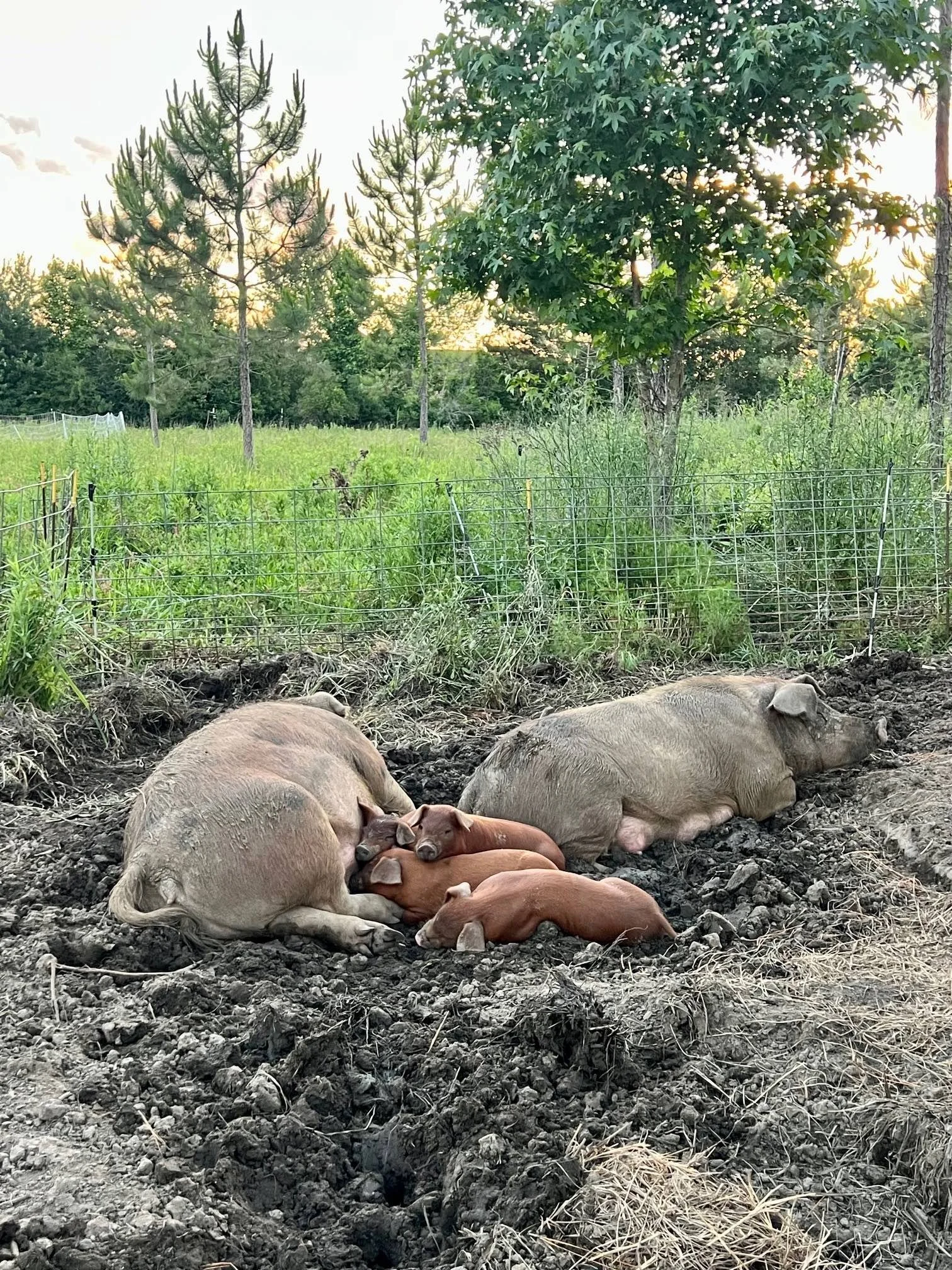
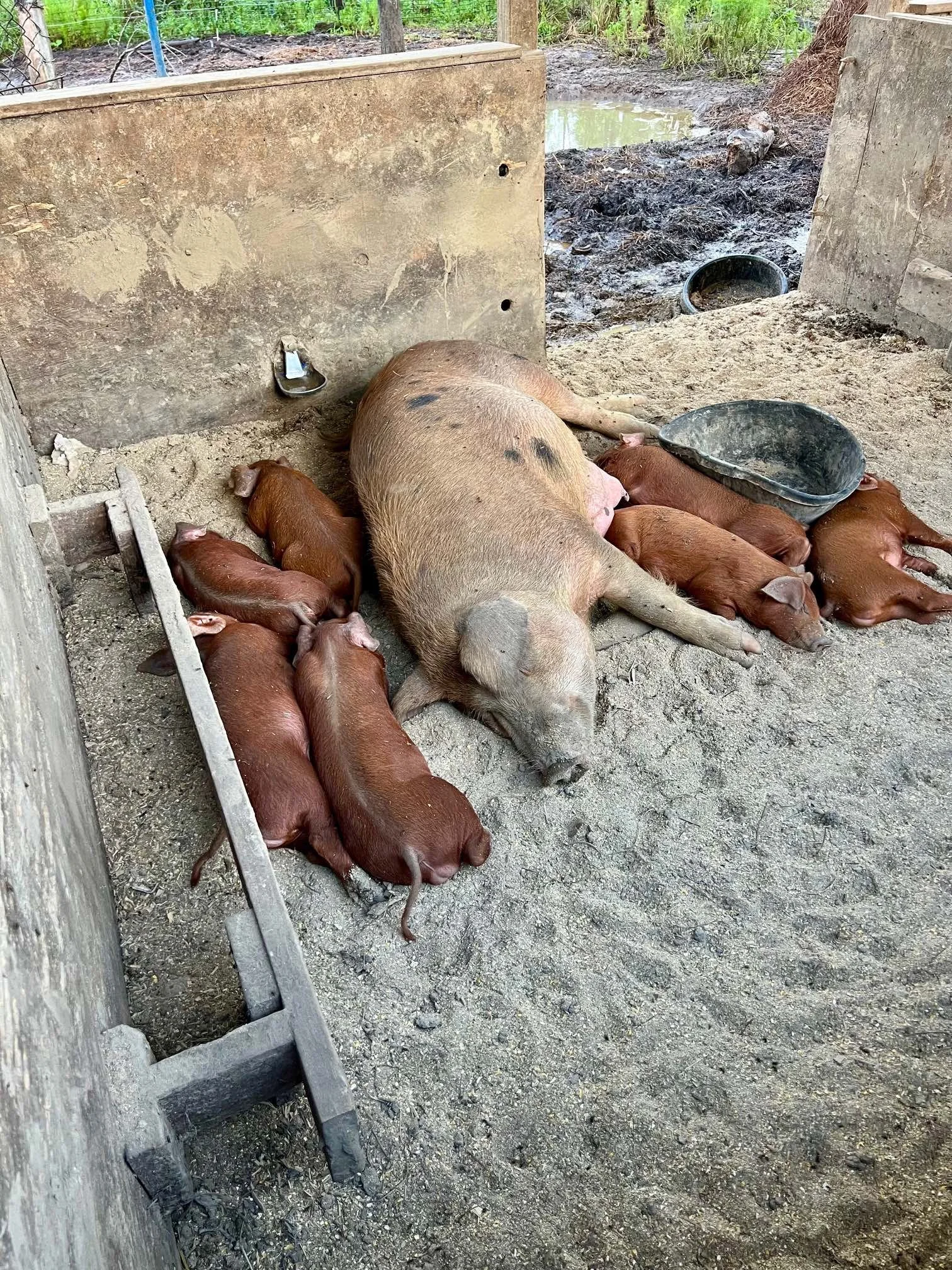
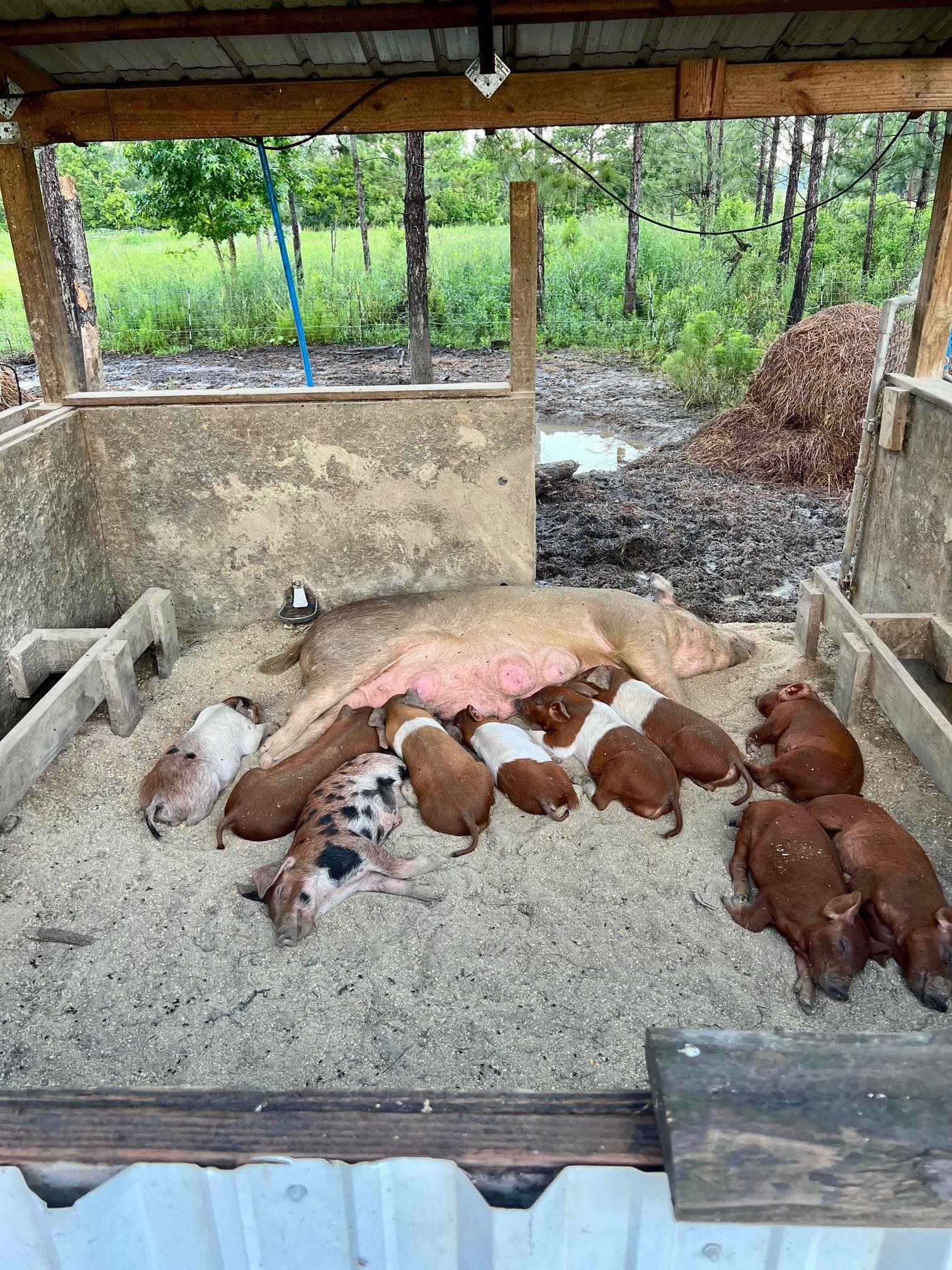
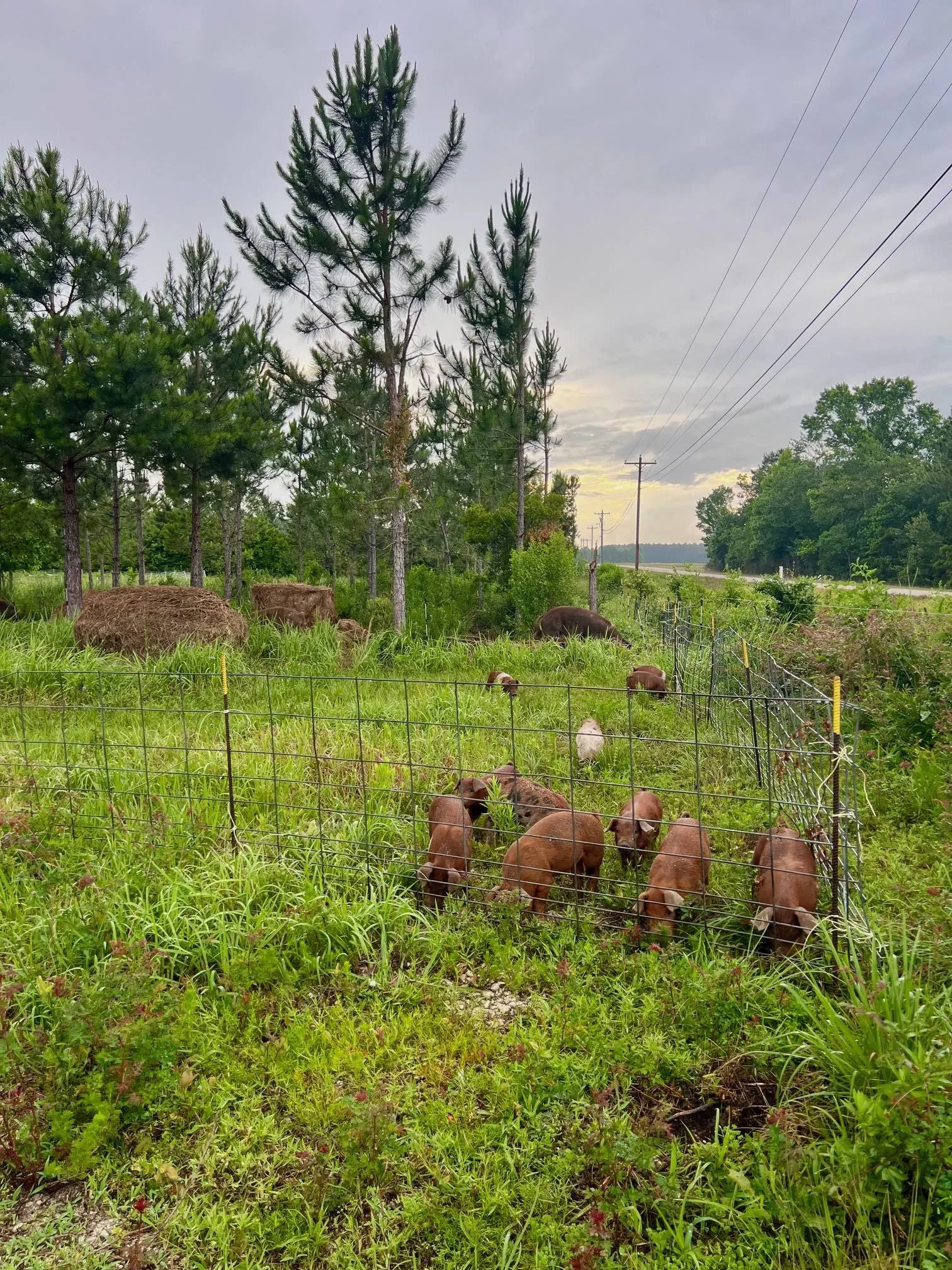
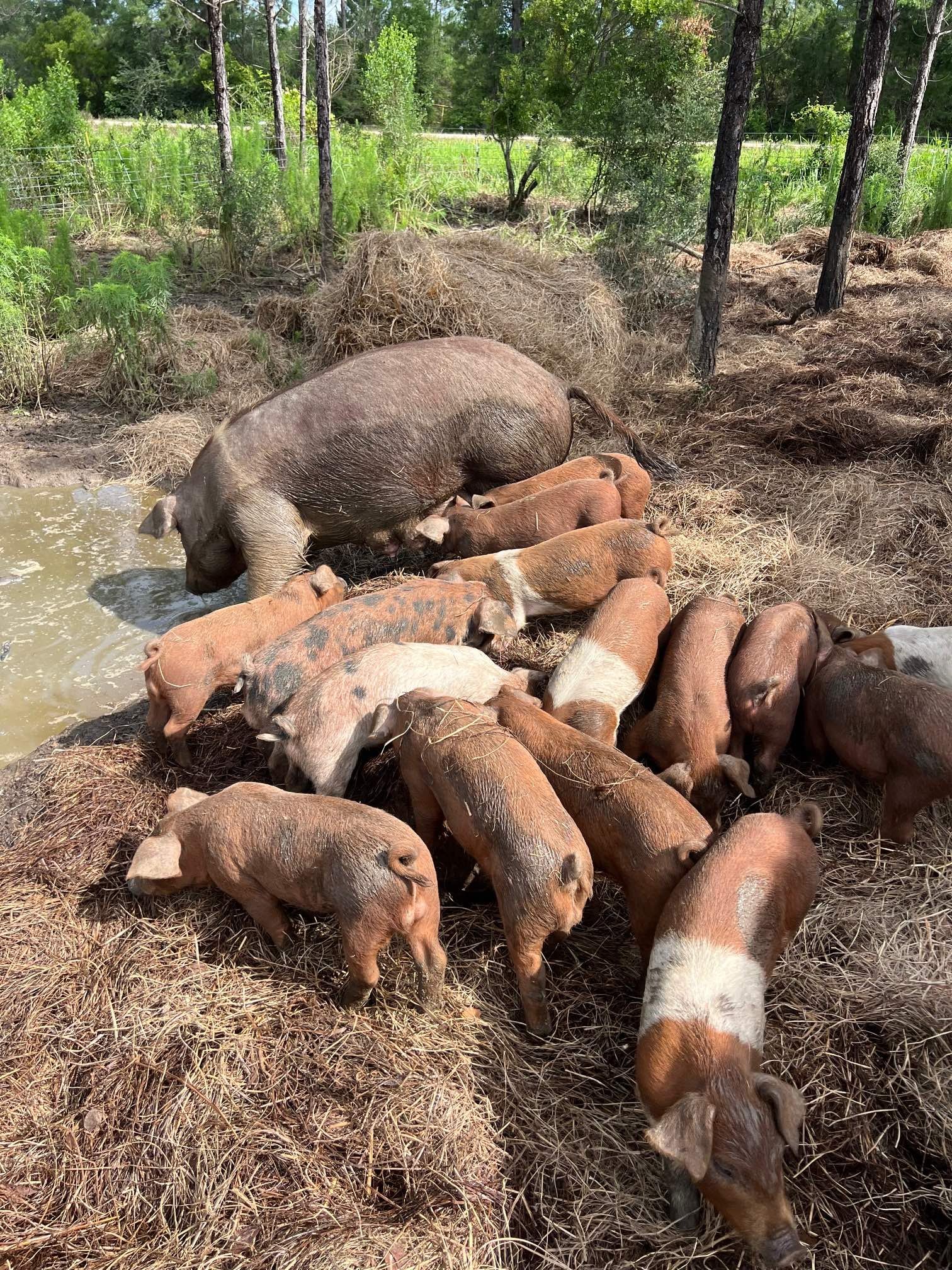
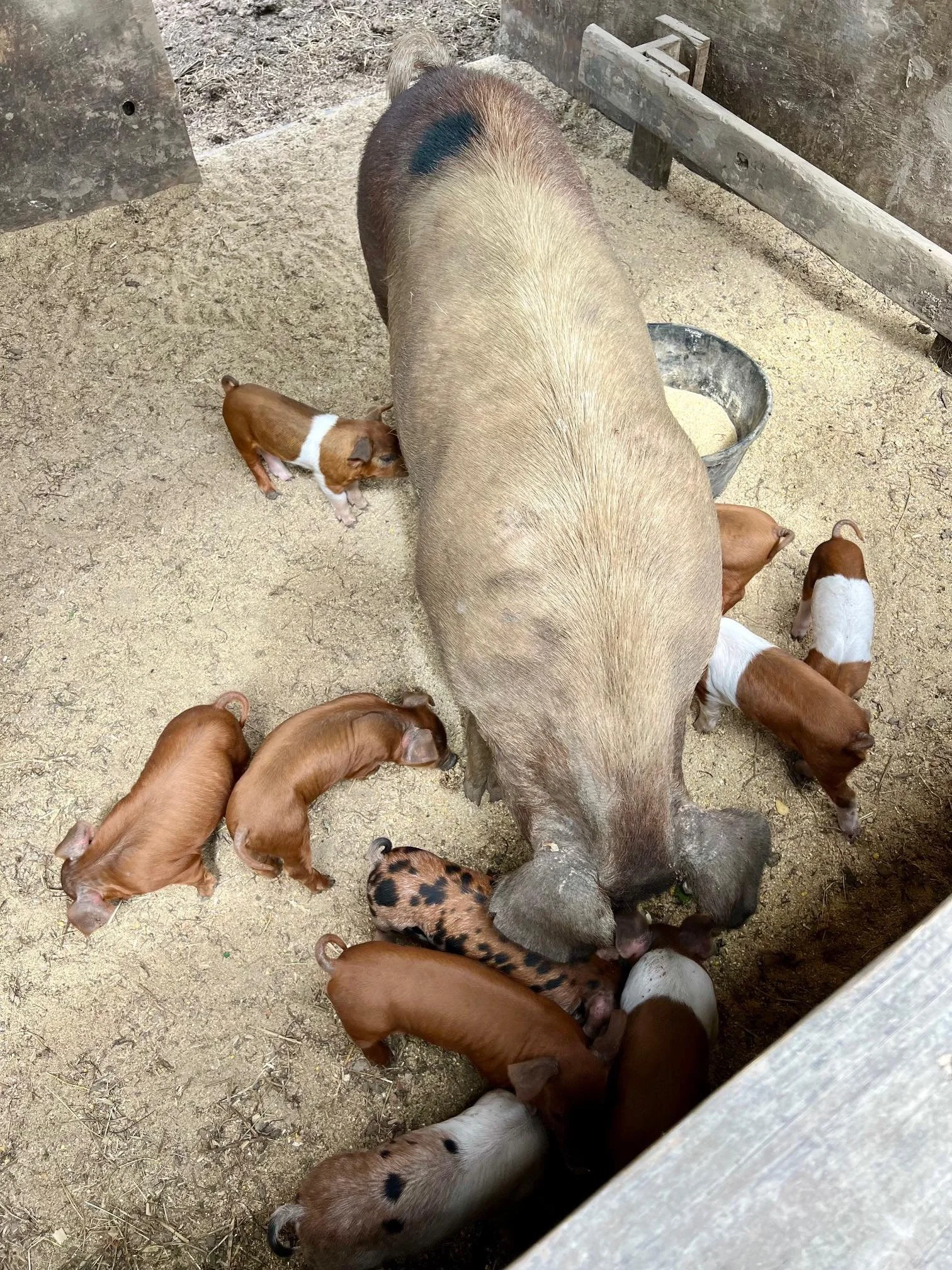
The piglets are growing super well and overall it’s been a very successful farrowing cycle, especially for three first time mommas!
With all of my sliding open and closing the slide door, one of the sows did figure out how to slide it open on her own and took a few walk abouts! We then had to drill in a screw on top of each door to hold them closed, but it worked out fine since by this point all the pigs had access to the yard and weren’t using the bathroom spot in the stalls anymore!
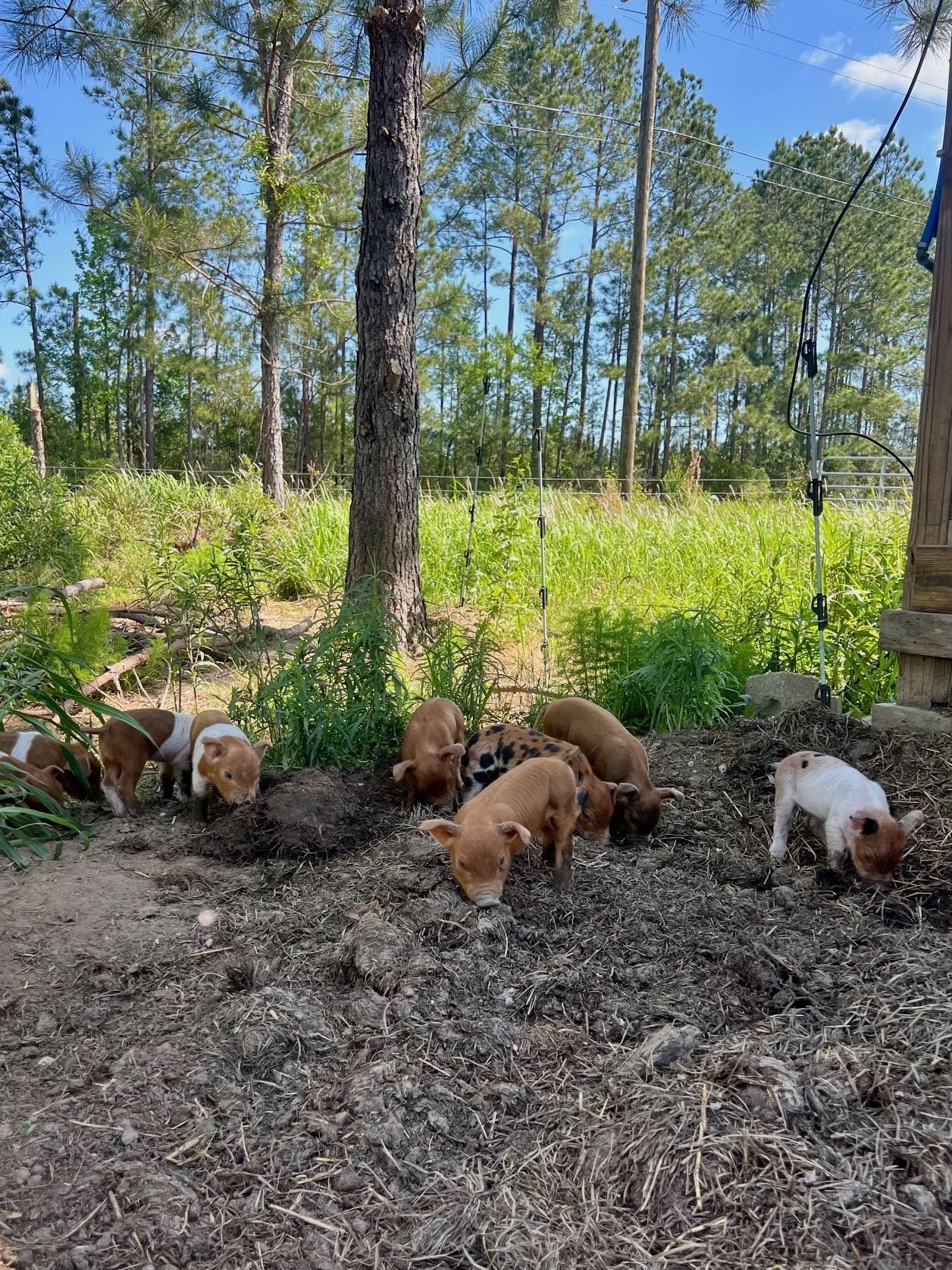
We also gave the piglets a creep feeder this time. They can still duck under the hot fence that is set at a height for their moms, so there is a section of their yard that only the piglets can access and they have free choice feed there all the time. They typically start nibbling on feed at about three weeks old, while still mainly nursing. And then their feed consumption picks up a lot in weeks 4, 5 and 6.
Since they can visit the feeder and eat any time they want, it also means they try to eat their mom’s food less when we feed them twice a day. It’s working well and we’ll continue you this on the next farrowing cycle.
They turned seven weeks old this weekend, so we’ll be ready to wean by next week! But with the rainy weather, we might keep them together a little longer so the sows can continue to enjoy the benefits of the dry farrowing barn. We’re not in a rush to breed them back since we have another gilt group set to farrow in July and August and they haven’t lost much conditioning, so the piglets might get a little longer with their moms than usual just because of weather conditions!


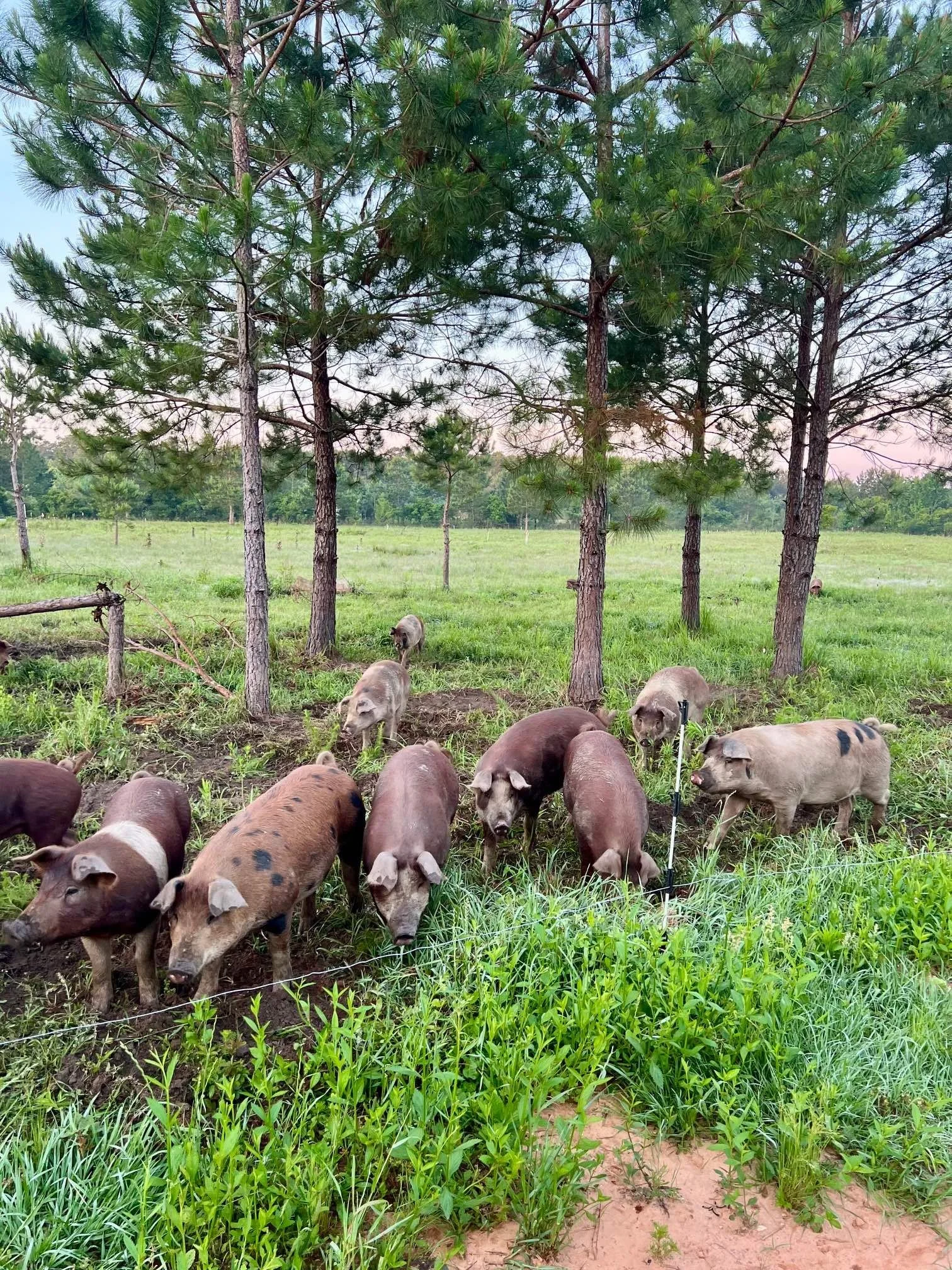
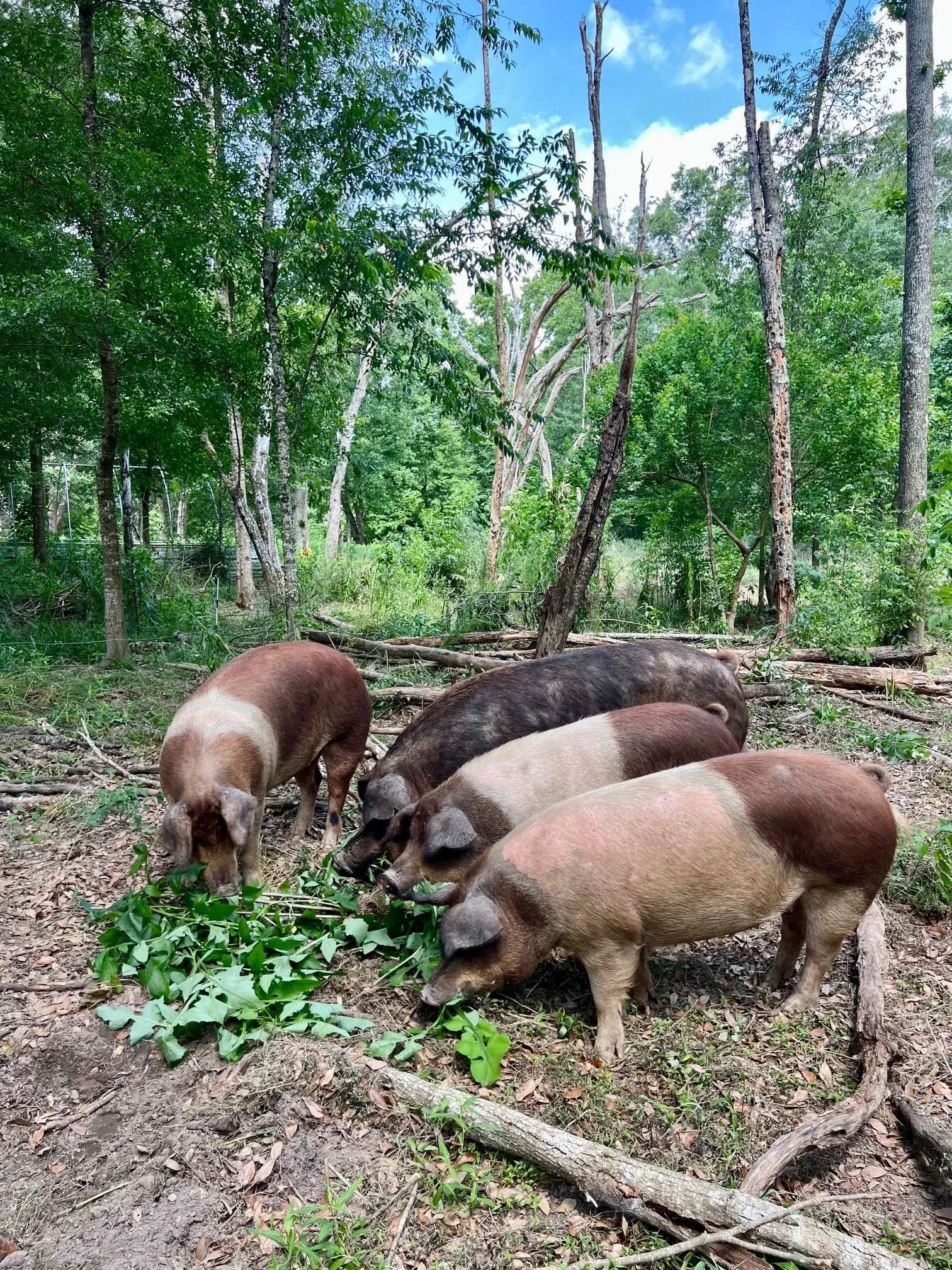
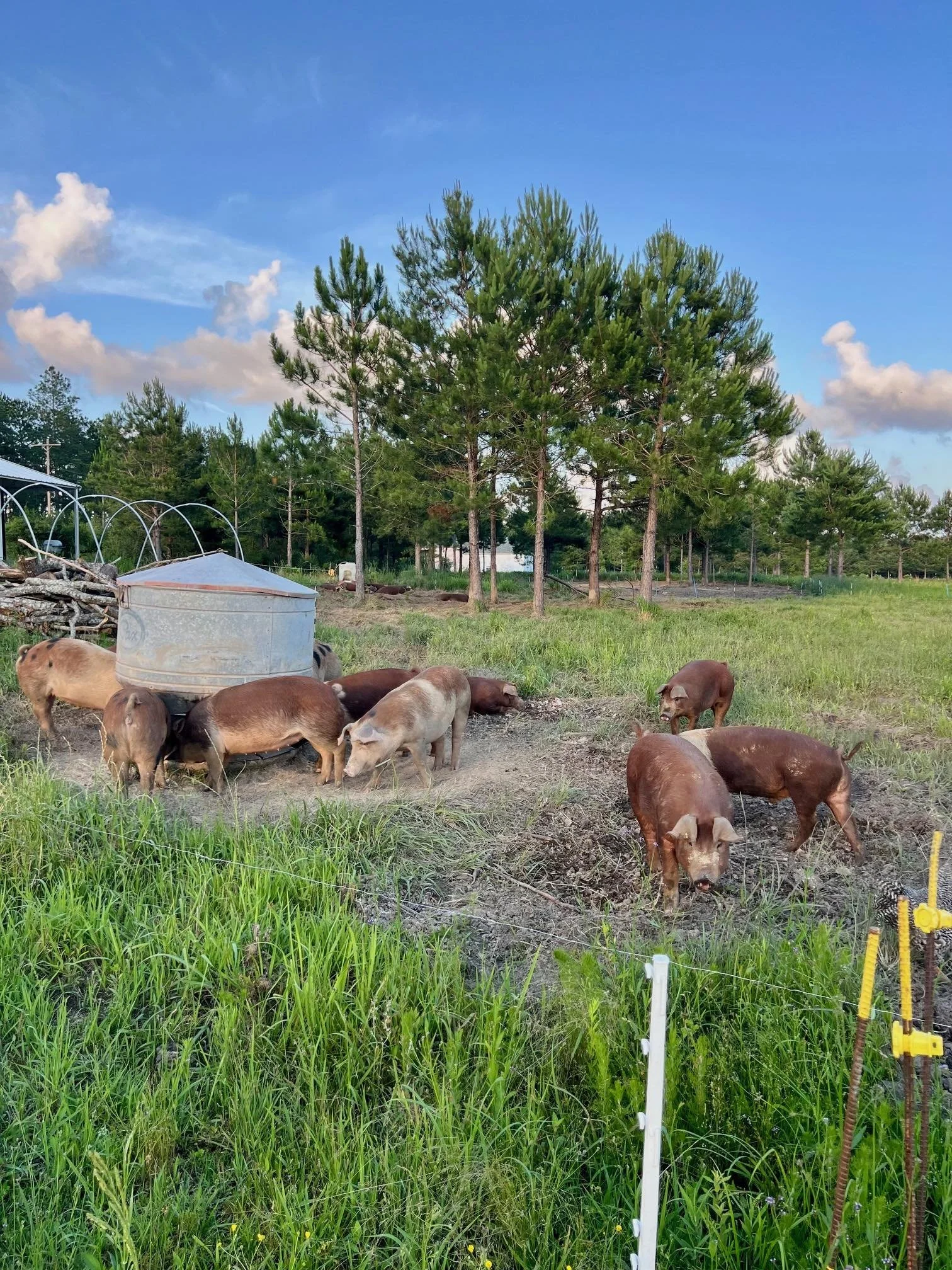
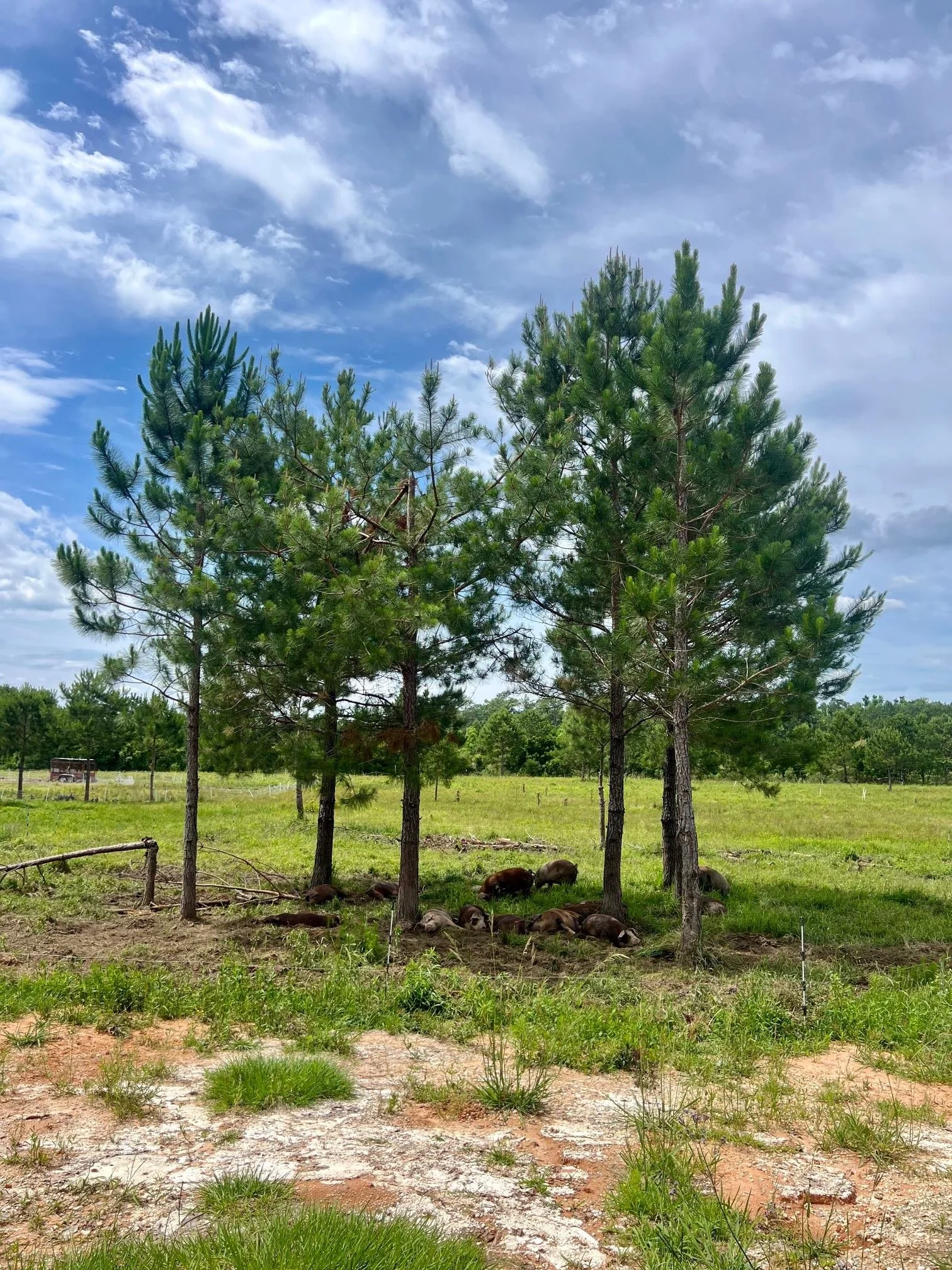
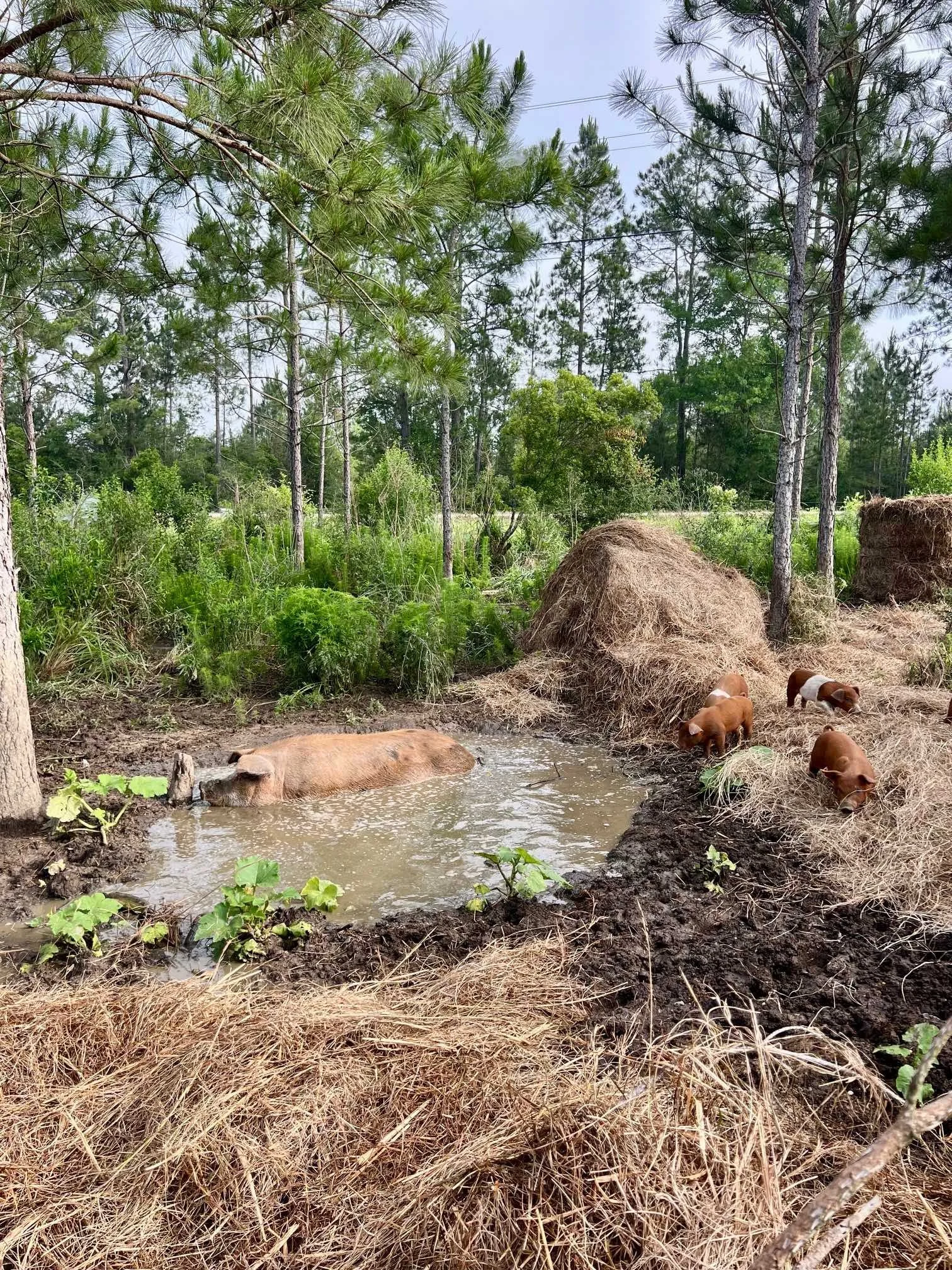
The feeder pigs are still rotating around our house field and we left them in some sections a little longer than usual (especially when it was dry!) to really root up the invasive cogon grass.
Now we’re moving them at a faster clip because of how quickly they can muck up an area in wet weather. Although when it rains this much, they don’t dig up wallows as much because they don’t need to cool off as much, but they root across an area more consistently looking for beetles and larvae and worms and tubers.
In the areas that they’re really decimating, we’re looking forward to seeding Sorghum-Sudangrass, which is a cross of forage sorghum, a close cousin of millet, and Sudangrass, a quick growing grass that can get very tall.
Sorghum sudangrass is is great cover crop for its ability to scavenge excess nutrients in the soil, suppress other plant growth (less desirable weeds) and fight compaction. It tolerates low soil fertility and drought and is fairly high quality in terms of grazing quality. Plus it grows so much that we can clip after grazing, which results in a lot of biomass and mulch to continue to build soil. We seeded some in select pastures last year and had some really impressive patches.
The three pregnant gilts and the boar are on the opposite side of the farm, which is fairly high with lots of tree cover. In addition to what they’re foraging, I’ve also been tossing them huge stalks of wild lettuce from nearby ditches that they don’t have access to. They seem to love it!
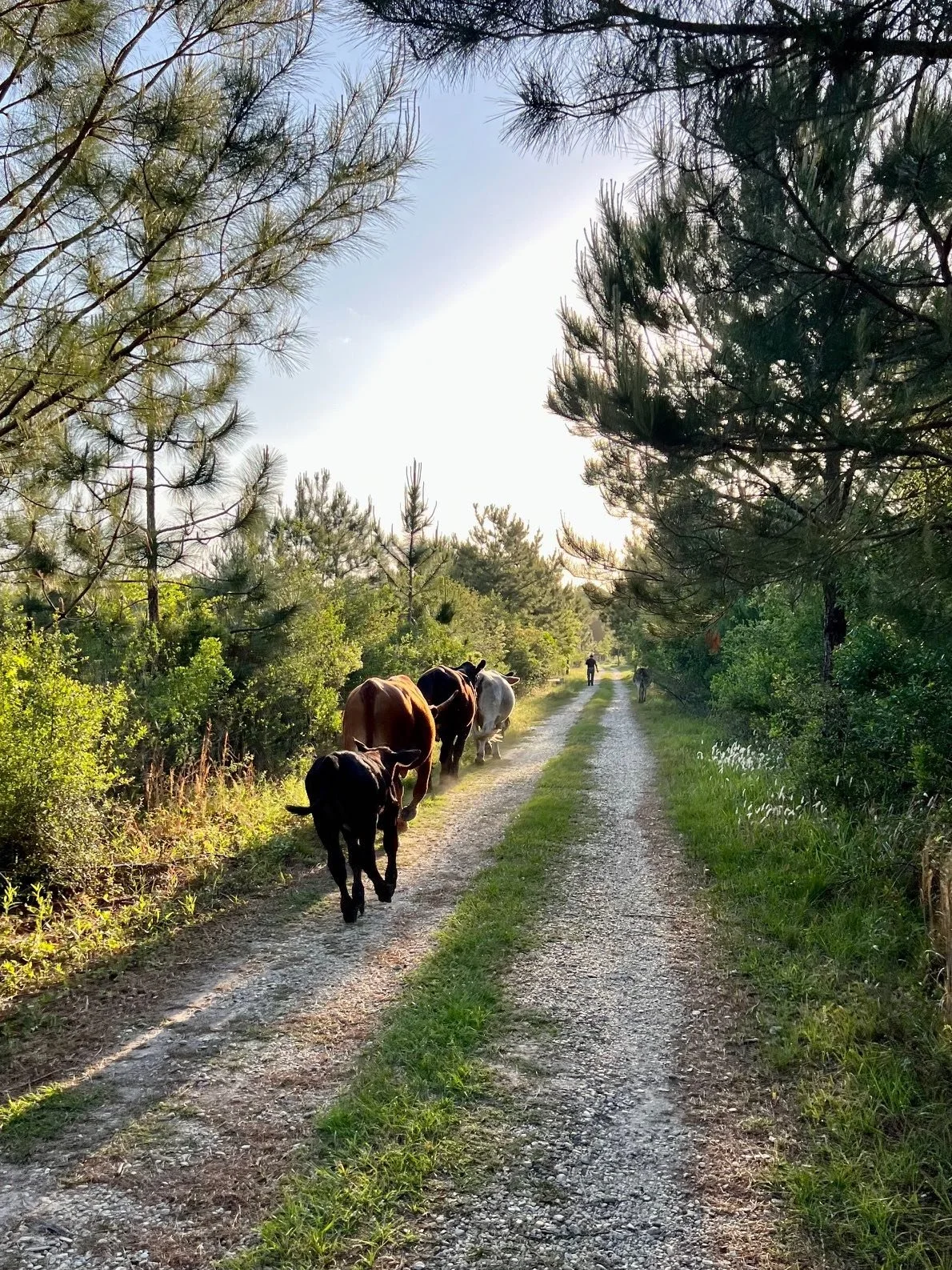
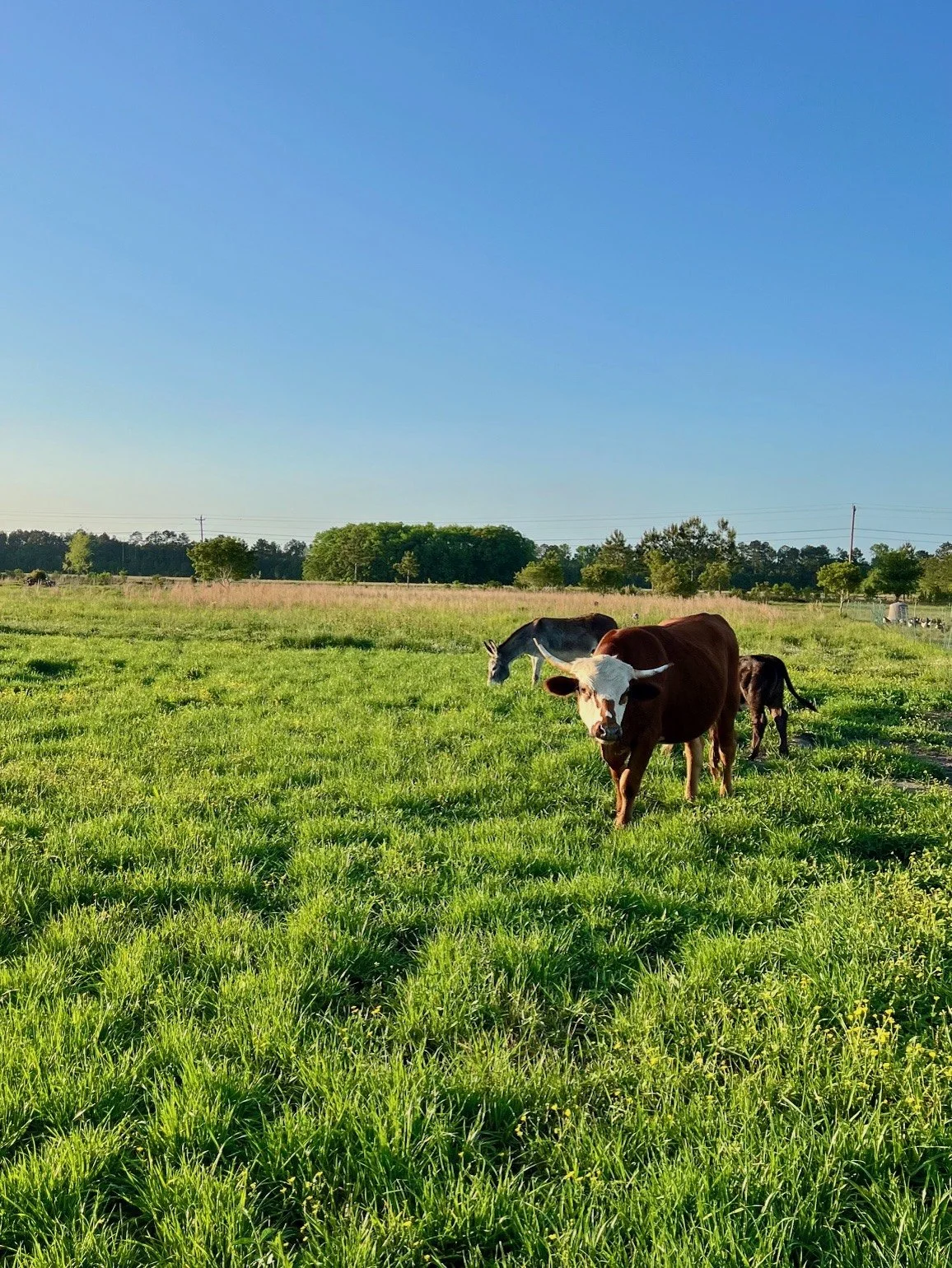
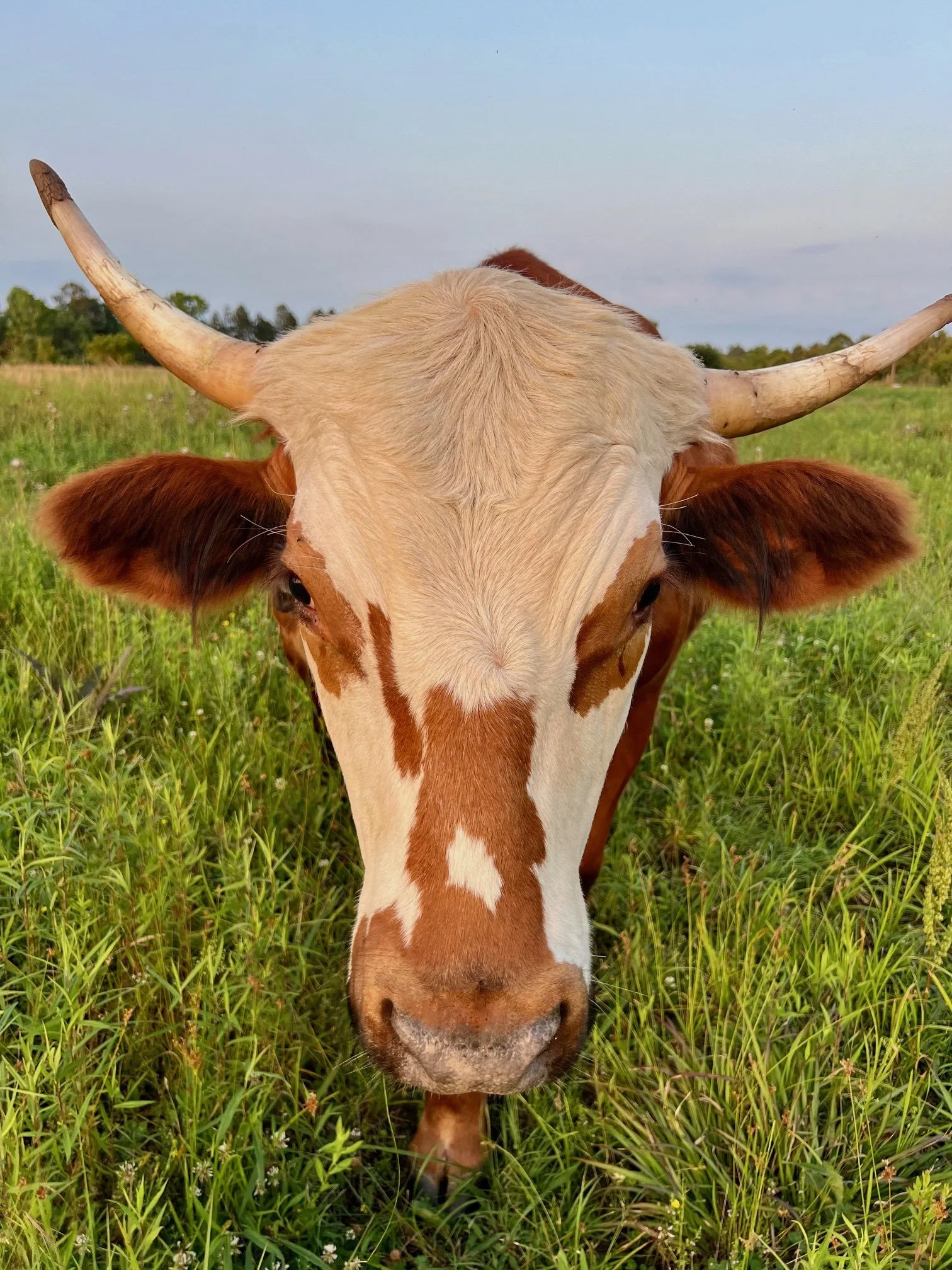
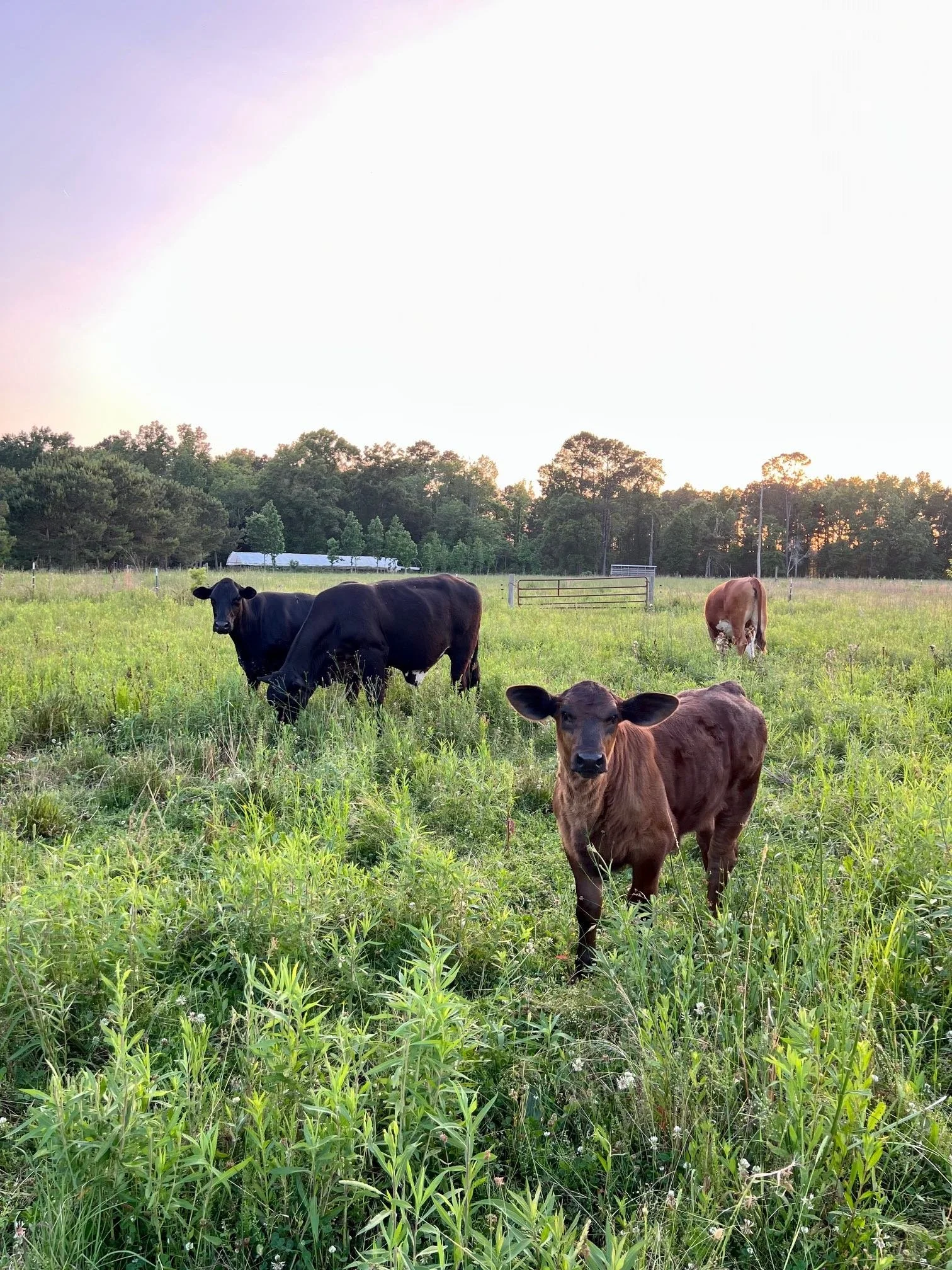
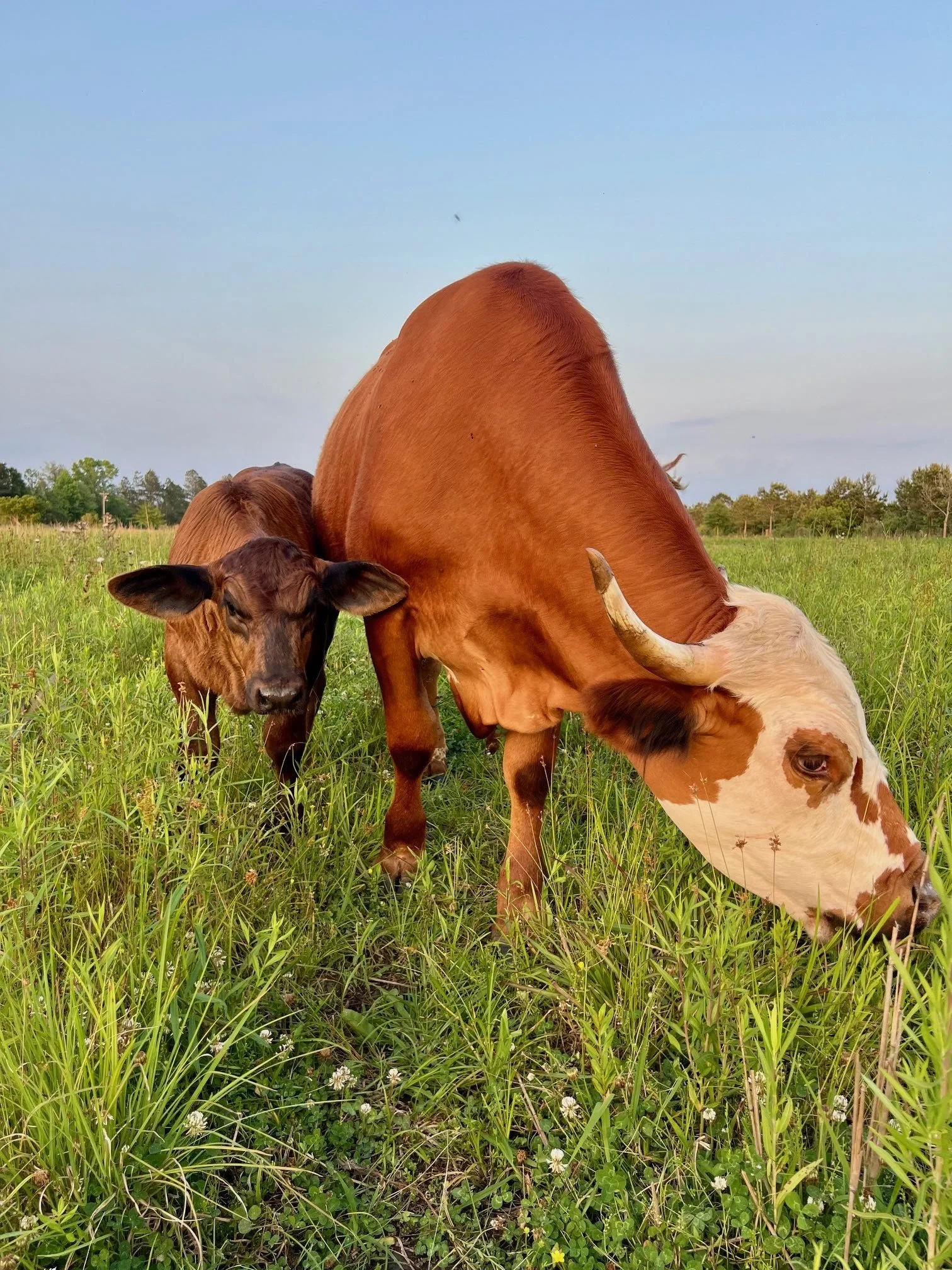
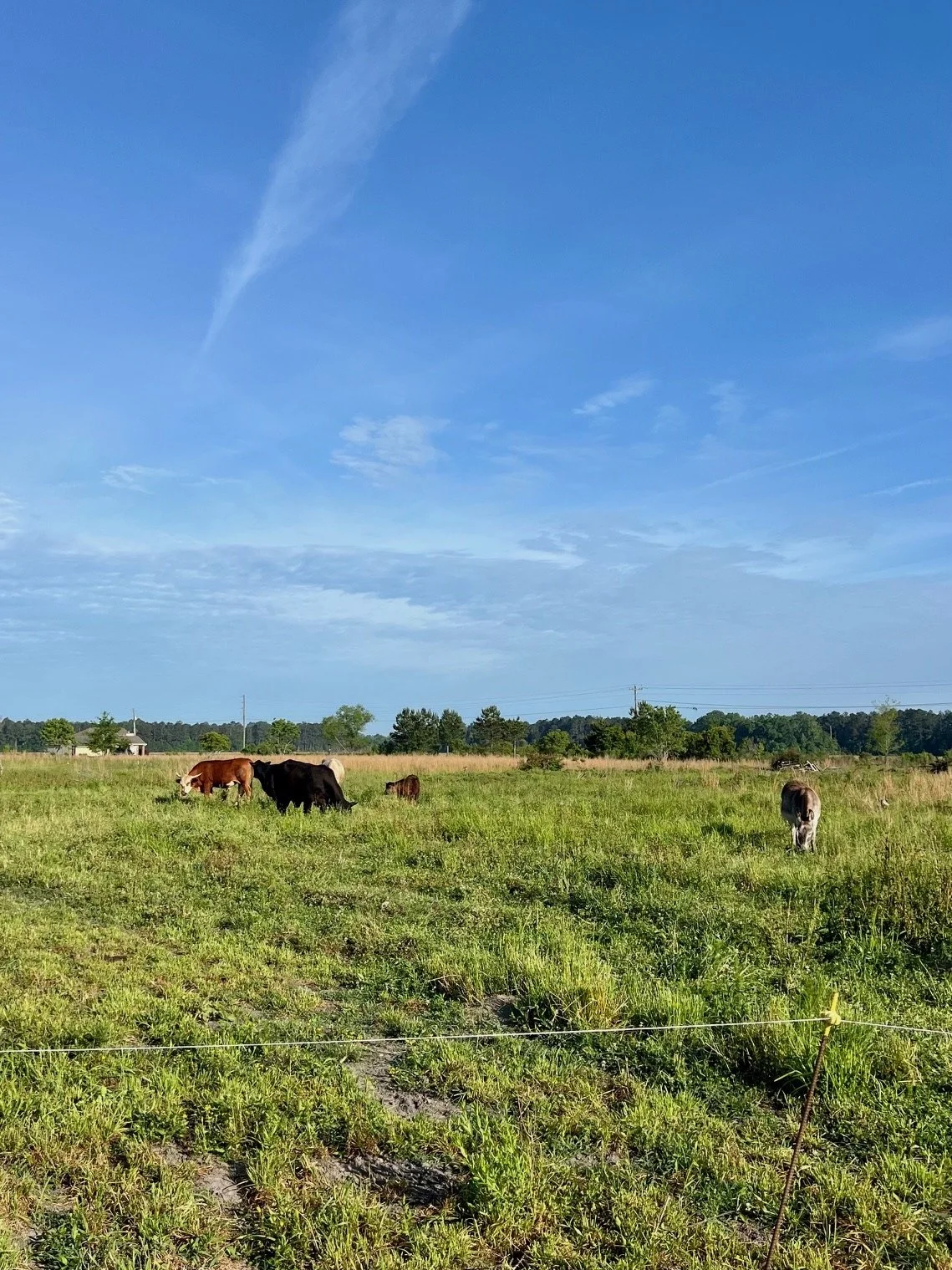
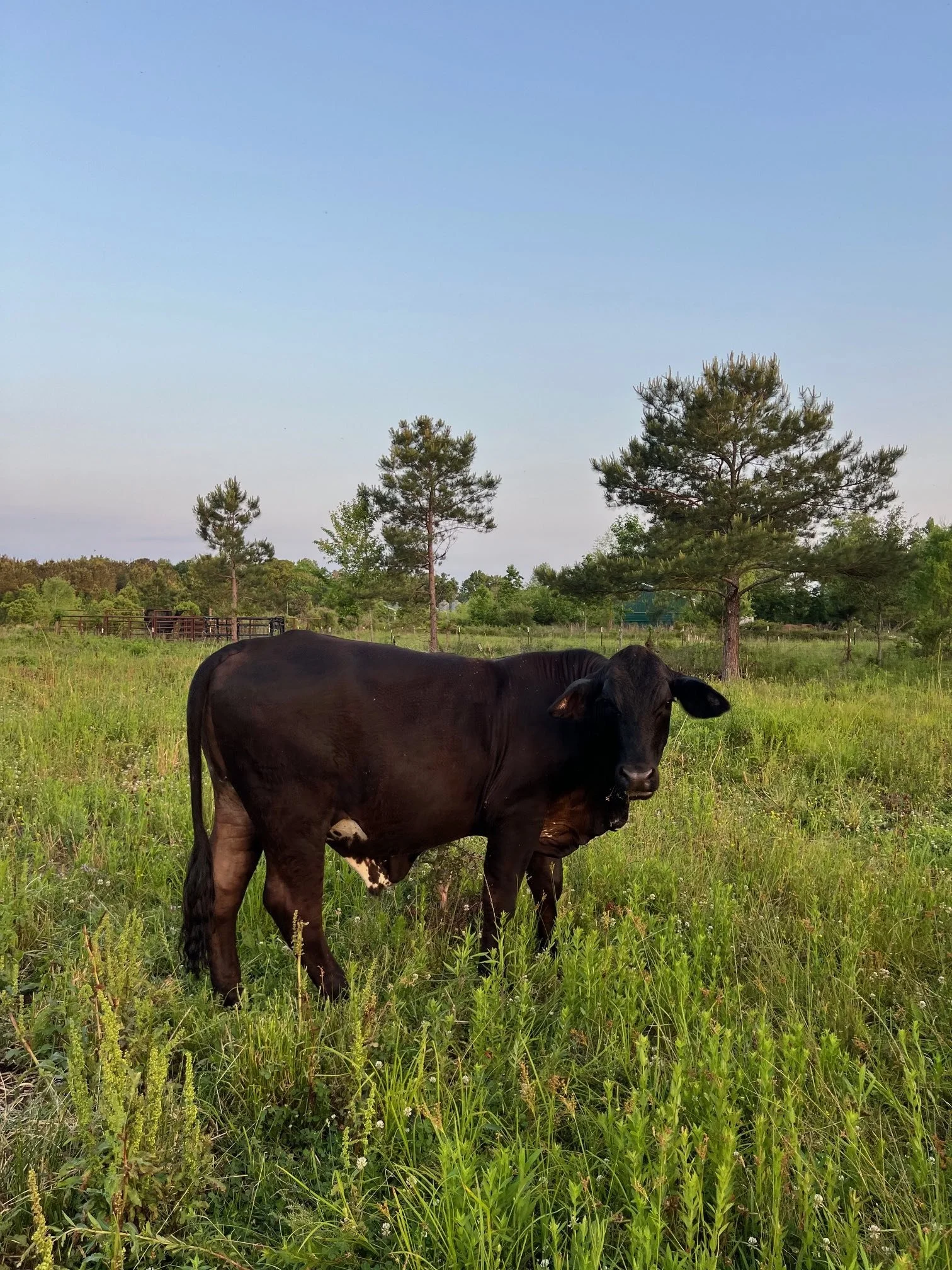
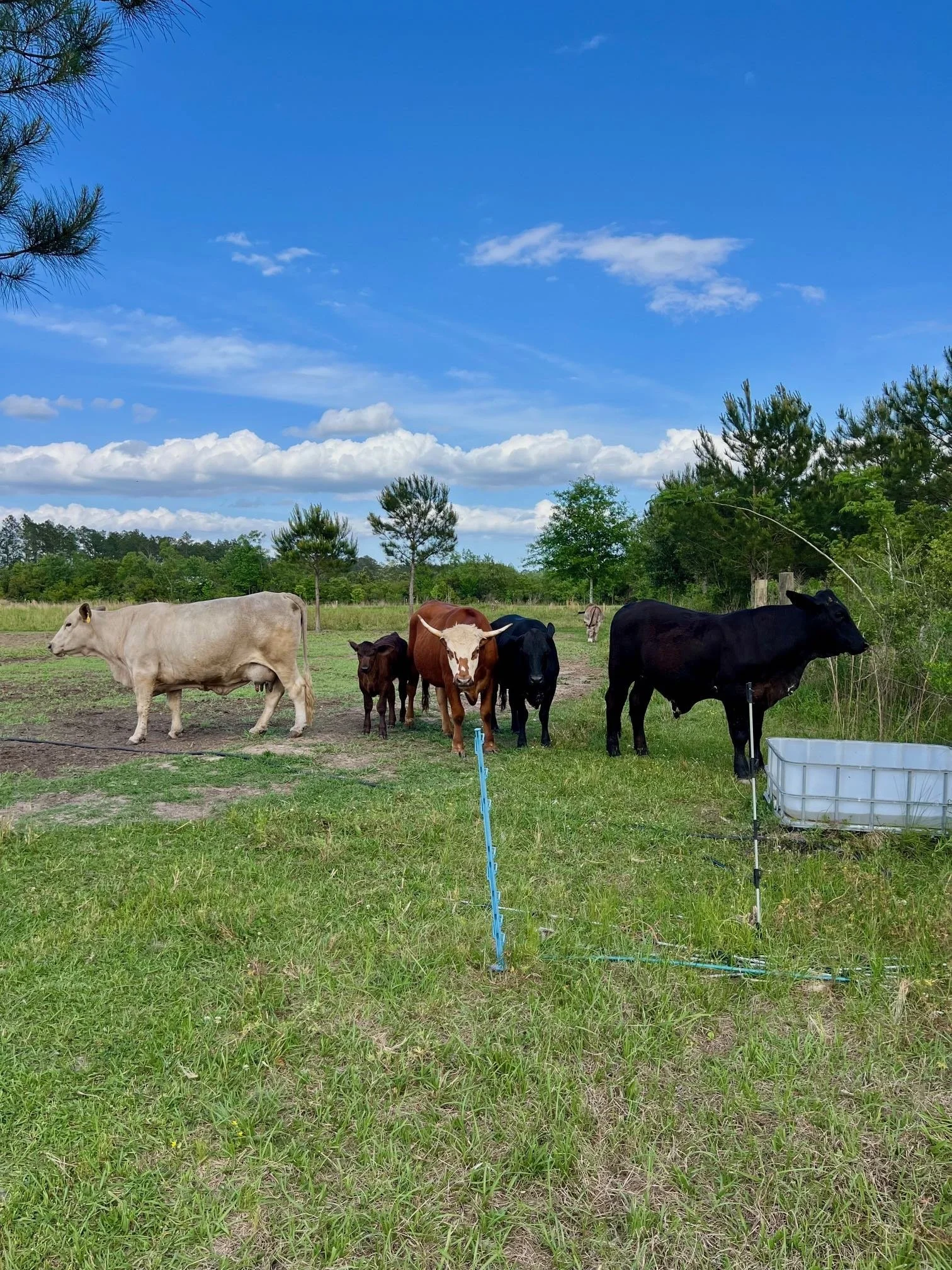
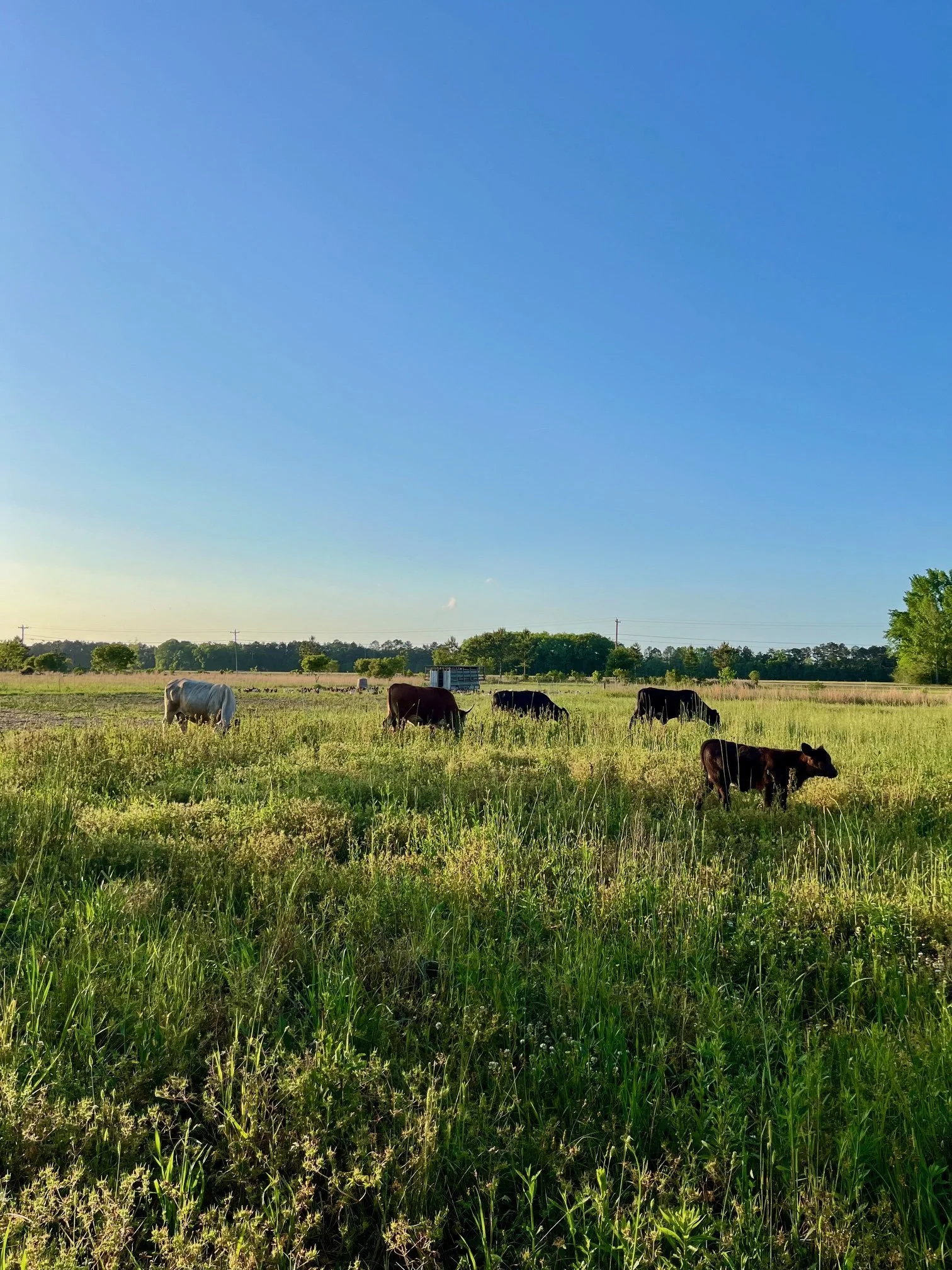
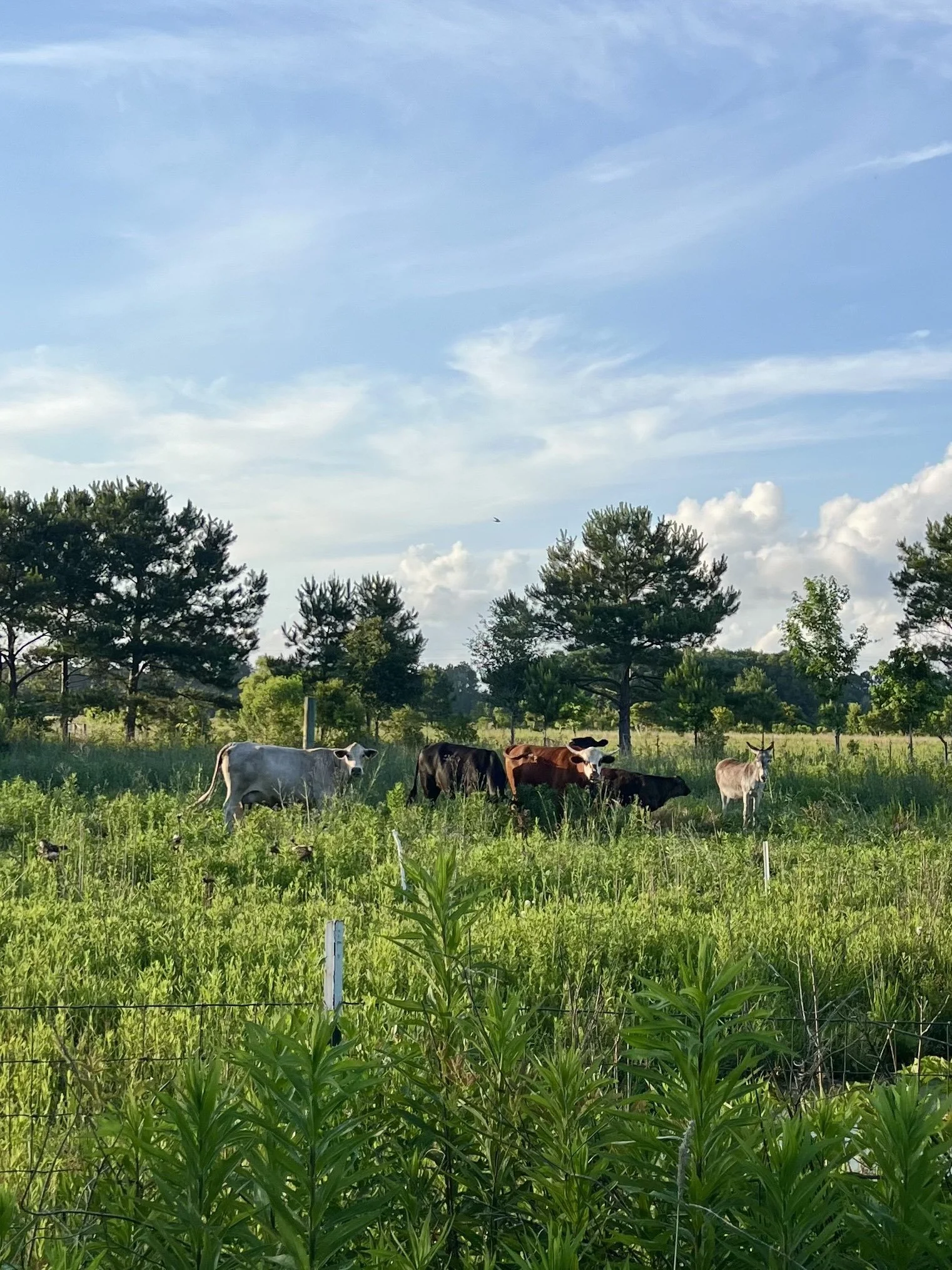
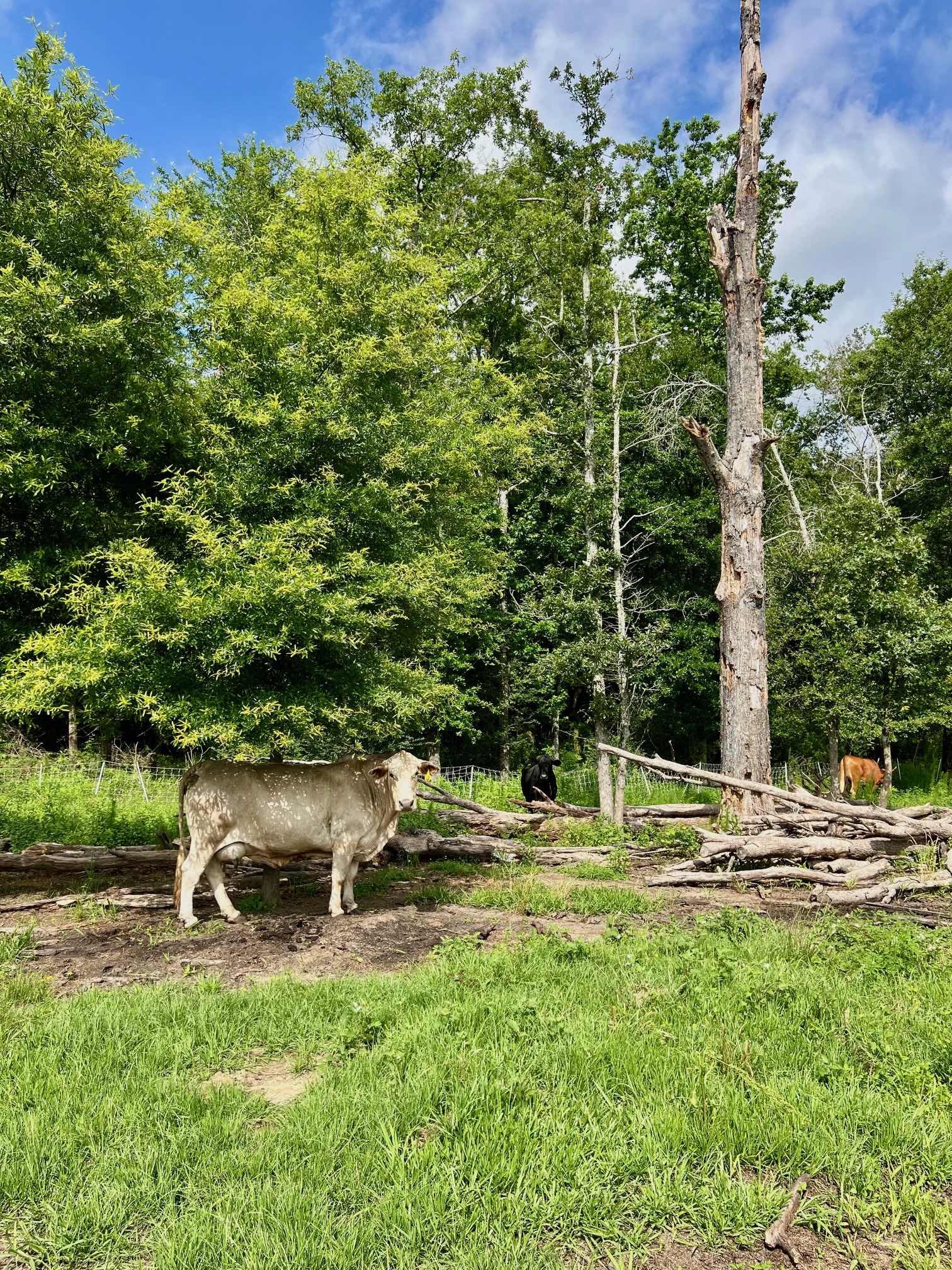
The cattle are the easiest species by far in the rain! If only we had the budget to have a big herd right now, but cattle prices haven’t really dropped.
Our small herd has been making its way around the farm as usual after several weeks in the fields nearest to our house.
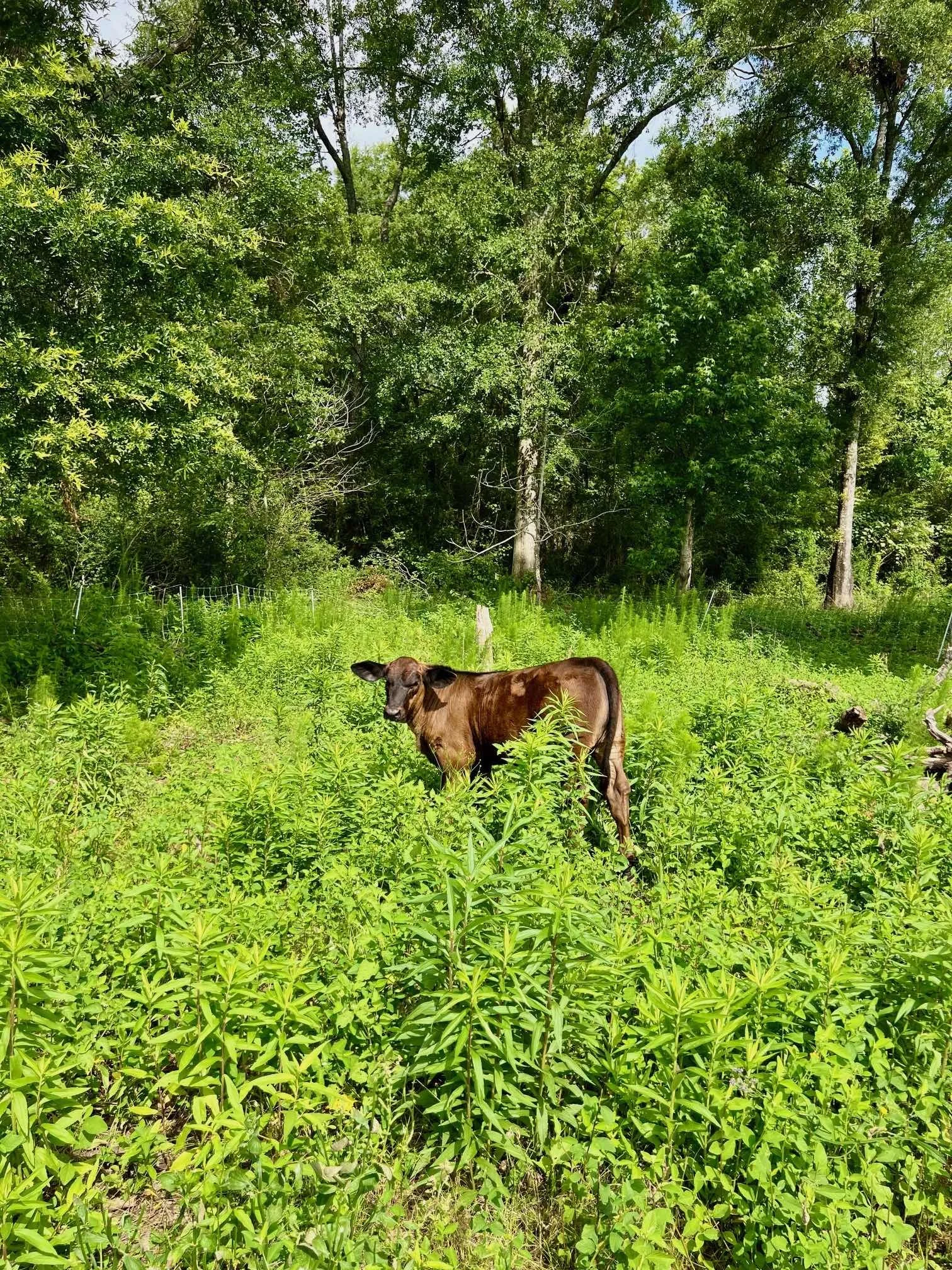
The heifer calf born in March is growing beautifully, but what’s so interesting is that she was jet black when she was born and now is becoming much more brown.
The hair around her ears, eyes and nose, as well as her tail is still darker brown or black, so she’s probably just growing out of her calf coat and will return to black later on. Her brother was jet black at birth and stayed that way, so it could be that she has recessive red genes and will stay lighter, though. It’ll be interesting to see!
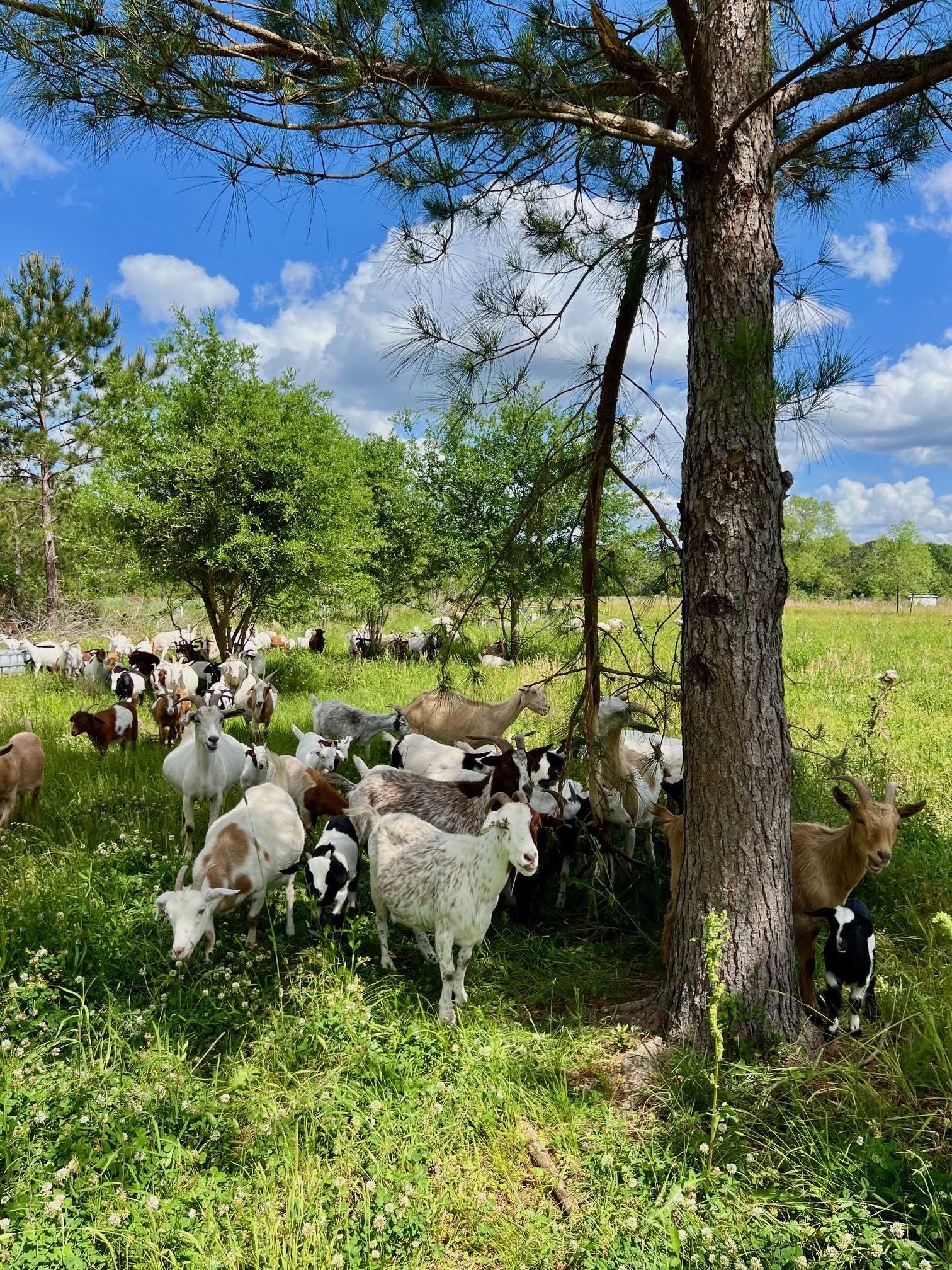
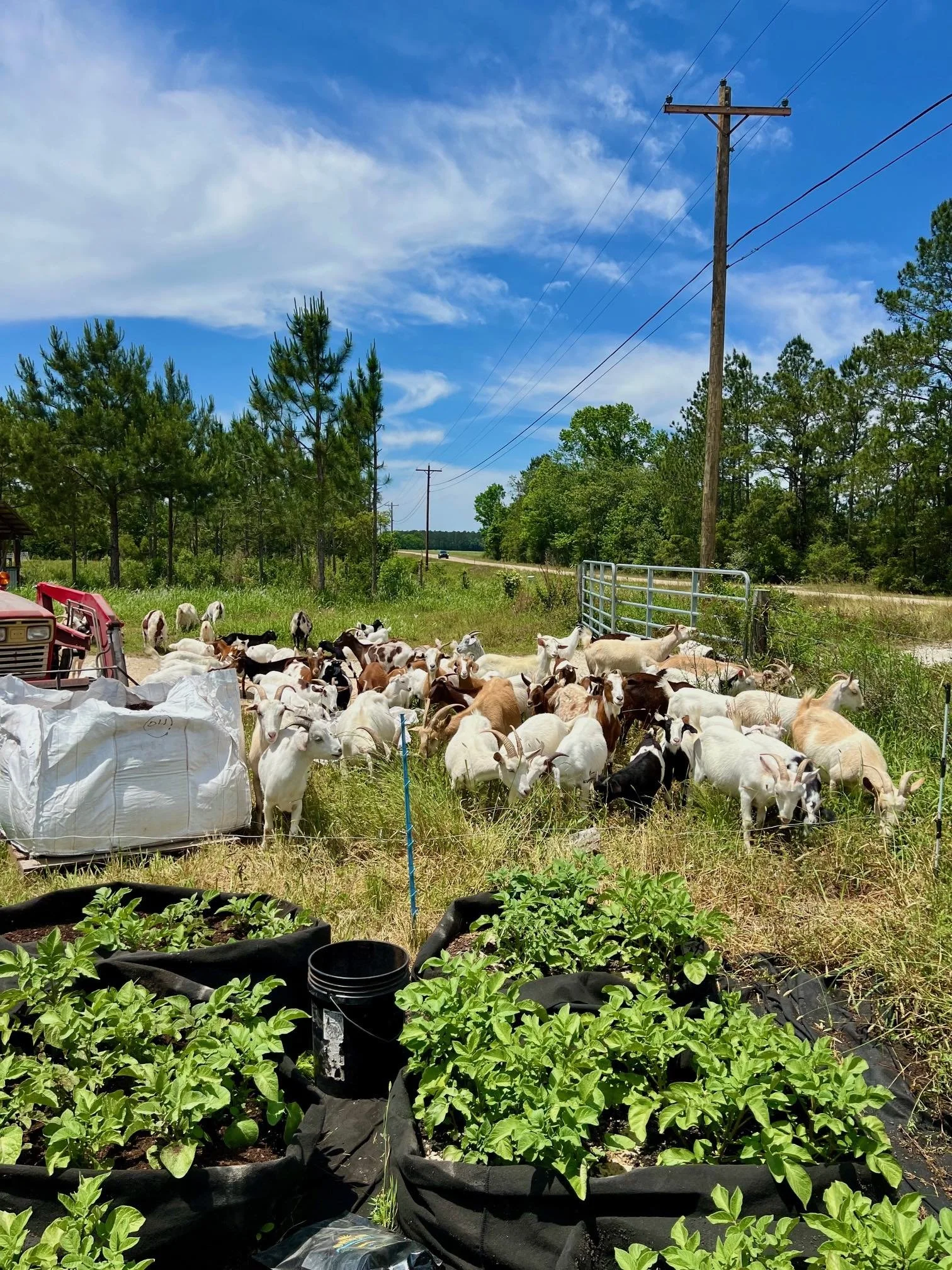
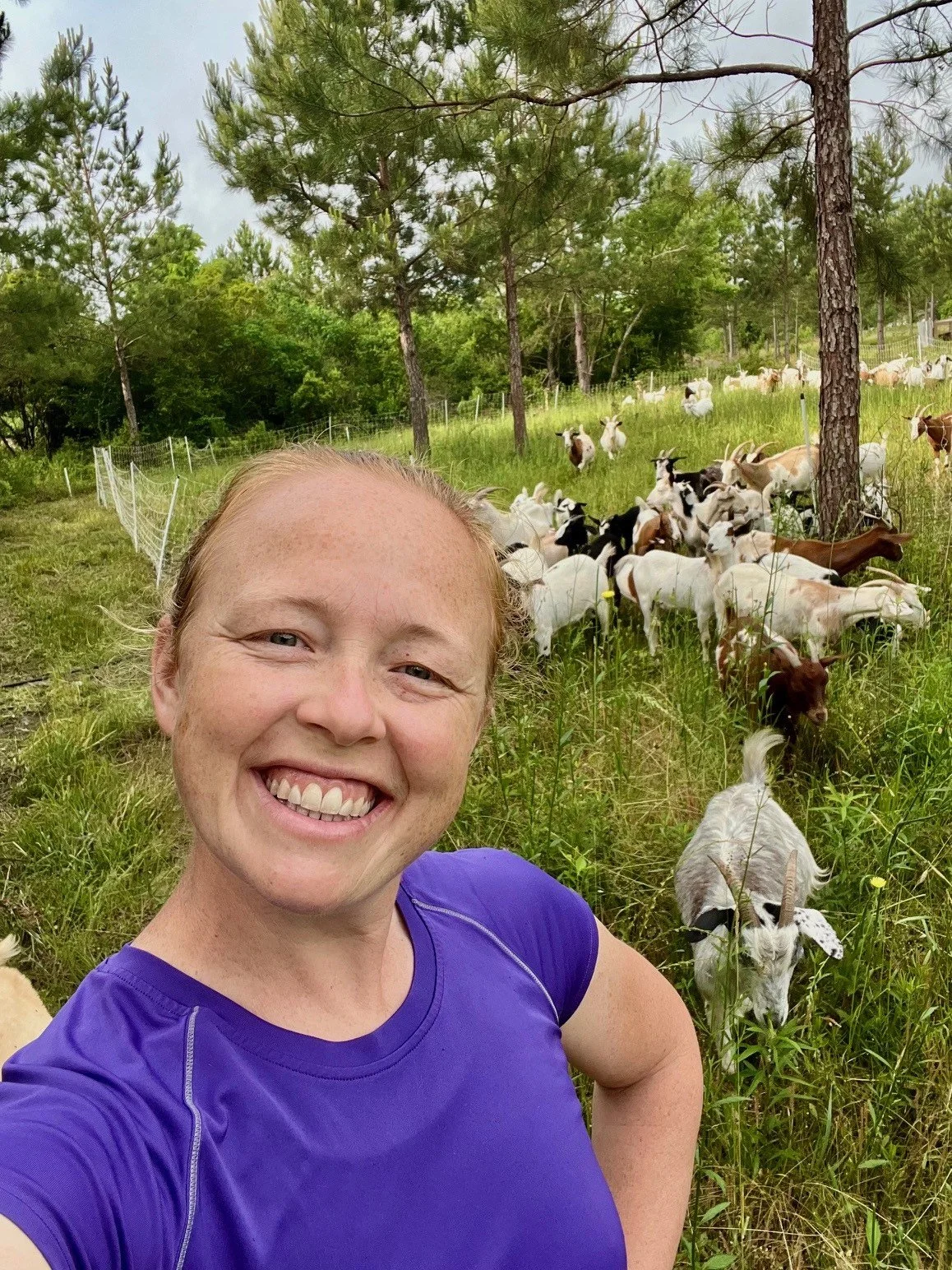
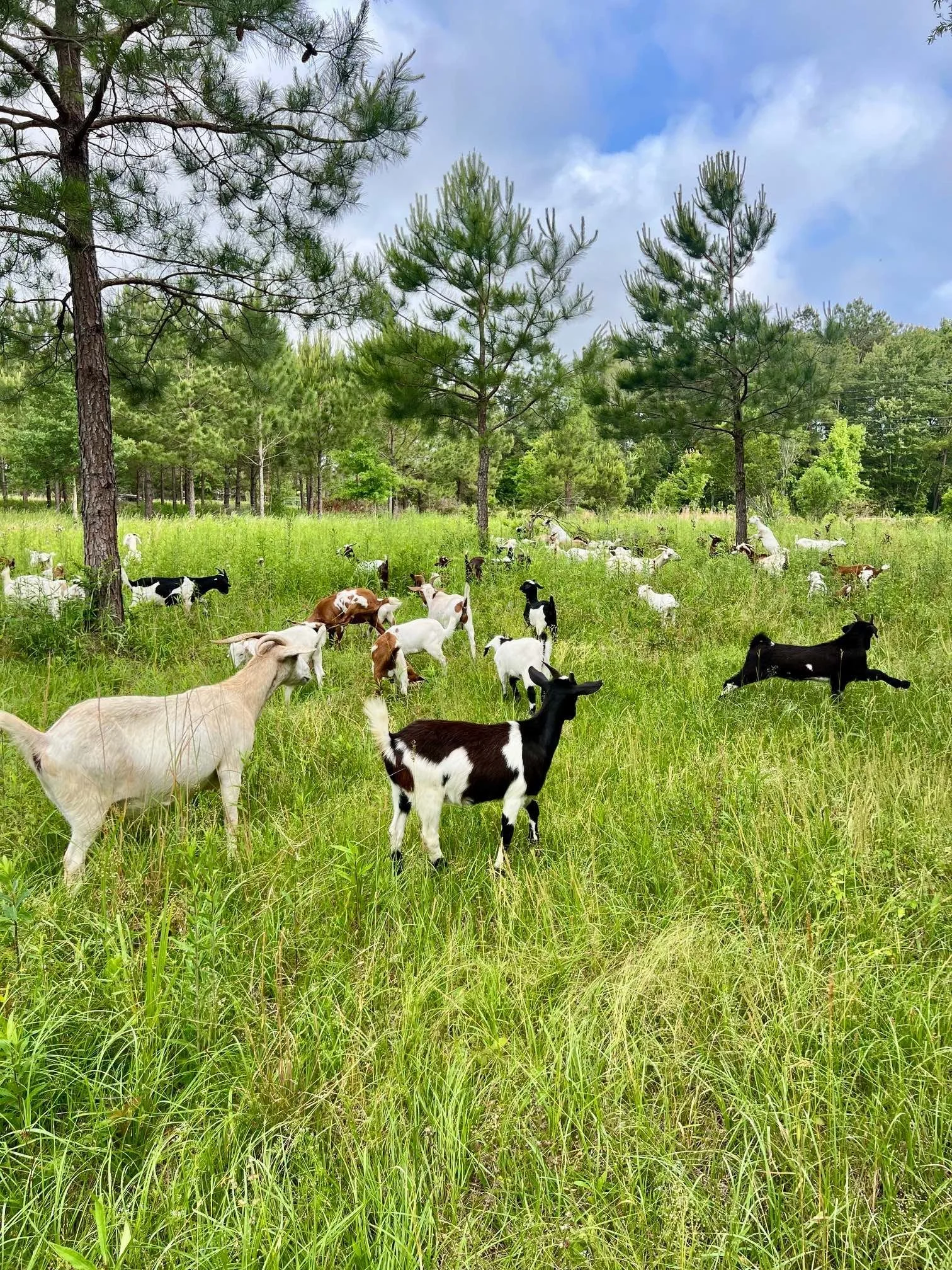
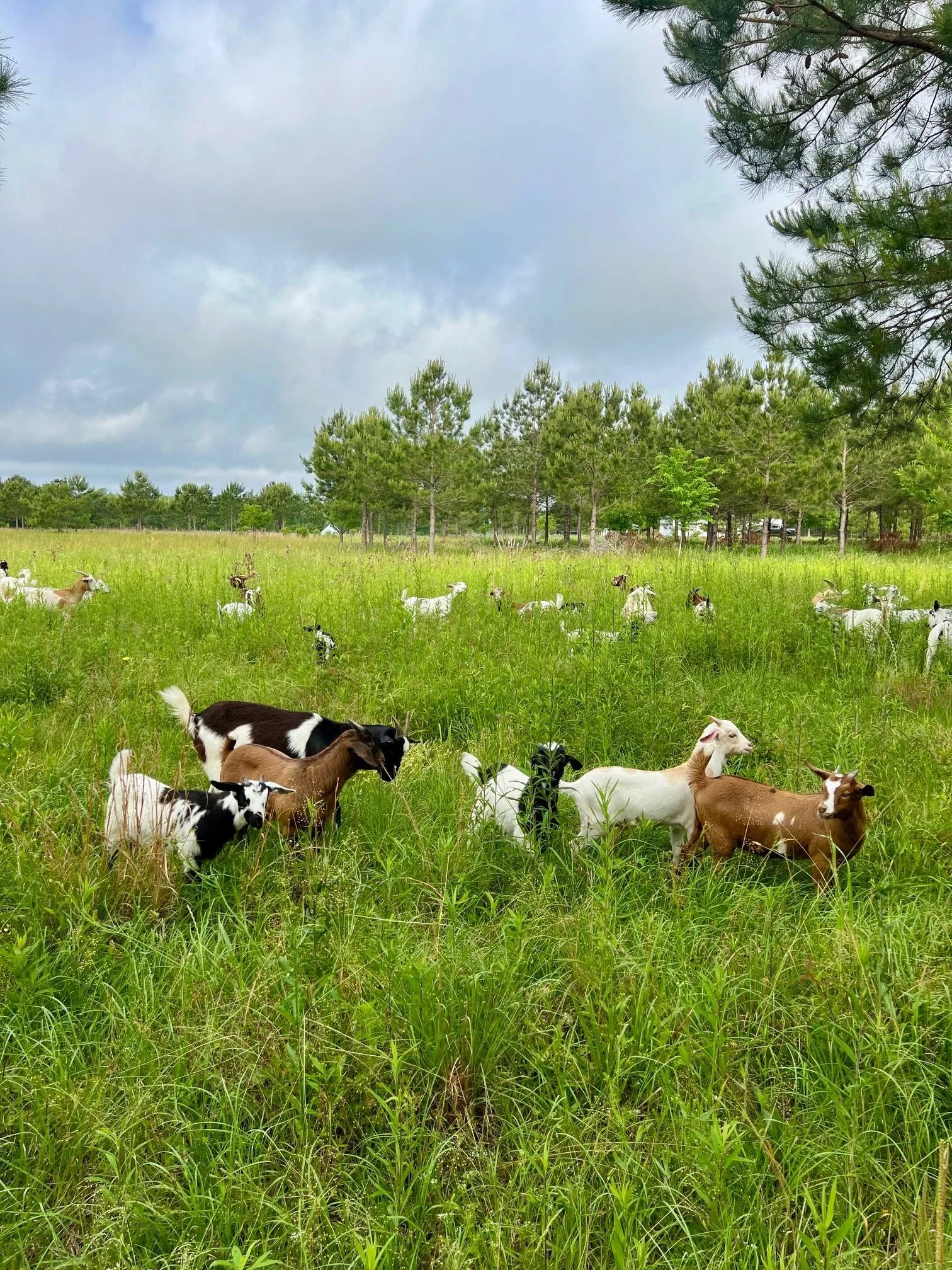
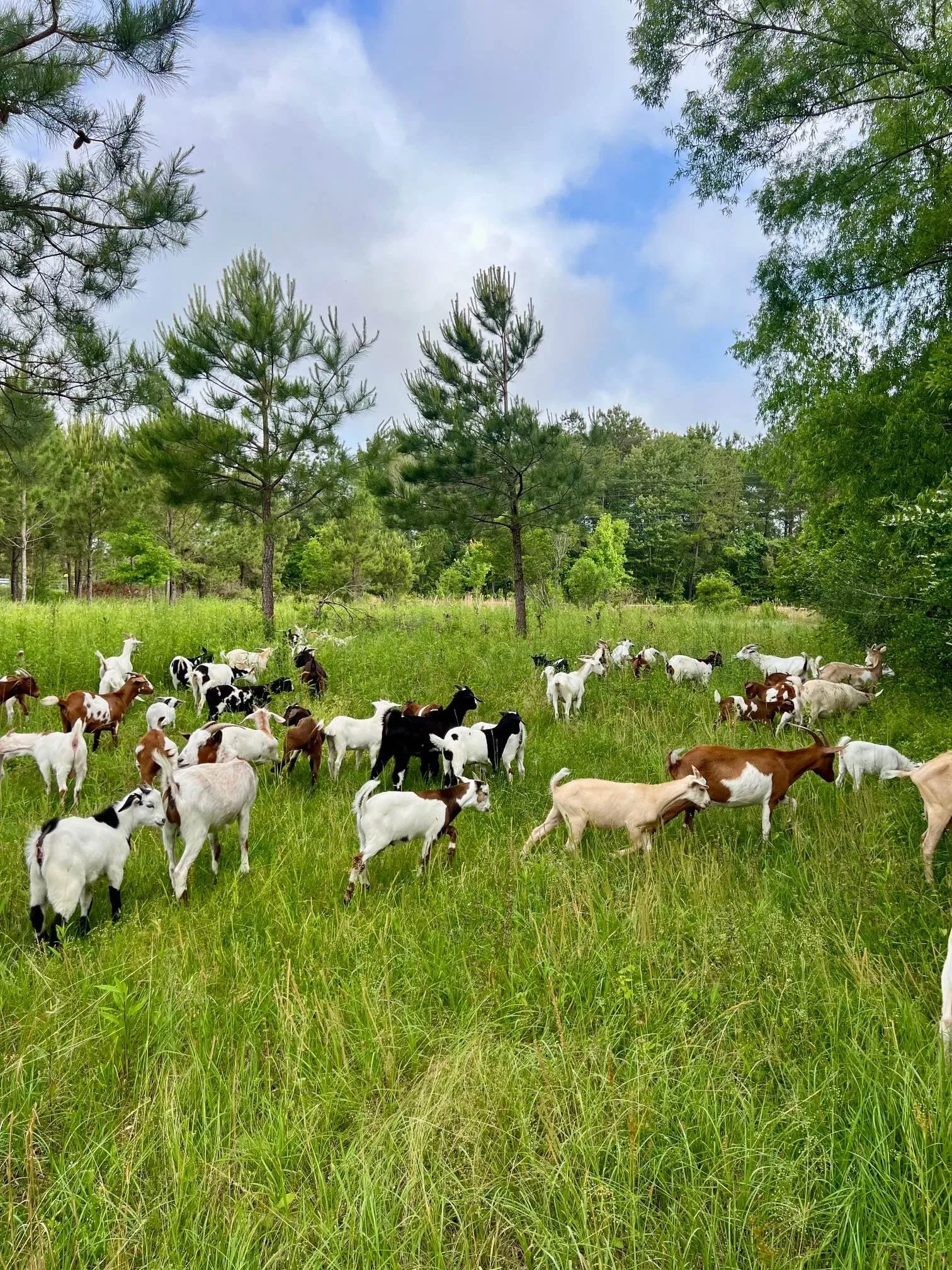
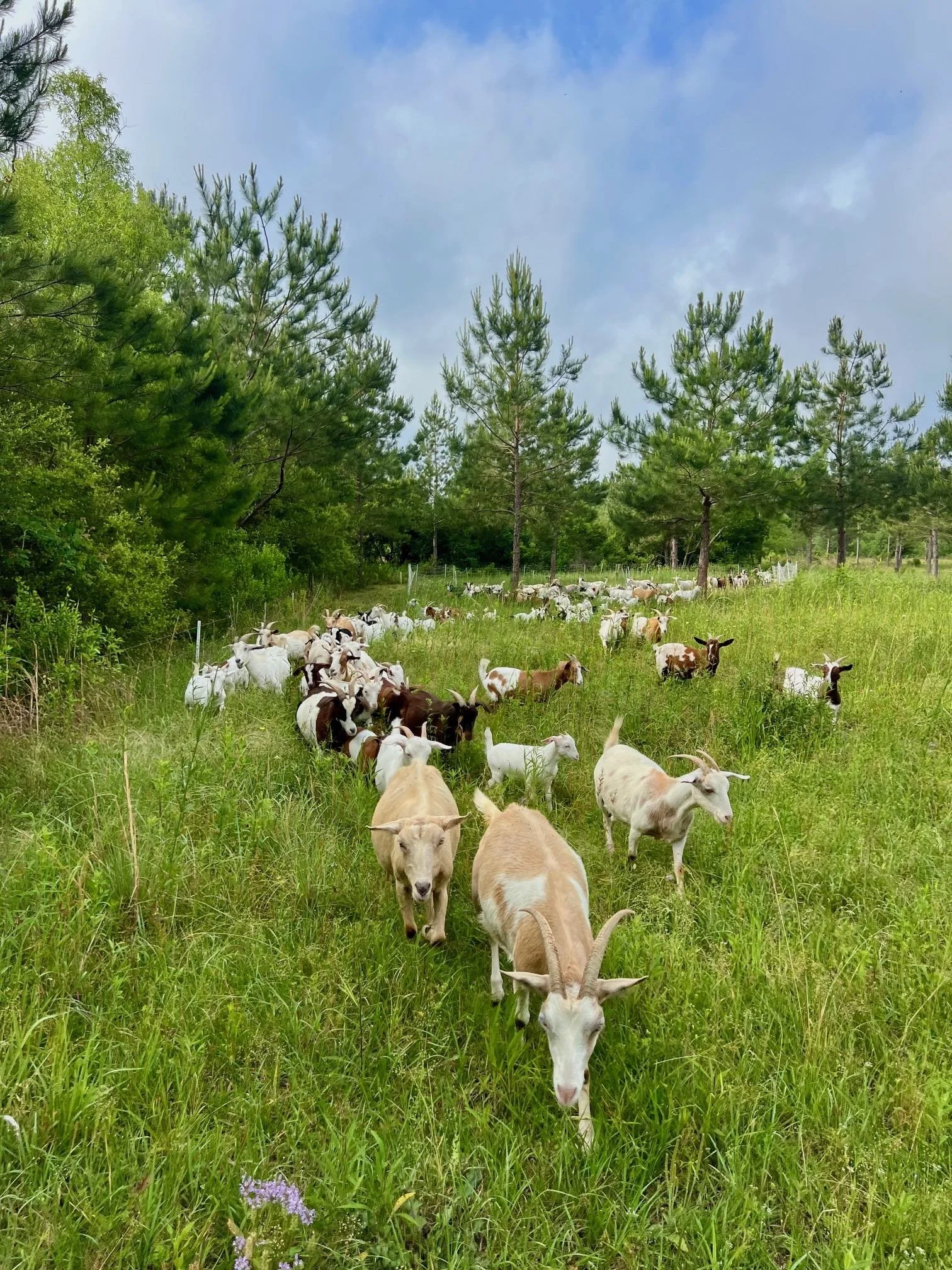
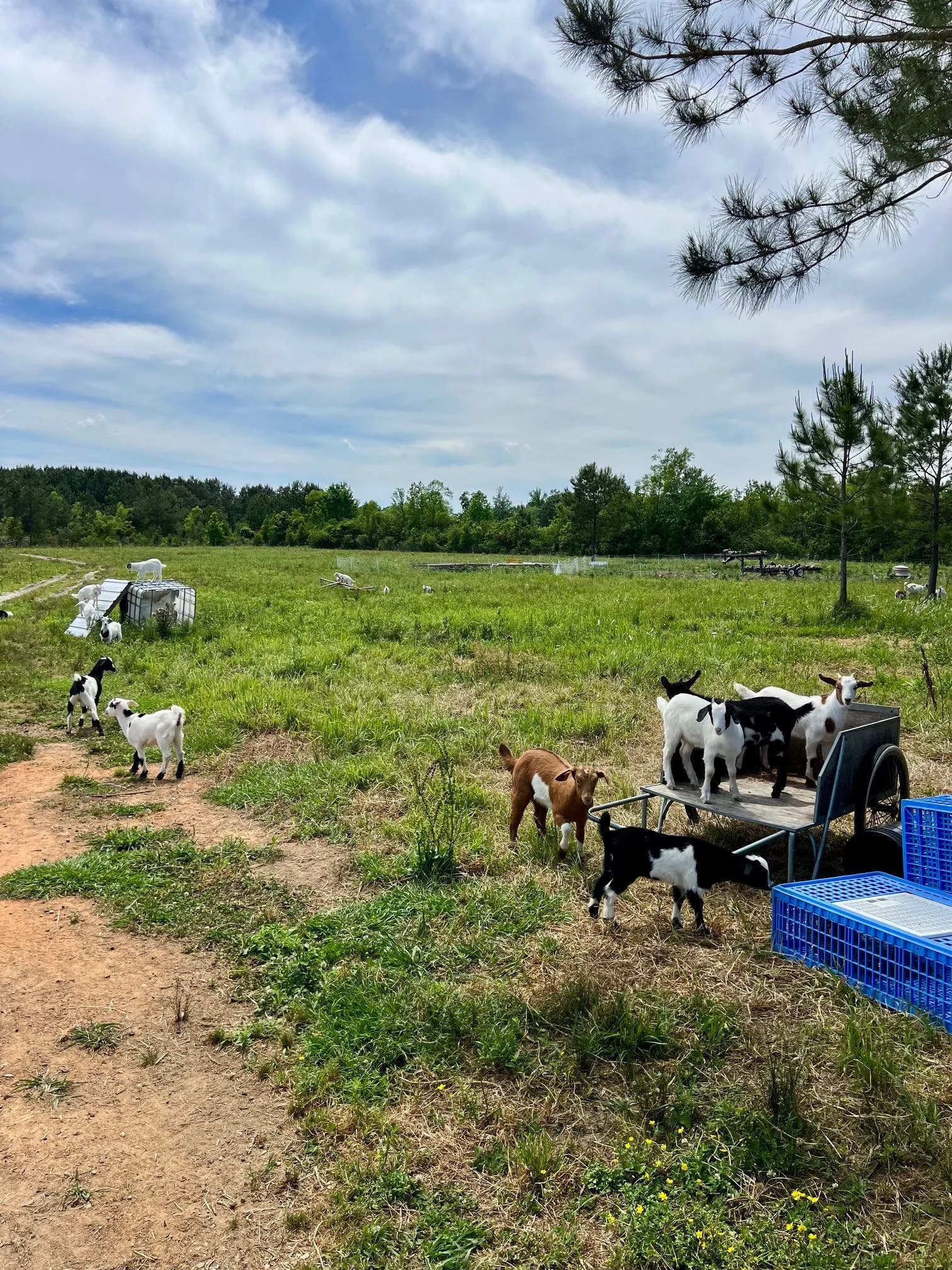
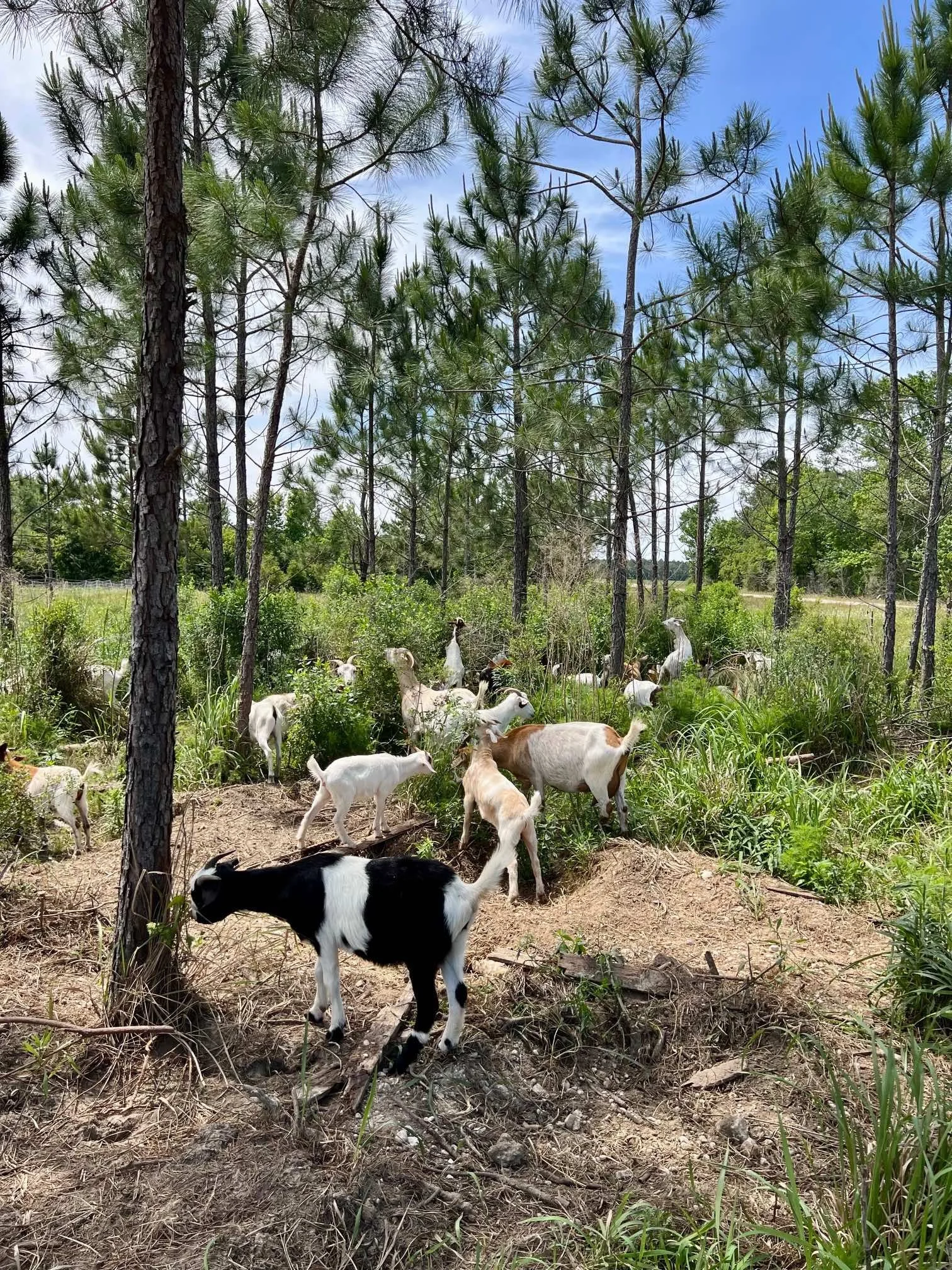
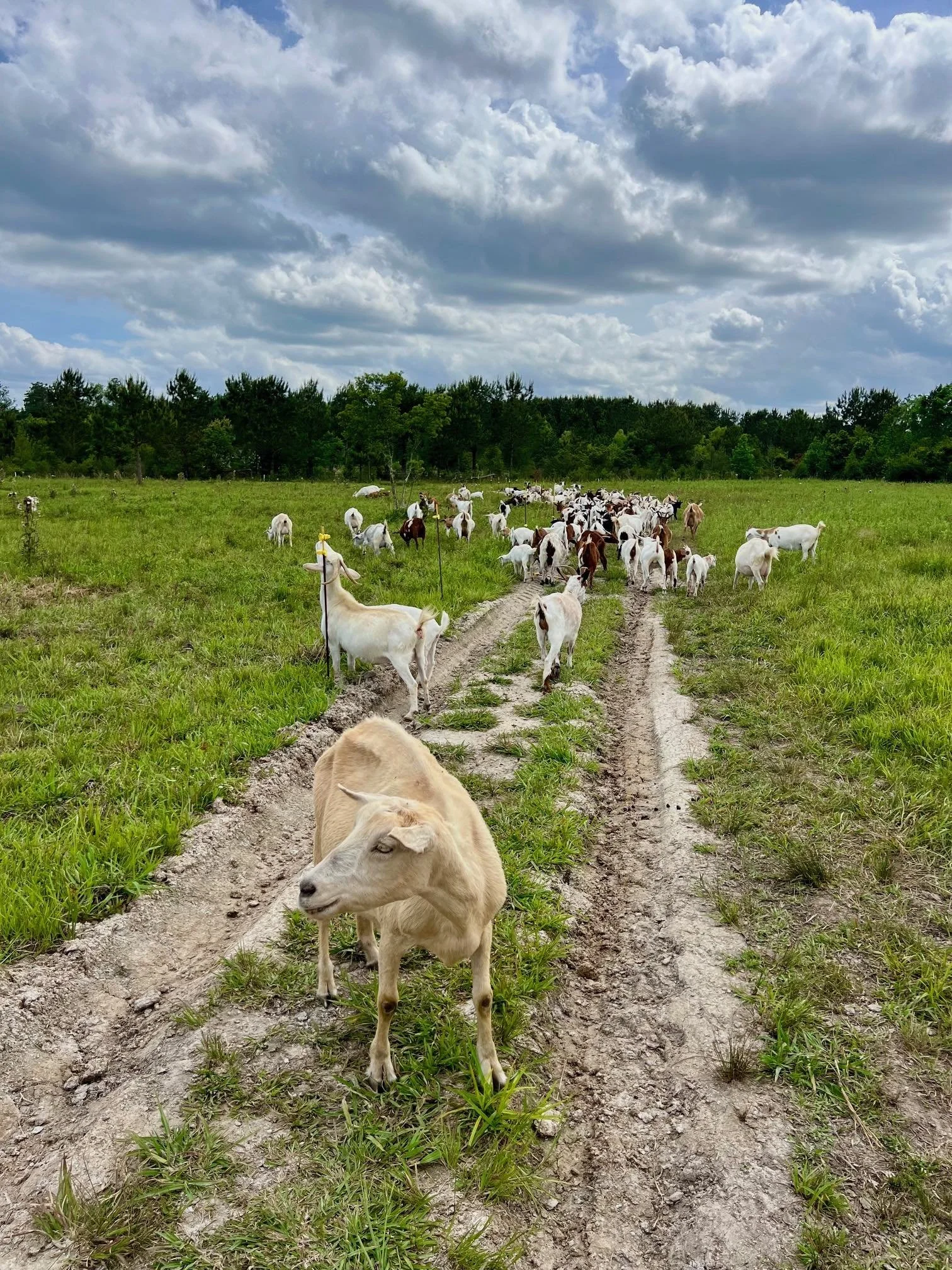
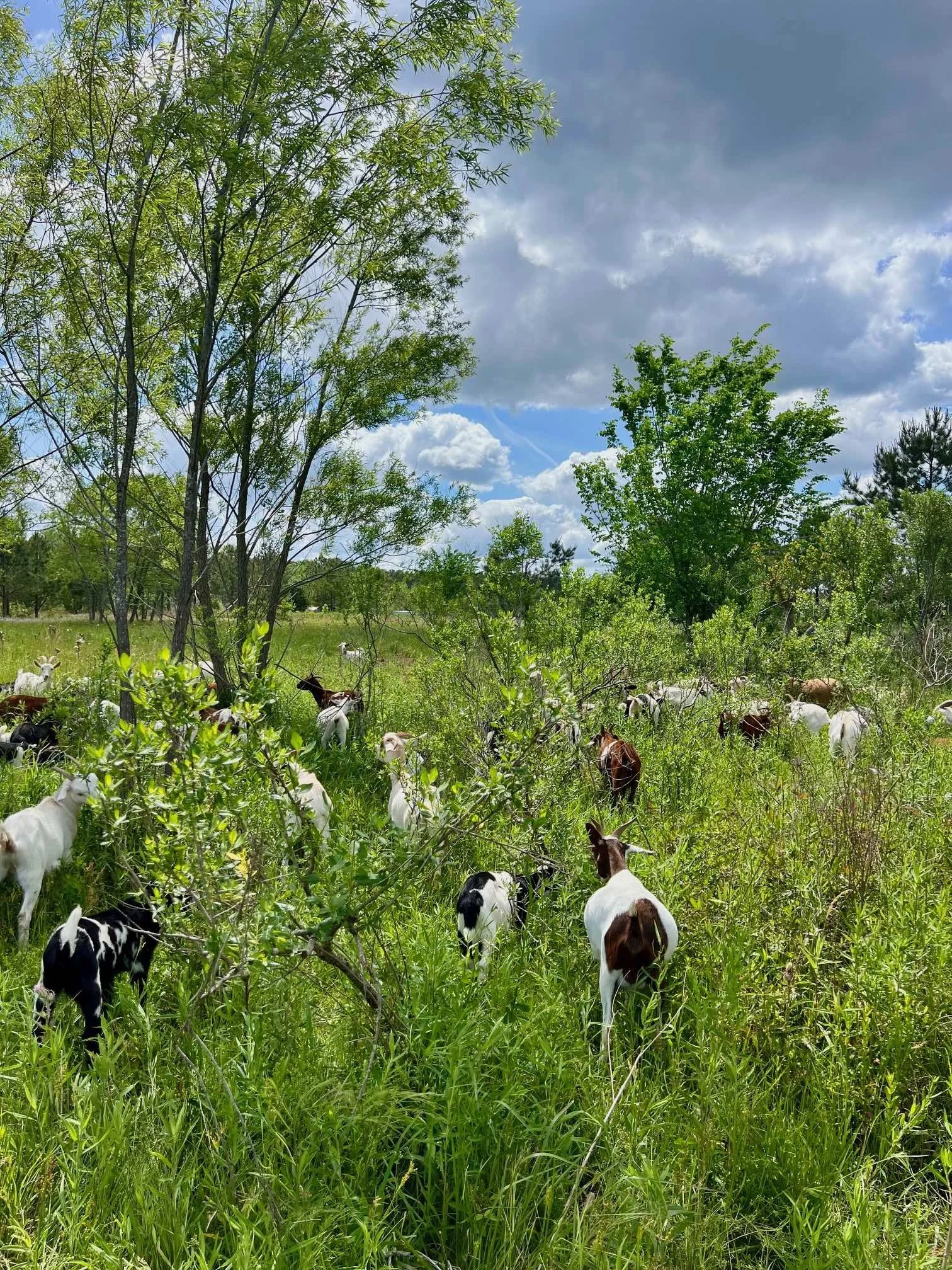
The goats have also been rotating all over the farm! Our usual pattern is to let them into one of our main fields surrounded by 5-strand high tensile perimeter fence on the outside and 3-strand high tensile internal fence sections that are interior only.
When they have enough forage in those 6-8 acre fields, they don’t typically break through the fence. And then we set up electric net fence for their nighttime corral for an extra layer of protection from predators.
But since it’s going on 3-7 years since we’ve installed this fence (depending on the section/field), there are some sections that desperately need maintenance for all the brush growing up on them and this draws the voltage down quite a bit. There’s a lot of overdue trimming we need to do this summer.
So that means the goats often take the (light) shock to go through the fence if they’re even the slightest bit bored or curious or even if there’s plenty of forage to eat in the field where they’re supposed to be, but they think there might be something even better beyond the fence.
Fortunately, they seem to know enough not to go off the property, but it’s made the rotations more interesting, shall we say?
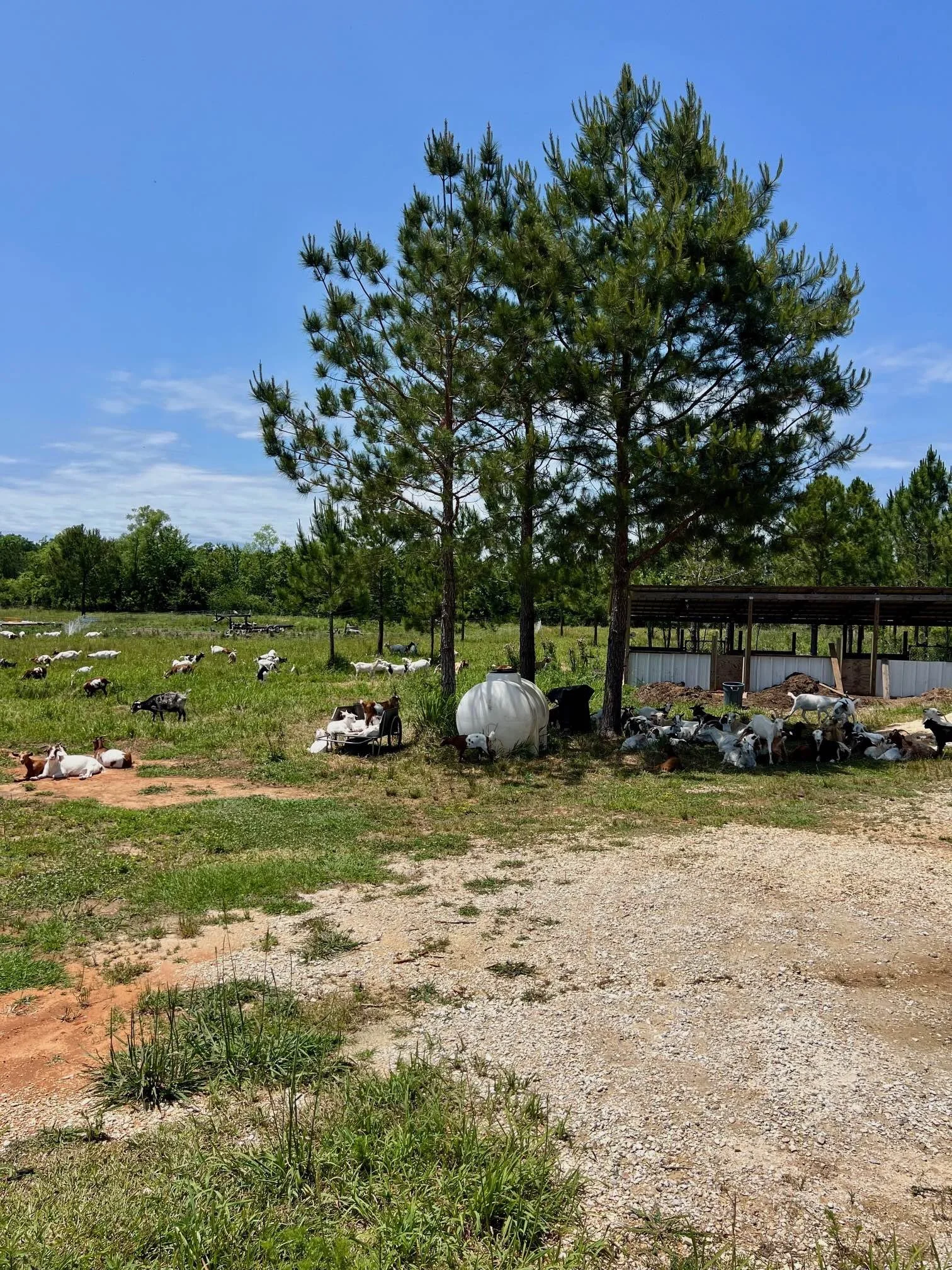
That’s why they came and “helped" me add soil to my potatoes in my garden one day. Interestingly, when they would make their way into our house field from the field across the internal road, they would bed down for afternoon naps on the gravel driveway area near the pig barn, but not on the porch of our house! We always figured if we didn’t have our house fenced out with temporary electric net fencing, they’d be on the porch, pooping everywhere and generally being annoying. But they behaved themselves!
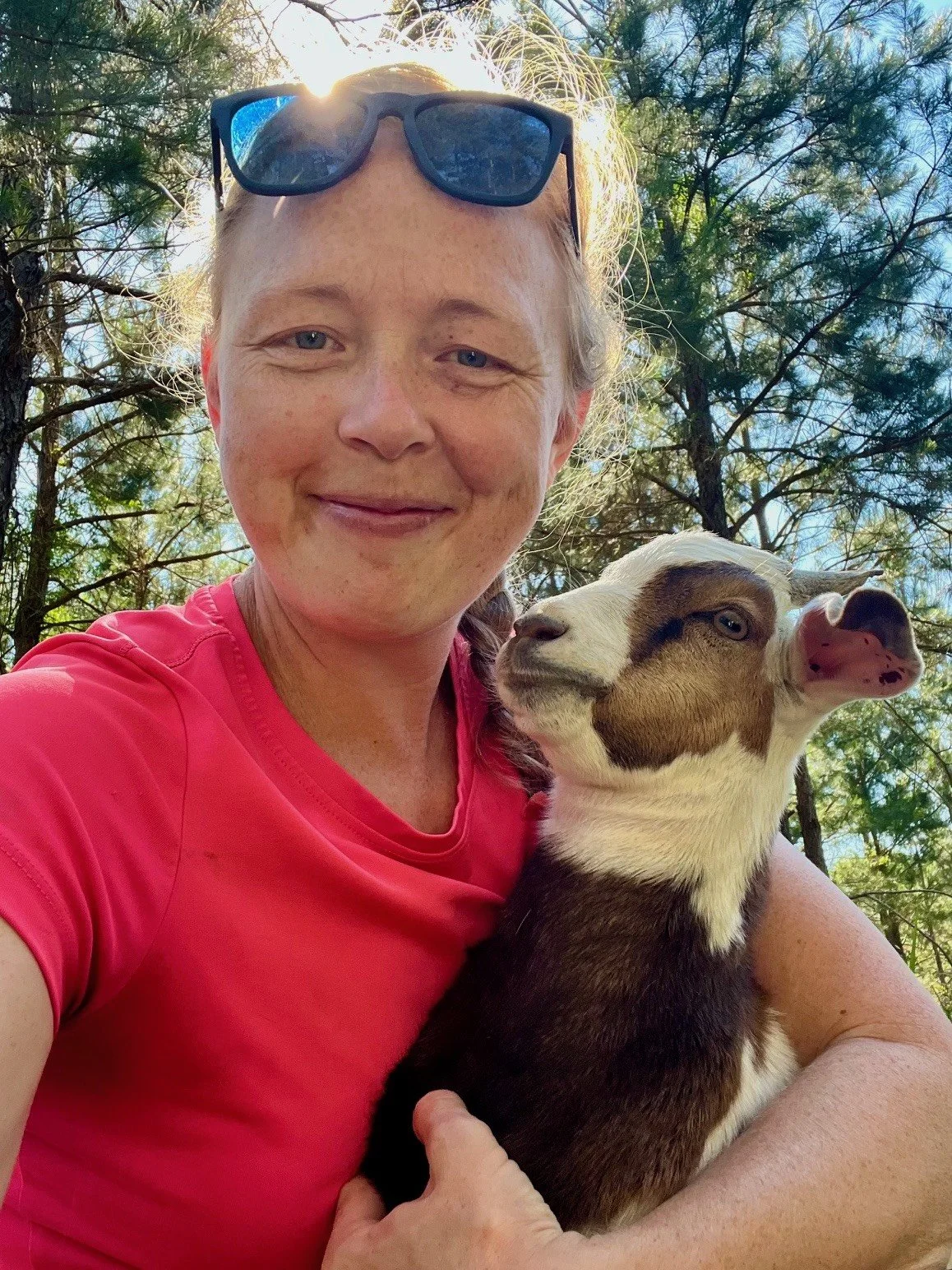
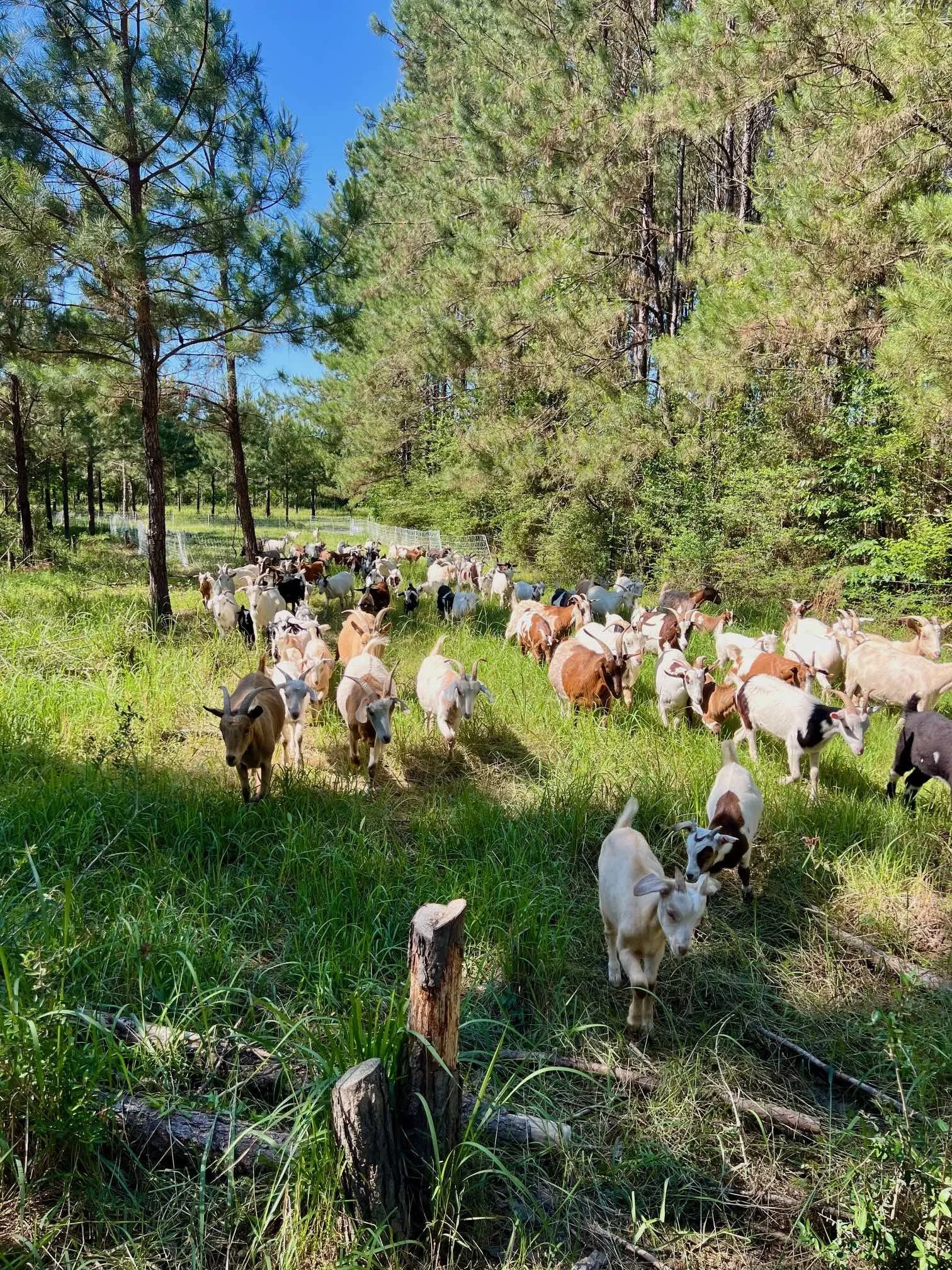
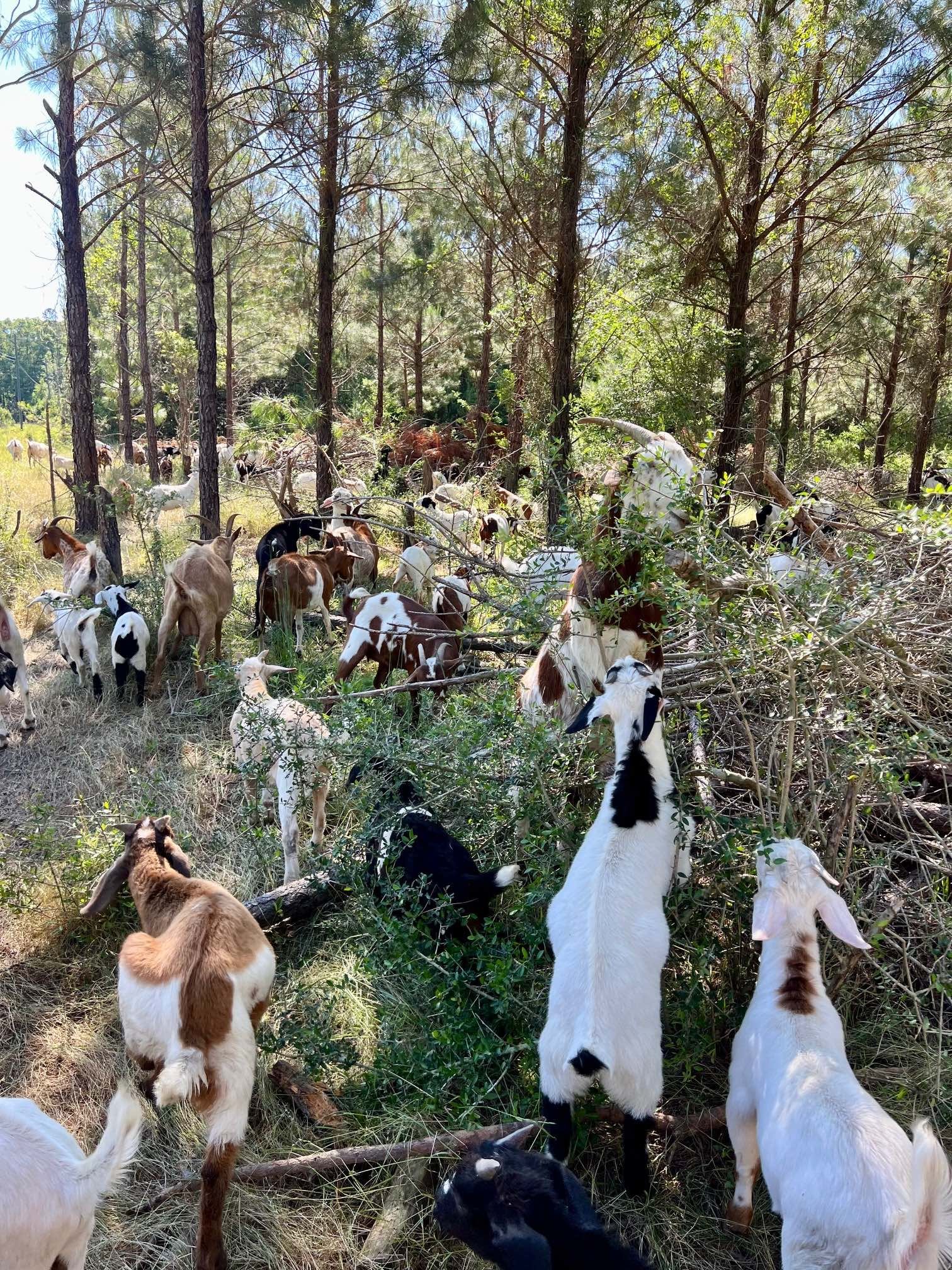
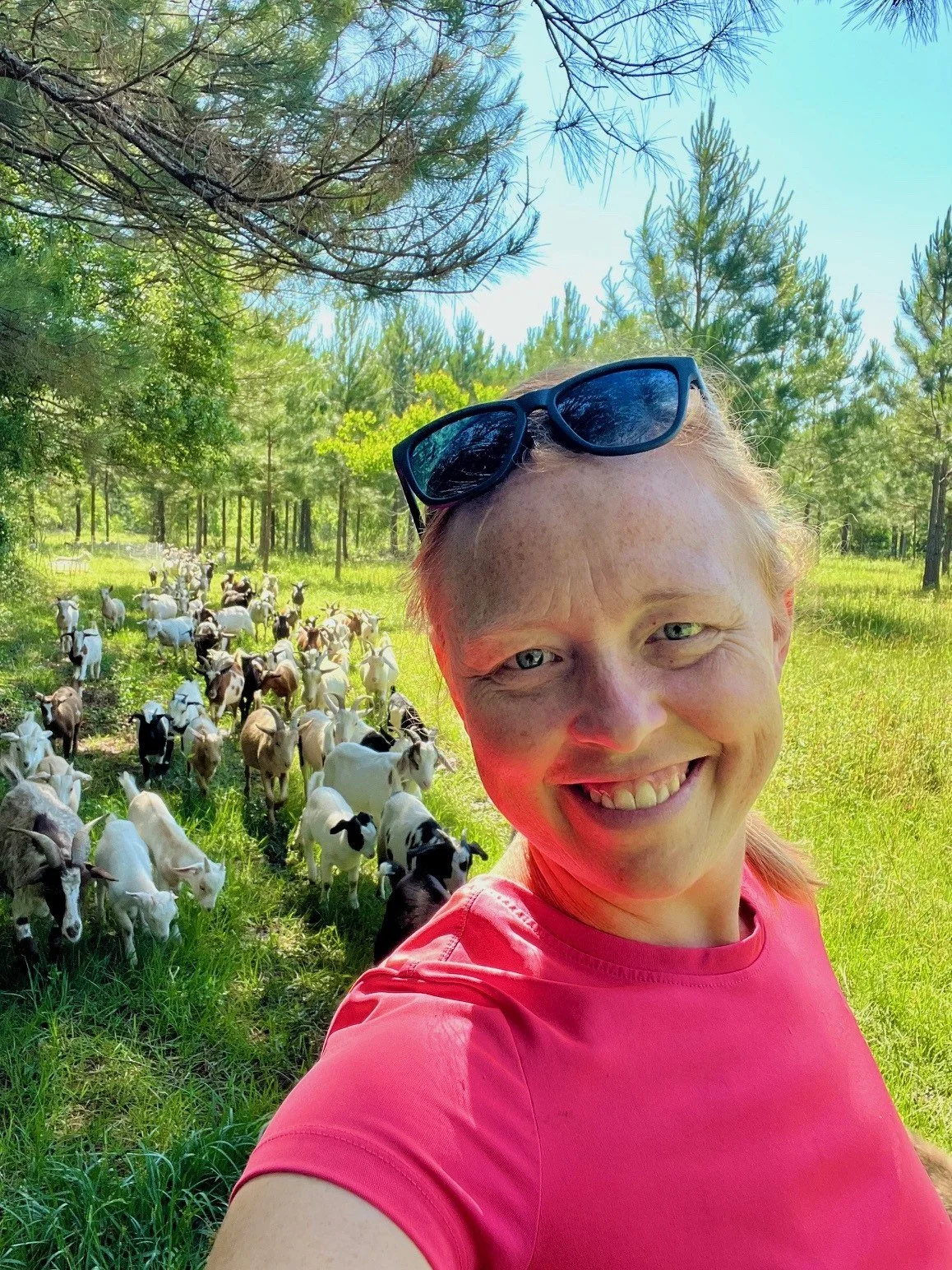
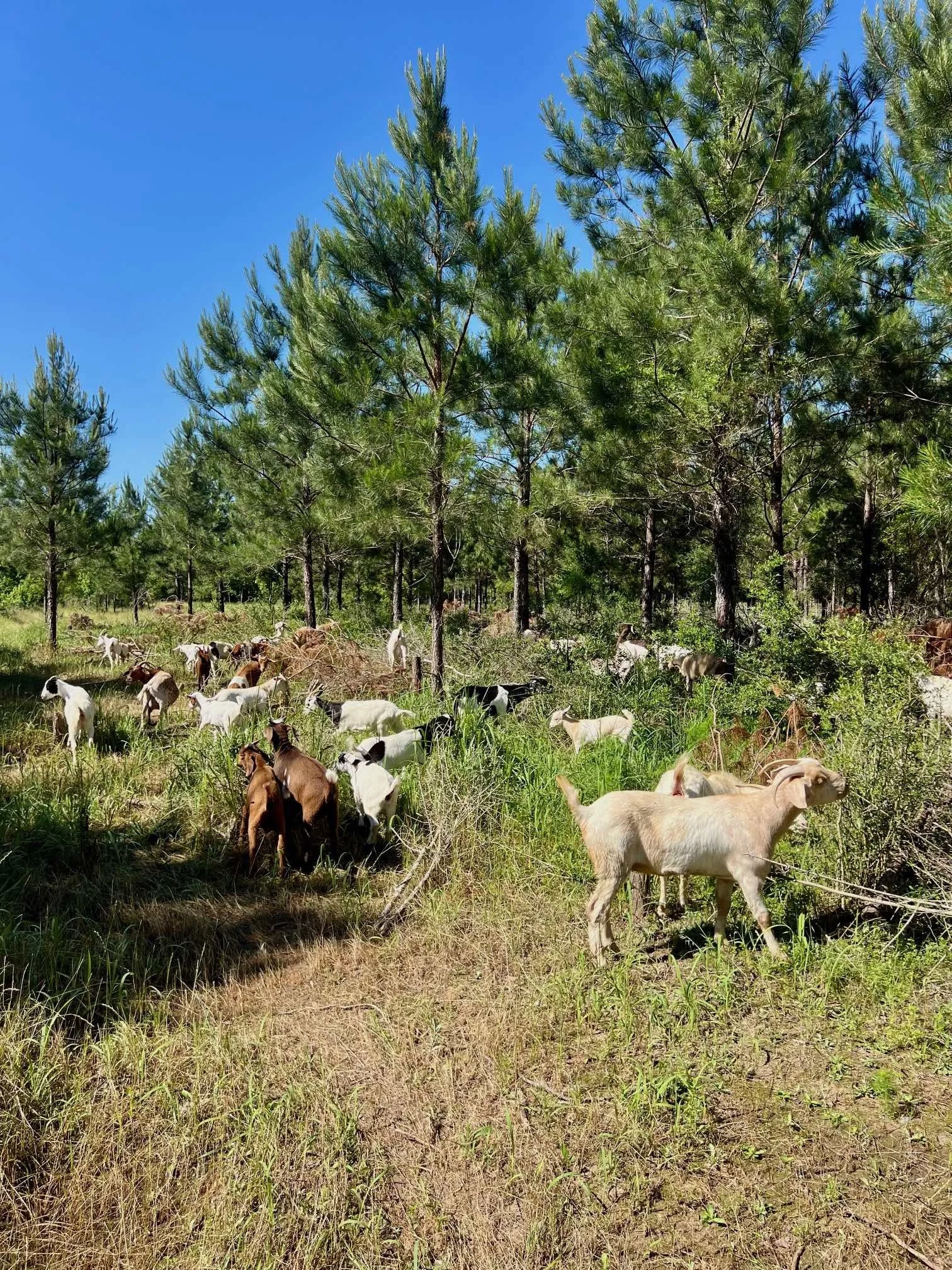
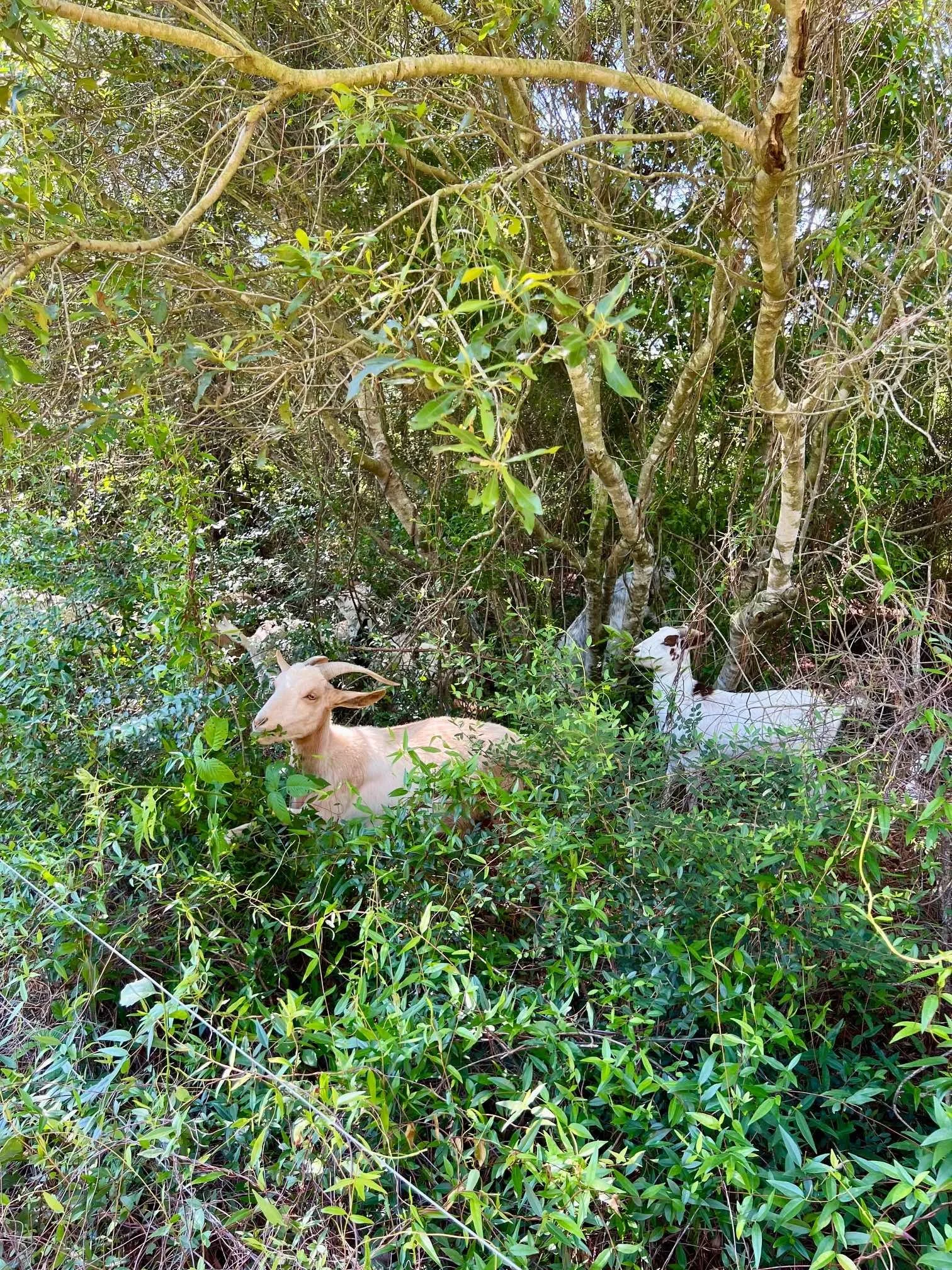
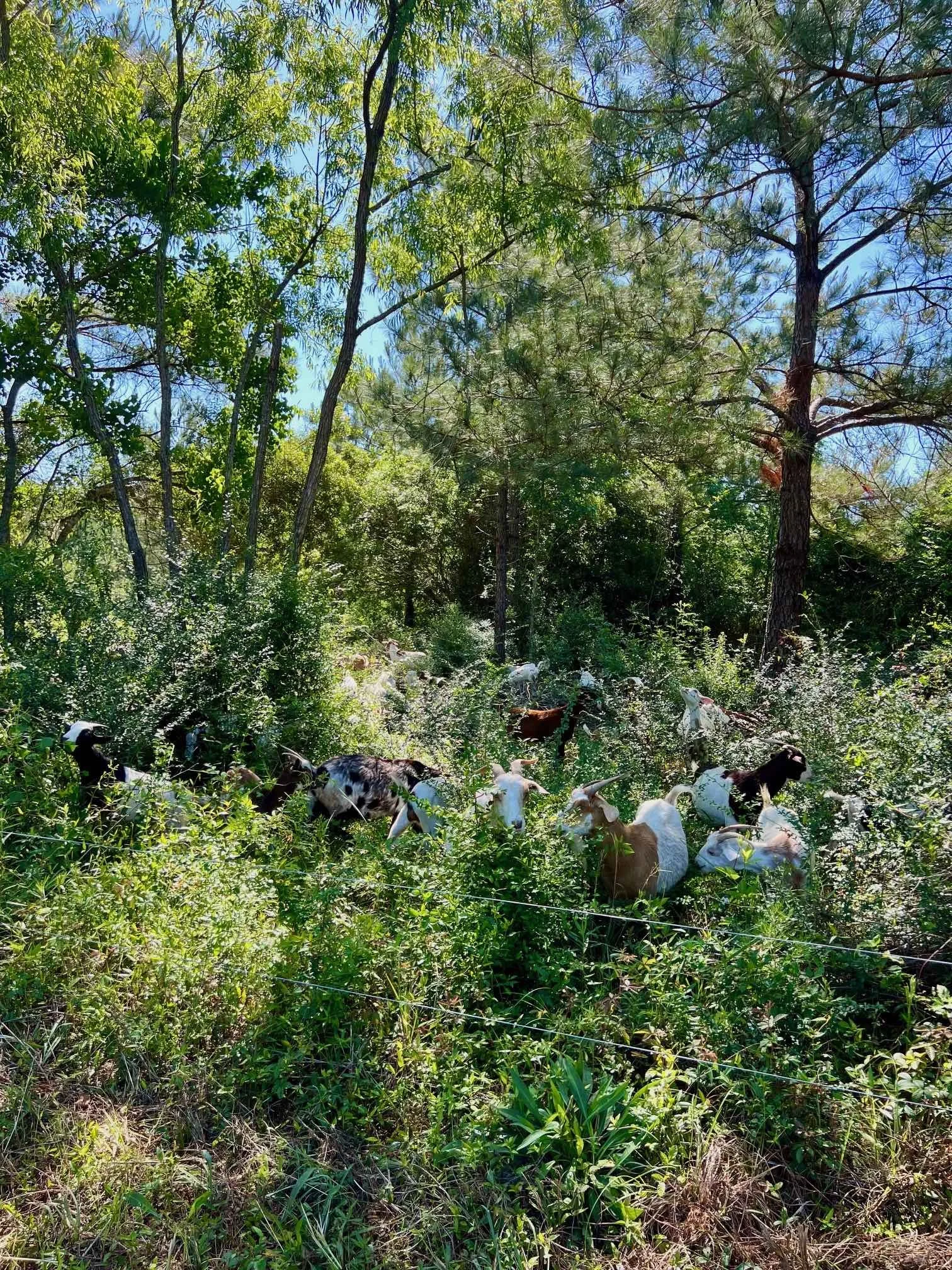
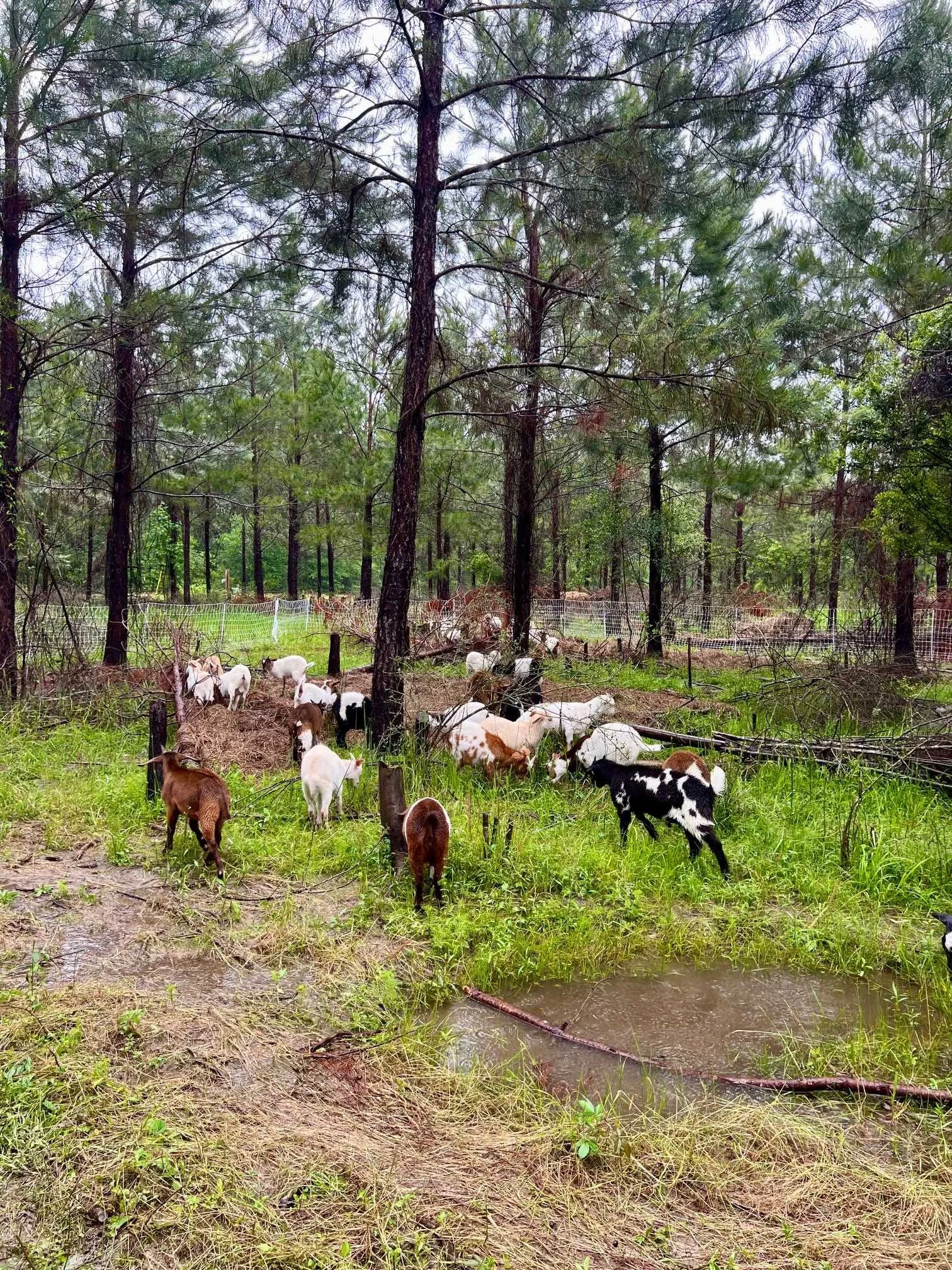
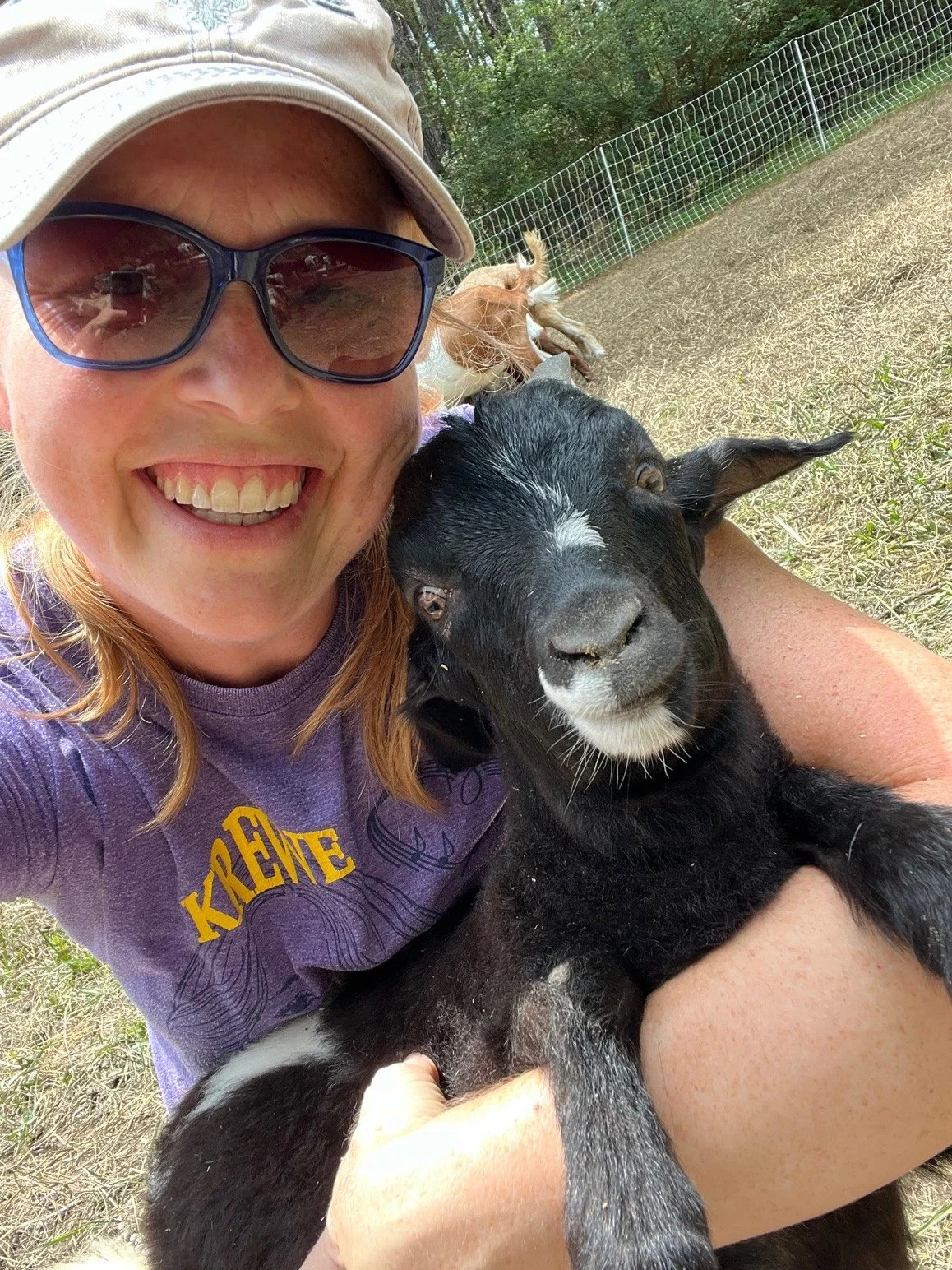
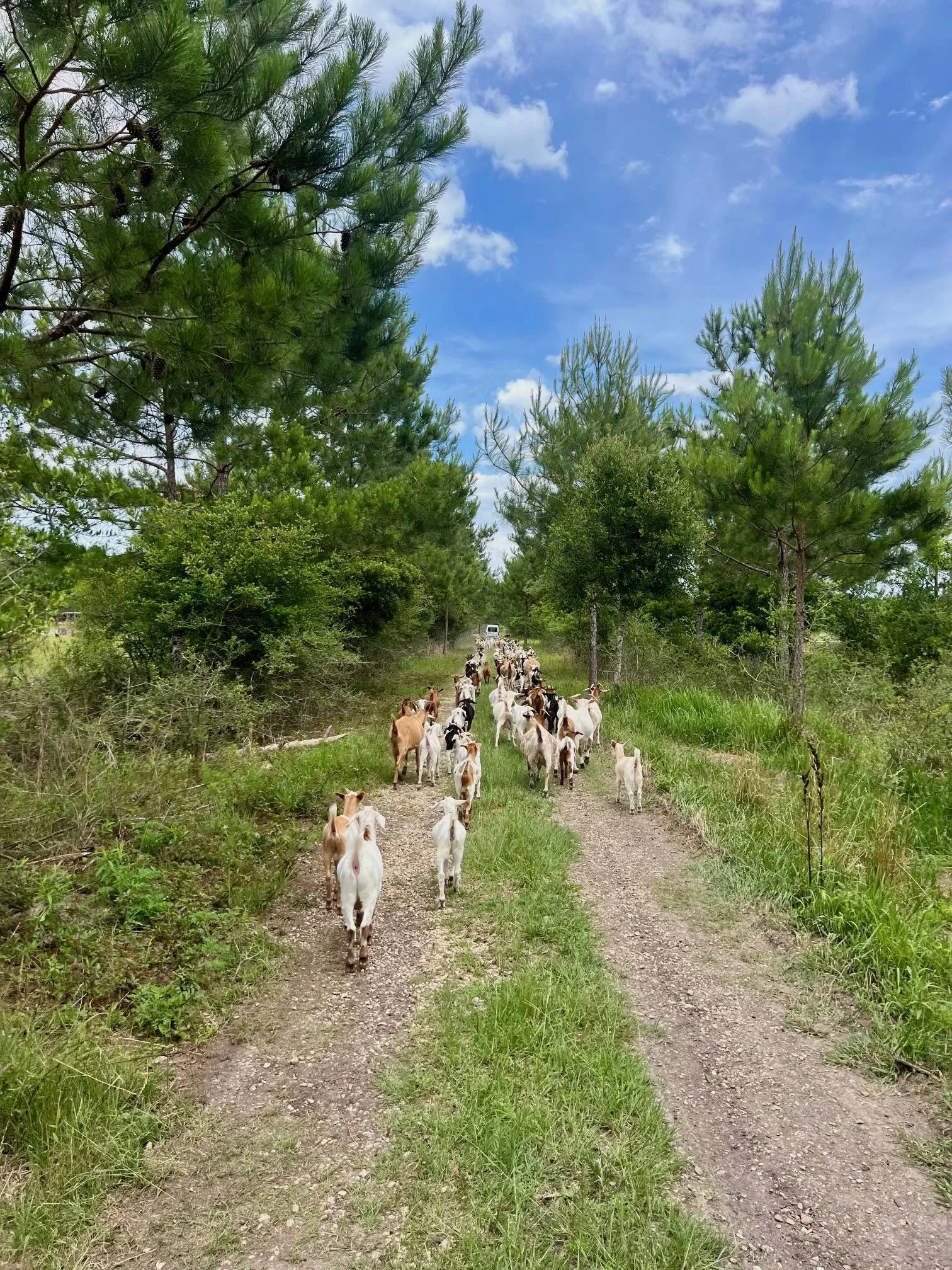
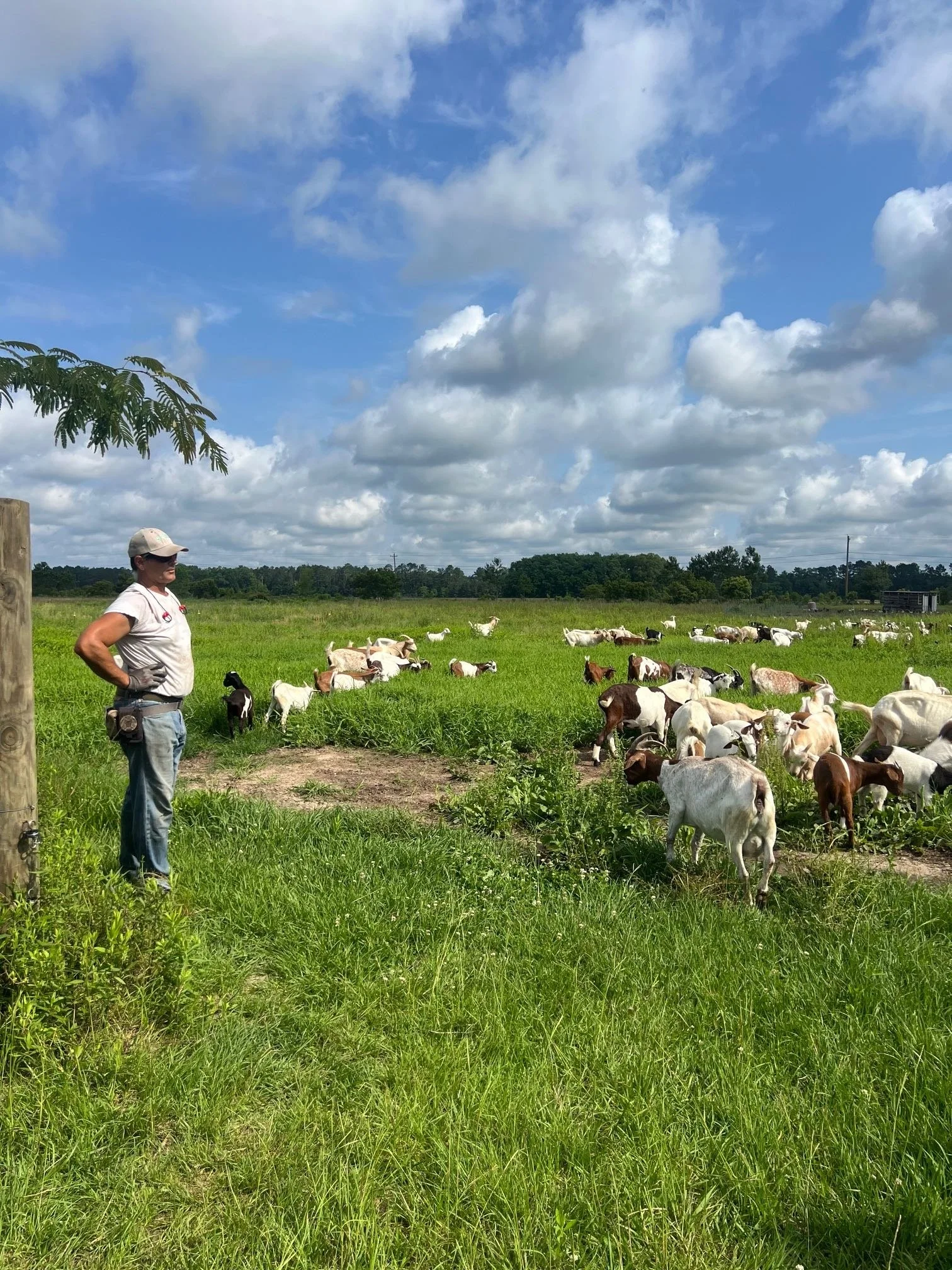
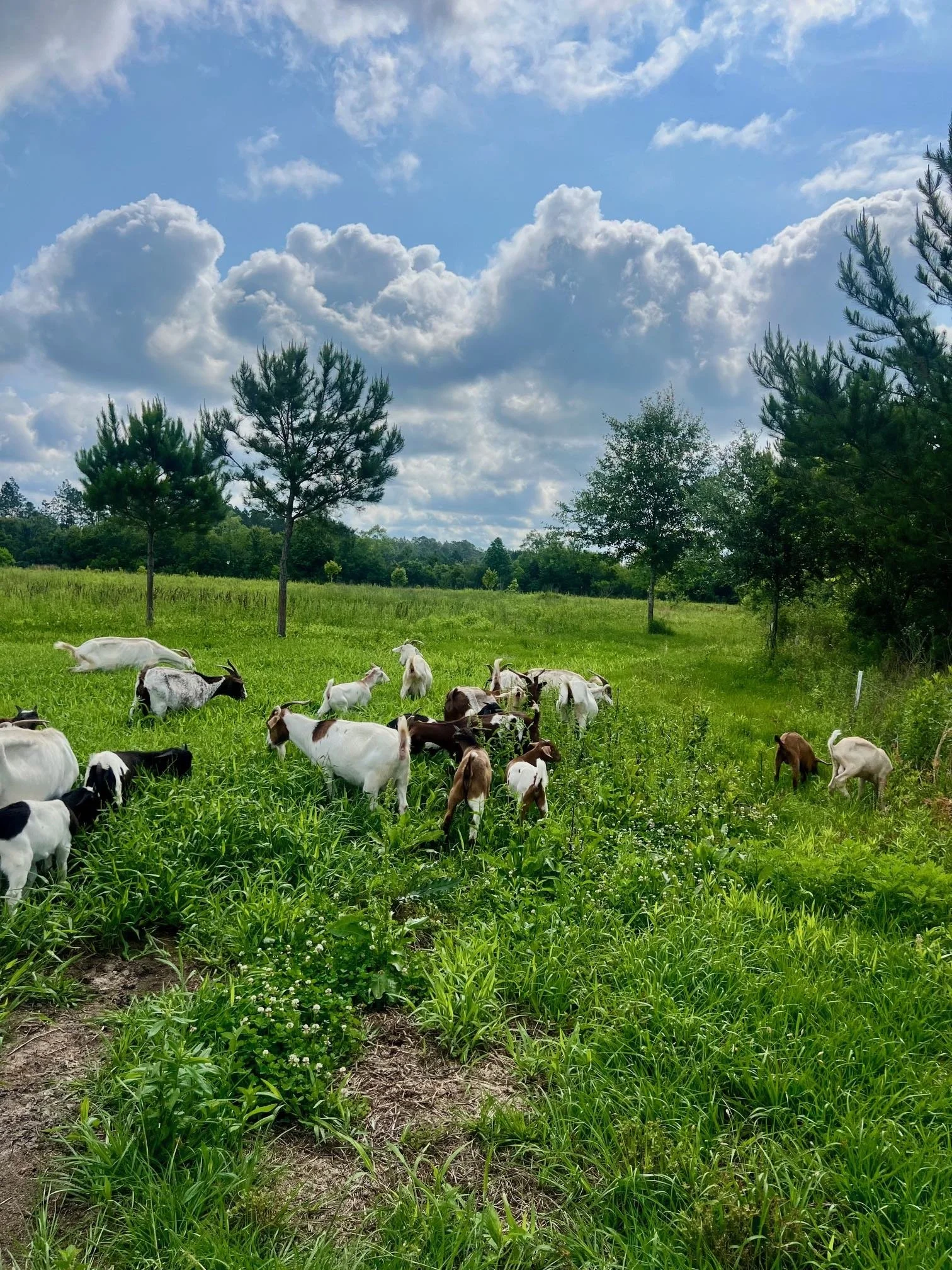
They also had some rotations on the edges of a few of our ditches, where they were eating so many of their favorite foods — privet, tallow, sweet gum, blackberry vines — and Grant was also thinning some trees and branches for them.
They were in the complete opposite side of the farm from their hoophouse during the heavy rains two weeks ago, so we spread out a bunch of old hay we had put their for the pigs last fall and their nighttime corral on a high sloping spot. They did great, but certainly would have rather had cover.
So this time, we worked them back towards the hoop house and that will be their nighttime corral for at least the next week or so while it continues to rain every day.
The kids are growing well and are getting close to when they could be weaned. I’ll aim to get a post up about the doelings available for sale soon!
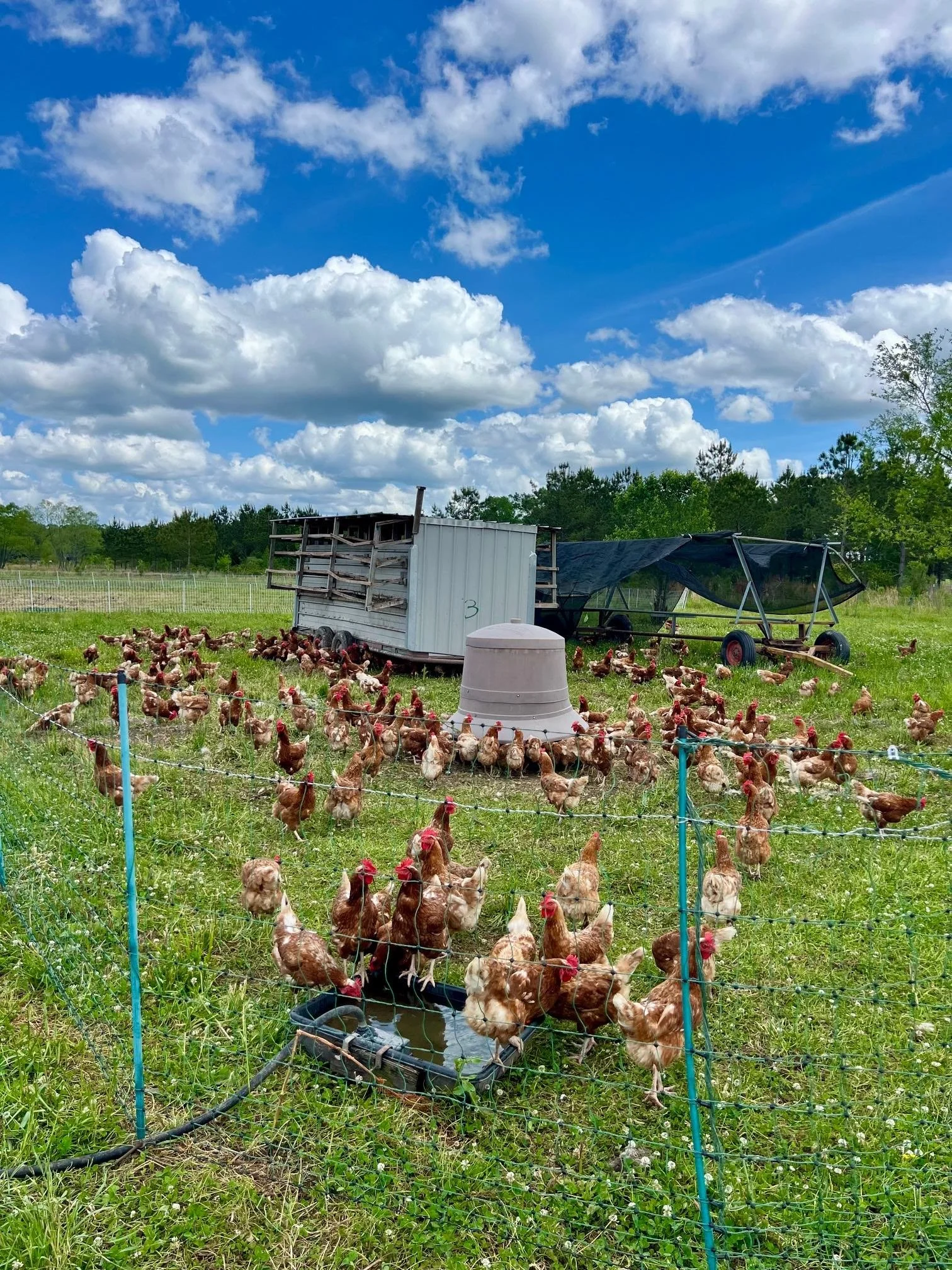
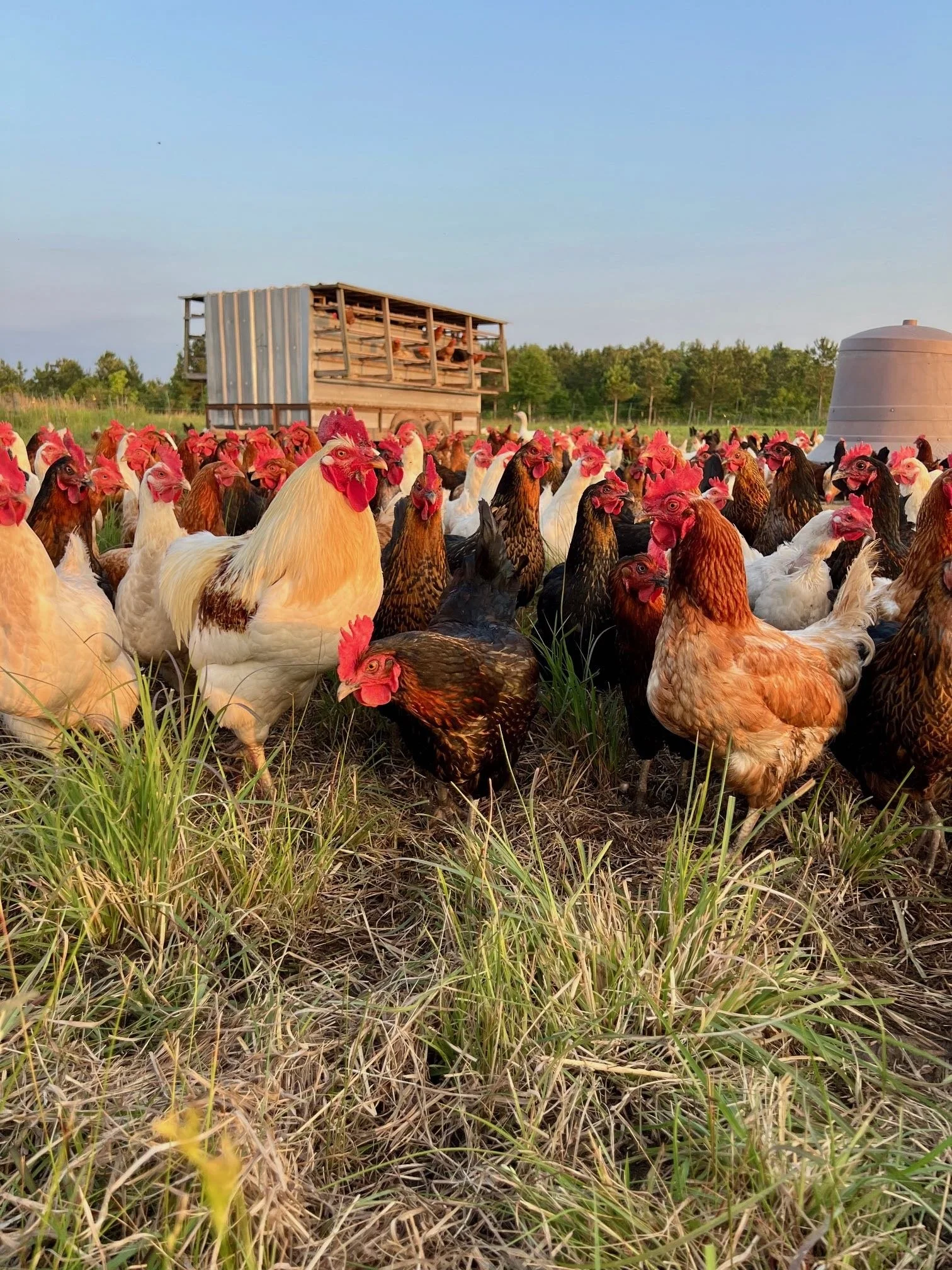
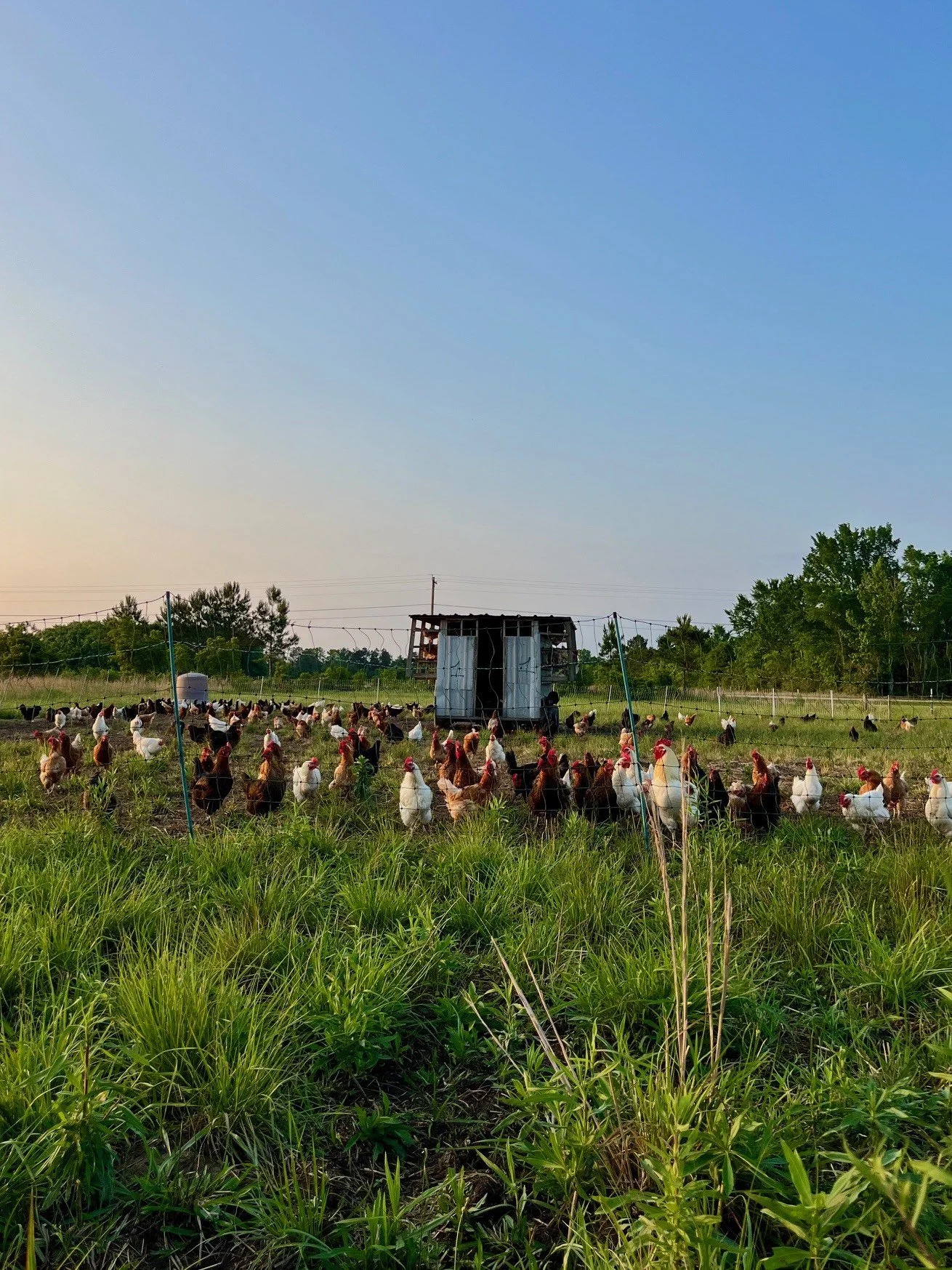
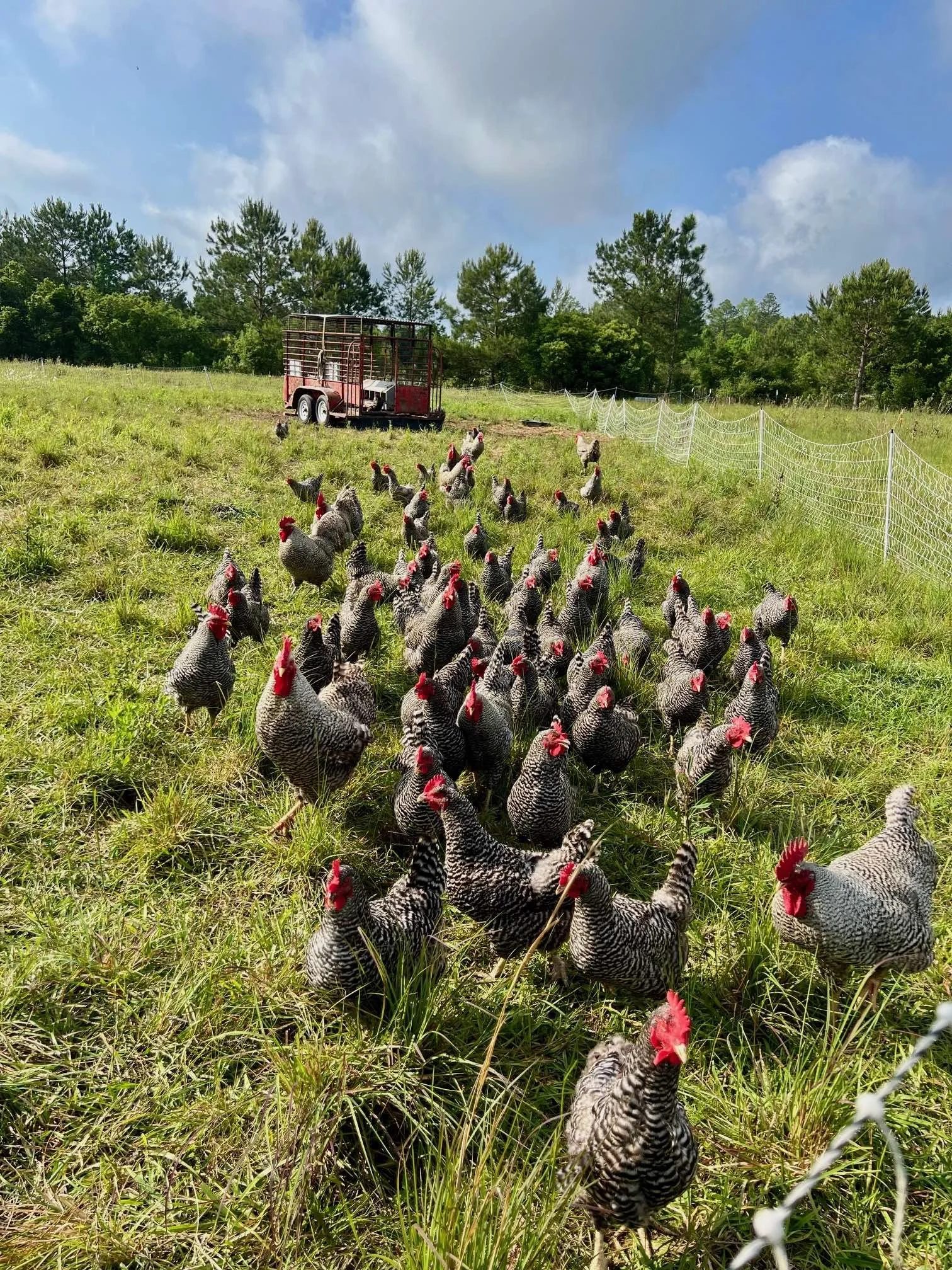
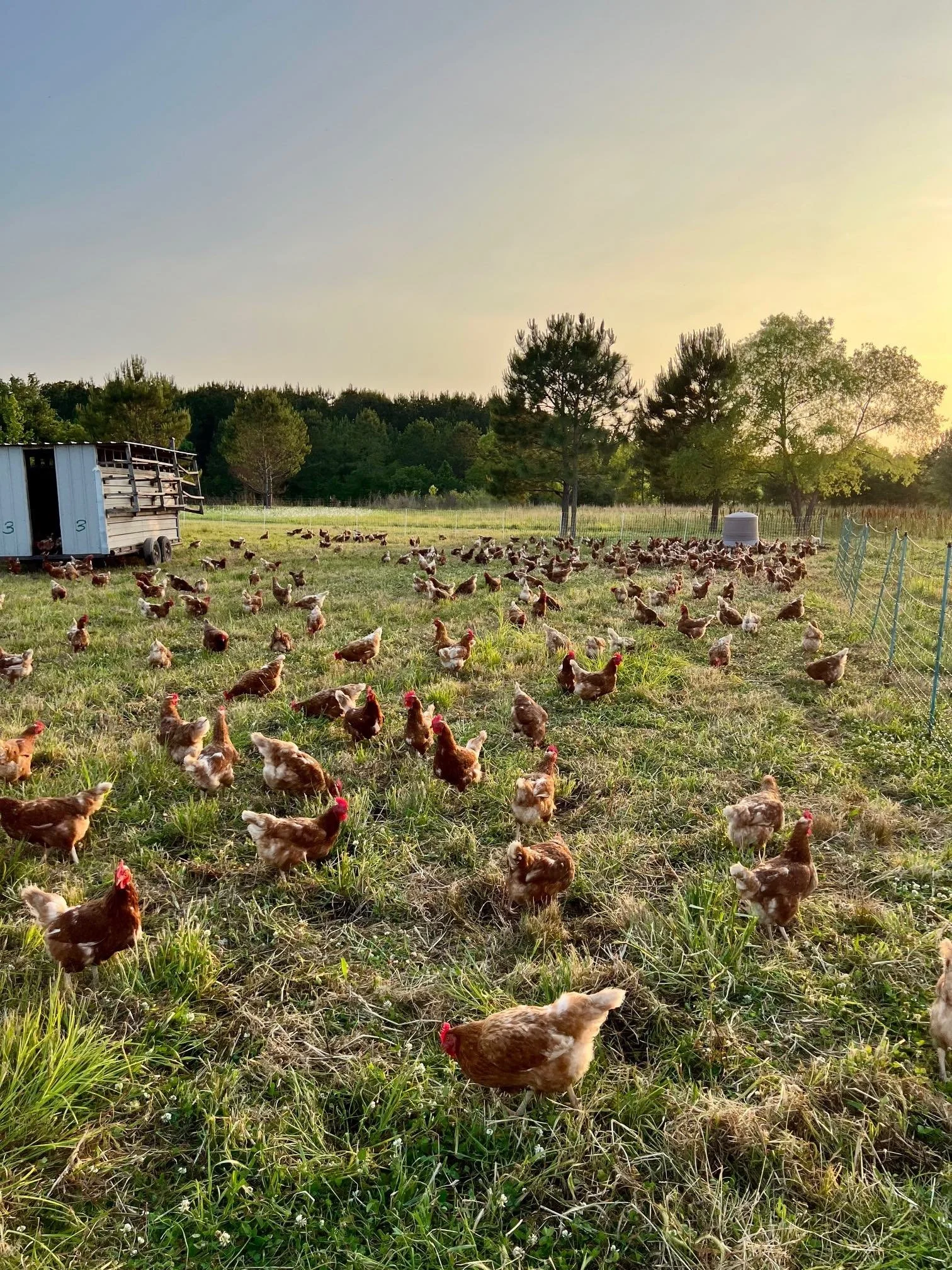
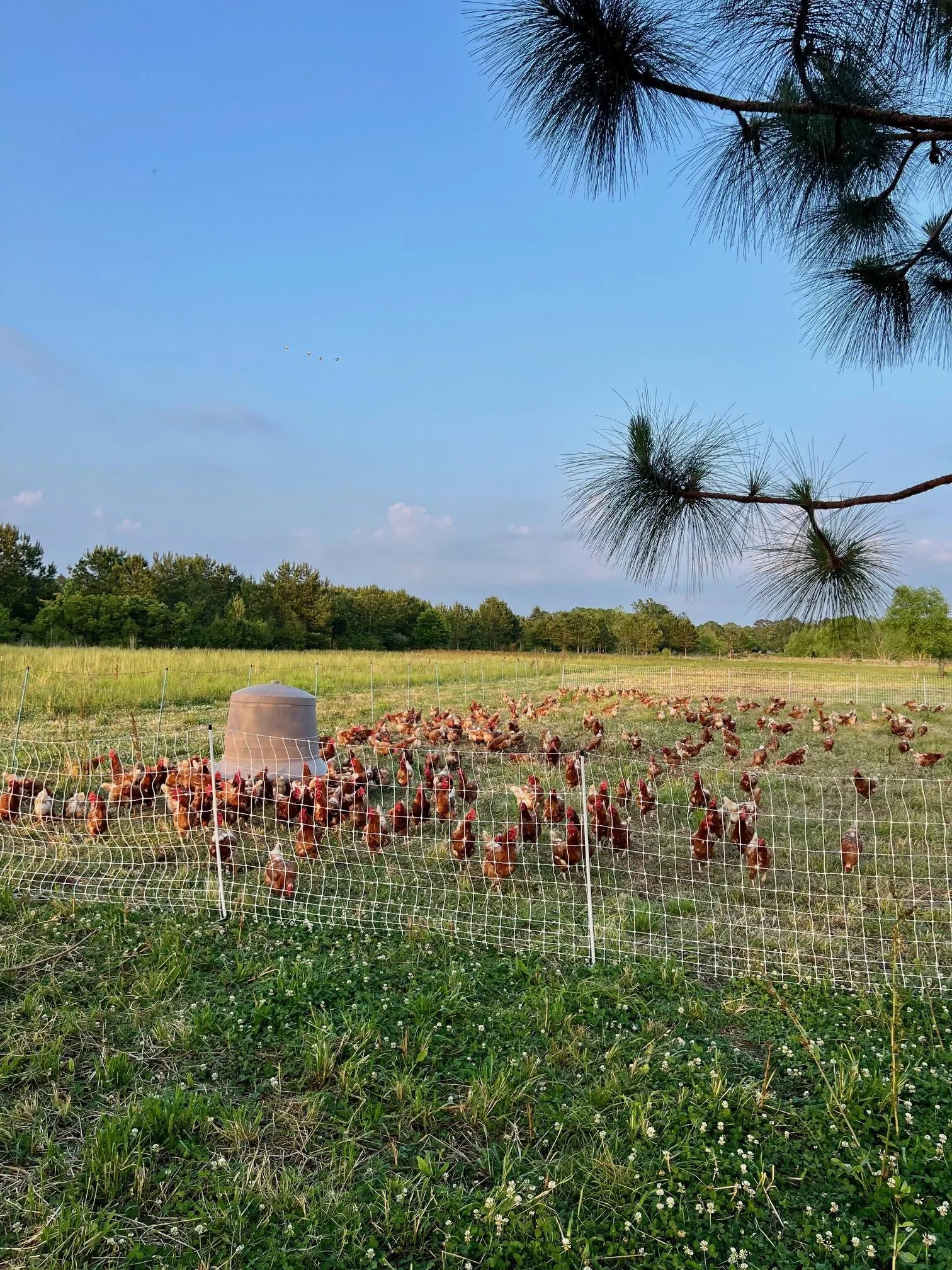

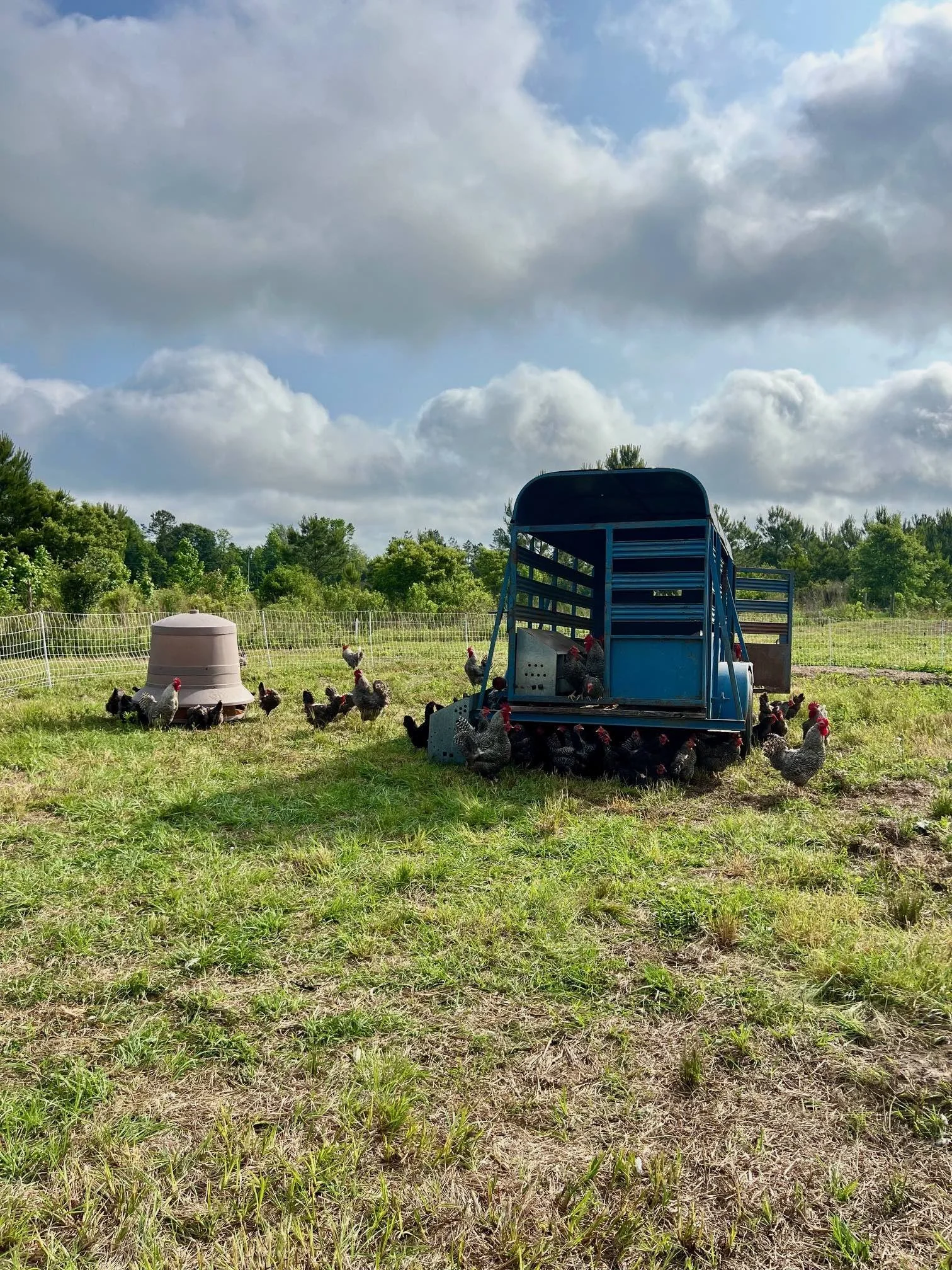
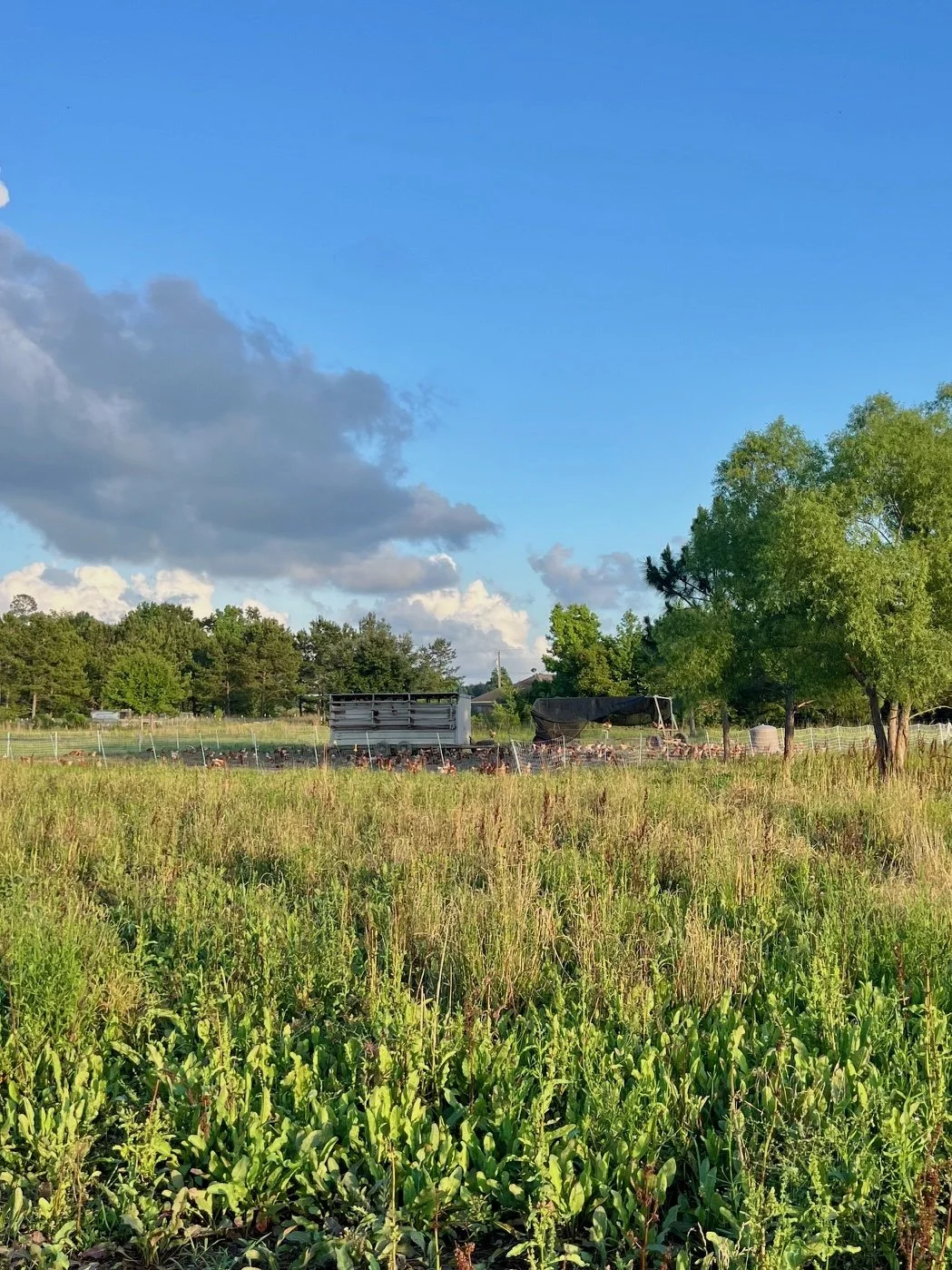
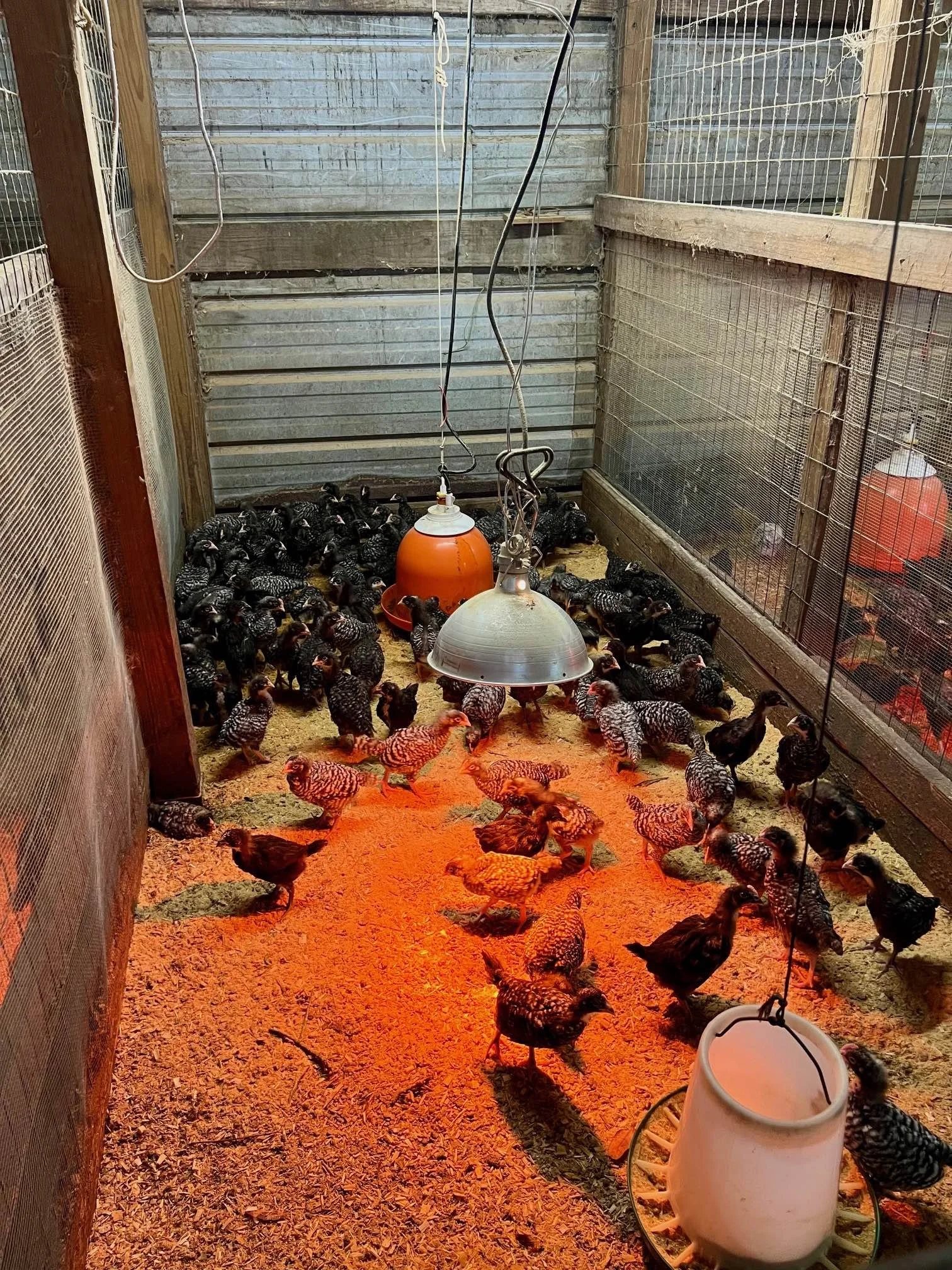
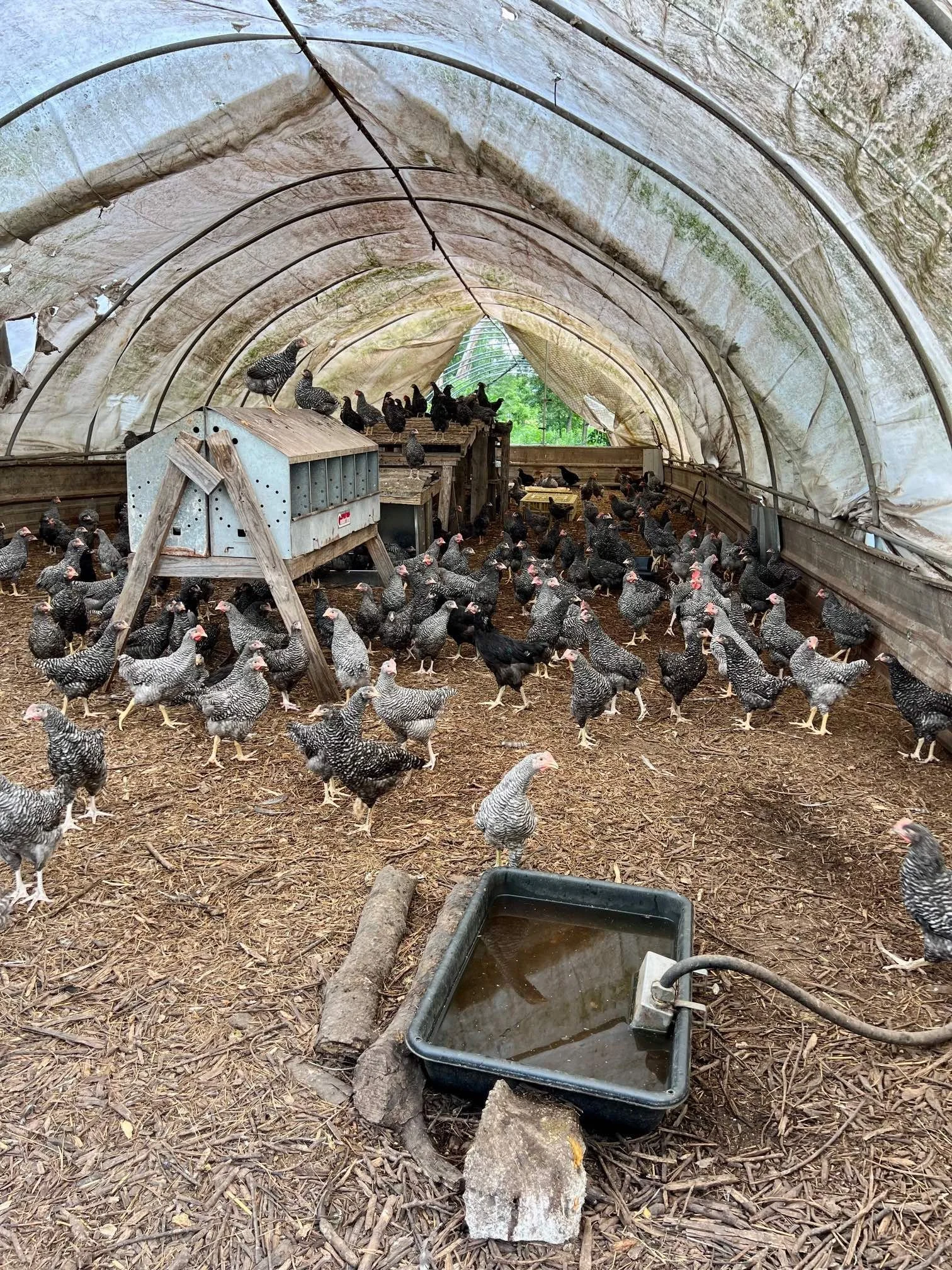
The chickens are doing fine and making their pasture rotations, but having so many egg layers on pasture in this weather is annoying, full stop!
The flocks have feeders that hold 1000 pounds of feed, so our usual practice is to fill it every 5-7 days as needed, using a large seed box on the forks of the tractor.
In this kind of rain, the fields are often too wet to do that — the tractor will rut up the soil too much or even potentially get stuck. So it’s bucketing feed daily and schlepping through wet fields on foot with a hand cart instead. Poor Grant is over it!
We park the chicken flocks right near field entrances and bed them down with lots of mulch and hay for a few weeks in the winter, anticipating potential January rainfall (it’s our fourth wettest month on average). The forage isn’t really growing much then anyway.
Had we known how this year would play out, we could have kept rotating them in the dryer winter months and bedded them down for May.
If money and resources were no object, I think we’d have a high tunnel for each flock and be able to move them back to it in periods like this, letting them rotate in a wagon wheel around it. Maybe someday!
And both the March and April hatches of chicks are continuing to do well and get their stripes. The older group is in one of our hoop houses and we’re getting ready to move the younger group into a different hoop house. They’re set to start laying in August and September.