
January on the Farm: Pig Moves & Pork Harvests, Gestating Goats, Hatching Ducklings, Hay for Chickens, Bale Grazing Cattle + Temperature Swings & Downpours!
January can sometimes be a tough month here with massive rainfall (and soil and forage less able to soak it up than in the summer months) and major temperature swings.
We had that and some very frosty mornings this month, but we made it through unscathed (all animals and water lines!) and it very much feels like spring is on the horizon now.
We have one last pork harvest coming up and then our pig focus will be entirely on the group of pigs born in October growing out for summer, the goats are about to start kidding, we’ve got ducklings we hatched in the brooder, chickens all over the farm and some rearranging and new coops to build, the small cattle herd bale grazing and cover crops almost ready for them to devour.
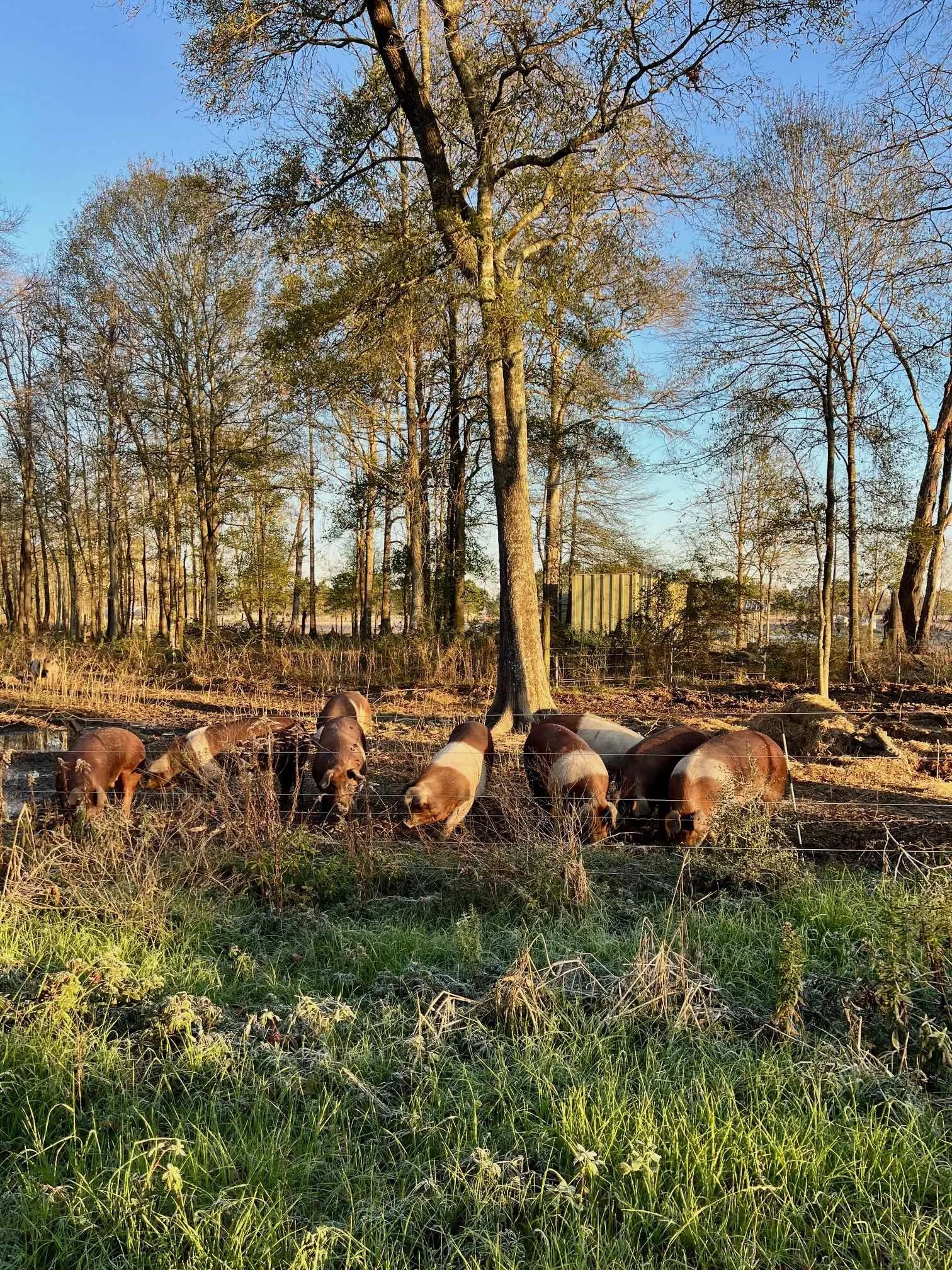
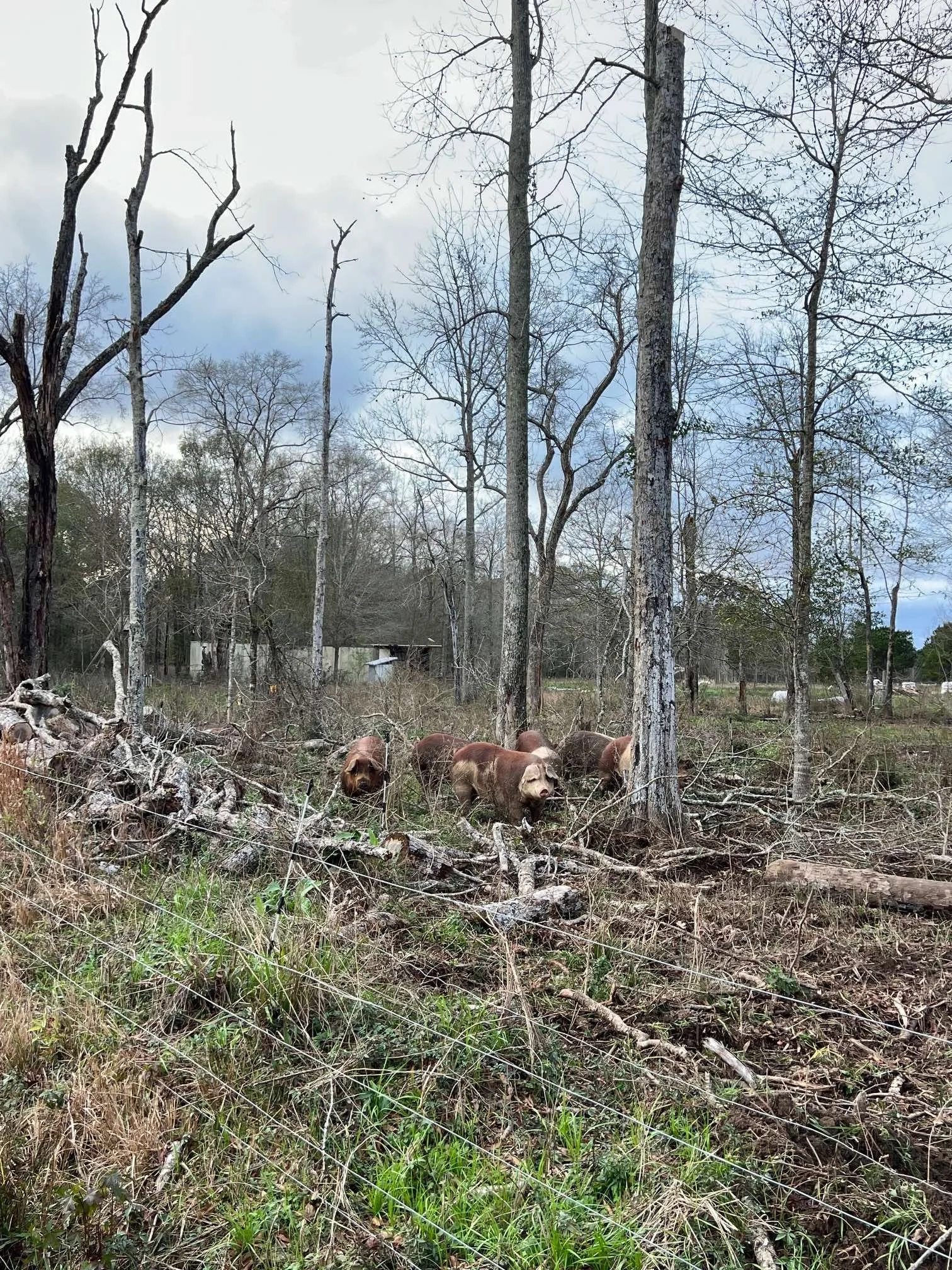
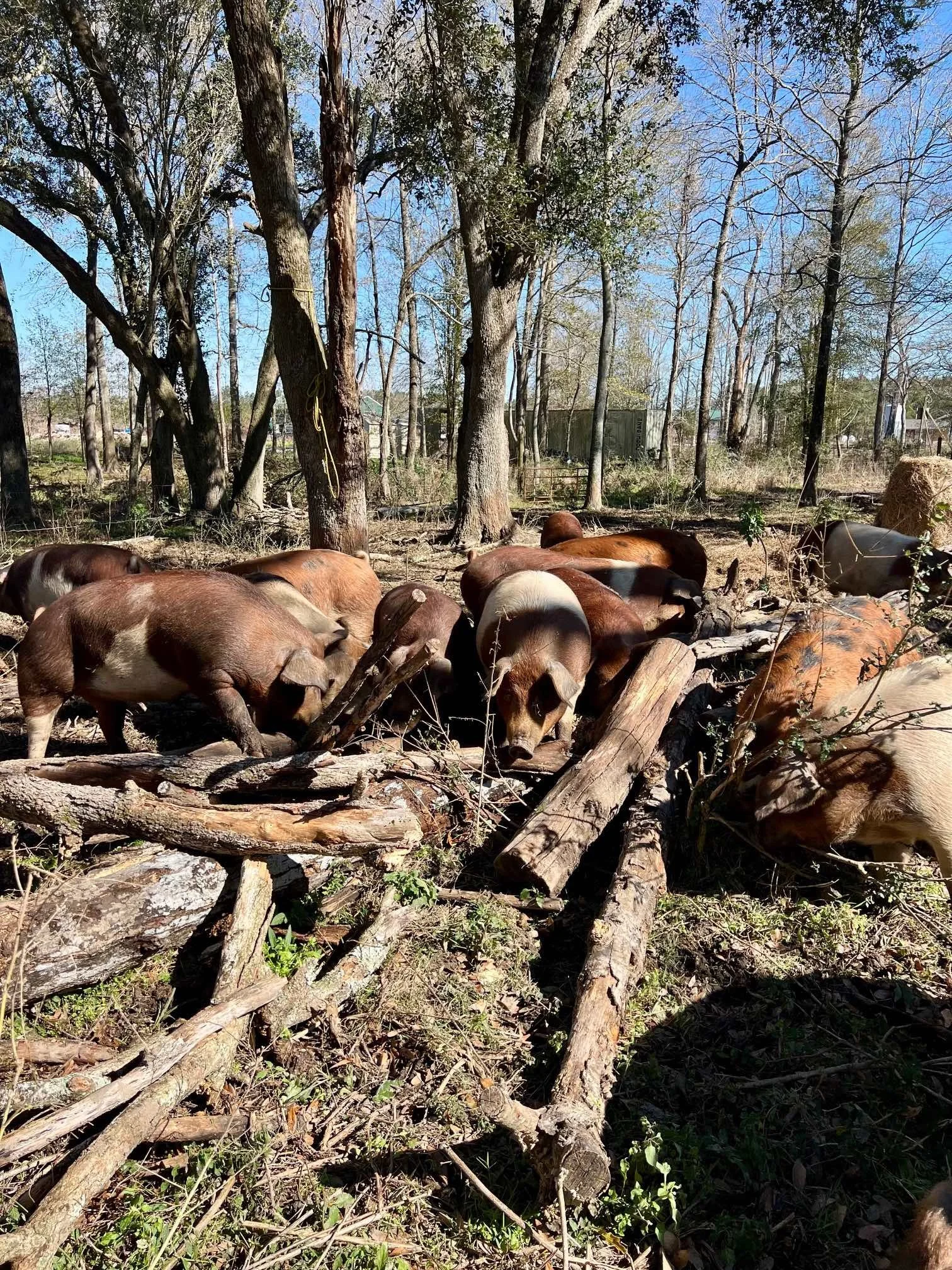
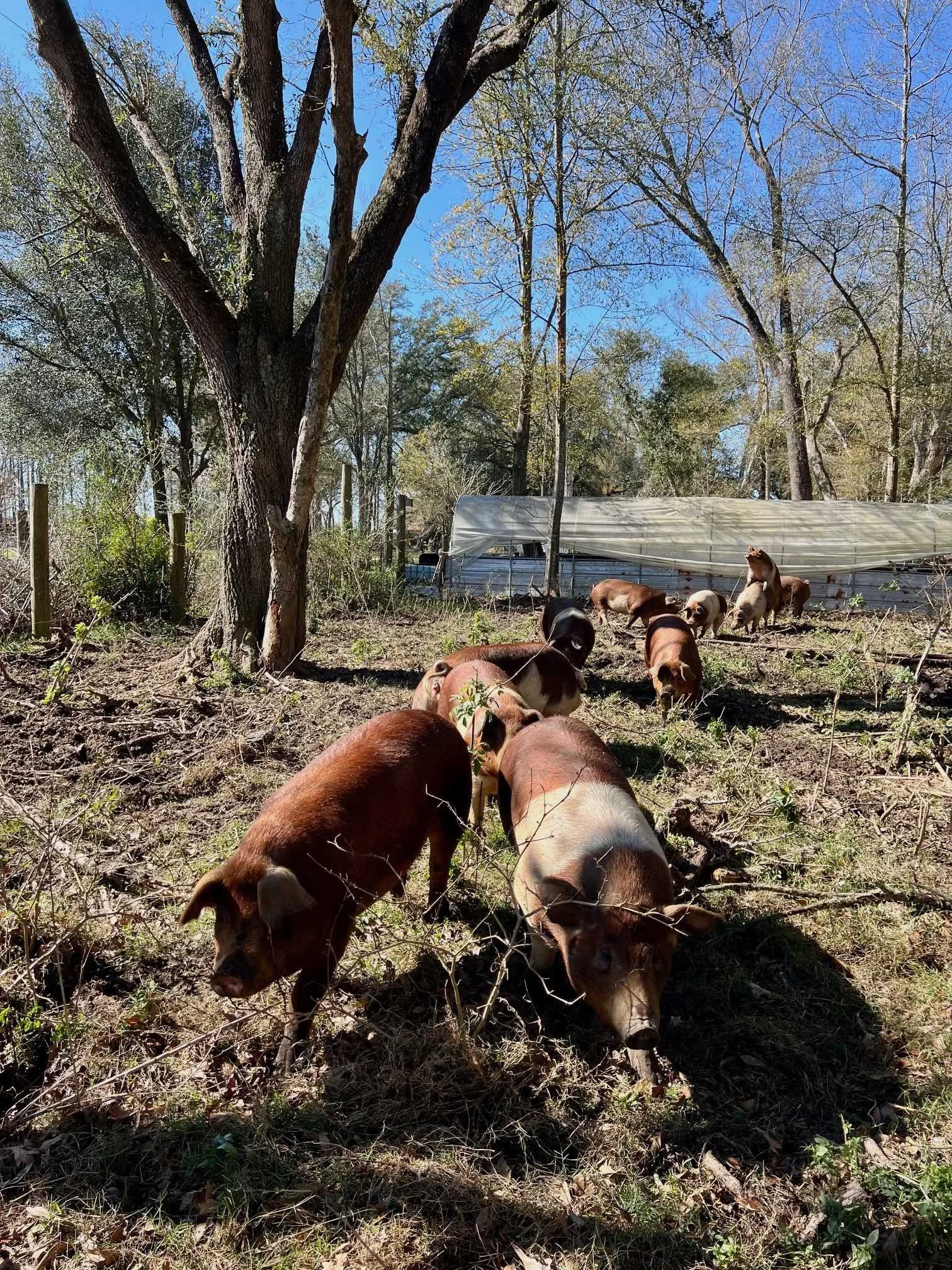
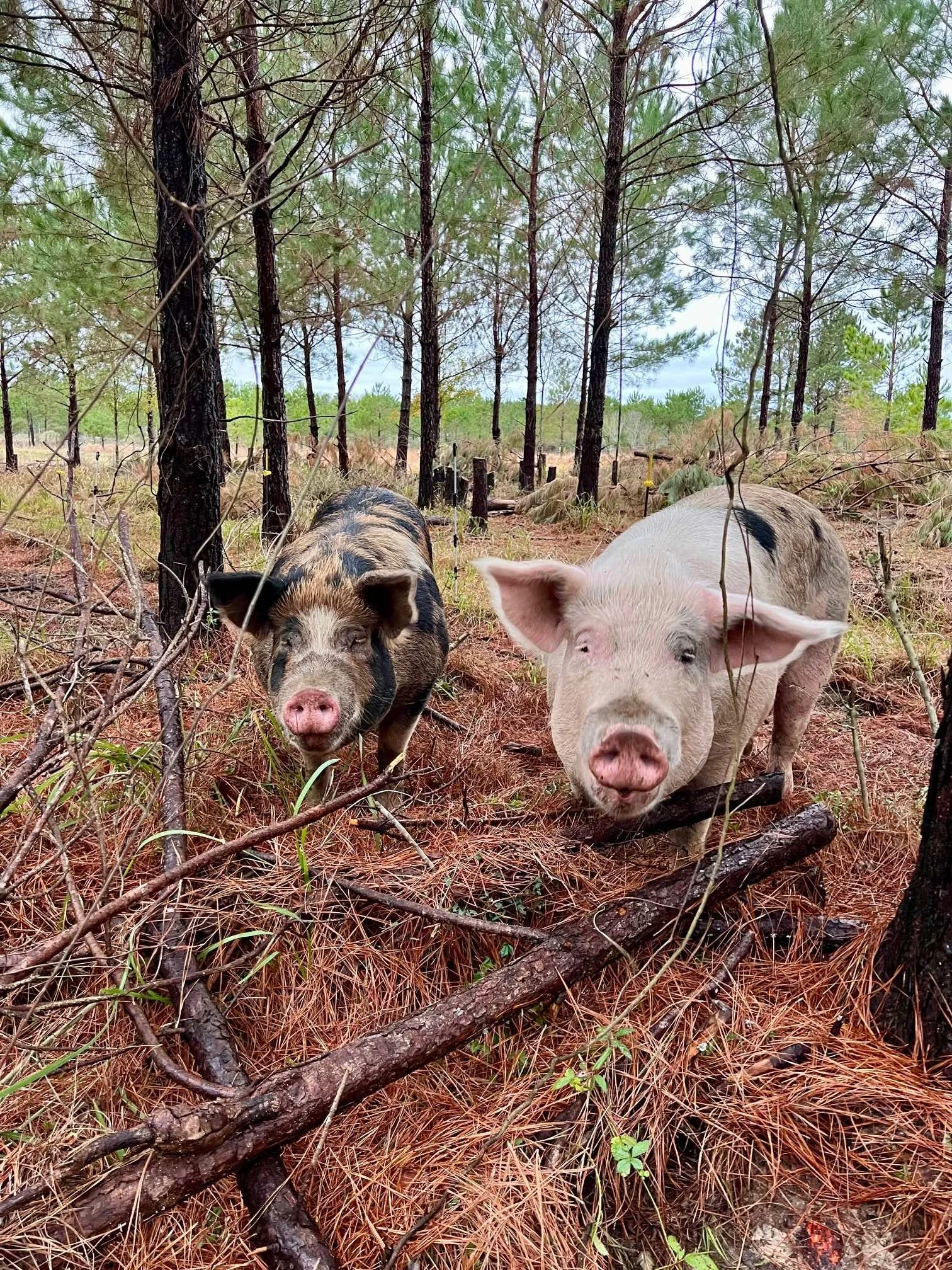
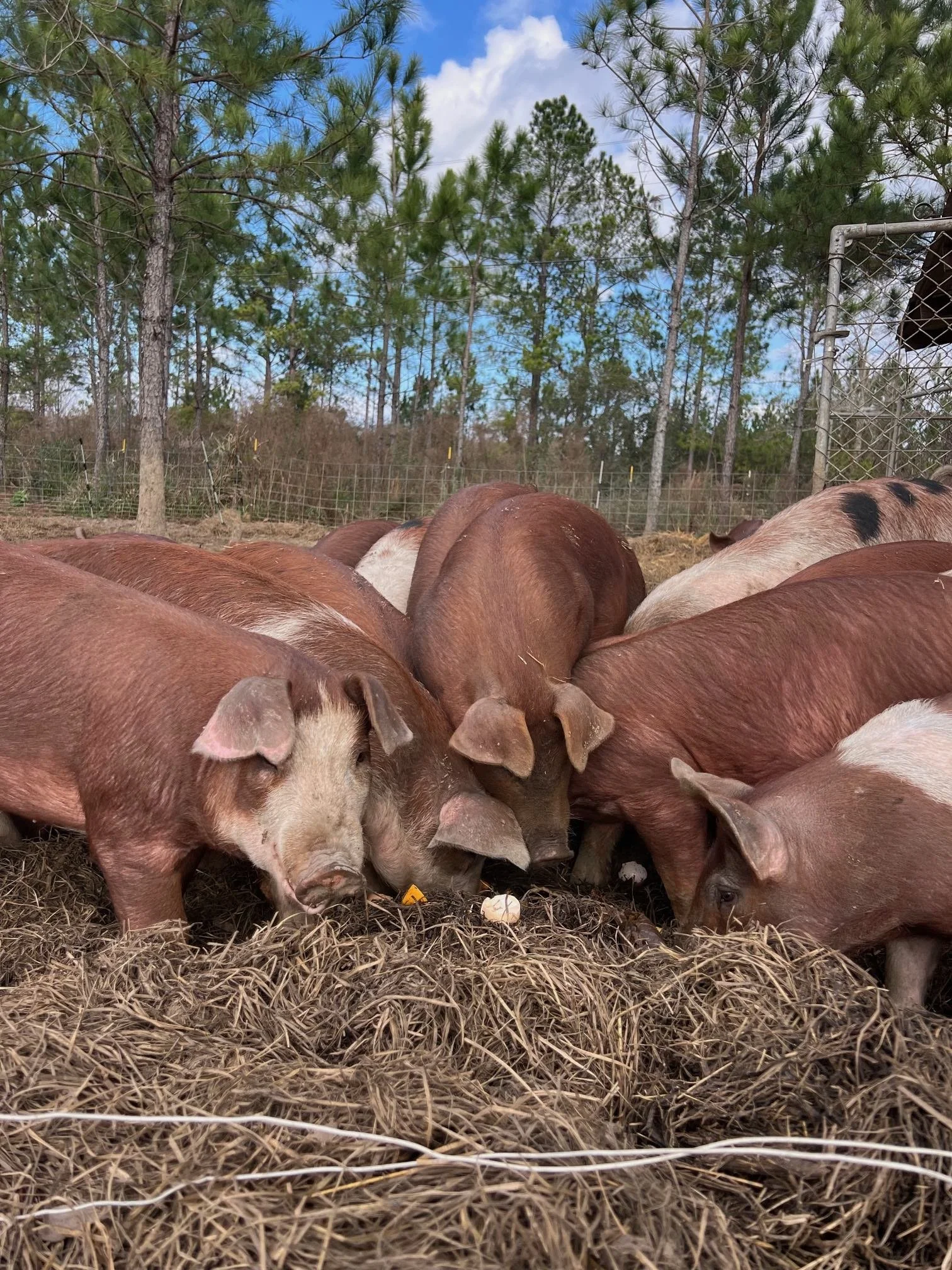
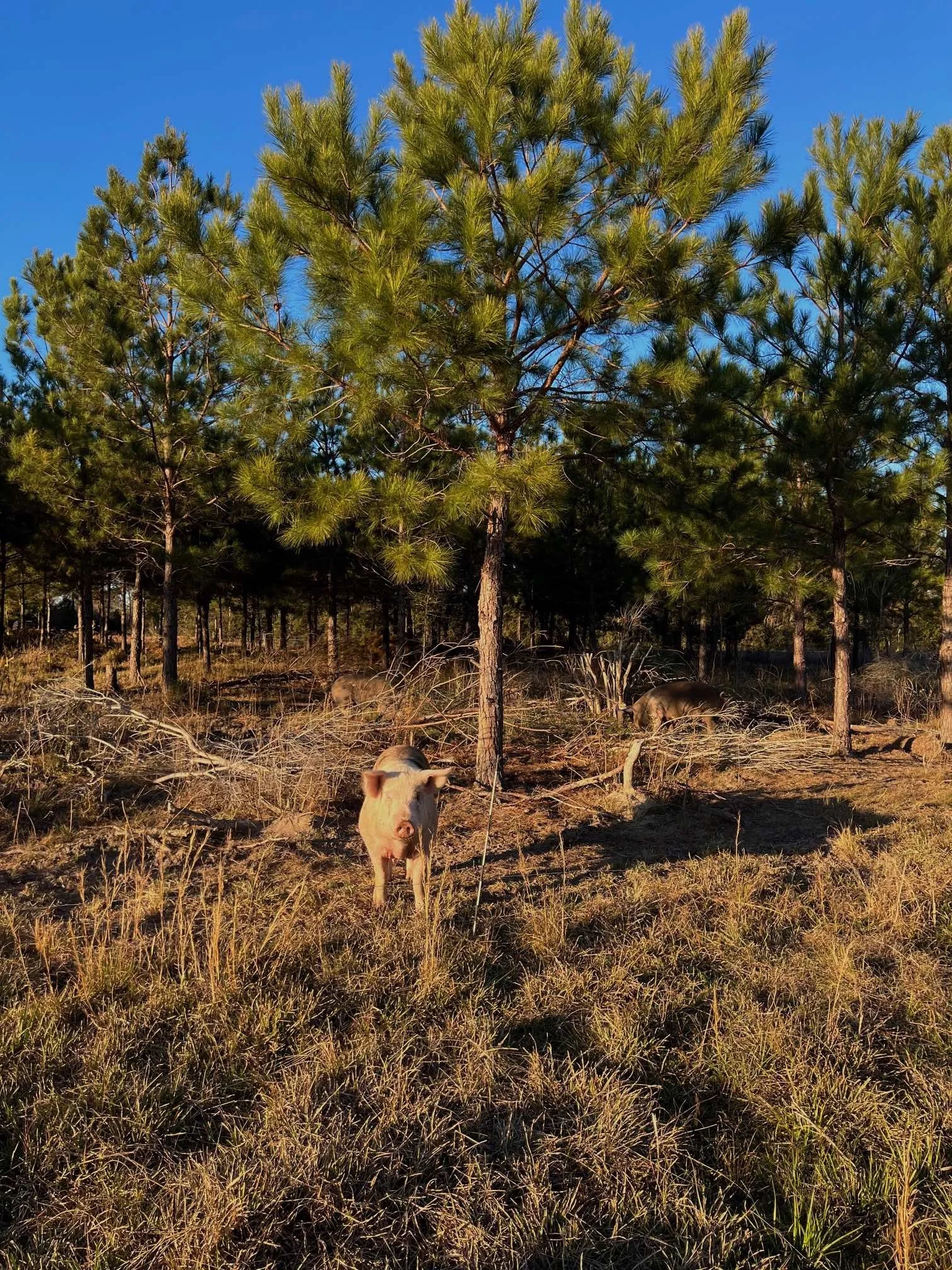
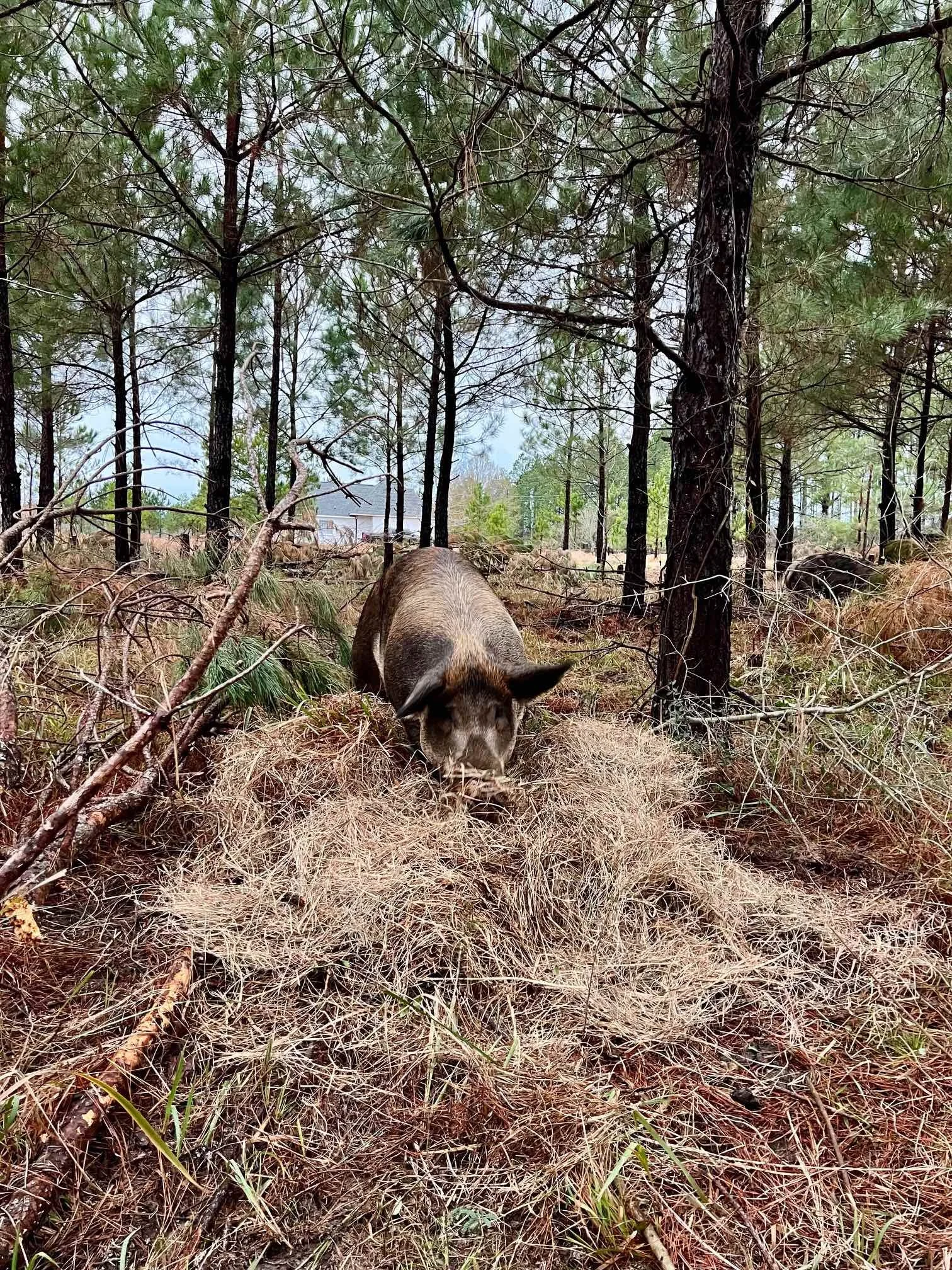
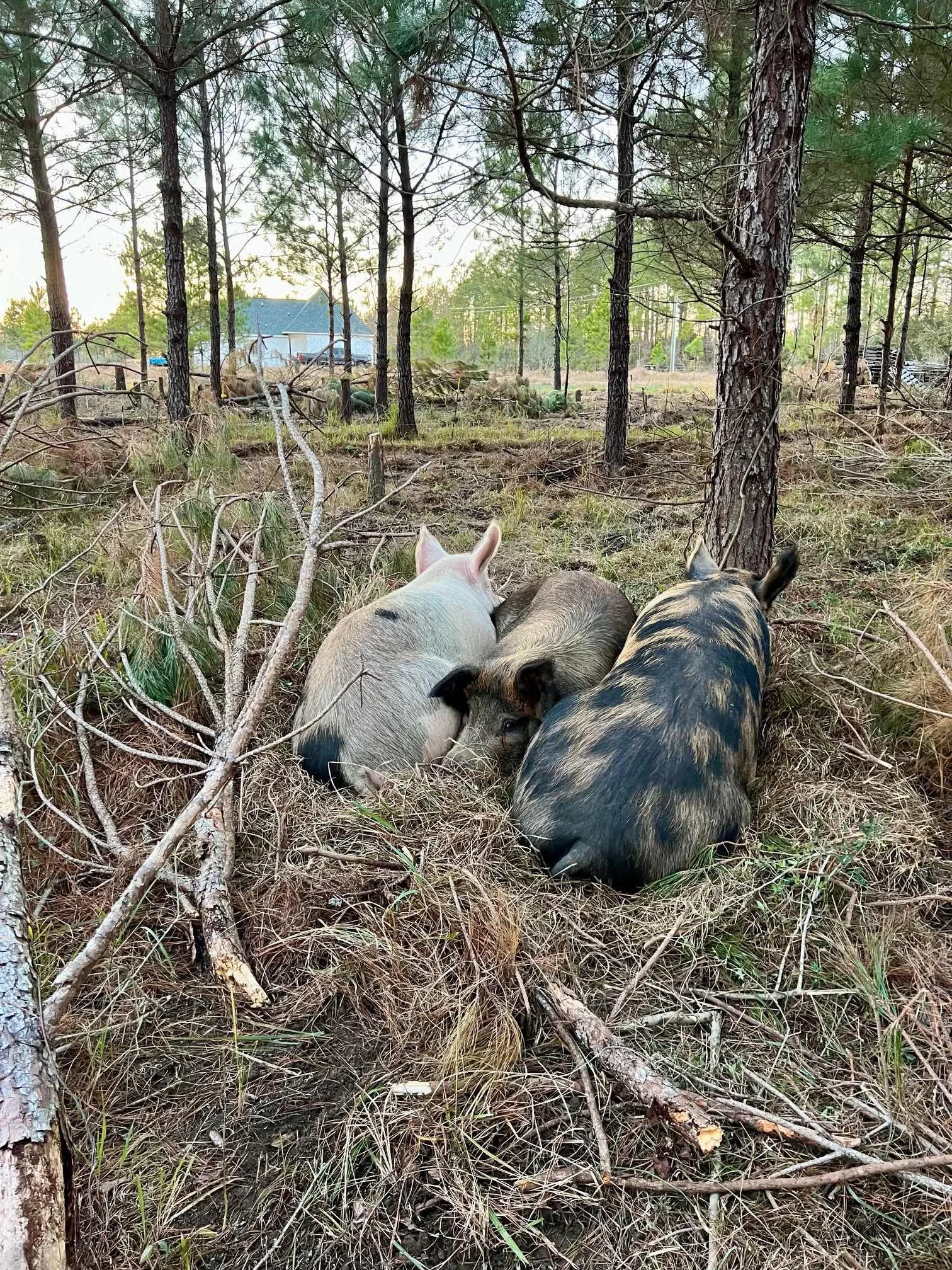
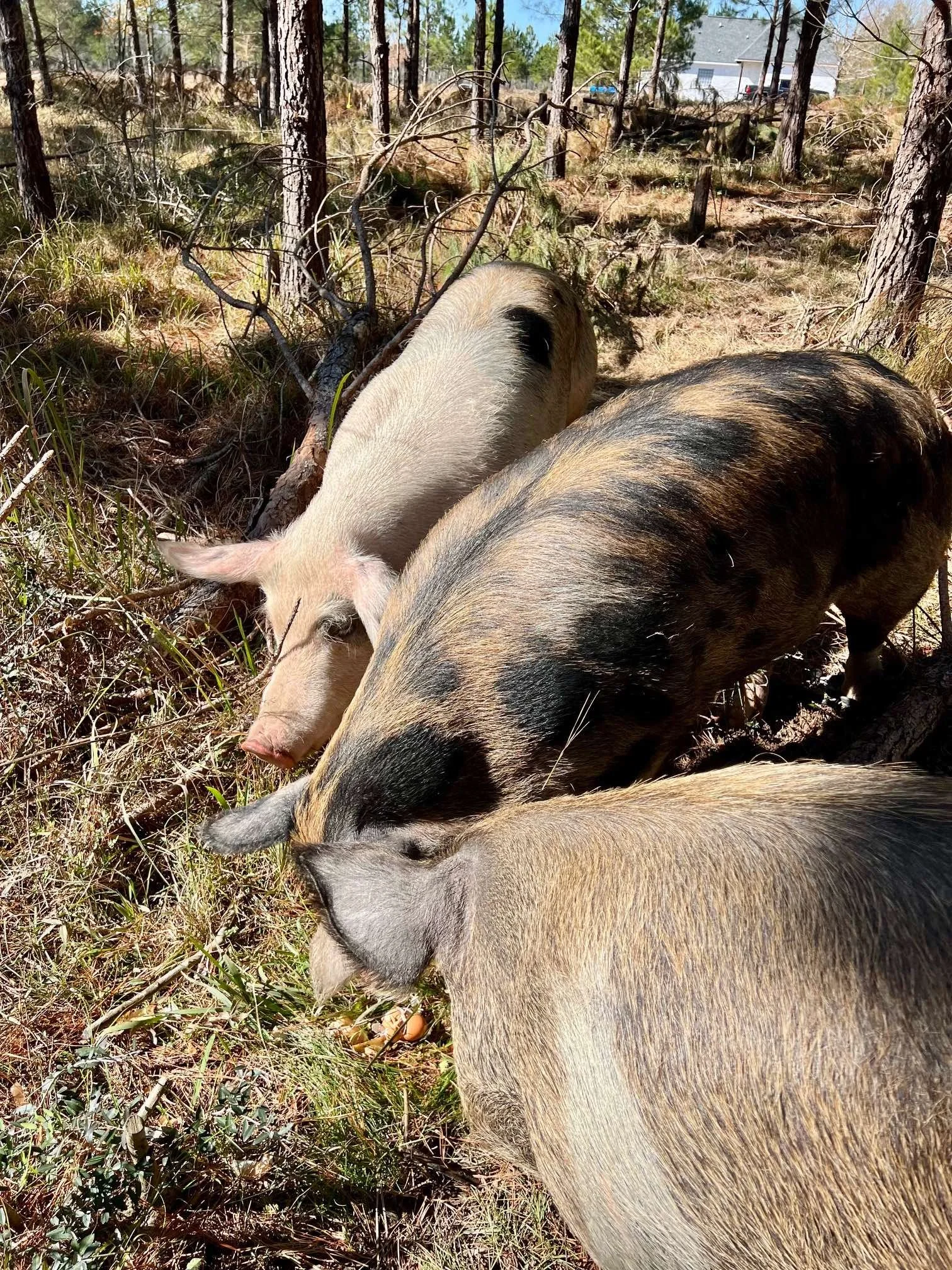
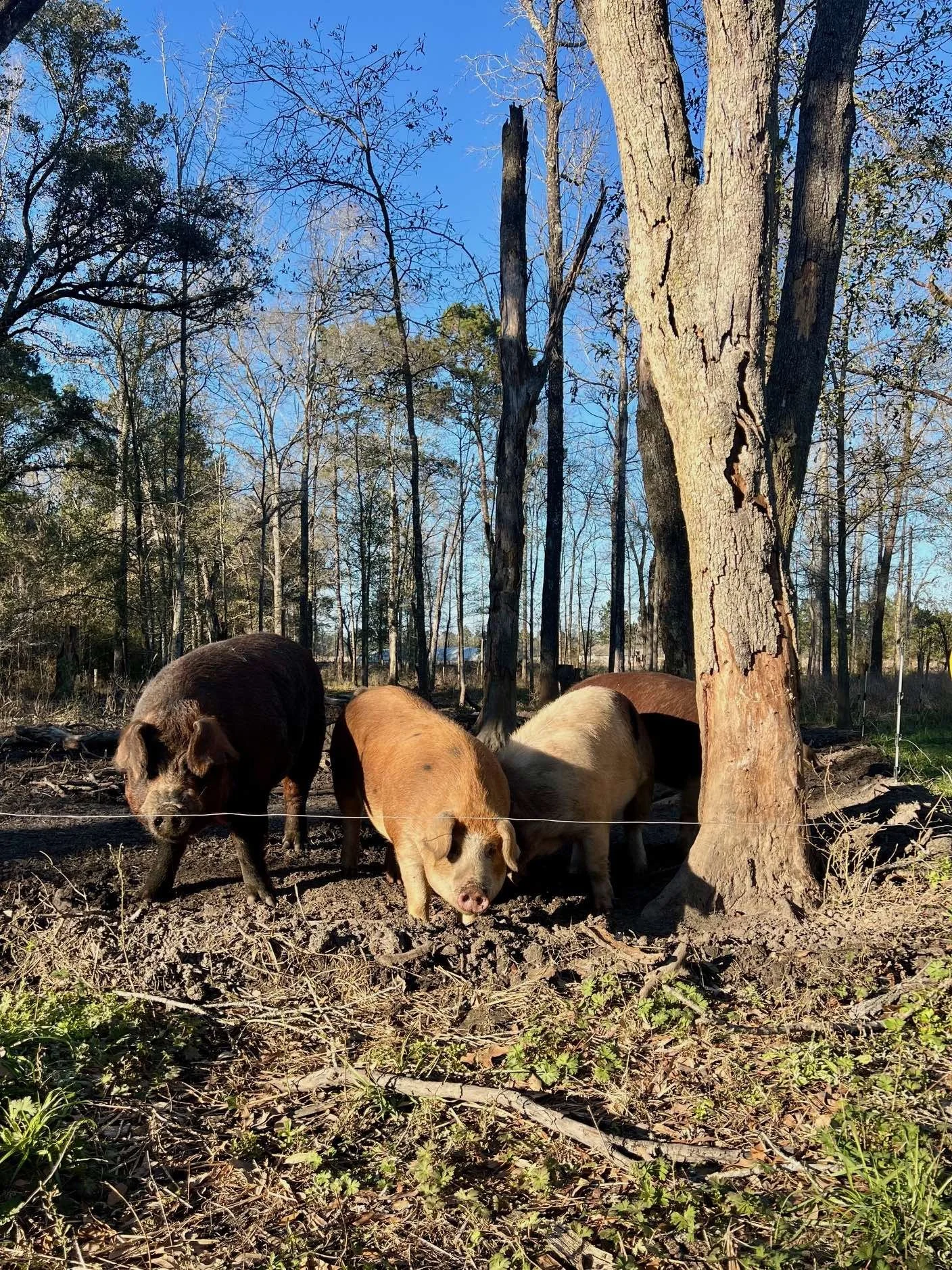
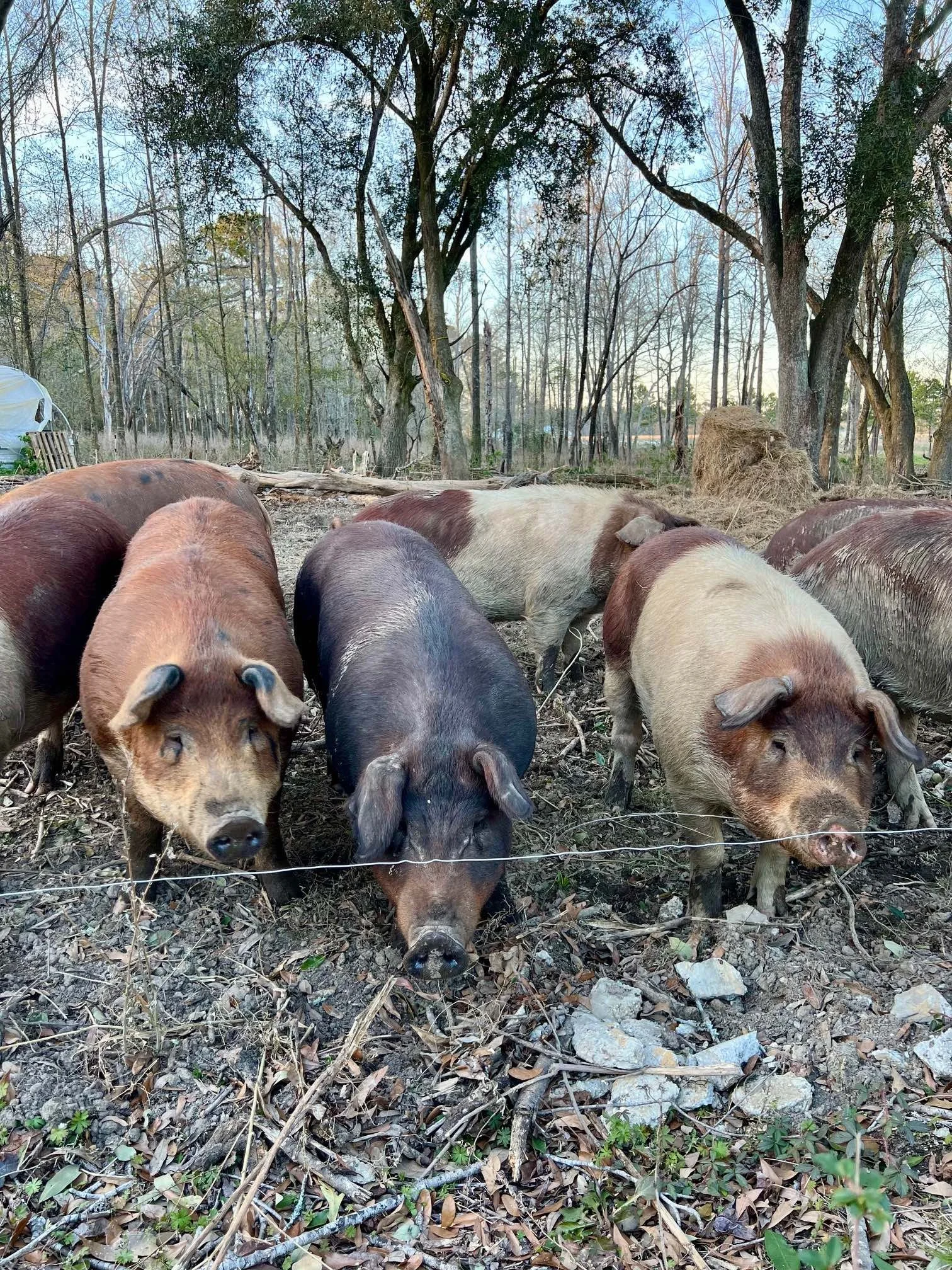
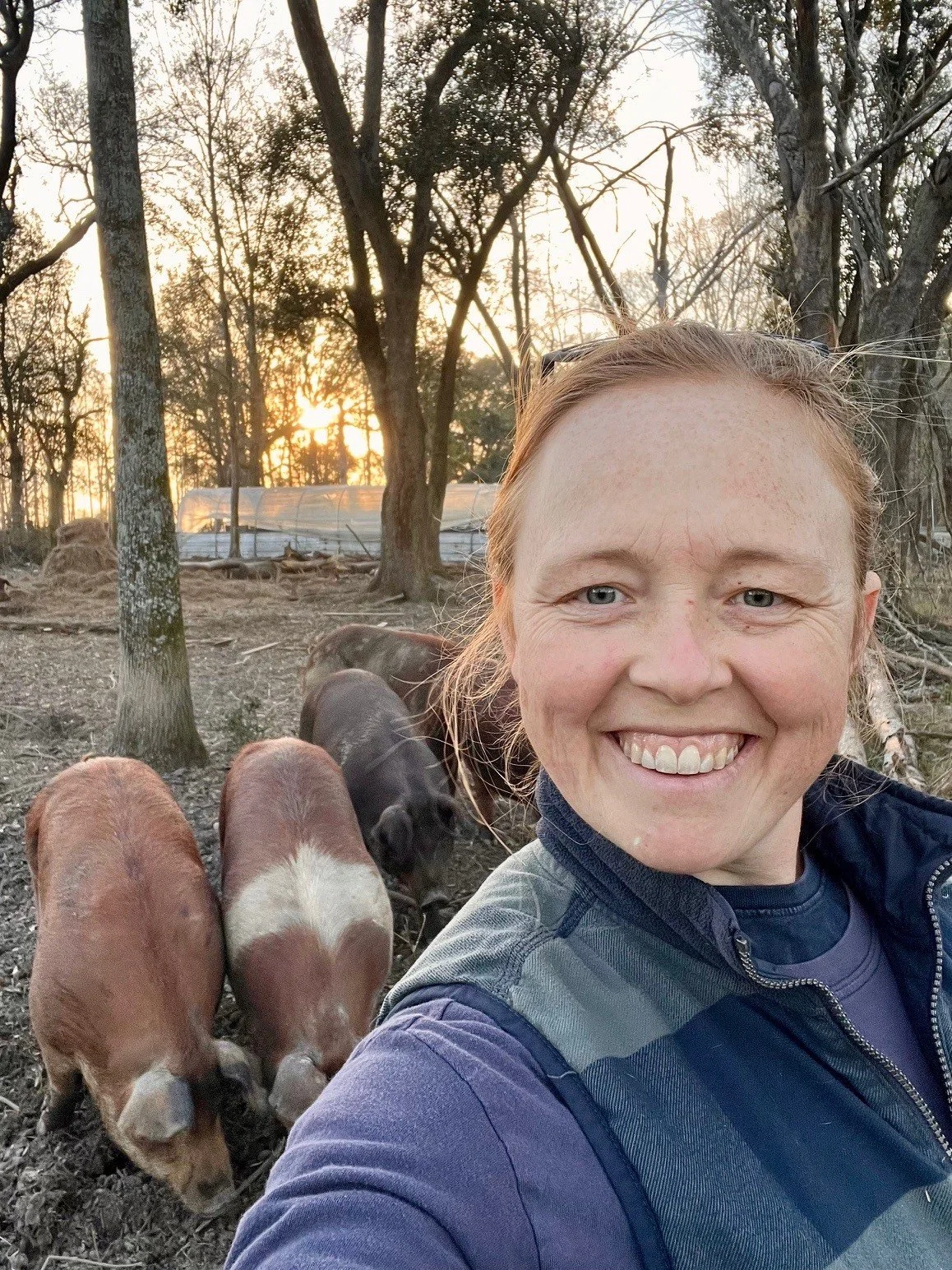
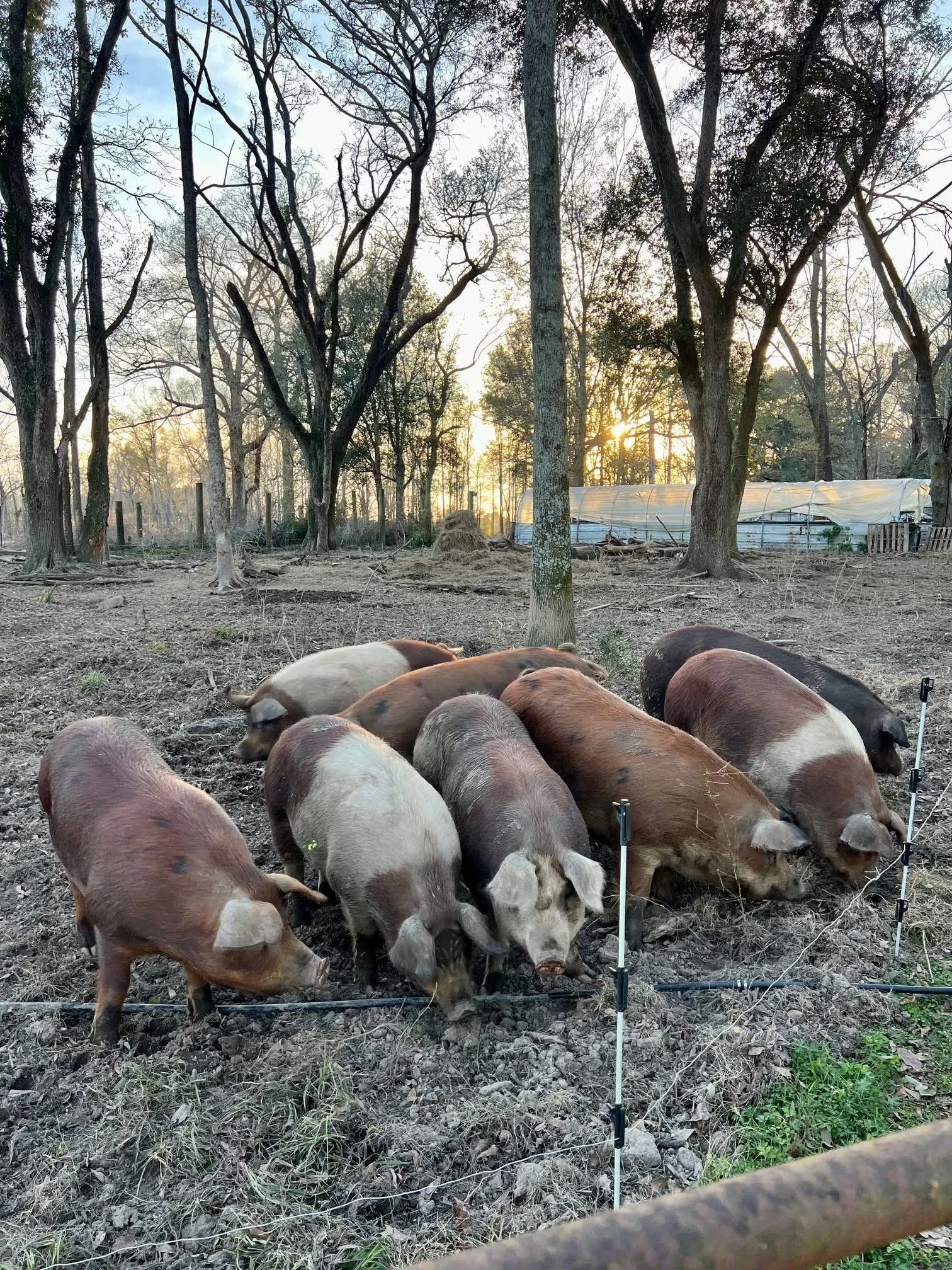
Winter in Louisiana is a lovely time for pigs!
Unlike the hot summer months, where they need so much water (to drink and to wallow in to cool off), cool weather gives them an extra spring in their steps and even when it gets as cold as it typically get here, they burrow in hay, build themselves nests and snuggle in the most glorious pig piles to stay warm. Their thick fat layer certainly helps in insulating them, too!
The three gilts we kept back as future mamas should be at least halfway through their gestation now, for piglets expected as early as the end of March. They’re still with their suitor, our Duroc boar, but we’ll swap him to another group of three gilts this week to breed for June piglets.
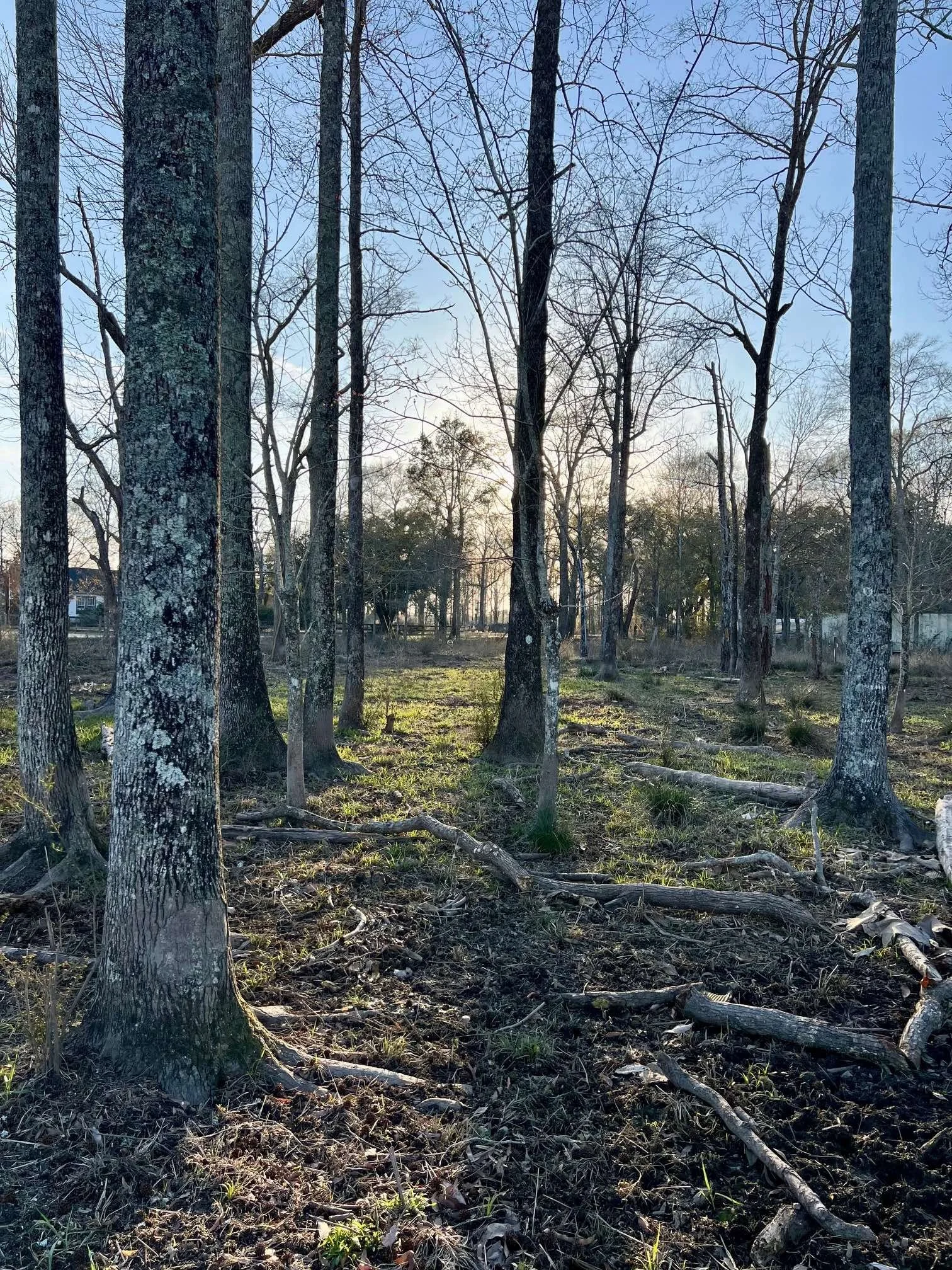
The finisher group (ie the rest of the pigs in these gilts’ group that we are not keeping as breeders) made their way through several sections of wooded areas at the front of the farm after spending the fall rotating through the opposite corner of the farm.
There’s some really low areas in the sections they worked their way through, so when we had our two big rainfall events in January (4.95 inches on January 9th and 10th and 5.1 inches on January 24th and 25th), we were happy they had the higher slopes of those sections to vacate to!
We sold some of the April piglets as weaned piglets, brought the first group to harvest in November, brought another group at the end of January and have the last of them scheduled for this week. This is our first group of hogs sired by our Duroc boar and they are really gorgeous pigs and that make beautiful pork.
But the bitter parts of the bittersweet feelings that comes with bringing them to harvest never goes away though. And I don’t think they should. We’re also retiring our three sows on this harvest, too, which in some ways is even harder than pigs destined only for pork from the beginning.
The sows have been having a last hurrah in a fairly thick pine section towards the end of our property. It’s been their post-weaning paddock after two of the last three litters and they seem to have a great time over there. One sow was adamant about making a serious nest before the big temperature drop last month. It’s really a special thing to watch an animal be able to fulfill her instincts and be connected to her environment. That’s something a bored pig on slated concrete floors in confinement never gets to do.
We’re really proud to provide such quality pork from pigs who lived good lives doing all kinds of other things that pigs in confinement never get to do — like root through the soil, forage and nibble on everything they root up, bask in the sun, snuggle with their litter mates, frolic around and do zoomies for no reason at all. But the reality that something dies for us to eat can still sting and be jarring, even all these years in.
Even if it can be painful, I’d rather know the animals that I eat than not. And being grounded in that reality and sending out gratitude for them makes meals and just the experience of being alive more meaningful, if you ask me.
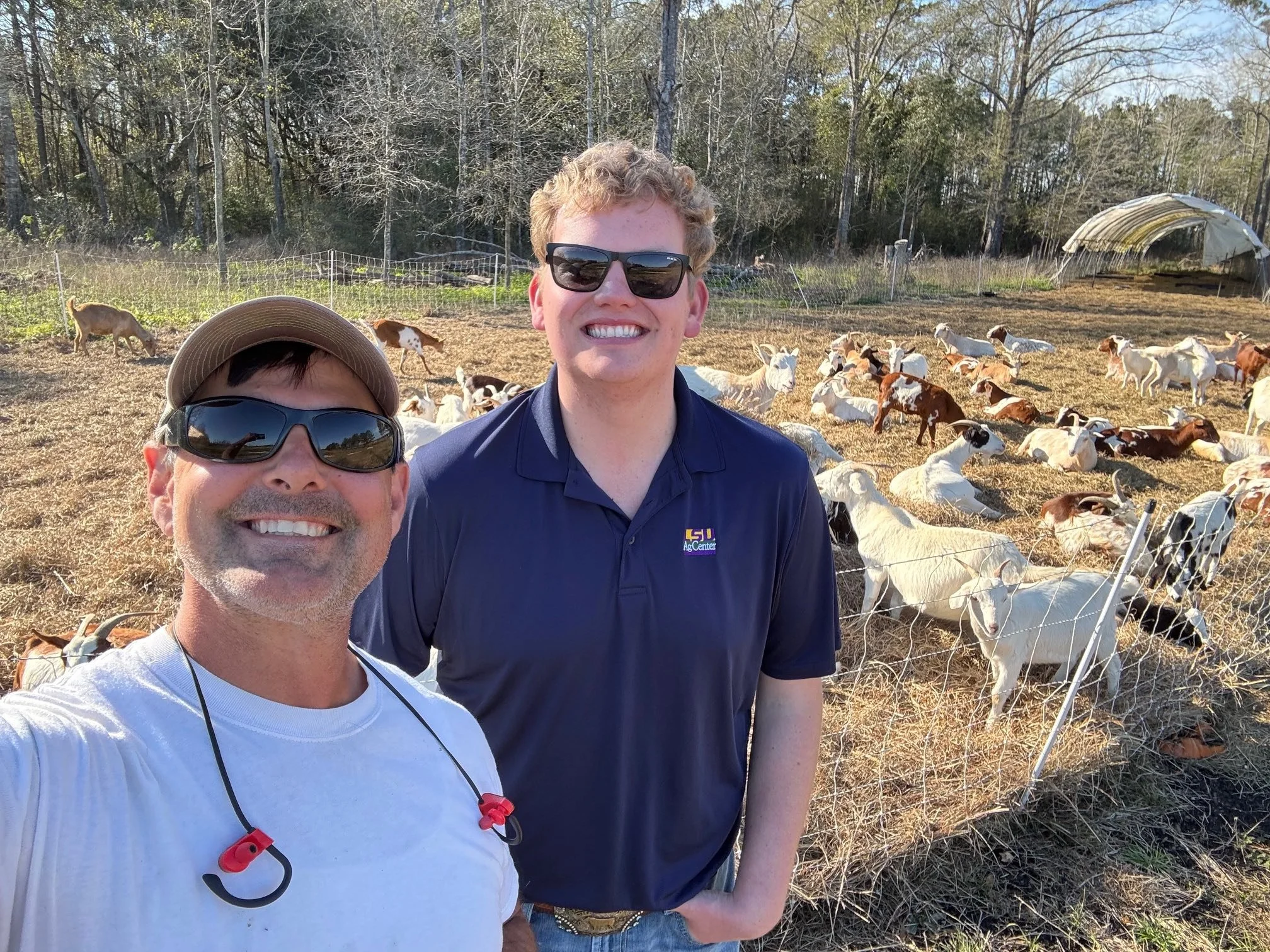
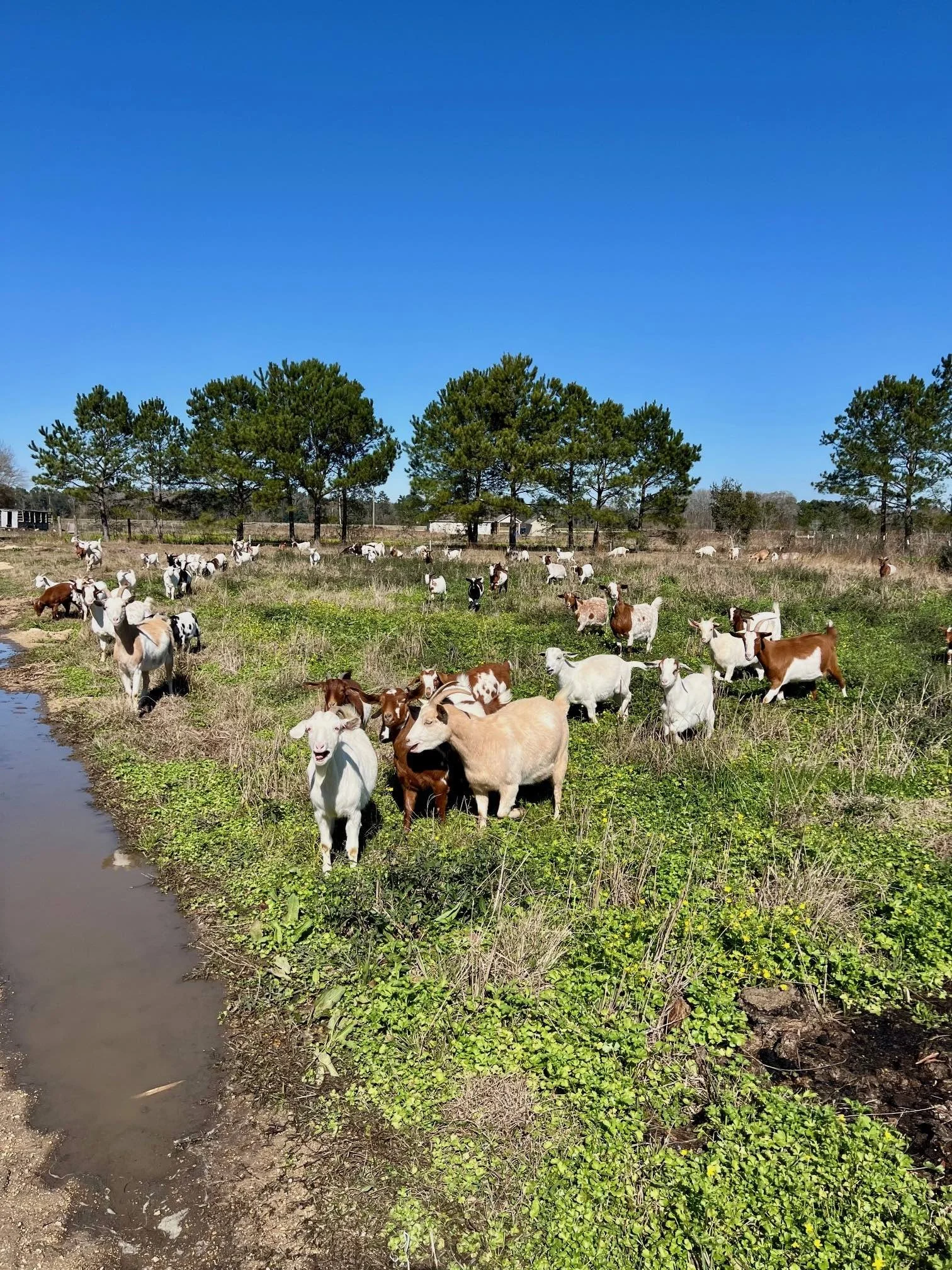
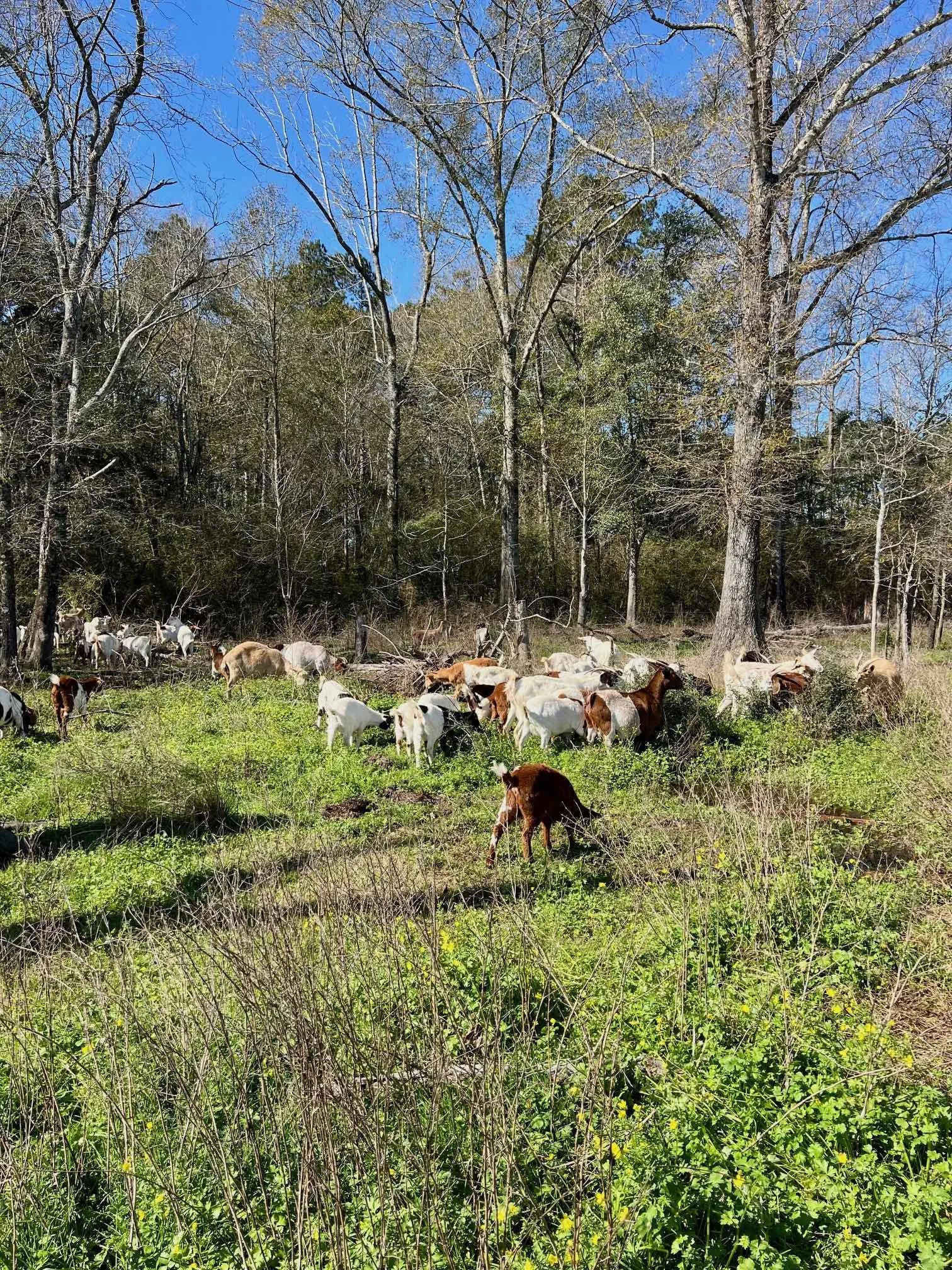
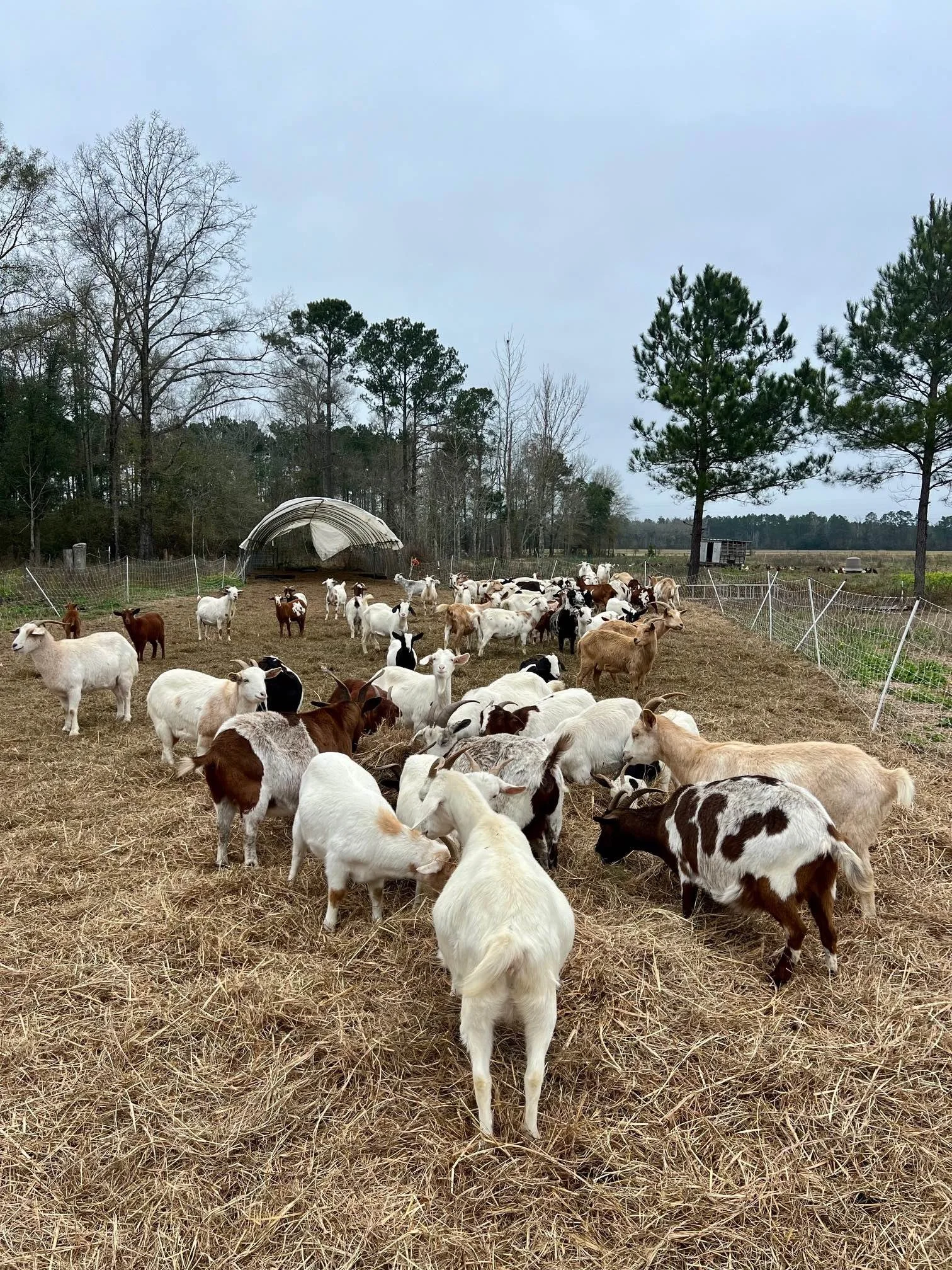
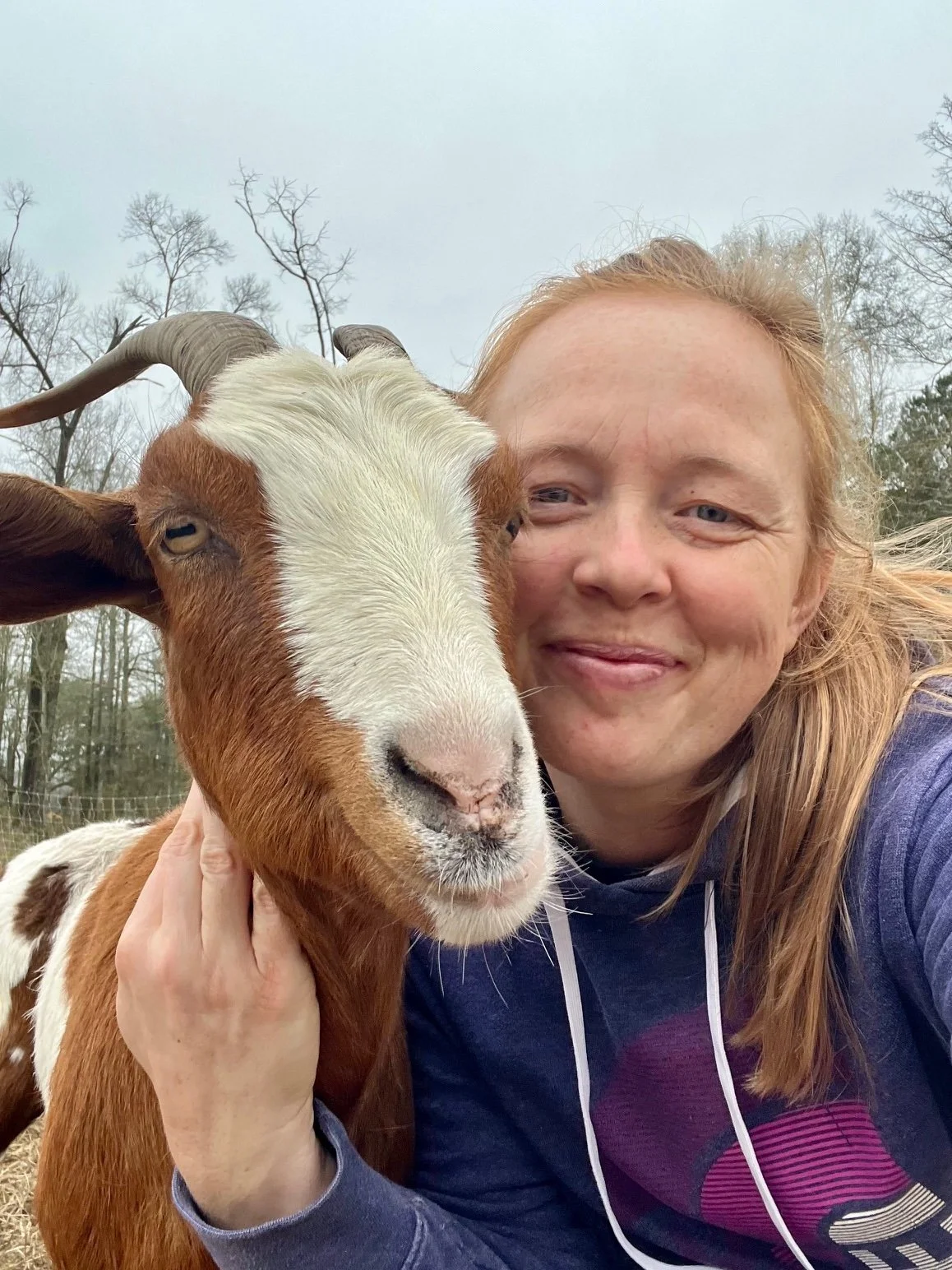
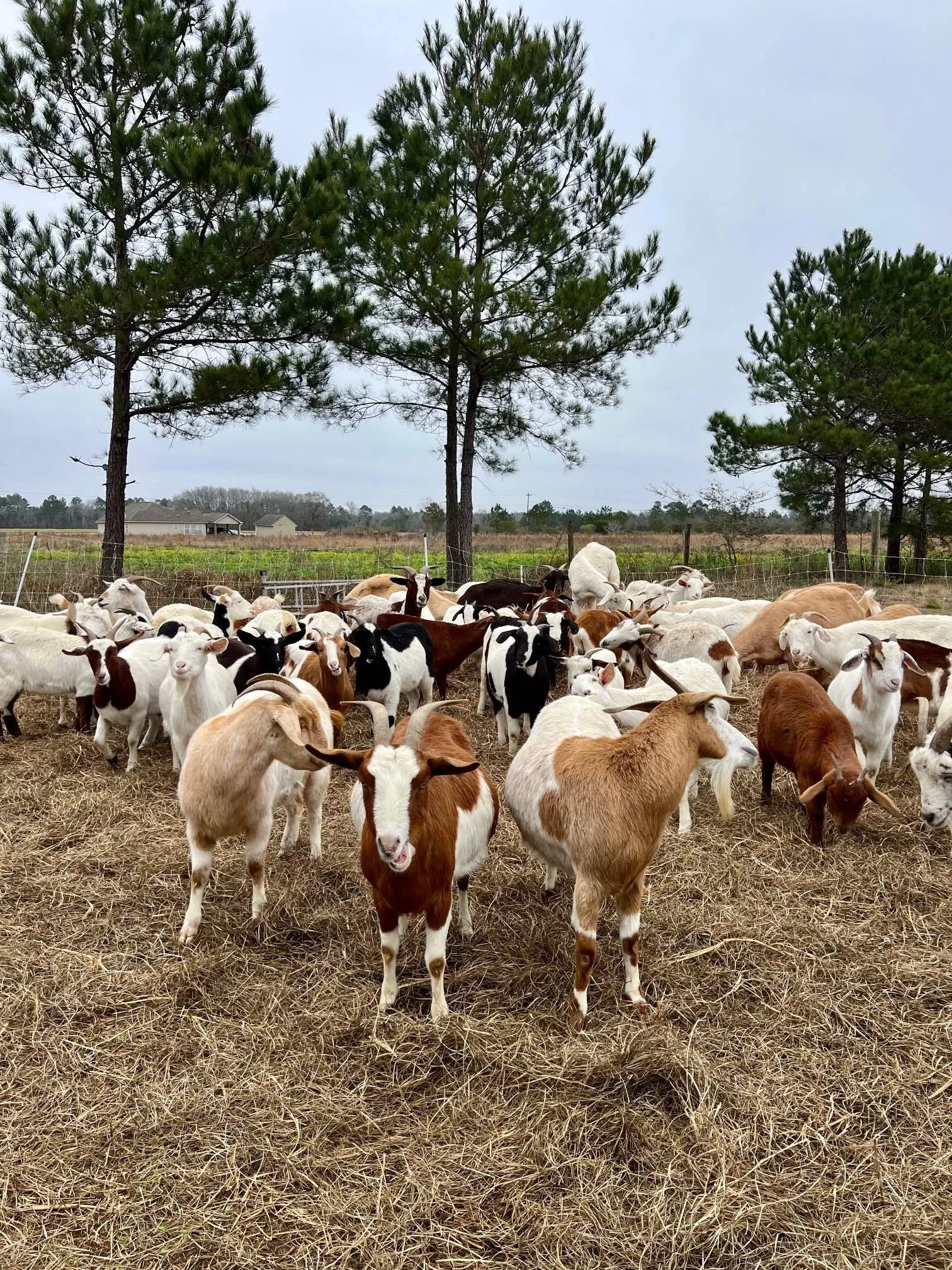
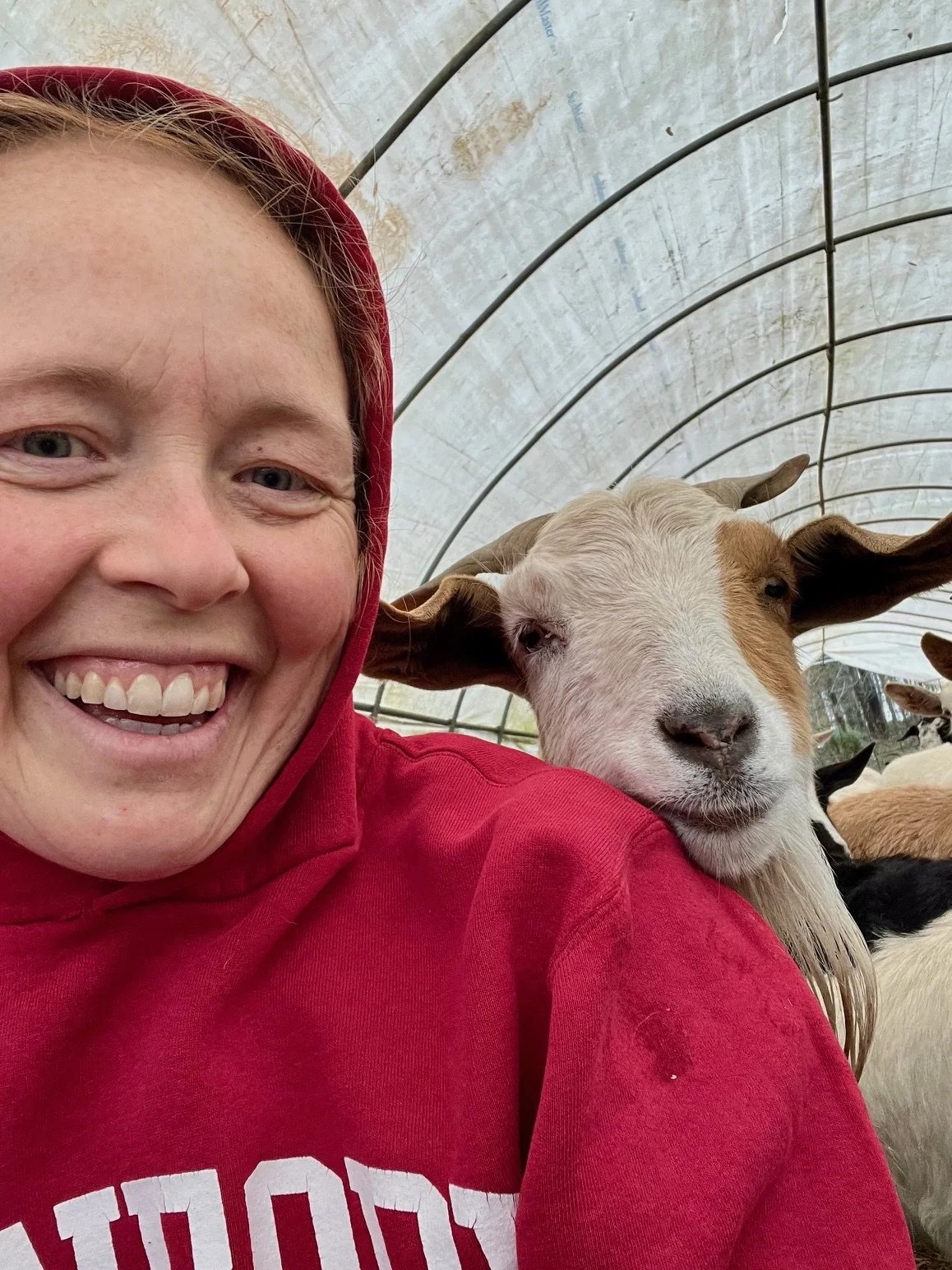
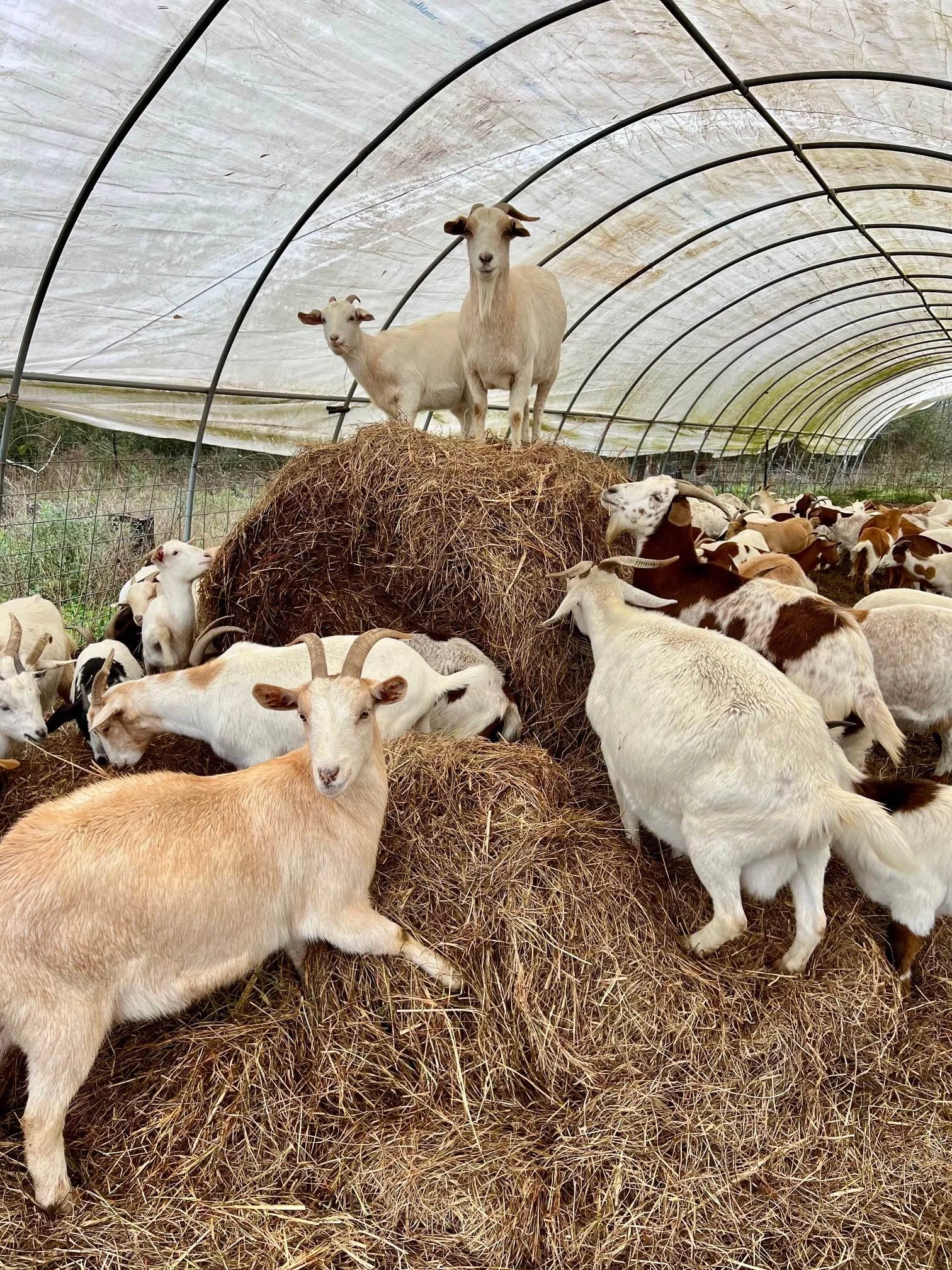
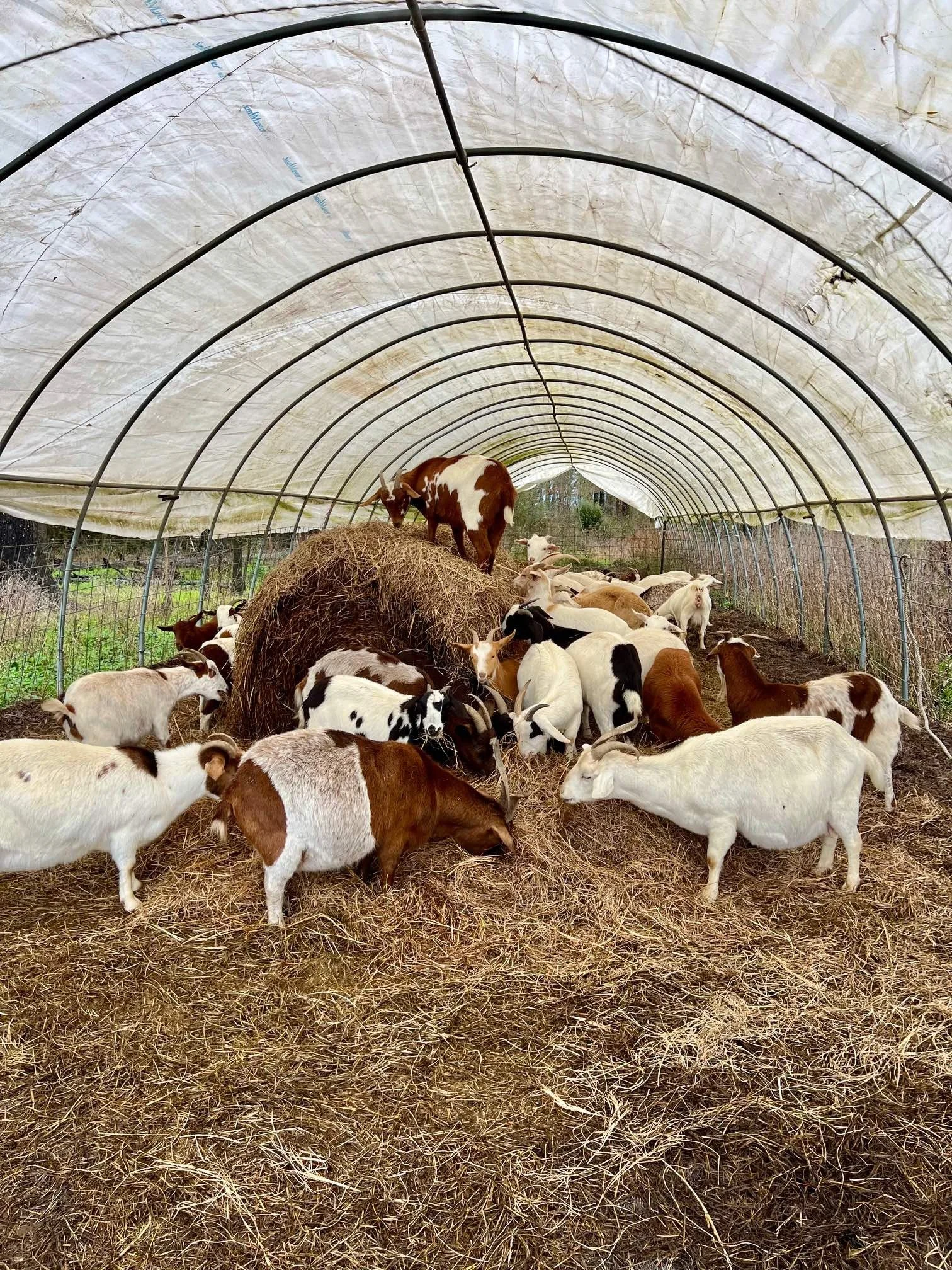
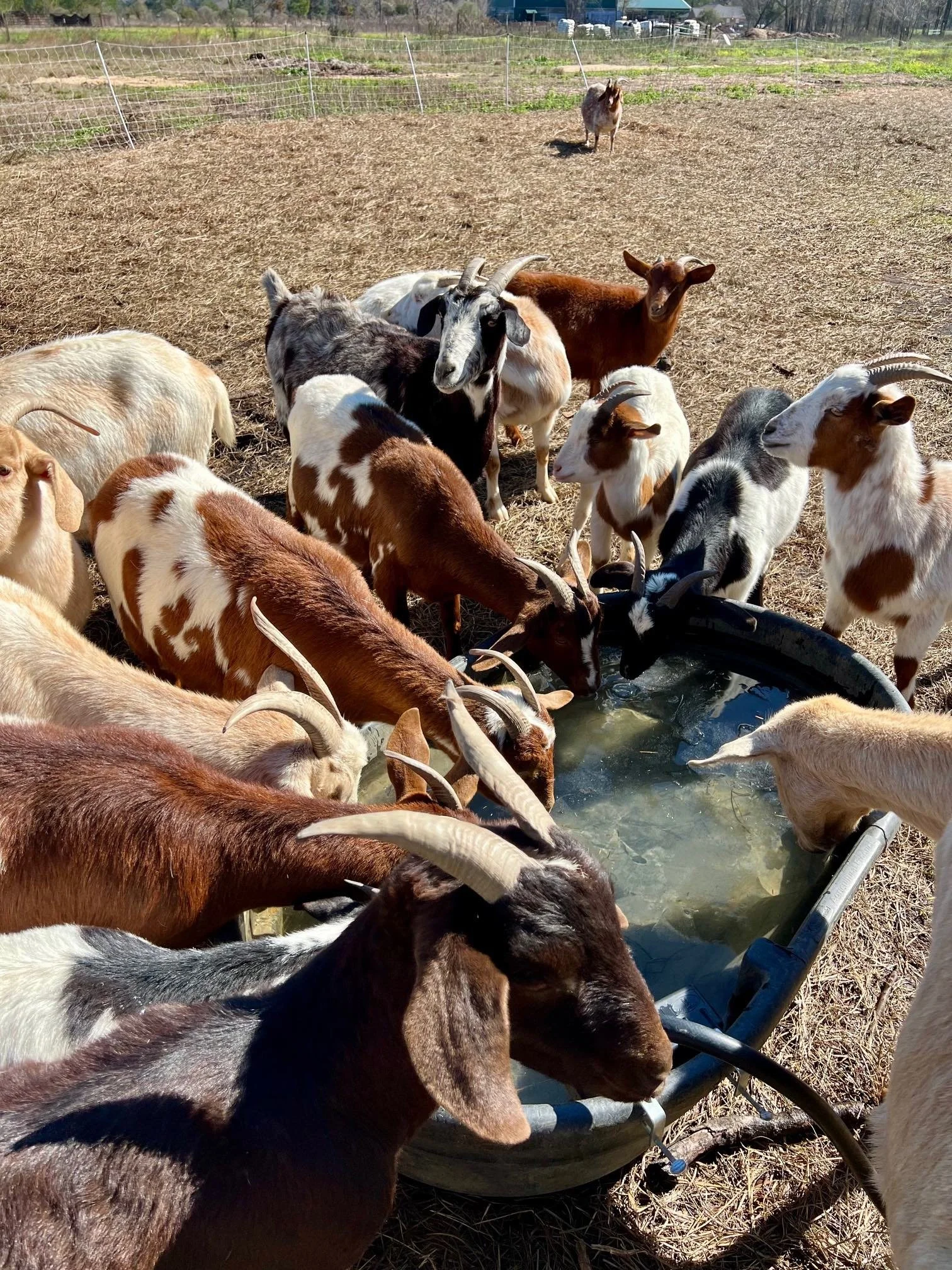
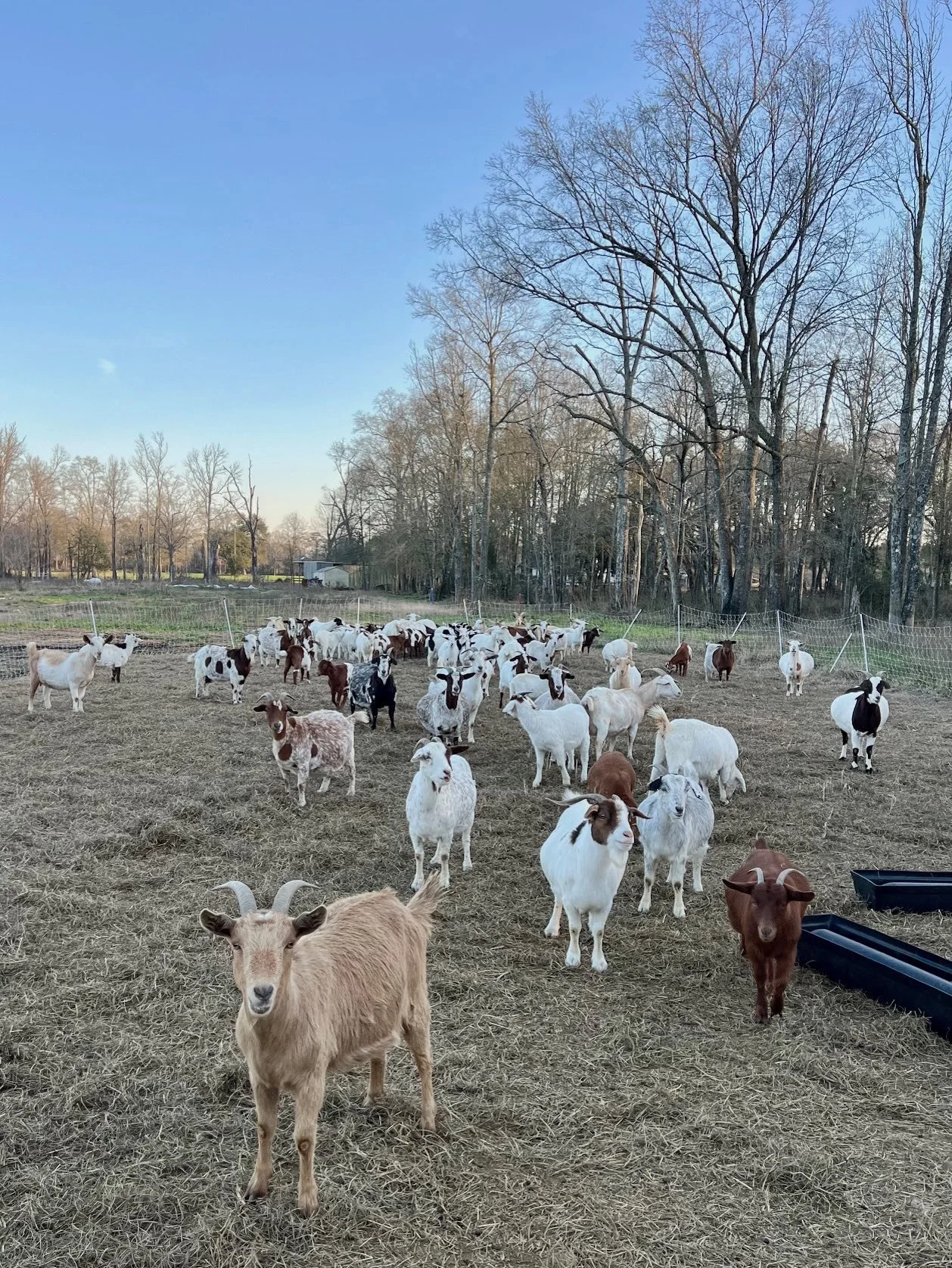
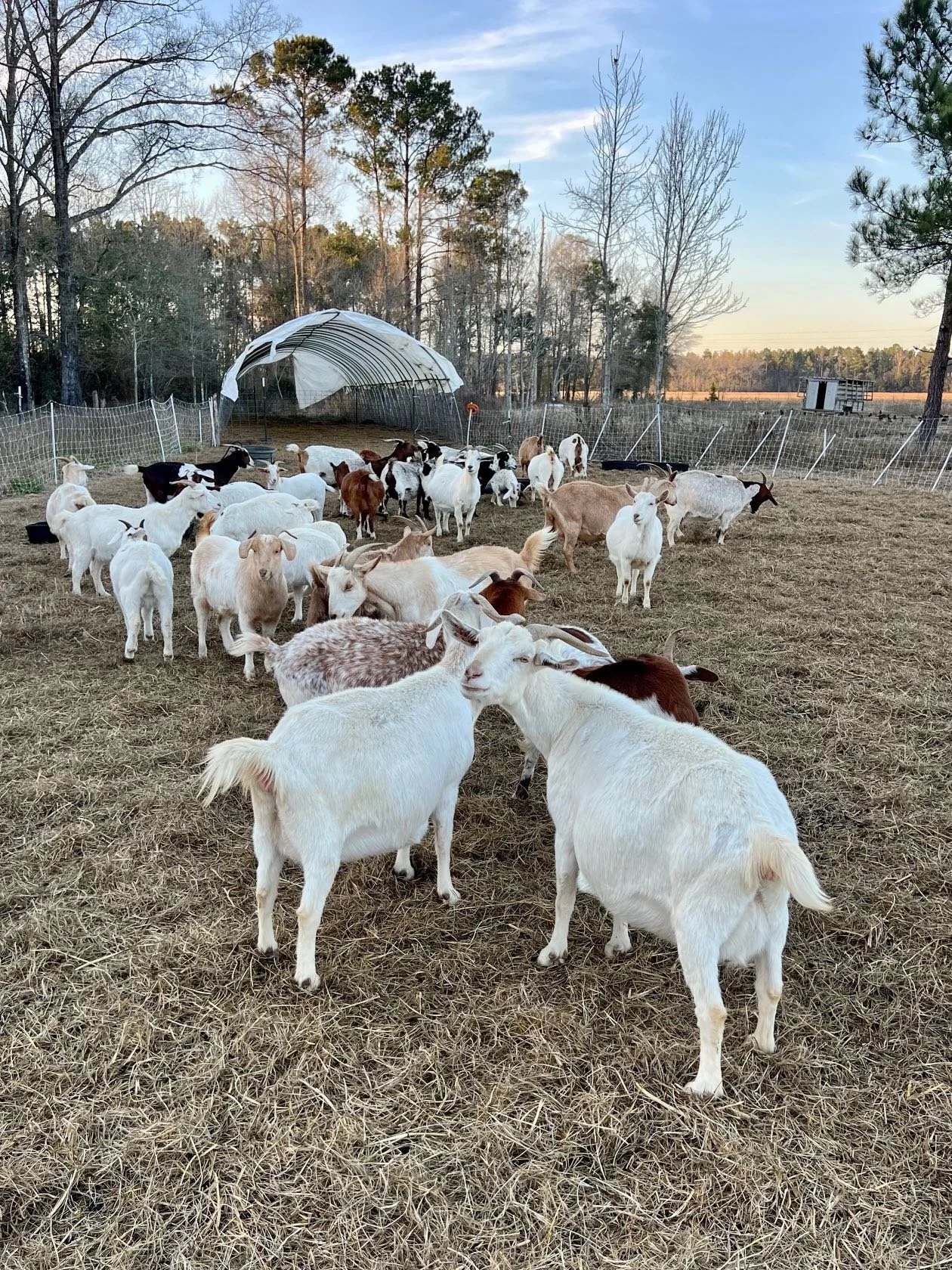
In goat land, it’s late stage gestation for the 32 proven does and 8 yearlings (first timers) that should be bred. We put the bucks with the does on September 14th and 150 days from that is tomorrow, February 10th. They were definitely interested in several does right away, but whether anyone was actually in heat and bred that day isn’t certain.
Some of them are really looking like they have basketballs suspended on their right sides. Their rumen is on the left side, so as they grow the kid(s) get pushed to the right side. And since when they eat a lot the rumen is often higher than the kids, they can look fairly lopsided! Some larger frame goats show less (especially if they’re only carrying one kid versus twins or triplets) and some naturally carry lower. This can be genetic and also from carrying large or multiple kids and having weaker abdominal muscles.
Uma, my 2021 bottle kid, has typically carried lower and one of her two daughters in the herd carries low, too. But Uma’s sister Clementine, who is four years older than her and therefore has had a lot more kids, still carries high as can be! Uma and Clementine have the same mom but were sired by different dads (Clementine by a Myotonic buck and Uma by a Kiko buck), so maybe that or their overall frame size and body shape make a difference, too.
There’s some does whose loose tail ligaments and udders make them look very close to kidding, but I also noticed a lot of breeding activity on September 20th and 22nd, so I wouldn’t be surprised if only a few outliers kid this week and the bulk of the kidding is next week. Time will tell!
Other than waiting for kidding to start, it’s kind of a boring time of year for the goats since there isn’t enough brush and shrubs growing that justifies grazing them and they’re just eating hay and alfalfa pellets. They did break out of their fencing one day when I was going back and forth in their area, so they got a quick circuit of inhaling some curly dock and clover before I rounded them back up.
Grant also had a nice visit with Tyler from LSU Agriculture's Small Ruminant team to chat about our continued breeding goals for our goat herd. We’ve bred for good mothering and parasite resistance for 9 years and now we’re to the point where we can start dialing in the best weight gain of the kids generation over generation to further improve the genetics of the herd.
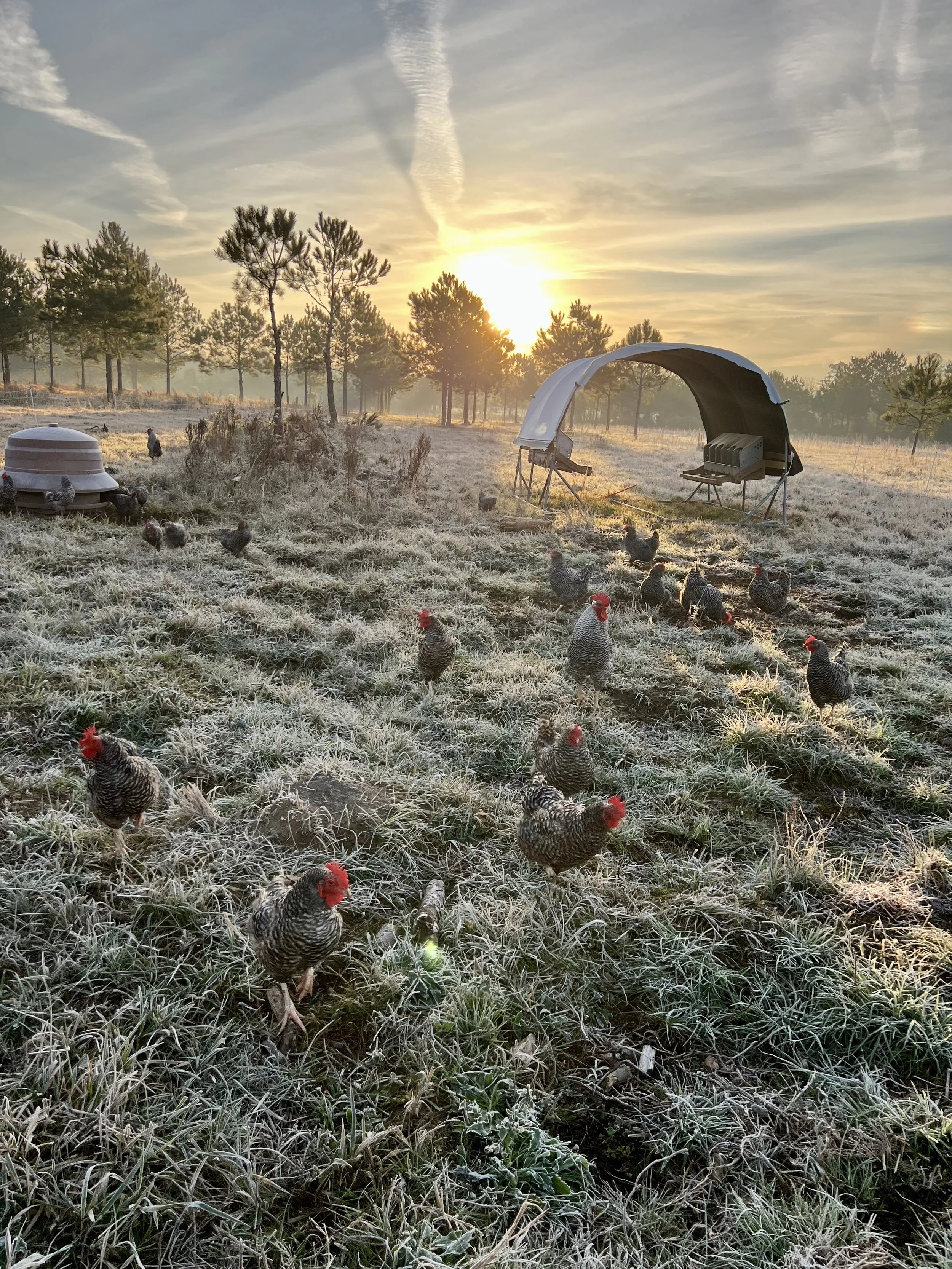
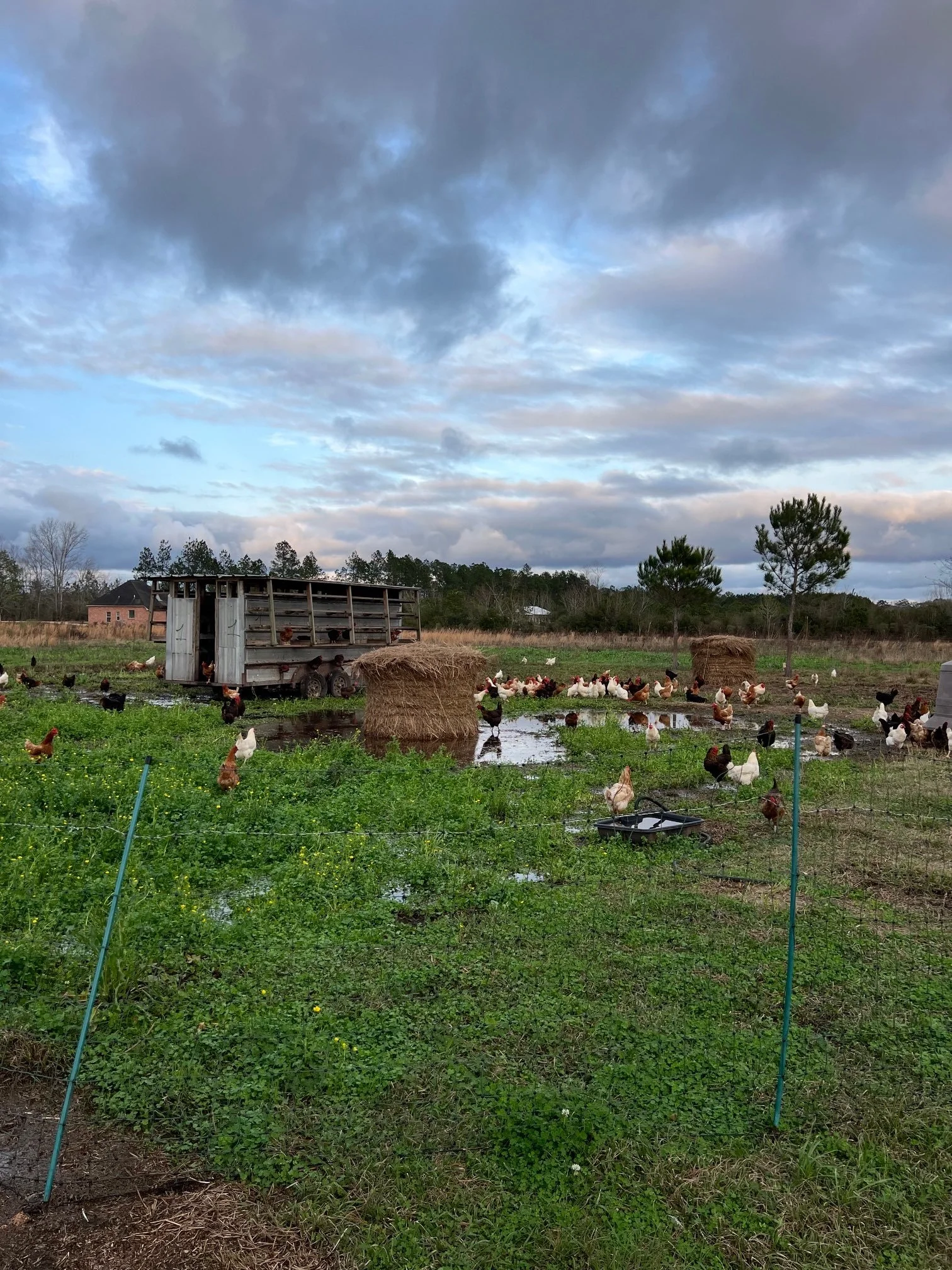
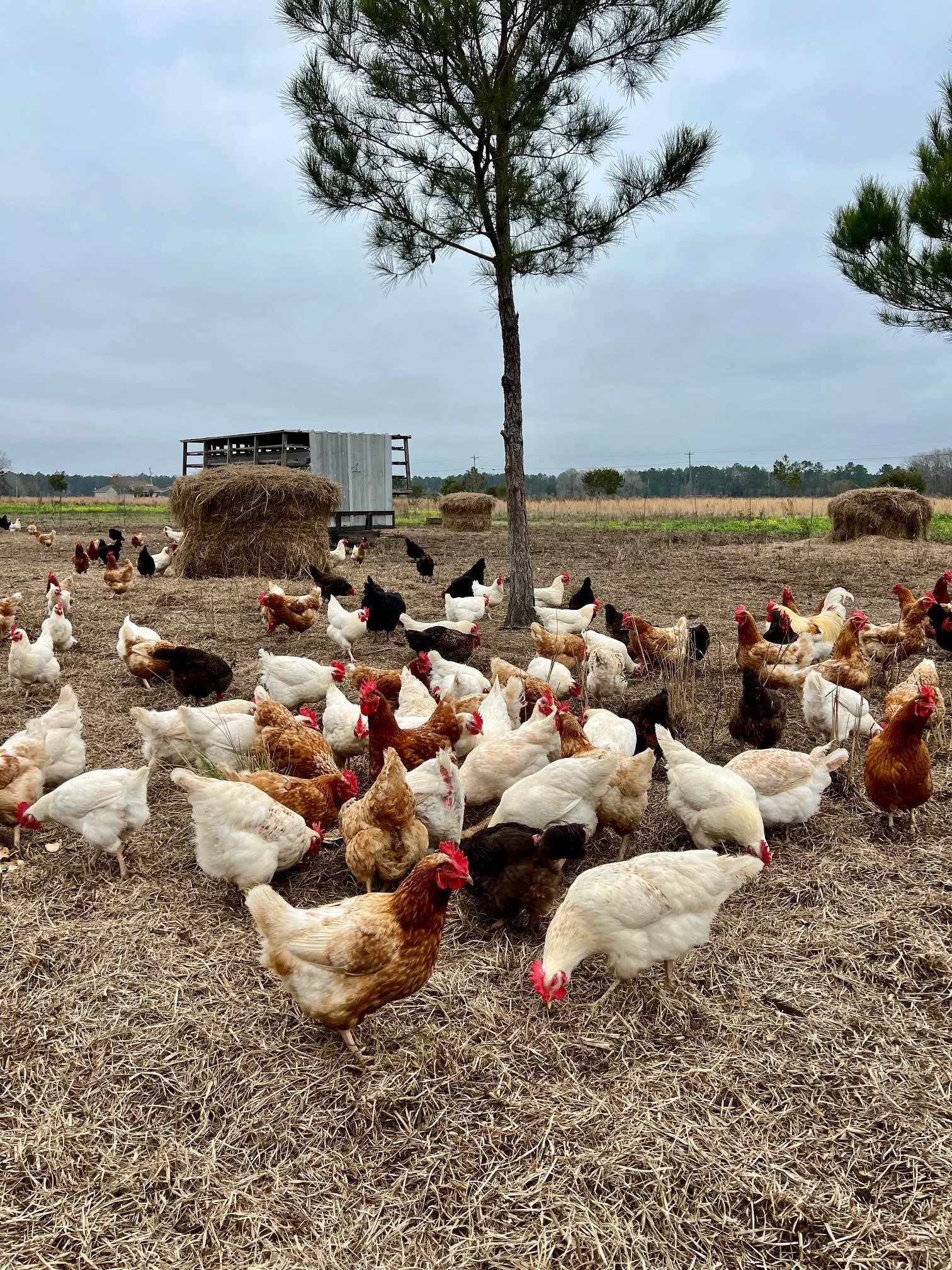
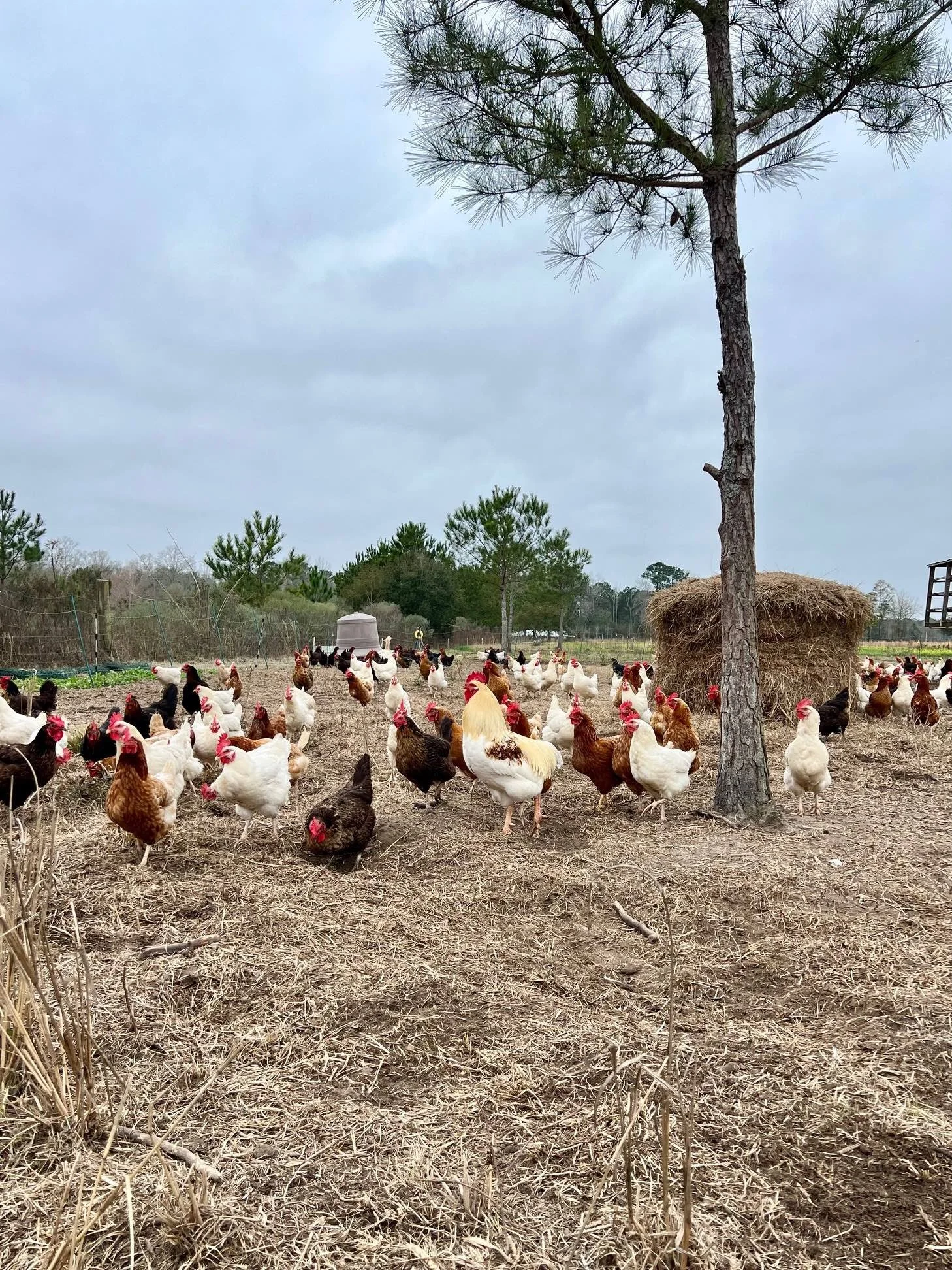
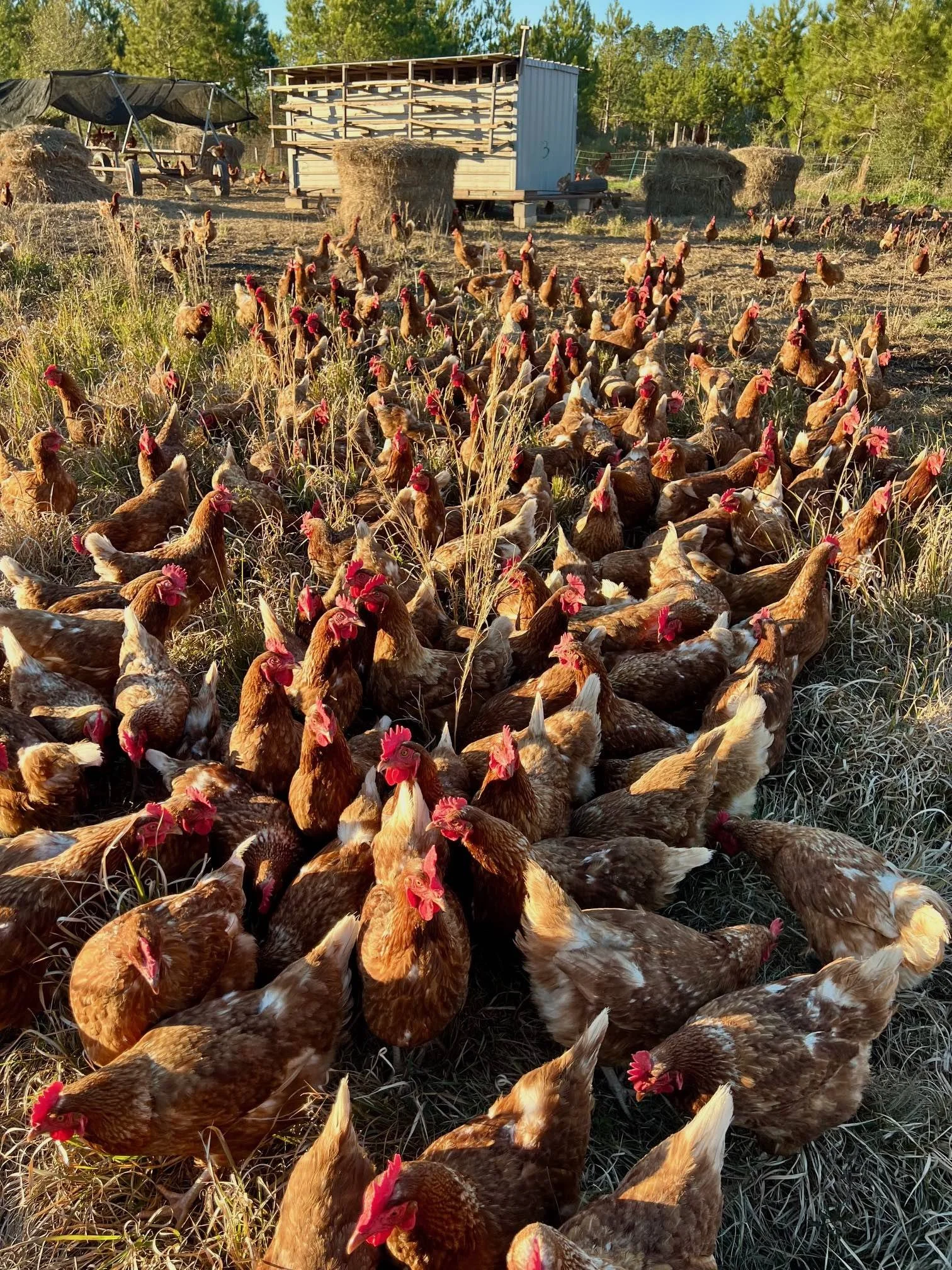
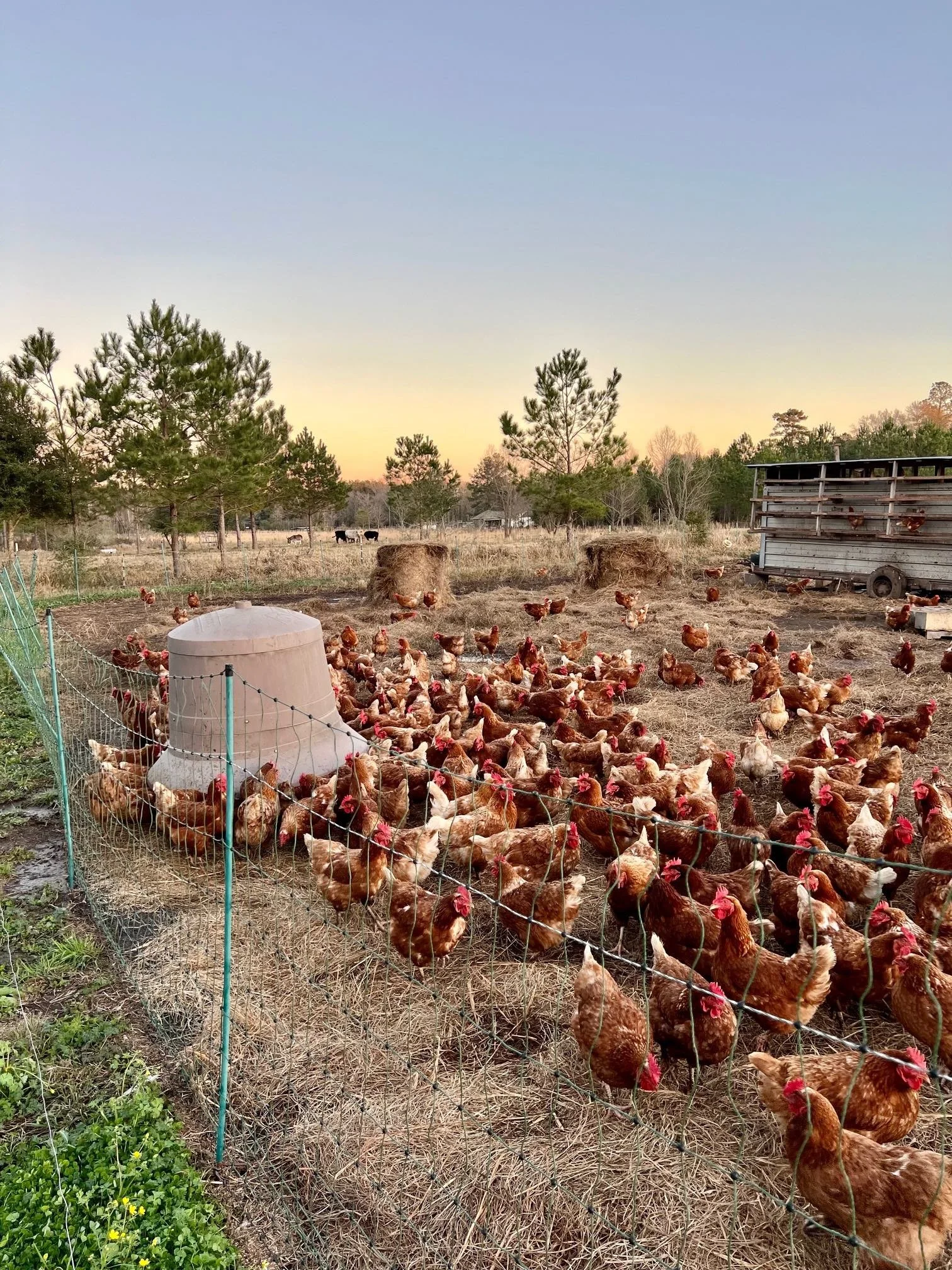
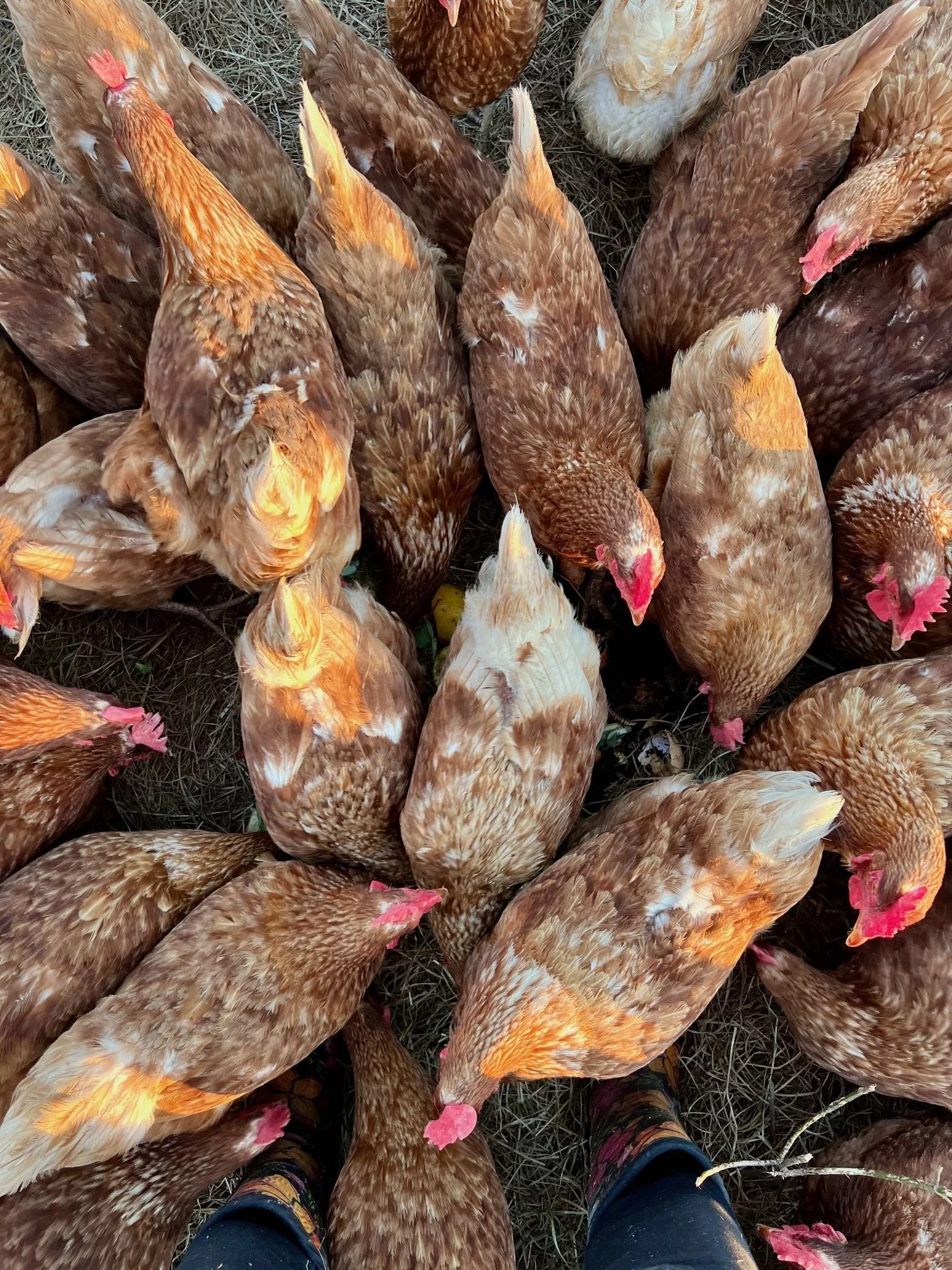
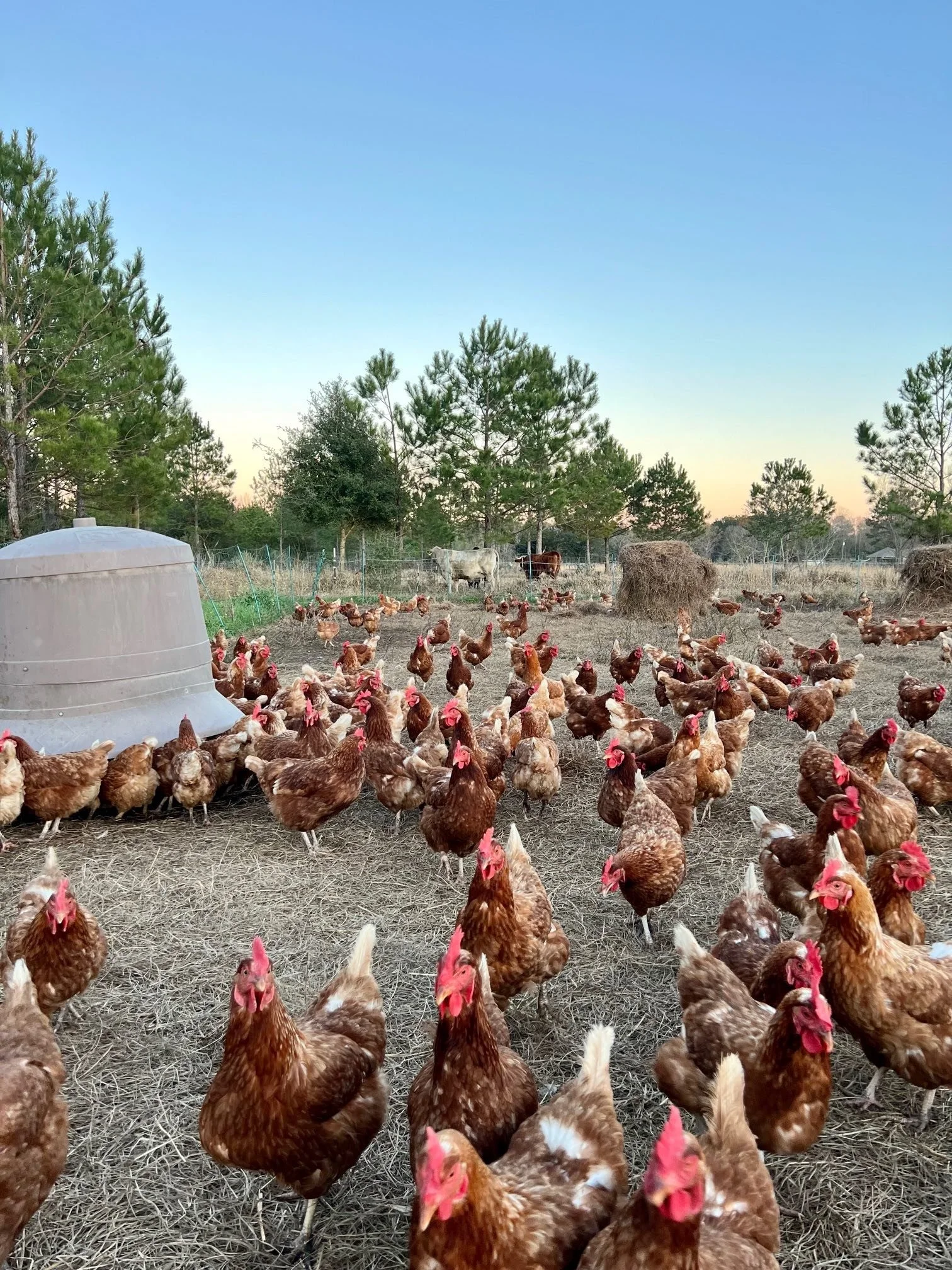
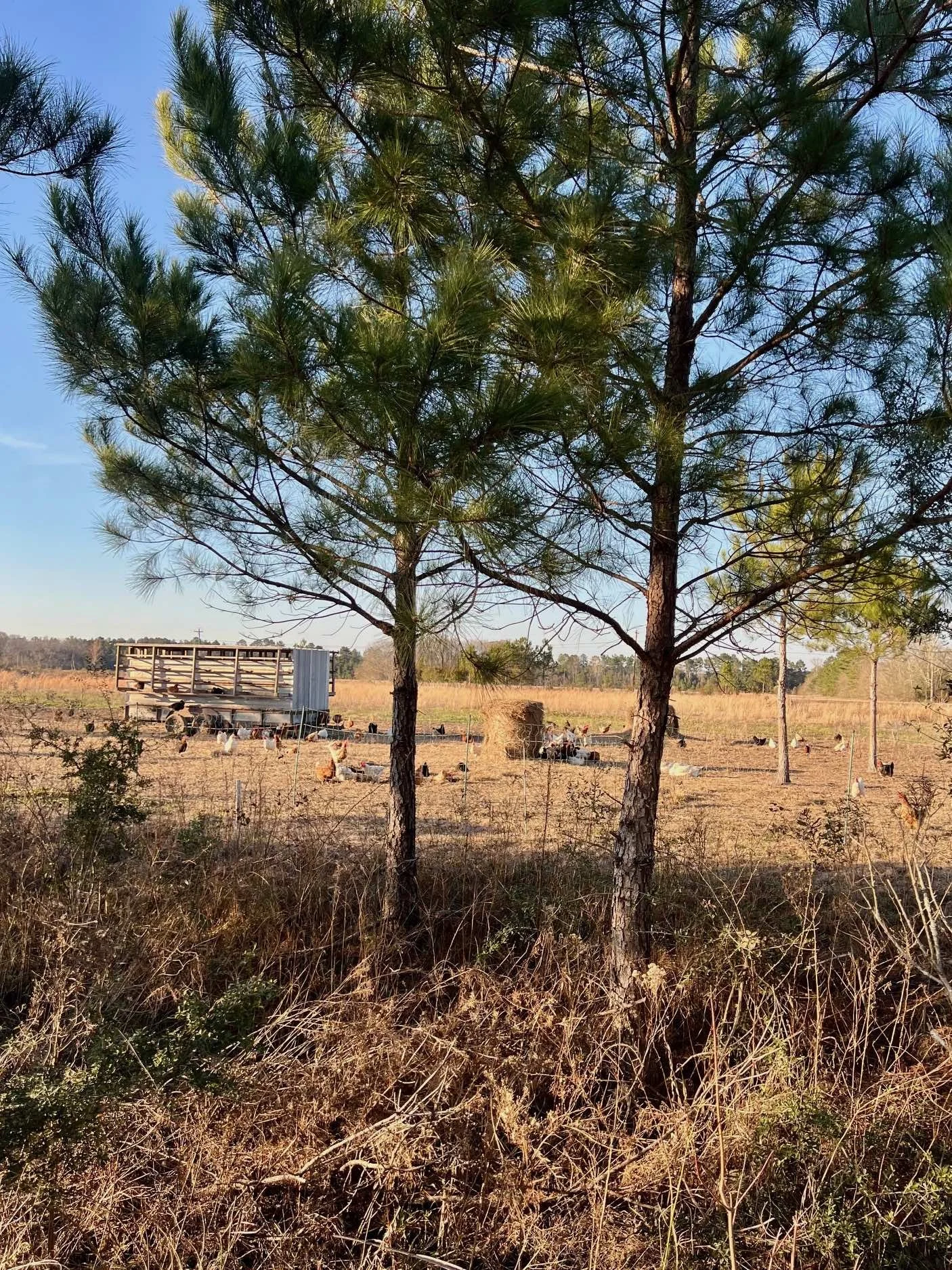
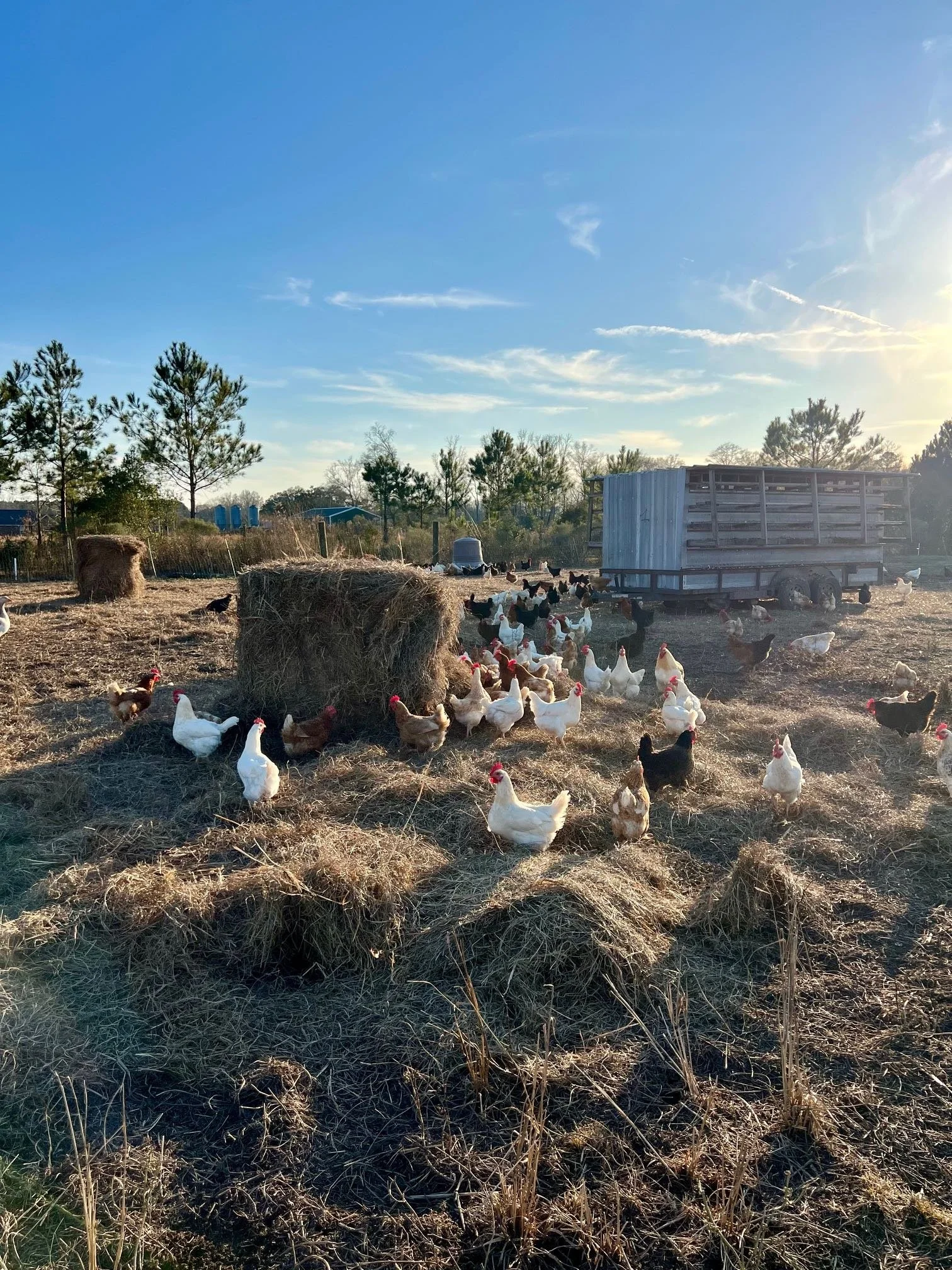
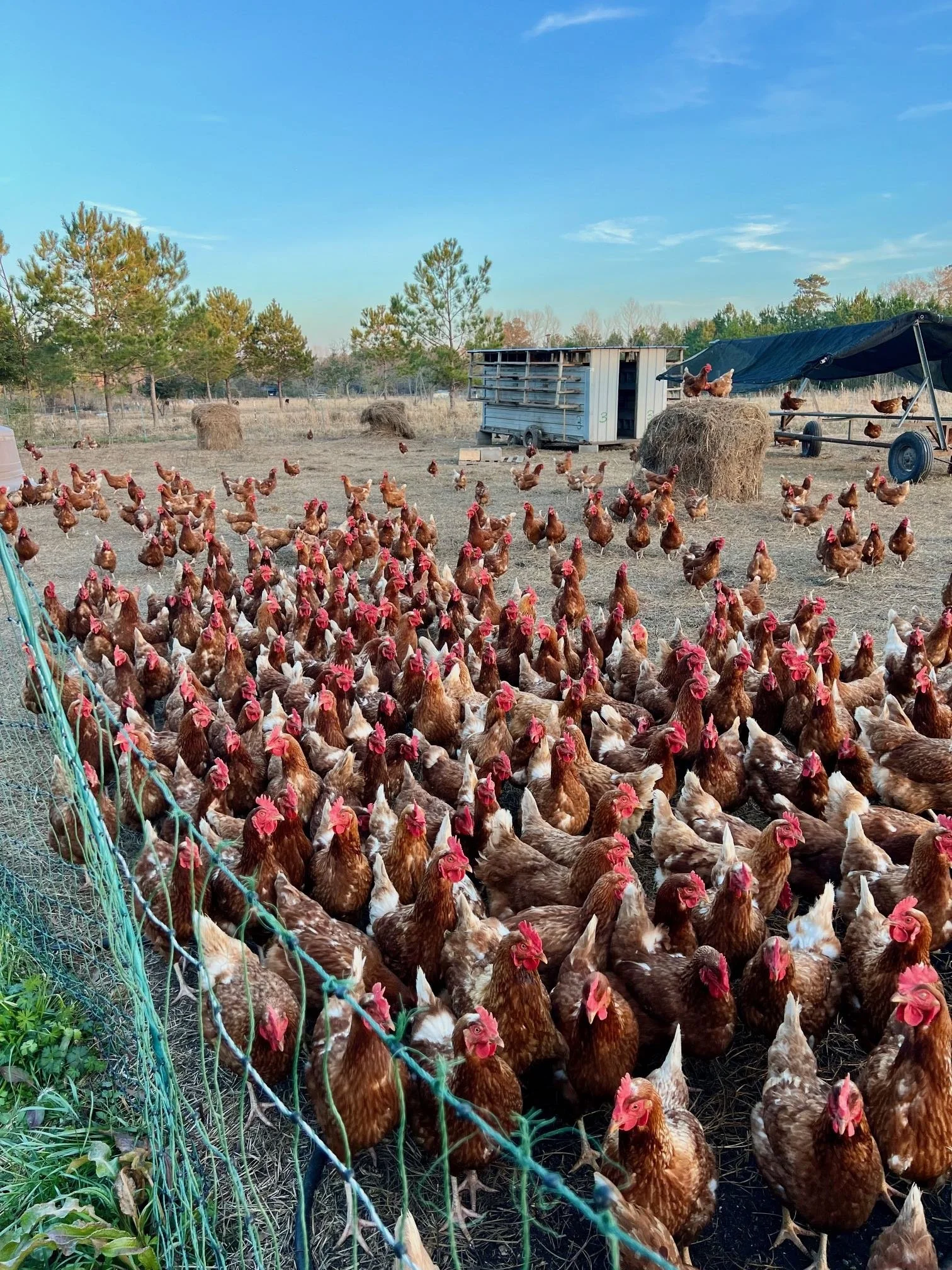
The hens are holding fairly steady with their egg production as we inch closer to spring. We’re at just under 11 hours of daylight as of today, and we will reach 12 hours around March 14th. We’ve always noticed that mid February typically marks an uptick in production. Maybe something about passing the 11 hour of daylight mark really helps!
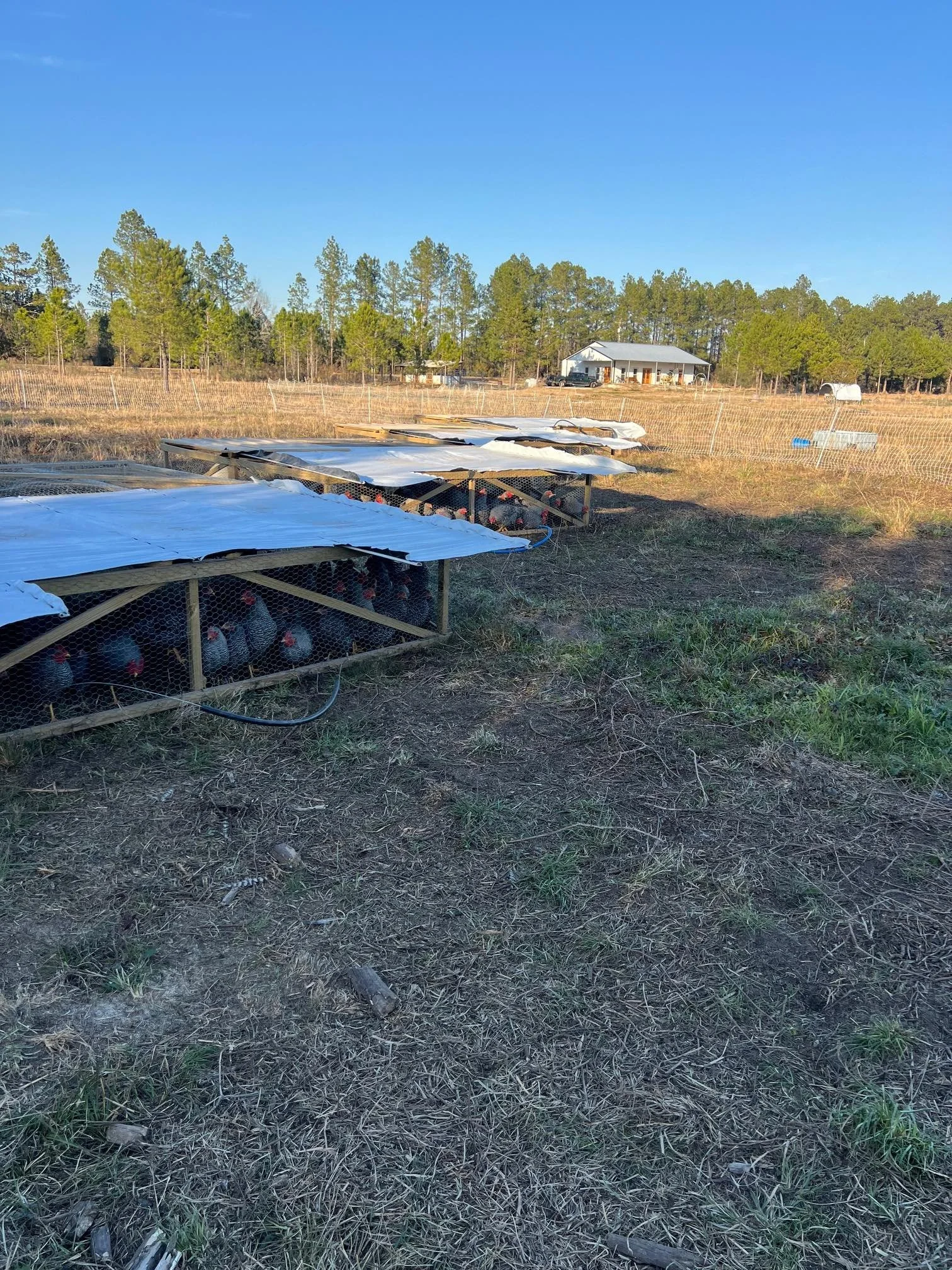
The two January deluges prompted us to put hay bales out in the big flocks to flake off as the winter goes on. While there is some limited forage the hens could nibble on if we kept moving them, the soil absorbs the heavy rain so much more slowly in the winter, that we’ve found it’s better to park the hens for a few weeks, give them tons of hay to scratch through for seeds and beetles and save the cool season perennial growth and the rye grass for grazing the cattle on once it gets taller!
The pullets from our two oldest hatches this summer are laying well and the first group’s eggs have sized up past the small egg stage. We have two more successions of hatches growing out in our pasture shelters that will be moved in with the breeding flock and should start laying in the next month or so.
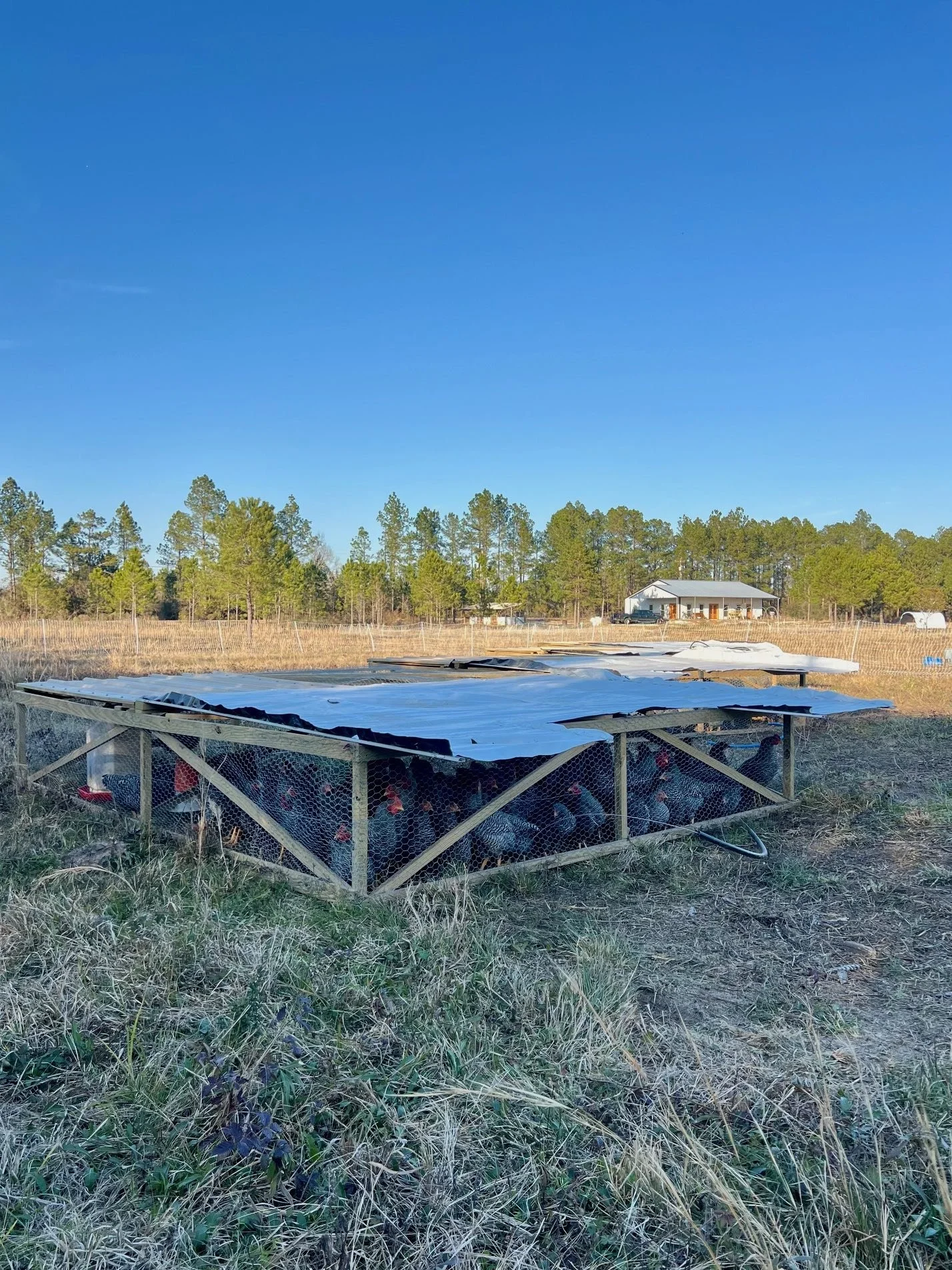
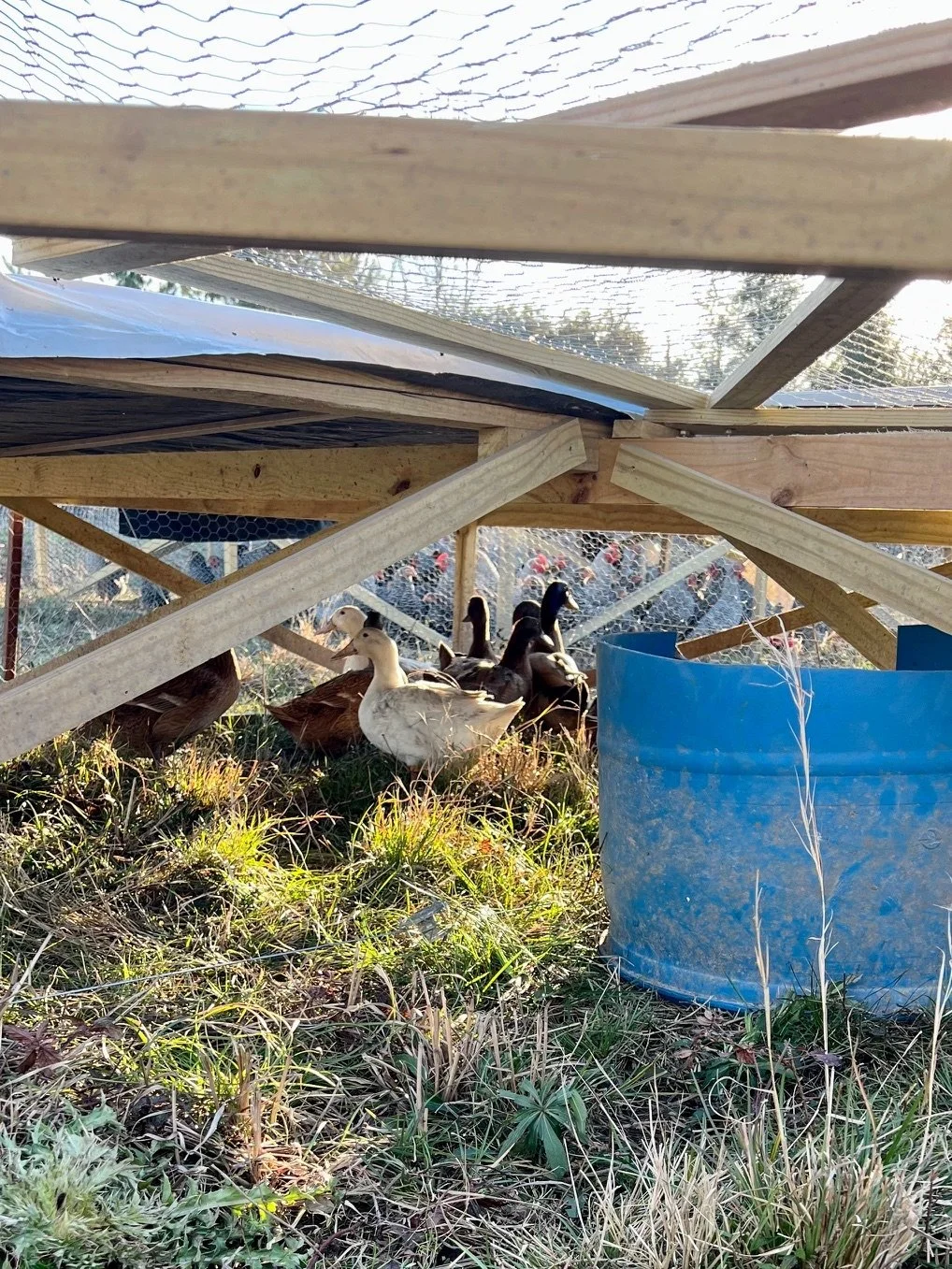
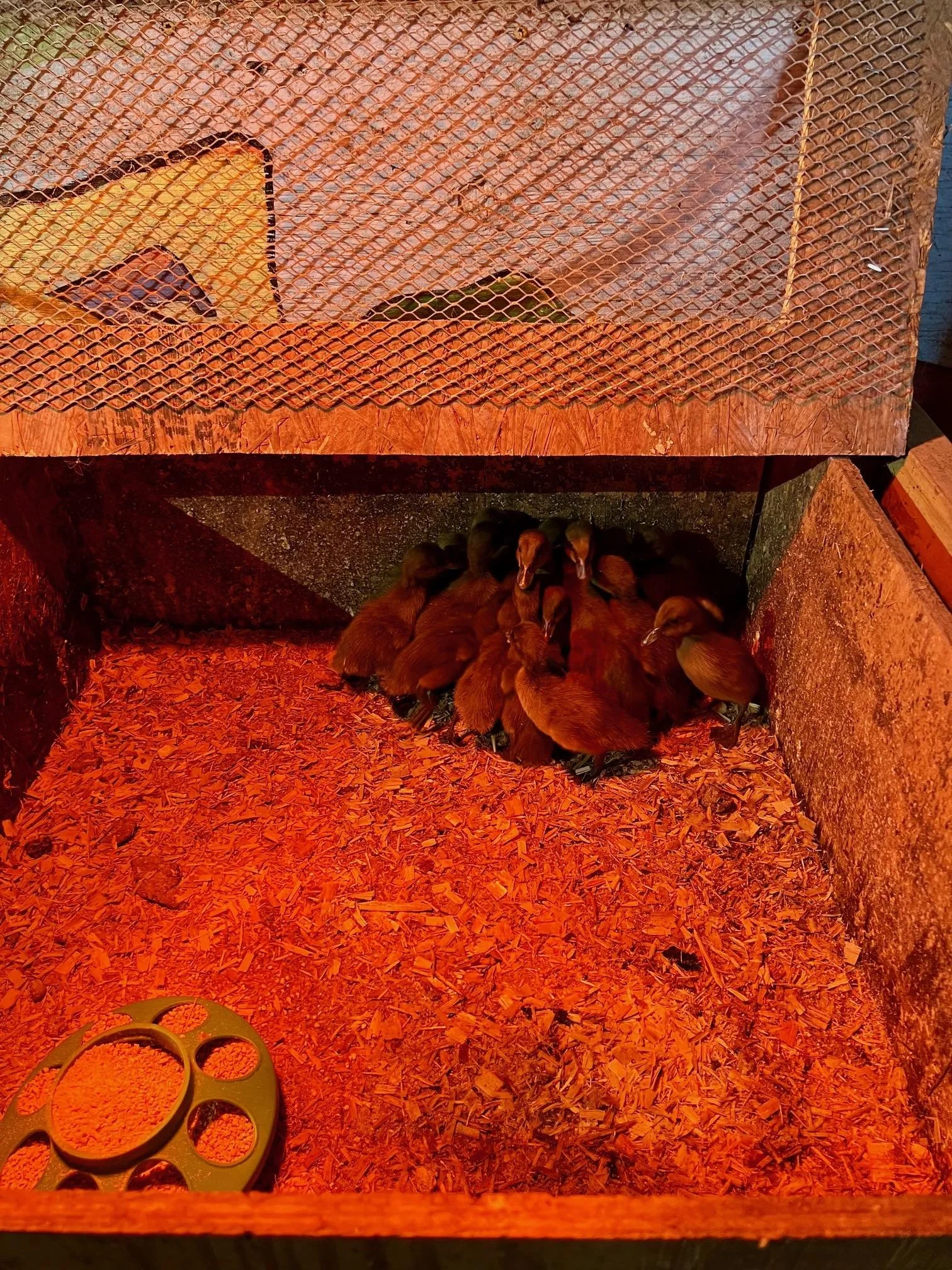
We’ve kept our small flock of ducks in a large pasture shelters, moving them daily with the chickens we’re growing out and it’s worked really well. They’re super flighty and skittish and they don’t like to roost up high like chickens do. So the shelter plus the electric fencing provides double protection against predators and still fits their big waterer they can dunk their heads in and the barrel we turned into their nest which they almost all dutifully lay in every morning.
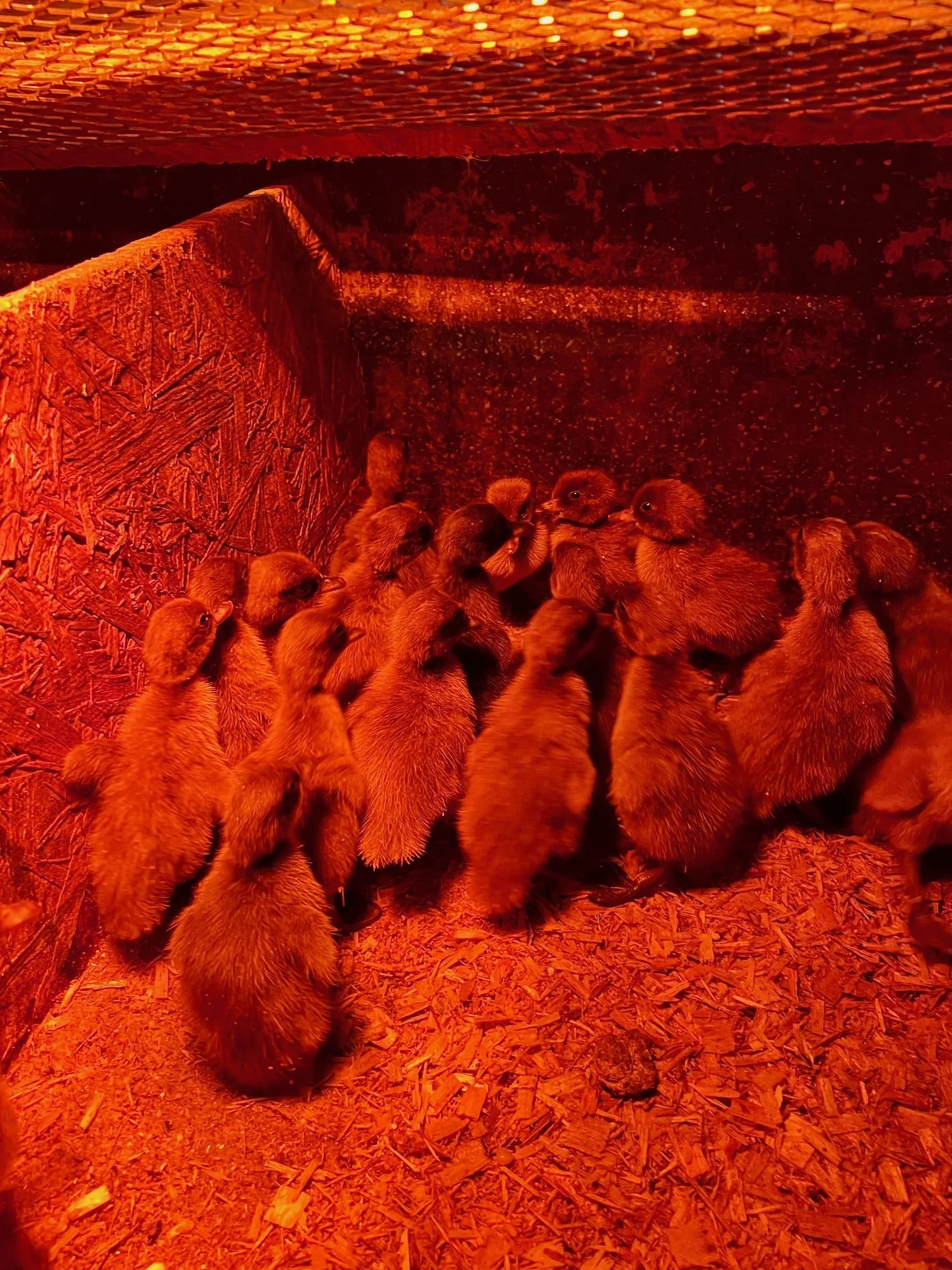
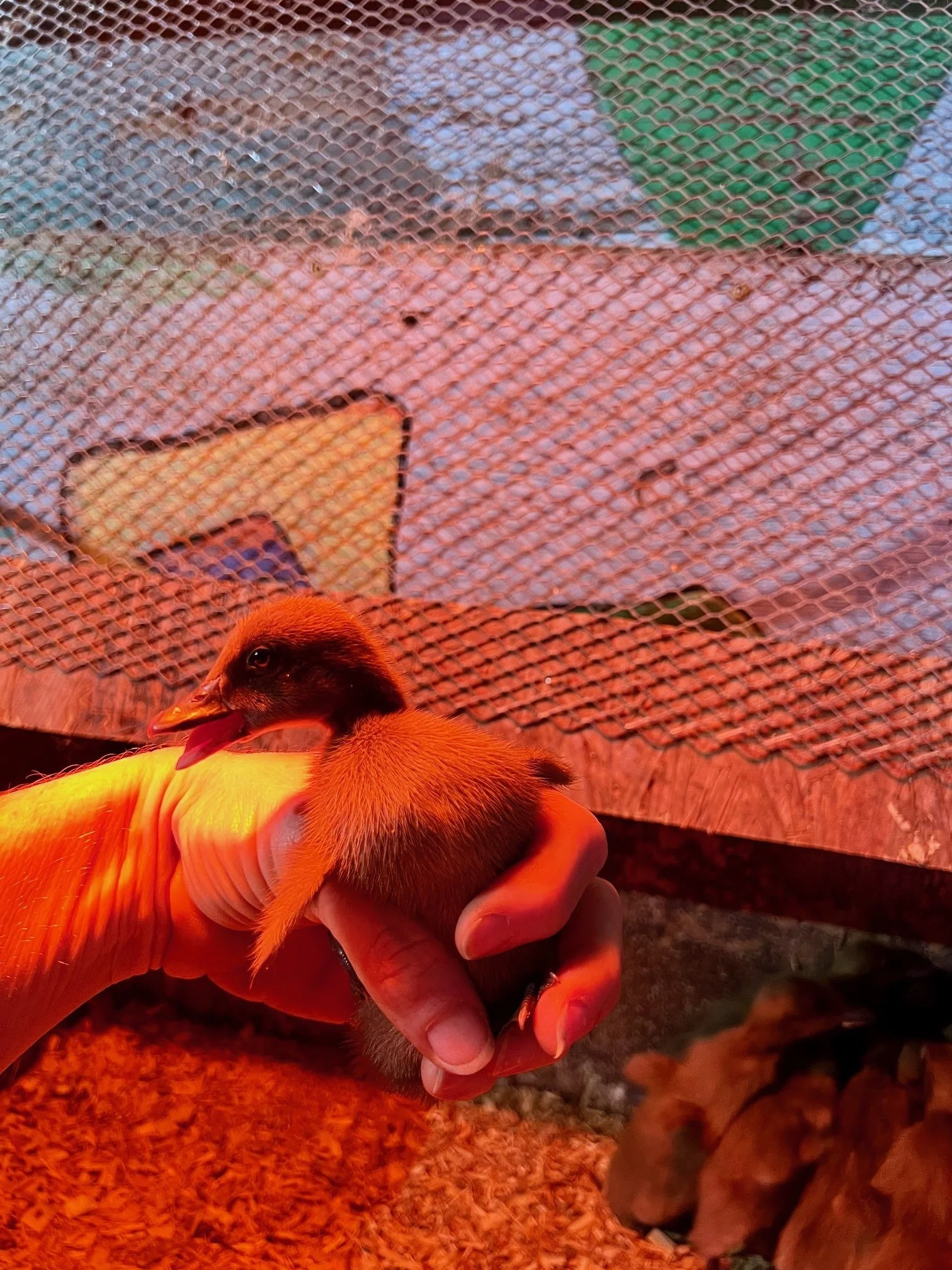
We hatched our first batch of ducklings from them, too! The fertility wasn’t the best, so that’s likely on the drake we have, but it’s better than nothing! The ducklings are doing well in our little original brooder and Grant is building another one to transfer them to soon. They grow fast!
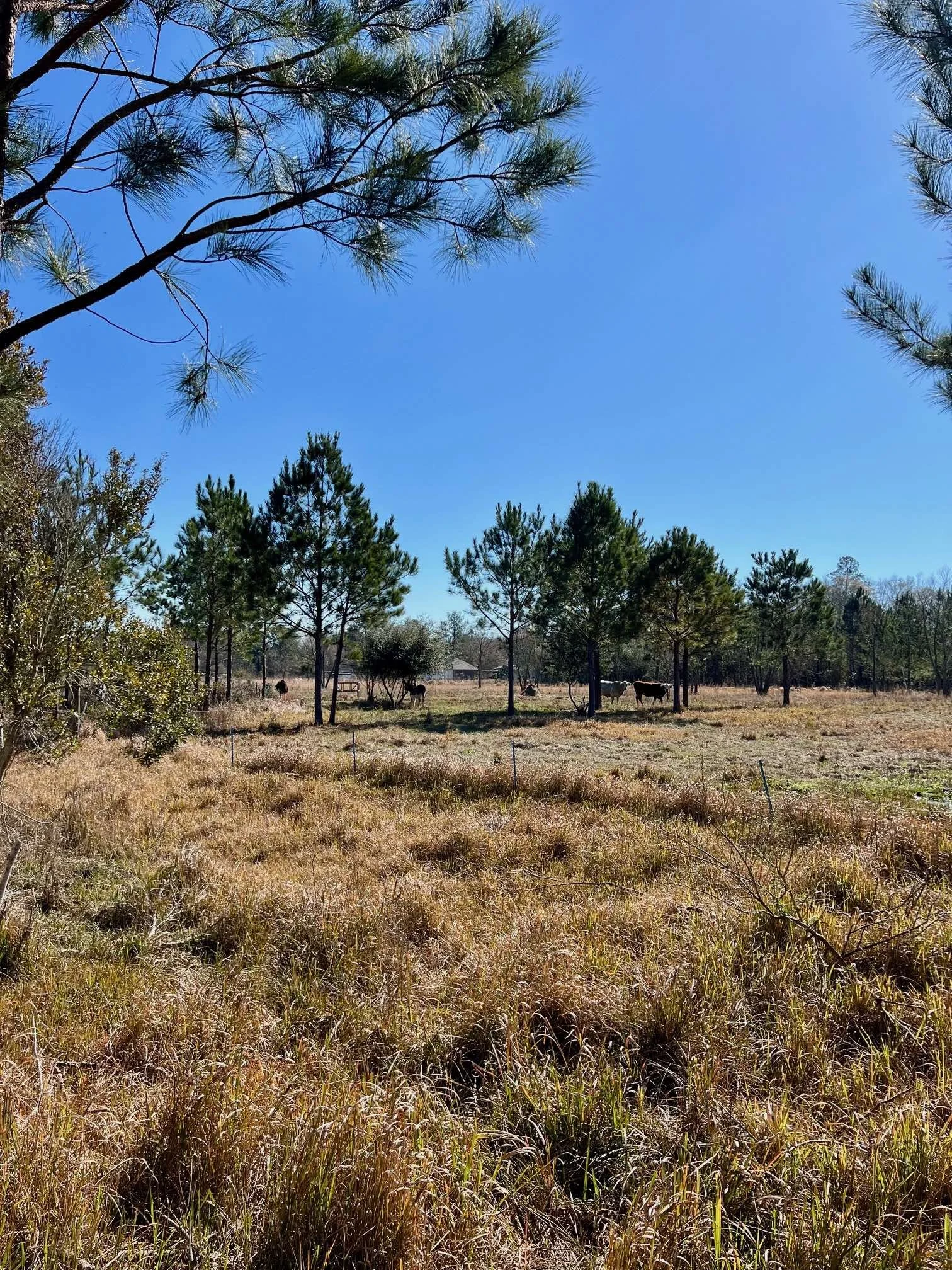
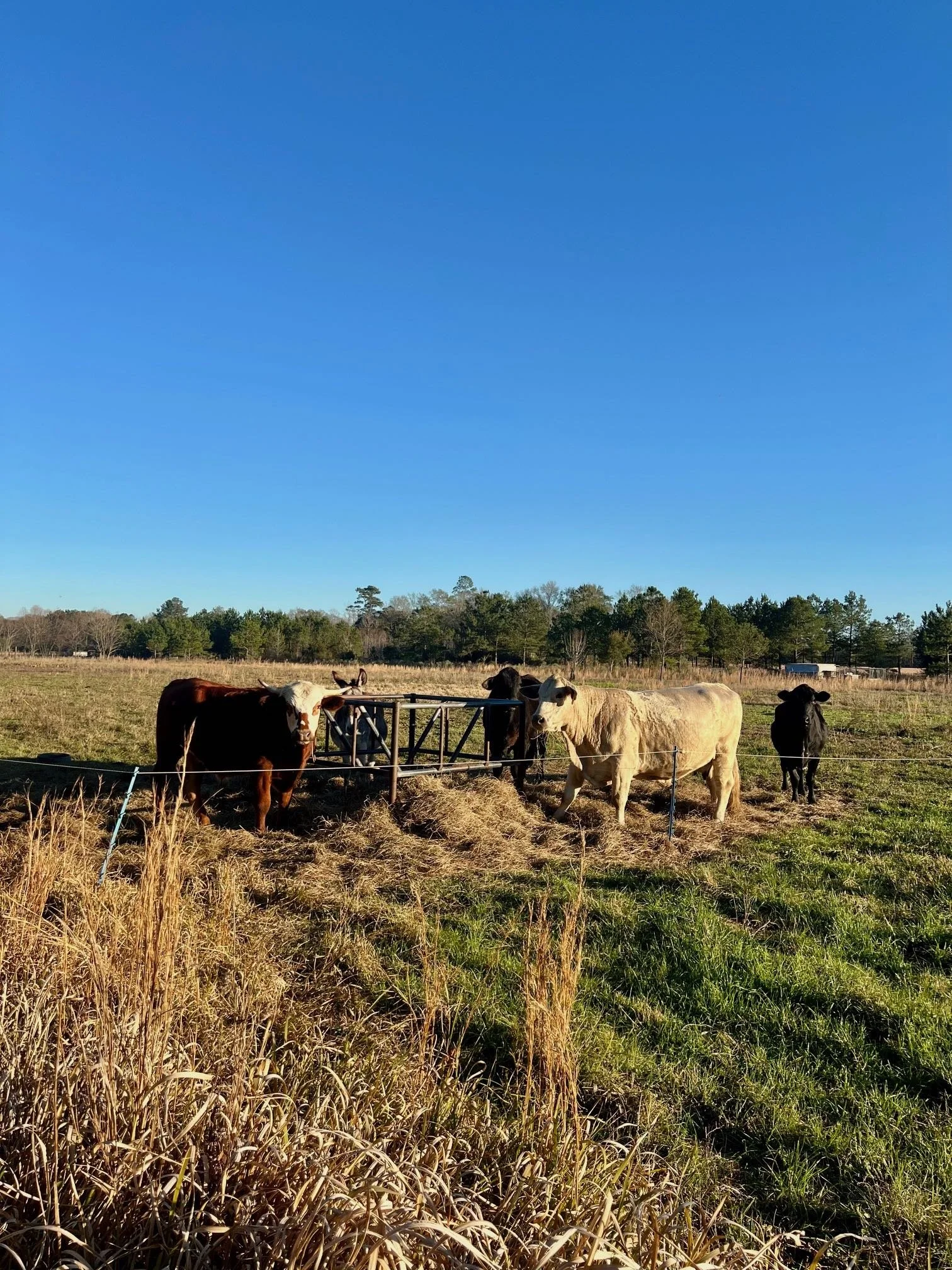
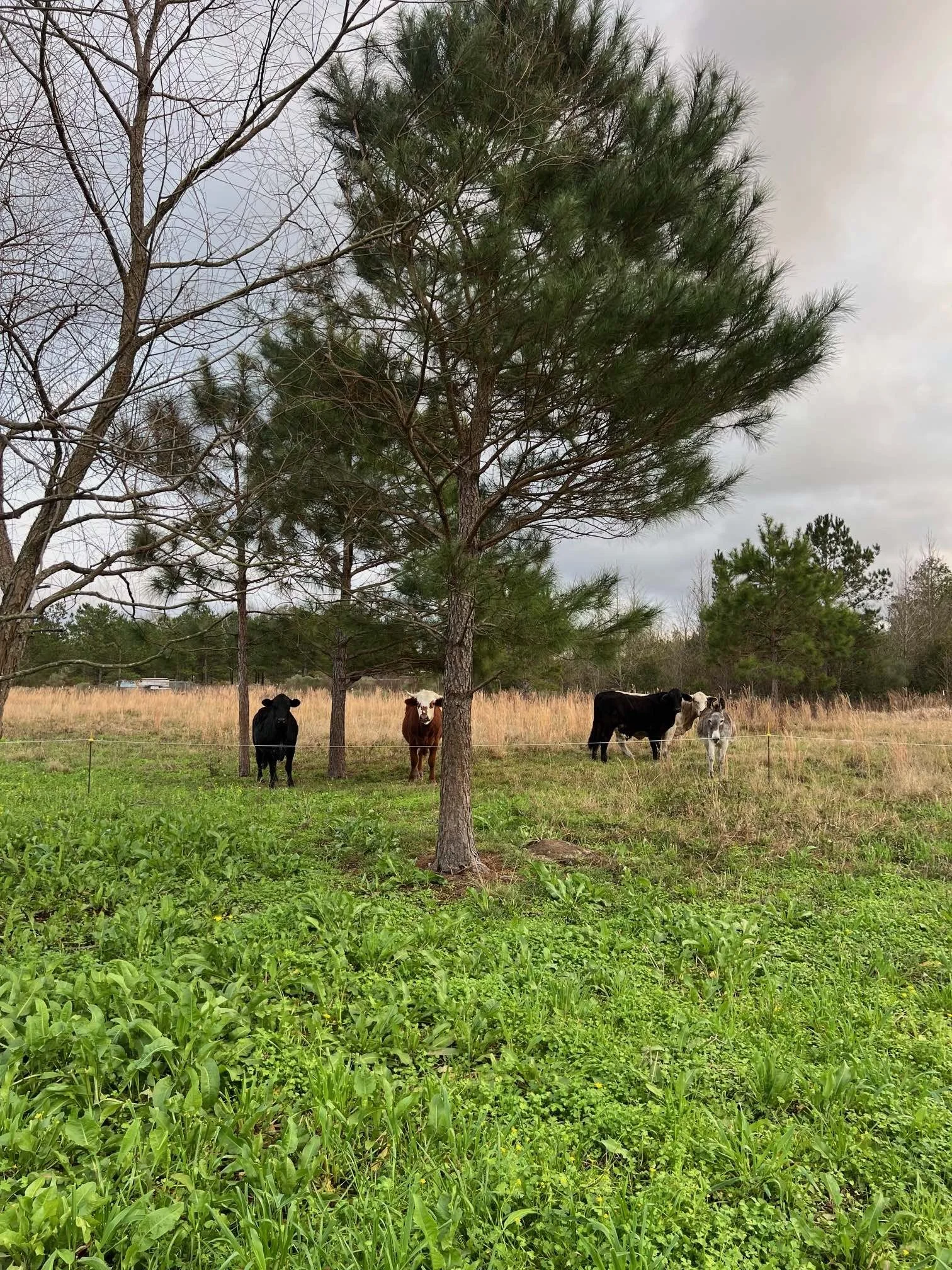
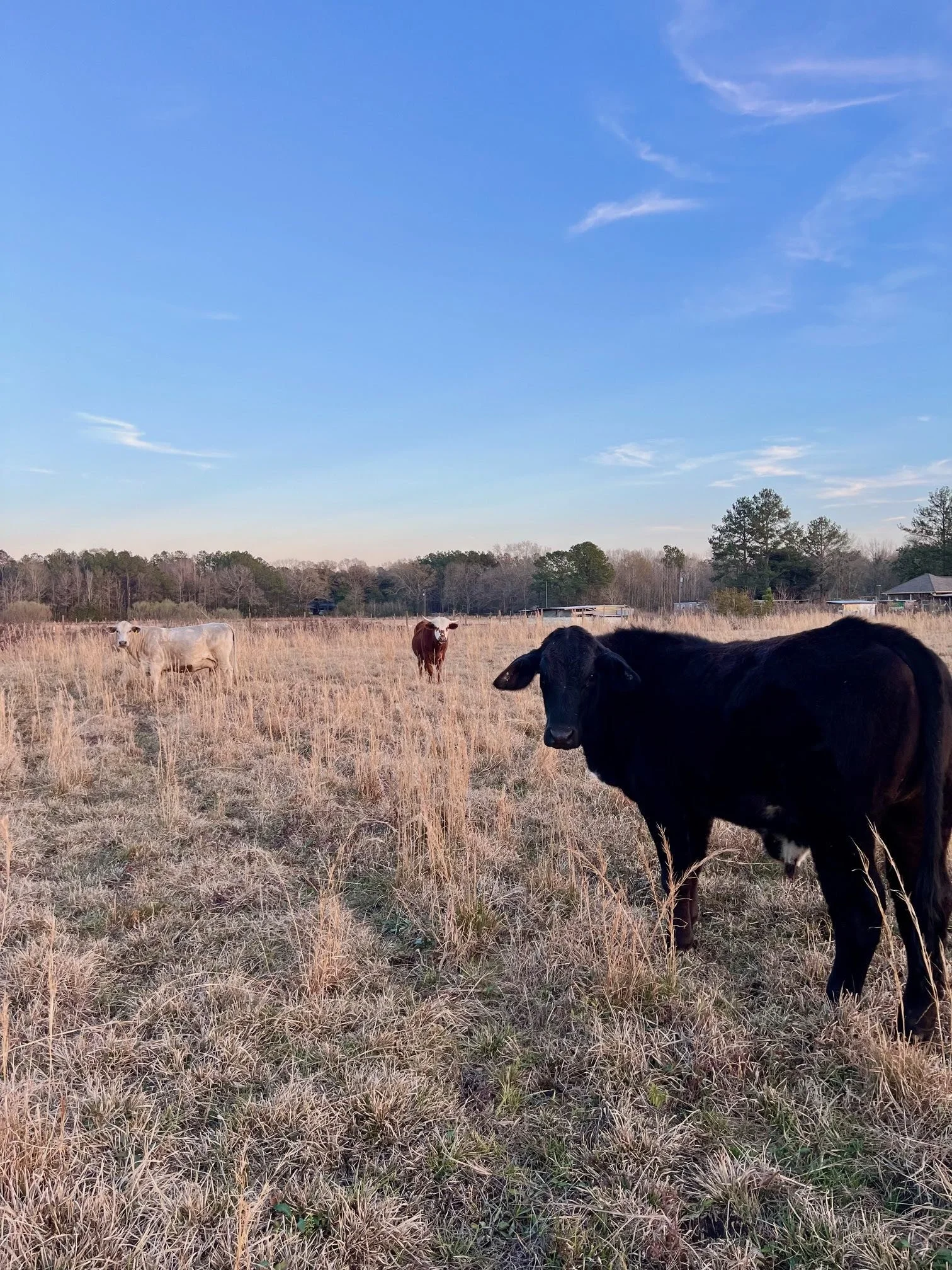
Our two cows and two steers plus the donkey are continuing to make the rounds bale grazing this winter.
Especially for such a small herd, bale grazing is an obvious choice. They can forage what they can in the fields we move through them, but get most of their nutrients from hay and alfalfa pellets. But we still can spread out their manure and hoof activity throughout the winter, as well as the hay waste.
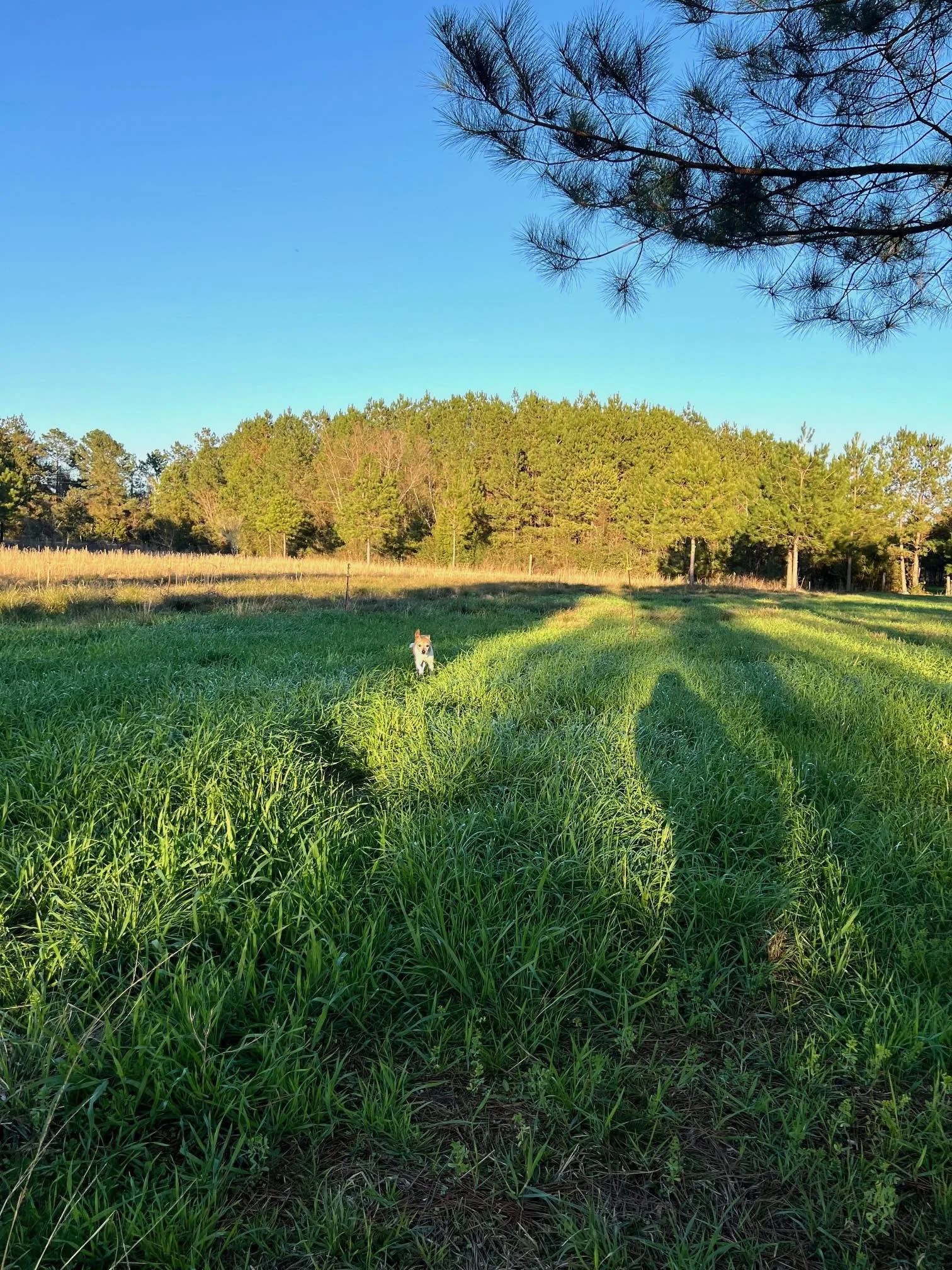
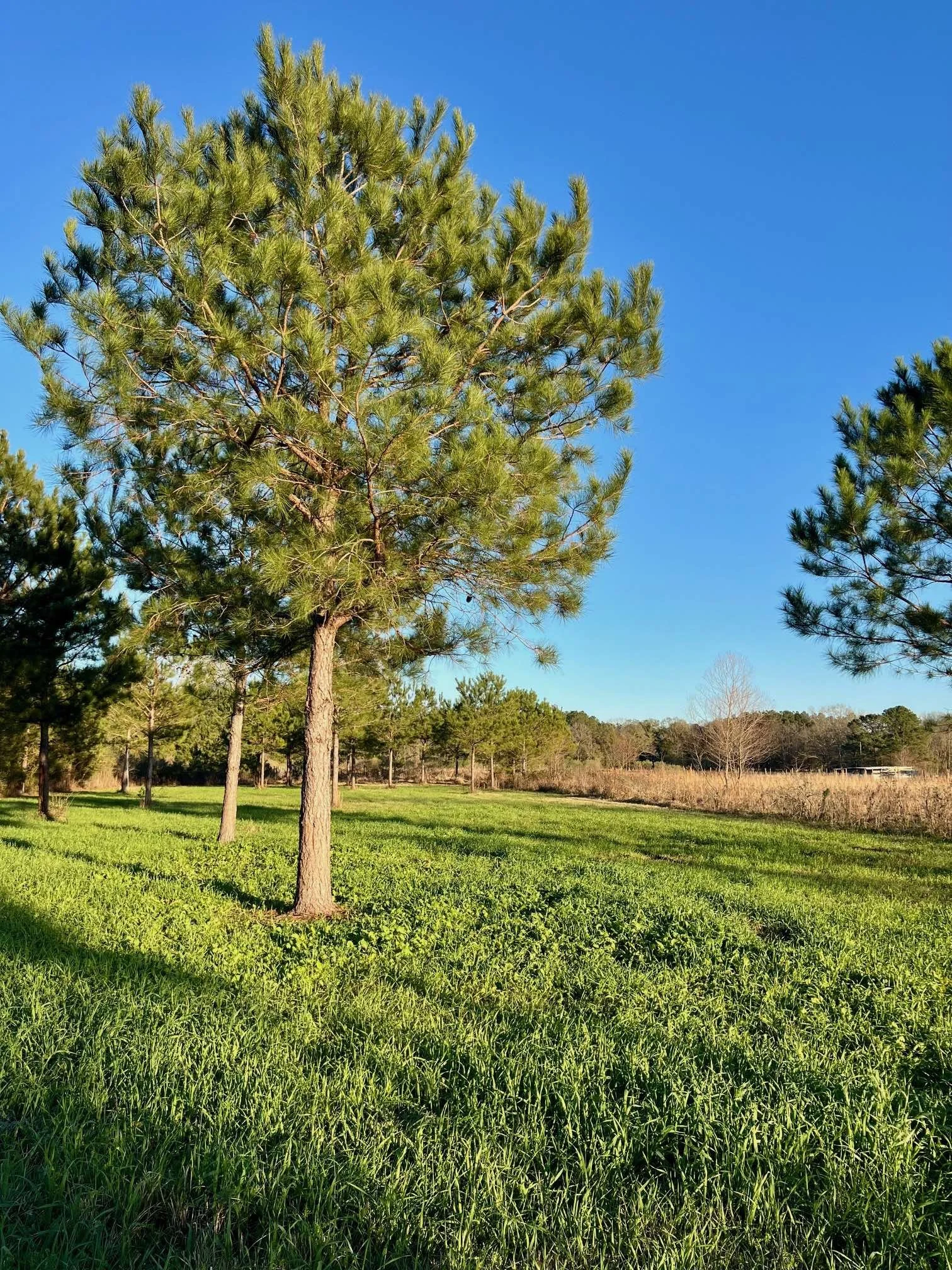
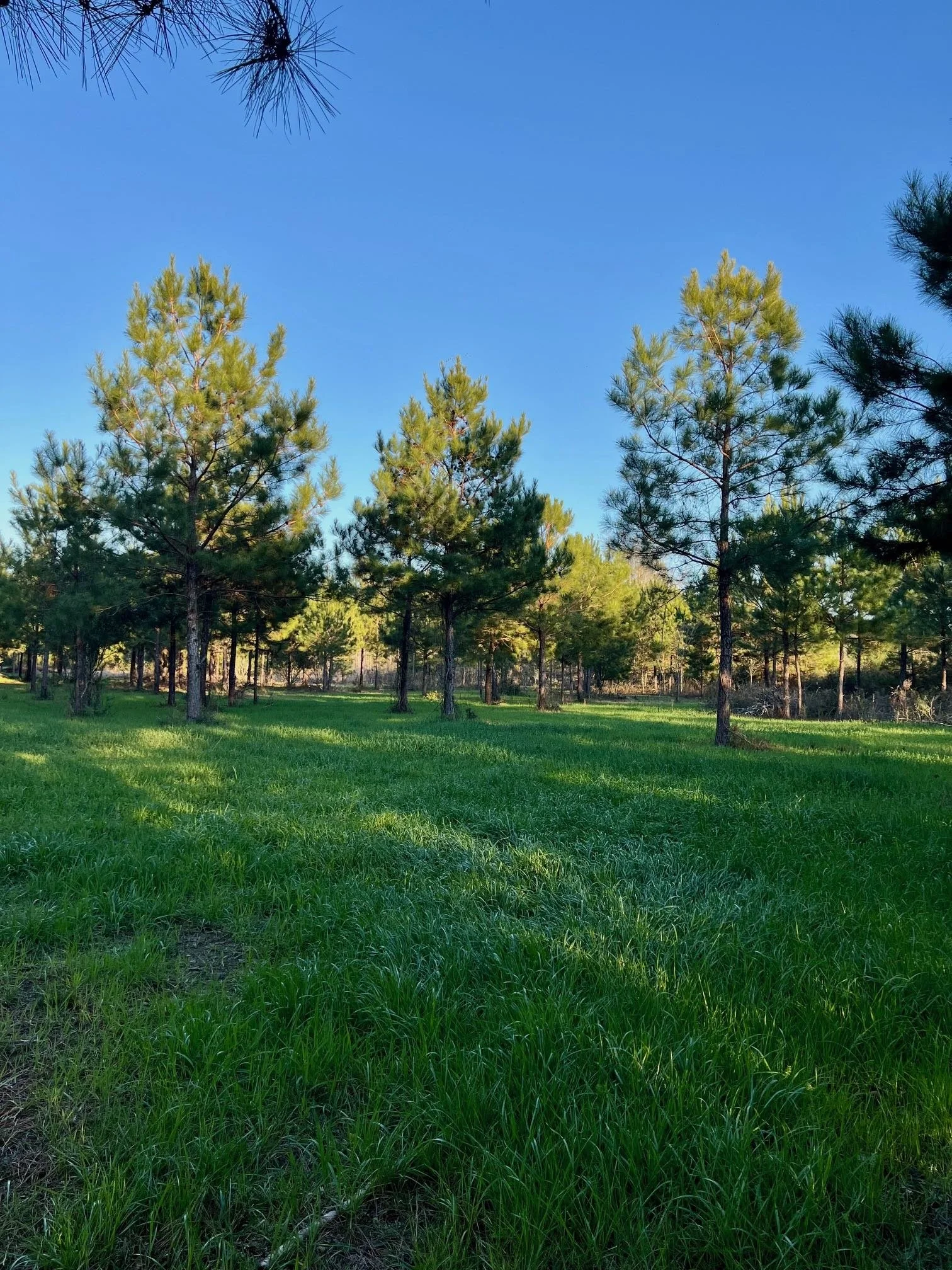
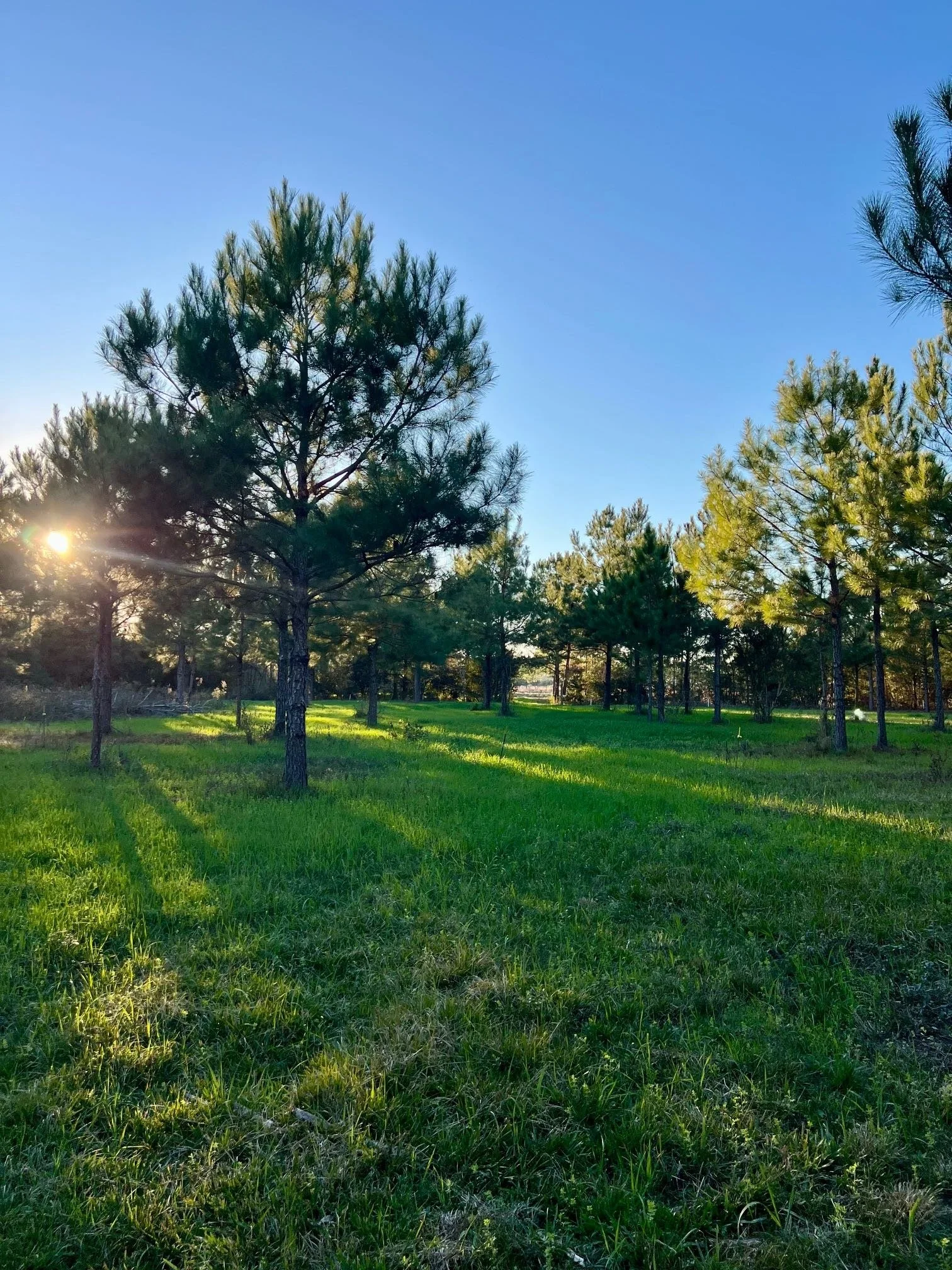
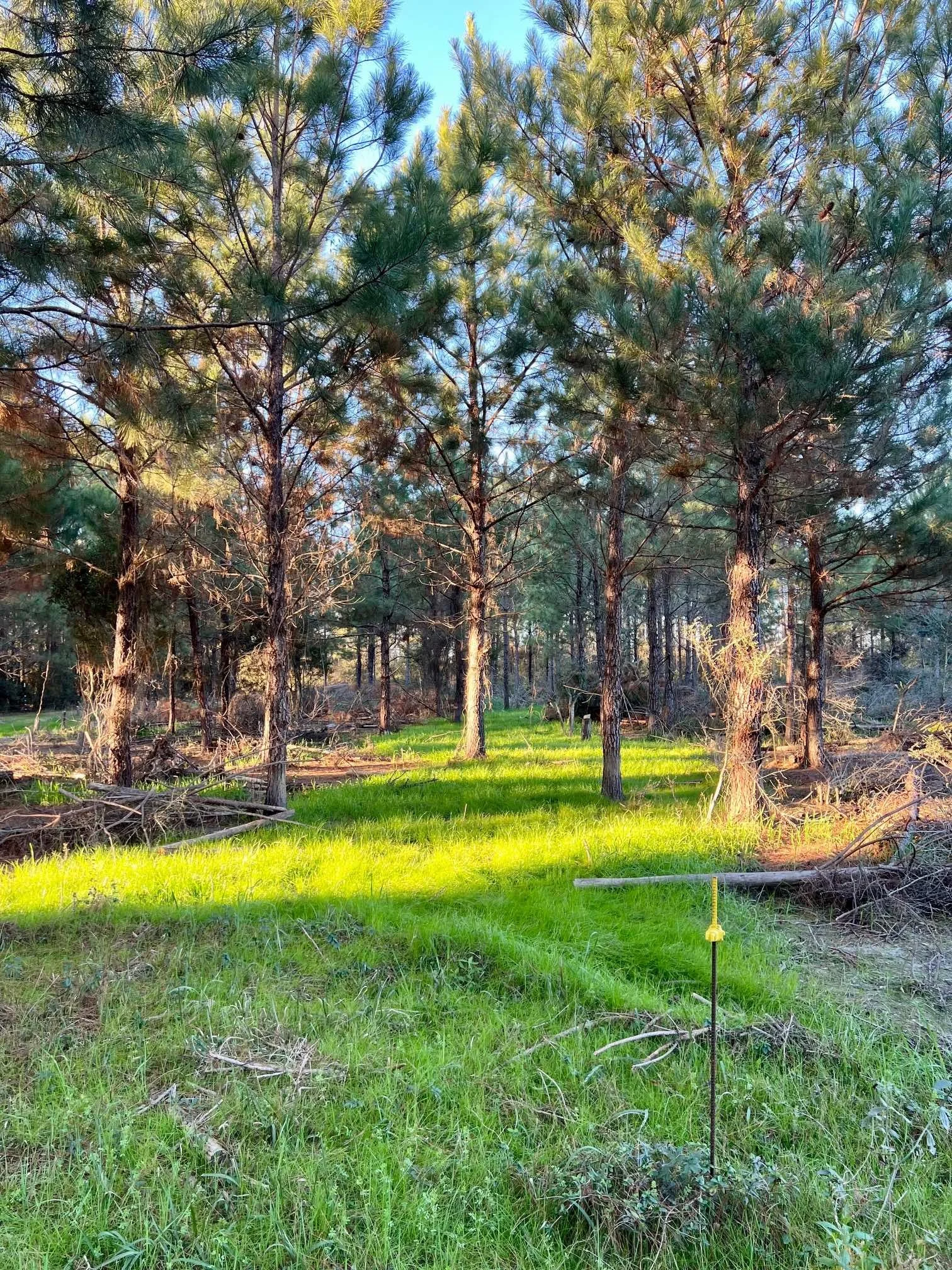
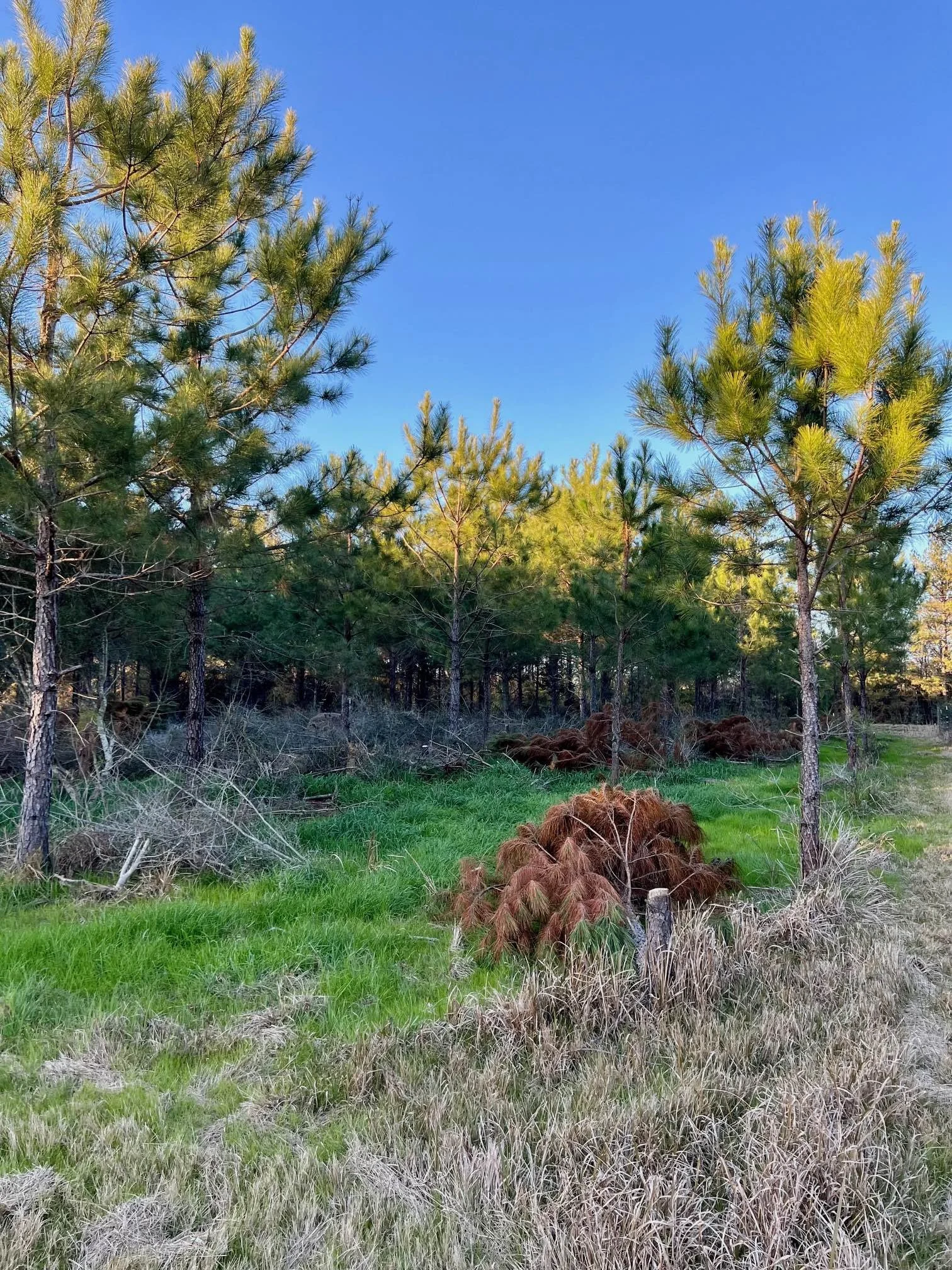
And the cover crop in the far sections of the farm are coming right along and are almost ready for them to graze!
We planted rye, wheat, oats and purple top turnips and I’m also seeing a lot of a native vetch, which is a legume, come up alongside these.
The rye stand in the section of woods where the pigs were this fall is particularly lovely. We basically planted the aisles of cover crop in between the wooded sections where we thinned some of the loblolly pine trees to let more light in and eventually create more of a silvopasture or savannah ecosystem.
I plan to go into this in more detail in a future blog, but we purposely leave the thinned branches and trunks piled in place. It might look messier and you might find some people advocating for burning it and “cleaning it up,” but we prefer to leave it for important wildlife habitat and for decomposers to do their thing to turn it into soil. For example, everyone loves fireflies, but not everyone realizes that they larval stage needs rotting (wet) logs!
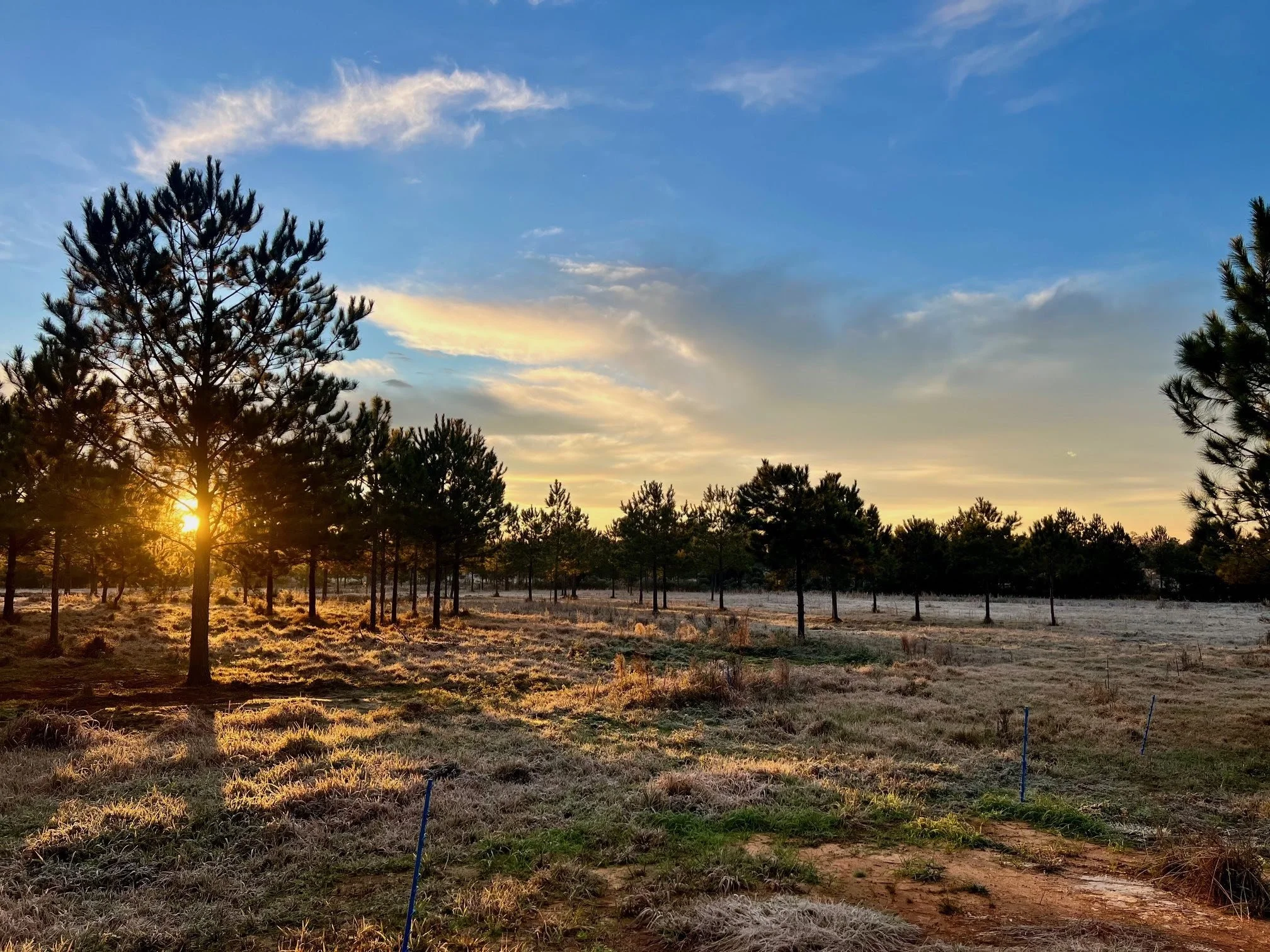
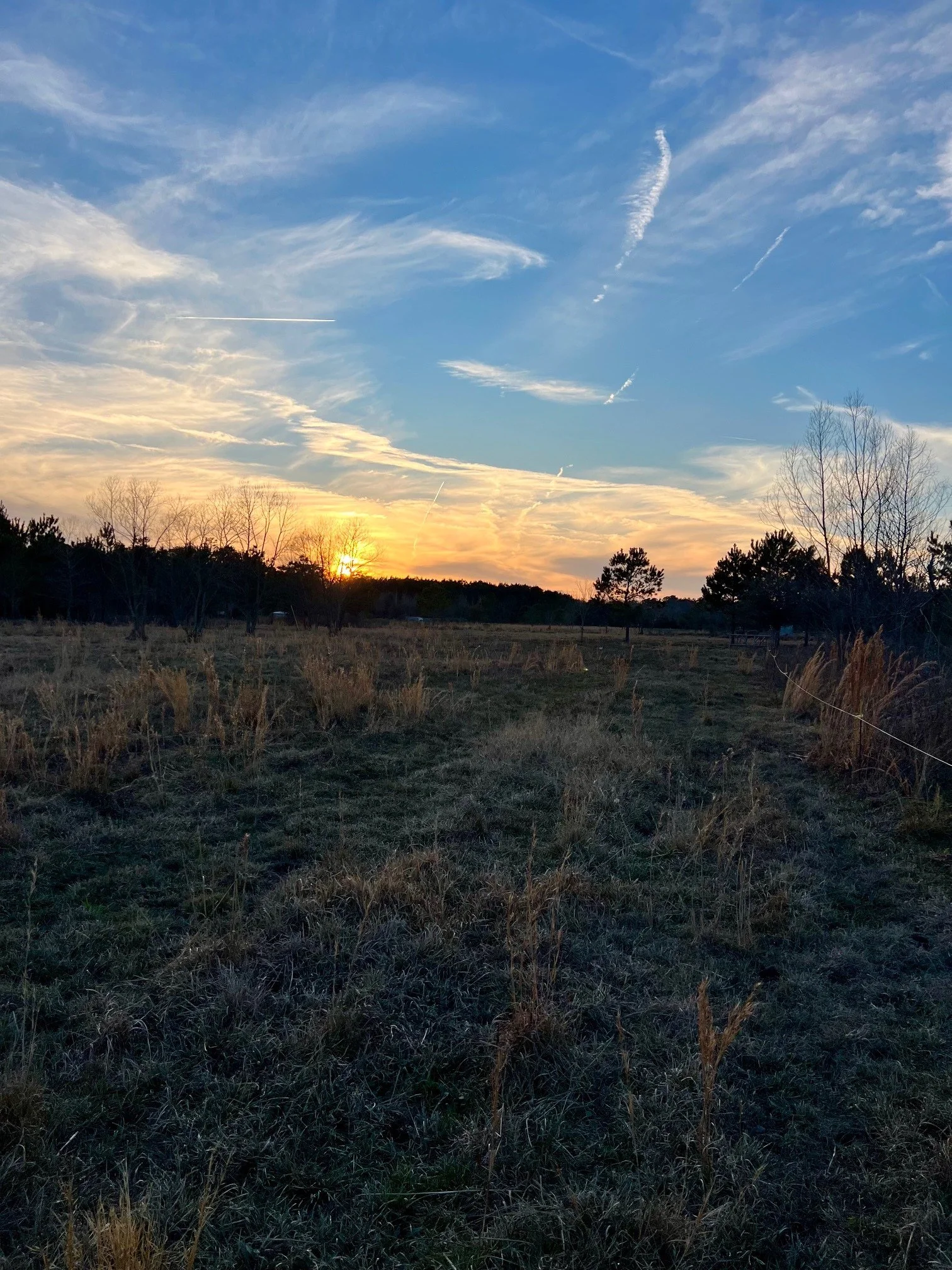
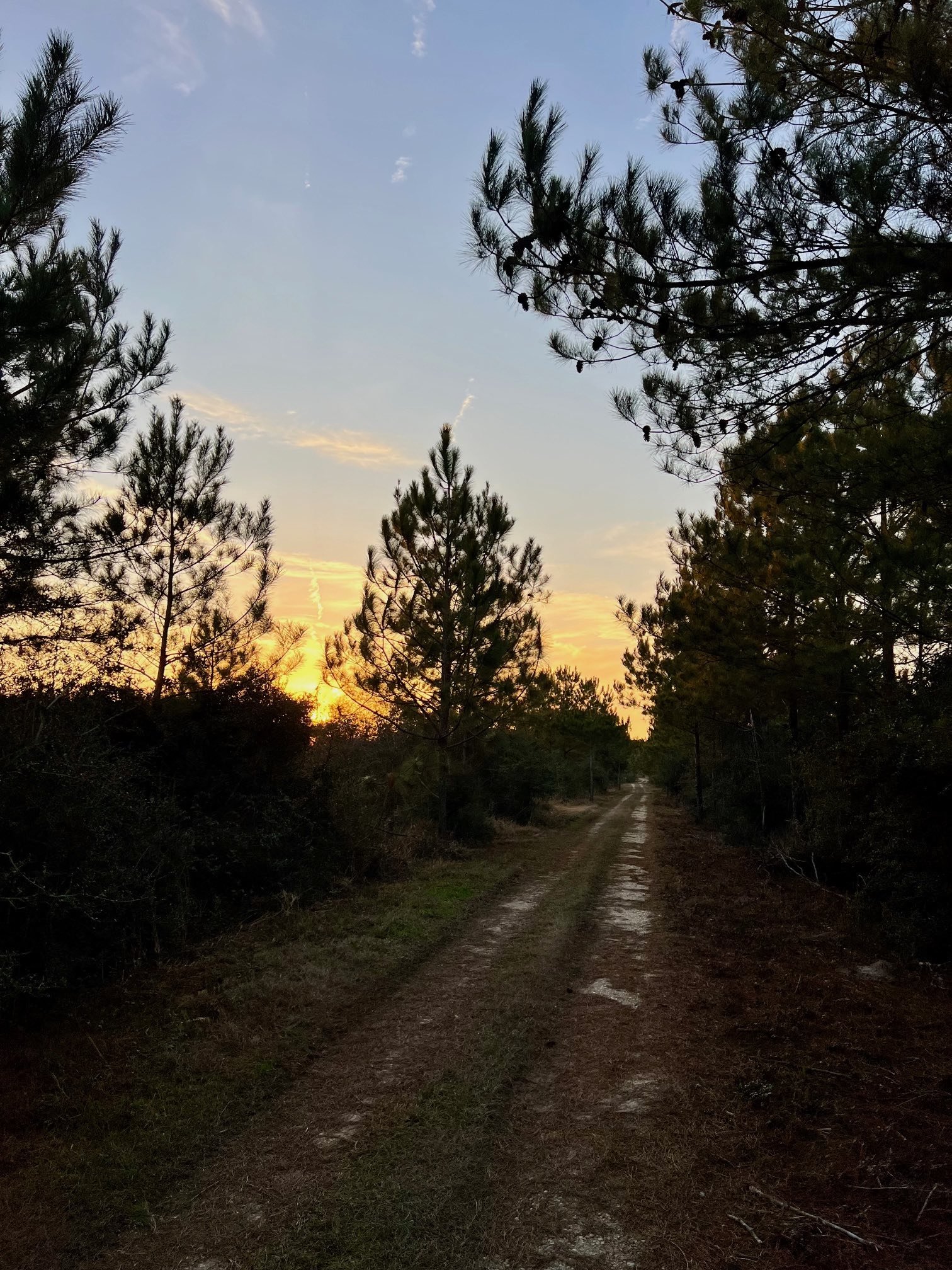
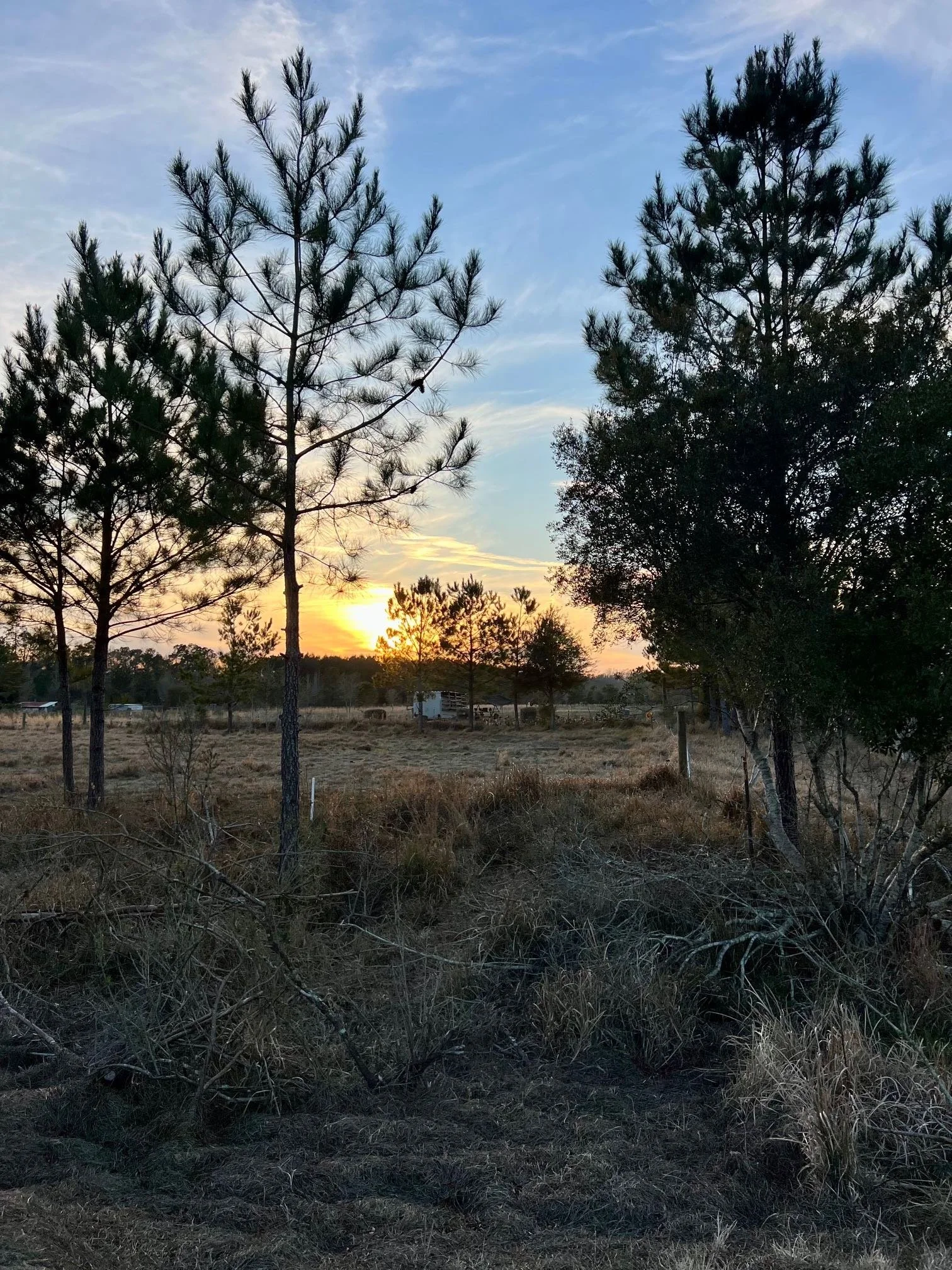
The winter position of the sun has certainly given us some beautiful sunrises and sunsets and of course that brilliant blue sky on sunny days. Hopefully we have passed the most bitter cold spells and can look forward to lively spring!